



Travel Log: Philadelphia (Day 1)
Sr. Eileen Reilly, SSND
July 26, 2016
Excitement rose on the bus as we began the two hour drive down the NJ Turnpike to Philadelphia, the site of the Democratic National Convention. When we arrived in the city before noon, the streets were alive with supporters of Bernie and Hilary – all eagerly awaiting the roll call vote scheduled for the evening.
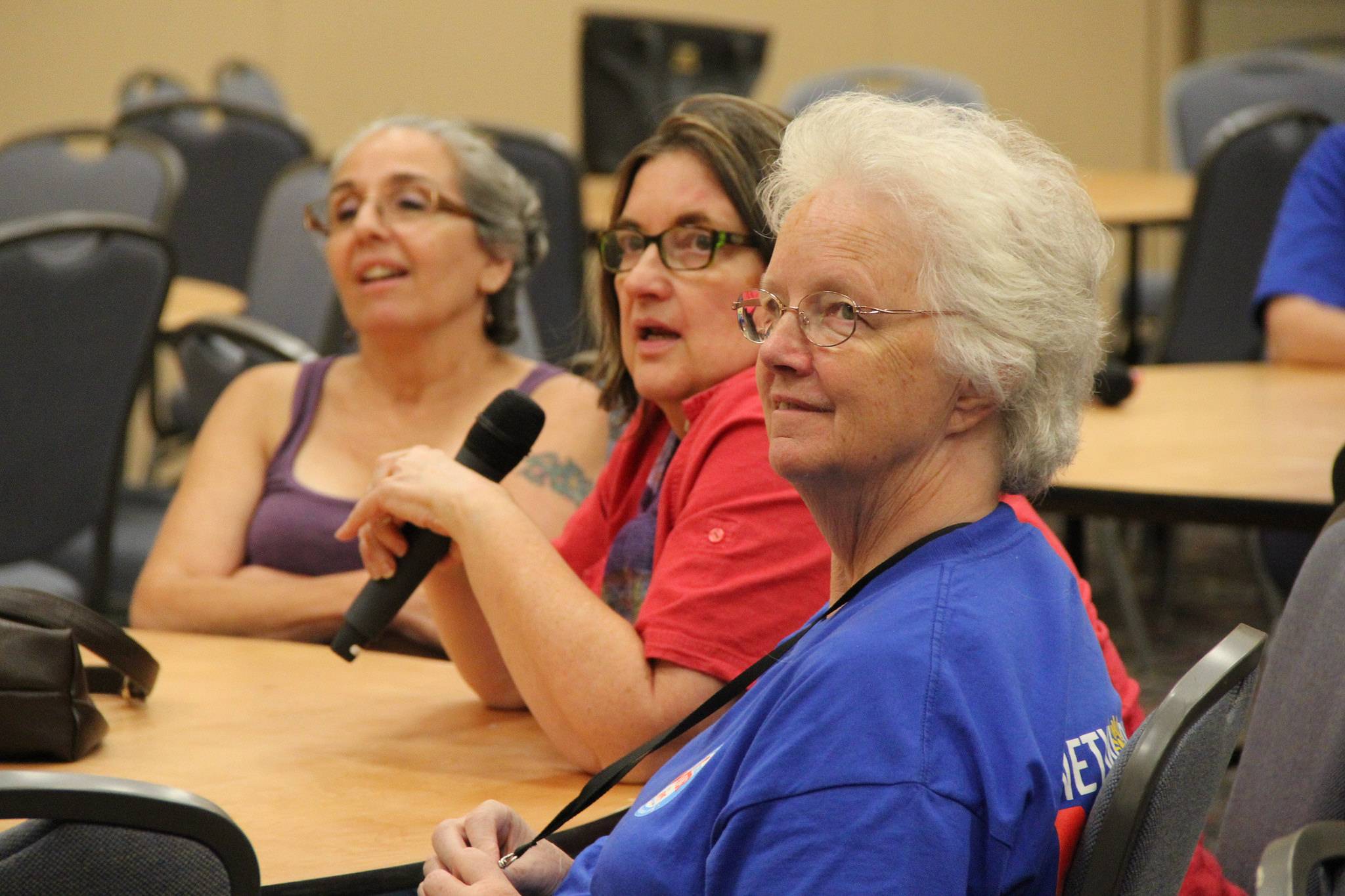 We Nuns on the Bus presented a workshop for some of the convention participants. It was a modified version of the caucus that we had presented in every city along the way. We were pleased and amazed at how many people knew of us, recognized us, and affirmed the work we were doing.
The credentialing process for the actual convention reminded me of the UN process – several different credentials were needed to gain access to the various venues for the convention, so we were all walking though the site displaying several passes.
We arrived at the site, just in time for the nominating speeches which were followed by the roll call vote. It was just like the movies! “The great state of . . . casts 7 votes for Bernie Sanders and 7 votes for Hilary Clinton. “ And so it went. After a very gracious speech by Bernie at the end of the roll call, Hilary became the official nominee of the party. We were there for this historic moment! What a thrill.
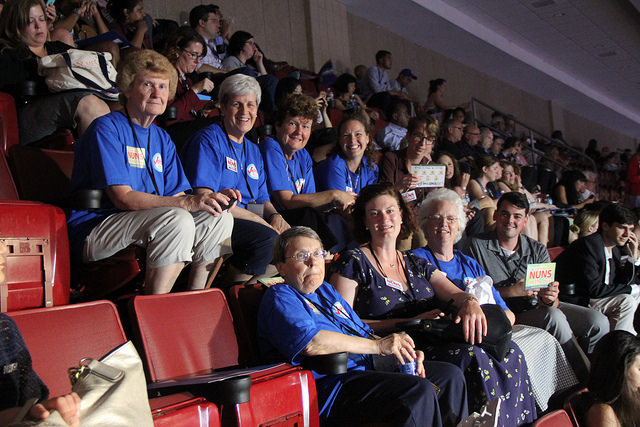 The remainder of the evening was a combination of speeches by supporters, appearances by celebrities, video presentations on some of the key issues. Perhaps the highlight was a presentation by the Mothers of the Movement – a group of mothers of children who have been murdered by police in the last several years. Theirs’ was a message of hope, a plea that not one more mother ever has to join their group.
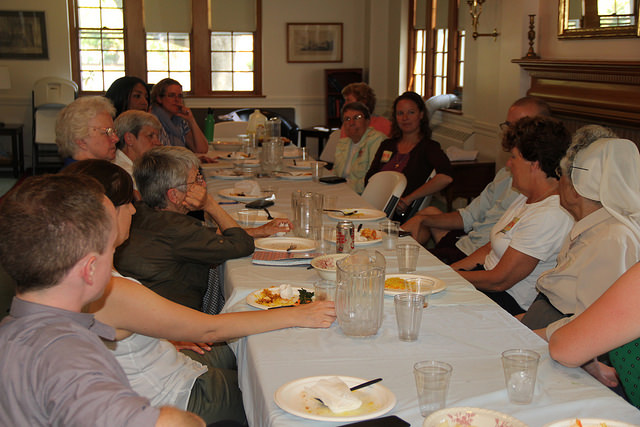
One more time, local nuns offered a warm welcome and overnight hospitality to we Nuns on the Bus – and the good news is that we were closer to the site of the convention than most of the delegates!
See also:
Slideshow: Democratic National Convention
Slideshow: DNC Workshop
 “We’re not going to talk our way out of racism” and income inequality.
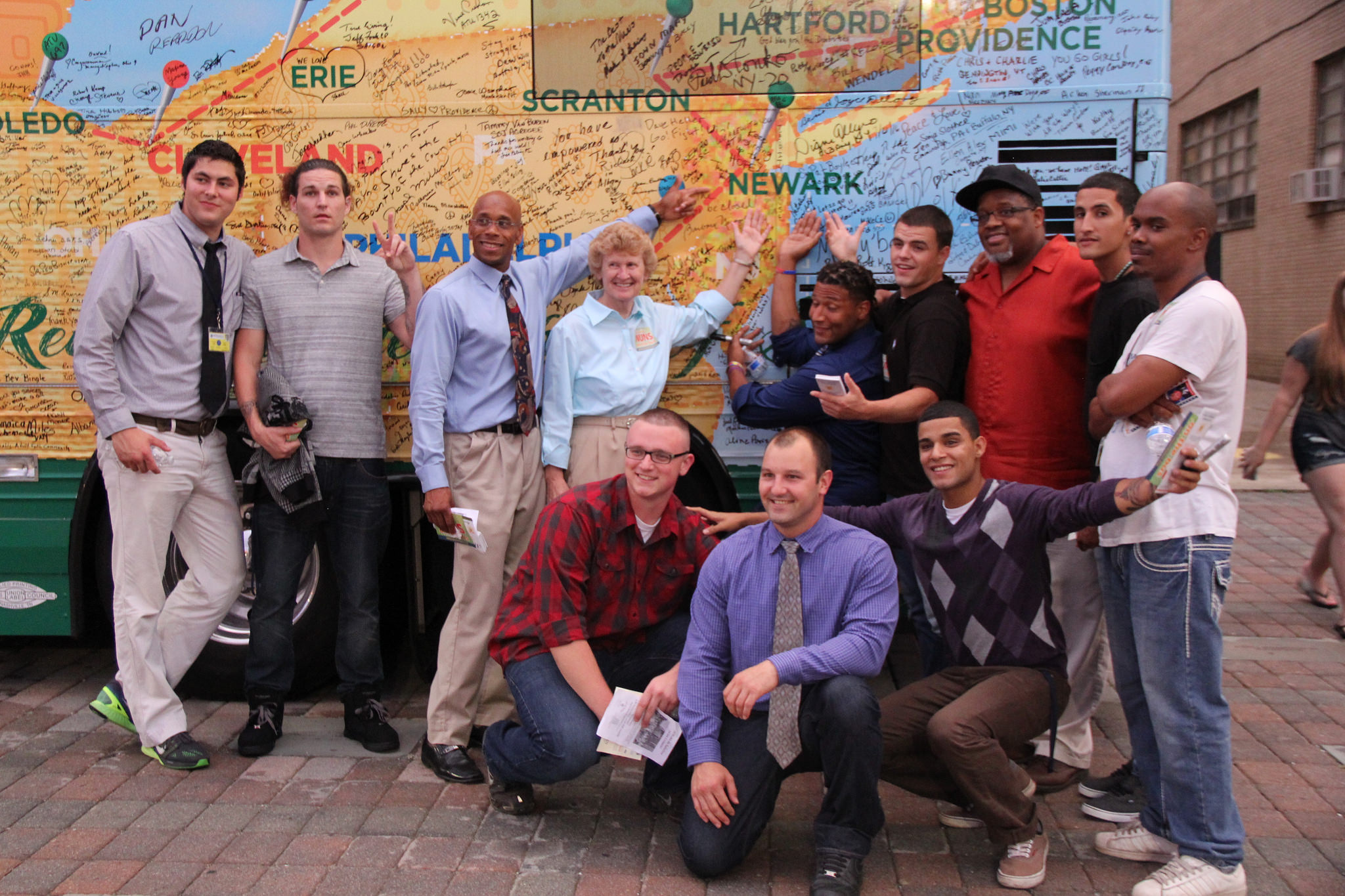
 On Day 14, we witnessed just such a space created for transformation at Integrity House in Newark, the largest comprehensive addiction treatment facility and program in New Jersey. Robert Budsock, CEO introduced us to the staff and clients, or members of the family as he likes to call them. They have an educational program, outpatient treatment and prevention programs. The most transformative is their therapeutic residential community: the love and care for each other was evident. Indeed, it is a family. Over 50% of the staff had themselves been participants in Integrity House. As one after another told their story of addiction, recovery and future goals, the healing power of relationships shone in their faces and was broadcast in their voices. How important community is! Each radiated a healthy, confident presence. How could we Nuns on the Bus not be touched, changed.
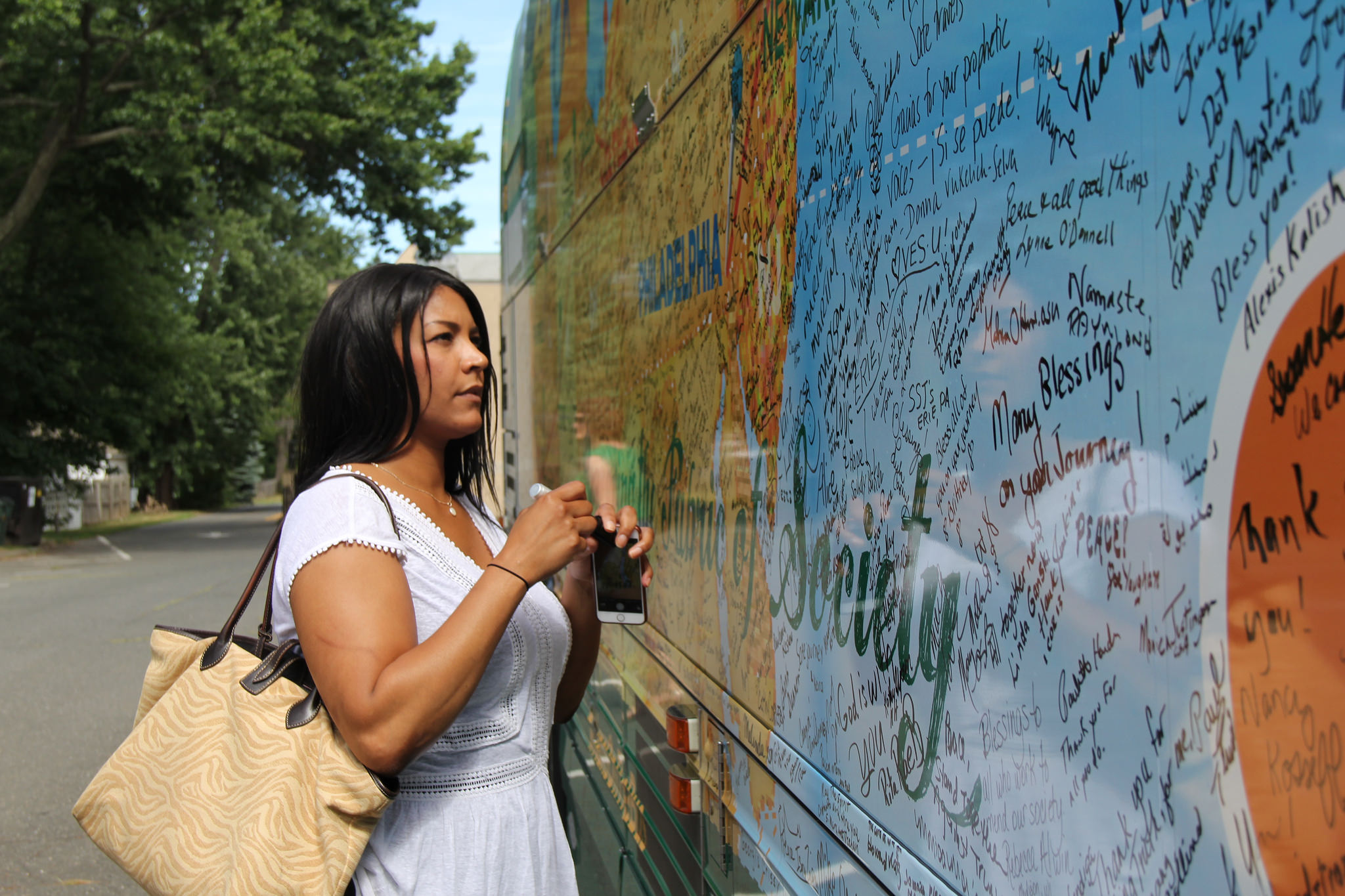 Is the Bus a visible vehicle of hope, of our desire for change, for a future when all are one?
 Our first stop was Integrity House in Newark, New Jersey, the largest residential addiction treatment center in the state. The caring, family-like environment there was amazing, especially given the size of the program. The director there identified a huge “gap” when he explained to us that residential drug treatment is not covered by Medicaid. This gap became very real when a few of the residents shared their experience of finally realizing they needed help, only to be told by other treatment centers that since they were on Medicaid, they could not come until that had the funds to pay for their treatment.
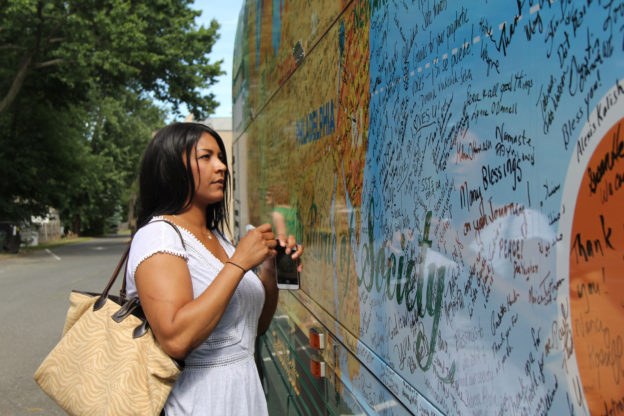
 Once again, local residents shared the Gaps that touched their lives, including wage theft – a situation in which employers do not pay the promised wage or neglect to pay overtime rates to those working more than 40 hours a week. When we came out of the Church, we were greeted by a beautiful rainbow – and a wet bus. Those attempting to sign our bus had to dry a spot first!
 We can learn so much from those who accept the humble reality that “my way” does not work. Darnell told us of the need to have access to a listening ear when things mount up. Darnell did not sugar coat things – addicts rarely do. He said recovery was hard but he had hope and had begun to see what a sober life might look like for him. He had learned the value of letting go of baggage that would hurt you. Darnell found salvation in interdependence with co-community members and counselors at Integrity House.
 Integrity house does that. But their resources are limited too. We need more beds so we can react in the moment. It was suggested that we could remove the beds from prison and put them in treatment centers and we would save money. Hmmmm.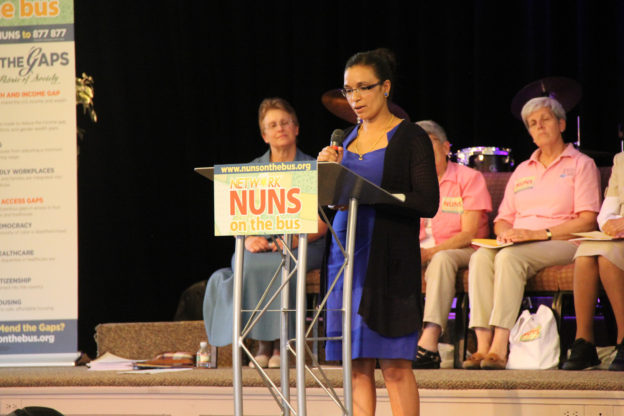
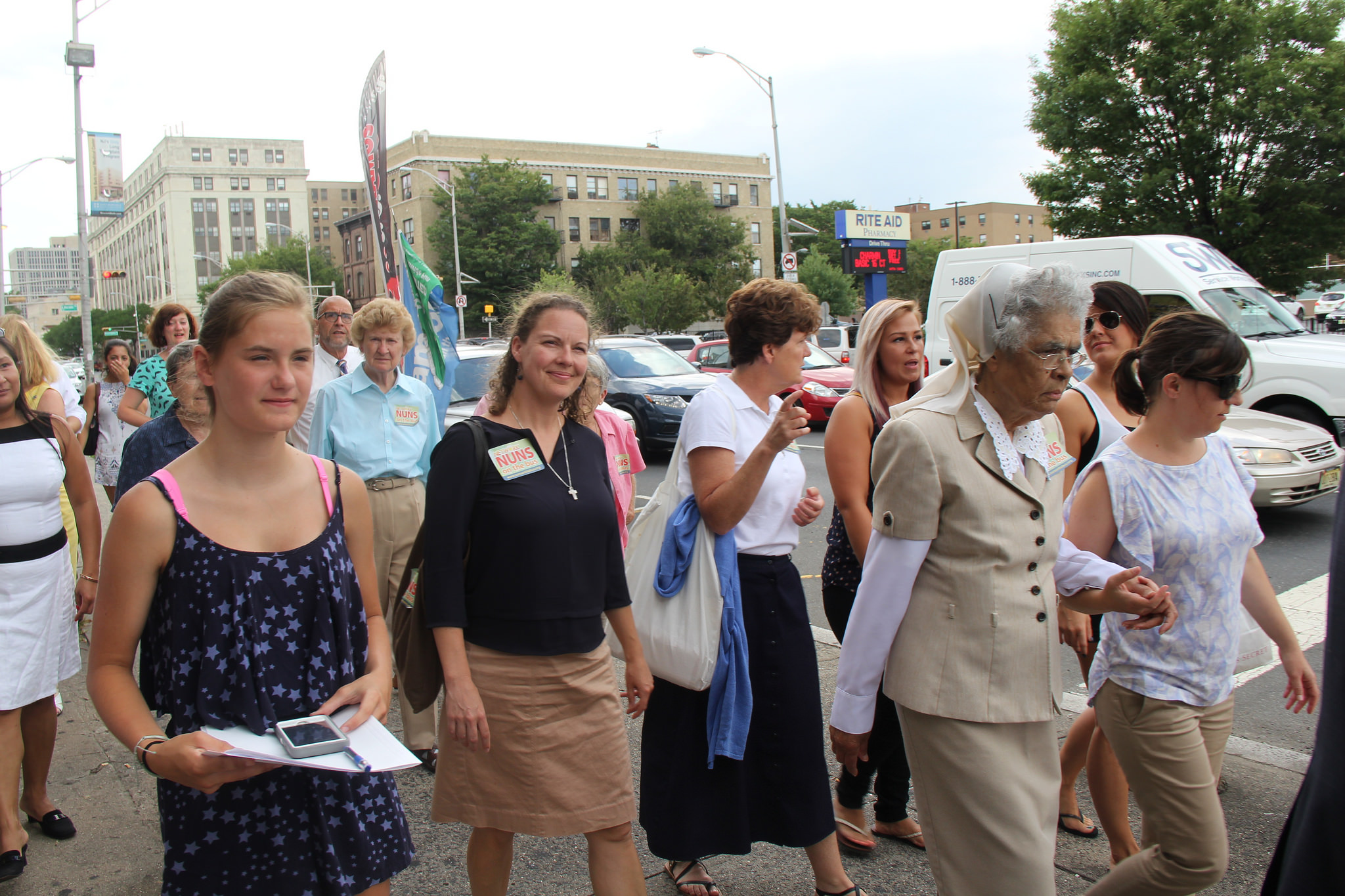
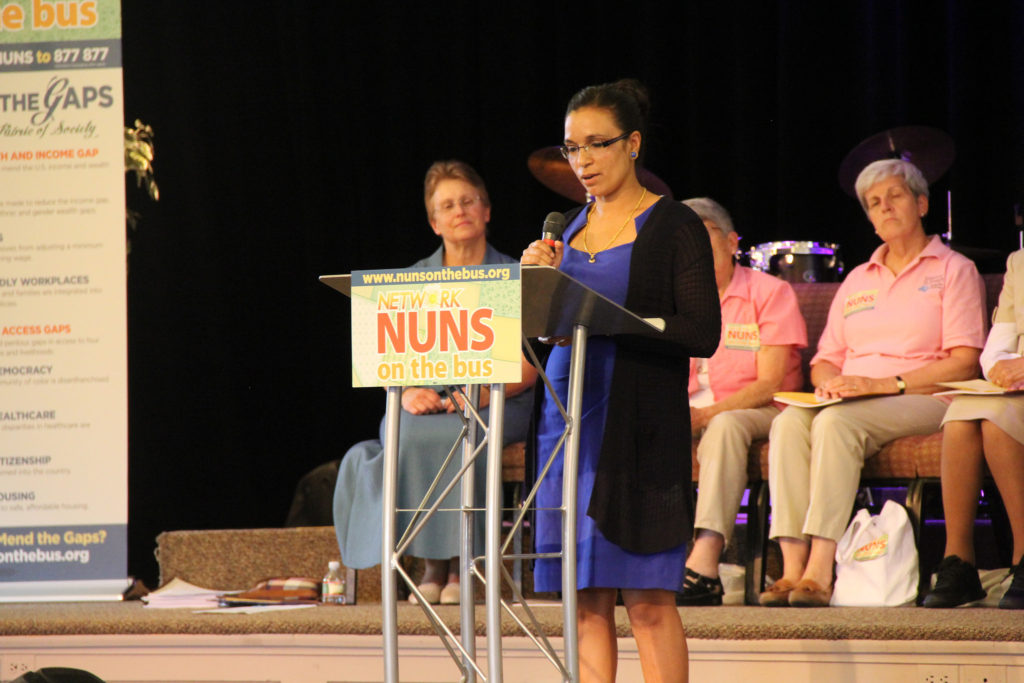
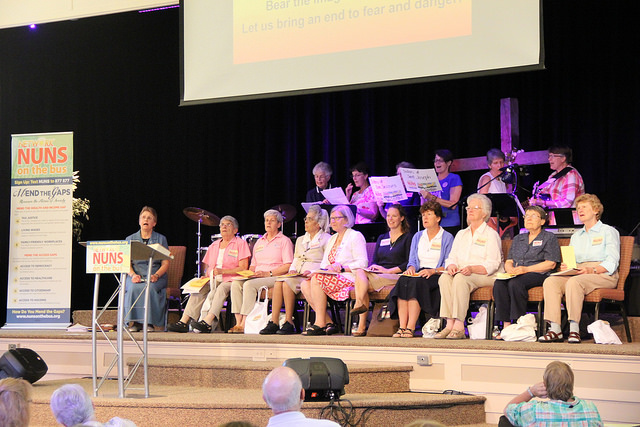 When we arrived there was a cheering crowd to greet us. Inside, we saw tables set up with participants from all the local service agencies there to talk about their work. We then had a program of speakers. The pastor of the church opened up with prayer and then we heard from local speakers who told us of the struggles of the immigrant, living wages, and the need to vote.
 We ended the meeting with Jan Novotka leading us in the prayerful song that she had written with collaboration by Mary Beth Hamm and Donna Korba for Network’s 40th anniversary. And of course, everyone came outside to sign the bus!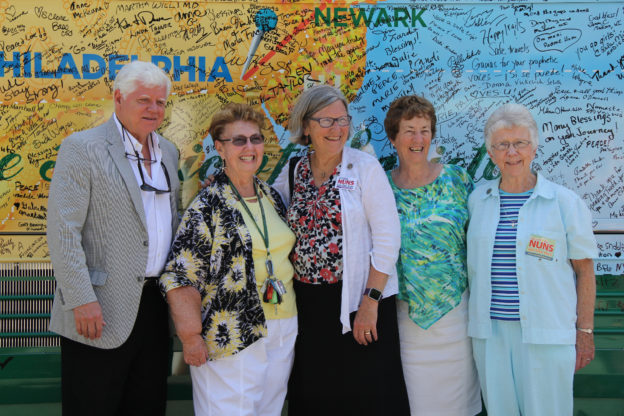
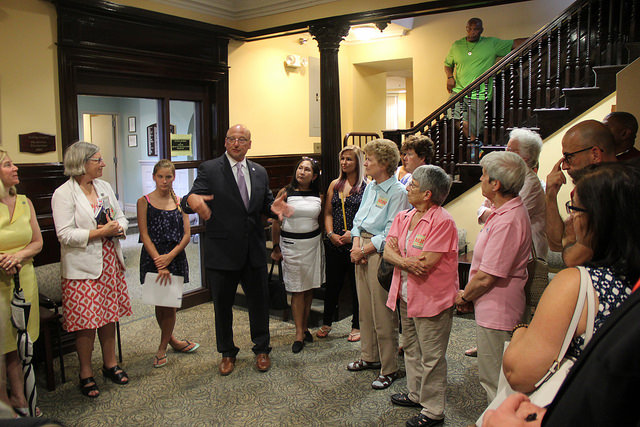
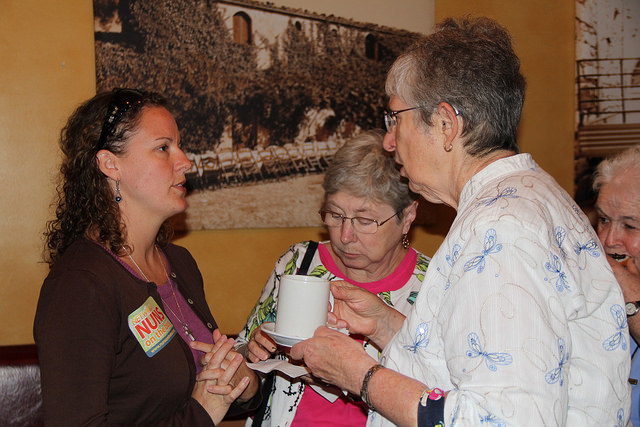 We left Rhode Island and headed to brunch at a restaurant in West Hartford, Connecticut. This event was sponsored and attended by Congressman John Larson along with the mayor, Shari Cantor, and many communities of women religious. The congressman personally thanked the sisters for their work of justice and the many ministries they have sponsored in his district.
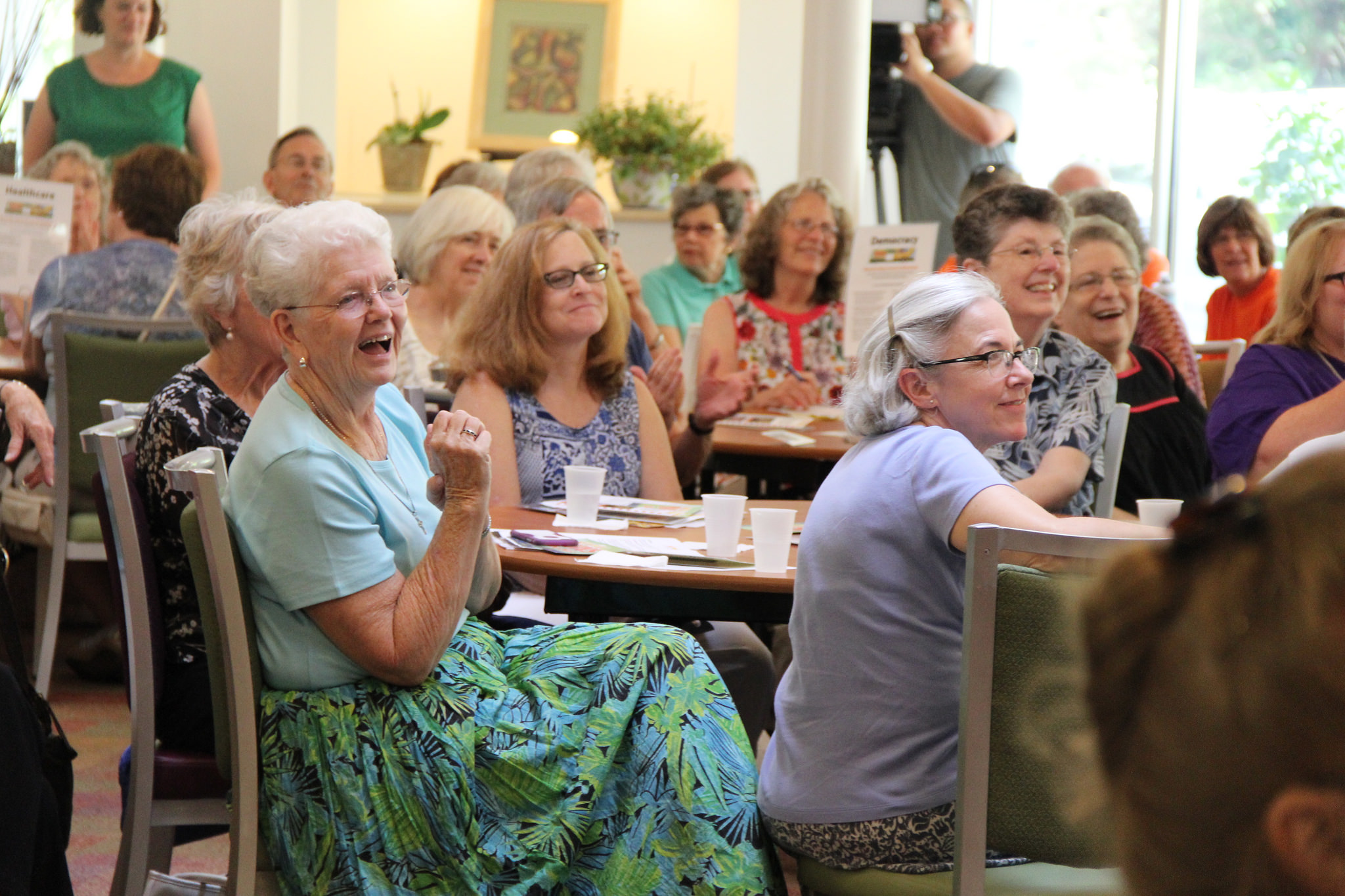 Our next stop was the Holy Family Passionist Retreat Center. As we entered the meeting space, over 250 people were waiting for us and ready to being addressing the gaps in their community. The gap area that my group discussed was citizenship. The interest in citizenship was so great that there were five full tables of people! I was deeply moved as the people shared their lived realities. The Northeast has a growing refugee and immigrant population. My group shared about how immigrants and refugees in their community often live in substandard conditions and don’t earn a living wage. There was a deep concern among them for a resolution to the millions of people who are living in the shadows and in fear of deportation and separation from family. The attendees envisioned a process that was more sensitive to the refugees and designed for the success of the refugees in the host community. Many of those who wanted to mend the gaps came from faith backgrounds with a strong social justice tradition as well as Catholics who are responding to the vision of Pope Francis.