



Finding Dignity at the Border
Our Faith Calls Us To Change a System That Treats People as Less Than Human
Jonathan Alcantara
July 31, 2026
Over my spring break, I had the opportunity to go on a Border Awareness Experience with Marquette University’s “Marquette Action Program.” The opportunity took me to Annunciation House in El Paso, a Catholic organization that accompanies migrants, immigrants, and refugees, offering them hospitality.
This experience wasn’t just about learning facts about immigration. It was about listening, being present, and realizing that these issues are not just headlines or political talking points. They are human stories about suffering and resilience, shaped by current political systems.
I learned how human dignity and due process can be stripped away and lost in the immigration system. I heard testimonies about how hard the journey to the U.S. can be, including the dangers many people face before they even reach the southern border.
I also learned about what happens to people after they arrive: the cold food, sometimes without utensils; overcrowded rooms; dusty desert air making it hard to breathe; delayed medication; and a lack of medical help unless someone’s condition became critical. What stayed with me most was the feeling that people were being treated as if they were case numbers instead of human beings, detained for long periods even when they came on work permits, student visas, or other legal ways.
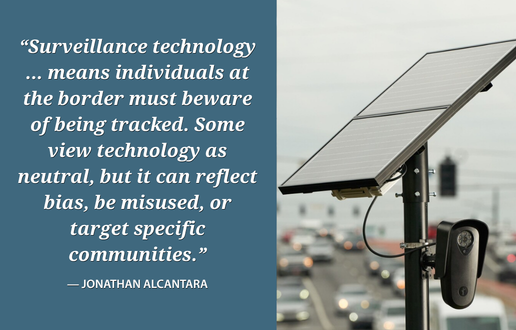
The role of surveillance technology also stood out. Flock cameras that automatically recognize license plates, AI, and data collection means individuals at the border must beware of being tracked. Some view technology as neutral, but it can reflect bias, be misused, or target specific communities.
Cities in states like California, Washington, Wisconsin, New York, Massachusetts, and Illinois moved to end their contracts with Flock license plate readers after learning cameras had been installed without city approval. The Associated Press and ACLU describe how Border Patrol has used nationwide license plate reader data and pattern analysis, raising concerns about profiling, privacy, and fairness in the country.
Federal agencies, funding, and policy shape immigration detention and border enforcement. If people are denied humane treatment or due process, then this is something Congress and federal agencies have the responsibility to address.
Over the past year, the Government Accountability Office has reported that Customs and Border Patrol has not consistently implemented medical care policies for people in custody. Nor did it have clearly defined ways of determining whether detention facility inspection programs were actually working. This illustrates that the concerns people raise are not just emotional reactions. There are real oversight failures in the system.
Federal advocacy matters because it’s one of the only ways to push for bigger change. If detention standards are not being followed, then federal agencies need stronger oversight. If surveillance technologies are being abused, then lawmakers need to ask hard questions and create stronger guardrails.
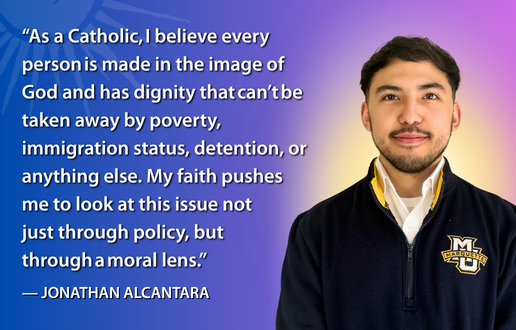
As a Catholic, I believe every person is made in the image of God and has dignity that can’t be taken away by poverty, immigration status, detention, or anything else. My faith pushes me to look at this issue not just through policy, but through a moral lens.
Catholic Social Teaching recognizes that countries have the right to regulate their borders, but also teaches that people have the right to migrate to sustain their lives and the lives of their families. When laws are enforced in a way that strips people of dignity, ignores basic care, or treats them as less than human, then something is morally wrong.
I keep coming back to the idea that justice is about having rules, but also about how people are treated within those rules. Due process matters. Humane conditions matter. Medical care matters. Privacy and surveillance oversight matter. If they’re missing, the system is failing.
My experience in El Paso made me realize that this is a human dignity issue. If I want to live out my faith in a meaningful way, then I can’t ignore what I learned.
Jonathan Alcantara is a student at Marquette University in Milwaukee and a 2026 Sr. Carol Coston Fellow in NETWORK’s Young Advocates Leadership Lab (Y.A.L.L.).
