



Reflection: Tending the Body of Christ: Reweaving the fabric of society
Sister Jan Cebula, OSF
July 21, 2016
“…so we, though many, we are one body in Christ and individually parts of one another.” Rom 12:3-8
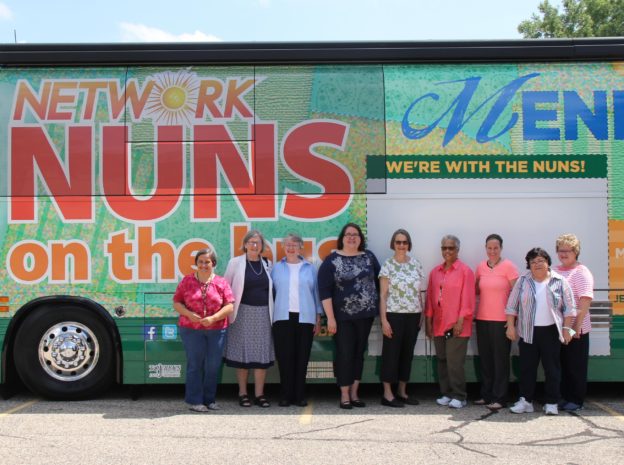
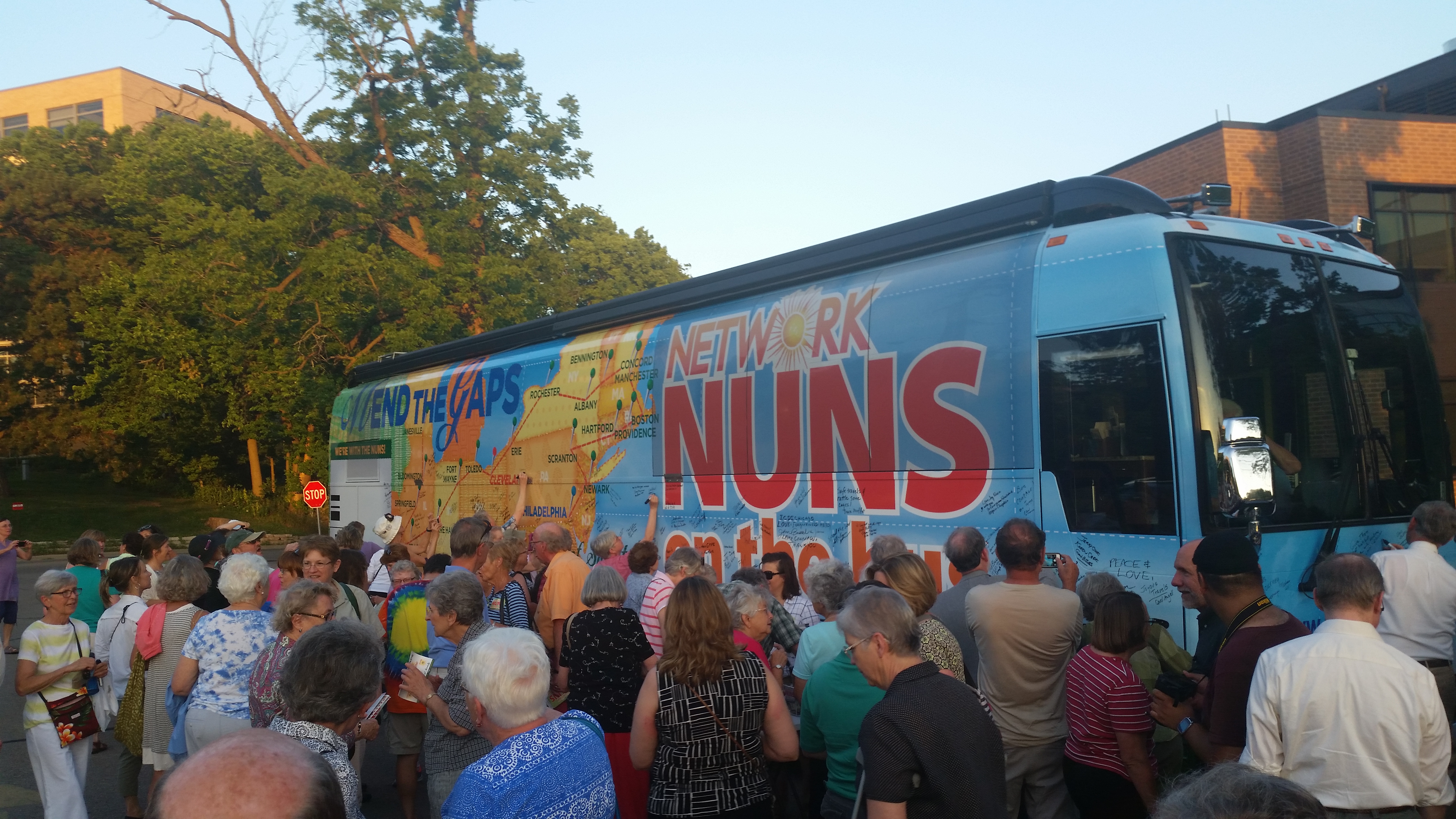
So began Day 9 of Nuns on the Bus: Mend the Gaps: Reweave the Fabric of Society.
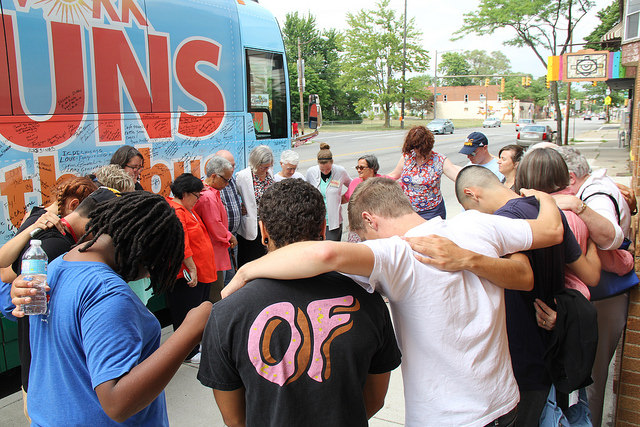
As we prayed with this scripture at the start of our day, we could not foresee how immersed we would be in the experience of being One Body. How it would unfold all around us, embrace us and touch us so deeply.
Each night we reflect on the day’s experience and on the previous evening, we talked about how some people are invisible to others; particularly people of color and those who have been marginalized by society. Perhaps the key to reweaving the fabric is connecting people, particularly with people who are the most impacted, we speculated.
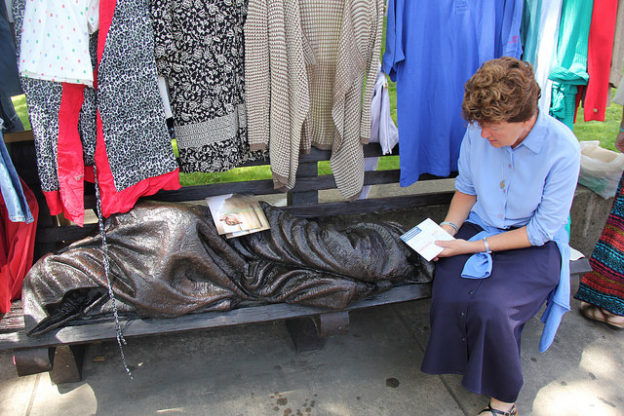
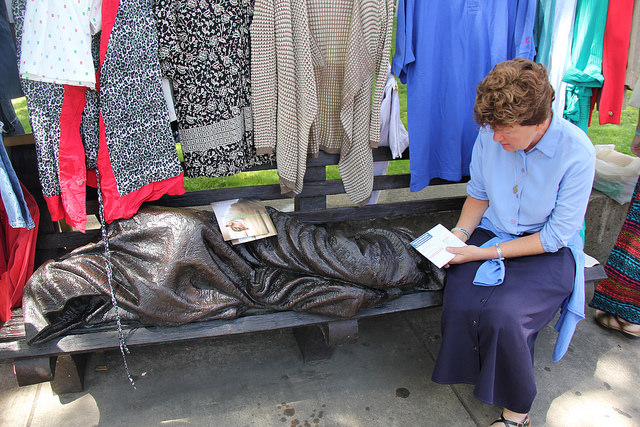 On our schedule was a stop at the Homeless Jesus statue outside of St. Paul’s Episcopal Cathedral in downtown Buffalo. Hmm, I thought. I had seen photos of it, but why stop here? By the time we stepped back on the bus, how grateful we would be for Rev. Will Mebane’s persistent invitation!
Buffalo is experiencing a type of rebirth, with lots of redevelopment, but not everyone was benefiting, Rev. Will told us. So he set about reconnecting the church with the homeless and others left out, left behind. It began simply by seeing and paying attention to those members of the Body of Christ. And it was apparent that the seeing and connecting keeps deepening, unfolding and expanding.
Rev. Bill invited us into a conversation with representatives of Concerned Clergy Coalition of Western New York, Gameliel of Western New York (a coalition of 85 congregations, labor unions and other organizations), the Coalition for Economic Justice, Catholic Charities and Friends of the Night People. And Congressman Brian Higgins joined in. They spoke of the abject poverty in the area—over 40%–and their efforts for racial and economic justice. “We are willing to lock arms with anyone and everyone,” Rev. Will explained. With tears at times, they told stories about how their relationships with “the least” had been transformative.
Details of what they said and even the words they spoke elude me now, but their passion and energy remain. And so do the lessons they taught about being members of the Body of Christ and about reweaving the fabric of society. It is about wholeness; of individuals and the entire body. Of reconnecting people, the personal with the systemic. Of seeing the whole and recognizing the connection to damaging policies and working to change them. Of ever expanding and inclusive relationships. Of being deliberate and intentional, grounded in deep faith and acting with courage.
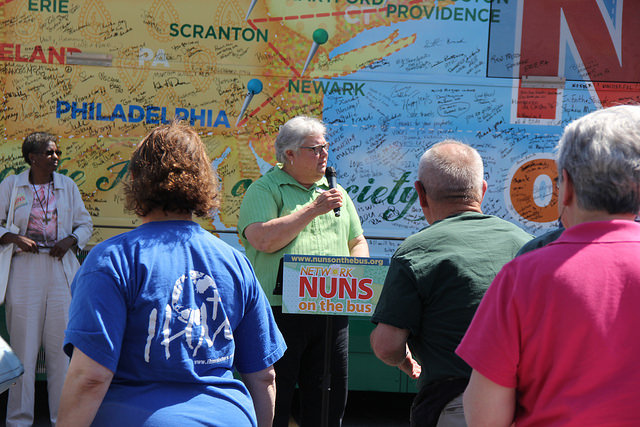
We emerged from the conversation to the space outside the cathedral for a short public program and were greeted by a diverse crowd and buzz of activity. When I spotted the t-shirt “The church has left the building,” I thought “How true about what’s happening here, about Nuns on the Bus”. We hadn’t yet seen the Homeless Jesus a short distance away.
Then I saw it. Jesus sleeping on a bench, wounds in his feet exposed. Everything we had just heard and felt, depicted here. Calling us all to wholeness. Impelling us to go on.
Deeply moved, we boarded the bus and headed to Rochester to be surprised by another Body of Christ experience.
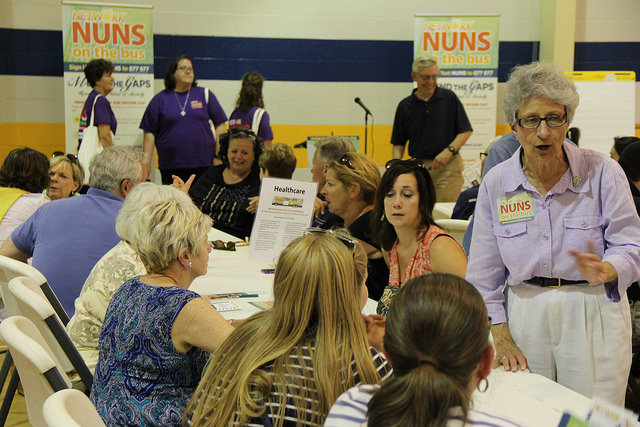
 Sister of St. Joseph Chris Wagner invited us to tour and learn about St. Joseph’s Neighborhood Center, a primary integrated health care center. Fifty two percent of Rochester’s children live in poverty and 70% are trauma survivors and the center is located in the midst of a low-income neighborhood. Most of the people who come there are uninsured or unable to afford health care with the insurance they do have.
It was clear that the focus is the health and wholeness of both the people who are served and work there. Over time, they have developed an integrated system, with all under one roof: full primary care, specialties such as cardiology and oncology, mental health services, dental, x-ray and lab. There are even body rooms with chiropractic, massage and physical therapy services. The 18 staff and over 250 volunteers love working there; unconfined by time restraints, they are allowed to practice medicine in the way they were trained to and want to. Care is customized to the individual.
The broader issues of health care policy issues and structural racism are also being addressed, witnessing to the wholeness.
And we’re riding the Bus connecting what’s happening in local areas all across the country to advocate for just federal policies.
As we left, I noticed a sign on the wall that read “I pin my hopes to quiet processes and small circles, in which vital and transforming events take place.” (Rufus Jones).
A good reminder of day 9: living as a member of the Body of Christ; reconnecting, mending the gaps, reweaving the fabric of society and creating wholeness.
 There were purveyors of all sorts Monday morning on the streets of Cleveland near Quicken Loans Arena as the Republican National Convention got underway. Most vendors displayed the standard assortment of red, white and blue political hats, buttons, and stickers promoting the Republican nominee. Others sold products designed to denigrate or ridicule the other party’s candidate. Then there were the teams of folks dressed in pink t-shirts offering free hugs.
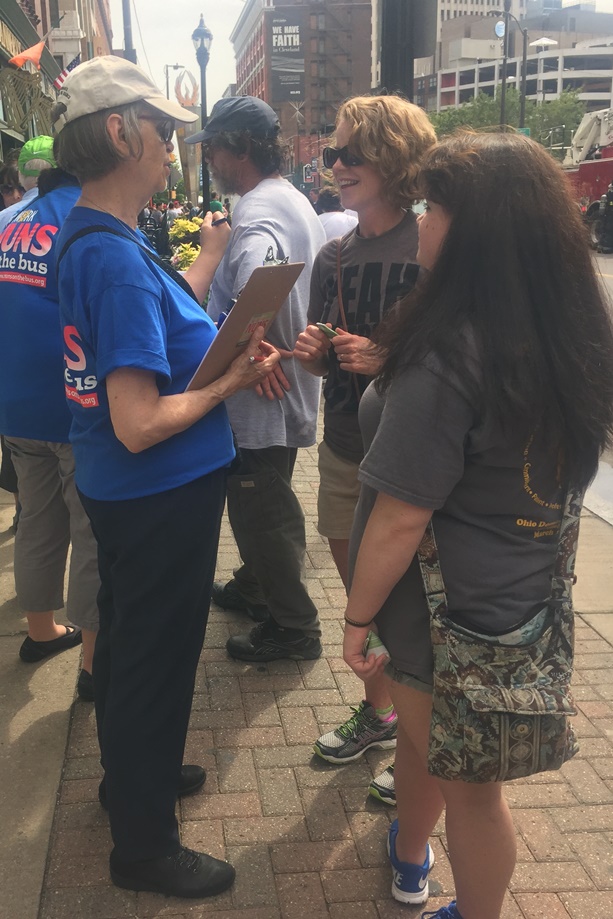
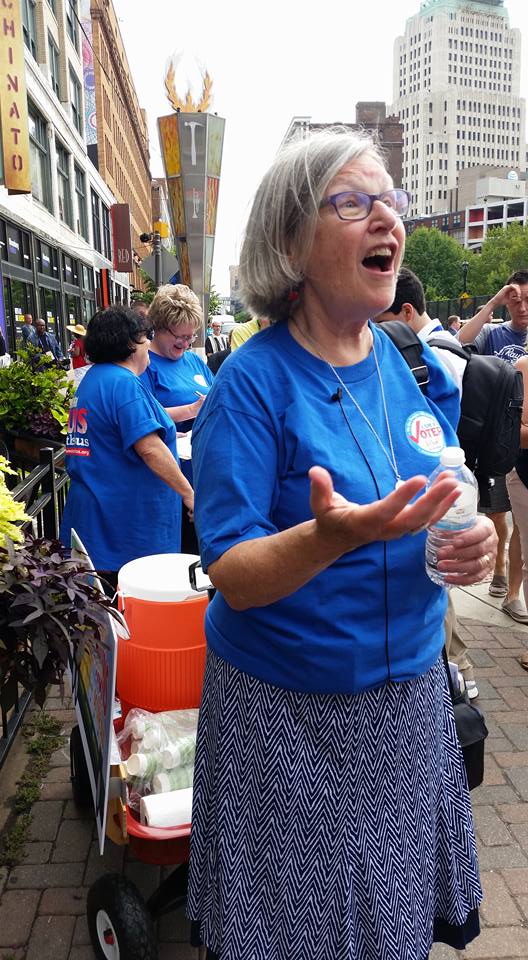 Each sister was equipped with a clipboard, pen, and three questions: 1) Who in your family is it difficult to discuss politics with, and why? 2) What worries you about this election? and 3) What gives you hope for our nation. I talked to a mix of folks: RNC delegates, Cleveland natives observing the spectacle, vendors, and conservative activists.
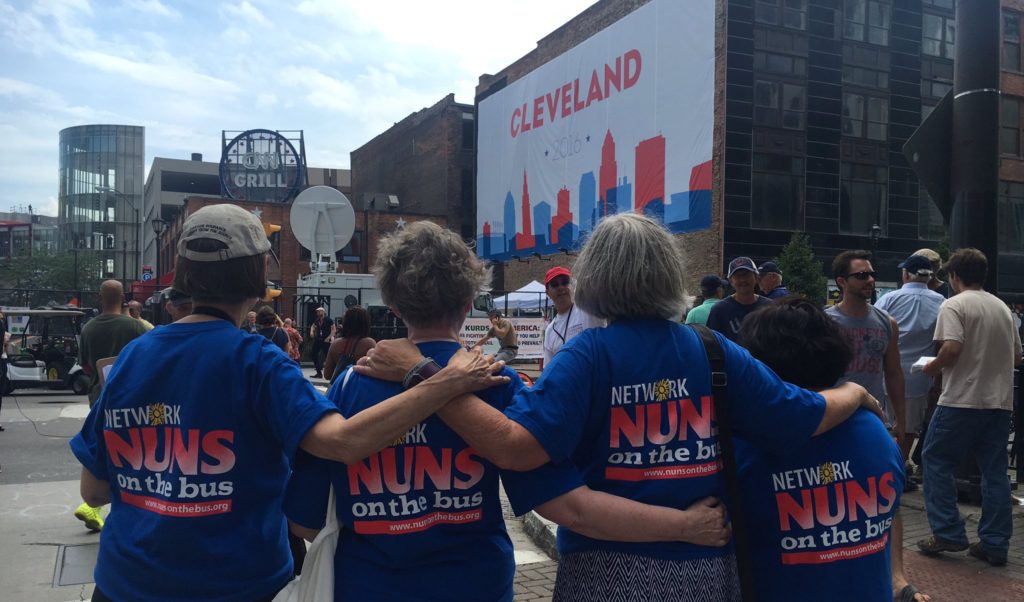 For that to be possible, I think we need to bridge the growing political divide. We need to sweeten the sour conversations in our body politic, in our families, and in our communities. We need to talk with people with whom we do not normally engage. If we want to mend the gaps and reweave the fabric of society, then we need to move beyond trading barbs, attacks, and presumed facts and focus instead on our hearts, probe our fears, and dare to hope for our nation.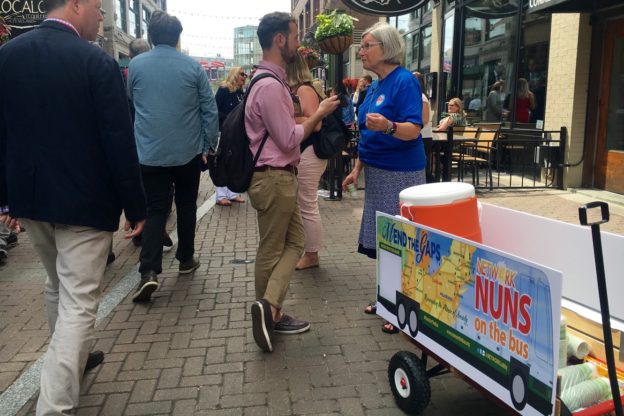
 Some of the people we are advocating for are the people losing money this week. They are people in need of fair taxes, an increase in living wages, affordable housing and healthcare. Several businesses in the vicinity of the Quicken Loans Arena, however, will be closed this week; people dependent will be negatively impacted. Businesses remaining open will difficult to reach if streets are closed. There will definitely be a crunch in some aspects of Cleveland’s economy.
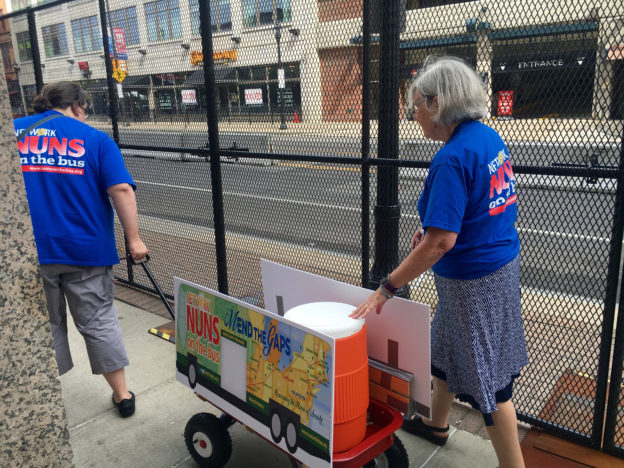
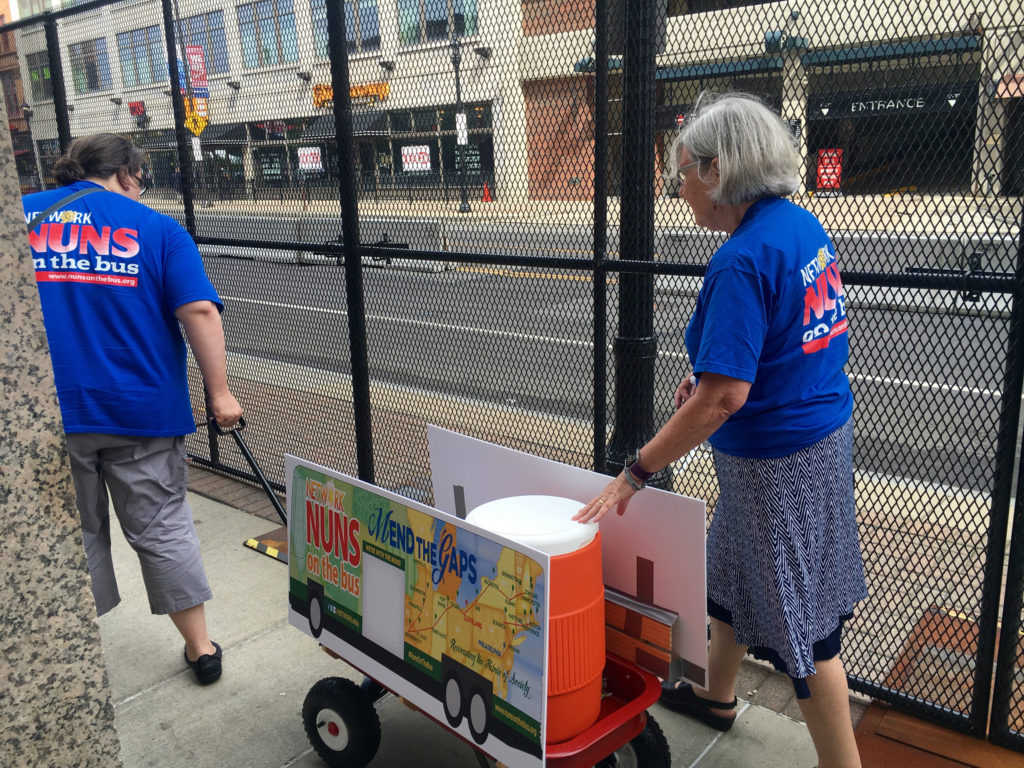
 We call our street ministry today, Lemonade Ministry. Two Red Flyer wagons have been decorated to resemble our bus. As we meet people along the way and offer them a cup of cold Lemonade we are prepared to “listen to stories that need to be told and heard,” Sister Simone Campbell.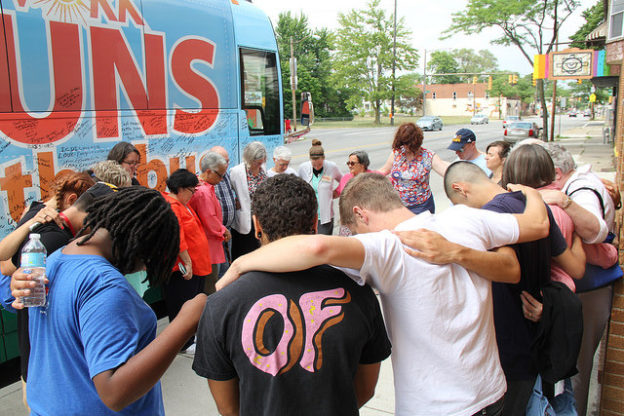
 The negative impacts that our nation’s policy choices have on people who are struggling are crystal clear in every state where the Nuns on the Bus have visited so far, and it’s not just in urban areas. Our route has taken us through small rural communities, mid-size towns, and larger cities. At each stop along the way we are blessed to mingle with the local community. During site visits we have heard first-hand stories from ordinary folks unable to make ends meet, no matter how many shifts they work. I have learned that too many Americans are unable to provide for their families or to access things most of the rest of us take for granted, such as transportation, health care, safe and affordable housing, or non-predatory lending.