



Follow Pope’s Example of ‘Meddling’ in Politics
By Sister Simone Campbell, SSS
October 24, 2016
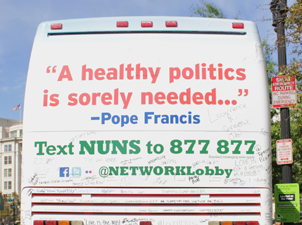
The world’s Catholics now have a Pope who prioritizes the common good, and encourages Catholics to get involved in politics. He has said “a good Catholic meddles in politics,” and getting involved in politics this election is desperately needed. I predict that this year, the first presidential election since the election of Pope Francis, we will see a rise in the Pope Francis voter: People who are genuinely concerned with exploitation of our people and our earth. These Pope Francis voters will come together this election season to defeat bigotry and hate.
While Pope Francis’s message is one of welcome and inclusion, we know that some politicians continue the dog whistle call of the political far right, attempting to control the Catholic vote through a single issue. In 2016, it won’t work. Our faith calls us to address the needs of all the people at the margins of our society. It’s not just about the needs of the unborn or those on death row. It’s not just about the needs of the top 1 percent, or the 99 percent, but it’s about the 100 percent.
This election can’t be about a single issue, it cannot just be about protecting the unborn, but also about protecting immigrants, Muslims, women, children and people in poverty. Any Catholic who has heard Donald Trump disparaging immigrants as criminals and rapists, advocating for sexual assault and the exploitation of women, denigrating Muslims, demeaning people of color by labeling them thugs, and calling people in poverty losers knows that he is not a presidential candidate deserving of the Catholic vote.
Recently, leaked and stolen emails from 2012 have revealed a conversation among several Catholics who are now tied to Hillary Clinton’s presidential campaign. This has been painted as “anti-Catholic bigotry.” Let me be clear: This is manufactured hysteria, a desperate political move and a farce. Those who are genuinely concerned about the interests of Catholics would promote the dignity of work, stand with those who are living in poverty against the structures of injustice, and rise above individual interest for the good of the whole community.
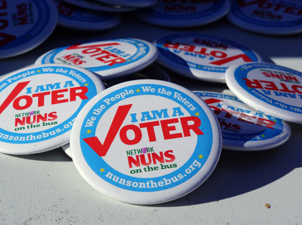
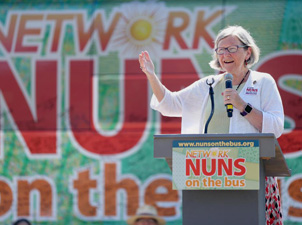
This October, I’m traveling through Cincinnati to talk with my fellow Nuns on the Bus, and all the Pope Francis voters who join him in his prayer: “I beg the Lord to grant us more politicians who are genuinely disturbed by the state of society, the people, the lives of the poor!” Nuns on the Bus Ohio has been committed to this effort, holding politicians accountable for the voter purge which would hinder access to democracy, working with immigrants and refugees to improve access to citizenship, and protecting our environment as stewards of the earth.
I am coming to Cincinnati to meet with people who are pursuing employment and seeking housing opportunities, to learn more about their lives, and to talk about issues that are most important to them this election season. I am also coming to Cincinnati to talk with people who aren’t Catholic, but share the conviction that we must do all we can to care for the common good. I invite you to join me for an election discussion that focuses on the common good. As people of faith, we must be a model for the media and for our candidates that we want a substantive conversation, not fights that tear apart the fabric of our society.
In 2016, Catholics are Pope Francis voters who work for the common good. We must not allow our polarizing election to turn us around.
Originally published in the Cincinnati Enquirer.
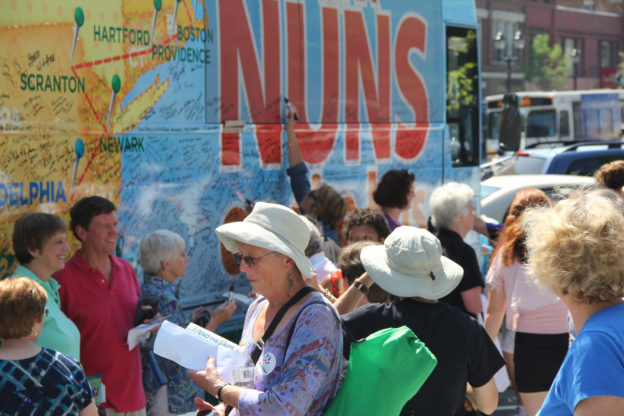

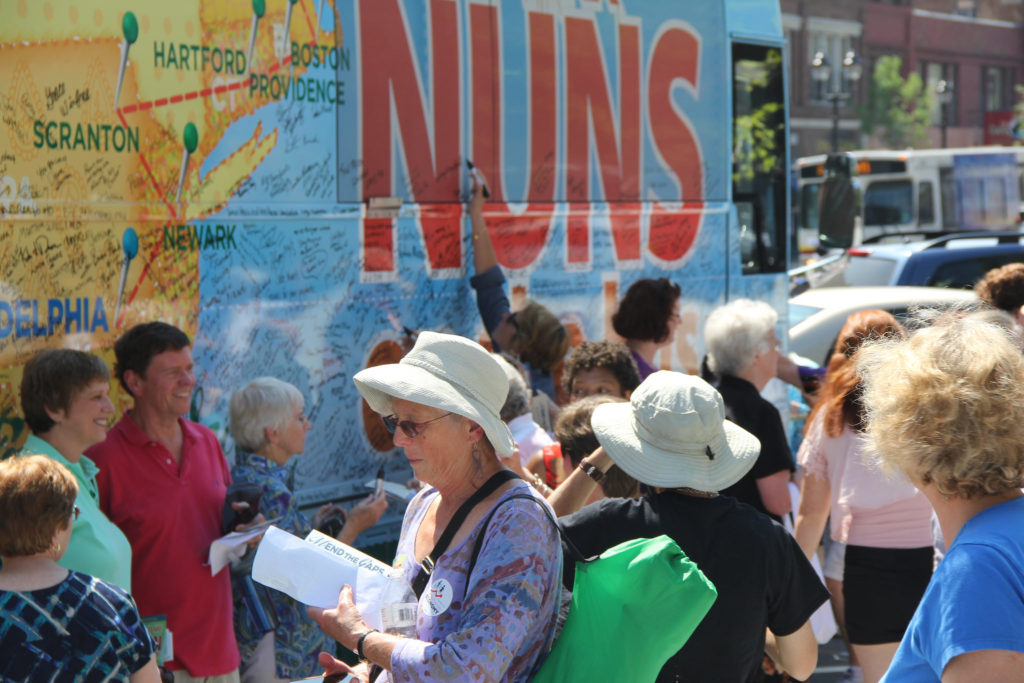 This morning as we prayed together and shared the scripture of the day, I was struck by this particular feast of Mary Magdalene, the woman who proclaimed to the disciples after the Resurrection “I have seen the Lord.” Thinking of the people I have met these two days, I too, “have seen the Lord” in the face of Christ in each of them. I have been blessed by their trust in sharing their stories, their dreams, and yes, their passion for justice and equality for all their brothers and sisters.
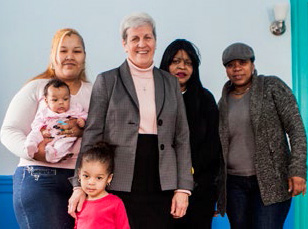
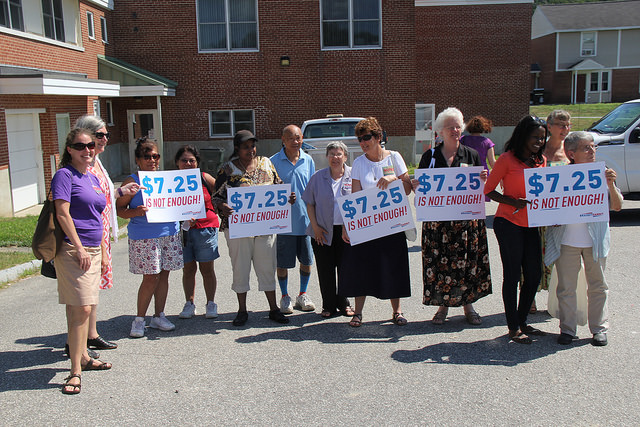 In the afternoon, the Granite State Organizing Project of New Hampshire invited us to visit a public housing development in Manchester composed of 250 units which are occupied by an extremely diverse community. The residents proudly described their newly organized Resident Council, whose motto is “togetherness is community.” I thought of the tagline of my ministry at Providence House – “Creating Communities – Transforming Lives.” I felt a synergy with the residents’ desire here and the strength that we all find when we are part of a caring community that supports one another! We learned in our visit that in the past 2 years the council has developed a Homework club, English language classes, and other social activities for the whole community. Dot who participated in their leadership training program spoke of how she learned to plan and prioritize her goals, and after 2 years was now on track to move to Georgia to reunite with family. Dot was thrilled that we had come to visit and hear their stories. Another humbling moment, as I thought of the women and children back home at Providence House – have I missed similar opportunities?
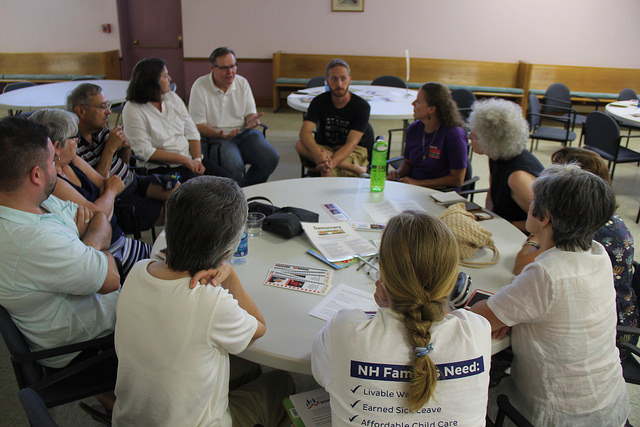 The evening was a caucus event at Holy Cross Center Manor. Spirited conversations with men and women from the local community ensued on the seven gap issues, each sister being responsible for a different gap conversation to moderate. Mine was affordable housing -– a natural fit!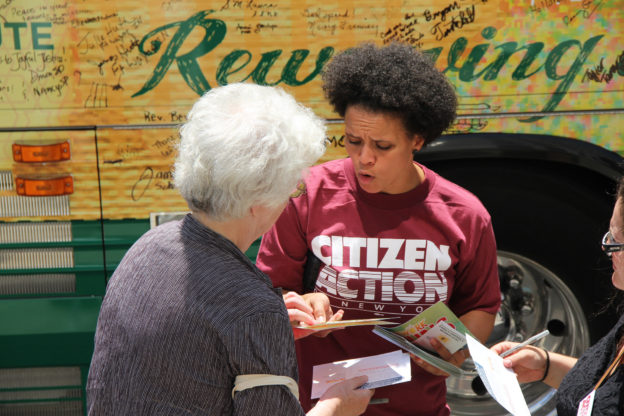
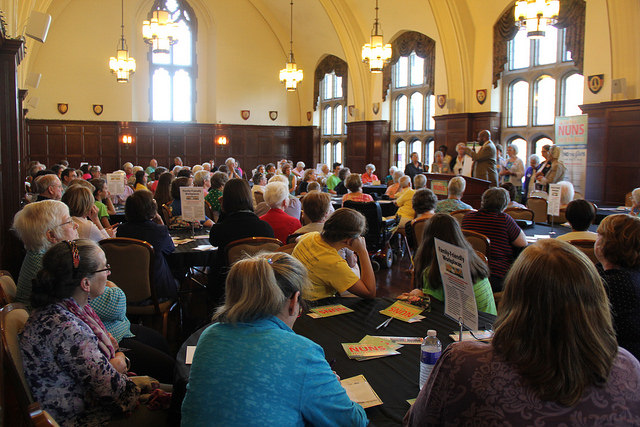 Other Sisters shared about the stories heard from the more than 200 people gathered at the Colgate Rochester Crozer Divinity School for our daily caucus events in each city. Sisters reflected on the stories heard from those whose voices are intentionally silenced by institutions because of racism, the challenges of our current democracy that doesn’t allow everyone to participate fully in society, problems faced by those who cannot afford insurance, and the countless issues faced by the homeless in their communities.
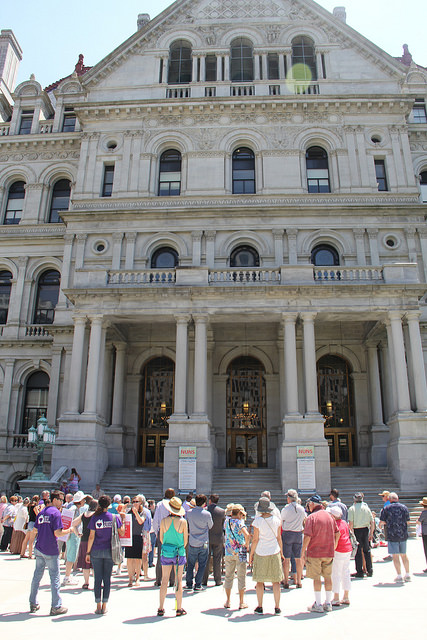 Following prayer this morning, we then made our way to the New York State Capital Building steps where again we heard parables from those on the margins so that more people may hear, see, and understand what is called forth from us to be disciples of Christ in the world today. We heard the story of one woman of the Working Family Coalition and part of the Fight for $15 and a Union movement and how she struggles daily to support her infant and five-year-old son as a loyal hardworking fast-food worker and how she had to choose again between giving birth to her son and losing her job that supports her family. We heard from the local Amalgamated Transit Union president Cory Bixby about the importance of workers’ rights and from Reverend Emily McNeil, Director of the Labor-Religion Coalition of New York about the need for a living wage, fair share taxation, and a stronger democratic process. Sister Simone Campbell, SSS, Executive Director of Network proclaimed that “policies made a lot of these problems and policies can fix these problems.” Congressman Paul Tonko declared that the Bus is powered by the people and indeed it is. It is powered by the parables, the stories of heartbreak and hope, of all those we meet and who sign their name to the bus to commit to doing their part to bring justice and joy into the world for everyone.
