

Category Archives: Front Page

Finding Hope in an Ill and Politically Divided Nation

Finding Hope in an Ill and Politically Divided Nation

Sister Emily TeKolste
April 22, 2020

I’m disturbed by the continuing reports of protests against state-level stay-at-home orders. I’m disturbed by the fact that some (few) of my family members seem to be supportive of these or otherwise calling for a reopening of the economy. I’m disturbed by the blatant disregard for reality and for each other that I perceive must be behind a willingness to promote and/or engage in these protests. What is going on in our nation?

Meanwhile, I have friends in the medical field. I have members of my community drastically changing their regular routines, trying to alleviate the strain on our health care systems and protect those who are most vulnerable among us. My social media has shown how close to home it comes: a friend of a friend recently lost her husband of 2 years to COVID-19, becoming a widow at age 31. This courageous woman has sought out local and national news outlets to implore people to stay at home so that nobody else has to endure what she has.

Where along the lines have we lost our ability to engage harsh truths? Where have we lost our ability to care about each other? Where have we lost our ability to sacrifice for the collective good?

I want to understand, but I’m afraid it isn’t understandable. I want to bridge these divides in our nations, but I’m afraid too many of them are un-bridgeable. I’m afraid too many forces are arrayed against truth and love and solidarity. This is not hopeful, but it’s real. It’s honest.

I hold that reality, but I hold it lightly. Because I also refuse to give up, I refuse to let the narrative be dominated by these small groups of people who are getting all this news coverage. I choose, instead, to be buoyed by looking at all the people who are staying at home (and recognizing this act as both privilege and responsibility), who are choosing to donate their stimulus checks because they don’t need them, who are organizing neighborhood mutual aid responses to help people get groceries, who are reaching out to gather and share stories of those who are most impacted, who are having phone meetings with their Senators to lobby for provisions that protect those most in need in this moment. And I hold that, too, as reality.

During this quarantine, I have come back repeatedly to the painful reality that I don’t know what will emerge in our society as we emerge from this pandemic. I see signs of hope and signs of despair. I don’t know, and I can be scared. But I return to this: I know that I choose to come out on the side of hope, love, and community. I will keep working. And I will remind myself that I have community around me doing the same. Thank you for being part of that community.

Pope Francis’s Easter Message of Hope and Dignity

Pope Francis’s Easter Message of Hope and Dignity

Colleen Ross
April 14, 2020

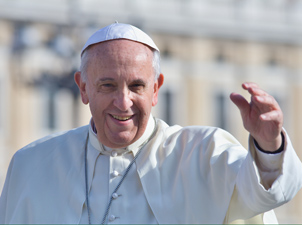
On Easter Sunday, in light of the worldwide coronavirus pandemic, Pope Francis stated “this may be the time to consider a universal basic wage.” His message to members of social movements encourages those who are organizing at the margins, thanks them for this work, and calls attention to the inequality and disparities that already exist and are worsened by COVID-19.

We must do the same, underscoring the ways that coronavirus is increasing persistent racial and economic disparities in the U.S and calling for solutions.

In the past several weeks, we have seen a stark separation between those who can afford to “stay home and stay safe” and those who are forced to endanger their health by continuing to work to put food on the table for their families. We have seen coronavirus cases and deaths disproportionately affect Black and brown communities as a result of a combination of factors (access to health care, pre-existing medical conditions, poor air quality, and more) caused by racial segregation and discrimination in the United States.

Pope Francis’s Easter message to the world calls us to re-evaluate our economic response to this crisis and put human life and dignity at the center. Beyond that, he encourages us to reimagine our world after the pandemic, to renew and transform life for marginalized people and communities. He calls us to “shake our sleepy consciences” and “put an end to the idolatry of money.”

We know that all people have dignity and worth, regardless of income, race, or immigration status. At the same time, we see and hear the many ways that our economic system, systemic racism, lack of health care, housing, nutrition, and other basic necessities deny the dignity and life of our neighbors and family every day. Pope Francis’s call to consider Universal Basic Income is a prophetic call to value human life over profit.

May we be bold enough to follow this call, re-imagine our world, and re-order our communal life in the United States.


Read Pope Francis’s full Easter address to popular movements of the world.

This Easter, We Can Start the Healing

This Easter, We Can Start the Healing

Easter is a celebration of the core mystery of the Christian faith that life follows death. In Jesus’s resurrection, love conquered death and showed the bewildered disciples a way forward. The world was changed and the love of God triumphed.

Today, the brokenness of our world has been exposed by the coronavirus. Millions in our nation go without health care or an income that can sustain them in crisis. Our President and his administration are unprepared and often uninterested in helping the most vulnerable. We are sheltered at home, praying the disease will pass us by. It feels too much like a continuation of Good Friday. Our Easter of 2020 seems to be missing. Unless love conquers our current politics of exclusion, how can we be redeemed? Our healthcare workers show us the path forward.

Every front page across the country is showing the generosity and self-sacrifice of our healthcare professionals. Their willingness to be of service to critically ill patients in the midst of this pandemic is heroic. As a Christian, this self-giving mirrors Jesus command: Greater love has no man than this, that a man lay down his life for his friends (John 15:13). This is the story of Good Friday and Easter.

We who are not healthcare professionals can do our part. We are sheltering at home. We are making cloth masks. We are connecting with friends and neighbors while social distancing. When we learn how connected we are, we discover that we have the courage to respond to the needs around us. We can make a difference. This is the best of the human species.

But then I realize that still not everyone in our wealthy nation has access to health care. States have still refused to expand Medicaid coverage for their most vulnerable citizens. Policy makers have consistently kept immigrants – documented and undocumented – from access to health insurance on the exchanges or to care at all. This was all a political calculus on the part of some politicians to make low income people and immigrants the enemy. This is the most catastrophic public health policy that I can imagine. This novel coronavirus is showing the consequence of their political games. It is a threat to all in our nation.

And then the President and his advisers are starting to talk about “opening up the economy.” The President’s approach once again puts the economy over the needs of the people. This is wrong. Pope Francis makes it abundantly clear that we must say NO to an economy that kills. We must say NO to an economy of exclusion and inequality. We must say NO to sacrificing our people so that the wealthy may continue to make a profit.

In this week that we Christians call Holy, we must let our faith shine out in this challenging time. We must ensure that all have access to healthcare regardless of income or immigration status. We need to support all who are valiantly trying to do their part to keep others safe. This is indeed what Jesus did in caring for the sick and confronting politicians who challenged his right to heal.

This Easter, we must let our faith shine in our resistance to putting the economy over the needs of the people. We must resist the political messaging that put the economy before the people. We are called to embrace policies and an economy that works for all.

This crisis has shown that politicians can still enact laws to meet the needs of the people. There is a glimmer of hope in that recognition. Many politicians didn’t believe in the social safety net until they themselves began to fall through the cracks and become vulnerable. This moment of awareness got them to vote for assistance to vulnerable families.

Let us continue to use this historic moment of reckoning to let love conquer all. Our nation is certainly broken, but it can be healed. Together we can cast aside the policies of exclusion that leave out our most vulnerable. This Easter, we can’t come out of physical hiding just yet, but we can start the healing with love for one another and advocating policies that reflect that love. Let us all be more like the healthcare professionals. Let us generously care for our neighbors and ensure that all can survive this moment. Let us put people first. Let us be Jesus in this time. Let us love one another. This will be an Easter gift to our nation.

Still Advocating for Access to Democracy

Still Advocating for Access to Democracy

Yesterday, the Supreme Court issued an emergency ruling refusing to extend the deadline for absentee voting in today’s Wisconsin election. This is further evidence of how the COVID-19 pandemic is forcing our nation, and our world, to take a hard look at what values are most sacred to us, and demonstrating where our political leaders’ responses are falling short.

Our initial attempts at social distancing had not even run their course before President Trump began pondering loosening restrictions for the sake of the economy. The implication being that economic activity is as important as protecting human lives. The public outcry quickly shut down that debate. People recognized the false choice, when weighing economic activity and the COVID-19 pandemic, the economy simply has to adjust to the reality of the pandemic. Consensus emerged, at least for now, that protecting public health is the paramount concern, leaving our government and businesses to minimize the economic fall-out as best they can.

Unfortunately, this false choice was also embraced by the majority of Supreme Court Justices yesterday in deciding that the Wisconsin elections must proceed as planned, with no extension for absentee voting, despite the clear and present danger to public health in the midst of the pandemic. Not only was this ruling disturbing for Wisconsinites who now must choose between their right to vote and their safety, but it has grave and disturbing implications for the 2020 election. We are in desperate need of strong public outcry to again reject a false choice and demand that leaders find ways to uphold our deepest values and protect human life.

The Supreme Court’s decision strikes a massive blow to voting rights that defies common sense and threatens to disenfranchise hundreds of thousands of voters. The Justices ruled 5-4 that Wisconsin voters would need to choose whether to comply with public health mandates or to exercise their right to cast a ballot. But, it did not have to be this way.

In the weeks leading up to the election, Wisconsin Governor Tony Evers took a series of desperate executive actions to make emergency accommodations in the state’s election. He took steps to delay the Democratic Presidential primary and extended time to receive mail-in ballots so that Wisconsinites could maintain their right to vote in the new reality of social distancing and stay-at-home orders.

The Republican controlled legislature challenged each of these actions in court and the day before the election, the Supreme Court’s order reversed the extended deadline for voters to submit absentee ballots. The entire episode is a sad example of how quickly elections are being politicized in the midst of a pandemic. The outcome of this confusing and contentious fight was celebrated as a success for “law and order,” but has undermined both the public health AND the voting rights of the people of Wisconsin.

This false choice between safety and fair voting was avoidable, but the Wisconsin state legislature refused to act to protect the safety of Wisconsinites. This early case study is proof that Congress must act, and act now, to determine a coordinated approach to preparing states for the 2020 election. Without funding and direction from the federal government, we run the risk of massive voter disenfranchisement and will see increasing chaos and civil discord as states scramble to adapt on their own.

NETWORK Lobby and our faith partners are engaged in democracy reform and voting rights advocacy leading up to the 2020 election and into the future. Now, our entire focus is prioritizing the security of the 2020 election and protecting access to democracy as a crucial part of the federal government’s response to COVID 19.

A Holy Week Prayer for New Life

A Holy Week Prayer for New Life

Lisa Sharon Harper
April 6, 2020

As we journey through Lent, NETWORK members and supporters are reflecting and acting to become Spirit-filled voters in preparation for the 2020 Election. Lisa Sharon Harper contributed the following prayer to our Lenten toolkit.

We Pray

Holy God, hear our prayers.

We enter Holy Week wading through the disequilibrium of unknowing, the grief of friends and family lost and the terror that we could be next.

Righteous rage rises each day as primal screams greet televised propaganda telling us all is well when all is not well!

We see the sick and hungry and imprisoned, the immigrant, the naked and the thirsty waved off and told to fend for themselves.

We see our federal government investing in body-bags and refrigerator trucks for “the least of these”—not ventilators and hospital beds.

We are tempted to believe the kingdoms of men are too much for us — too much for you — God. But, the Resurrection… new life… breath… new bone… new muscle… a new way of being in the world… Resurrection is your promise.

If we do not believe in your power to raise the dead, then we have no faith at all.

God, gird us for the coming days. Set our faces toward the ballot box where your people might lift the only weapons we have in defense of the least of these—our votes.

Amen.

Lisa Sharon Harper is the Founder and President of FreedomRoad.us, an Auburn Theological Seminary Senior Fellow, and a speaker, writer, activist, and artist. Find her on Twitter at @lisasharper


Read the full Lenten toolkit “Becoming Spirit-Filled Voters

Unemployment and the Coronavirus Crisis

Unemployment and the Coronavirus Crisis

Alex Burnett
April 3, 2020

When my partner developed a small cough and mild chest pain in late February, we didn’t think they had coronavirus. My partner works as teacher’s aide in a public elementary school and gets sick all the time. We thought they caught a cold from a student or were dealing with stress-related illness.

We were wrong. Over the next few weeks, their mild chest pain turned major, their temperature spiked, and they developed such difficult breathing it became difficult to walk. During one particularly frightening Friday, they could not keep down food for over 24 hours, developed a 100+ degree fever, and could barely speak due to severe chest pain. As I Googled, “When should you go to the emergency room coronavirus,” I found myself anxiously wondering whether their insurance covered emergency room visits.

Thankfully, their symptoms improved since that awful Friday, but our anxiety hasn’t gone away. My partner loves working in elementary education, but feels terrified about finding another job. Most elementary schools hire aides on yearly contracts and we don’t know whether their school—or most schools—will be hiring aides during a global pandemic, which might force schools to remain indefinitely closed. Even if schools re-open in the fall, my partner knows they’ll struggle finding a summer job after their contract ends in June. Like many education workers, my partner might face at least three months of unemployment during an economic meltdown.

Nobody should experience any of this. That’s why NETWORK advocated for three COVID-19 relief packages, including the Coronavirus Aid, Relief, & Economic Security (CARES) Act, which became law on March 27th. This bill offers some relief to workers, like my partner, facing coronavirus-induced unemployment. Besides expanding unemployment insurance to gig, temporary, and self-employed workers, the CARES Act offers eligible workers an additional $600 per week in unemployment benefits for up to four months. As my partner’s story demonstrates, these reforms are profoundly important, especially since economic experts and the federal government predict that the unemployment rate could reach an unprecedented 32%.

However, my partner’s story also demonstrates that Congress must do more. The CARES Act doesn’t guarantee free coronavirus testing and treatment to people, like my partner and their colleagues, who could lose health insurance upon becoming unemployed. Additionally, the CARES Act does little for incarcerated and undocumented people, who remain ineligible for unemployment benefits and at-risk of receiving inadequate medical care. Because NETWORK knows closing these gaps will save lives, we’re advocating for a 4th coronavirus relief package, which guarantees testing and treatment for incarcerated, undocumented, and uninsured people. You can read about our work here.

The coronavirus pandemic has already harmed millions of people. By passing a 4th relief package, Congress can prevent more people from needlessly suffering. As an organization guided by Catholic Social Justice, NETWORK calls on Congress to provide care and economic relief for all U.S. residents, regardless of employment status, insurance, citizenship, or incarceration.


A Faithful Response to “Catholics for Trump”

A Faithful Response to “Catholics for Trump”

After postponing the “Catholics for Trump” rally previously scheduled for March in Milwaukee, Wisconsin, the Catholics for Trump coalition is now launching online. Despite the current coronavirus pandemic, President Trump’s re-election campaign is continuing to try to engage Catholics remotely.

This campaign was planned and is now being executed with the assumption that a large group of Catholics will support President Trump’s re-election campaign. I am in favor of Catholics participating in politics — as Executive Director of NETWORK Lobby, that much is clear. Even the Pope calls on Catholics to participate in politics to promote the common good, saying “A good Catholic meddles in politics.”

But I cannot understand how Catholics, following Pope Francis’s urging to participate in politics, could support our current President and his policies. In fact, I believe that participating in “Catholics for Trump” activities, online or in person, directly contradicts the most essential Catholic beliefs.

Catholics are called to follow the life and teachings of Jesus, who above all else, instructs us to love our neighbors, especially those who are most vulnerable and marginalized in their society. The Trump administration has turned its back on that call at almost every turn.

In March, I was relieved to read Milwaukee Archbishop Jerome Listecki’s clear announcement that the “Catholics for Trump” rally was not hosted by the Catholic Church or the Archdiocese of Milwaukee, and the Catholic Church and the Archdiocese of Milwaukee were not endorsing or affiliated with the rally. As President Trump’s re-election campaign continues, I urge any Church leaders who find themselves in a similar situation to do the same.

In addition to making it clear that the Church does not endorse or support these events, Catholic leaders should continue to make it clear what “side” we are called to be on in these turbulent times. Jesus did not say to vote Democrat or Republican. Instead, Jesus taught his followers, by his actions, to heal those who were sick and align themselves with those who had the least power. That is the “side” we should be on as Catholics.

For Catholics engaging in politics during this election season, I encourage you to join us at NETWORK in being “Mend the Gaps” voters. We have an election toolkit that includes a fill-out-your-own side by side to compare candidates, an LTE writing kit, and questions to ask a candidate at a town hall, and we’re still adding more resources.

President Trump is running on policies that directly contradict long-held positions of the Catholic Church. His immoral immigration policies throw children in cages. He works to expand the death penalty, he participates in what Pope Francis calls “covert euthanasia” by stripping health care and nutrition assistance from families, and he rolls back policies that protect the Earth. His is not a campaign that Catholics can support, and our faith should not be used as a political tool to reelect an immoral President.


Get involved: Go to NETWORK’s 2020 Election Toolkit.

Surviving the Coronavirus Together

Surviving the Coronavirus Together

Robert Beezat
March 19, 2020

The coronavirus is having a huge, negative impact on the US economy. That negative impact will grow over the next several months.

Everyone will be impacted by the downturn in the economy.  Those who must take care of their children while working from home, those who have no sick leave or family leave, and those who lose their jobs will be hit the hardest.

Many corporations are also being hit hard. The airline industry is asking for $50 billion in aid.  Hospitals, hotels, cruise ships, restaurants and restaurant workers, taxi drivers, health care and elderly care workers, and the many other businesses and workers who make our economy thrive are experiencing partial or full loss of income.

One thing which can help both workers and businesses survive through this crisis is to tap into the enormous wealth of our country. The United States is the wealthiest country in the world. Wealth is measured as the difference between total assets (houses, savings, stocks and bonds, retirement accounts, etc.) and total liabilities (mortgage, car loans, student debt, credit card debt, etc.)

People in the US hold over $100,000,000,000,000.00 ($100 trillion) in personal wealth.

Corporations in the US hold $1,600,000,000,000.00 ($1.6 trillion) in corporate wealth.

A very small portion of that wealth can save the economy now and serve as a springboard to a quick recovery and economic expansion after the coronavirus is brought under control.

A one-time, 2% wealth tax on individuals and a one-time, 6% wealth tax on corporations would give our people and businesses the ability to survive this national and international disaster.

2% of the personal wealth of this country equals $2 trillion. That $2 trillion can be used to cover loss of pay due to loss of jobs, no or minimal sick leave and family leave, childcare and elderly care expenses, etc.

From an individual standpoint, the median individual wealth is $38,000.00. On average, a 2% wealth tax on individuals would equal $760.00, Each person in turn would receive back a check for $6,000.00.

Under this scenario, every person would pay the same tax rate, and every person would get the same $6,000.00 payment.

For example, someone who had $38,000.00 in wealth would pay in $760.00 in a one-time and would receive a check for $6,000.00.

Someone who had $300,000.00 in wealth would pay in $6,000.00 in a one-time wealth tax and receive a check for $6,000.00. They would break even on this program.

Anyone with wealth more than $300,000 would start paying in more than they paid into the system.  Here are some examples:

  • Someone with half a million in wealth would pay in $10,000.00 and receive back $6,000.00. They would be contributing 0.8% of their wealth to help us overcome the effects of the coronavirus.
  • Someone with $1 million in wealth would pay in $20,000.00 and receive back $6,000.00. This person would be contributing1.4% of their wealth to help all of us overcome the effects of the coronavirus.
  • Someone with $100 million in wealth would pay in $2,000,000.00 and receive back $6,000.00. This person would be contributing 1.9% of their wealth to offset the coronavirus devastation
  • Someone with $1 billion in wealth would pay in $20,000,000 and receive back $6,000.00. They would be contributing almost 2% of their wealth to fighting the negative effects of the coronavirus. There are 607 billionaires in the US.

I think someone with half a million dollars in wealth would not be opposed to contributing $4,000.00 (or 0.8%) of their wealth to help those who are hit hardest by the coronavirus.

I think the same for someone having $1 million in wealth. They would not be opposed to contributing 1.4% of their wealth to this effort.

For the roughly 36,000 households having $100,000,000 or more, some may object to using 1.9% of their wealth for fighting the negative impacts of the coronavirus. The same for the 607 billionaires. However, since most of these folks are connected to some of the wealthiest businesses in our country, I would hope they would see their contributions to both do good, but also to help the economy bounce back more quickly and strongly as the crisis comes to an end.

I would propose that the same type of thought process apply to a one-time corporate wealth tax. A 6% one-time corporate wealth tax equals $96 billion. That money could help businesses stay open, continue production, and continue paying their employees.

Both of these taxes and resulting expenditures would not add a penny to the national debt which currently stands at $23.3 trillion.

Robert Beezat has managed a broad range of organizations in the private, public, and not-for-profit sectors, including many serving lower income communities. He has spoken on behalf of NETWORK at colleges and universities regarding social justice issues and the Common Good.

Cornering COVID-19: The Importance of Paid Leave During this Global Crisis

Cornering COVID-19: The Importance of Paid Leave During this Global Crisis

Anne Marie Bonds
March 20, 2020

I’ll be honest. I don’t like working from home! After the NETWORK office went partially, and then fully, remote last week, I thought I had it made. I could wear my pajamas all day and my only commute was from my bed to my kitchen table. Even with the constant worry and threat I’m feeling due to the global COVID-19 pandemic surrounding me, I was at least excited to work from home. Unfortunately, working remotely isn’t all sunshine and roses. Technical difficulties arise almost every time I try to join a conference call or conduct a meeting, and I’m starting to feel disconnected from my friends and family.

Fortunately, I don’t live completely alone. Like many millennials living in a big city, I have roommates —three to be exact. As COVID-19 spreads across the world, they don’t have the privilege that I have to simply work from home. One of my roommates is a hairdresser and one works at Trader Joe’s while also a full-time student. Both of these roommates are currently facing challenges due to the COVID-19 outbreak, and both of their struggles are being widely felt by all vital workers and those working in the gig economy.

For my roommate, who is a hairdresser, she is technically classified as a gig worker or an independent contractor in her salon. Andi relies on payment from her clients and does not receive payment from the salon itself. So, when her salon shut down due to fears over coronavirus spreading in Washington, D.C., she was not given any paid leave from her employer. In order to pay her rent for the next few months while the entire city is on lockdown, she has been cutting hair in our house, purposefully breaking the CDC’s self-distancing and quarantine guidelines out of financial necessity. My roommate has been constantly cleaning and disinfecting the house to try and keep us all safe. She has described her debilitating fear and anxiety that she’ll get sick to me, but her need to remain financially stable outweighs any illness she faces.

One of my other roommates, is facing similar issues in her job. She works as a cashier at Trader Joe’s while paying her way through college. When coronavirus became more of a threat in Washington, my roommate knew that she was still going to work, because her job is a vital part of our nation, especially as more and more people begin to panic shop at grocery stores and retailers across our nation. While people are staying home and working, she is coming into contact with hundreds of people every day at the grocery store in order to provide an essential service that keeps our nation running. My roommate worries because she is at risk of contracting COVID-19 every day at work, yet she does not have any guarantee of paid leave if she feels sick and has to quarantine.

This global pandemic has revealed a glaring injustice in our nation’s labor system: our heinous lack of federally mandated paid leave. The vast majority of working people in the United States do not have access to comprehensive paid leave. Across the nation, less than 25% of middle to lower-income workers have access to paid leave. With this highly contagious, deadly disease spreading through our communities, it is more important than ever that people are able to stay home when they are sick. Lack of paid leave means low-income workers are required to go to work, even when they are sick, and even when they could be carrying coronavirus.

Luckily, the House and Senate passed a historic paid leave bill this past week in response to the COVID-19 pandemic. It allows for 10 days of paid sick leave for full-time workers and up to 12 weeks of unpaid emergency family leave if they or a loved one gets sick for a long period of time. This bill is a historic first step in ensuring that all people have access to paid leave, and it will vastly reduce the number of COVID-19 cases and deaths in the United States. Unfortunately, this bill still does not ensure that all workers have access to paid sick leave, specifically health care workers and employees who work for corporations with over 500 and under 50 employees. For these workers, more must be done so that they can stay home when they are sick and care for their loved ones during this trying time.

No one should have to go to work when they are sick with a deadly virus, simply because they are financially forced to. They could potentially infect and endanger others when they are sick and more and more people could die. It is imperative for our nation’s health that we are all ensured comprehensive paid sick leave.

Dreamers Brace for SCOTUS Decision

Dreamers Brace for SCOTUS Decision

Giovana Oaxaca
March 19, 2020

The executive action known as Deferred Action for Childhood Arrivals (DACA) has withstood a number of legal challenges over the years. In a few months, however, the delicate future of more than 700,000 DACA recipients will face yet another test. Let the Senate know that immigrants are welcome in our nation by signing our petition.

On November 12, 2019, the Supreme Court heard oral arguments for the DACA cases that the Supreme Court considered for review in the fall 2019 term. Although there exist legislative solutions, such as the Dream and Promise Act which passed the House and the Dream Act and SECURE Act (introduced in the Senate), Congress has so far failed to pass meaningful protections for undocumented immigrants eligible for deferred action and temporary protected status. This has deferred the DACA matter to court cases, which have put a halt to the Trump administration’s decision to terminate DACA in September 2017. The Supreme Court’s decision will have far-reaching effects by deciding the fate of the program for the near future.

Watch interfaith leaders pray for the protection of immigrants, refugees, and DACA recipients in the #Faith4DACA vigil.

The stakes have never been higher. In a recent survey, over fifty percent of DACA recipients reported that they fear being detained or deported from the United States at least once a day. An even greater share of DACA recipients surveyed reported that they feared being separated from their children. The Supreme Court’s decision will alter the reality for the millions of DACA recipients living and working in the U.S. If the Supreme Court rules with the Trump Administration, this would leave thousands stranded with few recourses, in the very place they call home.

Brief Overview

On September 5, 2017, the Trump administration announced that it was terminating DACA, a decision that was been met with instant legal pushback. More than ten cases were filed challenging the administration’s decision. After a number of judges issued preliminary injunctions protecting the program, the administration appealed to the Supreme Court.  Late last year, the Supreme Court granted the administration’s petition, agreeing to hear arguments for three cases on November 12th, 2019. The Supreme Court’s ruling on the DACA cases and an array of other high-profile cases are expected in June 2020.

Speculated Outcomes

Legal advocates, allies, and organizations are bracing for the court’s ruling.

  • The court may conclude it may review the administration’s decision. It may then rule that the termination is unlawful or lawful. A ruling stating that the action was unlawful would be good for DACA recipients because it would mean that the administration should not have terminated DACA under its reasoning at the time. The court may rule that the administration’s decision was lawful. This would be bad for DACA recipients because it would mean the administration could begin rolling back the program. It is also possible that the court could find DACA itself unlawful at this time. This would mean that the government could stop accepting renewals of applications.
  • The Supreme Court may decide not to review the administration’s decision to terminate. A ruling along these lines would mean that the administration could commence rolling back the program; it could also mean that a future administration could reinstate it.

High-profile businesseshigher education institutions, former national security officials, and religious organizations have joined a litany of amicus briefs in support of DACA recipients. The plight of Dreamers clearly resonates with the majority of Americans. As it stands, an overwhelming majority of Americans support a pathway to citizenship. For now, the decision to stay DACA rests in the hands of the Supreme Court.