

Category Archives: Front Page

Restoring the Right to Unionize

Restoring the Right to Unionize

Sister Quincy Howard, OP
February 12, 2020

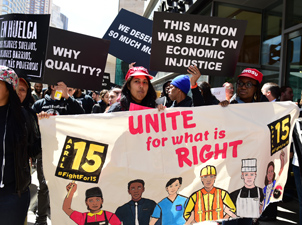
For nearly a century, the right of workers to unionize for fair pay and working conditions has been a cornerstone of a fair and functional labor market. Established as a way to protect workers from dehumanizing exploitation during the Industrial Revolution, over the decades unions have represented workers in a variety of industries. Unions can ensure that workers are paid fairly, with benefits, and under reasonable working conditions.  Unions give workers a unified voice through collective bargaining, a process of negotiations between employers and employees. When unions are strong, they are able to set wage standards throughout an entire industry. For decades, unions have contributed to a vibrant middle class and have lessened income inequality and narrowed racial and gender wage gaps.

Union membership, however, has been steadily declining. Some estimates show that union membership has decreased by 3 million workers over the past 30 years.  Unfortunately, the decline of unions is not because they are no longer needed but because the fundamental right to unionize has been eroding year after year.  Employers exploit weaknesses in current labor laws to undermine workers’ rights—and face no real consequences for doing so. The result has been stagnant wages, unsafe workplaces, and rising inequality, especially for women and communities of color.

It is time to fully restore the right of our nation’s workers to unionize. Fortunately, the House of Representatives passed a bill last week that ensures that all private sector workers can bargain for just wages and benefits: The Protecting the Right to Organize (PRO) Act (H.R. 2474 and S. 1306).

The PRO Act encourages workers to unionize and collectively bargain, and it introduces vital protections for workers who choose to do so. Even though it is illegal, there are currently no consequences for employers who retaliate against workers attempting to organize in the workplace. The PRO Act would finally hold those employers financially accountable for illegally retaliating against their employees. The PRO Act also gives workers more freedom to organize and reach an initial agreement with their employers. As the Economic Policy Institute explains, the PRO Act overrides “right to work” state laws by requiring all workers who are covered by—and therefore benefit from—a union to contribute “fair-share fees” to support the cost of collective bargaining efforts.

The PRO Act enables workers to more readily organize by streamlining the process for forming a union, ensuring that new unions are able to negotiate a first collective bargaining agreement, and holding employers accountable when they violate workers’ rights.

In order to reverse decades of damage done to our nation’s labor laws, we now call on the Senate to pass strong legislation empowering workers to organize and bargain without fear of retaliation. Passing the PRO Act will help rebuild workplace democracy by ensuring every worker has a voice and will even the power imbalance between employers and workers.

The Unbought and Unbossed Shirley Chisholm

The Unbought and Unbossed Shirley Chisholm

Ewaoluwa Ogundana
February 11, 2020

Shirley Chisholm once said, “if they don’t give you a seat at the table, bring a folding chair.” At a time when social justice is on the line and the morals of our democratic principles are in decline, there is surely a need for more folding chairs to be brought to these decision tables.

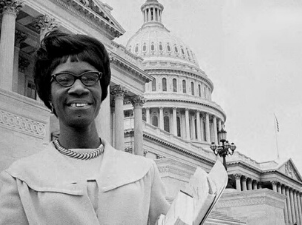
Shirley Chisholm was not only the first Black woman to run for Congress and win, she was also the first Black woman to run for President and make it to the Democratic Convention with 152 delegates supporting her ballot. At a time when one of her opponents, George Wallace, proclaimed “segregation today, segregation tomorrow, segregation forever,” Shirley Chisholm chose to rise above what she saw and heard, and go after what she believed. She once said that she decided to run for president because “in spite of hopeless odds…” she wanted “to demonstrate the sheer will and refusal to accept the status quo.” She refused to accept the status quo and because she did, like Moses, she parted the Red Sea of what looked impossible. Chisholm worked for civil rights relentlessly, and this Black History Month, we remember her for the courageous work that she did fighting for the social justice and equality of African Americans.

The establishment of Black History Month traces back to 1926, when Carter G. Woodson, American historian and founder of the Association for the Study of African American Life and History (ASALH), established Negro History week. Then in 1976, President Gerald Ford officially recognized February as Black History Month, and every president then began to follow suit. Black History Month is a time to reflect and honor the lives of African Americans who paved the way for the freedoms and civil rights that exist today. For this month specifically, in honor of the centennial anniversary of the Nineteenth Amendment passed in 1920, that granted women the right to vote, and the sesquicentennial anniversary of the Fifteenth Amendment passed in 1870, which gave Black men the right to vote, this year’s Black History Month theme is African Americans and the Vote. The power of a vote can change the onset of elections, and with this year being a presidential election year, the theme could not be more suitable.

This year’s theme not only speaks for the need for a continuous fight towards black voting rights, but it also speaks for the need to push more Black leaders to run for local and national elections so that more seats at the table can be created. This same push is what helped Shirley Chisholm become the first black woman to be elected to Congress with her never-before-heard campaign slogan “unbought and unbossed.” At a time of racial upheaval, this slogan was bold and courageous and it’s what landed her the House of Representative position of New York’s 12th congressional district. Shirley Chisholm was bold, she was fearless, and she persisted until the very end when she passed away after suffering from several strokes in 2005.

Mrs. Chisholm is remembered today for the hard work she did for the African American community through her legislative power. From her work as a community activist, to her sponsorship of bills that supported education and families. Mrs. Chisholm was not an average legislative artisan. She sponsored bills that would increase federal funding to extend daycare facility hours and a bill to grant a guarantee minimum annual income for families. She was fierce in defending the issues that most concerned her constituents and as a result, she left an impact on the people for generations to come. At a time when seats at the table for African Americans didn’t even exist, Shirley Chisholm, pioneered to create one for the people behind her; this Black History Month, we remember her for the tireless work that she did to help our community today.


Sources:

https://history.house.gov/People/Listing/C/CHISHOLM,-Shirley-Anita-(C000371)/
https://www.history.com/topics/black-history/black-history-month
https://www.biography.com/political-figure/shirley-chisholm
https://asalh.org/black-history-themes/ 

    Ewaoluwa Ogundana is a Senior at Trinity Washington University studying Political Science, with a minor in Communications. In her future career, Ewaoluwa plans to continue advocating for education and immigration policies in order to help resolve the problems surrounding those issues in her community.

Sister Simone’s Testimony on Child Poverty

Sister Simone’s Testimony on Child Poverty

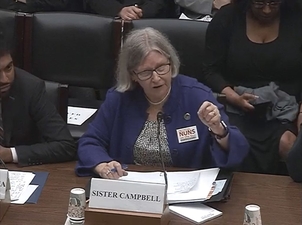
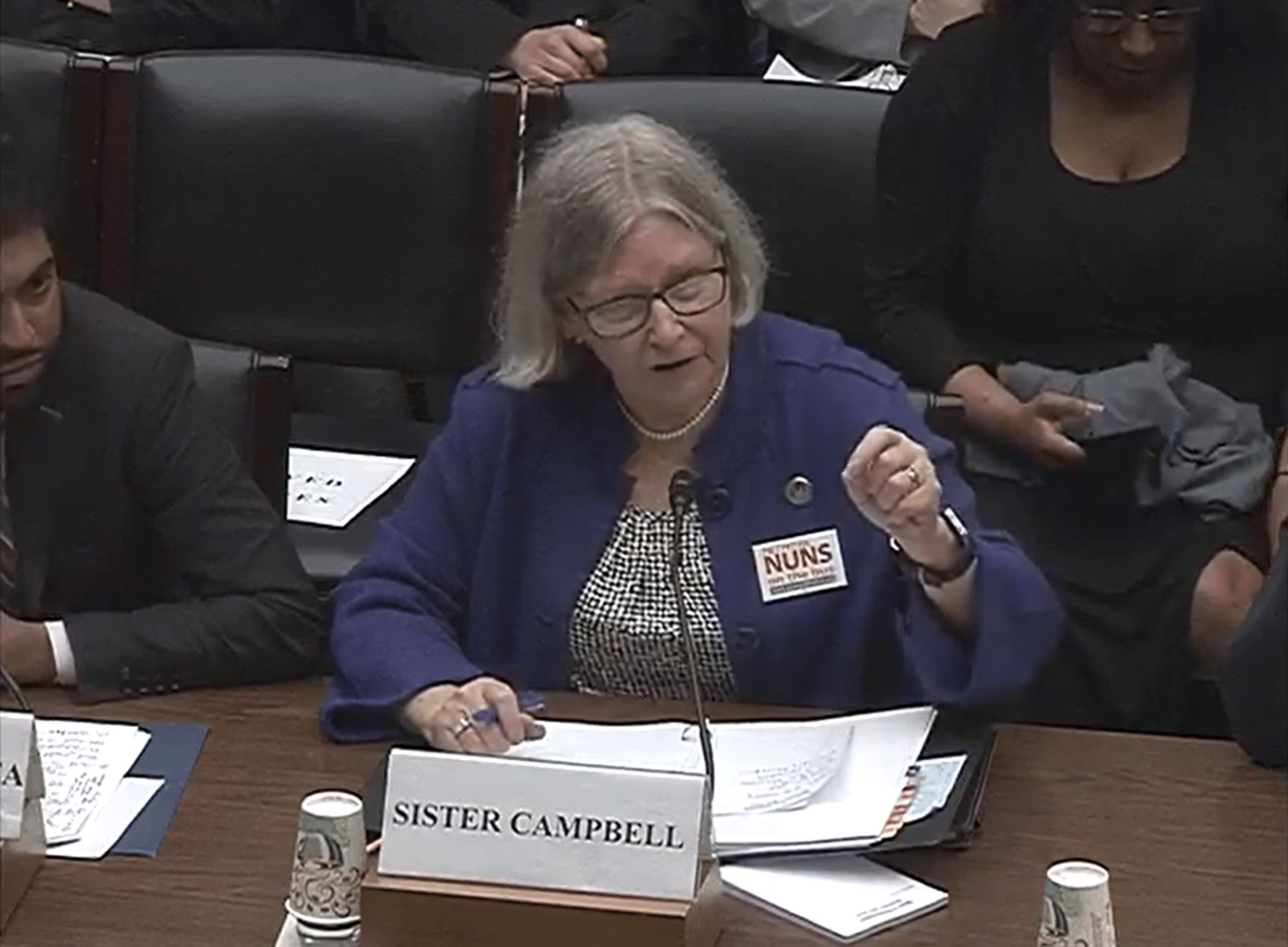
On February 5, 2020, Sister Simone testified in front of the House Oversight Committee Subcommittee on Government Operations about the Trump administration’s harmful proposal to change the poverty line calculation. Read Sister Simone’s written testimony below, and watch the recorded hearing at networklobby.org/ogrtestimonystream.


This new rule will in all likelihood lead to a poverty measure that further underestimates the material hardship experienced in the U.S., thus exacerbating what is already a dire situation for our children.  It is expensive to be poor and new studies show that it is costing more every year.  Various factors contribute to the dynamic, but inflation has a lot to do with it.  Rich and poor households experience inflation differently.  Research indicates that low-income households experience higher rates of inflation than those with middle or high-incomes.  Inflation inequality refers to this heavier burden of inflation on low-income families due to their lack of options to “shop around” and substitute lower-priced goods.  Low-income households often lack access to a diverse set of retailers due to neighborhood conditions, barriers to transportation, or lack of access to the internet.  This is exactly what people have told us repeatedly in our travels.

Therefore, the current measure of inflation already tends to under-estimates the cost burdens of being poor.  If the OMB adopts the Chained CPI it will exacerbate this invisible squeeze on people living in poverty—and that exacerbation will be compounded over time.  Moreover, the statistics generated by this adjusted measure would effectively mask the reality of U.S. poverty, thus increasing the threshold for accessing needed supports.

The Administration has glossed over the fact that these proposed changes are predicted to preclude millions of struggling families from receiving crucial social safety net benefits. The U.S. Department of Health and Human Services (HHS) poverty guidelines are based on the OPM.  Therefore, changing the measure would affect how HHS determines eligibility and benefits for a broad array of crucial federal social safety net programs.  Moreover, children are more likely than any other age group to participate in these means-tested programs. Below are just a few of those key programs proven to benefit children’s health, education and food security and to lift millions of children out of poverty each year. The change to the applied inflation measure would have very real impacts on how many children can access these programs.

  • The Supplemental Nutrition Assistance Program (SNAP) and the Special Program for Women, Infants and Children (WIC)
    SNAP is the first line of defense against child hunger and food insecurity, a persistent problem for 17 percent of children in the United States. It is estimated that 200,000 participants would lose eligibility for SNAP as a result of this rule change.

WIC is an especially important program for ensuring children’s health and wellbeing by supporting pregnant and postpartum women, infants and young children who are at risk of going hungry. The program serves nearly half of all infants born in the U.S. and targets some of the most vulnerable women and children in the country. More than three quarters of WIC’s 7.6 million recipients are children under the age of 5. An estimate 40,000 children and infants could lose access in 10 years under this rule change.

  • Medicaid and Children’s Health Insurance Program (CHIP)
    Together, these programs provide crucial healthcare to more than one in three children in the United States.  Adjusting the inflation measure as proposed could reduce access for 300,000 children in a decade.
  • Community Health Centers (CHC’s)
    CHC’s provide accessible, lower-cost primary care to roughly 28 million people across the country, nearly a third of whom are children. Applying the proposed changes could reduce the number of patients eligible for service.
Download the full written testimony here.

Sister Simone Testifies to #ProtectKids

Sister Simone Testifies to #ProtectKids

Sister Simone testifies in front of the House Oversight Committee Subcommittee on Government Operations subcommittee about the Trump administration’s harmful proposal to change the poverty line calculation.
Watch live Wednesday, February 5, 2020 at 10:00 a.m. Eastern.

Interfaith Leaders Respond to Hearing on Child Poverty in House Government Oversight Committee

Interfaith Leaders Respond to Hearing on Child Poverty in House Government Oversight Committee

Ness Perry
February 4, 2020

Tomorrow, Sr. Simone Campbell, SSS will speak before the House Committee on Oversight and Reform alongside Rep. Alexandria Ocasio-Cortez (D-NY), Mr. Indi Dutta Gupta, and Ms. Amy Jo Hutchinson. The hearing, titled, “A Threat to America’s Children? The Trump Administration’s Proposed Changes to the Poverty Line Calculation” will be address the effects of policies that hurt children in our nation. Watch the livestream of the hearing February 5, 2020 at 10:00 AM Eastern here.

Interfaith leaders gave a response to the proposed changes that widely impact children living in poverty:

“Pope Francis said that the measure of society can be found in the way it treats those most in need. Children living in poverty are the most vulnerable and the least equipped to advocate for their own well being. The OMB’s proposal to change the poverty measure ignores the needs of these children, especially in rural communities. Chained-CPI will undercount poverty, remove life-saving benefits, and take food off the tables of our neighbors. This is not the faithful way forward.”
Sr. Simone Campbell, SSS, Executive Director, NETWORK Lobby for Catholic Social Justice

“The regulatory changes proposed by the administration imperil the already frayed safety net for children living in poverty.  In the spirit of St. Francis, we call on the House of Representatives to intervene on behalf of this vulnerable population, America’s impoverished children.”
Stephen Schneck, Executive Director, Franciscan Action Network

“Quakers strive to practice equity and justice, and we support policies that promote these values. These proposed rules and regulatory changes do neither; rather, they undermine fundamental values and expose millions of children across the country to unnecessary hardship. These rules would eliminate access to free school lunches, expose young children to toxic chemicals, and perpetuate the cycle of poverty in these vulnerable lives. Instituting harmful regulations like these highlights this Administration’s failure to help those who need assistance the most – low-income families and children. The federal government has a moral obligation to help those who are in need. We stand firmly opposed to government actions that lack compassion and common sense. We support oversight efforts that will hold the Administration accountable for its actions that threaten the health and well-being of children across the country.”
Diane Randall, Executive Director, Friends Committee on National Legislation

“This Administration continues to deny the very real needs of low-income children and families who struggle with hunger. As a Jewish organization, grounding our work in Jewish values and ideals is not a mere slogan; it is the vital prism through which we understand what it means to be a nation that looks after its most vulnerable, particularly its children. We applaud Chairwoman Maloney and the House Oversight Committee for holding these hearings, which underscore the callous and cruel scheming by the Trump Administration to weaken vital safety net programs, including making it more difficult for nearly one million children to access food at school. As a nation, we are better than this. It is our responsibility to ensure that we protect and support our children so that they can grow and thrive.”
Abby J. Leibman, President & CEO, MAZON: A Jewish Response to Hunger

“We are called by our faith to care for the vulnerable and challenged by our national values to promote the welfare of our children. Catholic sisters have been serving the children of this country for almost 300 years. We know from our own experience that if communities are to thrive, all children and families in those communities must have access to the care and services they need and to which they are entitled.

We find this administration’s continued attempts to dismantle programs that support children and families deeply troubling.  We thank the House Government Oversight Committee for examining the systematic manner in which various agencies of the executive branch have sought to use their rule making authority to weaken programs and dismantle regulations designed to safeguard this country’s most precious resource, our children.”
Ann Scholz, SSND, Associate Director for Social Mission, Leadership Conference of Women Religious

Caring for the most vulnerable – especially the millions of children suffering from poverty and hunger every day in the United States – should be a priority for all of us, including our government. But rather than strengthening the programs that help our most vulnerable children, the current administration is threatening their health and well-being through budget cuts and damaging regulatory changes. For children to thrive, they need adequate housing, nutritious meals, and safe drinking water. We applaud the House Oversight Committee for prioritizing the needs of our children and holding the administration accountable.”
Rabbi Jonah Dov Pesner, Director, Religious Action Center of Reform Judaism

To read more about the harmful effects of the Trump administration’s proposal to redefine the poverty line, visit our blog, “Trump Administration Seeks to Re-Define the Poverty Line.”

The Trump Administration Continues to Sabotage Health Care for Millions

The Trump Administration Continues to Sabotage Health Care for Millions

Anne Marie Bonds
January 31, 2020

On Thursday, the Trump administration announced that they would accept applications from states that want to set up a Medicaid block grant. Under this new guidance, states will have established spending caps on the amount that they receive in federal funding for Medicaid, likely resulting in drastic cuts to Medicaid beneficiaries across the nation.

Medicaid’s current coverage guarantees health care that is always available when you need it most. People who have fallen on hard times can enroll in Medicaid and receive a core set of services, no matter how many must enroll into the system. By creating block grants for Medicaid, the Trump administration is capping the amount the government can spend on care for those on Medicaid, putting beneficiaries at risk of losing their health care coverage.

Trump’s plan to create Medicaid block grants will ensure that working families who are currently covered by Medicaid will endure cuts to their benefits and services. This will cause long wait times at the doctor’s office for the poorest in our nation, and it will put 70 million people at risk of going bankrupt before affording their desperately needed care.

This proposal is just the next attempt at destroying our nation’s Medicaid system. With Trumps’ previous attacks on Medicaid through work requirements and his repeated attempts to invalidate the Affordable Care Act, the President has disregarded the lives and dignity of the poorest in our nation.

Medicaid block grants are just the newest attack on low-income families by the Trump administration.

The Prevailing Lesson from NAFTA & USMCA: All Trade is a Work in Progress

The Prevailing Lesson from NAFTA & USMCA: All Trade is a Work in Progress

Giovana Oaxaca
January 29, 2020

The House passed the United States-Mexico-Canada Agreement Implementation Act (USMCA), also known as NAFTA 2.0, mid-December after more than a year of intense negotiations. The revised agreement delivers stronger rules for labor and the environment, and a new mechanism for enforcement of its numerous obligations, while also dismantling an unscrupulous settlement regime letting corporations off the hook for violating domestic laws. The new agreement also strips Big Pharma giveaways enshrined in the President’s first draft. Ultimately, the agreement will attempt to modernize and ameliorate some of the 1990’s North American Free Trade Agreement’s (NAFTA’s) flaws. All that is to say, the USCMA constitutes a deliberate attempt to reign in the adverse impacts of trade liberalization under the previous NAFTA standard. The USCMA is the floor for all future agreements.

The product of negotiations between House Democrats’ Trade Working Group—led by House Speaker Nancy Pelosi and Ways and Means Chairman Richard Neal—and the White House, the revised agreement addresses serious flaws in the initial proposal that left President Trump’s desk in 2018.  Trump’s deal included Big Pharma giveaways, lax rules around environmental and labor rule enforcement, and other serious concerns for the faith community. Changes were hard-won, by congressional Democrats, union and consumer groups. After an internal political struggle to take up the USMCA, the Senate voted and passed the revised trade deal in early January of 2020. President Trump is set to sign the agreement into law on Wednesday of this week, sealing one of this topmost campaign promises.[1] Mexico and Canada are expected to ratify the agreement. On Mexico’s part, President Andrés Manuel López Obrador has been supportive.[2] The final sign-off will come from Canada’s parliament before the deal is fully ratified. Standard practice dictates that officials must spend the next few months working to meet all the necessary obligations outlined in the agreement before it can enter into force.[3]

For better or worse, the revised trade deal will define the landscape for bilateral trade between the United States, Mexico, and Canada for the near future, and ultimately, impact the wellbeing of the people that inhabit them. Appraising the deal, Public Citizen’s Lori Wallach explains, “Although the new deal still includes problematic terms, the alternative is status quo NAFTA, not a more improved deal.”[4] As much as the President would like to boast the agreement as the pinnacle of trade achievements, the reality is it will take a lifetime commitment from the triumvirate leaders of the United States, Mexico, and Canada, their industries, and officials, to work to expand the benevolent obligations of the agreement for effective change to come. Going forward, it will also take constant vigilance and strict observation of the principles of common good for a faithful and just trade arrangement to emerge.

Globally, unfair trade practices have exacerbated social and economic inequality by hitting the most vulnerable to swift changes the hardest. They are the underclass of workers displaced and poorer because of outsourcing in Ohio’s manufacturing industry and they are also the workers whose labor was exploited by wage suppression in Michoacán; they are the indigenous peoples of Canada whose land was uprooted by lucrative oil pursuits; and they are the countless others. In Mexico, the federal minimum amount a worker can expect to receive for their labor in one day is just $4.25. Despite Mexico’s efforts to ameliorate wage stagnation, it is simply not possible to do without taking into consideration the underpinning trade structure which enables corporate exploitation of so-called cheap labor.[5] Subsequently, of the three million Americans displaced from their jobs due to technology, trade, and policy choices, a majority have suffered a pay cut.[6] The USMCA finally earned the support of labor, consumer, and environmental groups once it began to address these unfathomable consequences.

Trade liberalization produces disproportionate losers and winners. Barring the intervention of governments, via fair trade policies and domestic federal policies that redistribute gains in the form of public sector goods, (or laws that curb corporate offshoring and outsourcing) the burden of the losses in trade settle mostly on the marginalized and poor. Striving towards a just traded arrangement means minimally accepting that the current system leaves out the neediest in favor of the wealthy.

Provisions in NAFTA, as other free trade agreements, have generally favored large corporations over the welfare of the people and environment. In ExxonMobil and Murphy Oil v. Canada, NAFTA’s Investor-State-Dispute Settle (ISDS) regime absolved a complaint brought up against the oil giants in violation of domestic law. The cases of exploitation against people and planet are too numerous to name.[7] Contrary to conventional theory, broad damages to people’s economic stability, the environment, and health caused by our trade policies outweigh the gains consumers get from cheaper imported products.

Rectifying the Ongoing Damage of NAFTA

Can the USMCA rectify the ongoing damage of NAFTA? The answer is complicated. Trade experts affirm that the USMCA is a floor, for a good trade agreement would require expansive changes. “[It] would additionally require climate provisions, stronger labor and environmental terms, and truly enforceable currency disciplines, and not limit consumer protections for food and product safety and labeling, the service sector, online platforms and more.”[8]

The Senate’s vote on USMCA highlighted this tension.[9] Nine Democratic senators voted against the agreement because it did not meaningfully address environmental and labor concerns. The sole Republican, Sen. Toomey (R-PA), voted against the deal on grounds that it would inhibit international trade.

Our Moral Duty as People On Trade

On trade, the Catholic Church is a firm proponent that treatises must respect human, civil, political, economic, social, cultural, and environmental rights at the individual, family and community levels, as well as the rights of nations and peoples.[10]

Compendium of the Social Doctrine of the Church teaches: “Today more than ever, international trade — if properly oriented — promotes development and can create new employment possibilities and provide useful resources.”   “[E]thical criteria … should form the basis of international economic relations: the pursuit of the common good and the universal destination of goods; equity in trade relationships; and attention to the rights and needs of the poor in policies concerning trade and international cooperation. Otherwise, ‘the poor nations remain ever poor while the rich ones become still richer'”(#364).

Trade is an extremely relevant topic when it comes to many polarizing issue areas, from migration, to wages and environmental stewardship—all issues we, as a people, care very much about. As a people, we have a moral duty to make the slow and arduous effort of pursuing the common good according to the principles the Catholic social justice.[11] Pope Francis put this best when he wrote: “We must pray for the conversion of people in business and politics that they will be truly moved by the suffering of those on the margins and lead us towards more just policies.” NETWORK will continue to monitor trade, and its connection and relevance to the world around us.

[1] “Senate passes USMCA, but much work remains.” Sabrina Rodriguez. POLITICO. https://www.politico.com/news/2020/01/16/senate-passes-usmca-in-major-win-for-trump-099744

[2] “Los Negociadores Comerciales De Estados Unidos, Canadá Y México Firman El Acuerdo Modificado Del T-MEC.” CNN. https://cnnespanol.cnn.com/2019/12/10/los-negociadores-comerciales-de-estados-unidos-canada-y-mexico-firman-el-acuerdo-modificado-de-usmca-t-mec/

[3] “USCMA is Far From a Done Deal.” Sabrina Rodriguez, POLITICO. https://www.politico.com/news/2020/01/24/usmca-is-far-from-a-done-deal-103339

[4] “NAFTA Vote Reveals New Reality for Trade Deals.” Lori Wallach. Public Citizen. https://www.citizen.org/news/nafta-vote-reveals-new-reality-for-trade-deals/

[5] “Mexico: The Importance of Minimum Wages in NAFTA Negotiations.” Leslie Palama and Carlos Vejar. Holland & Knight LLP. https://www.shrm.org/resourcesandtools/legal-and-compliance/employment-law/pages/global-nafta-mexico-minimum-wage.aspx

[6] “How to Respond to Job Losses from Technology, Trade, and Policy Choices.” Andrew Stettner, The Century Foundation. https://tcf.org/content/report/respond-job-losses-technology-trade-policy-choices/?session=1

[7] “Case Studies: Investor-State Attacks on Public Interest Policies.” Public Citizen. https://www.citizen.org/wp-content/uploads/egregious-investor-state-attacks-case-studies_4.pdf

[8] “NAFTA Vote Reveals New Reality for Trade Deals.” Lori Wallach. Public Citizen. https://www.citizen.org/news/nafta-vote-reveals-new-reality-for-trade-deals/

[9] “Here Are The 10 Senators Who Voted Against Trump’s North American Trade Deal.” Sylvan Lane. The Hill. https://thehill.com/policy/finance/478636-here-are-the-10-senators-who-voted-against-trumps-north-american-trade-deal

[10] Pope John Paul II, Encyclical Sollicitudo rei socialis, 33.

[11] Evangelii Gaudiaum. Pope Francis.

SCOTUS Punishes Vulnerable Immigrant Families

SCOTUS Punishes Vulnerable Immigrant Families

Laura Peralta-Schulte
January 27, 2020

A narrowly divided Supreme Court today allowed the Trump administration to begin enforcing a wealth test, called “Public Charge,” for immigrants seeking a green card. Under this rule, immigration officials could deny green cards or visas to legal immigrants seeking permanent residency if they’ve used Medicaid, nutrition assistance, or other safety-net programs, or if they’re considered likely to do so. The justices voted 5-4 along ideological lines. This controversial immigration rule will go into effect now, even as lower courts wrestle with multiple legal challenges against them.

Today’s court decision will increase confusion and fear broadly across immigrant families about using public programs for themselves and their children, regardless of whether they are directly affected by the changes. There have already been significant reports of families who are not affected by the ruling taking themselves or their children off lifesaving programs like the Children’s Health Insurance Program and SNAP.

Public charge is just one of many attacks on low-income families, immigrant families, and communities of color by the Trump Administration.

Read more from Bloomberg News:

“The Trump rule changes what critics say is a longstanding understanding of federal immigration law and its bar on permanent residency for ‘public charges.’ The new rule expands the definition of public charge and gives officials broad power to determine that someone is at risk of falling into that category.

The rule will ‘radically disrupt over a century of settled immigration policy and public-benefits programs,’ New York, Vermont, Connecticut and New York City argued in a filing that urged the court to leave the rule on hold.”

What Congress Needs To Do Before 2020

What Congress Needs To Do Before 2020

Ness Perry 
December 11, 2019

December is shaping up to be a big month for Congress. Before the end of the year, there are a few crucial issues they must act on.

Funding the Government

Congress has until December 20, 2019 to prevent a shutdown. Last year’s government shutdown hurt government employees and hindered federal spending alike. A budget for FY 2020 must be confirmed before December 20 or risk another shutdown.

While the House allocated zero additional funds for DHS border enforcement, the Senate’s funding bill includes a $5-billion-dollars for additional border enforcement. We applaud the House for putting human rights first by voting to allocate no additional funds to DHS. Senate Democrats also voted against giving more money to be DHS. In order to avoid a shutdown, lawmakers must either agree on all 12 spending bills (including DHS) or pass another continuing resolution (CR). A full year CR would result in $100 billion dollars less in funding for federal programs.

Regarding impeachment, Senate Republicans could use impeachment as a bargaining chip and refuse to vote on a spending bill until their demands on impeachment are met.

Trade

USMCA negotiations have just reached agreement. Speaker Pelosi and President Trump were previously negotiating on mechanisms to enforce labor regulations as well as pharmaceutical companies’ ability to include provisions for biologic drugs, which would make it harder for competitors to put generic versions on the market. Lastly, they had to reach agreement about worker protections. Now that the deal has been made, President Trump needs to sign the agreement before the winter recess so that it doesn’t drag on into 2020.

VAWA Reauthorization

Over six months ago, the House passed H.R.1585, a bipartisan bill to re-authorize and improve the Violence Against Women Act (VAWA). Now, the legislation has reached an impasse in the Senate. Democrats and Republicans have both introduced legislation to reauthorize VAWA (Violence Against Women Act) after attempts to reach bipartisan agreement faltered. Senator Dianne Feinstein (D-CA) introduced a Senate version of the House VAWA reauthorization passed with bipartisan support(S.2843).

This bill closes the “boyfriend loophole,” extending existing gun restrictions to include dating partners, which has attracted opposition from the NRA. The bill also expands protections for LGBTQ+ people and Native Americans. Senator Joni Ernst (R-Iowa) authored her own bill in the Senate, which does not include these provisions. It is unclear if Senators Feinstein and Ernst will come to an agreement before 2020. We must pass VAWA reauthorization to protect and support all survivors of sexual violence and we continue to advocate with them at the center of our politics.

Census

Congress allocated funding for the 2020 Census at $7.3 billion for the year. This amount will apply until the end of the current continuing resolution, on December 20. Congress must act to retain full Census funding in order to make sure everyone is counted.

Health Care

H.R.3. (The Lower Drug Costs Now Act) is expected to get a rules committee markup early this week, and will then receive a full floor vote later on in the week. An amendment by Texas Representative Lloyd Doggett (TX-35)would allow people without insurance to access the lower drug prices negotiated. Through the demand of moderate Democrats in the House, this provision was unfortunately omitted. It is unclear if this amendment will make it into the final version of the bill.

Taxes

We are hoping to see a short-term expansion of credits under the Earned Income Tax Credit and the Child Tax Credit. More than 5 million workers not raising children aged 19-67 would no longer be taxed into, or deeper into, poverty each year. Furthermore, improvements in the CTC to make it fully refundable for all families would lift nearly 2 million children above the poverty line. But, it is unknown at this time if Congress will act before the end of the year.

Immigration

The House Rules Committee will hear the Farm Workforce Modernization Act of 2019 this week, which will establish a special citizenship status for certified agricultural workers. A floor vote of this bipartisan bill is expected on Wednesday afternoon.