

Tag Archives: SNAP

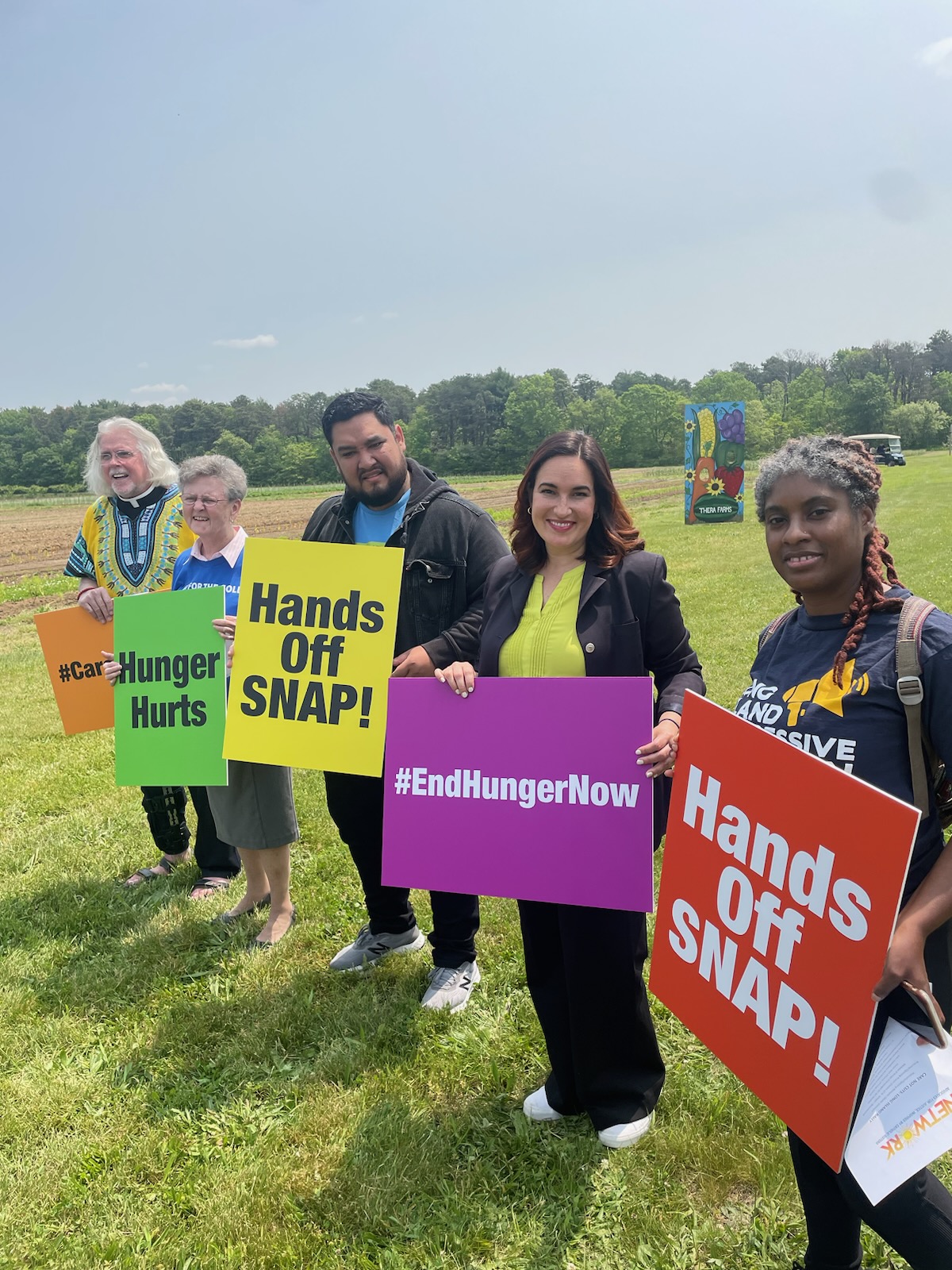
Justice-seekers defend vital human needs programs from federal budget cuts at NETWORK's Care Not Cuts rally in Brentwood, N.Y., on May 22.

Justice-Seekers Call for ‘Care Not Cuts’ in Long Island

Wisdom from Long Island Justice-Seekers at the Care Not Cuts Rally for the Safety Net

Social Justice seekers advocate for thriving communities at the Long Island, NY Care Not Cuts Rally

From left to right: Fr Frank Pizzarelli, Sr. Tesa Fitzgerald, Angel Reyes, Serena Martin-Liguori, Monique Fitzgerald

In the face of the unjust healthcare, housing, and food program cuts proposed by House Republicans, justice-seekers came together in New York on May 22 to continue NETWORK’s Thriving Communities Campaign and demand a moral budget that protects all our neighbors! Almost 100 Sisters, clergy, partners, and advocates turned out to oppose these cuts and defend food, housing, and healthcare programs.

In order to highlight the devastating harm their proposed social program cuts would bring to the local community, NETWORK invited organizations who provide vital services to impacted families and individuals of all backgrounds. The result of that work culminated in the first of our Care Not Cuts rallies on Long Island, New York, which drew over 85 attendees and 12 community organizations that are on the frontlines of care in Long Island.
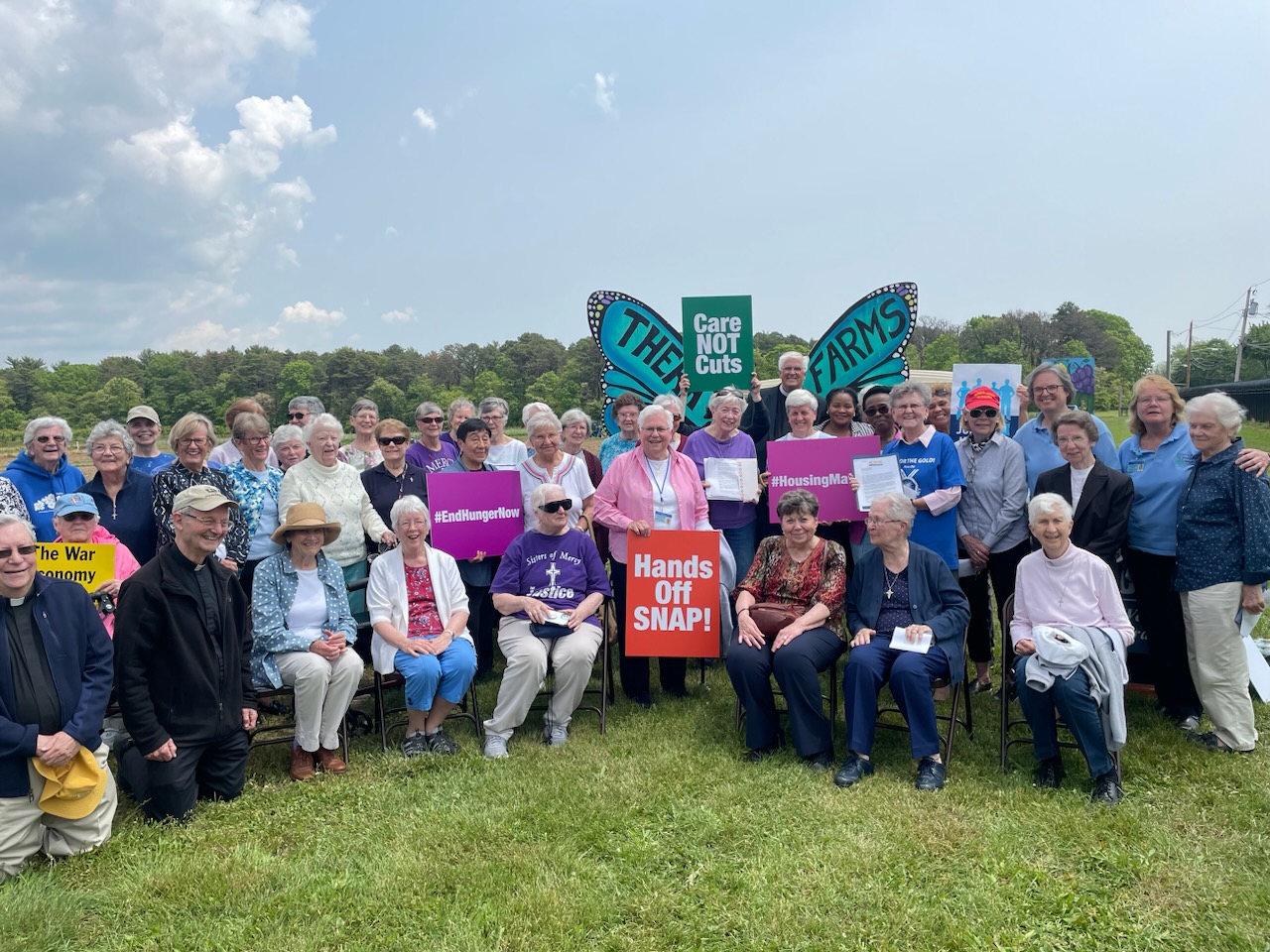
 

Justice-seekers gather at the Care Not Cuts rally in Long Island on May 22.

Almost 100 Sisters, clergy, community leaders and other justice-seekers gathered at Thera Farms in Brentwood, N.Y. to oppose cuts to food, housing, and healthcare programs in the federal budget.

Thera Farms, located on the beautiful, sprawling campus of the Sisters of Saint Joseph in Brentwood, served as the backdrop for the rally. Thera Farms is a local community farm that offers fresh produce to women, children, families and seniors by accepting SNAP, WIC and other nutritional benefits at their farm stand.

We heard from powerful advocates like the Sisters of Saint Joseph Brentwood, New Hour for Women and Children, Mercy Haven, and Make the Road New York. Together we spoke about what is at stake from the immoral social program cuts, and called on the community to contact their members and demand a moral budget.

Wisdom from Long Island Justice-Seekers at the Care Not Cuts Rally for the Safety Net

Selected statements from justice-seekers at the Care Not Cuts Rally for the safety net

“We need to stop putting the poorest of us on the line when Washington wants to balance the Federal Budget,” said Skyler Johnson of New Hour.

“It’s tax cuts for the wealthy that have blown up the debt in our country. It is not the social programs for those in need,” said Mark Hannay of Metro New York Healthcare for All.

“This isn’t just about the government and people being held hostage. This is a blatant attack on working people, on the hungry, on the homeless and work insecure, on children, on veterans, on the disabled, on women, on LGBTQI people, on Black and Brown communities, on our Indigenous neighbors. This is an attack on all of us,” said Ani Halasz of Long Island Jobs with Justice.

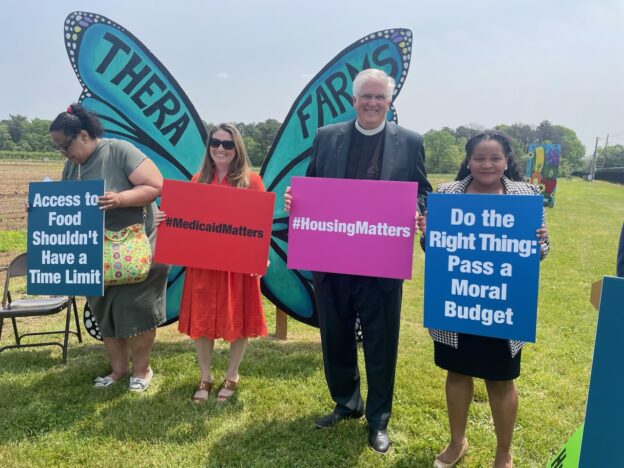
Justice-seekers defend vital human needs programs from federal budget cuts at NETWORK's Care Not Cuts rally in Brentwood, N.Y., on May 22.

Justice-seekers defend vital human needs programs from federal budget cuts at NETWORK’s Care Not Cuts rally in Brentwood, N.Y., on May 22. Melanie D’Arrigo, Campaign for New York Health (in red), Rev. Peter Cook and Rashida Tyler, New York State Council of Churches.

The consequences of an immoral budget are dire, but the efforts and resilience of our advocates and justice-seekers are strong enough to make a change. Throughout our rally, we could see a clear, hopeful vision: when we come together, we can create a community where everyone can thrive.


Colin Martinez Longmore is NETWORK’s Grassroots Outreach and Education Coordinator.

Photo of produce on grocery store shelves.

End of Health Emergency Will Impact Immigration, Other Human Needs

End of Public Health Emergency Will Impact Immigration, Other Human Needs

JoAnn Goedert, Ignatian Volunteer Corp Member
Government Relations Special Contributor
May 8, 2023

President Biden has announced that the federal government’s COVID-19 Public Health Emergency (PHE) will end on May 11. The Emergency has been in effect since early 2020, and its termination signals a welcome easing of the tragic impact of the COVID-19 pandemic. But for millions of our neighbors who struggle at or near the poverty in the U.S., and for those hoping to enter the country at our borders, the implications of the PHE’s end will be significant.

Impacts on Domestic Human Needs

In recognition of the economic devastation of the pandemic, benefits were added and eligibility and reporting requirements were suspended for many federal programs, but only until the end of the PHE. For individuals and families living at or near the poverty level, the consequences of terminating these protections will be serious, especially in the areas of health care and food assistance.

“Unwinding” of Medicaid Continuous Enrollment Protections: Pandemic legislation provided enhanced Medicaid funding and authorized Medicaid recipients to keep their coverage until the end of the PHE without having to re-certify their eligibility on a regular basis. Not surprisingly, enrollment in Medicaid grew by over 23 million during the pandemic. However, in December Congress prematurely ended this enrollment protection and instead allowed states to begin “unwinding” the continuous enrollment in April.

Some states already have aggressively begun disenrolling Medicaid recipients, many of whom may be unaware that their enrollment is in jeopardy and even more who will struggle to rapidly document their current eligibility. The Department of Health and Human Services estimates that up to 15 million individuals will be disenrolled in the coming months, and that nearly half of those who lose coverage are in fact eligible but unable to surmount the bureaucratic challenges of proving it. As a result of the unwinding of Medicaid continuous enrollment, the number of uninsured adults and children in the U.S. is predicted to soar, with tragic consequences for families and massive new burdens on health care system.

Restoration of SNAP Benefit Limits for Individuals Without Jobs: The Supplemental Nutrition Assistance Program (SNAP) has strict and complex work requirements for “able bodied adults without dependents” under age 50 that terminate their benefits after three months unless they can prove that they are employed or in a job training program. In response to widespread unemployment during the pandemic, the government suspended that three-month limit. With the end of the PHE, however, this suspension will cease for most SNAP participants on June 30, and these individuals will once again be limited to only three months of SNAP eligibility while unable to meet the work requirements in any three-year period.

March 1 Termination of SNAP Emergency Benefit Allotments: It is important also to note that increases in SNAP benefits provided as pandemic relief were ended nationwide by March 1. This substantial reduction in benefits amounted to an average of approximately $90 per month per individual and over $200 per month for most struggling families. Soup kitchens and food banks nationwide already have reported an overwhelming increase in need since the cut.

Phase-out of SNAP Benefit Expansion for Students: In addition, pandemic legislation extended SNAP eligibility to many more higher education students. With the end of the PHE, their eligibility will be phased out over the next year. Here is an explanation of this change in student SNAP eligibility.

Impact on Immigration

Termination of Title 42: Title 42 expulsion policy is a Trump administration order issued in 2020, purportedly as a public health measure, that allowed border authorities to expel migrants without giving them the opportunity to seek asylum. Public health experts have long declared that Title 42 is not related to any health measure. Reports are that the rule has been used more than two million times to abruptly turn back immigrants since 2020.

Title 42 will expire with termination of the PHE, and the expulsions are set to end on May 11. However, NETWORK is deeply alarmed that, the new measures announced by the Biden administration to purportedly ease pressures at the border, comes at the expense of the right to seek asylum at our southern border and does not support a just and humanitarian immigration policy.

NETWORK is monitoring the critical impacts of these policies and protections that end with the termination of the PHE. We will share this information with you, along with any calls for action that they may require to safeguard the welfare of our neighbors in the U.S. and at the southern border.