

Category Archives: Front Page

The Theology of Voting: Our Vote is Our Voice

The Theology of Voting: Our Vote is Our Voice

Joan Neal
September 9, 2022

On September 1, President Biden delivered a speech in Philadelphia on the critical state of democracy. He said,” I believe America is at an inflection point, one of those moments that determine the shape of everything that’s to come after. And now, America must choose to move forward or to move backwards, to build a future or obsess about the past, to be a nation of hope and unity and optimism or a nation of fear, division and of darkness.”

At this crucial time in our country’s history, our faith calls us to join together to defeat those who would withhold the full rights of democracy from some citizens based on race, ethnicity, or other arbitrary distinctions.  We, the people, especially people of faith, must fulfill our moral responsibility to get involved in the public square and not only cast our own votes but also safeguard the franchise for all citizens and help as many people as possible to cast their votes as well.  Our democracy is in a critical state and ‘we the people’ are the only ones who can save it!

Most importantly, as Catholics, when we vote, we must use our prudential judgement and our political power to elect people who will safeguard the right to vote for all citizens.

Our vote is our voice and right now, we have to raise our collective voice and overcome these anti-democracy forces once and for all.  If we fail this time, we might wake up one morning and find we no longer live in a pluralistic democratic society, but an autocracy enforced by the political and financial power of a select group of people who fundamentally do not believe in democracy at all.

As Catholics, it matters that we vote and it matters how we vote.  People of faith are called to use their prudential judgement to choose and critique our political leaders and the laws they pass, so that we build a society where everyone is respected and valued, everyone can exercise agency over their own lives, and everyone can contribute to the common good.

We are called to care not just about our own personal preferences but also about how elections will affect those who are poor or economically disadvantaged, those who need access to quality healthcare and decent housing, those who are immigrants in our midst trying to find a safe harbor and a place for their families to thrive, those who need to earn a fair wage and have decent working conditions, those who are disabled and anyone in need of care, all those who are marginalized in any way. Justice and our faith demand it.

Ultimately, we participate in our democracy not just because we are citizens but because of what we believe about God and each other.  We know from the parable of the Last Judgement that God is not just concerned with the hereafter.  God is concerned with the ‘here and now’.  So, here and now, we must honor the Imago Dei in each of us and use our vote to act in solidarity with our sisters and brothers if we want a democracy that brings life for all.

The Theology of Voting: The Right to Vote is A Sacred Right

The Theology of Voting: The Right to Vote is A Sacred Right

Joan Neal
September 6, 2022

In his opening address to Congress in January 2021, Senator Raphael Warnock from Georgia said, “We believe democracy is the political enactment of a spiritual idea – that we are all children of God and therefore, we ought all to have a voice in the direction of our country and our destiny within it. Democracy honors the sacred worth of all human beings, the notion that we all have within us a spark of the divine, to participate in the shaping of our own destiny. The right to vote is a sacred right.”

The right to vote is also foundational to and a hallmark of a functioning democracy. And as people of faith, we believe that voting is not only a civil right, it is a covenant we have with one another and a moral responsibility.

Therefore, a truly pluralistic democracy, requires that every person/every citizen has the right to vote and that right be protected under law. And when that right is denied, when that right is abridged in any way for arbitrary reasons, it is a moral failure that people of faith, people of good will are obliged to confront. Voting and political participation in our democracy is one of the most important ways we can honor every person’s human dignity, enable our vision of justice, and contribute positively to the common good as members of society.

Our Church has a long history of speaking out about our moral obligation to be involved in politics. In their 2004 document: “Catholics in Political Life”  The USCCB said, “Catholics who bring their moral convictions into public life do not threaten democracy or pluralism, but enrich them and the nation. The separation of church and state does not require the division between belief and public action, between moral principles and political choices, but protects the right of believers and religious groups to practice their faith and act on their values in public life.”

They also say in their 2007 document “Forming Consciences for Faithful Citizenship,” “In the Catholic tradition, responsible citizenship is a virtue, and participation in political life is a moral obligation.” (#13).

Multiple Popes have talked about the responsibility of Catholics to participate in the public square. Pope Benedict XVI, in his first encyclical, Deus Caritas Est reminds Catholics of the connection between Gospel values and political participation when he says, “Charity must animate the entire lives of the lay faithful and therefore also their political activity, lived as social charity,” (#29)

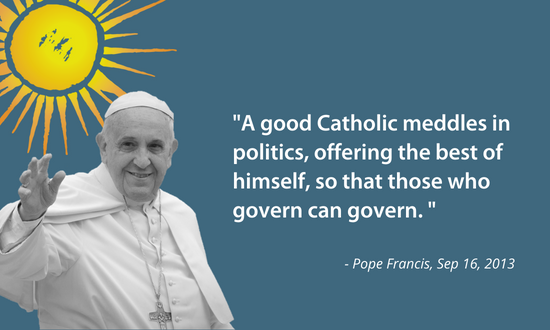
Pope Francis has said in Evangelii Gaudium, “A good Catholic meddles in politics, offering the best of (themselves) so that others can govern.” He went on to say, “Politics, according to the Social Doctrine of the Church, is one of the highest forms of charity, because it serves the common good.” (#205). Voting is a concrete way for us to ensure justice and charity prevail in our nation and our Catholic Tradition re-enforces it as a moral obligation.

But being a diverse, participatory democracy isn’t easy. Unfortunately, voter suppression efforts are not new to America. We all know the shameful history of the battle for the right to vote in this country — for African-Americans, Indigenous people, women, and other marginalized groups — which emerged out of decades, even centuries of denying their innate human dignity.

It took 251 years for African-American men to be given the right to vote in the 15th Amendment passed in 1870. 95 years later, America finally became a pluralistic democracy with the passage of the Voting Rights Act of 1965 that guaranteed the right to vote for all African-Americans; provided the legal means to ensure compliance with the 15th Amendment and to challenge restrictive voting laws and practices designed to deny the free and fair access to the ballot.

Despite those challenges, over time the political power of Black and non-white citizens has grown across the country. Once again the backlash has been swift as many politicians try to prevent their fellow citizens from exercising their right to vote. So, the battle for voting rights continues and has escalated since the 2013 Supreme Court Shelby County v. Holder decision that struck down the enforcement provisions of the VRA and eliminated the pre-clearance requirement for states to change their election laws.

As a result of that decision, today, more than 20 states have passed restrictive voter laws, gerrymandered districts, made it harder to access the voting booth by closing polling places, especially in communities of color, limiting early voting, placing restrictions on vote-by-mail, requiring stricter voter ID, and by putting people in positions who will enforce these restrictions no matter the infringement upon their fellow citizens’ rights.

All of these actions are designed to discourage and suppress the Black and non-white vote, the votes of young people, poor people and people who do not share the political view of one party. Today, we find ourselves as a country facing the very situation the VRA was designed to end. Once again, the foundational principle of a functioning, participatory democracy is being challenged by those who do not see the image of God in their fellow citizens.

In addition to all that politicians are doing to prevent fellow citizens from exercising their constitutional right to vote, many other citizens not targeted by these voter restrictions, have failed to fulfill their own civic, sacred duty to vote. According to the Pew Research Center, only 61% of eligible voters participated in the 2020 Presidential election. Now, clearly there are extenuating circumstances for those who, though citizens, are legally or physically unable to cast their votes, but that means 39% of eligible voters failed to vote. 39% of eligible American citizens failed to have their say in the way our country is governed and who is governing it. They failed to safeguard the common good by casting their vote.

Diane Nash, a charismatic veteran leader of the Civil Rights Movement, in an address at the National Catholic Conference for Interracial Justice in 1961, said:  “The problems lie not so much in our action as in our inaction… I’m wondering now if we in the United States are really remembering that this must be a government ‘of the people’ and ‘by the people’ as well as ‘for the people’. Are we really appreciating the fact that if you and I do not meet these responsibilities then our government cannot survive as a democracy?”

In her address to the National Call to Action Conference in 2012, she said: “We, the citizens, are the only ones who can change this country. We have to get to work, keep on working and force our elected officials to implement our vision of justice and peace.”

And that is the call to all of us. As citizens and people of faith, we are obligated and indeed today it is urgent, that we exercise our right to vote. Unfounded restrictions on lawful access to the ballot, excessive and undue requirements for citizens to exercise their right to vote and the undergirding white supremacist ideology that fuels these actions are a problem for all citizens, especially those of us who see participatory democracy as a way to honor the image of God in our neighbors.

That is why all of us must speak out and act against these unconstitutional attacks on the right to vote. All Americans, need to wake up now! Our democracy is on the verge of collapse under this unrelenting assault against collective rights by people who only seek their own, unrestricted power, people who do not share the vision of the Beloved Community.

The Power of Spirit-Filled Organizing - Michigan Team in Action

The Power of Spirit-Filled Organizing with NETWORK Lobby

The Power of Spirit-Filled Organizing

Tools for Advocacy

September 6, 2022

NETWORK has worked for justice in our federal policies since 1972, and the Advocates Team model of uniting justice-seekers around the country has been with us since NETWORK’s inception. Today, NETWORK has more than 100,000 members and supporters across the country with a presence in nearly every congressional district.

This content is excerpted from the newly published NETWORK Advocates Handbook. Download the full handbook or order a copy in the NETWORK store.

Every time you make a phone call, send emails, sign petitions, attend town halls, or participate in lobby visits, your action increases NETWORK’s power on Capitol Hill. NETWORK’s work would not be possible without the commitment and persistence of our Spirit-filled advocates for justice.

NETWORK Advocates Teams

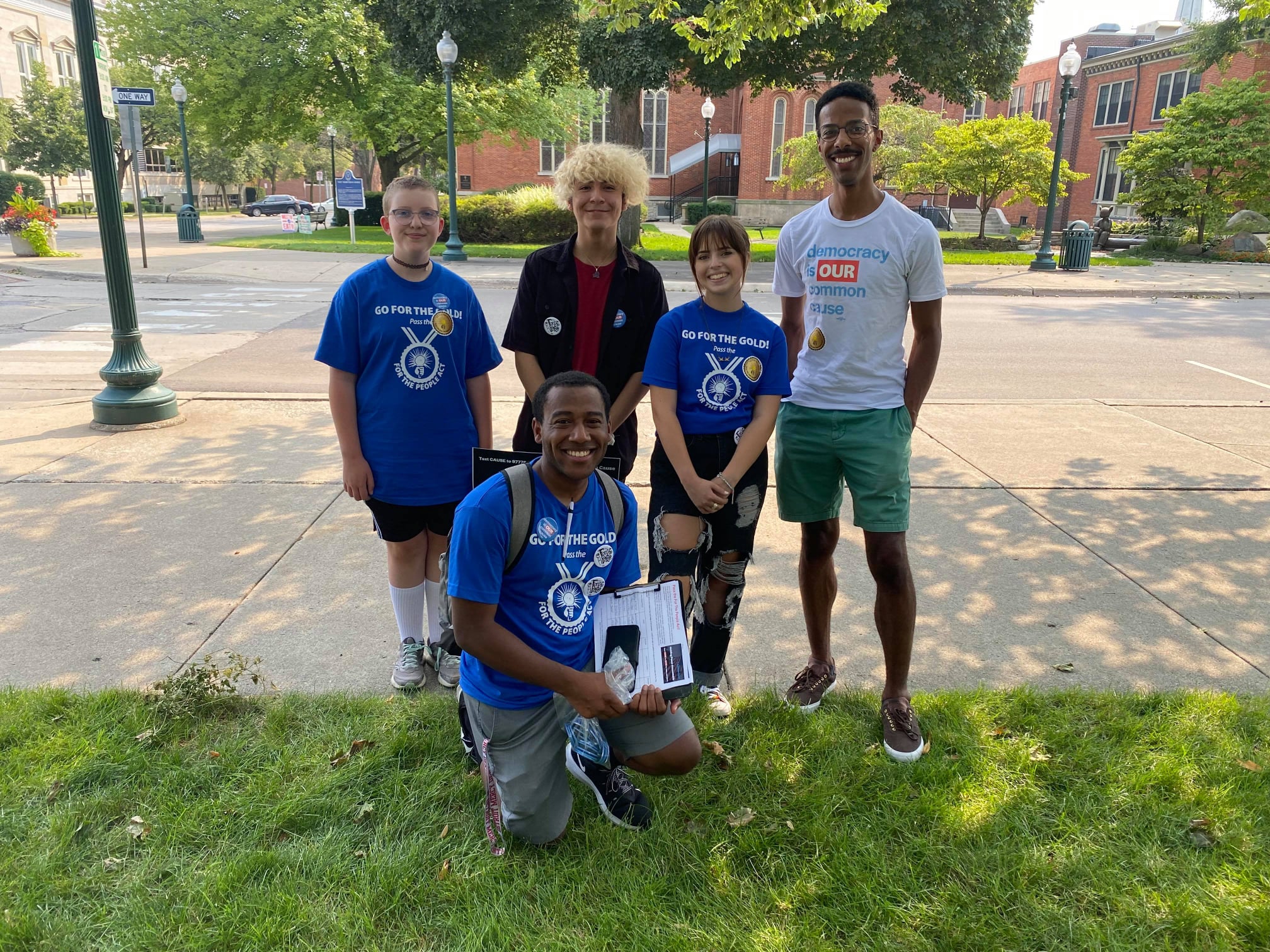
The Power of Spirit-Filled Organizing - Monroe Michigan Team Democracy Event - August 2021 If you live in a strategic building state, we invite you to join an existing Advocates Team or work with us to start a new team composed of people united by a shared passion for justice, desire to learn, and commitment to advocacy.

Advocates Teams welcome people with all different levels of experience and backgrounds. Some team members have been involved with NETWORK for decades, while others are new to advocacy.

With support from NETWORK staff and one another, team members grow in their understanding of federal policies that support the common good. They participate in strategies that have a national impact—at a level far beyond individual or uncoordinated efforts. Much of this impact can be attributed to the meaningful relationships team members develop with their Members of Congress and their staff.

Living Out Sister-Spirit

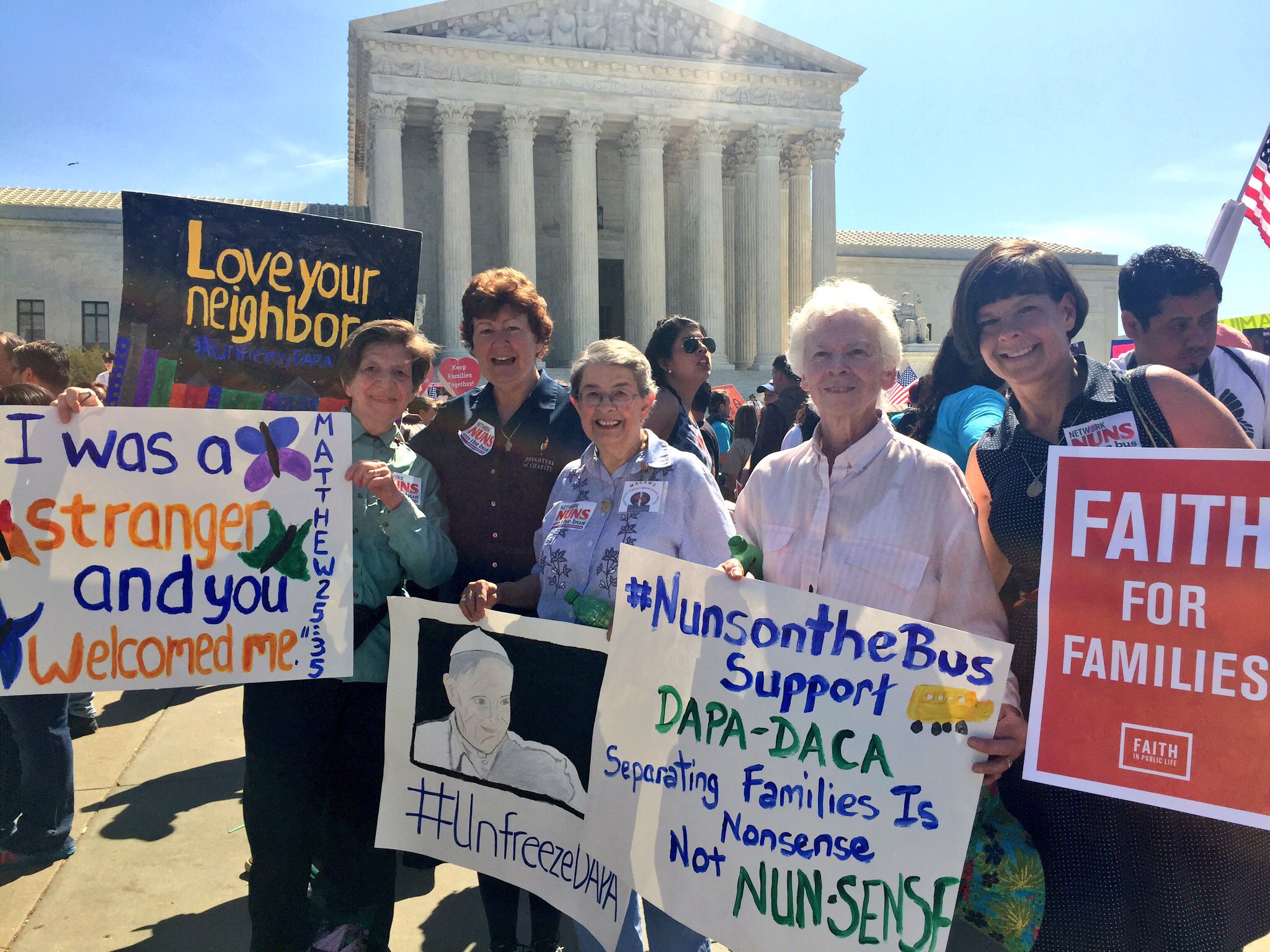
The Power of Spirit-Filled Organizing - Living Out Sister Spirit at the Supreme Court in Support of DreamersSince 1972, the NETWORK community has grown far beyond only those who are Catholic Sisters. Whether you are a Catholic Sister or not, everyone can live out Sister-Spirit, the radical, joyful, and inclusive energy that motivated NETWORK’s founding and continues to animate NETWORK’s political ministry today.

We live out Sister-Spirit when we…
  1. Listen with curiosity and humility and are open to learning.
  2. Root our understanding in encounter, not ideology.
  3. Approach situations and people with hope and welcome.
  4. Act out of a grounded spirituality rooted in contemplation and reflection.
  5. Pursue Gospel justice with joy and persistence.
  6. Prioritize the well-being of others, especially those at the margins.
  7. Work collaboratively in community, not “presiding over.”
  8. See everyone as people first, not just roles.
  9. Trust our instincts, are bold, and are willing to do the unpopular.

Celebrate together, use humor, and are feisty.

Centering Racial Justice

Because racism is embedded into our society’s systems and structures, we intentionally prioritize dismantling systemic racism and white supremacy in our political systems as well as our economic and social structures. To do this work for racial justice effectively, advocates must engage in ongoing development and learning about racial justice and regular self-reflection. NETWORK resources are available to equip you to do the work of racial and economic justice, organize in solidarity with people of color, and educate yourselves and others in your community about racism.

Encounter-Based Advocacy

Pope Francis often speaks of the importance of creating a “culture of encounter” to bridge divides and Catholic Social Justice instructs advocates to be and act in solidarity with those who are most marginalized by our systems and structures. In other words, the best solutions to problems will not come from the outside but from those who are most directly impacted by the injustices.

Lived experiences are the most important component of the meaning-making that informs our advocacy, therefore, we strive to center the voices of those most directly impacted by the injustices we seek to end.

  • Look first to resources, skills, and perspectives held by impacted communities.
  • Reject a deficit-based approach; instead, recognize the assets already existing in communities.
  • Center peoples telling their own stories and sharing their lived experiences in our advocacy.
  • Involve impacted communities in devising solutions to the challenges they face.
  • Recognize that impact is more important than intent and approach each situation with intentionality and a commitment to recognizing and addressing unintended consequences.
The Power of Organizing

The Power of Spirit-Filled Organizing - Working in NeighborhoodsThe goal of organizing is to get other people to join us in working for a more just world. When we grow our community of justice-seekers, we strengthen our power. Organizing tactics include conducting one-on-ones, planning effective meetings and conference calls, canvassing, hosting a house party or site visit, holding town halls, planning a demonstration, organizing a group to contact elected officials, speaking to the media, or spreading your message online.

As we work for justice, how do we continue to learn and grow? Through feedback and reflection. NETWORK staff are available to help you debrief any meeting, event, or campaign so you can continue to improve your organizing skills. Whether it is talking through a challenge you have encountered or exploring training needs, we are here to help.

NETWORK also has a number of organizing workshops, and we are always working to add more. We offer both topic-based and skill-building workshops including:

  • About NETWORK
  • Catholic Social Justice
  • Intro to Faith-Based Advocacy
  • How to Lobby/Prep for Lobby Visit
  • Build Anew Policy Briefing
  • Racial Wealth and Income Gap
  • Human Bar Graph on Income Inequality
  • Town Hall for Tax Justice
  • Transformative Conversations to Bridge Divides
  • Tax Justice for All: Unveiling the Racial Inequity of the U.S. Tax Code

We encourage you, our members, to share your passion for justice by learning a new organizing skill or revisiting ones that you have used in the past, especially as we approach the 2022 midterm elections. This is a critical time to mobilize fellow justice-seekers to vote for candidates who will advance racial equity and economic justice.

—————————————————————————————————————————————-

Whether you live in a state with a NETWORK Advocates team or not, we would love to brainstorm ways to multiply the effects of your advocacy with you. Contact the NETWORK staff by emailing [email protected]We look forward to talking with you!

This article originally appeared in the Third Quarter 2022 issue of Connection, NETWORK’s quarterly magazine – A Time to Build. Read the entire issue here.

This content is excerpted from the newly published NETWORK Advocates Handbook. Download the full handbook or order a copy in the NETWORK store.

The Theology of Voting: Participation in Democracy as a Christian Value

The Theology of Voting: Participation in Democracy as a Christian Value

Joan Neal
Sept. 2, 2022

Many people would not naturally connect theology — the study of God — with voting.  The two concepts might seem to be in different, if not opposite, realms of reality.  But when we think of theology as our organized system of knowledge and understanding about the nature of the Divine and we think of voting as an area that this knowledge and understanding of the Divine helps us interpret, then it is indeed legitimate to speak of a ‘theology of voting’.  For us as Christians, it’s a little like WWJD – what do we believe Jesus would think and do about voting?

As we explore that question together, let’s begin with a foundational belief. Scripture tells us, and we believe, that we are all created in the image and likeness of God – the Imago Dei.  This is the source of the inherent dignity of every human person and this dignity must be upheld in every aspect of our lives, including our lives as citizens and members of society.  We believe, therefore, that society, government, institutions, all must create the environment where every person can not only live but also thrive.  This means that, as Christians, we must ensure that our civic and political systems serve people and not the other way around.

Together, I want to build on and explore the premise that our faith in God and our belief in the Gospel of Jesus Christ call us to view voting as a sacred activity that is informed by our identity as Christians, our belief about Who and What God is, our understanding about God’s love for humanity, and our responsibility to each other as citizens of this country who see the image of God in one another.

However it first must be made clear, that I am not conflating our religious beliefs with our identity as citizens.  That is called Christian nationalism and it is the exact opposite of what I mean about connecting our understanding of God and our secular right to vote.  Christian nationalism is the belief that America as a nation is defined by Christianity and only Christianity holds a privileged position in the public square.  It takes the name of Christ and asserts it as the political agenda for the nation, thereby excluding anyone who is not Christian from national identity.  I am not saying God tells us who we can vote for and who we must not vote for.  That ideology is not Christian at all nor does it serve our responsibilities to our nation.

Rather, I am talking about Christian values and how our formation as people who profess a particular understanding of and faith in God and who follow Jesus Christ Whom we believe is God Incarnate, informs our participation in the public square through the exercise of our right and our responsibility to vote as citizens of the United States.  I am talking about our understanding of what it means to be a person of faith and a citizen of this diverse, multi-ethnic, multi-cultural, inter-religious, pluralist country.

Jesus told us what is required of us as Christians living in community with one another: love God and love your neighbor as yourself.  When St. Paul talked about the early Christian communities as the ‘body’, he was referring to our identity as a ‘family of faith’ that is to be in community or relationship with one another and to live in a community – that is, people with common interests living in a particular city, state or country.  His implication is that we are both Christian and citizen and these dual identities must inform each other in order to build the kind of environment, the Beloved Community, (what Jesus often called the Kingdom or Reign of God), on earth.  That should be our goal.  Clearly, our form of government and our participation in it, matter.

So, when we look at different forms of government around the world, (autocracy, oligarchy, monarchy, etc.), we see that the choices are few of governing styles that provide that environment.  In fact, history shows us that democracy is the system of government that best affords every person the freedom and dignity to flourish.

And that is because democracy is not only a system of government.  It is also an ideal, a vision for how a society can organize itself to recognize and respect the dignity and freedom of each and every person while also enabling the common good to thrive.

A promise made! A promise kept!

Jarrett Smith
August 31, 2022

The elimination of student debt was one of President Biden’s campaign promises. Earlier this month,  I was heartened to learn that he followed through with his pledge:  forgiveness for some student loan debt. There are an estimated 43 million Americans who eligible to participate in the upcoming program.

In real terms, this means millions of U.S. students will see an increase in their discretionary income. They will have more freedom to save for a down payment for a house, reduce medical expenses, save for a child’s future education, open a business, and more because of this policy decision.  While not all in Congress support this move, the possibility of tangible improvements for so many struggling to make ends meet at the end of the month is now encoded in law.

Key elements of the White House student loan forgiveness plan include:

  • Provide up to $20,000 in debt cancellation to Pell Grant recipients and up to $10,000 in debt cancellation to non-Pell Grant recipients. Borrowers who earn less than $125,000 per year or households earning less than $250,000 are eligible for debt cancellation;
  • Extend the federal student loan pause a final time through December 31, 2022 to provide borrowers a smooth transition back to repayment; and
  • Make the student loan system more manageable for current and future borrowers by cutting monthly payments in half for undergraduate loans and holding schools accountable when they hike up prices.

Student loan borrowers can go to studentaid.gov/debtrelief to receive more details on the plan from the Department of Education.

The President’s new policy is in line with NETWORK’s mission as his action reflects Catholic Social Justice.  As people of faith, we are called to live the Gospel in a broken and suffering world. With college costs, and loan borrowing to meet the high costs, soaring well beyond the means of wage-earners, and our nation still in recovery from a pandemic, we must advocate for a federal government that promotes human dignity. By providing much-needed relief to federal student loan borrowers, our nation took another step towards the common good.

Policing Bills Must Be Data-Driven Public Safety Solutions

The Time is Now for Data-Driven Public Safety Solutions

No More Unsafe Policing Bills. It’s Time For Data-Driven Public Safety Solutions

Min. Christian S. Watkins, Government Relations Advocate
August 30, 2022

We know what keeps us safe: environments where people of every color and background have fair wages, great schools, and affordable healthcare. When there are problems in our communities, they are addressed with proven solutions like social supports, investments in built design, increased educational opportunities, and housing equity. However, our country has mishandled public safety challenges with racist policies and practices that have made us all less safe and secure, like: hyper-militarized law enforcement of Black and Brown neighborhoods, overly aggressive — and sometimes deadly — policing tactics, mass incarceration, insufficient economic development, qualified immunity to shield bad police behavior, and tough-on-crime legislation.

Instead of taking responsibility for their failures, certain politicians want to divide and distract us by pointing the finger at the people and communities affected by the criminal legal system that they engineered to fracture our society. They draft bills with catchy, ‘get tough’ names, but negatively impact all of us — whether we are directly targeted or not. Two such bills, H.R.6448/S.3860 and H.R.6375/S.4287, are coming up for consideration this fall. NETWORK and our coalition partners strongly call for Members of Congress to vote against these proposed measures.

Policing Bill # Name and Sponsor Why They Are Harmful
H.R.6448/S 3860 Invest to Protect Act of 2022 (Sponsor Rep. Josh Gottheimer [D-NJ-5]) These bills would flood our streets with an additional 100,000 police officers, increase funding by $1B per year over five years, and increase the amount of surveillance and other relative equipment—further harming already marginalized communities.

Police bureaucracy would expand without concrete accountability measures. This further entrenches disrespect for our fundamental freedoms.

These bills would completely fail to adequately address the policies and practices at the root of community violence. Moreover, the holistic, evidence-based safety programs that have been proven (with research and data) to help our communities thrive, are not included.

H.R.6375/S 4287 COPS on the Beat Grant Program Reauthorization and Parity Act of 2022 (Sponsor Rep. Tom Rice [R-SC-7])


NETWORK is in coalition with a group of social justice and civil rights organizations that have issued a formal letter to House Leadership requesting that they not advance these bills. Read the letter here.

The most impacted people, of course, are those caught up in a criminal legal system primarily focused on harsh and inequitable punishment and lengthy incarceration (rather than rehabilitation and reintegration into society). But those of us on the outside looking in are harmed, too. We are conditioned to believe (consciously or subconsciously) that impacted people are the reason why their communities are unsafe. Bills like these, which racialize and vilify large swaths of people, often go unseen as a culprit in making life miserable.

In thinking this way, we not only fail to see how the laws are designed to impact a certain group of people; but we also devalue the diverse humanity and unique beauty that God bestows on all of Creation.

Law enforcement and elected officials use communities in distress as political pawns to appease and appeal to their voter bases. They signal that they are tough-on-crime by suppressing individual freedoms with policy that brings about outsized police interference. Isn’t this in conflict with the ideals of our Democratic Republic? I know that it is out of step with our sacred scriptures.

Advocate for Public Safety Strategies, Against Tough on Crime Legislation

All of us–Black or white, rich or poor, or republican or democrat–should live in safe and secure neighborhoods. People living in troubled neighborhoods that have obstacles to thriving lives because of racist economic policies and practices, should not be targeted for an outsized police presence. They don’t need more weapons. The deserve proven, safer, and life affirming strategies. Politicians on both sides of the aisle continue to promote tough-on-crime tactics to appease the electorate. What else can you do to help?

  • For decades, police have been allocated substantial funding without being held to concrete accountability measures. Let Congress know there can be no more bills like this.
  • Too often, citizens with mental health issues are incarcerated instead given proper medical treatment. Let Congress know this has to stop.
  • We’ve waged a war on drugs and have been tough on crime without results that keep people and communities free and safe. Let Congress know that policing bills must be rooted in public health and based on evidence-based investments – not on the rhetoric they think voters want to hear
  • Be an advocate for legislation that values the humanity of everyone in all of our communities, like these proposed in the House. NETWORK will let you know when it’s time to take action with a call or email to the House:
Evidence Proves Legislators Tough On Crime Police Measures Harm Our Communities and Don’t Keep Us Safe

Our country serves as the model of democracy around the globe, but sadly, our incarceration rate of 629 people per 100,000 means our country has the highest rate of incarceration in the world. The U.S. rose to the top of this disturbing chart over the past four decades because of the proliferation of biased and ineffective tough-on-crime legislation. As the Sentencing Project reports, presently, there are two million people in the nation’s prisons and jails — a 500% increase over the last 40 years. Changes in sentencing law and policy, not changes in crime rates, explain most of this increase. Friends, think about this carefully: U.S. policing policy has driven the country to claim nearly 25% of the world’s total prison population but has failed to significantly reduce crime in our communities. What does this mean?

Despite what politicians and police tell you about the effectiveness of their tactics, decades of data has shown that ‘get tough’ policies have not made us safer. There is little correlation between high rates of ‘violent crime’ and incarceration rates and research from the Pew Charitable Trust dispels the theory that stiffer prison terms deter drug misuse, distribution, and other drug-law violations. I applaud Pews suggestion to policymakers: pursue research-based alternative strategies that work better and cost less. But, there’s more than the proper allocations of resources to consider.


Black lives hang precariously in danger because of the police. Among Black Americans, the rate of fatal police shootings between 2015 and August 2022 stood at 40 per million of the population, while for white Americans, the rate stood at 16 fatal police shootings per million of the population.

Dig Deeper: How did we get here?

Much of the carceral trauma inflicted on people and communities in modern times came after the passage of the 1994 Violent Crime Control and Law Enforcement Act (the crime bill). The legislation was passed with bipartisan support, in large part, to help Democrats appear tough-on-crime. Data leading up to the crime bill showed that people in urban areas needed employment opportunities and education, but Congress responded with jails and military grade weapons on our streets (How to Be An Antiracist, Ibram X. Kendi, 2019).

Even before the crime bill inflicted harm with racially biased policing and mandatory drug sentencing guidelines, state and federal authorities waged 13 years of ‘get tough’ policies across the country that emphasized the use of incarceration for more offenders for longer periodsbut did not reduce the crime rate. And before that time period, a trio of U.S. presidents squarely aimed unjust crime policy at Black and Brown people.

In 1982, President Ronald Reagan declared that stronger law enforcement was needed to curb drug abuse. In 1965, President Lyndon Johnson declared war on crime. Both policies sought to vilify the marginalized and addicted, not safeguard public welfare with policies that reflected mercy and justice as God calls for (Zechariah 7:9-10).

in 1971, President Richard Nixon’s used racial abuse as the basis of criminal legal system policy. This may have been suspected at the time, but it wasn’t until years later that his phony ‘War on Drugs’ was revealed as a political strategy designed to demonize political enemies.

We knew we couldn’t make it illegal to be either against the war or black, but by getting the public to associate the hippies with marijuana and blacks with heroin, and then criminalizing both heavily, we could disrupt those communities. We could arrest their leaders, raid their homes, break up their meetings, and vilify them night after night on the evening news. Did we know we were lying about the drugs? Of course we did. (John Erlichmann, former Nixon domestic policy advisor, Harper Magazine).

Evidence Based Public Policy Legislation Is Vital to the Build Anew Agenda

NETWORK’s Build Anew agenda seeks a country where all people enjoy freedoms and thrive in God’s economy. Any bill that sprouts in the shadow of the 1994 Crime Bill violates our Spirited call for justice and equity.

We can’t be fooled into thinking that the same old policy is going to fix our policing and criminal legal system problems. NETWORK calls on Congress to stop the cycle of police funding bills that don’t work. Instead, advance policies rooted in public health and in evidence-based investments that will truly keep people safe. We know what keeps us safe. Together, we will make this a place where our rights are respected and where every one of us can live full and healthy lives, with no exceptions.

Links from this blog to read and share with your friends and family
Infrastructure Law Coordinator-Landrieu

The President’s Bridge Builder – Mitch Landrieu

The President’s Bridge Builder

Q&A With Mitch Landrieu

August 16, 2022

Mitch Landrieu, a senior adviser to the president and coordinator of implementation of the infrastructure law

Credit: Wikipedia

A major accomplishment of President Biden’s first year was the passage of the Infrastructure Investment and Jobs Act, a $1.2 trillion effort to modernize U.S. roads, bridges, transit, broadband, drinking water and wastewater infrastructure.

Leading this effort is Mitch Landrieu, a Catholic and former mayor of New Orleans (2010-2018). As mayor, Landrieu performed an infrastructure improvement of sorts when he removed the city’s Confederate statues.

He shared with Connection about his work for the Administration and its importance in rebuilding solidarity in society.

Q: What makes an inherently nuts-and-bolts issue like infrastructure come alive for you?

Mitch Landrieu: Infrastructure can seem like a big word – what it is really is about is building a better America and helping people in their daily lives.

With the Bipartisan Infrastructure Law, we have a once-in-a-generation opportunity – to rebuild our roads and bridges, so you can get where you need to go, quickly and safely; upgrade our ports and waterways, so you can get what you want quickly and cheaply; and expand access to high-speed internet to all Americans, so where you are from has no bearing on how high you go.

And when we do those things right, we can create millions of good-paying jobs. We can reduce costs for middle-class families. We can fight the greatest challenge of our time: climate change.

Most importantly, we can win the economic competition of the 21st century and shape a brighter future for the generations to come. That is what gets me really excited.

Q: What is the most significant aspect of the work you’ve so far overseen for the Administration?

ML: When President Biden asked me to lead infrastructure implementation, he was clear in his charge: Build a better America without unnecessary bureaucracy and delay while doing what is difficult for the sake of what is right.

And that is what we have done in the past seven months.

We have already pushed $110 billion out the door – money that is going towards cleaning up communities, fighting climate change, creating new and better jobs, a and building a bridge to our future economy. And we have got nearly 5000 projects all across the country – in every state, DC, and Puerto Rico – that are identified or are already underway.

I am also really excited about the work we’re doing to close the digital divide, both in terms of laying new broadband and providing affordable high speed internet for those who cannot afford it.

That’s real results where people live and where it really matters. And we are just getting started.

Q: What role does investing in infrastructure play in recovering a sense of solidarity in our society?

ML: President Biden often says that America can be defined in one word: possibilities.

And that’s what we are proving with the Bipartisan Infrastructure Law. We, as Americans, can do big things again.

And we can work together to get things done.

This once-in-a-generation investment in infrastructure is an opportunity to build a bridge – both literal and figurative – to the future. A bridge to a 21st century economy where every American has access to good-paying jobs. A bridge to a resilient nation that can withstand the natural disasters that tear our communities apart. A bridge to an America where no American is forgotten or left-behind – and we are more united than divided.

Bridges connect us – they connect people, communities, and the country – and that is exactly what we are doing with the Bipartisan Infrastructure Law.

Q: How does your faith inform how you approach this role?

ML: I am a big believer in the common good and lifting people up. It’s why I am so driven to racial equity work. It’s why I think we have to have a moral movement against poverty.

A Jesuit priest, Fr. Harry Tompson, who served as a mentor to so many in New Orleans, told me to “go where you can do the most good for the most amount of people in the shortest amount of time.”  That has always stuck with me.

I take that with me in my work each and every day.

Q: You removed Confederate statues as mayor of New Orleans. What did that experience teach you about community?

ML: A big part of removing the Confederate statues in New Orleans was about reconciling our past and choosing a better future for ourselves – making straight what had been crooked and making right what was wrong.

Sometimes inequity is right in front of us – like the statues were for me – but we do not see it.  Once you do see it, it is hard to look away.

The other thing that was more basic is that our public spaces belong to all of us. The names of buildings, the statues we erect, the way we remember our history do really matter. Making sure everyone is included is critical.

With the Bipartisan Infrastructure Law, we are taking a large step in the right direction. We are ensuring every community has access to safe and clean drinking water. We are ensuring every community has access to high-speed Internet. And we are ensuring every community is protected from the devastating effects of the climate crisis.

The future of our communities requires righting the past and building for the future. And that is what we will do with President Biden’s once-in-a-generation investment in infrastructure.

This article originally appeared in the Third Quarter 2022 issue of Connection, NETWORK’s quarterly magazine – A Time to Build. Read the entire issue here.

Rochester Reparations Vigil | NETWORK Lobby for Catholic Social Justice

Register for the Rochester, NY In-Person Prayer Vigil for Repair and Redress

[ninja_form id=”9″]

Racism has been a well-preserved traveler across generations in large part because of government behavior, like: blocked access to the wealth-building opportunities of homeownership, racial bias throughout the criminal legal system, and segregation from “good” schools. Our communities suffer because redress has been denied. We’re glad you can join us!

Want to learn more about New York’s NETWORK Advocates Team, who are volunteer justice-seekers rooted in the community, or about future reparations events and actions? Contact Catherine Gillette, Senior NETWORK Grassroots Mobilization Organizer.

Affirming the Black Catholic Voice and Presence in Our Church and Our Country

Affirming the Black Catholic Voice and Presence in Our Church and Our Country

Joan F. Neal
Aug 10, 2022

NETWORK applauds the National Black Sisters’ Conference (NBSC), National Black Catholic Clergy Caucus, National Association of Black Catholic Deacons, and the National Association of Black Catholic Seminarians for a successful four-day gathering and congratulates the newly elected NBSC Board, including Sr. Addie Lorraine Walker, SSND, NBSC’s new President, who received the organization’s Harriet Tubman Award, for being the “Moses for her people.” As she accepted, Sr. Addie Lorraine said she would “only accept the award if those in the banquet hall would accept the responsibility of being Black in a white-dominated American Catholic church.“

The National Black Sisters’ Conference, which was founded in 1968 to serve as the unifying voice and forum for religious Black Sisters, held its Board election as part of the general assembly. The new Board for the 2022 -24 term includes:  President:  Sr. Addie Lorraine Walker, SSND, who has served on the NBSC Board since 2019; Vice President: Sr. Melinda Pellerin, SSJ, who has also served on the NBSC Board since 2019; Secretary: Sr. Nicole Trahan, FMI, who will be serving on the Board for the first time; and Treasurer:  Sr. Patty Chappell, SNDdeN, who has held previous Board positions.  The other elected members of the Board include:  Sr. LaKesha Church, CPPS, Sr. Roberta Fulton, SSMN, Sr. Gwynette Proctor, SNDdeN, Sr. Patricia Ralph, SSJ, and Sr. Callista Robinson, OSF.

Sandra Coles-Bell, NBSC Executive Director reported from the gathering, “After a two-year hiatus, 150 attendees and members of four national Black Catholic organizations met for four days of reflection, study, conversation, planning, and prayer on the campus of the University of Notre Dame in South Bend, Indiana with the unifying theme of ‘Come Together Children.’ Participants were reminded of the importance of walking together in the Roman Catholic Church in the United States and the relevance of the Black Catholic voice and presence in maintaining the Roman Catholic Church in the United States. The South African principles of UBUNTU and SAWUBONA engaged participants in robust conversations on how to move prayerfully forward as Black men and women with the full force of Catholicism informed by the faith and experiences of Black people in this country.”

National Black Catholic Sisters Receive Inaugural Justice-Seeker AwardEarlier this year, NETWORK awarded the National Black Sisters’ Conference with the inaugural Distinguished Justice-Seeker Award to honor the NBSC’s dedicated and persistent witness for racial justice in the Catholic Church and society. NETWORK looks forward to collaborating with NBSC’s newly elected Board and commends the continued prophetic witness of the National Black Sisters’ Conference.