

Category Archives: Front Page

NETWORK Lobby Supports the No Ban Act and Access to Counsel Act

NETWORK Lobby Supports the No Ban Act and Access to Counsel Act

Giovana Oaxaca
July 24, 2020

The Trump Administration has made several attempts to curb immigration under the guise of public health through rules that are clearly discriminatory amid the COVID-19 pandemic. Yesterday, NETWORK Lobby sent a letter to the House of Representatives in support of the No Ban Act and the Access to Counsel Act of 2020.

The letter read, “On behalf of NETWORK Lobby for Catholic Social Justice and our 100,000 members from across the country, we write to express our support for the No Ban Act and the Access to Counsel Act of 2020 (together, H.R. 2486). NETWORK Lobby recognizes that all displaced people deserve access to protection, regardless of the faith they practice our country of origin. Welcoming individuals of all backgrounds is not only an American value enshrined in the U.S Constitution, but also a basic tenet of Catholic Social Justice. Consistent with our values, we call on Congress to pass the No Ban Act and Access to Counsel Act of 2020 without amendments or changes.”

Please read NETWORK’s letter of support below:

NETWORK Lobby Supports the No Ban Act and Access to Counsel Act

Dear Representative,

On behalf of NETWORK Lobby for Catholic Social Justice and our 100,000 members from across the country, we write to express our support for the No Ban Act and the Access to Counsel Act of 2020 (together, H.R. 2486). NETWORK Lobby recognizes that all displaced people deserve access to protection, regardless of the faith they practice our country of origin. Welcoming individuals of all backgrounds is not only an American value enshrined in the U.S Constitution, but also a basic tenet of Catholic Social Justice. Consistent with our values, we call on Congress to pass the No Ban Act and Access to Counsel Act of 2020 without amendments or changes.

The NO BAN Act is an effective counter measure against numerous anti-immigrant executive orders and bans that have been issued under the guise of national security in recent months and years. These wide-scale and discriminatory bans have in use since the early days of this Administration, when President Trump issued the Muslim Ban. After a lengthy legal challenge in the courts, a version of the ban stayed in place despite the objection of humanitarian and civil rights advocates, NETWORK Lobby among them. It effectively precludes people from Iran, Libya, Somalia, Syria, and Yemen, as well as other countries from entering the country. Like the refugee ban—which specifically targets refugees for extreme vetting—the ban targeting asylum-seekers arriving at the border, the expanded “African” ban on Nigerian, Sudanese, Tanzanian, and Eritrean nationals, and countless other orders promulgated in response to the COVID-19 global health crisis, the travel bans extend the Executive Branch’s authority to restrict or suspend immigrant entry, even when these bans exhibit discrimination on the basis of gender and race—clear violations of the Immigration and Nationality Act (INA) nondiscrimination clause.

We stand in solidarity with people of Muslim, African, Arab, Iranian, Middle Eastern, Central American, and South Asian communities impacted by this Administration’s travel bans. President Trump’s promulgations on travel restrictions for countries where a majority of peoples are people of color or religious minorities, defy our nation’s leadership in the cause for religious freedom and racial equality at home and abroad. Passing the No BAN Act is an important step in prohibiting arbitrary discrimination from happening in the future, by imposing stricter requirements before any future ban could be issued, as well as reporting requirements to Congress to create an oversight mechanism once any future ban is in place.

This critical legislation would repeal President Trump’s Muslim ban, asylum ban, and refugee ban, and make necessary reforms to the Immigration and Nationality Act (INA) to prevent future discriminatory bans. During the markup, the bill was amended to rescind the President’s recently expanded Muslim ban, targeting more Africans, and require reporting related to this ban, which was issued on January 31, 2020 and is now in effect. The language in this bill went through numerous negotiations, including during the House Judiciary Committee markup, to ensure that it would continue to provide meaningfully protection for impacted communities.

The Access to Counsel Act of 2020 would allow U.S. citizens or those who otherwise have lawful immigration status in the United States access to legal representation. Since the first Muslim ban, we have seen individuals detained at airports, barred from boarding flights overseas and in some cases forced to relinquish their immigration status without any opportunity to gain legal support. Access to counsel is critical to protect individuals from discriminatory government action.

This landmark bill honors our commitment to religious freedom and protection against discrimination. NETWORK Lobby for Catholic Social Justice urges Congress to vote YES to passing the NO BAN Act and Access to Counsel Act of 2020 and vote NO to any amendments.

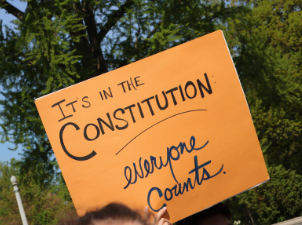
Orange sign that says "It's in the Constitution: Everyone Counts"

A Fair Census Count in Georgia and Across the Country

A Fair Census Count in Georgia and Across the Country

Leah Brown
July 20, 2020

The Census is a survey that collects necessary information on every person living in the United States. The invitation arrives in the mail and can be responded to, online, by phone, or email. With over 300 million people to count accurately, everyone must complete the 2020 census. Currently, only 4 out of 10 households have participated in the Census.

Last week, NETWORK Government Relations Advocate Sr. Quincy Howard spoke with Rebecca DeHart of Fair Count, Georgia. To listen to their conversation about the relationship the census has on voting rights and our democracy, watch here:

https://www.facebook.com/NetworkLobby/videos/586175852269333/


Not only does the Census take a count of everyone living in the U.S., it determines how many seats each state receives in the House of Representatives, which ultimately decides the Electoral College. The Electoral College is a system where each state gets a certain number of electors based on the number of representatives. Each electoral candidate is allowed to cast one vote in the presidential election.

The Census determines other vital areas such as funding for schools, hospitals, fire departments, and communities. These areas accumulate to an estimated amount of $1.5 trillion a year in tax dollars. It also informs employers about opportunities for economic development while planning new homes and improving communities. Due to the coronavirus pandemic, the Census Bureau pushed back deadlines for people to respond to the survey until October 31, 2020. This week, census workers will resume home visits to those who have not yet responded to the survey. Visits will begin in selected locations in Connecticut, Indiana, Kansas, Pennsylvania, Virginia, and Washington. These states were selected based on the amount of sanitation protection items such as sanitizer, masks, and gloves. The nationwide rollout of door knocking will begin on August 11 for the rest of the states.

The census workers will be working diligently, by handing out flyers outside of grocery stores, libraries, and pharmacies and assisting people in answering the surveys. The bureau relies on door-to-door outreach to gather data from commonly undercounted groups, including people of color and immigrants.

In the 2010 census, 9% of Black people were unaccounted for, which is 1 in 12 households. While it may not seem detrimental, missing data for Black households means missing funding. Missing data for people of color is a problem that has occurred for decades with the Census. Black children are twice as likely to be undercounted as non-Black children. In addition to this, since Black people are incarcerated at five times the rate of white people, the Census counts Black incarcerated people as residing in the rural areas where prisons are located, not their home communities. Ultimately, these small actions throughout the Census count end up not providing enough funding to the communities who need it.

The 2020 Census is also the first year that people can fill out the Census online. Everyone must fulfill their civic duty by filling out the census survey before October 31, 2020. You can complete your Census online even if you do not have a pin at www.my2020census.gov. Be sure to get counted!

Leah Brown is a summer volunteer at NETWORK. She will be beginning her second year at La Salle University this fall where she studies Criminal Justice and Political Science with a minor in English.

New Agreement, Old Problem for the USMCA

New Agreement, Old Problem for the USMCA

Laura Peralta-Schulte
July 14, 2020

The U.S.-Mexico-Canada Agreement (USMCA), the updated North American trade agreement, came into effect on July 1, 2020. NETWORK and progressive allies worked with Members of Congress to ensure the new agreement contained significantly improved labor standards and labor enforcement. Unfortunately, new evidence shows labor activism remains a deadly undertaking in Mexico even though the new North American trade deal ushered in the first real legal protections for workers there. It is increasing clear that only strict enforcement of the agreement will end violence against union activists and give Mexican workers true protections and freedom to organize for better working conditions.

Since the agreement was signed by President Trump in January 2020, there have been significant threats and violations. U.S. and other multinational corporations have filed over 600 lawsuits to block Mexican labor reforms. The Mexican government has also pushed back on creating a review and redo process for Mexican union contracts.

Further, labor unionists have been the targets of violence and arrest. In May, Oscar Ontiveros Martínez, a Mexican union organizer, was murdered as he was trying to organize mining workers.  The 29-year-old’s killing sent a warning to anyone still thinking about organizing the mines where Ontiveros once helped to lead a strike. Ontiveros was the fourth organizer of the Media Luna strike gunned down in three years. A fifth colleague, Oscar Hernández Romero, disappeared in October. The murders remain unsolved, and no trace of Hernández has been found.

More recently, Mexican labor activist Susana Prieto, a prominent labor lawyer representing exploited workers in Mexico-Texas border maquiladora factories, was held without bail for three weeks on trumped-up charges of “mutiny, threats and coercion” after trying to register an independent union to replace a corrupt “protection” union. Her case reflects the myriad of labor abuses throughout Mexico, where workers fighting for independent unions, better wages and COVID-19-safe workplaces face ongoing abuse and resistance. She was released on July 1. The conditions for her release, including a 30-month internal exile, are designed to end her representation of Matamoros workers seeking independent unions and intimidate workers nationwide seeking to exercise their labor rights. She must end her Matamoros labor organizing, not leave Mexico, and relocate to the state of Chihuahua, where a prosecutor issued new warrants for her arrest.

Mexico has a long history of labor abuse. The new USMCA agreement is a significant new tool to pressure the Mexican government to protect workers, but change will not be quick. Until new labor rules are fully enforced, corporations will continue to exploit workers on both sides of the border.

The Intersection Between the Heart of Christ and Juneteenth

The Intersection Between the Heart of Christ and Juneteenth

Leslye Colvin 
June 29, 2020

Upon hearing of a program being offered at the local cathedral that addressed poverty and the Church’s social justice teachings, I knew it was for me. Through JustFaith, I was provided insight to the heart of the Gospel of Christ as taught by the Catholic Church. Having entered this church as a young child in an apartheid state, I had already gained a deep appreciation of Moses and the Exodus from the Black Protestant Church. I also recognized the strong similarities between the enslavement and subsequent struggles of the Hebrew people, and those of us as African-Americans. The connection and assurance of God’s presence in the midst of ineffable suffering was as certain as the sun rising in the east and setting in the west.

My family entered the Catholic Church amidst the racial segregation of the mid-1960s. While the priests and parishioners welcomed us, I know our lived experience was not shared by all African-Americans, not even for those who identify as cradle Catholics. It was years later in JustFaith that I saw my families experience of welcome as a clear example of the Church’s social teaching on human dignity. This was transformative as I began to feel a pull towards a professional path guided by these principles. However, before that would unfold, the economy crashed and I became a ninety-niner, one who who received 99 weeks of unemployment benefits during the Great Recession.

An acquaintance called to ask if I would be interested in an internship with the archdiocese through the Catholic Campaign for Human Development (CCHD), a unit of the United States Conference of Catholic Bishops that addressed domestic poverty. I promptly completed and submitted my application. A short time later, I was offered the position. While it was part-time and with no benefits, it was an opportunity to move beyond unemployment  and to do work that resonated with me. The new path was appearing.

By the time my internship began, there had been two significant changes that were causes for concern but I did not have the luxury of walking away from the opportunity.  My first surprise was learning my acquaintance had resigned and been replaced. The second change was another reason for pause. The CCHD internship was a part of Social Justice Ministries and, in this archdiocese, functioned under Catholic Charities. With the change, the internship and Social Justice Ministries, which would become Justice and Peace Ministries, was moved to a new unit named Communications and Advocacy. The Advocacy component included Disability Ministries, Jail and Prison Ministry, and Respect Life Ministry as well as Justice and Peace.

The decision to combine Communications with Advocacy was problematic in the best of circumstances. Communications is responsible for representing the interests of the institution, primarily the archbishop and the archdiocese. Advocacy is charged with encountering those on the margins with the heart of the Gospel. There is an inherent tension between the two units requiring discernment and contemplative action from leadership.

On the first visit to my new office, I was escorted by the head of Communications and Advocacy. The short walk had only one memorable moment. For no apparent reason, I was told, “We don’t talk about liberation theology.” Not wanting to rock the boat before it left shore, I did not response. Although two weeks later, I was offered a full-time position in Justice and Peace Ministries, the director’s comment was a precursor of the challenges to come and, in time, I would begin to reclaim my voice.

How do you tell an African-American woman not to discuss liberation theology? Although the distorted slaveholder’s Christianity of the United States, present in Catholic parishes and Protestant churches, has denied it for four centuries, liberation flows through the veins of the Gospel and the heart of Christ. Jesus was a man who lived under oppression, yet his words are clear, “He has sent me to proclaim liberty to captives. . .”

On this Juneteenth of 2020, the nation remembers the last enslaved people of African descent who learned of their freedom in Texas more than two years after the Emancipation Proclamation and two months after the assassination of President Abraham Lincoln. Shamefully, the oppression of chattel slavery was replaced by the era of Jim Crow and institutionalized racism that we continue to resist as did our ancestors. As “Black Lives Matter” is proclaimed, may our nation follow the guidance of James Weldon Johnson as we “Lift ev’ry voice and sing ’til earth and heaven ring, ring with the harmonies of liberty.”

Leslye Colvin is the Communications Coordinator for Gathering for Mission, a project of Catholic Committee of the South inspired by Pope Francis that provides practicums in dialogue in dioceses across the country. She is also a member of the editorial team for the Center for Action and Contemplation’s Daily Meditations, and a member of the NETWORK Board. This blog was originally published on Leslye’s blog, Leslye’s Labyrinth, www.leslyeslabyrinth.blogspot.com.
Washington, D.C. Deserves Equal Representation

Washington, D.C. Deserves Equal Representation

Sr. Quincy Howard, OP
June 26, 2020

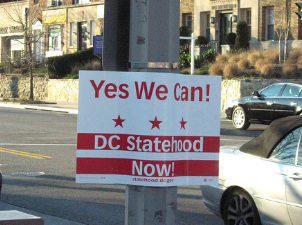
Tomorrow, the House of Representatives will vote on H.R. 51, the Washington D.C. Admission Act, legislation introduced by Representative Eleanor Holmes Norton that would finally give equal representation to the more than 706,000 people who call Washington, D.C. their home. NETWORK supports this legislation and the movement to secure equal representation and equal rights in the U.S. Congress for the District of Columbia.

In a letter sent to Representatives today, we write, “With a majority Black and brown population, the fight for D.C. Statehood cannot be separated from the struggle for racial justice in our nation. The lack of voting representation for D.C. residents is part of the harmful heritage of racial injustice in our nation. Our government cannot continue to arbitrarily revoke the fundamental, constitutional rights of our fellow citizens living in the District. It is wrong to justify the status quo based on party politics or the historical precedent of preventing Black and brown people from voting.”

The House vote on H.R. 51 could be a significant step forward for Democracy, as Rep. Holmes Norton said on twitter, “Neither chamber has passed the DC statehood bill in DC’s 219-year history. This is the beginning of the end of taxation without representation and the start of consent of the governed for DC residents.” We urge all representatives to vote yes on H.R. 51!

Read NETWORK’s full letter to the House of Representatives below, or download as a PDF.


June 25, 2020

Dear Representative,

NETWORK Lobby for Catholic Social Justice urges you to vote YES on the Washington D.C. Admission Act (H.R. 51). H.R. 51 is a vital piece of legislation that will finally give equal representation to the more than 706,000 people that call Washington D.C. their home.

Voting representation is the foundation of our democracy and it is past time to extend it to the people of D.C. Even with the passage of the 15th Amendment and the success of the women’s suffrage and Civil Rights movements, District of Columbia residents have remained disenfranchised from voting since its establishment. Today a population the size of Vermont—all neighbors to our nation’s epicenter for democracy—are stripped of their most fundamental right to vote. Our nation cannot proclaim to be the world’s strongest democracy when we deny hundreds of thousands of people political representation simply because of their zip code.

With a majority Black and brown population, the fight for D.C. Statehood cannot be separated from the struggle for racial justice in our nation. The lack of voting representation for D.C. residents is part of the harmful heritage of racial injustice in our nation. Our government cannot continue to arbitrarily revoke the fundamental, constitutional rights of our fellow citizens living in the District. It is wrong to justify the status quo based on party politics or the historical precedent of preventing Black and brown people from voting.

As people of faith, we believe that it is every citizen’s right and responsibility to participate in the political process as an expression of their inherent dignity. Our nation was founded on the principle of self-governance, but the people of D.C. do not have control over their own laws or their own budget. Residents of the District must no longer be denied this sacred right and responsibility—it is time for Congress to act.

Our status quo maintains that these Americans are not worthy of fully participating in our democracy. This historic vote brings us closer to achieving the ideals articulated in our founding documents. We urge a quick passage of H.R. 51 in the House of Representatives to grant Washington D.C. the sovereignty, rights, and dignity of statehood. Additionally, NETWORK Lobby urges a NO vote on any MTR’s introduced on the floor that diminish the pro-democracy reforms that H.R. 51 accomplishes as currently written.

Sincerely,
Sister Quincy Howard, OP
Government Relations Advocate, NETWORK

The Seventh Anniversary of Shelby: A Reminder of the Fight to Restore Voting Rights Protections

The Seventh Anniversary of Shelby: A Reminder of the Fight to Restore Voting Rights Protections

Sr. Quincy Howard, OP and Eva Sirotic
June 25, 2020

This week marks the seven-year anniversary of the Supreme Court’s decision in Shelby County v. Holder. The Shelby decision, which was passed on June 25, 2013, gutted key protections of the Voting Rights Act (VRA), leading to states and localities across the country to enact restrictive voting laws, disenfranchising millions voters in the United States. For six years, civil rights organizations have been fighting back against these discriminatory laws. We need Congress to restore the VRA to its full strength to ensure that all eligible voters have equal access to the ballot and that every vote counts.

The ideal of “one person, one vote” is central to our understanding of democracy in the United States, but the reality in our country falls short. While the legal discrimination that prevented people of color from voting for hundreds of years is no longer in place, today a new combination of restrictive standards and requirements keep voters from exercising their right to vote. Whether implementing voter ID requirements, purging voter rolls, restricting early voting, or closing polling locations, state-level election laws can make it considerably harder, if not impossible for many eligible citizens to vote. Furthermore, these requirements have a disproportionate impact, often by design, on low-income and voters of color who are less likely to have flexible schedules, access to transportation, or a government photo ID.

Many of these tactics are familiar to communities of color, but ever since the passage of the Voting Rights Act in 1965 there had been an effective mechanism in place to apply federal oversight of potential voting rights violations. Specifically, Sections 4 and 5 of the Voting Rights Act (VRA) used a formula determined by the VRA in 1965 to identify jurisdictions with histories of racial discrimination and subject them to federal preclearance requirements prior to implementing any changes in voter registration or casting of ballots. In 2013, however, the Shelby County v. Holder Supreme Court decision stripped the VRA of this preclearance mechanism—deeming the formula outdated—and opened the door for states to pass more restrictive voting standards with impunity.

Since the Shelby ruling, 23 states have freely implemented more restrictive voting laws and conducted elections accordingly. The only recourse left is under Section 2 of the VRA—to challenge these laws after the fact. Meanwhile, the resulting voter disenfranchisement has already taken place and the results of potentially rigged elections stand. Accordingly, unfair elections around the nation have begun to resemble a discriminatory game of wack-a-mole: lawsuits of voter discrimination have quadrupled in the five years since the Shelby decision. Expensive and slow-moving litigation is an untenable approach to reinstating fair elections; and Section 2 offers no remedy for the impacts of disenfranchisement.

NETWORK is calling on the Senate to pass legislation that restores the Voting Rights Act and provides critical emergency election funding to prepare for this November’s election. In 2020, with COVID-19, we are still seeing the implications of voter protection inequities. Congressional failure to address the Shelby ruling in 2013 combined with a global pandemic are wreaking havoc on our elections. A series of botched primaries in the midst of a deadly virus has revealed how a racist system that fails to protect voting rights ultimately harms the entire nation.

The debacles we saw in the Wisconsin primary, and subsequently in Georgia, are warnings for the upcoming general election. While it may be hard to distinguish motives—suppression, intimidation, incapacity or indifference—it is clear that a racist system enabled these outcomes. Protections written into the Voting Rights Act—and gutted in the Shelby ruling—were designed to avoid exactly this type of disenfranchisement. H.R. 4, a bill that would restore these protections, passed the House last year but languished in the Senate for months prior to the pandemic. Today, passage of the VRAA is more urgent than ever.

The Senate also has an obligation to provide $3.6 billion in emergency funding for state and local capacity to run fair and accessible election in a pandemic. The adjustments necessary to ensure that every eligible voter is counted in COVID-19 cost money and take time. There are only four months for states and local election officials to be ready. The Senate’s failure to act now is a dereliction of duty and risks disenfranchising millions of voters in the 2020 general election.

To learn more about the legacy of racism in our election systems, watch Suppressed: The Fight to Vote. This 37-minute film documents how the election system in Georgia failed voters at multiple stages in 2018. And please join NETWORK Lobby and the United Methodist Church on June 30th for a panel discussion about these same threats to November’s general election in COVID-19. RSVP for the discussion.

Eva Sirotic is a rising third-year at the University at Virginia majoring in Global Studies. She is passionate about issues related to social justice, particularly women’s rights and racial equality. Outside of the classroom, she works for Take Back the Night, a sexual violence prevention organization and The Fralin Museum of Art in Charlottesville, VA.

To Honor Pride, Pass the Equality Act Now!

 To Honor Pride, Pass the Equality Act Now!

Ness Perry
June 23, 2020

On June 15, 2020, the Supreme Court announced that the federal law that bars sex discrimination in employment also applies to LGBTQ+ workers. This landmark decision is especially significant because June marks the celebration of Pride month for the LGBTQ+ community.

NETWORK applauds this historic recognition of human rights, but the struggle for equality isn’t over. Last week, the Trump Administration finalized a rule that erases protections for transgender patients against discrimination within health care. LGBTQ+ people, especially LGBTQ+ BIPOC, cannot access housing, health care, and more. We need the Equality Act to address systemic discrimination LGBTQ+ people face every day. We strongly affirm people of all sexual identities, orientations, genders, and expressions; this is why we call on the Senate to vote on the Equality Act now!

The Equality Act, which the House of Representatives passed over a year ago, provides needed legal protections from discrimination for all LGBTQ+ people. When LGBTQ+ people identify themselves as such in the workplace, they often face unequal treatment, disrespect, and even losing their jobs. When LGBTQ+ people identify themselves as such when applying for housing, they risk being homeless. When LGBTQ+ people seek medical care, they are often turned away because of who they are or who they love. This must come to an end now.

The legal protections offered by The Equality Act are especially pertinent now, during the COVID-19 pandemic. LGBTQ+ people are afraid to take paid leave if they or a loved one is sick because they are afraid of workplace discrimination. A survey by the Human Rights Campaign found that 27% of LGBTQ+ people of color and 16% of LGBTQ+ white people say they are afraid to request time off to care for a loved one because it might disclose their LGBTQ identity. LGBTQ+ people of color are disproportionately affected by this because they fear losing their job for taking paid leave 44% of the time compared to 37% of their white counterparts. Passing the Equality Act would create better access to paid leave for LGBTQ+ people.

At the Faith for Equality Rally before the House vote last year, Sister Simone said, “Love and welcome are at the center of what we care about as people of faith.” This statement still echoes today, when the Equality Act still has yet to be voted on in the Senate. We urge Senate leadership to swiftly vote on the bill with love and welcome in their hearts. To honor the legacy of Marsha P. Johnson and Sylvia Rivera leaders of the Stonewall Uprising and the LGBTQ+ movement, it is time to make the Equality Act law.

The Senate JUSTICE Act Fails to Live Up to the Moment

The Senate JUSTICE Act Fails to Live Up to the Moment

Joan Neal
June 22, 2020

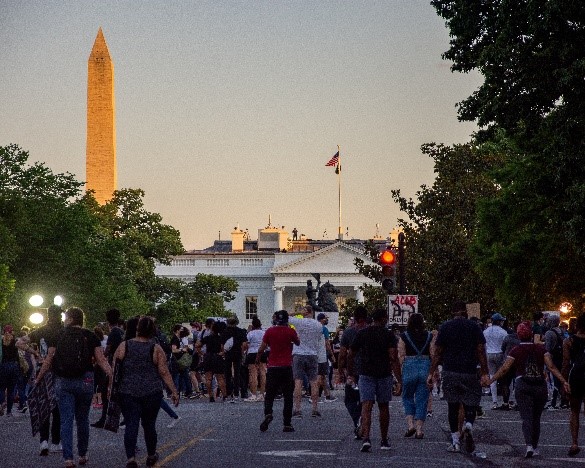
On May 25, 2020 when George Floyd was murdered by a Minneapolis policeman, the nation and indeed the world, saw with their own eyes the police brutality suffered by the Black community on a regular basis. For 23 days now, people have been protesting in the streets of cities and towns against that same cruel and inhumane treatment from the people who are sworn to ‘serve and protect’ all communities. The disconnect is not only visible, it is deadly.

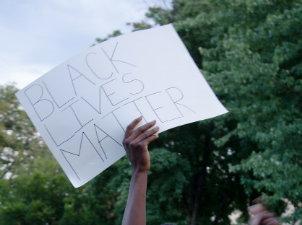
These protesters are shouting to high heaven that Black Lives Matter. They are demanding justice and equal protection from the law as well as under the law. They are declaring that the kind of police brutality that is standard operating procedure in communities of color all over the nation must stop — NOW! The public outcry against the kind of over-policing and state sponsored violence against Black people in the U.S. shows no signs of diminishing until justice is done.

Now it is time for Congress to act. Now is the time for lawmakers to pass meaningful police reform legislation that protects Black communities from the systemic threats of over-policing, police brutality, misconduct and harassment. The House of Representatives has taken that responsibility seriously and are proceeding toward passage of a sweeping reform package in The George Floyd Justice in Policing Act of 2020. It is not a perfect bill but it includes meaningful changes to the way police departments operate at the State and local levels. Read NETWORK’s letter to Congress in support of H.R. 7120.

On the other hand, the bill just introduced in the Senate by Tim Scott (R-South Carolina), falls woefully short of what is needed to respond appropriately and decisively at this moment in our country. The JUSTICE Act proposes data bases and studies as a response to the continuing loss of life in the Black community at the hands of police and law enforcement. It offers suggestions that police refrain from using deadly force, choke-holds and other such death-dealing physical restraints instead of prohibiting them. It provides $8 billion dollars in new funding as an incentive for police departments when such funding is already available through other mechanisms. It fails to revoke qualified immunity and prohibit the use of no-knock warrants. It provides no mechanisms to hold police accountable when they break the law nor does it eliminate transfers of military equipment from the Federal government to State and local police departments. The JUSTICE Act is fundamentally flawed and the Senate should go back to the drawing board.

NETWORK joined The Leadership Conference on Civil and Human Rights in a letter urging Senators to vote NO on a motion to proceed with the JUSTICE Act. Read the letter in full here. 

The current moment offers this country an historic opportunity to make transformational change in the way we envision and ensure public safety for everyone. We need a fundamental change in policing culture, one that recognizes the dignity of every human person and holds law enforcement accountable for their actions. We need an end to the adversarial rather than service relationship with Black people. And we need increased investments in under-resourced communities that provide the same opportunities to thrive that other communities already enjoy. Now is the time. We urge Congress to swiftly rectify the legacy of white supremacy and racism in public safety. The people have issued a clarion call to action and Congress must respond.

Black Lives Matter and Juneteenth

Black Lives Matter and Juneteenth

Laura Peralta-Schulte
June 19, 2020

“The people of Texas are informed that, in accordance with a proclamation from the Executive of the United States, all slaves are free. This involves an absolute equality of personal rights and rights of property between former masters and slaves, and the connection heretofore existing between them becomes that between employer and hired labor. The freedmen are advised to remain quietly at their present homes and work for wages. They are informed that they will not be allowed to collect at military posts and that they will not be supported in idleness either there or elsewhere.” —General Orders, Number 3; Headquarters District of Texas, Galveston, June 19, 1865

On June 19, 1865, about two months after the Confederate Gen. Robert E. Lee surrendered at Appomattox, Va., Union Gen. Gordon Granger arrived in Galveston, Texas, to inform enslaved Black people of their freedom and that the Civil War had ended. Since then, Juneteenth has been a day of celebration in the Black community and grown to become the most popular annual celebration of emancipation from slavery in the United States.

This Juneteenth we must pause and acknowledge the immense gap between the freedom promised in 1865 and the freedom delivered. The Emancipation Proclamation formally ended slavery in the Confederate States, and later the 13th Amendment ended slavery across the United States, but white enslavers and white Union victors established new rules that intentionally limited the freedom of Black people and families for decades after that.

The new reality still allowed white former enslavers to set wage and work conditions. White structures restricted employment opportunities for Black people while creating new forms of powers to control “idleness” – an excuse police used to arrest Black people, imprison them, and force them to work for little or no wages. Newly “freed” Black people and families faced violence and terror as they attempted to leave their former enslavers. Firsthand historical accounts of formerly enslaved people recall multiple insistences of lynching and shootings. The system of slavery adapted into new systems of white control over Black people.

Still, Black families celebrated. Their joy and celebration was and continues to be an act of resistance and resilience in the face of racial oppression.

The Civil Rights movement of the 20th century and the continued fight for Black liberation against state-sanctioned oppression in this century are the continuation of century-old attempts to right the wrongs based in the United States’ original sin, the enslavement of Black people.

The forces of white supremacy and white racism are so powerful and so pervasive that we see day in and day out examples of blatant disregard for Black lives at the hands of the State police agents as well as white vigilantes seeking to assert dominance over Black lives. We see disregard for Black people’s health in hospitals, leading to higher rates of illness and death. We see disregard for Black workers who experience higher rates of unemployment and lower wages than white workers. The system was never set up to provide equity for Black Americans. We must work for radical change based in Black liberation for the good of our whole nation.

My heart breaks every day recognizing how my own behavior has contributed to Black oppression. It is long past time for white people to acknowledge how we contribute to this long-standing system, benefit from it, and have responsibility to tear it down. “All lives matter” is a slogan for those who refuse to acknowledge the unique and life-altering privileges being white provides. The privilege to have doctors take your health concerns seriously. The privilege of being able to walk by police officers without triggering their fear and a potential attack.

The Black Lives Matter movement is a holy movement calling us to affirm the life and dignity of Black people. In his life and in his death, Jesus was a member of an oppressed community, not the powerful. We cannot claim to follow the life and message of Jesus and remain silent in the face of racism today. Like the delay in emancipation for people who were enslaved in Texas in 1865, the pain and suffering of Black people in the United States has been going on far too long today.

We solemnly say the names of those we’ve lost to violence and systemic racism. We watch as our brother George Floyd died with a knee on his neck for 8 minutes and 46 second as he cried in vain for the breathe of life and for his dead mother. We won’t be silent anymore.

Hope grows as resistance grows. The streets across the U.S. and around the world have become alive with prophetic witness. This is church in the street, proclaiming the sacred truth, “No one is truly free until we all are free” To the Black community on this day of remembrance, I commit to working with you restructure our society to ensure equity for the Black community. To the white people marching in the streets and in virtual spaces, I see justice in your eyes. To the white Sisters and Brothers clinging to the false God of white supremacy or white silence, I call you to true discipleship.

Malcom X said, “I believe that there will be ultimately be a clash between the oppressed and those who do the oppressing. I believe that there will be a clash between those who want freedom, justice and equality for everyone and those who want to continue the system of exploitation.”

This Juneteenth, let us acknowledge the sinful history of slavery in our country, mourn the people harmed and killed by white violence and inhumanity, and honor the resilience of the Black community. This Juneteenth let us recommit ourselves to use our hearts, minds, and souls in the service of racial justice, a justice far too long delayed.

White People Must Listen to the Prophetic Call for Justice

White People Must Listen to the Prophetic Call for Justice

Sr. Emily TeKolste, SP
June 16, 2020

The mayor of my hometown recently announced an intent to sue Minneapolis for the recovery of police costs in the wake of George Floyd’s death and the resulting nation-wide protests. He backed off of this intent within a day, but this announcement reveals the deep ignorance of many white people — especially white people who live in areas built on the white flight of the 1950s and 1960s — of what’s really behind the ongoing Movement for Black Lives.

Instead of throwing blame or even settling for arrests of the officers responsible for the police brutality that inspired the protests, white people are called to go further. We must look deeply at our systems and at our own hearts to see more clearly the structural and historical racism in our society and the ways we are socialized into a white supremacist culture. We must change the system that creates and fosters a willingness to sacrifice Black lives and dreams.

The city I grew up in had a reputation for ticketing people for “Driving While Black.” I can still remember having only three of the Black students in my class of 500 at the local public junior high school. Perhaps even more significantly, the city drained the taxbase from Indianapolis, leaving the city’s public amenities worse off because the wealthiest people moved to the suburbs, while still benefiting from living in proximity to the city.

The truth that many of us need to reckon with is that these protests are not just about the killing of George Floyd and Brionna Taylor. They are not just about the killing of Michael Brown or Tamir Rice or Sandra Bland or any of the countless others who have been murdered at the hands of the police or vigilante citizens. They are about that, and more.

The protests we’ve witnessed over the past weeks and over many, many years are about a systemic imbalance of power that certainly didn’t start with the police and demand a resolution which must go far beyond the prevention of police brutality.

The protests are about systemic racism that exists beyond intent or individual action. This systemic racism shows itself through the disproportionately high impact of COVID-19 in Black communities, which are overrepresented as workers in essential frontline industries, as inmates in crowded prisons, and as residents of underinvested neighborhoods with inadequate access to health care.

Systemic racism shows itself through the ongoing racial wealth gap. White U.S. residents have a median family wealth over eight times that of their Black and Hispanic counterparts. This is the result of white people building and then passing down wealth withheld from Black families through slavery, sharecropping, redlining, unequal access to benefits of the G.I. Bill, and more.

The racial wealth gap can also be connected to more obvious manifestations of racism, including the Tulsa Black Wall Street Massacre in Oklahoma. In 1921, a white mob attacked a flourishing Black business district along Greenwood Avenue, destroying the wealth that Black residents had built up in spite of the obstacles they faced.

Systemic racism shows itself through the city’s treatment of residents in Flint, Michigan, a predominantly Black community, who were ignored as they voiced concerns regarding the contamination of their water supply. The delayed and inadequate response by local government officials undermined the health of approximately 8,000 children exposed to lead poisoning between April 2014 and August 2016.

Systemic racism shows itself through decisions to impose unaffordable fines for minor offenses, particularly on Black people, in order to provide revenue for the city’s government in Ferguson, Missouri.

In a world where racism is systemic, it’s not enough to be a nice person. It’s not enough to donate to the “right” causes or oppose only the obvious white supremacy of our nation’s current Presidential administration. Amy Cooper, who was caught on video putting a Black man’s life in danger by falsifying an accusation against him and calling the police, checked those boxes.

Amy Cooper’s behavior toward Christian Cooper emphasizes that white privilege and white supremacy manifest themselves everywhere. In her use of dog-whistle claims, she made clear that her freedom to break the rules trumped his freedom to ask her to follow them. As Fr. Bryan Massingale says, “She assumed that a black man had no right to tell her what to do. She assumed that the police officers would agree.”

It may be tempting to look to the damaged buildings and broken glass as a reason to discredit the concerns of the Black community, but we must resist that temptation. Concern about the destruction of property must never surpass concern about human life. Especially for people of faith who profess the dignity of all human life.

As Catholics, we look closely at the life of Jesus, and Jesus upended society. In a story told in all four Gospels, he even drove those doing business out of the Temple. According to Gospel of John,

“In the Temple, he found people selling cattle, sheep, and pigeons, while moneychangers sat at their counters. Making a whip out of cords, Jesus drove them all out of the Temple—even the cattle and sheep—and overturned the tables of the moneychangers, scattering their coins.” (John 2:14-16).

When injustice is in our midst, we too must drive it out.

We white people must dig into the work of racial justice. As we do this, it is important for us to listen to people of color, especially Black people, and be sure they are compensated for their time and work in educating us. There are numerous resources available. NETWORK’s Recommit to Racial Justice guide lists many, many additional resources to continue your learning, as does our Resource Library.

As the Jewish Talmud reminds us, “Do not be daunted by the enormity of the world’s grief. Do justly now. Love mercy now. Walk humbly now. You are not obligated to complete the work, but neither are you free to abandon it.”

Emily TeKolste is a Sister of Providence of St. Mary-of-the-Woods, Indiana, and a grassroots organizer for NETWORK Lobby for Catholic Social Justice. She lived in Carmel, IN, until 2014. She has contributed writing to Global Sisters Report.