

Category Archives: Front Page

Encountering the Reality of the Southern Border

Encountering the Reality of the Southern Border

Mary Cunningham
July 20, 2018

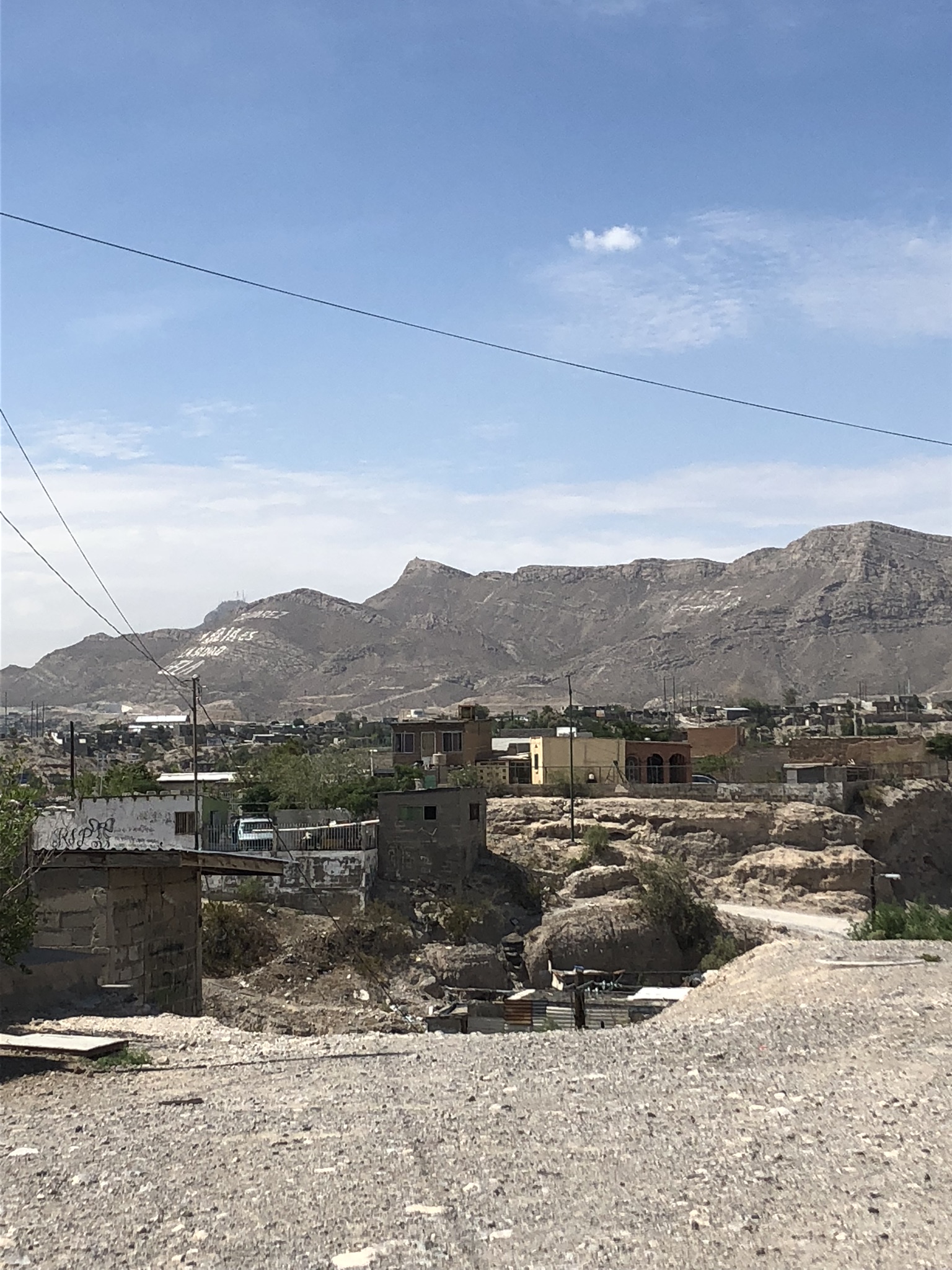
Ciudad Juárez, Mexico, and El Paso, Texas are just miles apart and yet they are worlds away. As you explore both, you notice the cities blend into one another: people living on one side, working on the other, Spanish and English spoken in both, and a shared industrial vibe. And yet, the cities remain two distinct realities – divided by a large border wall, 18 feet high in some places. People on one side are trapped by low wages, poor working conditions, violence, and persecution, and on the other trapped by their own minds and biases. But there is a deep inequality between the two countries, and, in the United States, an explicit denial of the experiences of people living south of the border – people most of us have never even met. It baffles me how a barrier can create not only physical separation, but a separation that is strongly emotional and visceral.

In early July I went to the U.S.-Mexico border for the first time. Working at a federal advocacy organization in Washington, D.C., I am constantly reading news about what’s happening at the border: people fleeing violence in countries such as El Salvador and Honduras, debates on funding for the border wall, family separation, the list goes on. Despite this, I always felt a desire to go the border – to meet people and hear their stories. D.C. is geared towards engaging with immigration on a policy level, but it often feels disconnected from what’s happening on the ground. This trip was a chance to immerse myself in the reality of the border—learning about the working conditions for people on both sides, the process for seeking asylum, the experience of migrants, the conditions in detention centers, Customs and Border Protection, and more. It was a chance to learn, but also a chance to feel the impact of the border and the precise division it creates.

At the beginning of the week we helped serve dinner at Nazareth Hall, a shelter for migrants recently released from U.S. Immigration and Customs Enforcement (ICE) and detention centers. Although there was a language barrier, the stories of the people we served food to were written all over their faces. We noticed the timidity of the group as they entered the dining hall and the slight relaxation that took over as they realized they were finally in a safe place. One woman came up to us after dinner with tears in her eyes, holding each of our hands for a few brief moments, as she repeated, “thank you.” We also got a tour of Annunciation House, a shelter for undocumented immigrants started by Ruben Garcia. (This is one of the only shelters available for migrants who are undocumented.) Interacting with migrants who had just been released from detention was a grounding experience. I spoke with one man from Cameroon who had been detained for 18 months. When I asked how that was, he just shook his head despairingly, claiming, “horrible.” It was evident that the conditions in detention centers are deplorable. Many local advocates we met with told us “make no mistake: these are prisons.”

In addition to helping at local shelters, we met immigration advocates and attorneys such as Anna Hey, Deputy Director of the Diocesan Migrant and Refugee Services (DMRS). Anna gave us an overview of the particular barriers facing migrants coming to the United States, explaining the snares they often get caught up in the legal process. Among all the things Anna shared with us, what stood out to me the most were the discrepancies between the number of people granted asylum from state to state, depending on where their case is heard. (In New York, New York the grant rate is 85%, while in El Paso the grant rate is a mere 6%.) Additionally, Anna noted how the whole “wait in line” argument is complete bologna. Some people applying for immigrant visas or Legal Permanent Residency (LPR) may have to wait over 20 years! Hearing about this and the lived experience of the clients Anna works with exposed the undeniable reality of our dysfunctional immigration system.

Towards the end of the week we crossed the border into Ciudad Juárez, Mexico. While there, we visited the Bibloteca Infantil, “El Buen Pastor,” a children’s library started by Cristina Estrada. Cristina explained how the limited economic opportunity in Juárez dissuades many people from finishing their education. Maquiladoras (foreign-owned and run factories) are common in Juárez and many Mexicans – often multiple members of the same family– end up working in them. We talked to a representative from Foxconn (an electronics manufacturing company), who told us that the starting wage is around $60 a week. Broken down, that means that at least three members of a family would have to work to make ends meet. Recognizing that many Mexican young people see factories like this as their only path, Cristina’s mission at the children’s library is to provide a space for young people to learn, study, and grow. She provides books for students and helps tutor them so they are able to recognize the value of education and where it can lead them. When one of our group members asked Cristina what she hoped to accomplish, she replied with tears in her eyes, saying her dreams had already been fulfilled. Seeing so many kids achieve their educational goals over the years is her greatest accomplishment.

This immersion trip brought me many things, but perhaps among the most important was that nothing is more powerful than the power of experience. Some elected officials choose to paint the immigrant population with broad strokes, calling them criminals, drug traffickers, or burdens to our country. But how fair is that, when these are people just like us, who each carry their own pain, struggles, and joys? There are so many stories that simply don’t get heard, because we don’t have enough time or space to tell them. While I know this immersion trip and these stories won’t change immigration policy overnight, they certainly changed me. I find hope at the individual level, where the stories of each individual person we meet transform our hearts and minds and push us in subtle ways to see anew. As the Columban motto goes, “A life unlike your own can be your teacher.”

Faces of our Spirit-Filled Network: Fr. Terry Moran

Faces of our Spirit-Filled Network: Fr. Terry Moran

Fr. Terry Moran
July 10, 2018

Tell us a little about yourself and the work you do.

I am a Catholic priest, an associate of the Sisters of Saint Joseph of Peace, and currently minister as the Director of the Office of Peace, Justice, and Ecological Integrity for the Sisters of Charity of Saint Elizabeth, a congregation of women religious, mostly in New Jersey, with some sisters in other states and in Haiti and El Salvador.

How did you first learn about NETWORK and what inspired you to get involved?

I remember when NETWORK was founded and the excitement it generated in sisters who were friends of mine.  NETWORK incarnated what we were talking about in theology after Vatican II – that the gospel compelled us to become involved in the political process, to build on our history of direct service by engaging in structural change.

What issue area are you most passionate about?

Climate change and learning how to foster a healthier human/Earth relationship is my greatest passion. Any other social issue is contingent on us facing the climate crisis. There can be no just human society on a dying planet.

How are you engaging your community on important social justice issues?

In as many ways as possible: I send out regular action alerts on issues that are important to us; a monthly e-newsletter called JustLove; two ecospirituality groups that meet monthly; regular workshops and talks; a Facebook page; recently I distributed a refrigerator magnet with a graphic of our Justice, Peace and the Integrity of Creation (JPIC) priority issues so that the sisters think about them as they get their morning orange juice.

How has your advocacy for social justice shaped your view of the world?

I come from a family in which political engagement was an important value so there’s a restlessness in my genes for a world that is more just, peaceful, and verdant.

How does your faith inspire you to work for justice?

My religious formation was in the early post-Vatican II days when “a faith that does justice” was shaking our sleepy 1950’s Catholicism. I’m very happy that Pope Francis is putting the social agenda of the gospel front and center again. I think his encyclical Laudato Si’ is the most compelling program available today for where the world needs to go.

Who is your role model?

Two people that are daily inspirations for me: Margaret Anna Cusack, the founder of the Sisters of Saint Joseph of Peace –the community of which I’m an associate. She was a 19th century Irish social justice advocate and prolific writer who drove bishops crazy.  Her book Women’s Work in Modern Society (1875) was among the first to explore the role of women in economic life. I love her quote, “People make a lot of the sufferings of the Desert Fathers but they were nothing compared to the sufferings of the mothers of the 19th century.”

Another is Daniel Berrigan, SJ, who has been a mentor for me since I first met him on his release from prison in my hometown, Danbury, CT in 1972. His contemplative searching of the scriptures that led to a life of resistance to war has been a life-long model for me.

Right now, I am most inspired by my seven friends of the Kings Bay Plowshares action who entered the largest Trident submarine base in the world on April 4, 2018 and enacted the prophecy of Isaiah 2 by hammering and pouring blood on these instruments of mass destruction.  I have their photo on my desk and often turn to it in the course of the day in gratitude and prayer. Their willingness to put their own lives and plans on hold and to risk prison for the sake of the gospel of non-violent resistance is tremendously inspiring to me.

Is there a quote that motivates or nourishes you that you would like to share?

“The world is violent and mercurial–it will have its way with you. We are saved only by love–love for each other and the love that we pour into the art we feel compelled to share: being a parent; being a writer; being a painter; being a friend. We live in a perpetually burning building, and what we must save from it, all the time, is love.”– Tennessee Williams

What social movement has inspired you?

Growing up in the 60’s, I’ve been deeply formed by my involvement in the peace movement and the women’s movement. I remember participating in the first Earth Day in 1970.  Most recently I’m very inspired by Black Lives Matter, the leadership taken by young people against gun violence, and the work of an organization of Dreamers called Cosecha who are risking their own safety for dignity for all the undocumented.

What was your biggest accomplishment as an activist in the past year?

That I haven’t lost my mind and have been able to keep going in the vile political climate in which we live.

What are you looking forward to working on in the coming months?

Starting an organic garden on our motherhouse property. There is something healing about getting your hands in the dirt. Also working with a local organization to welcome a third refugee family.

Choosing Engagement over Alienation

Choosing Engagement over Alienation

Sister Mary Ellen Lacy
July 6, 2018

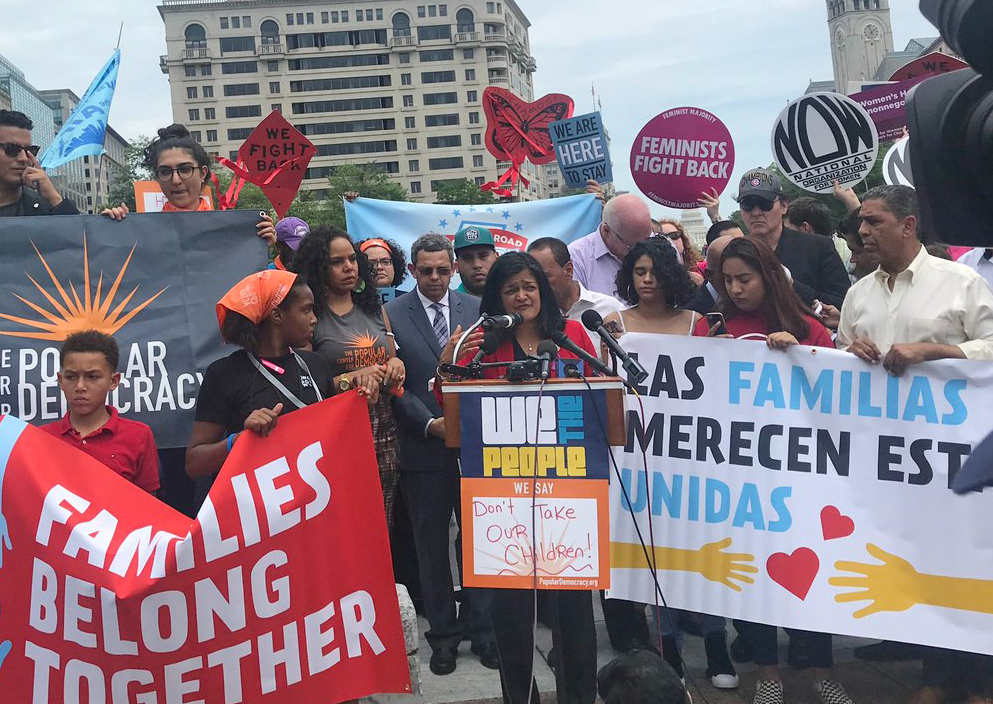
The other day, my NETWORK colleagues, sisters and other women of faith attended a prayer vigil in front of the Customs and Border Patrol Building in Washington, D.C.  We were there to pray for a conversion of hearts for those who peel crying children from their mothers in the name of justice, or worse, in the name of God. There were stirring testimonies, prayers and songs sent to heaven on behalf of the little ones. I cannot think about this situation without fighting back my own tears of pain and anger.

When it was over, we decided to take an Uber home. The Uber driver was an affable older man who sported a leather cowboy hat and greeted us with a heartfelt smile. After we were loaded up, we had to wait because the President’s motorcade was driving by. The Uber driver then shared with us that he was a ‘Trump Supporter’ and that children have been taken at the border for 12 years.  He wondered aloud, “why do people blame ‘the poor guy’ [Trump] for everything when he only does the same as all the rest before him?”

In these scary times, people who have opposing opinions may seem evil and perhaps we see them as an enemy to our basic notion of being a Christian or American. Often, out of anger and fear, we marginalize them and deport them from our hearts.

Dr. Martin Luther King Jr. taught us that, in order to love your enemies, you must begin by analyzing self. There may be something within you that arouses a tragic hate response to the other individual. So, we must examine ourselves.  Once we remove the plank from our own eye, as needed, we should remember that even the person who hates us most has some good in him, some of God in him. Thirdly, if we get the opportunity to devour our enemy, we should not take it.

My instinct was to scream when I heard the oft repeated ‘Somebody else did it too’ defense.  Instead, I offered that in the past it was not done for the same reasons or to the degree it is being done today. He seemed a little unnerved and his voice became strained and louder. Clearly, I had struck a chord. He repeatedly told me to ‘check the facts’ as he defended the new policy. I offered my personal experience at the border to counter his impression to no avail. It occurred to me, although we did, indeed, have the facts,  that was not going to change his heart. We did not need to embarrass him or prove him wrong because that was equally unhelpful.  At this point, one of my companions awkwardly tried to change the subject.

We got quiet for a moment. I questioned whether I had unnecessarily provoked the angry response.  However, the need for engagement, speaking up in our daily lives and transformational conversations with those of differing opinions beckoned me to attempt communion with this man. Protests and vigils have impact but real transformation calls us to remain in the uncomfortable conversation. Besides, this was a nice man who merely thought differently than I did. I should be able to talk with him. If we want the suffering of our sisters and brothers to end, we must be able to talk with each other. After all, God made me and God made him. We always have that much in common with another person.

So, allowing for the possibility that he had a piece of the truth, I asked him what he had hoped would happen in this situation? He relaxed his delivery but he still believed that immigrants should ‘go home’ and come back legally. His heart softened as he entered into a dialog with us and released the angry rhetoric he first presented to us. A few minutes into this more humble exchange, he came to admit that separating kids from their parents is a bad thing. By the end of the ride, he shared other political views that we could own, too. He even conceded a tax/budget issue to my companion and said he enjoyed our conversation.

When faced with the opportunity to deport this man from our hearts and devour him with facts, we chose to welcome the God within him and he responded in kind. I was grateful for our conversation because it reinforces to me that, if we can be generous to each other on the ground, and we elect leaders who mirror our values, then we have a chance of changing Congress.

Let us model the community and courageousness we hope to see in the halls of Congress.


Sister Mary Ellen Lacy, DC, is a NETWORK Grassroots Mobilization Fellow.

People of Faith Working for Access to Affordable Medicine

People of Faith Working for Access to Affordable Medicine

Fran Quigley
July 5, 2018

Last June, 26 year-old Alec Smith of Minnesota died because he could not afford to treat his Type 1 diabetes with insulin that has risen in price over 1,000% since the late 1990s.  One out of every five Americans does not fill a prescription each year because they can’t afford it—and risk strokes, heart attacks and unrelenting pain as a result.

Tobeka Daki of South Africa, the mother of two sons, died in 2016 because she could not afford a monopoly-protected cancer medicine priced at 193 times its manufacturing cost. The United Nations estimates that 10 million people each year die because they cannot afford the medicine to treat them.

The tragic stories of Alec Smith and Tobeka Daki could be repeated many times over in every community, and they could be told about vaccines, mental health medicines, asthma medication and nearly every other treatment. Many of us heard about the Epi-Pen 450% price increases or “Pharma Bro” Martin Shkreli’s 5,000% overnight spike in the price of the HIV medicine Daraprim. But these high-profile controversies are only the most visible symptoms of a deeply entrenched problem.

In stark contrast to Jesus bringing healing to the poorest of the poor, today’s lifesaving treatments have increasingly become a luxury that only the world’s wealthy can afford. Protected from market competition by monopoly patents, medicines are routinely priced at levels hundreds of times their manufacturing costs. The companies that sell the medicines make record-breaking profits yet still routinely raise prices by double-digit margins each year.

These companies tout their research investments, but they actually spend far more on advertising, executive salaries as high as $78 million per year, stock buybacks that enrich the top shareholders, and political campaign donations. In the meantime, our sisters and brothers are splitting their pills, maxing out credit cards just to go to the pharmacy, or simply going without their medication.

For people of faith, this status quo is unacceptable. All major religious and moral traditions embrace a clear responsibility to care for those who are poor and the sick. And that obligation goes beyond direct care to use our voices to ensure that our systems and laws do not lock out those in desperate need of medicines.

So it is not surprising that a significant majority of Americans are demanding drug pricing reform. And we have an opportunity to make it happen. Bipartisan proposals to change the system are pending in dozens of states and Congress.

Those proposals include allowing Medicare to negotiate drug prices the same way other countries do now, and speeding the process for drugs  to be available at far cheaper generic prices. The corporations setting record prices can do so only because our government has chosen to grant them private monopolies on selling taxpayer-funded developed medicines, even though nonprofit models for research and development have proven to be effective.

Advocates for affordable medicines have won before. In the HIV/AIDS treatment campaign of the turn of the century, much of  the faith community joined a global moral movement that successfully overcame monopolies and reduced antiretroviral medicine prices by more than 90%, saving millions of lives in the process.

The faith community can play this role again. We start with the foundation, set out in both our sacred texts and global human rights treaties, that people who are suffering should be able to access the medicines they need. The fact that Alec Smith, Tobeka Daki and millions of others cannot access the medicine they need to live is a moral failing.

But we can fix this, and people of faith can help lead the way.


Fran Quigley is a NETWORK advocate based in Indiana and the coordinator of People of Faith for Access to Medicines (PFAM).

To the NETWORK Community:

Do you have a personal story about drug prices that you’d like to share with NETWORK as we advocate for affordable medicine? Submit your story below. Thank you!

Another Republican Attempt to Attack Healthcare

Another Republican Attempt to Attack Healthcare

Kaitlin Brown
July 2, 2018

Over the past few months, we have seen continued attacks and outright sabotage on the Affordable Care Act (ACA) from the Trump administration. After last summer’s failed attempt to repeal and replace the Affordable Care Act through a bill sponsored by Senators Lindsey Graham (R-SC) and Bill Cassidy (R-LA), the administration moved to try and end protections through the rule-making process in the department of Health and Human Services. While the implications of the new rules are serious, and will likely cause millions of people to lose or be priced out of healthcare coverage, there is a new legislative threat looming that is eerily similar to the Graham-Cassidy plan that we saw last summer.

This plan was introduced recently by the conservative Heritage Foundation and former Senator Rick Santorum and later presented to Republican leaders. Most of the plan is the same as what we saw last summer in the Graham-Cassidy proposal. It would undo protections for those with pre-existing conditions, include annual and lifetime limits, and exclude certain essential services in health insurance plans, including maternity and mental health services.1  Additionally, it would undo Medicaid expansion and convert Medicaid funding to a block grant to the states, making it less likely that low income people will be able to access affordable coverage.1

The good news is that this is still just an idea from a conservative think tank. However, as we have seen before, Republicans in the House are serious about taking away healthcare coverage and protections from the most vulnerable.

There is concern that if this horrible idea becomes a bill, it could move quickly this summer due to a process called budget reconciliation. In this process, the budget could include instructions that would allow for Congress to pass a bill with only 51 votes, instead of the normal 60 vote majority. This is what happened last summer when the “repeal and replace” bills nearly passed in the Senate.

As people of faith, we believe that healthcare is a human right. When proposals like this threaten to take away access to healthcare from the most vulnerable among us, we will fight to stop it. We will be monitoring this situation closely to ensure that this proposal does not become a bill. If it does become a bill, we will mobilize and act to prevent it taking healthcare away from millions.

  1. https://www.americanprogress.org/issues/healthcare/reports/2018/06/19/452421/graham-cassidy-2-0/

Reflections on My Trip to the Border

Reflections on My Trip to the Border

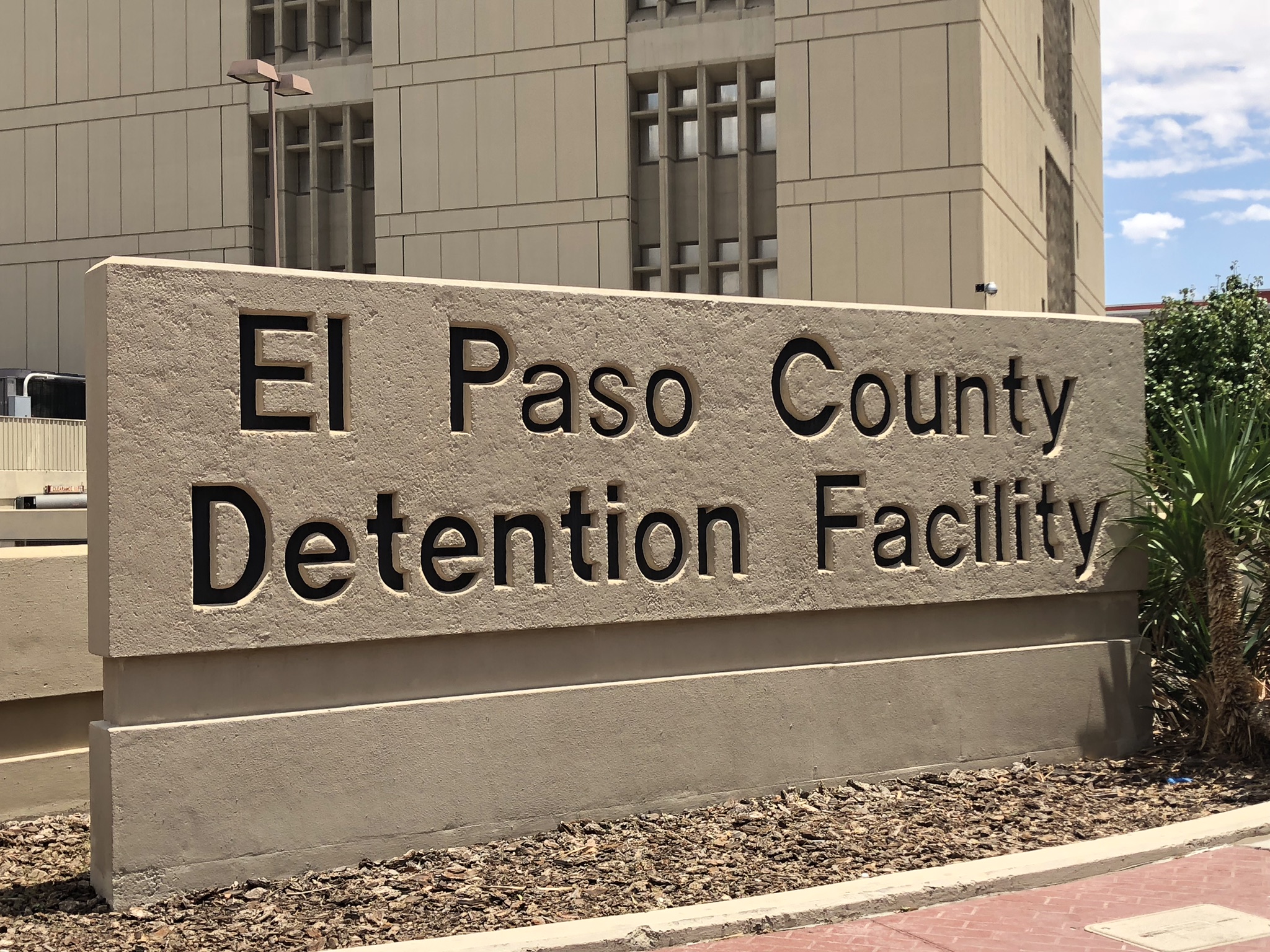
First let me say that being on the border caused me to weep! Being present at the El Paso county courthouse across from the Federal Detention Facility and the Federal Courthouse in Texas painfully brought home to me how the Trump administration is using the law to inflict pain. As an attorney, it is very disturbing to experience law as oppression.

In El Paso a diverse delegation gathered for breakfast on the morning of June 26, 2018. The Associated Federation of Teachers (AFT) had convened their members, faith leaders, and members of other unions to witness to the trauma occurring to families on the border. I was honored to be in the midst of so many advocates (including Dolores Huerta, who told us she is 88 years old!) and concerned people.

Randi Weingarten, the President of AFT, was a wonderful hostess introducing all of us and helping us quickly build a community of shared purpose. She is trying to build the relationships of Unions with the faith community. Her wife, Rabbi Sharon Kleinbaum, was one of the major faith voices. Sharon is the senior rabbi of a synagogue in NYC. Together, they have been working on this shared activism.


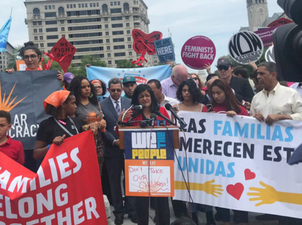
After breakfast and a bit of organizing, we drove in vans down to the County Courthouse which is across the street from the Federal Courthouse and the Federal Detention Facility. With a dozen cameras and various reporters we spoke out about the anguish of family separation and family detention. There were Texan Legislators, county officials, union representatives and faith leaders. But what got me in the extreme heat was the anguish in the block. At one point I had to walk away and weep for our nation and for our people.

I wasn’t scheduled to speak at the Courthouse, but Randi decided that we needed a faith voice there. I was honored that she called on me. My brief message was to acknowledge that I had had to walk away from the press conference to weep for our nation. But that my message for us was from Micah. What does God ask of us? “Act justly, love tenderly and walk humbly.” Our nation is failing this mandate. We are failing to act justly. We as a nation are not loving. Our leadership is not walking humbly. We must repent and change our course of action.

After an hour of public witness we boarded yellow school buses. These school buses were provided by the leadership of the local school district so that about 150 of us could go to Tornillo Children’s Detention Facility. We headed off with press cameras rolling.

Tornillo is a border crossing spot about 55 miles outside of El Paso. On the way we saw the border wall that is prominent on the landscape. Tornillo is a small agricultural village where there is high levels of arsenic in the water and no sewage treatment plant, sidewalks, street lights. There the border crossing includes a child detention facility.

We held our prayer vigil outside the gates of the border crossing/detention facility. My message there was from Pope Francis’ exhortation on holiness. There he calls on us to stand in the shoes of our immigrant brothers and sisters “who risk their lives to offer a future to their children. Can we not realize that this is exactly what Jesus demands of us?” I spoke directly to Speaker Ryan to pay heed to Pope Francis’ teaching.

After an hour-long vigil in the very hot sun, we attempted to deliver toys and books to the children at the facility. As expected, we were turned away without accomplishing our goal. But, our contribution will go to Annunciation House in El Paso. We heard that they had just received 32 parents released by ICE but still disconnected from their children. Most had not even talked to their children since they had been separated. But the expectation (dare I say hope or plan) is that the children will be reunited with them there.

We left the border and headed to the airport for the long journey home. Delayed planes only stretched out the time for reflection and absorbing the experience, the pain and the worry for our nation. I was grateful to have gone in this mixed delegation. It was doubly painful that the Muslim ban decision came out while we were at the Courthouse. But how good to stand together.

While this trip made me weep for our nation, it also caused me to think of what Walter Brueggemann says is the source of prophetic imagination. He calls us to touch the pain of the world as real…and in the process we will release an active experience of hope. So in the midst of the pain of the world that makes me weep, I pray that we might be a community strong enough to sustain each other. In that very process we together become the active hope…I pray to the Lord.

New Ways Ministry’s Work for LGBTQ Equality

New Ways Ministry’s Work for LGBTQ Equality

Sister Jeannine Gramick, SL
June 28, 2018

NETWORK is thrilled to celebrate Pride Month with New Ways Ministry. In the Catholic world, we often find that members of the LGBTQ+ community are not recognized or affirmed. We know that people of all sexual orientations and gender identities have human dignity and we are called to treat all with love and respect. We applaud New Ways Ministry and their work as a Catholic organization to “promote the acceptance of LGBT people as full and equal members of church and society.”


The Catholic movement for LGBT equality has reached a point I had never dreamed possible when I first became involved with the LGBT community almost 50 years ago.With Pope Francis’s examples of openness and dialogue, and his encouragement of pastoral accompaniment, I have seen many church leaders and institutions willing to welcome LGBT Catholics to their rightful place in the faith community.

New Ways Ministry has been cataloguing the development of LGBT-friendly Catholic parishes for about two decades. In the last year or so, we have seen a significant increase in the number of faith communities who have adopted some form of public affirmation of LGBT people. Some parishes even have full-blown LGBT ministries of education, spiritual development, and personal support.

On Catholic college campuses, the growth in LGBT equality has been even greater. Schools are establishing gender-neutral bathrooms and dorm policies. Courses in LGBT history, theology, and spirituality are increasing. LGBT faculty members are receiving employment benefits for their spouses. Most importantly, young students are leading the way with calls for greater inclusion for LGBT people.

This tremendous growth is certainly a blessing to be treasured, but we mustn’t be swayed to think that all the work has been done. New Ways Ministry has been involved in working to end the terrible scourge of unjust firings of LGBT people who work at Catholic institutions. We are encouraging parishes, schools, and religious congregations to adopt employment non-discrimination policies regarding sexual orientation, gender identity, and marital status.

Internationally, we are involved in developing the Global Network of Rainbow Catholics (GNRC), a coalition of Catholic LGBT organizations and ministries from around the world. At the top of the GNRC agenda is raising awareness about many countries around the globe that are adopting laws that criminalize LGBT people, who not only face arrests, imprisonment, and torture at the hands of government officials, but also experience violence and terror from their fellow citizens. New Ways Ministry and the GNRC are trying to get Catholic leaders to speak out against these horrendous human rights abuses.

Within our own church, New Ways Ministry is working to promote support for lesbian nuns and gay priests, brothers, and deacons. We have been sponsoring gatherings for these individuals with leaders of religious communities and with formation/vocation personnel.

Finally, although New Ways Ministry has had the support of thousands of Catholics over the last few decades, there have been none more generous, courageous, and consistent than the communities of women religious. It is not an exaggeration to say that we would not be in existence today if it were not for the support of the nuns.

Yes, the Catholic LGBT movement has come a long way, but we still have a long way to go!


Jeannine Gramick, SL is a Sister of Loretto and a co-founder of New Ways Ministry.

A Play Date to Oppose Family Separation

A Play Date to Oppose Family Separation

Daisy Pitkin
June 27, 2018

On June 13th, I and about 15 other parents and our children went to Representative McSally’s District Office in Tucson, Arizona to raise our deep concern over the separation of families at the border. Congress is in session, so Rep. McSally was not in her office. While waiting to see if we could speak with her by phone, we sang songs, read books, and ate peanut butter and banana sandwiches. We called our visit a “play-date,” and while we were there, some of the children filled out office-supplied opinion forms. Carter, who is ten, wrote: “Please make this stop it is realy [sic] wrong.”

We went to McSally’s office knowing that she would not be there, but after hearing about the suicide death of Marco Antonio Munñoz after CBP agents forcibly tore his three-year-old son from his arms, and after learning that hundreds of separated children are being held at shelters right here in Tucson, we felt it urgent to reach out to her in person. We are her constituents. She represents us in Congress. Isn’t this the way representative democracy is meant to work?

McSally issued a statement in response to our visit. It began, “It is most unfortunate that this group, organized by radical activists, broke into our office today to disrupt the workplace and prevent us from serving constituents…” She went on to claim that visits like ours “distract from the many issues our country faces.” Again, we are her constituents. We were there to speak with her about an urgent issue facing our country, happening to children and families in our community.

On the night after our play-date, my three-year-old son had a nightmare. I rushed to hold him and to quiet him so he wouldn’t wake his 9-month-old sister. He’d dreamed about a tiger scratching at his window, he said. “Tiger” has become a kind of stand-in for all sorts of unknowns, particularly sounds he doesn’t recognize. I asked if he could hear the branch scraping the window in the breeze. He nodded. I asked if that could that be the “tiger.” He nodded again, and after a few minutes, he fell back to sleep holding my hand. As I lay next to him, I wondered what a stranger might have said to him if he had awoken somewhere away from me. What would have happened if he had awoken to no one?

For me, and I imagine for many others who are outraged by the barbarity of separating families, this is the root of the issue: It is inhuman to make a child alone in the world, or to place her with strangers who aren’t supposed to touch or hold her, who don’t know how to comfort her.

More than 2,300 children have been separated from their parents or guardians due to the Trump administration’s “zero tolerance” policy. Hundreds of these children are being held at a shelter three miles from my home. It is possible that some of them will not see their families again. Yesterday, President Trump signed an executive order to detain immigrant children in camps indefinitely, this time along with their parents.

These policies are monstrously cruel. They are an attack on things I hold very dear: family, the well-being of children, empathy, community, love. So I and my friends who are parents and our children will continue to raise this grave moral issue to Rep. McSally as well as to our senators, city councilpersons, mayor, governor, and anyone else in a position to create safe, compassionate, humane immigration policies. Play-date anyone?


Daisy Pitkin is an Assistant Professor at the University of Arizona Honors College, where she teaches critical thinking and creative writing courses. She is the proud mama of two sweet children, ages 3 years and 9 months.

Faces of our Spirit-Filled Network: Rachelle Wenger

Faces of our Spirit-Filled Network: Rachelle Wenger

Rachelle Wenger
June 25, 2018

How did you first learn about NETWORK?

I first learned about NETWORK through Dignity Health. Dignity Health is one of the largest healthcare systems in the nation. Its mission is to deliver compassionate, high quality, affordable health care service—especially to those who are poor and vulnerable. Advocacy is central to its mission, and NETWORK has been a longtime partner in helping the organization to advance its policy priorities. As the Director of Public Policy & Community Advocacy, I can’t imagine being able to do my work without our collaboration with NETWORK.

What inspired you to get involved and join NETWORK?

To sum it up, it’s the Sister-Spirit that inspires me and that continually draws me in. I’ve been so fortunate to grow up (and be raised by) incredible women religious. They’ve shaped my love for people and community since I was a little girl—through my formative years in elementary school and high school. And as I came to Dignity Health as a young mother and someone starting out in a career in Catholic healthcare, it was always the Sister-Spirit that moved me, made most sense to me, and gave me the reason for why and how I’m called to this work.

What issue area are you most passionate about?

Other than health and healthcare, I’m most passionate about immigration, equity issues (homelessness and poverty), and the environment. As an immigrant to this country from the Philippines at age of five, I have a deep understanding of what it means to be “the other,” to be displaced and to be indebted (this utang ng loob, literally translated in Tagalog means, “a debt of one’s inner self”). All this while continuing to practice what it means to be authentically one’s self, value this broader sense of being home, and give back to and cherish community. There is so much suffering in our neighborhoods, our nation, and our world today. I believe that our passions direct us to seek justice, build meaningful connections, and experience joy and love.

How are you engaging your community on important social justice issues?

I get to wake up to the best job in the world. I wouldn’t even call it work, except that I actually get paid for doing something I love. At Dignity Health, I get to live out my passions, work on social justice issues at both the legislative/regulatory policy and community levels, mobilize grassroots advocacy efforts, and partner with so many amazing organizations, businesses, and leaders of all sorts of shapes, sizes, and backgrounds.

How has your advocacy for social justice shaped your view of the world?

I’m often on a plane these days and I never seem to tire looking out of the window—the view still takes my breath away. The sun sometimes gets too bright or the darkness too mysterious and I have to put the window cover down. And so I close my eyes to reflect and pray. Life is so precious. Every day that we get to have to be in it, to be a part of it, and do our part for it—makes me feel so blessed. Advocacy is more than just seeking social justice; it’s actually experiencing this incredible gift in the world called humanity.

How does your faith inspire you to work for justice?

Faith is all things quite alive in and around me, and is also in those things in between that seem like contradictions—that in the moment can’t get quite pinned down by time. In a word, faith is everything to me. Faith lets me know that the work I do to advance justice matters—that it’s meaningful and that there’s more work still to be done.

Who is your role model?

Wow, to pick one would be impossible for me. Every day, at every turn, there is someone or even something that inspires me and that I want to practice to become. Like my dad, who is recovering from a stroke and who I see fighting his way back from paralysis to walk again; like Sister Regina Ann, who I got to know during a break at a NETWORK Board retreat while we sat under a dogwood tree as if the chaos of time stopped for a moment so we could enjoy the beautiful spring afternoon; like my children, Keana Sky and Tristan Blue, who show me the resilience and unbreakable bond of love.

Is there any quote that motivates or nourishes you that you would like to share?

I recently gave a TedTalk style presentation at the closing plenary session of a CleanMed conference, since titled “Finding Your Voice in the Climate Story.” And there was this one quote from Nigerian storyteller Chimanda Ngozi Adichie that I included: “The single story creates stereotypes. And the problem with stereotypes is not that they are untrue, but that they are incomplete. They make one story become the only story…The consequence of the single story is this: … It makes our recognition of our equal humanity difficult.”

It’s just such a powerful way of recognizing what harm we do to ourselves and each other when we fall for the single story. How truly precious everyone’s voice is and how our own story contributes to the greater story of what is humanity.

What social movement has inspired you?

There are lessons to be gained from all the modern day social movements. The one I’m most interested in right now is how our country will continue to grapple with healthcare so that it is accessible and affordable to all. We’ve been able to make gains, but we’ve also made some steps backwards. What inspires me most are the many women and men that work day in and day out to care for others—despite the political winds, despite the brokenness still of our nation’s healthcare system, despite the long road ahead to one day get to a place where we no longer look at healthcare solely as a human right, but as something everyone can depend on during their time of need.

Not a Page in Your Handbook

Not a Page in Your Handbook

Garrison Mays
July 21, 2018

A few weeks ago, I took it upon myself to binge watch the second season of Dear White People, a series on Netflix. There was an episode where one of the supporting characters Lionel, a gay Black man, goes on a little adventure to find the right gay network where he can thrive and be himself. He goes through all the gay stereotype crowds: the Black gays, the theater gays, the overly sexual gays, etc. After his party hopping, he finds out that none of them accept him, regardless of the fact that they all share similar sexual identities. It should have worked out, right? Very wrong. Some people didn’t like Lionel because he wasn’t “gay enough,” others because he wasn’t “Black enough.” The list goes on as to why Lionel doesn’t fit other’s ideas of what he should be.

Like Lionel, I went to a Predominately White Institution (PWI) as an openly gay Black man.  However, unlike Lionel who had some sort of base network, I had a hard time finding a group  that understood and supported the three important attributes – my sexual orientation, my race, and my gender – that make me who I am.  In some groups, I got dumb questions about my blackness, and in others I got dumber questions about my gayness to the point where they weren’t inquisitive, but disrespectful.

Throughout my four years in college, it has been very difficult to feel 100% comfortable at this PWI. I have always bounced around from one white group to another, straight and gay groups alike, to better understand my place.  Lionel’s main network is made of thoughtful, smart, and decent Black people who don’t judge him by his gayness or his awkward blackness, but by his actions and the way he communicates. As my time was wrapping up at this PWI, I found a space that was judgement free with different types of people: straight, gay, Black, Latinx/Mexican, trans–all thoughtful and thought-provoking individuals that care about being inclusive and inquisitive about things that are unfamiliar.

I say all of this to say that Pride Month is a time for celebrating who you are. I for one bask in and appreciate this month so much as I try to find my place in this world that is just now coming around to the idea of the LGBTQ+ community. Nevertheless, this is an ongoing experience for me. I always try and fight the urge not to exclude a person because they don’t abide by the textbook or the website definition of what a queer person is. I’m not for everyone and vice versa–I understand that. But everyone deserves a chance to try and be comfortable in their surroundings. Happy Pride Month!

Garrison is a young chocolate smart-alec, who shares his opinion and wants to hear yours. He graduated from Xavier University in Cincinnati, OH in the spring of 2018 with a bachelor’s in marketing. He is excited to explore the opportunities that present themselves to him moving forward. He loves Beyoncé more than most, his favorite movies are The Incredibles and Reservoir Dogs, and you can find him lying in his hammock listening to the podcast The Read to decompress from people.