



A System Built on Waiting
Uncertainties of Immigration Cases Puts Life on Hold
Steven Perez
June 3, 2026
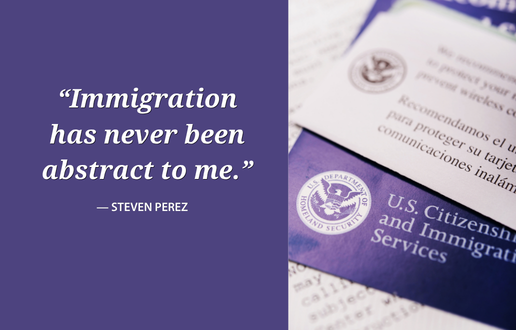
Immigration has never been abstract to me. My family is mostly immigrants, so it’s always been part of normal life – just not in the way it usually gets talked about in politics. It shows up in small things: conversations about paperwork that’s “still processing,” family members planning their lives around whether something might get approved, or decisions that always seem slightly temporary because nothing is fully guaranteed yet.
What’s hard to explain is how much of it comes down to waiting. Not the kind of waiting where you sit around doing nothing, but the kind where life keeps moving and you must move with it anyway. People work, go to school, raise families, pay bills, but there’s always this background uncertainty about whether things will stay the same a year from now.
That uncertainty isn’t just personal. It’s built into the system. According to the Transactional Records Access Clearinghouse at Syracuse University, there are over 3 million pending immigration court cases in the United States right now (TRAC Immigration). That number is hard to really grasp until you think about what it means in practice: millions of people stuck in a process that can take years to resolve.
Long processing delays can seriously affect people’s ability to work, stay with family, and plan their lives in any stable way. It’s not just a legal issue since it becomes something that shapes everyday decisions in a very real way. I’ve seen that on a smaller scale in my own life. Even when people are doing everything “right,” things could change depending on timing or decisions outside their control. It makes long-term planning feel different. Not impossible, but less certain.
Serious attempts to fix this issue legislatively, falling short of overhauling the entire system, would mean measures that address some of the delays that have become normal at this point. Increasing funding for immigration courts and staffing would alleviate a major part of why cases take so long, that there simply aren’t enough judges and support staff to keep up with the volume. If the system is overloaded, it can’t function at a reasonable pace.
Another helpful measure would be to streamline certain application and work authorization processes, so that people aren’t waiting year for basic decisions. For a lot of people, being able to work legally isn’t just about income; it’s about stability. When that gets delayed, everything else gets delayed too.
It would also be helpful to make the process more consistent across different courts and locations. Currently, outcomes and timelines can vary a lot depending on where someone’s case ends up, which creates an uneven system that’s hard to predict or plan around.
The current situation, with its backlogs and structural pressure, isn’t sustainable. From my perspective, what stands out most is how normalized waiting has become. It’s easy to talk about immigration in terms of a political debate about rules and enforcement. But underneath that, it’s also about whether the system can keep up with the lives it’s affecting. Right now, for a lot of people, it can’t, so it becomes a waiting issue.
That gap between how fast life moves and how slow the system responds is where most of the real impact is happening. Waiting isn’t neutral. It affects decisions, relationships, opportunities, and the way people think about their future. It’s not always visible from the outside, but it’s a constant reminder for the people inside it.
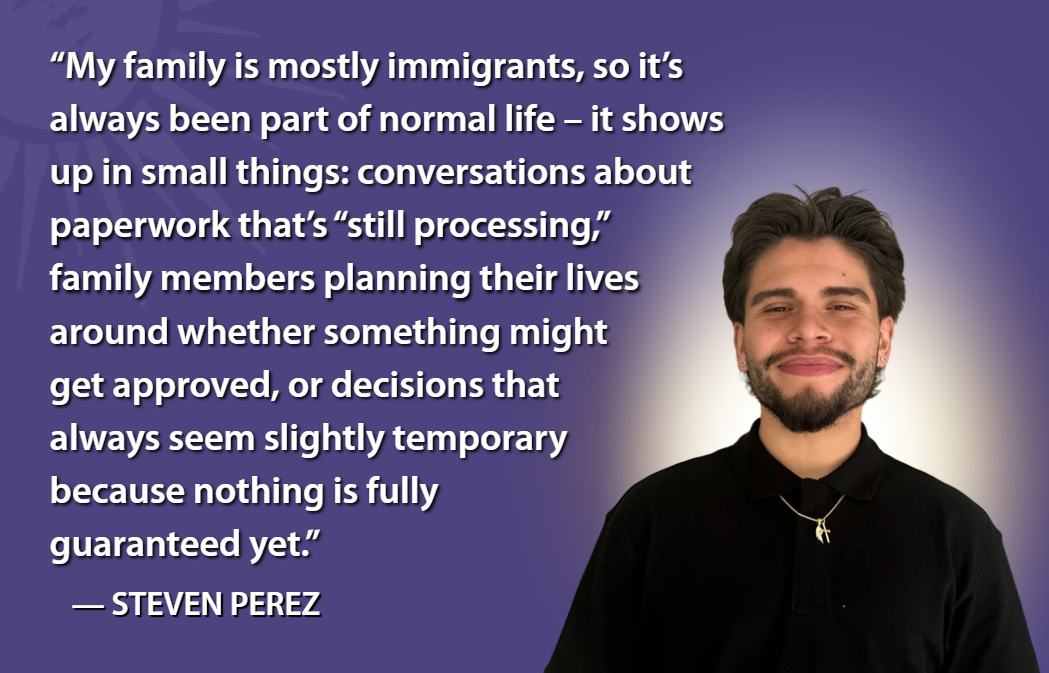
Steven Perez is a student a student at Barry University in Miami and a Sr. Carol Coston, OP Fellow in NETWORK’s Young Advocates Leadership Lab (Y.A.L.L.).
