
Tag Archives: voting rights

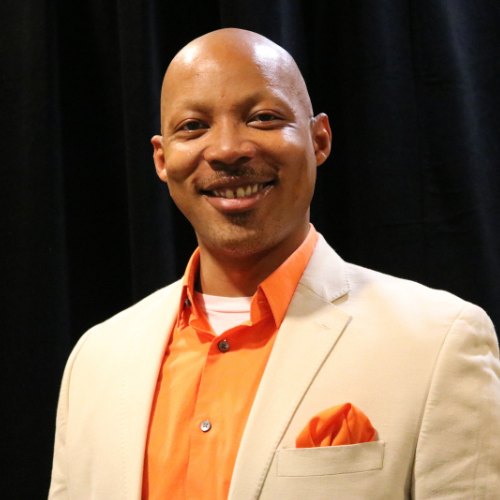
African American male holding right fist in the air and protest sign in front of U.S. Supreme Court Building

Erasing the Black Vote

Erasing the Black Vote

From the Supreme Court and Congress to State Legislatures, the Right to Vote is Consistently Under Attack

Min. Christian S. Watkins
May 15, 2026


My grandmother had to pay poll taxes after she was granted the right to vote. My mother was a Black Panther and community organizer, who still remembers drinking from separate water fountains while fighting for voting rights. They both taught me that voting is sacred. Not because it is somehow a magical fix, but because it is powerful to participate in our own liberation. It is one of the few tools Black communities have held that those in power have consistently tried to limit. 

Every generation has faced new strategies designed to narrow participation while preserving the appearance of fairness, and this is our time to live into that rich legacy of overcoming. 

In 2026, those strategies continue with renewed force. With the April 29 Louisiana v. Callais decision, the Supreme Court has further weakened key protections of the Voting Rights Act, opening the door for state legislatures to redraw districts in ways that decimates Black political power and the influence of other communities of color, which they have begun to do with ruthless ferocity.
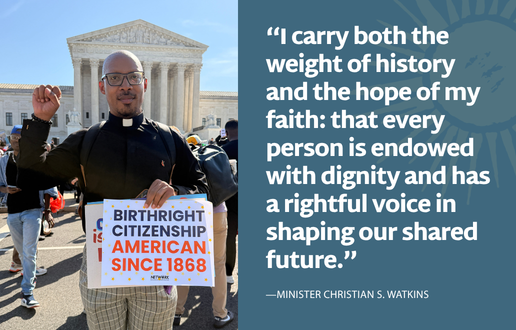
 

African American male holding right fist in the air and protest sign in front of U.S. Supreme Court Building

Min. Christian S. Watkins at the “Protect Birthright Citizenship” protest in front of the U.S. Supreme Court in Washington D.C.


This devastating blow and its fallout, which threatens to wipe out Black representation in Congress and state houses, especially in the South, are only part of the picture. At the same time, Congress has failed to restore protections, even as restrictive voting laws spread across the country. New federal and state-level proposals raise additional concerns. 

Efforts to create national “verified voter” systems or impose stricter documentation requirements for registration are framed as security measures. In practice, these “show your papers” policies risk excluding those least likely to have ready access to passports or birth certificates: disproportionately Black, Brown, low-income, and naturalized citizens. These policies—as well as the disastrous Supreme Court decision—do not exist in a vacuum. They reflect longstanding patterns of exclusion dressed in new language. 

Voting alone will not solve every injustice, but without it, the communities most affected by injustice are pushed even further from the decisions that shape their lives. 

So, the task before us is clear. We must prepare, participate, and protect the vote: 

  • Check and update your voter registration early and help others do the same. 
  • Make a concrete plan to vote—early is preferable, but safely by mail or on Election Day if necessary. 
  • Follow all instructions carefully if voting by mail and return ballots promptly. 
  • Learn your rights and share voter protection resources within your community. 
  • Support election integrity by volunteering as a poll worker or nonpartisan monitor. 

These actions are practical, but they are also moral. Catholic Social Teaching reminds us that participation in public life is a form of charity because it shapes the conditions in which people either flourish or struggle. When access to the ballot is restricted, it is not just a procedural issue—it is a wound to human dignity and the common good.
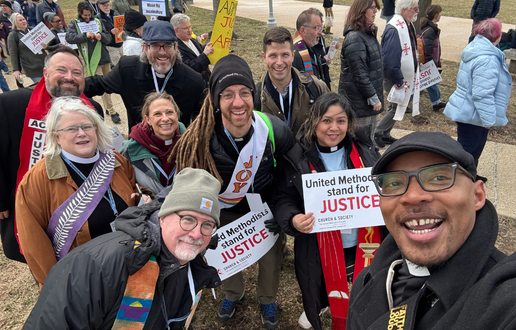
 

Diverse group of faith leaders holding protest signs and in "selfie" style at a protest.

Min. Christian S. Watkins (right) and fellow faith leaders at the “Faithful Resistance” protest in Washington D.C.

Voting is not the whole of democracy, but it is one of its load-bearing walls. Without it, accountability weakens and exclusion deepens. With it, we create the possibility—however imperfect—of a more just and inclusive society. 

In my own work, and in the mission of NETWORK, voting rights remain central because they sit at the intersection of so many struggles—racial justice, economic equity, and the fight against concentrated power. I carry both the weight of history and the hope of my faith: that every person is endowed with dignity and has a rightful voice in shaping our shared future. 

The question before us is not simply whether we will vote. It is whether we will defend the conditions that make voting meaningful for everyone. That work requires persistence, solidarity, and a refusal to accept disenfranchisement as inevitable. 
Min. Christian S. Watkins is NETWORK’s Senior Government Relations Advocate.

Lent’s ‘Crosses of Resistance’ — Voting Rights 

Lent’s ‘Crosses of Resistance’ Voting Rights

Ash Wednesday is a Call To Resist the Trampling of Voting Rights

Min. Christian S. Watkins
February 18, 2026


Lent begins with the smudge of ash on our brows and the whispered truth: “Remember you are dust, and to dust you shall return.” In that stark confession, the Church names both our fragility and our belovedness before God. 

Yet while Christians prepare to walk this 40-day road of repentance and renewal, congressional Republicans are advancing a different kind of mark, one that would brand millions of citizens at the ballot box. Two bills, the Senate’s SAVE America Act (S.3752) and the House’s Make Election Great Again (MEGA) Act (H.R.7300), carry on the egregious legacy of the stalled SAVE Act (H.R.22) and its promotion of a “show your papers” regime.  

These bills force eligible voters to present proof of citizenship in person to register to vote, update their registration, and in some cases even to cast a ballot. This functionally eliminates online and mail-in registration and sabotages voter registration drives.

More info: How the SAVE Act would disenfranchise rural voters (Center for American Progress)

The House’s MEGA Act also piles on restrictive photo ID requirements, bans universal vote-by-mail, and mandates aggressive voter roll purges every 30 days, ending long-standing protections against last-minute disenfranchisement. This would hand the federal government sweeping power to decide which citizens get to participate in our democracy. 

logo for NETWORK's Crosses of Resistance 2026 Lent seriesCatholic Social Teaching names participation in public life, including voting, as a moral duty flowing from the dignity of the human person and our call to the common good. Any law that weaponizes bureaucracy against people in poverty, the young, Black and brown communities, and those without stable housing stands in direct opposition to that duty. 

During Lent, the prophets condemn those “who trample on the needy, and bring to ruin the poor of the land.” The SAVE 2.0 and MEGA Acts are part of a coordinated effort to trample voting itself. This is not about preventing the rare noncitizen vote; it is about manufacturing distrust so that a shrinking minority can cling to power.

We have seen the Trump administration escalating demands for sensitive voter data—including a push tied to the atrocities carried out in Minnesota—while federal law enforcement has targeted election records in Fulton County, Georgia. 

The Gospel calls us to repent of the country’s long history of racist voter suppression, to organize, accompany, and advocate so that every eligible neighbor can vote without fear or unnecessary obstacle. This is as important as feeding the hungry or visiting the incarcerated person. 

The ballot is not a perk for the well-resourced. It is part of the dignity of the human person in public life – a way for our leaders and policies to represent us. When lawmakers criminalize paperwork mistakes, punish election officials for doing their jobs, and build systems that block working people, elders, students, disabled voters, and low-income families, they are not strengthening democracy. 

As we journey toward Easter, we proclaim a crucified and risen Christ who breaks chains, not ballots; who opens doors, not shutters them; who pours out the Spirit so that every voice can testify. Will we consent to new crosses laid upon the backs of the poor in the voting booth, or will we shoulder the cross of resistance and insist that our laws reflect God’s liberating love? 

Take Action with NETWORK: Help us resist legislation that denies voting rights to all eligible voters. Call your Senators and let them know that these bills must not pass! Call this number:  (202) 915-4877.

Min. Christian S. Watkins is NETWORK’s Senior Government Relations Advocate.
We Must Help Folks to Vote

We Must Help Folks to Vote

National Voter Registration Day Reminds Us That This Land is Our Land

Theresa Lindberg
September 16, 2025
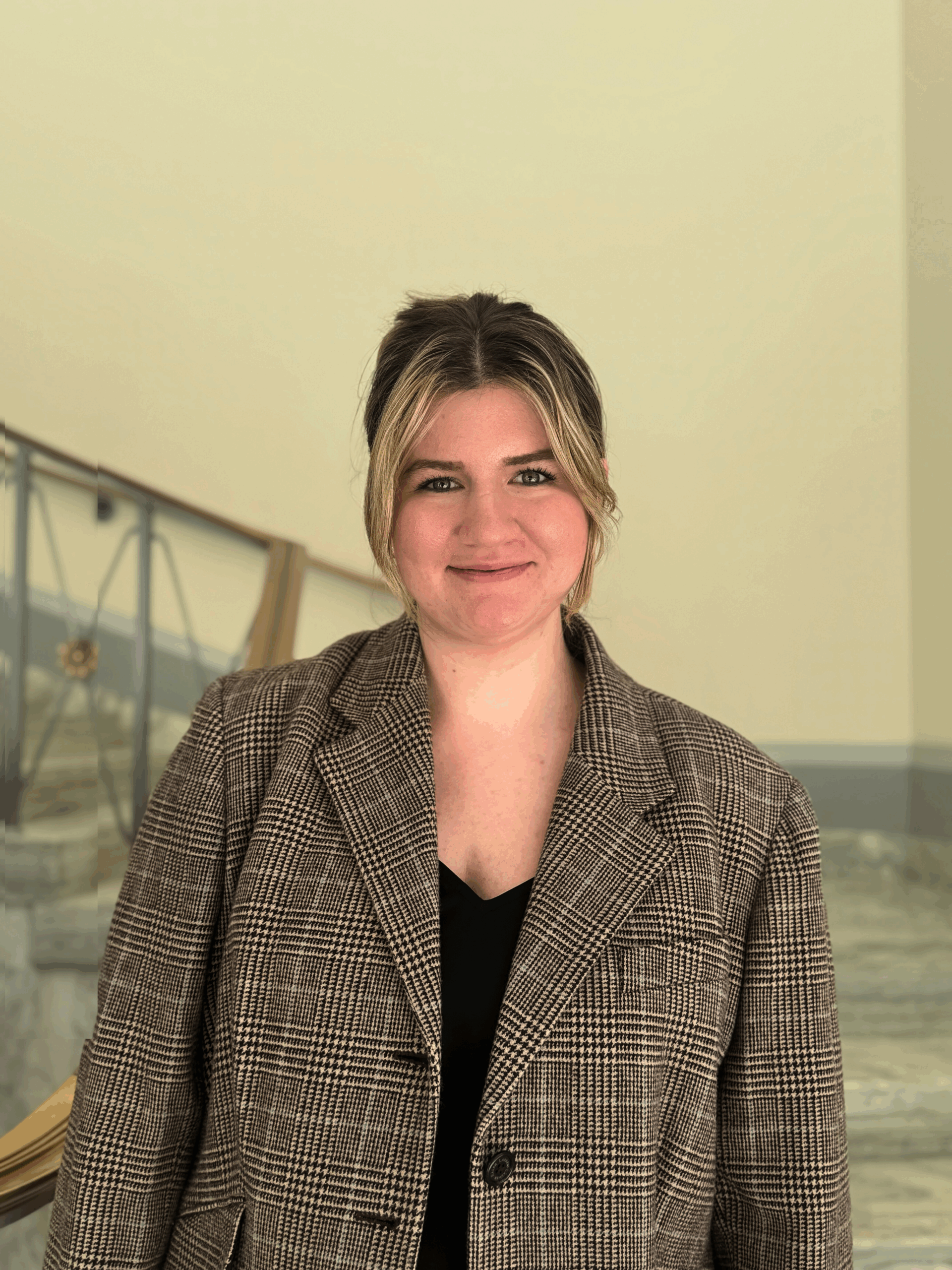
Theresa Lindberg, a 2025 Sr. Carol Coston Fellow in NETWORK's Young Advocates Leadership Lab (Y.A.L.L.)

Theresa Lindberg

I love folk music. My love first started in elementary school when my teacher played “This Land Is Your Land” by Woody Guthrie. With his simple melody and distinct tune, Woody galvanized the country with each line. His unifying message resonated with Americans, becoming an anthem for many Americans who felt the government wasn’t representing their interests. 

I think Woody knew something we all struggle to believe now: that we have collective power as people. But billionaires make this hard to believe when they are allowed almost entirely to fund political campaigns. After all, our elected officials are meant to represent us, not the top one percent, right? It’s important to keep this in mind on National Voter Registration Day (September 16).

No matter the amount of money in our bank account, we all value the freedom to choose our elected officials. But some politicians are supporting undemocratic legislation that favors their own interests over those of their constituents. Here’s the issue: our government system has become increasingly unresponsive to the needs of the people to win favor with the top one percent.

With increasing numbers of voter registration forms going missing, lost absentee ballots, and the consideration of restrictive voting bills like the SAVE Act, more marginalized groups, including rural communities, Black and Brown voters, folks with disabilities, and elderly people, are targeted. We all want to live in a world where each of these voices, including our own, is equally valued.

I saw this play out myself last fall when I helped register several hundred people to vote on my campus community here in Milwaukee. I had countless conversations with students and other community members who all said the same thing: registering to vote feels impossible.

And getting to the polls? Even harder. In the case of my friend Grace, we mailed in her request for an absentee ballot three months before the November 5 election and followed up with local election offices, calling the county clerk in both Milwaukee and Appleton.

She never received her ballot. I ended up driving her four hours round-trip so she could vote in person instead. But what would she have done without access to a friend’s car?

Unfortunately, due to the poor organization of absentee ballots and state laws that varied in their restrictions, many eligible voters were prevented from registering and blocked from the polls.

My belief in Catholic Social Justice teaching inspired me to serve as a voting rights advocate last fall. Whether we are Catholic, Protestant, Jewish, Muslim, Hindu, or Sikh, people of faith value representative democracy. We know what’s happening is wrong, but together we can protect our right to representation.

I especially like this line in Woody Guthrie’s song, “this land was made for you and me”. Together, we can protect our right to vote! Today, on National Voter Registration Day, let’s remind each other to get registered and to make it to the polls in November. By doing so, we continue to build the beloved community where our shared values are at the center.  

So, this National Voter Registration Day, put on some Woody Guthrie or your favorite folk singer and do your part. Call a friend to catch up and ask if they are registered! Have you changed addresses recently? Check your own status; it might have changed. And don’t forget our power as a collective. After all, this land is your land, and this land is my land. 

Theresa Lindberg is a student at Mount Mary University in Milwaukee and a returning Sr. Carol Coston Fellow in NETWORK’s Young Advocates Leadership Lab (Y.A.L.L.). 

Safeguard American Democracy: Oppose the American Confidence in Elections Act and Support the Freedom to Vote Act

Safeguard American Democracy: Oppose the American Confidence in Elections Act and Support the Freedom to Vote Act

Safeguard American Democracy: Oppose the American Confidence in Elections Act and Support the Freedom to Vote Act

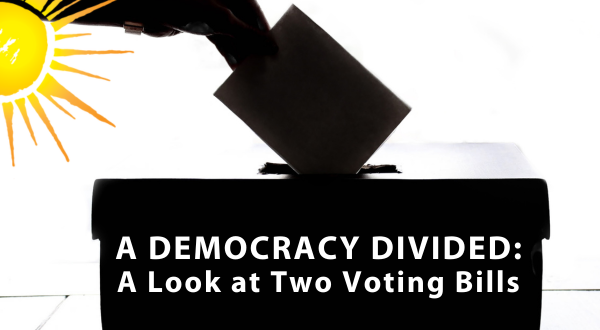
Safeguard American Democracy:Oppose the American Confidence in Elections Act and Support the Freedom to Vote ActOur country is divided on how to best safeguard American Democracy and the freedom to vote. Some favor continued progress towards a more inclusive democracy with expanded voting protections that benefit all citizens of voting age. Such proponents are in conflict with others who prefer restricted voting laws that make it more difficult for voters to cast a ballot, and whose policies tend to benefit wealthy corporations and individuals. NETWORK Lobby’s Build Anew policy agenda guides our work to forge a multifaith, multi-racial democracy where we all thrive. Paramount to this transformative change is unfettered access to voting. We ask all justice-seekers to join our efforts to safeguard American Democracy and oppose H.R. 4563—the American Confidence in Elections Act and support the Freedom to Vote Act.

While we thank God that the Supreme Court’s holding in Allen v. Milligan protected voting in Alabama’s Black and Brown communities by striking down gerrymandered congressional districts – and the voting power of these communities across the nation, political extremism is still a major threat to our democracy. In 2023, legislators in at least 11 states passed 13 restrictive voting bills. These restrictive voting measures were the result of concerted efforts by dark money special interests and self-serving politicians. Money was funneled to influence policymakers’ decisions to alter voting laws to make it harder for communities of color to vote. Instead of ensuring fair and equal representation promised in our Constitution, Republicans in states across the country have drawn partisan gerrymandered district maps designed to keep political parties and dark money special interests in power.

The prophet Isaiah’s judgement of the rulers and leaders of Jerusalem during their time of seeming prosperity is especially poignant. “They say that what is right is wrong and what is wrong is right; that black is white and white is black; bitter is sweet and sweet is bitter” (Is. 5:20). Sacred reflection is prologue to the contradictory nature of two election related bills recently introduced in the House — the Republican-crafted American Confidence in Elections (ACE) Act (H.R.4563) and the Freedom to Vote Act (FTVA) (H.R.11) — which has bipartisan backing.

The ACE Act (H.R.4563) would:

  • Limit the choices that voters have when registering to vote
  • Repeal President Biden’s Executive Order instructing federal agencies to encourage voter registration
  • Restrict the ability of voters to cast a ballot by mail
  • Create strict photo ID requirements
  • Reinforce partisan gerrymandering
  • Enhance the power of wealthy special interests by increasing contribution limits and maintaining the avenues for anonymous, or dark money, donations

The Act would also restrict private funding of the administration of elections, even as Congressional Republicans refuse to adequately fund the administration of federal elections. And, Washington, D.C. voters are singled out by the legislation as District voters would become guinea pigs for the states, with the establishment of a series of repressive restrictions, including dramatic reductions in drop box access for voters and onerous new voter ID and mail-in voting rules.

Conversely, FTVA (H.R.11), introduced by Rep. John Sarbanes (MD-03) in the House on July 17, 2023, is a transformational pro-voter, anti-corruption bill that is complementary to the John R. Lewis Voting Rights Advancement Act. Passage of this bill would be a vital step forward to live into Build Anew’s mission.

The FTVA (H.R.11) would protect the integrity of elections, simplify voter registration, and expand access to the polls. It would:

  • Protect local election officers and poll workers from harassment and intimidation
  • Limit gerrymandering
  • Shine light on “dark money” flooding into campaign advertising

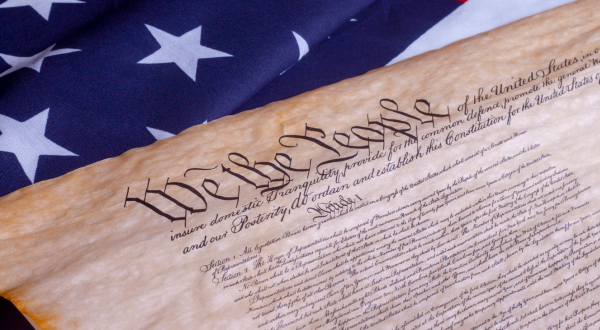
Untraceable funds allow wealthy individuals and corporations to exert undue influence over the political process and erode the democratic ideal of equal representation. The FTVA (H.R.11) would not allow money to effectively drown out the voices of everyday citizens it would enhance the aspirational principle of “we the people” from the Preamble to our Constitution.

The Catholic faith requires that we on honor human dignity. The rise of dark money and undisclosed corporate donations, coupled with restrictive voting measures, casts a shadow on the integrity of our democratic process, and results in diminished dignity for those left out of the process. We are called to recognize and respect the inherent worth and dignity of every human being, no exceptions!

Voting is not only a civic duty but also a means of upholding the dignity of every person, and allowing them to have a voice in shaping their communities, and the larger society. We must actively working towards the elimination of discrimination, prejudice, and systemic racism in all its forms, especially in our elections. NETWORK strongly opposes the House Republican American Confidence in Elections Act The ACE Act, H.R.4563) and calls for the swift passage of the Freedom to Vote Act (FTVA H.R.11).