
Tag Archives: democracy

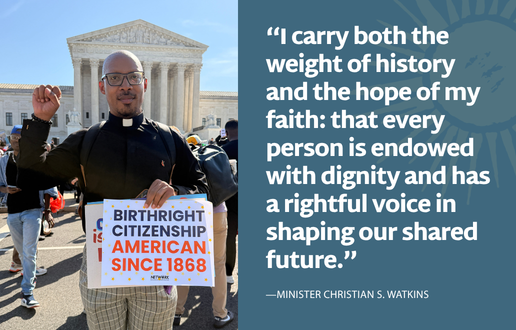
African American male holding right fist in the air and protest sign in front of U.S. Supreme Court Building

Erasing the Black Vote

Erasing the Black Vote

From the Supreme Court and Congress to State Legislatures, the Right to Vote is Consistently Under Attack

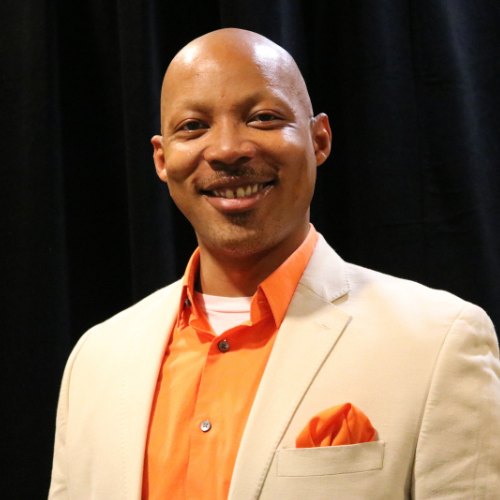
Min. Christian S. Watkins
May 15, 2026


My grandmother had to pay poll taxes after she was granted the right to vote. My mother was a Black Panther and community organizer, who still remembers drinking from separate water fountains while fighting for voting rights. They both taught me that voting is sacred. Not because it is somehow a magical fix, but because it is powerful to participate in our own liberation. It is one of the few tools Black communities have held that those in power have consistently tried to limit. 

Every generation has faced new strategies designed to narrow participation while preserving the appearance of fairness, and this is our time to live into that rich legacy of overcoming. 

In 2026, those strategies continue with renewed force. With the April 29 Louisiana v. Callais decision, the Supreme Court has further weakened key protections of the Voting Rights Act, opening the door for state legislatures to redraw districts in ways that decimates Black political power and the influence of other communities of color, which they have begun to do with ruthless ferocity.


African American male holding right fist in the air and protest sign in front of U.S. Supreme Court Building

Min. Christian S. Watkins at the “Protect Birthright Citizenship” protest in front of the U.S. Supreme Court in Washington D.C.


This devastating blow and its fallout, which threatens to wipe out Black representation in Congress and state houses, especially in the South, are only part of the picture. At the same time, Congress has failed to restore protections, even as restrictive voting laws spread across the country. New federal and state-level proposals raise additional concerns. 

Efforts to create national “verified voter” systems or impose stricter documentation requirements for registration are framed as security measures. In practice, these “show your papers” policies risk excluding those least likely to have ready access to passports or birth certificates: disproportionately Black, Brown, low-income, and naturalized citizens. These policies—as well as the disastrous Supreme Court decision—do not exist in a vacuum. They reflect longstanding patterns of exclusion dressed in new language. 

Voting alone will not solve every injustice, but without it, the communities most affected by injustice are pushed even further from the decisions that shape their lives. 

So, the task before us is clear. We must prepare, participate, and protect the vote: 

  • Check and update your voter registration early and help others do the same. 
  • Make a concrete plan to vote—early is preferable, but safely by mail or on Election Day if necessary. 
  • Follow all instructions carefully if voting by mail and return ballots promptly. 
  • Learn your rights and share voter protection resources within your community. 
  • Support election integrity by volunteering as a poll worker or nonpartisan monitor. 

These actions are practical, but they are also moral. Catholic Social Teaching reminds us that participation in public life is a form of charity because it shapes the conditions in which people either flourish or struggle. When access to the ballot is restricted, it is not just a procedural issue—it is a wound to human dignity and the common good.


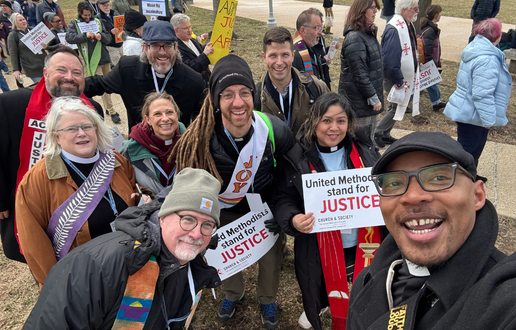
Diverse group of faith leaders holding protest signs and in "selfie" style at a protest.

Min. Christian S. Watkins (right) and fellow faith leaders at the “Faithful Resistance” protest in Washington D.C.

Voting is not the whole of democracy, but it is one of its load-bearing walls. Without it, accountability weakens and exclusion deepens. With it, we create the possibility—however imperfect—of a more just and inclusive society. 

In my own work, and in the mission of NETWORK, voting rights remain central because they sit at the intersection of so many struggles—racial justice, economic equity, and the fight against concentrated power. I carry both the weight of history and the hope of my faith: that every person is endowed with dignity and has a rightful voice in shaping our shared future. 

The question before us is not simply whether we will vote. It is whether we will defend the conditions that make voting meaningful for everyone. That work requires persistence, solidarity, and a refusal to accept disenfranchisement as inevitable. 

Min. Christian S. Watkins is NETWORK’s Senior Government Relations Advocate.

Lent’s ‘Crosses of Resistance’ — Voting Rights 

Lent’s ‘Crosses of Resistance’ Voting Rights

Ash Wednesday is a Call To Resist the Trampling of Voting Rights

Min. Christian S. Watkins
February 18, 2026


Lent begins with the smudge of ash on our brows and the whispered truth: “Remember you are dust, and to dust you shall return.” In that stark confession, the Church names both our fragility and our belovedness before God. 

Yet while Christians prepare to walk this 40-day road of repentance and renewal, congressional Republicans are advancing a different kind of mark, one that would brand millions of citizens at the ballot box. Two bills, the Senate’s SAVE America Act (S.3752) and the House’s Make Election Great Again (MEGA) Act (H.R.7300), carry on the egregious legacy of the stalled SAVE Act (H.R.22) and its promotion of a “show your papers” regime.  

These bills force eligible voters to present proof of citizenship in person to register to vote, update their registration, and in some cases even to cast a ballot. This functionally eliminates online and mail-in registration and sabotages voter registration drives.

More info: How the SAVE Act would disenfranchise rural voters (Center for American Progress)

The House’s MEGA Act also piles on restrictive photo ID requirements, bans universal vote-by-mail, and mandates aggressive voter roll purges every 30 days, ending long-standing protections against last-minute disenfranchisement. This would hand the federal government sweeping power to decide which citizens get to participate in our democracy. 

logo for NETWORK's Crosses of Resistance 2026 Lent seriesCatholic Social Teaching names participation in public life, including voting, as a moral duty flowing from the dignity of the human person and our call to the common good. Any law that weaponizes bureaucracy against people in poverty, the young, Black and brown communities, and those without stable housing stands in direct opposition to that duty. 

During Lent, the prophets condemn those “who trample on the needy, and bring to ruin the poor of the land.” The SAVE 2.0 and MEGA Acts are part of a coordinated effort to trample voting itself. This is not about preventing the rare noncitizen vote; it is about manufacturing distrust so that a shrinking minority can cling to power.

We have seen the Trump administration escalating demands for sensitive voter data—including a push tied to the atrocities carried out in Minnesota—while federal law enforcement has targeted election records in Fulton County, Georgia. 

The Gospel calls us to repent of the country’s long history of racist voter suppression, to organize, accompany, and advocate so that every eligible neighbor can vote without fear or unnecessary obstacle. This is as important as feeding the hungry or visiting the incarcerated person. 

The ballot is not a perk for the well-resourced. It is part of the dignity of the human person in public life – a way for our leaders and policies to represent us. When lawmakers criminalize paperwork mistakes, punish election officials for doing their jobs, and build systems that block working people, elders, students, disabled voters, and low-income families, they are not strengthening democracy. 

As we journey toward Easter, we proclaim a crucified and risen Christ who breaks chains, not ballots; who opens doors, not shutters them; who pours out the Spirit so that every voice can testify. Will we consent to new crosses laid upon the backs of the poor in the voting booth, or will we shoulder the cross of resistance and insist that our laws reflect God’s liberating love? 

Take Action with NETWORK: Help us resist legislation that denies voting rights to all eligible voters. Call your Senators and let them know that these bills must not pass! Call this number:  (202) 915-4877.

Min. Christian S. Watkins is NETWORK’s Senior Government Relations Advocate.

Why Midterms Matter | Protecting Our Vote Protects Our Future

Protecting Our Vote Protects Our Future

Protecting Our Vote Protects Our Future

It’s Time to Look Toward Midterm Elections, Where the Real Work Toward Preserving and Protecting Democracy Happens

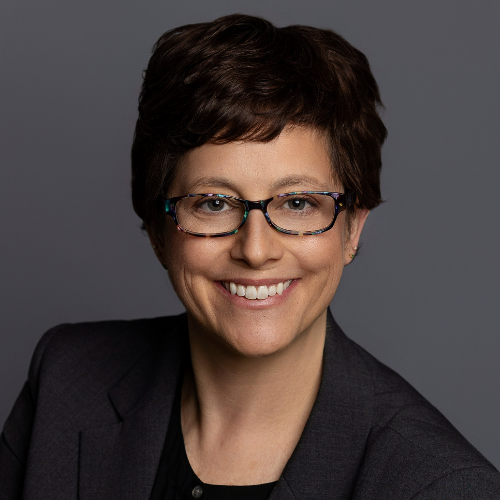
Mia Lazo
November 5, 2025


With the 2025 off-year elections behind us and the 2026 midterm elections just one year away, it’s a good time to start looking ahead to next year’s election.

It may be easy to dismiss midterm elections as less important than presidential elections. But midterms are where so much of the real work of democracy happens. Governors, senators, representatives, mayors, and local officials all make decisions that ripple through our daily lives. Whether it is health care, education, housing, or infrastructure, these choices impact us directly. 

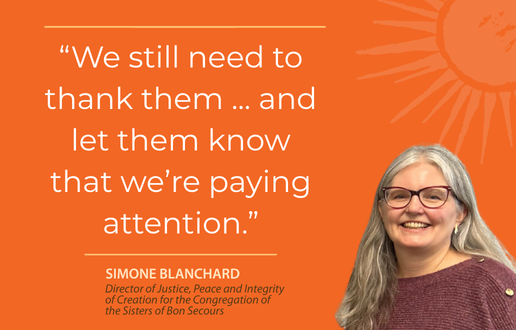
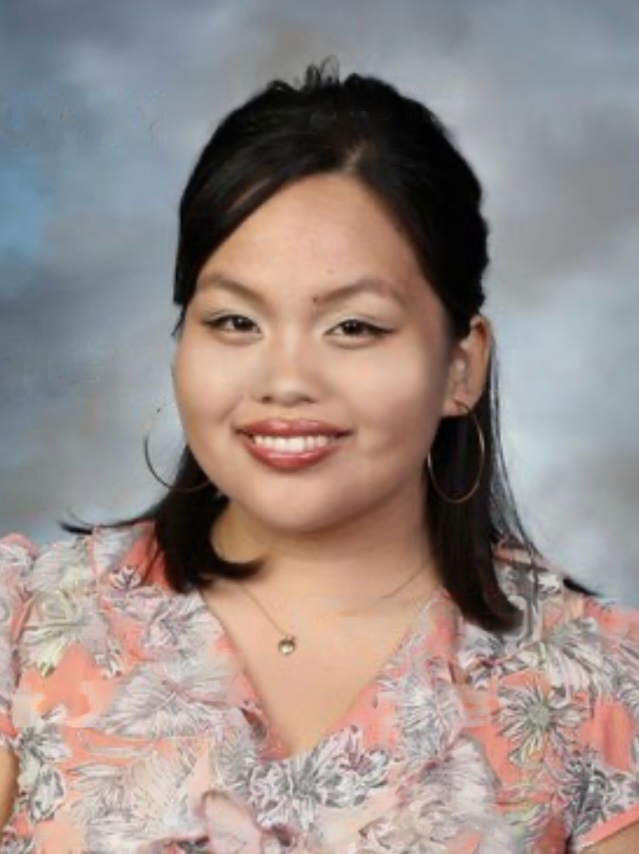
Mia Lazo, an environmental studies major at Mount St. Mary's University in Los Angeles and a Sr. Carol Coston Fellow in NETWORK's Young Advocates Leadership Lab (Y.A.L.L.)

Mia Lazo

Today, threats to voting are real, starting with barriers to voter registration. 

Voter registration is more than paperwork; it is a vital first step toward protecting our democracy and building the common good. The common good depends on broad participation. When more of us are registered and engaged, government decisions reflect the needs of the many, not just of the wealthy or politically powerful. 

But there are constant efforts to impose burdensome identification requirements to voter registration being proposed by the President, members of Congress, state legislatures, and before regulatory agencies. The single demand of requiring U.S. citizens to show in person a birth certificate, passport, or other document proving citizenship when they register or re-register to vote could bar from voting as many as 21 million U.S. citizens who don’t have these documents readily available. This attacks women, Immigrants, those affected by weather disasters, working people, and those living in rural communities. 

Even more troubling, the U.S. Citizenship and Immigration Services (USCIS) recently banned registering new voters at citizenship ceremonies, a time when new Americans should be most welcomed into democratic life. Add to that the growing restrictions on mail-in ballots, such as reduced drop boxes and stricter ID requirements, and you see the trend: Some of our lawmakers protect the elite by making it harder for so many of us to exercise our basic right to vote. 

My family has our own story of what can happen when We the People don’t have a say in our own future. My parents fled to the U.S. to escape the oppressive and corrupt Marcos dictatorship of the Philippines. In 2022, the son of the former dictator was elected president, as the wealthy wanted to protect their interests. While billions of pesos went into fraudulent infrastructure projects, cities living without infrastructure continued to suffer devastating floods. Typhoons damaged farms, roads, and other infrastructure, affecting nearly 907,000 families, or more than 3.4 million people (about the population of Oklahoma). With landslides, flashfloods, electrocution, and drownings, communities saw their homes washed away while those in power enriched the pockets of their billionaire friends. This kind of corruption does not happen in a vacuum; it thrives when leaders face little accountability and when citizens are too discouraged to demand better.  

The same risks exist here in the United States. When fewer people vote, including in midterms, entrenched politicians have more room to cater to their donors rather than the communities they represent. Just as Filipino citizens watch their tax dollars vanish into the pockets of the elite, people in the U.S. face leaders who prioritize corporate lobbyists over working families. The connecting thread is clear: Unchecked political power always bends toward self-interest. Voting is how we check it. 

Democracy does not collapse in one dramatic moment; it unravels slowly when people disengage, when voters participation falls, and when power ends up in the hands of wealthy elites able to buy figureheads and power centers in the government. By the time citizens realize what they’ve lost, it can be too late. 

In Venezuela, democratic institutions were slowly hollowed out, one law and one election at a time. Leaders stacked the courts with loyalists, rewrote the constitution to expand executive power, and silenced opposition through censorship, harassment, and arrests. Elections became hollow performances to legitimize those already in power. The cost to ordinary citizens has been catastrophic. A country once among the wealthiest in South America now suffers from hyperinflation, poverty, and chronic shortages of food, medicine, and electricity. Millions have fled in search of stability, and those who remain endure long lines for basic goods, while corrupt elites live in luxury.

Here in the United States, we still have the tools to prevent that fate. Tanks in the streets may grab headlines, but the quieter erosion of voting rights is the greater danger. That is why registering now to vote for the 2026 midterms matters. Government leaders already line the pockets of their wealthy friends through tax cuts. But every voter registration represents a person who is ready to hold people in power accountable. Every ballot cast is a reminder that this country belongs to all of us, not just the privileged few.

The example of the Philippines shows us what happens when corruption goes unchecked. My family back home knows it more than anyone else. Venezuela reminds us how quickly democracy can unravel. But the U.S. has a chance to choose differently if we show up.  So,  please check your voter registration, start thinking about your voting plan for next November, and encourage your loved ones, your colleagues, your neighbors, and even the barista who makes your coffee to do the same.  

Visit vote411.org to register to vote, check your registration status, and more. 

Mia Lazo is an environmental studies major at Mount St. Mary’s University in Los Angeles and a Sr. Carol Coston Fellow in NETWORK’s Young Advocates Leadership Lab (Y.A.L.L).

Hispanic Heritage Promotes Democracy and Dignity

Hispanic Heritage Promotes Democracy and Dignity


My Responsibility is to Help Build a Future Where We All Have a Share in the Decisions That Shape Our Destiny

Jonathan Alcantara
October 6, 2025


For Hispanic Heritage Month (September 15-October 15), NETWORK’s Sr. Carol Coston Fellows share their thoughts on the importance of this observance in the U.S. The following is Part 2 of a two-part reflection by Jonathan Alcantara of Marquette University. (Read Part 1.)

Jonathan Alcantara, a 2025 Sr. Carol Coston Fellow in NETWORK's Young Advocates Leadership Lab (Y.A.L.L.)

Jonathan Alcantara

In addition to undeniable economic and cultural contributions, the Latino community also participates powerfully in the democratic process. In particular, young Latinos are the fastest-growing demographic of voters, and our voices will shape the future elections. However, targeted voter suppression tactics like disinformation and misinformation, lack of access to absentee ballots, limited early voting, and bans on students using their school IDs at the polls continue to create barriers for young Latino voters.

So, over the past two years, I’ve served as a Sr. Carol Coston Fellow, working with other students and young adults in Wisconsin and across the country to foster a safe environment for civic engagement and support voter registration on our campuses. All of the meaningful conversations I’ve had with my peers on campus and with community leaders show and remind me that our democracy is stronger when we all participate and a lot weaker when we’re separated and pushed out.

Despite the inequalities, political tensions, and fearmongering, our lucha and resilience still define us. Across the nation this month, Latino communities are finding ways to gather and celebrate their heritage while navigating their fears. In cities like Chicago, Madison, and Appleton, Wisconsin, festivals celebrate with live music, dances, and traditional food. They also have workshops and representatives talking about healthcare, business inclusion, and professional leadership.

However, many events have scaled back and have even been postponed because of the possibility of immigration raids, but one thing’s for certain, seguimos unidos y en solidaridad, no matter the obstacles. Our culture is still alive not only in the happy moments but also in times when we must pivot, adapt, and continue showing up for one another through advocacy.

What ties all of this together is the set of values that go with the Latino community. We strongly believe in familia, dignidad, and oportunidad, which are values that anyone, regardless of their background and what they look like, can recognize as important. My Catholic faith reminds me that these are more than just cultural values; they are moral truths: that every person is made in the Imago Dei and deserves respect, freedom, and the chance to grow and thrive, no exceptions. In our faith, we say, cada persona es hijo de Dios, every person is a child of God. And that truth calls us to treat every person with the same dignity and respect.

Looking ahead, I see a hopeful future where our cultura is not only honored by others but fully integrated into the story of this country. A future where Latino students, like me, succeed in college without the barriers that are currently holding us back, where workers earn livable wages that match their contributions to our country, where families can live without the fear of leaving their house for five minutes, and where our voices are fully recognized in the public.

This vision is attainable, and this is why Hispanic Heritage Month matters. Is it about honoring culture? Yes. But it’s also about defending human dignity, expanding and growing economic opportunity, and strengthening our democracy. For me, Hispanic Heritage Month is both personal and shared. This month calls me to remember the resilience of those who came before me and to act with the knowledge of my responsibility for those who will come after me.

This month, I celebrate my heritage not only by remembering the past but by helping build a future where every family, Latino or not, can live, work, and thrive con fe, esperanza y orgullo, no exceptions.

Learn more about NETWORK’s Young Advocates Leadership Lab (Y.A.L.L).

We Must Help Folks to Vote

We Must Help Folks to Vote

National Voter Registration Day Reminds Us That This Land is Our Land

Theresa Lindberg
September 16, 2025
Theresa Lindberg, a 2025 Sr. Carol Coston Fellow in NETWORK's Young Advocates Leadership Lab (Y.A.L.L.)

Theresa Lindberg

I love folk music. My love first started in elementary school when my teacher played “This Land Is Your Land” by Woody Guthrie. With his simple melody and distinct tune, Woody galvanized the country with each line. His unifying message resonated with Americans, becoming an anthem for many Americans who felt the government wasn’t representing their interests. 

I think Woody knew something we all struggle to believe now: that we have collective power as people. But billionaires make this hard to believe when they are allowed almost entirely to fund political campaigns. After all, our elected officials are meant to represent us, not the top one percent, right? It’s important to keep this in mind on National Voter Registration Day (September 16).

No matter the amount of money in our bank account, we all value the freedom to choose our elected officials. But some politicians are supporting undemocratic legislation that favors their own interests over those of their constituents. Here’s the issue: our government system has become increasingly unresponsive to the needs of the people to win favor with the top one percent.

With increasing numbers of voter registration forms going missing, lost absentee ballots, and the consideration of restrictive voting bills like the SAVE Act, more marginalized groups, including rural communities, Black and Brown voters, folks with disabilities, and elderly people, are targeted. We all want to live in a world where each of these voices, including our own, is equally valued.

I saw this play out myself last fall when I helped register several hundred people to vote on my campus community here in Milwaukee. I had countless conversations with students and other community members who all said the same thing: registering to vote feels impossible.

And getting to the polls? Even harder. In the case of my friend Grace, we mailed in her request for an absentee ballot three months before the November 5 election and followed up with local election offices, calling the county clerk in both Milwaukee and Appleton.

She never received her ballot. I ended up driving her four hours round-trip so she could vote in person instead. But what would she have done without access to a friend’s car?

Unfortunately, due to the poor organization of absentee ballots and state laws that varied in their restrictions, many eligible voters were prevented from registering and blocked from the polls.

My belief in Catholic Social Justice teaching inspired me to serve as a voting rights advocate last fall. Whether we are Catholic, Protestant, Jewish, Muslim, Hindu, or Sikh, people of faith value representative democracy. We know what’s happening is wrong, but together we can protect our right to representation.

I especially like this line in Woody Guthrie’s song, “this land was made for you and me”. Together, we can protect our right to vote! Today, on National Voter Registration Day, let’s remind each other to get registered and to make it to the polls in November. By doing so, we continue to build the beloved community where our shared values are at the center.  

So, this National Voter Registration Day, put on some Woody Guthrie or your favorite folk singer and do your part. Call a friend to catch up and ask if they are registered! Have you changed addresses recently? Check your own status; it might have changed. And don’t forget our power as a collective. After all, this land is your land, and this land is my land. 

Theresa Lindberg is a student at Mount Mary University in Milwaukee and a returning Sr. Carol Coston Fellow in NETWORK’s Young Advocates Leadership Lab (Y.A.L.L.). 

Forfeit Not Your Soul

Forfeit Not Your Soul

Authoritarian Takeover of DC is a Crisis for Racial Justice and Democracy

Min. Christian S. Watkins
August 29, 2025

As I stood and bore witness to the Braddock’s Rock unhoused encampment behind the U.S. Institute for Peace of all places, I held a sign that read “What’s This Cost You? Mark 8:36,” referencing Jesus’ question: “What does it profit a man to gain the whole world and forfeit his soul?” Concerned clergy and service provider staff convened on August 14 to assisted unhoused neighbors as they relocated. In doing so, we witnessed the crime of Christ being evicted – a violation of our sacred call to care for all people.

In recent weeks, the poorest residents of the city of Washington, D.C.—the heart of U.S. democracy—are being disappeared from our communities: tents torn down and belongings discarded, communities of resilient survival scattered like dust in the wind.

Clergy and service provider staff gather as the Braddock's Rock unhoused encampment is cleared on Aug. 14.

Min. Christian S. Watkins, (second from left) of the NETWORK Government Relations Team joins other clergy and service provider staff as the Braddock’s Rock homeless encampment is cleared on Aug. 14. The move came as part of President Trump’s militarized takeover of Washington, D.C.

And it didn’t stop there. After President Trump issued the Executive Order, collaborating law enforcement agencies intentionally targeted Black and Brown youth navigating the Metro and traversing D.C.’s streets working to deliver food.

The Trump administration wielded emergency powers to unnecessarily federalize the Metropolitan Police Department, deploying National Guard troops and slowly dismantling our sanctuary protections. They initially targeted our unhoused neighbors but soon expanded their scope to hyper-militarize and surveil Black and Brown youth and communities with merciless force. This naked display of power is sinful. God says, “Woe to those who trample on the poor.” (Amos5:11

With President Trump naming only cities with Black mayors for future militarized takeover, it is clear that this is all a manufactured assault on Black political power – as well as a rehearsal for broader authoritarianism to envelop our country. This would decimate our collective future built on Constitutional aspirations and promises.

This unneeded hyper-militarization of a peaceful city is designed to send an authoritarian message rather than address any legitimate community needs. Rather than nurture democracy and the systemically disenfranchised, this misguided show of force is a distraction, a calculated attempt to shift the nation’s gaze away from far more dire crises:

  • Skyrocketing inflation and the international devaluation of the U.S. dollar, which erodes working families’ purchasing power. 
  • Administration ineptitude and Department of Government Efficiency (DOGE) failures, which leaves core agencies leaderless and ineffective, costing taxpayers more than the agency ever purported to strive to save. 
  • Cratering political support at home and abroad, as allies question America’s stability and credibility as a world leader, much less a moral authority. 

When leaders are cornered by their own failings, they often reach for the oldest tool in the autocrat’s playbook: stoke fear, unleash the military, and change the subject. This takeover is not happening in a vacuum. It is fueled by a Christian nationalist ideology that seeks to merge political power with a narrow, exclusionary version of Christianity.  

True Christian witness calls us to loving service grounded in humility and justice lending to liberation, not to bless state power when it tramples our neighbors, the people Christ admonished us to protect, serve, and defend and the integrity of the Church. If we do not name and resist it, we risk turning the cross of Christ into a banner for empire. 

As people of faith and moral courage, we MUST resist. 

Catholics and faithful allies committed to the common good know you cannot speak of justice when local police accountability is replaced by federal chains of command that answer political power, not community needs. You cannot claim security while criminalizing poverty and erasing the humanity of the unhoused.  

True justice cannot be militaristic or top down. It must be rooted in restorative, community-based care. The federalized, militarized response fractures trust and undermines local accountability. Faithful communities must speak truth to power.

Why We Need An Economy for All

Why We Need An Economy for All

Despite Major Setbacks Under the Trump Administration,
the Vision of a Better Tomorrow is Clear as Ever

Jane Sutter
Second Quarter 2025

Just five days before the inauguration of President Trump, NETWORK unveiled its An Economy for All policy agenda in a webinar that attracted more than 2,100 registrants. The agenda demands that elected leaders deliver what our communities need to thrive:

  • Jobs with paid leave and wages that cover our bills, retirement, and more
  • Affordable housing, food, and health care
  • Safe and welcoming neighborhoods
  • Clean air and water
  • A just tax code that ensures the wealthy pay their fair share
  • A just and humane immigration system
  • A politics responsive to the people, not the money
Joan F. Neal, NETWORK Interim Executive Director, speaks at an Ash Wednesday prayer service calling for a compassionate federal budget, March 5 on Capitol Hill. Photo: Catherine Gillette

Joan F. Neal, NETWORK Interim Executive Director, speaks at an Ash Wednesday prayer service calling for a compassionate federal budget, March 5 on Capitol Hill.
Photo: Catherine Gillette

In introducing the agenda, NETWORK Interim Executive Director Joan F. Neal noted, “We all recognize that these are challenging times for our country. Our democracy, our vision of a free, diverse, inclusive, pluralistic country is on the line, starting now.”

The challenging times became even more apparent as Trump enacted his “shock and awe” campaign and the House of Representatives narrowly passed its budget plan on Feb. 25 that extends previous tax cuts to billionaires and threatens to undo important safety net programs.

As the drama unfolded in Washington, NETWORK friends and collaborators witnessed the implications for their work on the ground.

Politics responsive to the people

When Rev. Dr. Gregory Edwards, Executive Director of POWER Interfaith, talks about activism,

Rev. Dr. Gregory Edwards, Executive Director of POWER Interfaith, participates in an Oct. 1 roundtable discussion in Allentown, Pa. During the 2024 Nuns on the Bus & Friends tour.

Rev. Dr. Gregory Edwards, Executive Director of POWER
Interfaith, participates in an Oct. 1 roundtable discussion in Allentown, Pa. During the 2024 Nuns on the Bus & Friends tour. Photo: Jacob Schatz, CCR Studios

he quotes Rev. Dr. Martin Luther King Jr.’s exhortation of “the fierce urgency of now.”

A multi-regional, multi-faith, multi-class, multi-generational movement, building politically progressive organizations and working with more than 400 congregations in the Philadelphia area, the Lehigh Valley and Central Pennsylvania, POWER’s focus is on local and state issues (wages, equitable school funding, renewable energy, and more). However, Edwards calls proposals at the federal level “disastrous, [and] at the same time it’s also a distraction because people are panicking.”

What citizens need from the federal government, said Edwards, is a higher minimum wage and access to quality and affordable health care, housing, and schools.
“What we know to be true is that things only change when people, ordinary people, actually begin to organize and lift up their voices and not only vote but are able to, by the thousands, move their legislators…to a position that is in their own best interests, regardless of who’s in the White House.”

A just tax code

Tax policy expert Sarah Christopherson traveled with Nuns on the Bus & Friends “Vote Our Future” tour this past fall. She delivered a strong message: “Never let anyone tell you that we can’t afford to take care of our people, that we can’t afford to feed the hungry, that we can’t afford to have a good education for our children, that we can’t afford to get homes and have living wages, because there is so much money untaxed right now, and some of it will never go taxed, among the billionaire class.”

Sarah Christopherson is a tax justice advocate, seen here on the 2024 Nuns on the Bus & Friends tour.

Sarah Christopherson is a tax justice advocate, seen here on the 2024 Nuns on the Bus & Friends tour. Photo: Jacob Schatz, CCR Studios

Christopherson points out that there are 815 people in the U.S. who are billionaires (according to an analysis of Forbes magazine data). “They are collectively worth six trillion dollars. You could tax them and still leave each one of them with a billion dollars and simultaneously have universal pre-K, have free school lunch, have full Medicaid coverage…It’s phenomenal what you could do, and they would still be billionaires.”

Christopherson describes how Republicans in Congress seek to renew tax for the ultra-rich and pay for them with cuts to Medicaid, SNAP, education, and health care subsidies and the threat of not curtailing the excess hoarding of wealth.

Protect people seeking asylum

At the Kino Border Initiative’s (KBI) Migrant Outreach Center in Nogales, Sonora, Mexico, staff and asylum seekers quickly saw the effects of the Trump administration’s restrictive immigration measures. About 270,000 people who had registered for appointments at a Port of Entry to the United States were stranded in Mexico, according to statistics compiled by the Washington Office on Latin America, a human rights advocacy organization.

Sr. Maria Engracia Robles, ME, of Kino Border Institute signs the Bus during the 2024 Nuns on the Bus & Friends site visit to the U.S-Mexico Border. Photo: Jacob Schatz, CCR Studios

Sr. Maria Engracia Robles, ME, of Kino Border Institute signs the Bus during the 2024 Nuns on the Bus & Friends site visit to the U.S-Mexico Border. Photo: Jacob Schatz, CCR Studios

KBI offers meals, shelter, clothing, legal and psychological assistance, and more. KBI Feedback Coordinator Sr. Maria Engracia Robles, ME, said through an interpreter, “All those Americans who have a good heart should understand the migrants in the U.S. are not criminals.” They are working in jobs such as agriculture, jobs that American citizens don’t want to do. “They are people of faith, they are working people.”

The reasons for migration have changed in recent years, Sr. Engracia said. Formerly, most migrants were seeking employment in the U.S. In recent years, migrants are families fleeing from violence or persecution. Despite recent events, the center’s clients remain hopeful, Sr. Engracia said. “They are hopefully waiting, God improves their lives,” and waiting patiently. “They are very sad but very strong at the same time.”

Jobs with fair wages

With the new Administration and Congress, Ani Halasz is greatly concerned that workers will struggle even more to make ends meet. Halasz is executive director at Long Island Jobs with Justice (LIJWJ), which works with labor unions, faithbased and other organizations, and activists to create living wage jobs, support worker organizing, and demand corporate accountability. The group’s mission aligns with NETWORK’s 2025 agenda – building an economy that works for all.


“We’ve known for a really long time that wealth inequality was destabilizing for democracies, but it didn’t feel urgent. … Now we’re to the point that you can’t deny it anymore.”

A top concern for Halasz is the status of the National Labor Relations Board (NLRB). In January, Trump fired the only female board member, leaving the board without a quorum. In February, Elon Musk’s Department of Government Efficiency (DOGE) announced the shuttering of regional NLRB offices. The move will “make it almost impossible for us to protect the rights of workers in the future,” Halasz said. “It will be increasingly hard for workers to organize labor unions, because there won’t be an agency overseeing that, there won’t be a federal act protecting workers’ rights to organize.”

Other threats include a chilling effect on workers coming forward about wage theft and other exploitation, as well as Medicaid requirements that impose work requirements and exclude many immigrants.

“What we’re seeing happening right now in this country is the rolling back of almost every protection in this country that we fought for.”

Clean air and water

When Curtis Da’Von meets with citizens, his goal is to help them understand how things are connected between our environment and our everyday experiences. As part of his work as Southwest Pennsylvania Organizing Director for Clean Water Action, a national organization, he educates the community—including who have lost a loved one to violence—about the dangers of environmental lead on children and its connection to behavioral and developmental problems.

Curtis Da’Von of Clean Water Action gets a selfie with the Bus at the Oct. 5, 2024 Nuns on the Bus & Friends rally in Pittsburgh. Photo: Jacob Schatz, CCR Studios

Curtis Da’Von of Clean Water Action gets a selfie with the Bus at the Oct. 5, 2024 Nuns on the Bus & Friends rally in Pittsburgh. Photo: Jacob Schatz, CCR Studios

“So often in communities of color, there’s issues of high violence and crime. So you can start to connect the dots,” he says. “You can literally look at a map and areas that are high in lead are high in crime.”

The Pittsburgh area, where Da’Von works, already lacks enough government funding to cover the needs to remove lead from homes. Funding cuts at the Environmental Protection Agency further jeopardize their work.

Staying hopeful

Pope Francis’s exhortation that people be “Pilgrims of Hope” in this jubilee year has become a rallying cry for NETWORK and its volunteers. As Neal expressed to webinar attendees, “Let us be inspired to move to action, and as we do, let us call upon the God we know we can depend upon to carry us through today, tomorrow, and however long it takes.”


For More Information:
Clean Water Action

Kino Border Initiative
Long Island Jobs with Justice 
POWER Interfaith
Sarah Christopherson 

Jane Sutter is a freelance journalist based in Rochester, N.Y., and is part of NETWORK’s New York Advocates team.

This story was published in the Quarter 2 2025 issue of Connection.