

Category Archives: democracy

Reflections on Solidarity and Democracy - Connection

The Edge of Solidarity

The Edge of Solidarity  

Renewal Comes from Expanding Our View of the Human Family 

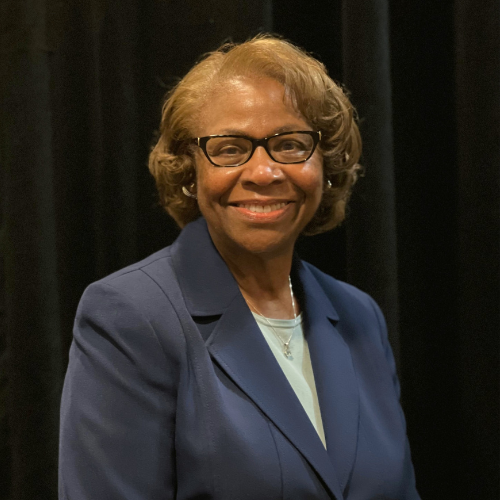
Joan F. Neal
July 20, 2023
Joan F. Neal, Deputy Executive Director and Chief Equity Officer at NETWORK

Joan F. Neal, Deputy Executive Director and Chief Equity Officer at NETWORK  

This past spring, the Vatican issued a document repudiating the “doctrine of discovery,” which was used to justify colonialism and atrocities against Indigenous people for centuries. While this movement by the church is welcome and long overdue, it is not without its flaws. Not only does the Vatican document minimize the church’s active and supportive role in colonialism and the oppression and abuse of Indigenous people, it also makes no mention of the transatlantic slave trade. Once again, the institutional church has failed to take responsibility for its role in enslaving human beings.  

This is a helpful illustration of how even those who seek to be allies in the struggle for justice in our society will be confronted time and again by the limits they place on solidarity — by the people whose struggles we fail or choose not to see. Solidarity is like the edges of a canvas or picture frame. It can be extended wide to include the entire human family. Or it can be narrowed so that some individuals, or even entire communities, are left standing beyond the edges of our “family picture.”  

Solidarity can also be like the aperture that adjusts how much light is let into a camera lens. When we set the aperture of solidarity wide, the light can be dazzling, causing so many people — overcome by their role in systems and structures of injustice and oppression — to shut down and retreat to a place of defensiveness and frailty. Every time a politician or media figure decries “wokeness” in our society, I shake my head, sadly aware that this is probably a person who sees the systemic problems and injustices in our midst, but also doesn’t want to do the work to correct these problems, perhaps afraid of what they might be asked to give up in the process.  

It is essential that we persist in doing the real work of solidarity — that we let in the light and extend the frame to the whole picture. We know from Scripture and Catholic Social Teaching (such as articulated by Pope Francis in Laudato Si’) that all of us are connected. When we’re selective in our solidarity, we can make well-intentioned missteps. Recall, in the wake of the 2016 election, how reporters flocked to diners in rural Pennsylvania in an effort to understand and empathize with the “left behind” Trump voter. This attempt at solidarity with one group was admirable, of course, but failed to recognize the wave of destructive policies against Black and Brown communities and the very fabric of U.S. democracy that was unleashed by Trump’s victory. 

Today, it’s clearer than ever that we face a political movement in this country whose capacity for solidarity is completely closed off to others and only includes themselves and people who look and think like them. Christian nationalism embraces the dismantling of democratic structures and weaponization of systems of government to punish those outside of their group and to further oppress people who question this raw use of power that benefits only a white, wealthy few. 

This aggressive anti-democratic movement has been on full display as it moves through state legislatures and other government bodies. It is animated by an awareness that, ironically, feeds into the worst aspects of its own rhetoric: that white Christians represent a shrinking, dying demographic, and that their values are not shared by younger generations. Of course, full participation in society by a multitude of diverse communities is not the end of anyone’s way of life, unless that way of life is defined by racism. The fear of being replaced by one’s neighbor is the antithesis of solidarity.  

Pope Francis has distinguished between populist political movements, which destroy democracy, and movements that are truly popular — that is, of the people — which can be a source of deep renewal in their societies. During this first half of 2023, NETWORK has embraced Pope Francis’ distinction and embarked on a movement for unflinching solidarity, declaring that communities in poverty cannot be held hostage to reckless and cruel budget cuts. That migrant people cannot be left out of our calculus of who matters as we build this country anew. That Black and Brown people, women and children are also made in the image and likeness of God, and their dignity must be respected. That solidarity is our only path out of the destructive environment of our society today.  

We affirm time and again that universal solidarity cannot be separated from the long-term protection of our democracy and the transformation of our politics. In fact, it is the key to lasting freedom and equality, and to the renewal and the authenticity of our own popular movement. Leaving people neglected outside the limits of our frame is a recipe for disaster. But journeying together in true solidarity is indeed the way to the Beloved community, “one nation, indivisible, with liberty and justice for all.” 

Joan F. Neal is NETWORK’s Deputy Executive Director and Chief Equity Officer.

This column was published in the Quarter 3 2023 issue of Connection. 
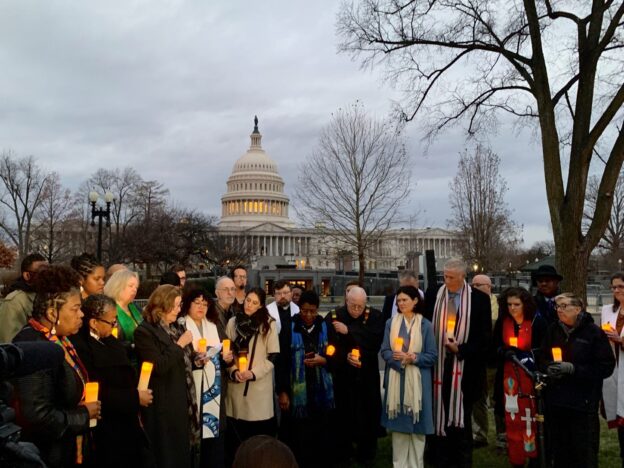
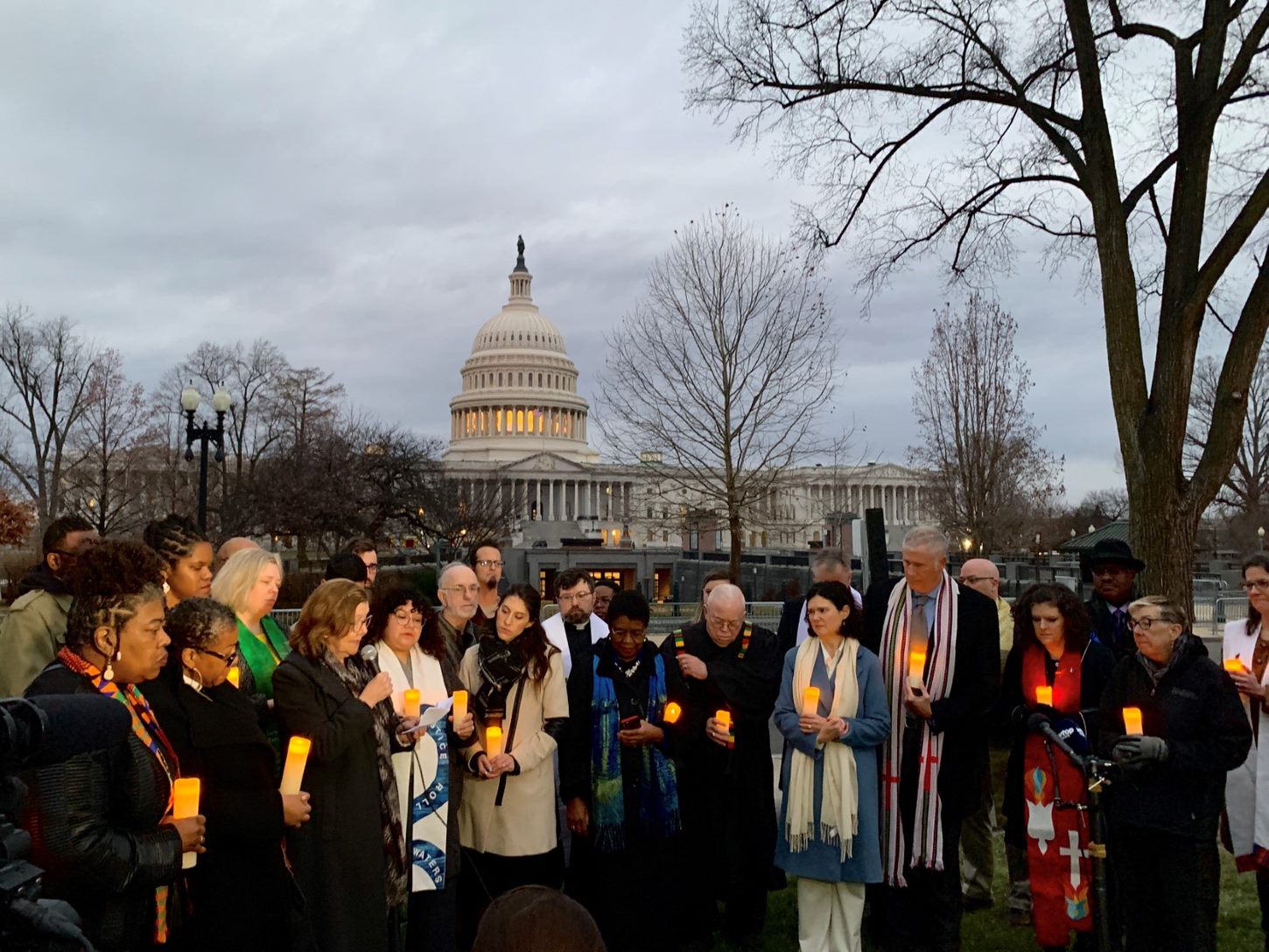
Christian leaders gather across from the U.S. Capitol for a sunrise vigil organized by the Baptist Joint Committee for Religious Liberty and Faithful America, marking the second anniversary of the January 6 insurrection.

Relational Politics

Relational Politics

Democracy’s Future Depends on Fostering Community

Mary J. Novak
April 12, 2023
Christian leaders gather across from the U.S. Capitol for asunrise vigil organized by the Baptist Joint Committee for Religious Liberty and Faithful America, marking the second anniversary of the January 6 insurrection.

Christian leaders gather across from the U.S. Capitol for a sunrise vigil organized by the Baptist Joint Committee for Religious Liberty and Faithful America, marking the second anniversary of the January 6 insurrection.


Early in the morning on Jan. 6 of this year, a diverse group of faith leaders from different Christian denominations gathered across from the U.S. Capitol for a sunrise prayer vigil. I spoke at this event, representing NETWORK and the concerns that many Catholics have for the future of the United States. We prayed together for our democracy, and it felt like a glimpse of the Beloved Community that our system of government is capable of fostering.

The challenge that faces all of us is that this group was not representative of the rhetoric and political movement currently claiming the mantle of “Christian” in U.S. politics. One of the results of the 2022 midterm elections has been the ascendancy of extremists in Congress who assert a nationalist brand of politics that is corrosive to our system of government. If anything is clear from the January 6 Committee hearings and other current signs, our democracy is not yet out of the woods.

Democracy is the container for all the social and political issues that our Catholic tradition so richly informs — the dignity of the human person, economic equity, the rights of workers. We work for them in a pluralistic context, always seeking to build up the common good. Democracy offers protections that policy alone cannot cover and which other systems and philosophies, like Christian nationalism and Catholic integralism, openly reject. These seek to ascribe some uniquely dominating role to Christianity in society and invariably end in oppression and violence. The protections of democracy have remarkably held us through these past years, and the midterm elections played out without violence, despite coming a year after the insurrection of January 2021. I believe this was possible precisely because people got involved, especially at the local level.

At NETWORK, our field is very engaged and active among the countless justice-seekers who have been awakened in the past six years. I see in them an opportunity to recapture a certain relationality in our politics that has been lost in recent decades, and some NETWORK Advocates Teams are already embracing this in moving ways. We cannot achieve lasting change without authentic investment in the human relationships that run through our government and our society. The Catholic Sisters who founded NETWORK believed in this model, and we have seen it start to re-emerge with a new generation of political activists, as was evident in the awe-inspiring turnout of Gen Z in the last election.

But what we need for the long haul is a true political movement that breaks through the polarization and moves us into a space where we can creatively imagine what our democracy needs to look like to meet people’s needs and truly respond to the signs of our times.

One of the real hazards of our politics, as pointed out by Rachel Kleinfeld and others, is that the very polarization and obstructionism that creates gridlock in our politics wears down people’s faith in our system of democracy over time, because they do not see it delivering for them. People need clean air, clean water, affordable housing, pathways to home ownership,  protections against discrimination — things that the government can and has delivered for people in the past! And we have been fortunate that the Biden administration has been able to deliver in areas like infrastructure and pushing back a bit against trickle-down economic policy.

But so much remains to be done. Part of our democracy work is addressing spiraling wealth inequality, the stratospheric inequity in our society that keeps wealth out of reach for so many and concentrated in the hands of the few. The wealth divide works to severely undercut people’s belief in this democratic system, because they do not see it as fair, they see that it can be corrupted, and again, they do not think it can deliver for them.

Despite the peril of the present moment, so many people of goodwill are responding to the challenge. Are enough people unsettled? No, frankly. But in our frustration with the polarization and stagnation brought about by a small number of ideological extremists with access to way too much funding and power, we can look around and see that we are not alone. We even find community in that space. And as we continue to organize and unify our vision and work for lasting change, we find something to be hopeful about, which can ground us for the long haul.

Mary J. Novak is NETWORK’s Executive Director.

This column was originally published in the 2nd Quarter issue of Connection. Download the full issue here.
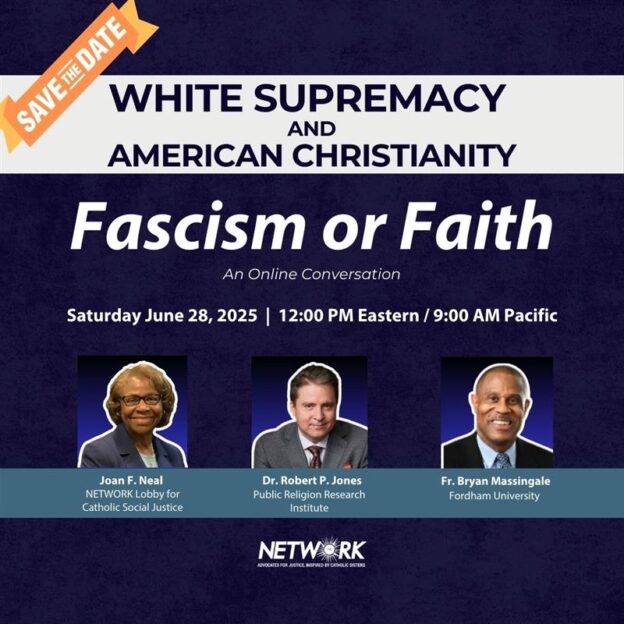
White Supremacy and American Christianity: Fascism or Faith

Take Action After Watching White Supremacy in American Christianity

White Supremacy and American Christianity Series

Fascism or Faith

Budget Reconciliation Toolkit

Bring the discussion to your community with messaging and resources from our NETWORK team.

Watch Only: Joan, Dr. Jones, and Fr. Massingale
Watch Only: Joan's Conversation with Amanda Tyler

What is White Christian Nationalism?

NETWORK partner, the Baptist Joint Committee for Religious Liberty (BJC), released a joint project with the Freedom From Religion Foundation (FFRF) detailing Christian nationalism’s prominence in the January 6 insurrection. In it, Amanda Taylor of BJC shares, “Christian nationalism is a political ideology and cultural framework that seeks to merge American and Christian identities, distorting both the Christian faith and America’s constitutional democracy. Christian nationalism relies on the mythological founding of the United States as a ‘Christian nation,’ singled out for God’s providence in order to fulfill God’s purposes on earth. Christian nationalism demands a privileged place for Christianity in public life, buttressed by the active support of government at all levels.

Christian nationalism is not Christianity, though it is not accurate to say that Christian nationalism has nothing to do with Christianity. Christian nationalism relies on Christian imagery and language.”

Watch Previous White Supremacy and American Christianity Conversations

White Supremacy and American Christianity, Part 5
We Choose Freedom
White Supremacy and American Christianity, Part 4

With previous discussion laying out the roots, influences, and threats to democracy posed by white supremacy in our churches and politics, Fr. Bryan N. Massingale, Dr. Robert P. Jones, and NETWORK’s Joan F. Neal looked to the future and explored how we the U.S. can move beyond Christian nationalism. And young adult justice-seekers shared how they connect their work for democracy to their faith. White Supremacy and American Christianity: Moving Towards Beloved Community was a special conversation, focused on the future and the possibility of a vibrant, multi-faith, multi-racial democracy where every person can thrive, without exception.

White Supremacy and American Christianity, Part 3

In October 2023, ethics professor Fr. Bryan N. Massingale, author Robert P. Jones, and NETWORK’s Joan F. Neal gathered for White Supremacy and American Christianity: A Consistent Ethic of Hate Threatens Our Democracy. The country was on the precipice of a budget crisis. House extremists didn’t want to negotiate, they wanted a government shutdown–they were a threat to our democracy. Their actions, rooted in white supremacy and Christian nationalism, were positioned to harm those they view as other: Black and Brown citizens and non-English speaking Black and Brown immigrants. Instead of building a pluralistic democracy, they aimed to diminish the progress and presence of non-white people in our country and throw our government into chaos.

White Supremacy and American Christianity, Part 2

In October 2022, ethics professor Fr. Bryan N. Massingale and author Robert P. Jones participated in an enlightening conversation ahead of this year’s midterm for an exploration on the influence of  White Supremacy in American Christianity on our politics. The conversation was moderated by NETWORK’s Joan F. Neal.

White Supremacy and American Christianity, Part 1

In April 2022, NETWORK engaged experts working at the intersection of racism, nationalism, and Christianity for a conversation on the poisonous effect that White Supremacy has on American Christianity. Fr. Bryan N. Massingale, Dr. Robert P. Jones, and NETWORK’s Deputy Executive Director and Chief Equity Officer Joan F. Neal were joined by Georgetown University’s Dr. Marcia Chatelain.

White Supremacy and American Christianity Guest Speakers

Darcy Hirsh is the Senior Director of Policy & Advocacy at Interfaith Alliance, (Part 3) where she leads the organization’s policy work at the local, state, and federal levels, as well as its critical advocacy in the courts.

Dr. Robert P. Jones is the President and Founder of PRRI, and author of White Too Long: The Legacy of White Supremacy in American Christianity. Robert P. Jones speaks and writes regularly on politics, culture, and religion in national media outlets including CNN, NPR, The New York Times, The Washington Post, and others. Dr. Robert Jones’s latest book is a New York Times best-seller. You can buy it here: The Hidden Roots of White Supremacy and the Path to a Shared American Future and follow Dr. Jones through his newsletter at https://www.whitetoolong.net/.

Fr. Bryan Massingale is the James and Nancy Buckman Professor of Theological and Social Ethics, as well as the Senior Ethics Fellow in Fordham’s Center for Ethics Education and author of Racial Justice and the Catholic Church. Fr. Massingale is a noted authority on social and racial justice issues, particularly in Catholic spaces. Read Fr. Massingale’s Op-Ed in National Catholic Reporter, “As the election cycle cranks up, Christians need to call out white Christian nationalism” and his keynote address at the 2022 Outreach Conference: “Intersectionality and LGBTQ Ministry”

Professor Marcia Chatelain, Ph.D., is the winner of the 2021 Pulitzer Prize in History (Part 1) her book Franchise: The Golden Arches in Black America. She is a professor of history and African American studies at Georgetown University and the leading organizer behind the #FergusonSyllabus, an online educational resource that has shaped educational conversations about racism and police brutality since 2014. 

Keep Up with NETWORK

Just Politics Catholic Podcast Season 2