

Category Archives: Front Page

Social Poet Award Winners | NETWORK Lobby Celebrates 50 years of Justice

Social Poets are Writing the Future

In Young Activists, NETWORK Sees What Pope Francis Sees

Don Clemmer
May 22, 2022
Social Poet Award Winners | NETWORK Lobby Celebrates 50 years of Justice

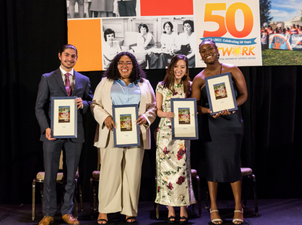
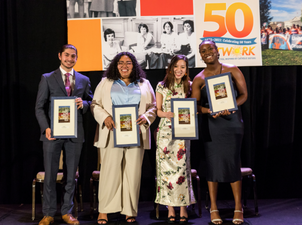
NETWORK’s 2022 Social Poet awardees at the 50th anniversary gala, Justice Ablaze.

On his 2015 trip to Bolivia, Pope Francis addressed social activists gathered there for the second World Meeting of Popular Movements. He told them that “popular movements play an essential role, not only by making demands and lodging protests, but even more basically by being creative. You are social poets: creators of work, builders of housing, producers of food, above all for people left behind by the world market.”

The following year, addressing these same groups gathered in Rome, he added that the popular movements “are sowers of change, promoters of a process involving millions of actions, great and small, creatively intertwined like words in a poem.” In his 2021 address to the same gathering, he began simply, “Dear social poets.”

Pope Francis’ messages to the Popular Movements have included some of the most striking rhetoric of his pontificate, decrying demagogues who exploit people’s anger and fear to demonize immigrants and other people pushed to the margins of society. In 2021, he said that protests following the murder of George Floyd most reminded him of the Good Samaritan in the world today.

NETWORK joins Pope Francis in centering the importance of young activists in the work of writing a better future for the world, one that dismantles systemic racism, roots the economy in solidarity, cultivates inclusive community, and transforms politics. So for NETWORK’s 50th anniversary, we honor four young activists as “Social Poets.” The four inaugural recipients of this award write with their lives the challenges and transformative potential that the decades ahead hold for those pursuing justice in the name of the Gospel.

Taylor McGee | Catholic Social Poet
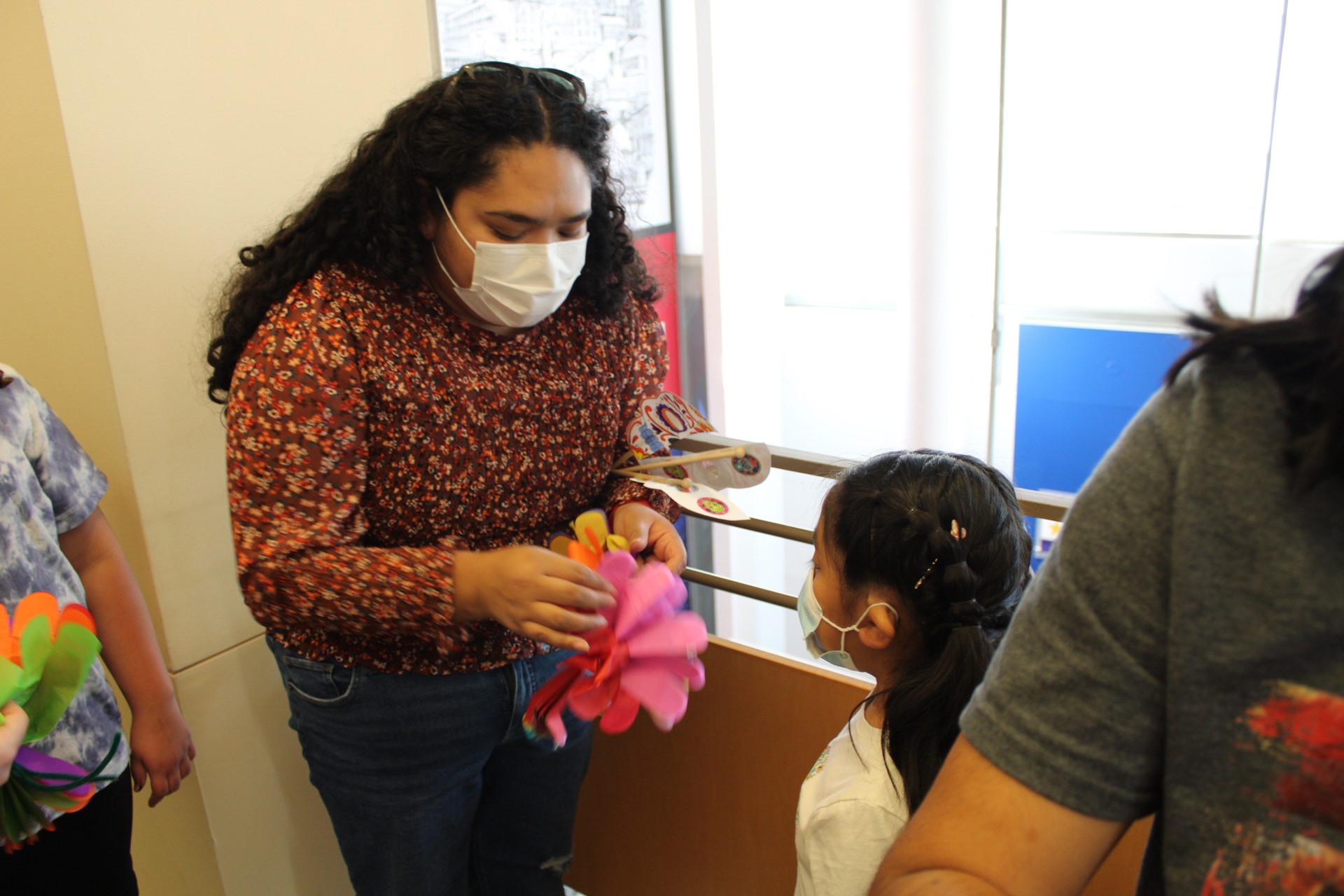
Taylor McGee celebrates her social poets award with her mother at NETWORK's Justice Ablaze gala

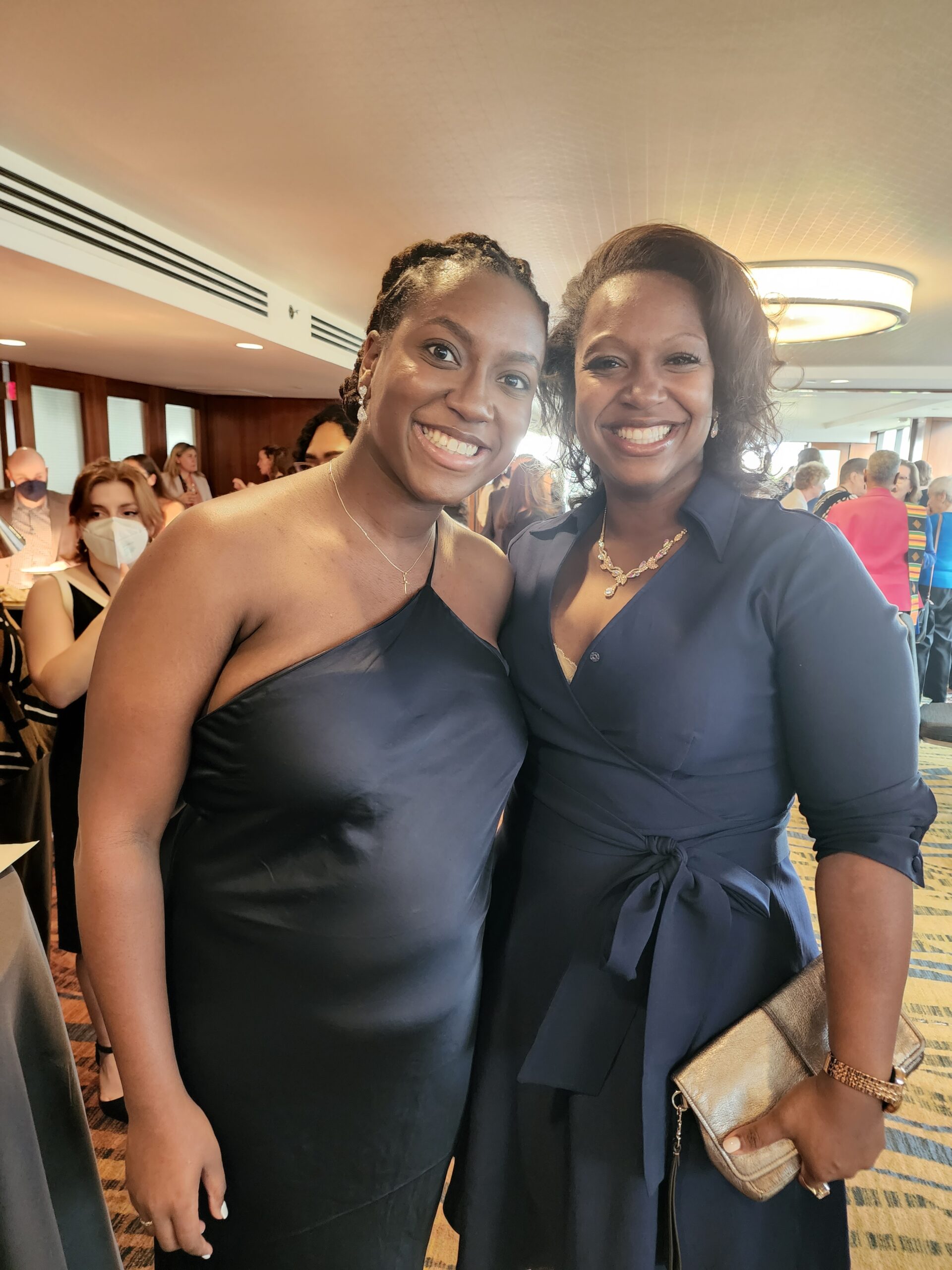
Taylor celebrates her social poets award with her mother at NETWORK’s Justice Ablaze gala.

A faith-based justice-seeker studying at St. Edward’s University in Austin, Taylor McGee has a gift for convening people from different backgrounds in faith contexts and using the encounter to open up old or familiar ideas about God and the world in new ways. As a faith and culture leader for St. Edward’s campus ministry, McGee, 20, has led an Earth Day event featuring discussion of Pope Francis’ Laudato Si’; a fish fry that invited local Black-owned businesses to campus and featured Black gospel music; and — her favorite — a virtual art exhibit, “Mirroring Mary,” which curated images of Mary from the various cultures represented on the St. Edward’s campus.

“I’ve been so blessed to have a great community given to me and understanding the similarities and differences within that community,” says McGee, adding, “If this is a community that I’m trying to serve, then I need to be in that community.” A Black woman and a cradle Catholic who has had to step back to see the eurocentrism of her own experience of church, she has majored in religious studies because, in part, “As a Black woman, you have to have that credibility.”

She credits Pope Francis for being explicit in his naming of problems in society, since working around problems without naming them leaves room for people to mute them. “I’m still in the South, and I know how things are,” she notes. But still she sees “Do everything in love” as what it is to be a social poet. This means “to be explicit in love and to not condemn and to not condemn people for their unlearning,” which can be challenging in activist spaces. But God invites everyone.

Ivonne Ramirez | Catholic Social Poet

Ivonne Ramirez uses educIvonne Ramirez, Catholic Social Poet Award Winner | NETWORK Lobby Celebrates 50 years of Justiceation and advocacy in her efforts to change the hearts and minds of fellow Catholics regarding the plight of DACA recipients like herself living in the Archdiocese of St. Louis. “If you are a devout Catholic, you should be with us, not against us,” Ramirez, 27, says of the need for the Church to be in solidarity with immigrants, especially young people who do not have documented status in the U.S. “These are your neighbors. … We need to teach people what is DACA and what it looks like in our parish.”

Ramirez is a catechist at Our Lady of Guadalupe, a predominantly Spanish speaking low to moderate income parish in Ferguson, Missouri, and also chaperones teen events and is a frequent speaker at parish teen retreats. Her mentor and role model is Sr. Cathy Doherty, SSND. “We’re starting a movement. We’re slowing and surely starting to see,”

Ramirez says of her efforts to educate priests and other church leaders to address immigration with their communities. This includes a recent meeting of several DACA recipients with St. Louis Archbishop Mitchell Rozanski to share their stories.

As DACA recipients can’t vote, she especially wants to communicate to people that they have power to help their neighbors and that who they elect matters. Ramirez also says the popular term for DACA recipients – “Dreamers” – is a misnomer. “We’re not dreaming. We’re actually working for something,” she says.

Marie Kenyon, director of peace and justice for the archdiocese, agrees: “Ivonne is a breath of hope to Hispanic youth in the parish, especially those without permanent legal status. Over the years she has found her voice in expressing and witnessing immigration issues to the church and the region. Her energy, creativity and ways of expressing her faith are just what is needed in our church today. … She is a true servant leader!”

Christian Soenen | Catholic Social Poet

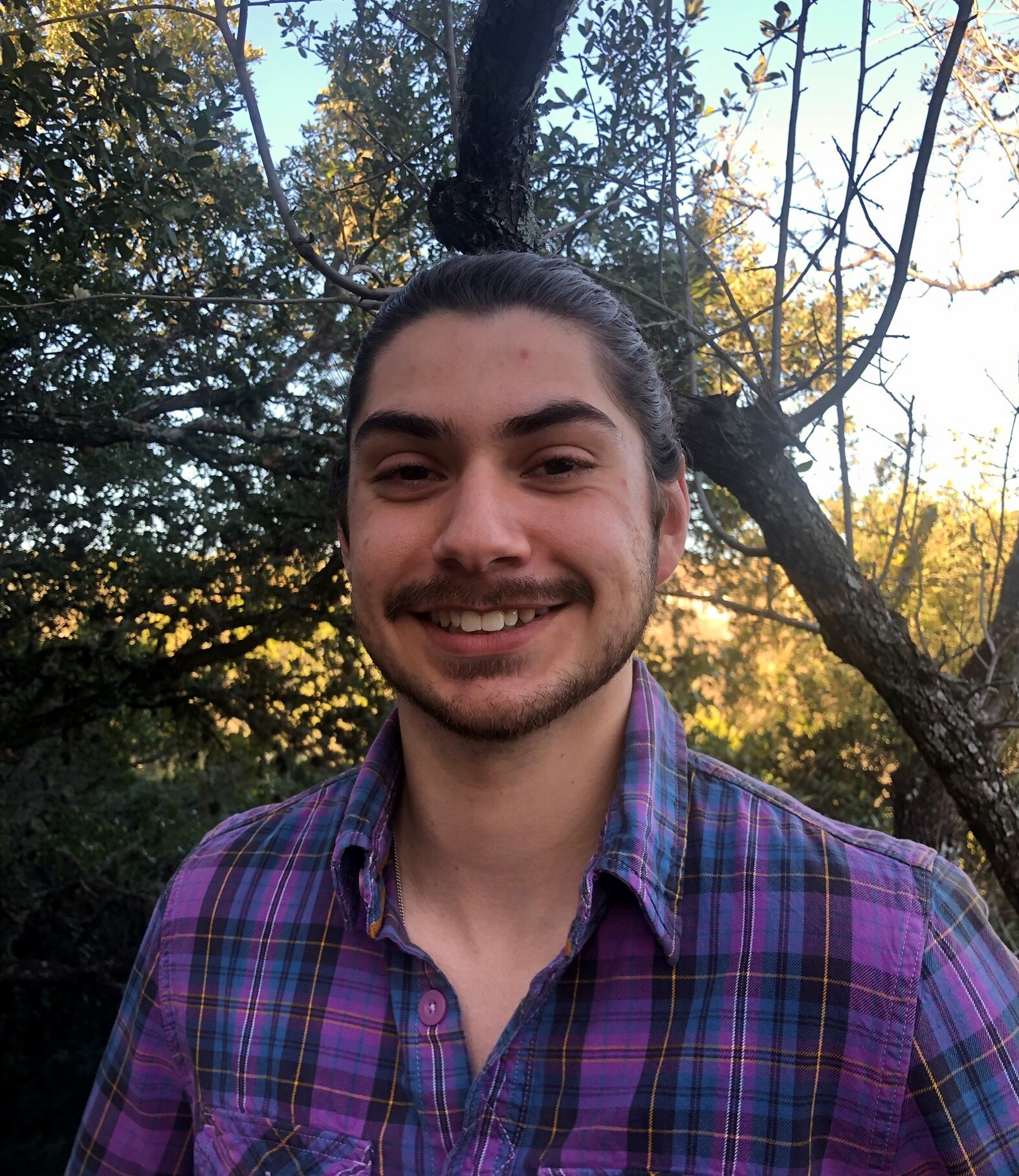
Christian Soenen, Catholic Social Poet Award Winner | NETWORK Lobby Celebrates 50 years of JusticeChristian Soenen has learned the weight of what it means to accompany people on their immigration journey, most recently as an education and advocacy intern at the Kino Border Institute in Nogales, Arizona. “You think that you understand the kinds of things that people are going through,” says Soenen, 23. “I thought I knew what was going on, and then I got to the border. I personally felt very disarmed. … You get very invested in the present, in the people who are suffering presently.”

A graduate of University of Texas at Austin who has engaged in immigration advocacy since high school, Soenen’s experiences at the border confronted him with the crushing impact of a broken system. During his time at Kino, Sr. Tracey Horan, SP, served as a collaborator and guide. “He demonstrates a sincere humility in his awareness both of what he has to offer the movement toward dignified migration and that his efforts are part of something bigger that is beyond him. I have been particularly impressed by his growth in identifying and empowering migrant leadership,” Horan says of Soenen.

“The moment you step away [from the border] it is so easy to forget the weight of that,” Soenen says of the end of his time with Kino. “I don’t think we can allow ourselves to forget.” The border experience has shown him how many dehumanizing structures people acquiesce to on a daily basis, and he adds, “I don’t know how you break out that.”

Despite the hopelessness of the circumstances, Soenen does see the Gospel alive in the struggles of migrant people and those who serve them. “Liberation is the fundamental focus of everything that is prophetic and Gospel,” he says. And the life and death of Jesus shows where God identifies: “We have had the ultimate symbolic example, and we’re still waiting for the world to realize what that means.”

Jennifer Koo | Catholic Social Poet

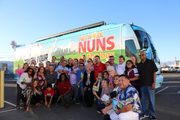
Jennifer Poo, Catholic Social Poet | NETWORK Lobby Celebrates 50 years of JusticeJennifer Koo first learned about Jesus when she was 17, in a high school history class. Now the only Christian in her multi-faith family of Southeast Asian immigrants, Koo, 24, says her newfound faith “offered me some hope and comfort in trying to grapple with all the inequity and brokenness that I was seeing all around me.”

Koo grapples with human brokenness all the time through her work for RESULTS, an anti-poverty advocacy organization, which she serves from Connecticut. As Koo discovered grassroots advocacy as a young adult, she also discovered a vocabulary to describe the oppression she’d experienced growing up, which “reminded me that I’m not alone in this journey towards justice.”

But while she’s not alone, she recognizes that the journey is different for people of color, people with disabilities, and others. “The stakes of the work that we are involved in, it’s not the same for everyone,” she notes. “This work can be incredibly exhausting and painful and tiring, and it can be very exhausting to feel as though you are being tokenized in a movement.”

One of Koo’s numerous endeavors has been to create self-care resources for activists. “I take this approach of seeing the people inside the advocate. We are not advocacy tools. We are people with our own lives,” she says. Upon learning that she is one of four Social Poets honored by NETWORK, Koo’s first response was to learn about the organization, which led her to being “overjoyed to see that this kind of space exists.”

This includes NETWORK’s commitment to growing as a multicultural, anti-racist organization that prioritizes looking at the person within the advocate. She also appreciates NETWORK giving her “help to contribute in making waves in this movement.” Each Social Poet is receiving $500 and will participate in the Advocates Training as part of NETWORK’s 50th anniversary celebration.

Don Clemmons is NETWORK’s content and editorial manager. This article originally appeared in Connection, NETWORK’s quarterly magazine (Second Quarter 2022 – “Celebrating Sister-Spirit: Our 50-Year Justice Journey”  *Special 50th Anniversary Edition*).

From the Archives: Called to Challenge the Treatment of Poverty

From the Archives: Centering Encounter for 50 Years

Sr. Mara Rutten, RSM
April 7, 2022

Dear Friend,

As we get ready for our 50th Anniversary Advocates Training and Gala next week, I invite you to reflect on the words of Sr. Jan Cebula, OSF:

“Yes, we face some critical choices as we decide
what kind of a people-a country-we want to be. It’s OUR choice
and we all have decisions to make at this pivotal time. Are
we going to choose: to remain isolated or recognize the strength
of community? To be fearful or reach out with compassion and love?”

~ Sister Jan Cebula, OSF, Nuns on the Bus 2016

In recent years, NETWORK continued to build on the legacy set by the lobbyists and organizers who came before, harnessing the power of community to advocate for federal policy change.

From 2012 up through a virtual campaign in 2020, NETWORK’s Nuns on the Bus NETWORK's Nuns on the Bustrips encouraged communities across the country to share their stories of how national policy issues of immigration, health care, and federal budgets are not just statistics, but have real impact on their personal experiences.

NETWORK lobbyists and organizers worked with people in the communities the Bus visited to meet with Members of Congress and advocate for policies that better serve their families and communities.

Throughout 2019 and in early 2020, NETWORK Lobby Raises Rural Voiceswe hosted roundtable discussions listening to diverse groups of more than 250 people living in rural communities all across the United States. NETWORK published a report titled “Raising Rural Voices,” lifting up their hopes and hardships, to help guide federal policy decisions in Washington.

“This report reflects the ‘active listening’ that doesn’t occur frequently enough within states or with policymakers in Washington. Too many decisions are made without understanding the perspective of rural residents or acknowledging the values of shared obligations.”

~ Kathleen Sebelius, Former Kansas Governor and Secretary of Health and Human Services, Forward to “Raising Rural Voices”

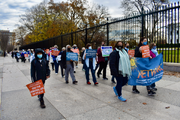
And friend, over the last year the NETWORK community has continued to prioritize encounter in our organizing. NETWORK's Title 42 White House ProtestJust last December, more than 80 Catholic Sisters and their advocacy partners rallied outside the White House to bear witness to their experiences serving migrants at the Southern Border and protest the inhumane misuse of Title 42 and call for its end. While strides forward have been made, there is still much to do in order to build a humane and just asylum system.

As we celebrate NETWORK’s 50th Anniversary, we recommit to centering encounter in our advocacy. This important work can only happen in community, and we are grateful to count you as part of our NETWORK community.

I have enjoyed sharing my stories with you over the past few weeks. Through the many changes in technology and shifts in politics over the years, NETWORK has remained steadfast in our political ministry. Together, we will continue to work for economic and social transformation for many years to come.

Read From the Archives: NETWORK’s Vision Comes to Life
Read From the Archives: Spirit at Work from the Beginning

Read From the Archives: Called to Challenge the Treatment of Poverty

Eliminate Unjust Sentencing Disparities and Build Anew

We Can Eliminate Unjust Sentencing Disparities and Build Anew

We Can Eliminate Unjust Sentencing Disparities and Build Anew

NETWORK affirms that every person is entitled to dignity and equal justice under the law. Since the inception of President Nixon’s 1971 War on Drugs, federal policies have perpetuated the plagues of over-criminalization, mass incarceration, and increased police militarization. Extreme sentencing measures such as mandatory minimums and “three strikes” laws have led to the U.S. having the highest percentage of incarcerated people in the world.

More pointedly, for decades, the sentencing disparity between crack and powder cocaine offenses has contributed to our country’s shameful legacy of systemic racism and mass incarceration, despite being two forms of the same drug. If we hope to Build Anew, we must dismantle systemic racism, cultivate inclusive community, root our economy in solidarity, and ultimately transform our politics.

Second Chance Month Centers Redemption and Rehabilitation

On the heels of Judge Ketanji Brown Jackson’s confirmation to the U.S. Supreme Court, the Biden administration commemorated the month of April as Second Chance Month. President Biden granted pardons to three people and commuted the sentences of 75 people, all of whom have made efforts to rehabilitate themselves, including through educational and vocational training or drug treatment in prison. Additionally, the Administration has taken steps to offer “meaningful socioeconomic opportunities for redemption and rehabilitation to reduce recidivism and empower formerly incarcerated persons to become productive members of society, and to reduce crime, making our communities safer.”

President Biden sent his Administration’s inaugural National Drug Control Strategy to Congress at a time when drug overdoses have taken a heartbreaking toll, claiming 106,854 lives in the most recent 12-month period.* The Strategy delivers on the call to action in President Biden’s Unity Agenda through a whole-of-government approach to beat the overdose epidemic. The strategy includes an “Incarceration to Employment” policy that fosters expanding and improving second chance opportunities for formerly incarcerated persons, advances successful reentry outcomes that make our communities safer, disrupts cycles of economic hardship, and strengthens our economy.

What Congress Can Do?

With these bold steps taken by the Biden Administration, now is prime time for Congress to continue the work of taking meaningful steps towards making justice happen for thousands of currently and formerly incarcerated persons in our nation. We can eliminate unjust sentencing disparity by passing robust legislation that lends to redemption, rehabilitation, and, reconciliation and restoration of incarcerated persons back into community as productive members of society. Some of the bipartisan bills that have passed, or are being considered by, the House of Representatives, and are currently being considered by the Senate are:

  • The EQUAL Act (S.79) eliminates the unjust sentencing disparity between crack and powder cocaine, and automatically authorizes resentencing of those previously convicted. In 1986, Congress passed the Anti-Drug Abuse Act, which created a disparity between federal penalties for crack cocaine and powder cocaine offenses. The law required the same harsh penalties for the possession of one amount of crack cocaine and 100 times the same amount of powder cocaine, an inequitable handling of essentially the same drug. Decades later, the Fair Sentencing Act of 2010 reduced that disparity from 100:1 to 18:1, and that reform was made retroactive in the First Step Act signed in 2018. Despite this reform, people continue to face longer sentences for offenses involving crack cocaine than for offenses involving the same amount of powder cocaine. This bill currently has a bipartisan list of 21 cosponsors and needs clean passage, acceptance of amendments would cause bill to go back to House for reconsideration.
  • The First Step Implementation Act (S.1014) is intends to cut adults’ and juveniles’ unnecessarily long federal sentences by (1) allowing courts to apply the 2018 First Step Act’s significant sentencing reform provisions to reduce sentences for those who committed their offenses prior to its enactment, (2) allowing courts to sentence below a mandatory minimum, (3) provide for sealing or expunging records of nonviolent juvenile offenses in some cases, and (4) requires the Attorney General to establish procedures to ensure only accurate criminal records are shared for employment-related purposes. Sen. Roy Blunt (R-MO) is the newest cosponsor of the bill as of April 25th, bringing the bipartisan list of supporters to ten.
  • The Prohibiting Punishment of Acquitted Conduct Act (S.601) ends the perverse practice of federal courts considering acquitted or dismissed charges as aggravating factors when imposing sentences for convictions. Sen. Moran Jerry (R-KA) is the newest cosponsor of the bill as of April 25, bringing the bipartisan list of supporters to ten.
  • The COVID-19 Safer Detention Act (S.312) expands eligibility of at-home supervision to additional vulnerable, low-risk elderly prisoners, and expedites releases from federal prison during the continued COVID-19 pandemic by explicitly naming COVID-19 vulnerability as a basis for compassionate release. This bill currently has a bipartisan list of 8 cosponsors.

As the Biden-Harris administration noted in their Second Chance Month fact sheet, “Advancing successful reentry outcomes makes our communities safer, disrupts cycles of economic hardship, and strengthens our economy.” Passing these laws would make meaningful movement towards justice for thousands of currently and formerly incarcerated persons in our nation.

Catherine Pinkerton’s Sister-Spirt Legacy

Prophet of a Future

Julia Morris
May 15, 2022

Sr. Catherine Pinkerton’s Legacy Shapes NETWORK’s Justice Journey Today

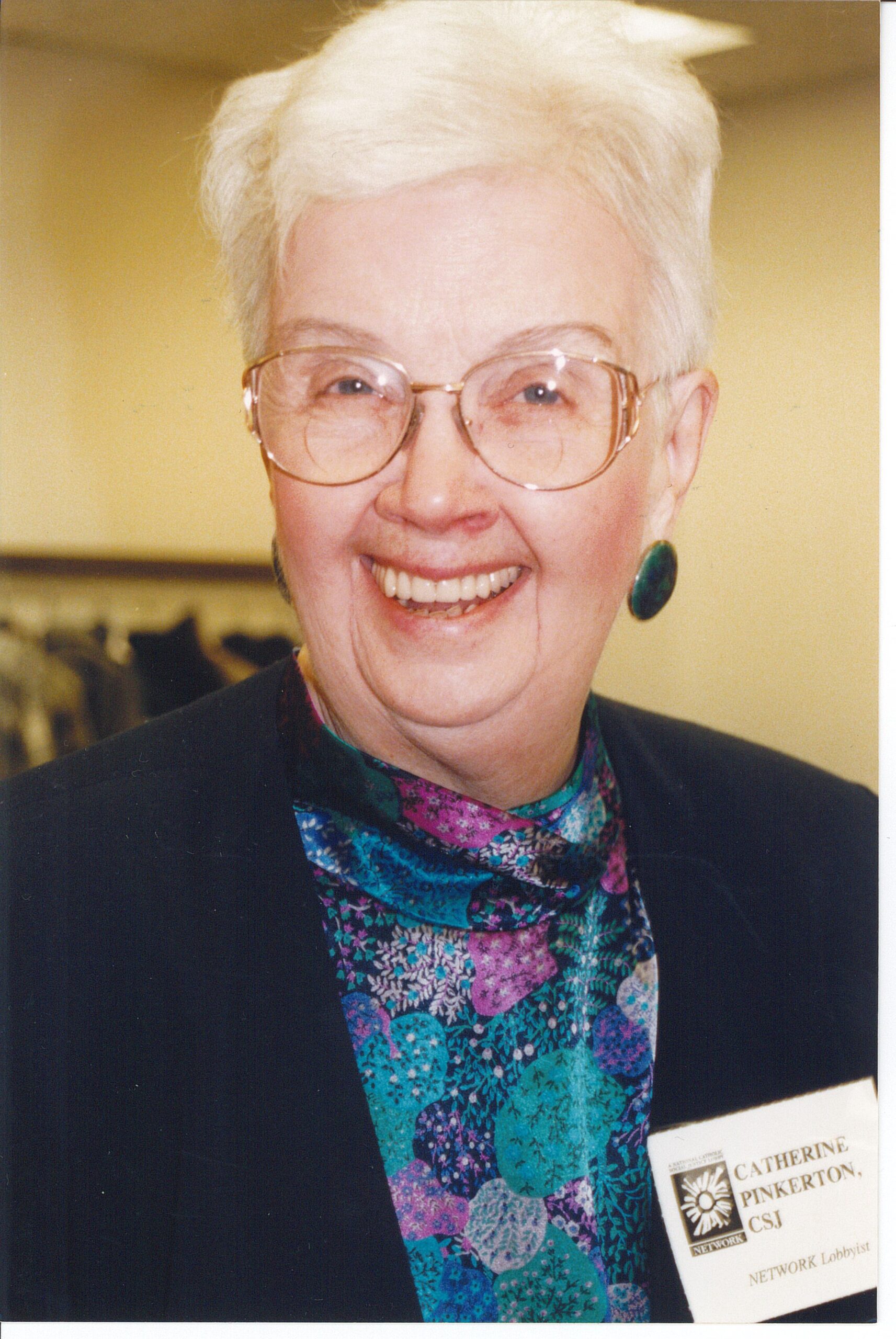
Sister Catherine Pinkerton close upOne way to evaluate efforts in social justice is to look at the number of people impacted or helped. For Sr. Catherine Pinkerton, CSJ, this number is upwards of 13.6 million, or the growing number of people signed up for healthcare exchanges through the Affordable Care Act, a number that has reached record highs this year.

Wide-reaching, sweeping reform rarely happens without committed advocates. Guided by her faith and her congregation, the Sisters of St. Joseph, Pinkerton diligently served at NETWORK as a lobbyist for 24 years, pushing for legislation that promoted the common good. Her legacy leaves a colossal imprint not only on NETWORK, but on Capitol Hill and federal policies that touch the lives of millions of people.

Radical Ministry

An early advocate for national comprehensive healthcare reform, Sr. Catherine Pinkerton lobbied the Clinton administration a decade before Barack Obama was even in the Senate. As the leader of her congregation, she had sought that every sick and elderly sister be cared for.

Her longtime friend Sr. Sallie Latkovich, CSJ recalls that Catherine’s early support of comprehensive healthcare legislation came from that experience, noting that Pinkerton would often warn her congregation that “healthcare programs would not always be available; that’s what jumpstarted her work to make them stronger.”

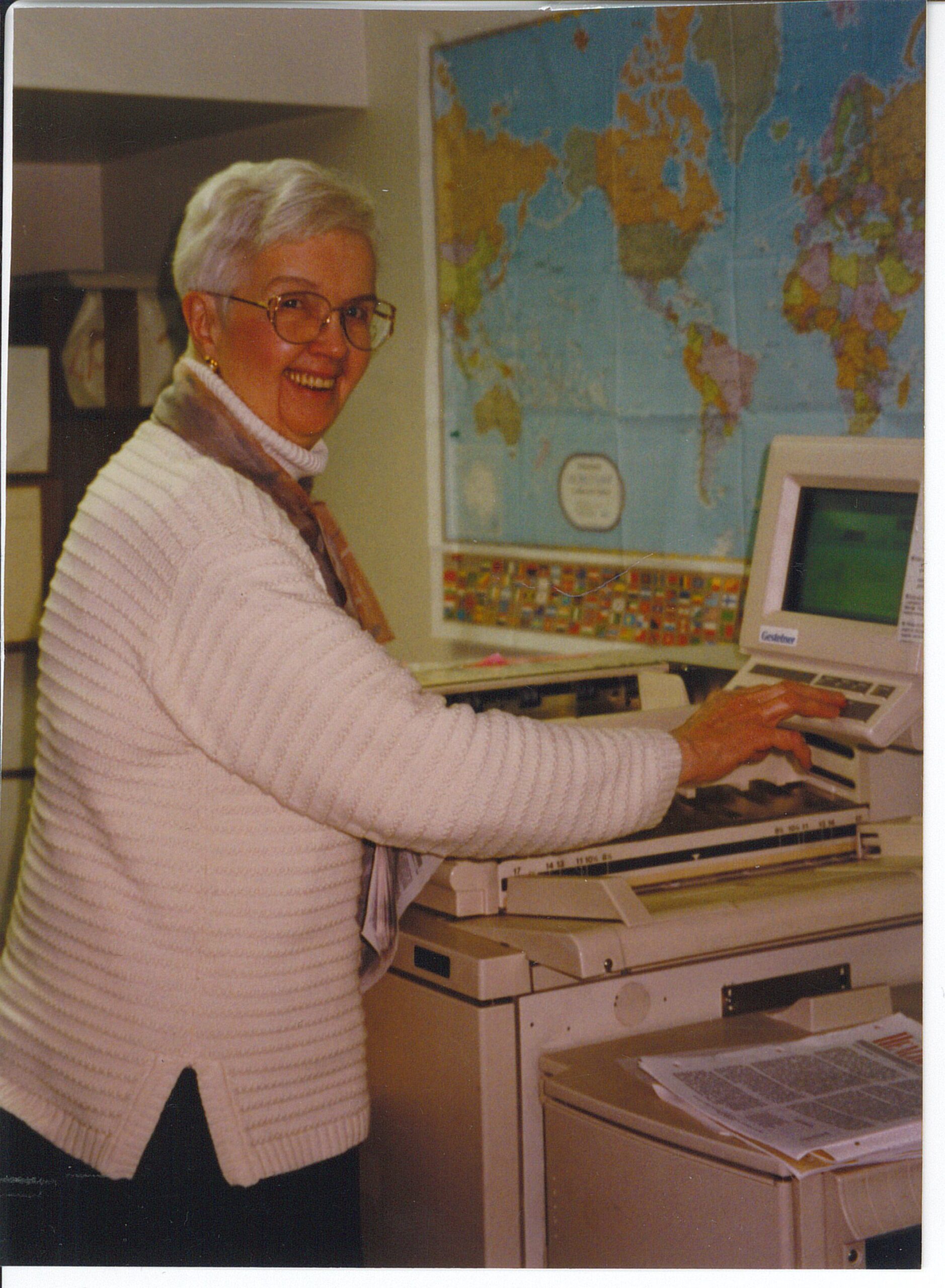
Sister Catherine Pinkerton at the ComputerIn 1984, Pinkerton joined NETWORK’s staff. She would say she saw Christ in the Gospels as a justice-seeker working against systems of inequality. In her ministry, she then turned to NETWORK aiming to model herself after Christ’s justice-seeking action by advocating and developing policies around the common good, especially working to ensure that all people living in the U.S. had access to healthcare and housing.

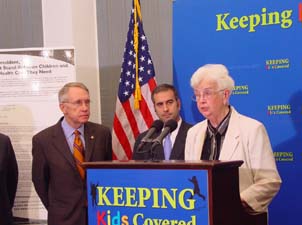
When efforts to craft comprehensive healthcare legislation faltered in the 1990s, Pinkerton became a passionate advocate for the Child Health Insurance Program (CHIP), which provides health coverage for children in families that earn too much to qualify for Medicaid but not enough to afford health insurance. Her perseverance and lobbying for comprehensive healthcare reform paved the way for the Affordable Care Act.

Her work was and is cutting edge. In many of the news articles written about her, Pinkerton is regarded as “radical.” In the 1999 book on Pinkerton, “The Genesis and Gestation of a Justice Journey,” author Jacqueline Magness asked her how she might feel about this word.

Pinkerton “smiled and exclaimed, ‘Radical …yes … back to the root. I like it!’” Noted for her ability to analyze a policy issues with speed and precision, Sr. Ann Curtis, RSM described Pinkerton as a “woman of vision … led by a vision of what God desires of us —justice, truth, and a dignified life.”

Pinkerton herself attributed this ability to the process that her community calls “conversion”: “You see it is a three-part process: (a) intellectual contemplation ‘fed with new insights and ideas and challenges’; (b) reflective conversion, ‘the process of making the truth one’s own and changing attitudes and behavior to accord with new insights’; and (c) the conversion of action, ‘the going forth to create with others the structures, processes, and systems that are authentic for what is life-giving.’”

Sister-Spirit Personified

Grounded in the spiritual legacy of Sisters like Catherine Pinkerton, NETWORK pursues Gospel justice with joy, persistence, and a feisty spirit. Former NETWORK Director Sr. Kathy Thornton, RSM, described Pinkerton as someone who won the respect and friendship of the political powers of her time:

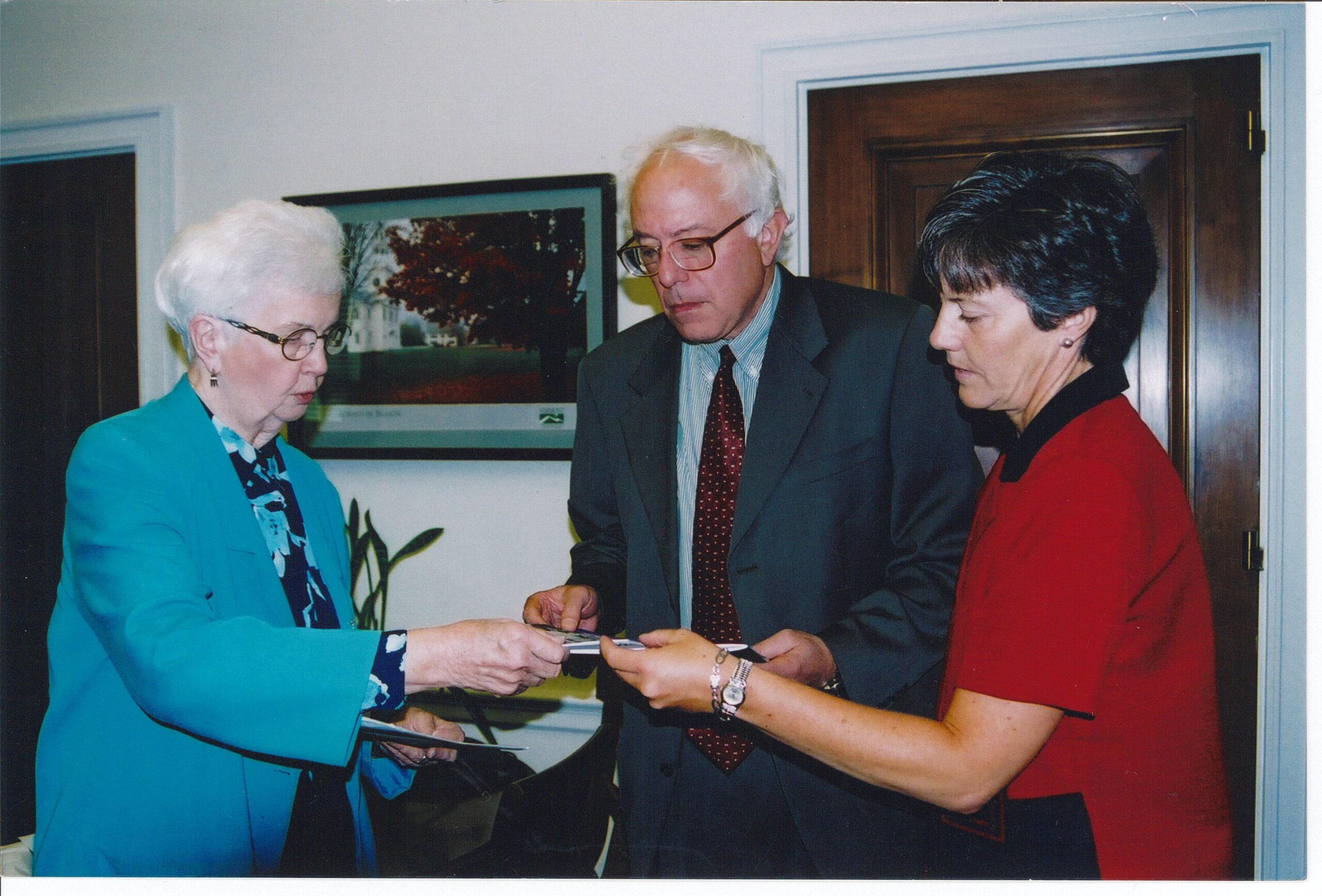
“[She has] the ably tease Bill Clinton, confer with Hillary Clinton, and chide Ted Kennedy, who,Pinkerton Lobbying with Sen. BernieSanders when he does not see Catherine for a while, admits to missing her.” Pinkerton’s longtime friend, Ohio Representative Marcy Kaptur, who entered Congress the year before Pinkerton joined NETWORK, remembers her “infectious giggle and great sense of humor. She walked thousands of miles through the winding corridors of Congress, back and forth from House to Senate, a highly respected, indeed revered, lobbyist.”

“Even when she felt strongly about an issue, she always treated the other with respect,” notes Latkovich. “She treated them as a person first, not as their opinion.”

In 2008, Pinkerton delivered the benediction at the Democratic National Convention. In 2012, she left Washington and returned home to her community in Cleveland. Never one to be complacent, she stayed active and engaged with her many friends and anyone who might come to her for her guidance. Kaptur recalls, “She listened intently to the nightly news, laughed a lot, never missing a beat even when in her 90s. She remained a trusted counselor and beloved friend throughout her life.

Sr. Catherine was a trailblazer for faith-filled people, and surely women, for generations to come.” Pinkerton died in 2015, yet the impact of her work continues to grow touching lives across the country. A wellknown prayer ends with the line: “We are prophets of a future not our own.” Sr. Catherine Pinkerton truly lived this prayer

Julia Morris is a NETWORK Policy Communications Associate. This article originally appeared in Connection, NETWORK’s quarterly magazine (Second Quarter 2022 – “Celebrating Sister-Spirit: Our 50-Year Justice Journey”  *Special 50th Anniversary Edition*).

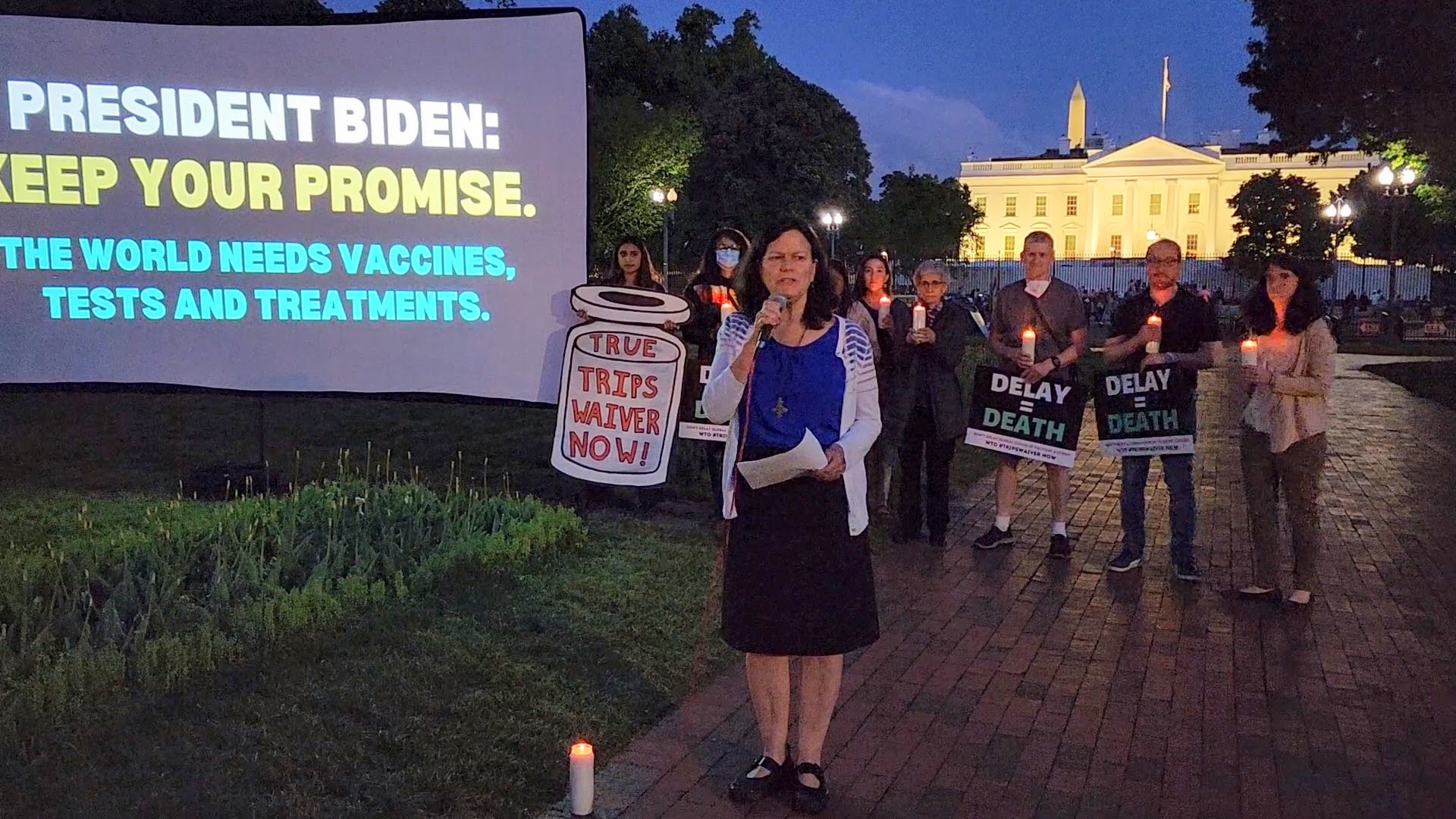
Be A Hero hosted a candlelight vigil at the White House calling for a 'True TRIPS waiver' for global vaccine equity and to save lives

Congress and President Biden Must Take Domestic and International COVID-19 Action

Congress and President Biden Must Take Domestic and International COVID-19 Action

Elissa Hackerson
May 13, 2022

How do you carve out a “new normal” in the calm days that follow the urgent times of a pandemic? Two years into life with COVID-19, people in the United States have yet to reach consensus on the path to achieve and maintain normalcy. Medical experts, governments, houses of worship, and ordinary citizens do not accept a uniform standard of safety and protection. Tensions arise over mask requirements in public spaces, vaccines and therapeutics are questioned, restrictions on large public gatherings are shunned, and the efficacy of booster shots is debated. In developed countries like ours, this is privileged discourse. Domestic and international COVID-19 infections persist, but most of us have taken the shot and are now blessed with significantly diminished threats of death and serious illness.

But what about our global siblings in under-resourced nations? How do they fare in places where jabs in the arm aren’t coming because of a lack of political will and resources? The short answer is, not well.

Global Vaccine rates in low-income and middle-income countries are dismally low | Congress and President Biden Must Take Domestic and International COVID-19 Action

© UNICEF/Maria Wamala
COVID-19 vaccinations are being administered in communities hosting refugees, such as Fort Portal, in Uganda.

Globally, only 80% of people in lower-income countries have received at least one dose of a COVID-19 vaccine. The United Nations reports that of the more than 10 billion doses given out worldwide, only one percent have been administered in low-income countries. Here, there is no debate: citizens across the globe that don’t have an economy like ours, and thus lack access to life-saving vaccines and therapeutics, are suffering. They are ravaged by a pernicious disease tamed by remedies in our country because of economic and health inequities: lack of funds to secure the vaccines and therapeutics, well-resourced countries hoarding supply, and Big Pharma’s preference for patent control and profits over sharing the science for lower-cost vaccine production.

Last October, in remarks given at the World Meeting of Popular Movements, Pope Francis called on pharmaceutical companies to release vaccine patents to make COVID-19 accessible by the poor. He noted at the time that only 3%-4% of the population in some countries had been vaccinated. One would hope that Big Pharma and world leaders would reflect on that dismally low vaccination rate, heed the words of the Pope, and take action that values lives over profit. But that didn’t happen.

What can people of faith do? Be a pest for those in poverty here and abroad 

In the Popular Movements meeting, Pope Francis recognized that some consider him to be a “pest” because of his unwavering defense of the poor and vulnerable. It doesn’t stop him in the pursuit of prophetic Christianity and it won’t stop NETWORK, either. As a member of the Catholic Cares Coalition, a national coalition of 60 Catholic religious and non-profit organizations promoting domestic COVID-19 vaccination and working to address COVID-19 vaccine and treatment equity in the U.S. and globally, we advocate for life-saving vaccine policies. Most recently, NETWORK signed on to a coalition letter urging Congress to pass a supplemental funding bill that prioritizes funding for ongoing domestic and international COVID-19 needs.

The pressure for domestic COVID-19 funds is necessary because nationwide, government money that secured hospital resources and rapid response measures during the height of the pandemic are running out. In our current landscape, if the government doesn’t pass a supplemental bill, it is likely that our “new normal” includes locking out Medicaid recipients, the uninsured, and the under-insured from free and deeply affordably COVID-19-related care, treatment and vaccines. It is critical that we provide funding which allows the United States to respond to these needs while also fulfilling our promises to assist those around the world.

NETWORK’s Request to Congress:

We support the Catholic Cares Coalitions request: pass the supplemental funding bill with at least $10 billion in domestic funding and $5 billion in international funds for COVID-19 vaccines, testing, therapeutics and delivery system strengthening.

What’s a TRIPS Waiver for COVID-19 All About?

Laura Peralta-Schulte Speaks at a White House Candlelight Vigil Calling for a True TRIPS waiver | Congress and President Biden Must Take Domestic and International COVID-19 Action

Laura Peralta-Schulte speaks at a White House candlelight vigil in May 2022 calling for a true TRIPS waiver.

The Trade-Related Aspects of Intellectual Property Rights (TRIPS) is an agreement created when the World Trade Organization was formed in 1995. This agreement restricts the rights to make and distribute patented medicines or materials, including COVID vaccines, testing and treatment, except under emergency conditions.

This Agreement, pushed by knowledge-based economies like the United States and the multinational, research-intensive pharmaceutical industry, imposed a base of protections for intellectual property rights, from patents to copyrights. Johns Hopkins University

In an effort to decrease pandemic deaths and illnesses, a COVID TRIPS waiver was proposed by South African and Indian governments to relax the intellectual property rights protections for medicines and technologies needed to prevent and treat COVID-19. This initial effort to release the science so lives could be saved was rebuffed by developed nations and pharmaceutical companies — who’ve thus far proven maximizing profits and maintaining control of monopolies is more important than saving lives. South Africa and India amended their waiver request so that it subsides in three years. The cap on the TRIPS waiver was intended to make rich countries and Big Pharma in Europe and North America feel better about lost profits and diminished control (in exchange for saving the lives of the global poor), but the measure has yet to draw support.

Are We Our Brother’s (And Sister’s) Keeper?

Congress and President Biden Must Take Domestic and International COVID-19 Action

Ady Barkan appears on screen at a White House candlelight vigil calling for vaccine equity.

Humanitarian efforts to protect our global siblings should trump financial gains and political posturing. After all, the United States is privileged to benefit from Big Pharma’s vaccine supply. Don’t we have a moral obligation to help vaccinate the rest of the world? Pope Francis would say yes!. And so would Ady Barkan, the founder and co-executive director of Be A Hero. During his electoral campaign, Joe Biden promised Barkan that, “if the United States were to discover a vaccine, he would ensure that no patents stand in the way of other countries’ and companies’ mass-producing it.” As president, Mr. Biden has stated that patents and international trade agreements should not be allowed to prevent the affordable production of COVID-19 treatments.

Unfortunately, these have been empty pledges to date. Pfizer and Moderna, two of the companies that received billions of dollars in public taxpayer funding to develop their vaccines, have not shared their innovation with global scientists. This is particularly disturbing in the case of Moderna’s vaccine project which was completely funded by public money. While U.S. tax dollars fueled the Moderna vaccine, the company padded their profit margin, Moderna forecasts at least $19 billion in sales in 2022.

NETWORK and our Catholic and interfaith partners will continue calling on the U.S. government to share live-saving technology and know-how with countries in the global South so that they can begin developing necessary vaccines, testing and treatment for their citizens. For too long, access to healthcare has depended on the charity of rich countries which is neither predictable or sufficient. Justice requires ensuring countries must be able to protect the health and well-being of their own citizens especially in times of crisis. We must shift from an economy of exclusion to one that prioritizes life.

We Continue Putting People over Profits

Domestically, the appetite for COVID-19 prevention measures may be waning, but the disease is here to stay. We must not ignore it, and we must urge our leaders to diminish its ability to compromise health and take lives domestically and globally. Affordable access to shots, therapeutics, testing, and boosters are key as we continue to battle COVID-19 and any variants that emerge. It’s hard to accomplish this goal when the government funding that ushered us into our “new normal” is drying up.

Globally, even if the TRIPS waiver is granted, money will be needed to produce, transport, and administer the vaccine. Congress should act to address our obligation to take care of people at home and abroad in the supplemental COVID funding bill. Pfizer, Moderna, and other biopharmaceutical companies that maintain a monopoly on innovations created with public funds, cannot produce enough doses on their own to vaccinate the world. By protecting their monopoly, they deny billions of people access to vaccinations.

On May 12, 2022, the second Global COVID-19 Summit was held. Its co-hosts, the United States, Belize, Germany, Indonesia, and Senegal, called for global researchers, heads of states, philanthropic executives, and health experts to explore solutions — and make commitments — to “vaccinate the world, save lives now, and build better health security — for everyone, everywhere.” At the onset of the Summit, President Biden announced a major commitment to vaccinating the world’s lower-income citizens.

NETWORK believes this action, combined with the renewed and increased financial support from other global leaders in the West has the potential to be a game changer for global health and lives around the world. Through the National Institutes of Health, the United States has licensed 11 COVID-19 research tools and early-stage vaccine and diagnostic candidates to the Medicines Patent Pool (MPP) so that global manufacturers can use these technologies for the potential development of COVID-19 vaccines, treatments, and diagnostics to benefit people living in low- and middle-income countries.

According to the White House, new financial commitments were made at the Summit that totaled more than $3 billion in new funding above and beyond pledges made to date in 2022. This includes over $2 billion for immediate COVID-19 response and $962 million in commitments toward a new pandemic preparedness and global health security fund at the
World Bank.

See the White House’s account of global commitments made during the summit.

We know that the solution to COVID-19 lies in affordable and widespread access to vaccines, testing and therapeutics. We will continue raising our voices to the White House to oppose Big Pharma’s efforts to exacerbate vaccine inequity in the name of profit. We will continue to urge Congress to pass a supplemental funding bill that prioritizes funding for ongoing domestic and international COVID-19 needs; and we call on President Biden to continue working for an effective TRIPS waiver that makes lifesaving technology available to all.

House Staffers Successfully Get the Green Light to Unionize

House Staffers Successfully Get the Green Light to Unionize

Gina Kelley
May 12, 2022

In March, NETWORK shared a blog discussing calls from Congressional Staffers for livable wages and the right to unionize. Last week in a Dear Colleague Letter, Speaker Nancy Pelosi (CA-12) announced that the House of Representatives would vote on a Resolution from Congressman Mike Levin (CA-49) to allow House staffers to unionize and also shared that $45,000 will be the new minimum annual salary for House staffers. Thankfully, that vote was a successful one.  

NETWORK Lobby for Catholic Social Justice applauds the passage of H.Res. 915 as well as the new $45,000 minimum annual pay standard for House staff. This is a great step in the right direction for workers’ rights on Capitol Hill.  

As people of faith, we know that supporting a living wage is one of the most effective ways to uphold the dignity of work. Catholic Social Justice teaches that work is more than a way to make a living — it is a form of continuing participation in God’s creation. Additionally, our faith affirms the right of workers to organize. We know it is a moral imperative that all workers are free to act in solidarity with one another and make their voices heard. Our belief in the intrinsic value of work and workers leads us to strongly support the expansion of the right of workers to bargain collectively, form unions, and engage in collective action.  

Representative Levin’s Resolution and Speaker Pelosi’s implementation of a minimum salary uphold the dignity of work. As an organization that proudly collaborates with Congressional staff — and has done so for 50 years — NETWORK affirms the faithful vocation of public service. We thank those who have answered that call and proudly support policies that recognize the dignity of that calling. 

Finally, while we are thrilled to see these actions taken to support Congressional Staffers, we simultaneously urge the Senate to prioritize the economic security of workers in all industries. Everyone deserves a livable wage and the right to join a union.  

Hundreds of Miles of Wall and Two Years of Title 42 Later: Are We Any Better Off?

Hundreds of Miles of Wall and Two Years of Title 42 Later: Are We Any Better Off?

Julia Morris
May 9, 2022

“Title 42 is a policy failure plain and simple. It does nothing to stop COVID from being spread and by circumventing immigration law it actually goes against the principles on which our country was founded.
Ending it was the right decision”
– Rep. Pramila Jayapal (WA-7)

A Trump appointed federal judge ordered a two week hold on the phasing out of the Title 42 expulsion policy, raising doubts about the Biden administration’s ability to restore asylum on May 23.

As Pope Francis said, “[T]housands of persons are led to travel north in search of a better life for themselves and for their loved ones, in search of greater opportunities. Is this not what we want for our own children? We must not be taken aback by their numbers, but rather view them as persons, seeing their faces and listening to their stories, trying to respond as best we can to their situation … Let us remember the Golden Rule: ‘Do unto others as you would have them do unto you.’” (Papal address to the United States Congress, 9/24/15.)

Faith and secular border reception agencies are ready to receive asylum seekers and hope that Congress and the Administration will treat them as partners in this journey so that they can provide the best service to our siblings at the border. Rather than fall victim to anti-immigrant rhetoric, we have an opportunity now to live up to our values and show compassion.

Title 42 is a death sentence for these vulnerable asylum seekers. At its core, Title 42 is an obscure public health law weaponized advance cruel, xenophobic immigration policies under the guise of public health.

We know how to curb COVID-19: vaccines, masking, and social distancing. A xenophobic and selective ban on individuals and families fleeing harm only undermines public trust in federal institutions like the CDC.

We can protect public safety without turning away vulnerable families coming to this country for a better life.

Join NETWORK activists in restoring the right to asylum, email Congress now!

The Weight of Something Precious

The Weight of Something Precious

In NETWORK, Catholics Sisters Have Built a True Legacy

We seldom end up where we expect in life. We think we have a clear vision of where we’re going, but the Spirit blows where it will, and our God is one of surprises. As I transition into the role of NETWORK’s first Chief of Staff, this rings true for my journey — from a social worker, to an Ursuline Sister of Cleveland, teacher, and school administrator. And now here I am, unexpectedly receiving a legacy shaped and handed down by the women religious who have come before me. As a Catholic Sister, I approach this moment with a deep awareness of its gravity.

You know something is well constructed and even valuable when it’s heavy. And that is definitely the case with NETWORK. In Catholic spaces, we throw around a word like tradition, forgetting that it has real weight. Fifty years ago, 47 women religious came together to discern, pray, and ultimately build on a vision for a better church and world by founding NETWORK. Emboldened by the spirit of their visionary founders and foundresses, these women heeded the call of the Second Vatican Council to breathe new life into their community charisms.

These dynamic and visionary women were grounded in a common call – to dismantle systems of racism, oppression, and inequality. This call was rooted in first-hand encounter and accompaniment of men, women and children who were suffering extreme poverty with limited access to healthcare and housing. I imagine the passion and resolve of these women came from their hearts being broken open by the suffering of those they loved and served. You might say these women had hearts ablaze for what they knew was possible — a way forward for the common good.

NETWORK has been blessed with an incredible legacy of women religious leaders who read the signs of the times and responded accordingly — Carol Coston, Maureen Kelleher, Nancy Sylvester, Catherine Pinkerton, Kathy Thornton, Simone Campbell — each sister receiving the torch from the sister and staff who served before her. I believe these women were called to serve for a particular moment in history and were blessed with the “grace of the office.”

But even these Sisters didn’t end up exactly where they expected. On issues including equal rights for women, universal health care, voting rights, and essential reforms of our immigration and criminal legal systems, the better future envisioned by NETWORK remains just that. This too is the weight of tradition, that we faithfully and persistently do our part, in cooperation with the Spirit, but also leave much for those who will follow us.

There is no question that the ministry of educating, organizing and advocating can be daunting at times. However, when a network comes together to support each other and the work; good things happen. I believe every generation is called to embrace and claim their moment in history. I too have had my heart broken open by the people I have encountered in my ministry. It has transformed me within, and as a woman religious, I know that interior transformation must precede work for social and economic transformation.

I am proud to take my place among the holy men and women who make the work possible, who keep alive NETWORK’s hope and vision for a more just and inclusive society. Thank you for your faithfulness to NETWORK these past 50 years. I look forward to serving with each of you as we carry the mission long into the future.

Erin Zubal, OSU, is an Ursuline Sister of Cleveland and NETWORK’s first Chief of Staff. She previously participated in NETWORK’s “Nuns on the Bus” campaigns and served as Chair of the NETWORK Advocates Board. This article originally appeared in Connection, NETWORK’s quarterly magazine (Second Quarter 2022 – “Celebrating Sister-Spirit: Our 50-Year Justice Journey”  *Special 50th Anniversary Edition*).

Social Poet Award Winners | NETWORK Lobby Celebrates 50 years of Justice

Gratitude and Memories from Our Spirit-Filled Celebration

Gratitude and Memories from Our Spirit-Filled Celebration

Joan Neal and Mary Novak
April 25, 2022

We are full of joy, hope, and gratitude for the NETWORK community! Our time together at the Advocates Training and Justice Ablaze Gala was the perfect way to honor the 50 years of work we’ve done together.

We have selected a few favorite photos to share with you, with more to come in the weeks ahead! Thank you to those who celebrated in D.C. and those who held us in your hearts. We are on this sacred journey together.