


Tag Archives: Immigration

Photo of produce on grocery store shelves.

End of Health Emergency Will Impact Immigration, Other Human Needs

End of Public Health Emergency Will Impact Immigration, Other Human Needs

JoAnn Goedert, Ignatian Volunteer Corp Member
Government Relations Special Contributor
May 8, 2023

President Biden has announced that the federal government’s COVID-19 Public Health Emergency (PHE) will end on May 11. The Emergency has been in effect since early 2020, and its termination signals a welcome easing of the tragic impact of the COVID-19 pandemic. But for millions of our neighbors who struggle at or near the poverty in the U.S., and for those hoping to enter the country at our borders, the implications of the PHE’s end will be significant.

Impacts on Domestic Human Needs

In recognition of the economic devastation of the pandemic, benefits were added and eligibility and reporting requirements were suspended for many federal programs, but only until the end of the PHE. For individuals and families living at or near the poverty level, the consequences of terminating these protections will be serious, especially in the areas of health care and food assistance.

“Unwinding” of Medicaid Continuous Enrollment Protections: Pandemic legislation provided enhanced Medicaid funding and authorized Medicaid recipients to keep their coverage until the end of the PHE without having to re-certify their eligibility on a regular basis. Not surprisingly, enrollment in Medicaid grew by over 23 million during the pandemic. However, in December Congress prematurely ended this enrollment protection and instead allowed states to begin “unwinding” the continuous enrollment in April.

Some states already have aggressively begun disenrolling Medicaid recipients, many of whom may be unaware that their enrollment is in jeopardy and even more who will struggle to rapidly document their current eligibility. The Department of Health and Human Services estimates that up to 15 million individuals will be disenrolled in the coming months, and that nearly half of those who lose coverage are in fact eligible but unable to surmount the bureaucratic challenges of proving it. As a result of the unwinding of Medicaid continuous enrollment, the number of uninsured adults and children in the U.S. is predicted to soar, with tragic consequences for families and massive new burdens on health care system.

Restoration of SNAP Benefit Limits for Individuals Without Jobs: The Supplemental Nutrition Assistance Program (SNAP) has strict and complex work requirements for “able bodied adults without dependents” under age 50 that terminate their benefits after three months unless they can prove that they are employed or in a job training program. In response to widespread unemployment during the pandemic, the government suspended that three-month limit. With the end of the PHE, however, this suspension will cease for most SNAP participants on June 30, and these individuals will once again be limited to only three months of SNAP eligibility while unable to meet the work requirements in any three-year period.

March 1 Termination of SNAP Emergency Benefit Allotments: It is important also to note that increases in SNAP benefits provided as pandemic relief were ended nationwide by March 1. This substantial reduction in benefits amounted to an average of approximately $90 per month per individual and over $200 per month for most struggling families. Soup kitchens and food banks nationwide already have reported an overwhelming increase in need since the cut.

Phase-out of SNAP Benefit Expansion for Students: In addition, pandemic legislation extended SNAP eligibility to many more higher education students. With the end of the PHE, their eligibility will be phased out over the next year. Here is an explanation of this change in student SNAP eligibility.

Impact on Immigration

Termination of Title 42: Title 42 expulsion policy is a Trump administration order issued in 2020, purportedly as a public health measure, that allowed border authorities to expel migrants without giving them the opportunity to seek asylum. Public health experts have long declared that Title 42 is not related to any health measure. Reports are that the rule has been used more than two million times to abruptly turn back immigrants since 2020.

Title 42 will expire with termination of the PHE, and the expulsions are set to end on May 11. However, NETWORK is deeply alarmed that, the new measures announced by the Biden administration to purportedly ease pressures at the border, comes at the expense of the right to seek asylum at our southern border and does not support a just and humanitarian immigration policy.

NETWORK is monitoring the critical impacts of these policies and protections that end with the termination of the PHE. We will share this information with you, along with any calls for action that they may require to safeguard the welfare of our neighbors in the U.S. and at the southern border.

Restore Basic Function

Restore Basic Function

Fixing America’s Immigration System Starts With Updating the Registry

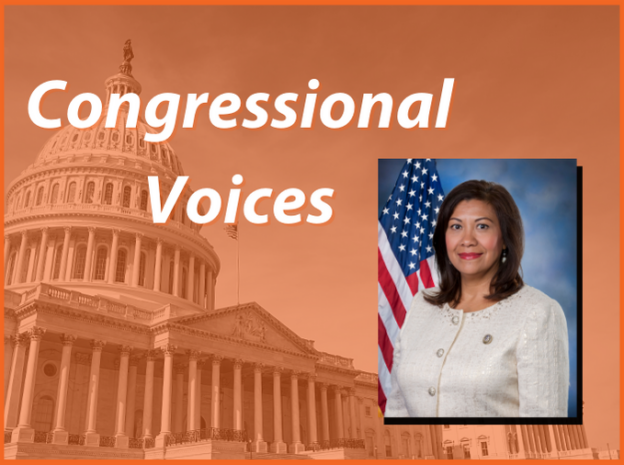
Congresswoman Norma J. Torres
March 7, 2023

When something isn’t working like it should—such as a car making a strange noise or a computer laboring to perform basic tasks—our human reaction is often to ignore the problem and hope that it goes away. We do this as long as possible, even as our avoidance is clearly allowing the situation to get worse.

In the United States, this is the path we have taken with our immigration system, which we have left broken and ignored for too long.

The problem is that we have no real function to allow people who come to this country, and who work hard and contribute to our communities, to pursue legal status. And because we have avoided addressing the problem, more than 10 million people in our communities live in the shadows, without legal status, and barred from full participation in society. People even wait 30-40 years in line for their documents to be processed. That is all part of the systemic failure we have seen.

We call the U.S. immigration system broken because it doesn’t perform the basic functions it’s intended to carry out.

Now, how often when we finally seek help and take a car to an auto mechanic do we hear that one little part is causing all the problems? It’s a relief and almost an embarrassment to know that our long-avoided problem has such a simple answer.

This too is reflected in U.S. immigration policy.

The Immigration Act of 1929 set up a registry to assist people who came to the U.S. without legal status. It was understood even then that we are better off knowing the people around us are not hiding in the shadows. The registry, which is still the law of the land, offered a rigorous process by which long-time residents could obtain permanent legal residence, and one of the provisions of that process was that a person resides in the U.S. before a cutoff date. Originally, this date was June 3, 1921. It has been updated four times through the years and is currently Jan. 1, 1972.

That’s a long time ago. I had just come to the U.S. two years earlier, at age 5, with my uncle, from Guatemala, which was embroiled in a dangerous civil war. I became a citizen 20 years later. The system worked for me. And that is part of why, in the 117th Congress, I co-led H.R. 8433: Renewing Immigration Provisions of the Immigration Act of 1929. This bill would simply update the cutoff date that, again, exists in current law.

It shouldn’t surprise us that one little provision in our system that hasn’t moved in half a century is broken and needs to be replaced. This bill is a simple change that would have a major impact on the quality of life of so many people. People will be able to present themselves at financial institutions, register their kids at school, go to the doctor, and contact federal, state, and local agencies without being afraid because they don’t have a legal document. While it wouldn’t solve every problem for every person in the U.S. without legal status, it would be a major step forward.

For the thousands of immigrant workers, our neighbors and friends who have been in the community a long time and who have been good Americans in every way, except on paper, we have an opportunity to be better neighbors to them. Delay and avoidance will lead to only more brokenness, and now, we have a path forward.

Let us work to make our communities whole—the time to do registry is now.

Rep. Norma J. Torres represents California’s 35th District. She has served in Congress since 2015.

This story was originally published in the 4th Quarter issue of Connection. Download the full issue here.

Advent 2022: Better Neighbors Welcome Their Neighbor

NETWORK Lobby offers Advent reflections

Advent 2022: Better Neighbors Welcome Their Neighbor

Sr. Eilis McCulloh, HM
December 12, 2022

Reflection:

The story is familiar. Mary and Joseph. No room at the inn. Giving birth in a barn. As Christians, spend this season commemorating their flight to Egypt where Mary gives birth to the Messiah.

Today, a “flight into the desert” evokes something different. We see and hear about families who must make the decision to leave everything they have and know in order to escape violence, crushing poverty, and other threats to their very existence. They courageously decide to make the perilous journey north. Their journey takes them north to the United States Southern Border where, instead of being welcomed with gifts of gold, frankincense, and myrrh, they are questioned by border police, detained in freezing detention centers, and bussed (against their will) to northern cities as punishment.

But, aren’t migrants today’s version of the Holy Family? Both flee with the hope of safety and an opportunity for their children to flourish. Instead, the United States, the richest country in their world, punishes migrants at every turn by invoking punitive immigrantion polices and refusing to act on legislation that could transform the lives of our immigrant neighbors living in the United States.

Yes, Advent is a time of waiting, but it is also a time of welcoming and a time of change. In 2013, Pope Francis said, “Migrants and refugees are. Or pawns on the chessboard of humanity.” Our immigrant neighbors have waited far too long and have been used as scapegoats in political play. Now is the time to create a pathway to citizenship to the more than 689,000 individuals who have DACA.

¡Que Viva la Virgen de Guadalupe!
Nuestra Señora de Guadalupe, ruega por nosotros.
Our Lady of Guadalupe, Patroness of the Americas, pray for us.

Call to Action:

It is beyond time for just and humane immigration reform that creates a path to citizenship through federal legislation. Join NETWORK Lobby in calling for Congress to act NOW!

Denying undocumented communities a pathway to citizenship holds us back from having a thriving society where everyone is valued. There is no doubt the contributions of immigrant youth, farmworkers, DACA and TPS holders are essential for our communities and our country.

Tell Congress to act now to pass a pathway to citizenship!

On Immigration, Be Angry For the Right Reasons

Sadly, U.S. Immigration Policy Has No Shortage of Outrages

Ronnate Asirwatham
September 15, 2022

Tune in any news outlet with a right-wing editorial slant, and it won’t be long before you encounter stories, narratives being pushed, of activities at the U.S.-Mexico border intended to frighten or enrage you, the viewer. This could be how drug seizures are depicted as if the government is somehow not doing its job, or it could be the dehumanizing portrayal of men and women seeking asylum in this country as some kind of threat to the safety of people living in the United States.

The racism, xenophobia, and fear-mongering wrapped up in these narratives are a gross misuse of the responsibilities held by the media. Their job is to inform, not to poison people’s minds with distortions and misinformation. But what’s also really tragic here is that, when it comes to immigration and issues at the border, there are plenty of issues that are worthy of our rage! But that rage is misplaced time and again, as a result of campaigns based on fear, not compassion.

The real issues worth being mad about are the result of a very deep hole the U.S. has dug in recent decades through both inaction on immigration policy and direct action, most notably by the previous presidential administration, to make life somehow even more hellish for some of the most marginalized people in the world — those who’ve fled their homes and countries in hopes of finding peace and security in a new land.

An especially egregious example of this was the previous administration’s March 2020 move to invoke Title 42 of the U.S. Code to prohibit entry of asylum seekers, using the possible spread of COVID-19 as the excuse. This order has been misused for over two years to illegally block migrants at the border, even though public health experts repeatedly declared the order has no true medical basis or justification. Title 42 has resulted in over 1.6 million expulsions of asylum seekers back to harm and over 10,000 incidents of kidnapping, torture, rape, and other violent attacks against migrant people.

No court in the United States has yet said the policy itself is legal, as legal challenges so far have only upheld it from the standpoint of administrative practice and capacity. The Immigration and Nationality Act says that seeking asylum is legal no matter how you cross the border.

As Joan F. Neal, NETWORK’s deputy executive director and chief equity officer, has noted: “Seeking asylum is a fundamental human right. The continuation of unjust, immoral Title 42 expulsions dishonors the God-given dignity of migrants and violates the internationally-recognized right to seek asylum. We must restore asylum at our southern border.

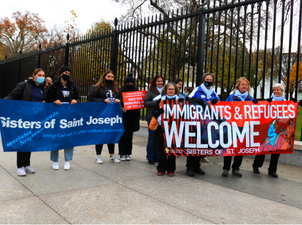
Delays by the current administration in rescinding this policy prompted more than 80 Catholic Sisters from across the U.S. to come to Washington last December. Carrying signs and praying, they marched past the White House, demanding an end to this racist policy. When President Biden finally moved to rescind Title 42 expulsions this spring, a federal judge issued an injunction blocking the administration’s action.

The inability to rise above our dysfunctional immigration policies is also worth people’s anger. Administration after administration, Congress after Congress, has failed to pass meaningful immigration reform, despite the fact that they have the power to bring millions out of the shadows and into the recognition of their dignity as citizens. Bishops and popes have called for these very policies — whether some version of the DREAM Act for people who entered the U.S. as children or comprehensive reform that provides a path to full inclusion and participation in society for everyone. Rather than recognizing the power they have to affect transformation of so many people’s lives, our leaders have squandered this opportunity, instead allowing our politics and society to indulge the lies of racism and white supremacy.

Christians should allow their hearts to be broken open by the plights of the people who think that, for all its flaws, the U.S. is still somewhere they want to make a home. We could build something beautiful, an inclusive future for our immigrant neighbors in this country, in which everyone’s contributions are valued and rewarded — if we just let the right things make us angry.