

Category Archives: Front Page

President Biden Acts to Rejoin the Paris Climate Agreement

President Biden Acts to Rejoin the Paris Climate Agreement

Caraline Feairheller
January 21, 2021

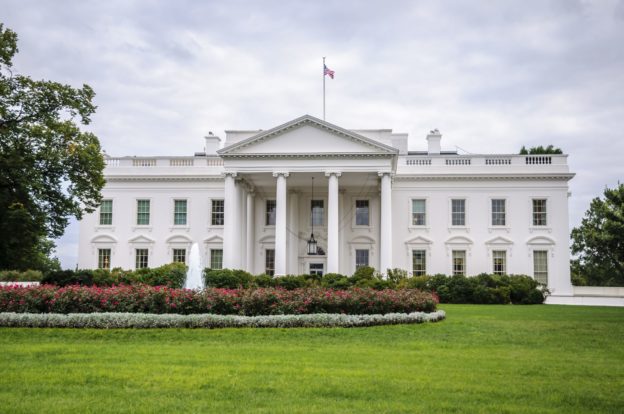
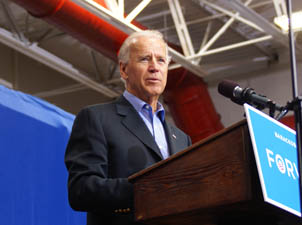
On the first day of the Biden-Harris administration, President Biden signed an executive order to rejoin the Paris Climate Agreement. This order reversed the 2017 Trump administration’s withdrawal from the Paris Climate Agreement. As NPR reports, “It will take 30 days for the U.S. to officially rejoin the agreement, but meeting its targets is going to be a taller order. The U.S. is the second-largest producer of carbon emissions, behind China, and has contributed more to global climate change over time than any other country.”

We at NETWORK applaud the Biden administration’s commitment to global solidarity, reducing greenhouse gas emissions, and confronting the realities of climate change. As Pope Francis says in his encyclical Laudato Si’, “Climate change is a global problem with grave implications: environmental, social, economic, political and for the distribution of goods. It represents one of the principal challenges facing humanity in our day.” (Paragraph 25)

We know that humans are intimately connected with all life on earth. Recent reports show that the global climate crisis has and will continue to disproportionately affect the most vulnerable unless bold action is taken. We look forward to working with the Biden administration to support bold actions that deepen our care for the Earth and for one another.

NETWORK Urges Biden-Harris Administration to Address Suffering in our Nation

NETWORK Urges Biden-Harris Administration to Address the Suffering in our Nation

Work for Racial Justice, Respect Immigrant Rights, and Strengthen Democracy in the First 100 Days
Caraline Feairheller
December 19, 2020

As President-elect Biden and Vice President-elect Harris prepare to take office, the COVID-19 pandemic has laid bare the ways our nation fails to structure a society that cares for those most in need. As both a public health crisis and an economic one, those most disproportionately affected have been communities of color and the poor. Over the years, the willful dismantling of social safety nets combined with the lack of preparedness for the pandemic have resulted in job loss, evictions, and food insecurity for millions of people.

While the injustice inherit in our system cannot be solved in the first 100 days of a new administration, a conscious commitment to alleviating the suffering can result in policies that prioritize the common good and support people and families at the economic margins.

We urge the Biden-Harris Administration to prioritize and commit themselves to systemic change in all branches of government in order to alleviate the harm brought on by the COVID-19 pandemic through the use of legislative action, such as:

  • Implementing a 6-month moratorium on forecloses and evictions.
  • Providing additional cash relief payments.
  • Creating a White House Racial Equity Office within the Executive Office of the President.
  • Require federal agencies serving populations underrepresented on voter rolls to provide voter registration services to their clients.
  • And more

In addition to these COVID-19 priorities, we call on the Biden-Harris administration to take immediate action to advance racial justice, protect immigrant rights, and strengthen democracy.


Download the full list of NETWORK priorities for the Biden-Harris transition.

Advent 2020: Waiting for Immigration Reform

Advent 2020: Waiting for Immigration Reform

Gina Kelley
December 20, 2020

During this season of reflection and hope as we approach the New Year, and with it a new Presidential Administration, I find myself thinking of everyone who has given and lost so much during this often tragic year. While I know that many of us this year have sometimes felt paralyzed at the loss of life, I have attempted to redirect this sadness towards hope for future change. Having worked with undocumented folks in college, I often imagine a day where the changes our broken immigration system requires are realized.

5.5 million undocumented immigrants are essential workers, including 425,000 who are healthcare workers. Immigrants have always been at the heart of our national community and identity, but this pandemic has demonstrated that without immigrants, this country does not survive. For example, 1.7 million undocumented workers are essential to our food supply. Undocumented individuals have always been essential and the pandemic has only amplified that truth. Undocumented immigrants can no longer be defined by their legal status. They are members of our communities. They have families of their own. They are equal.

The United States has often thanked essential workers throughout these painful 10 months. However, undocumented individuals are frequently excluded from that gratitude just as they were with the passage of stimulus checks. Our neighbors have worked through a pandemic without equal treatment or government support. COVID-19 relief is necessary for all of us, and ‘us’ includes our undocumented brothers and sisters.

During this time of incredible difficulty, we have also witnessed continued violence and negligence on our borders against those most in need. Since 2017, all while in U.S. custody, or immediately after being released, 39 adults have died with independent experts finding that subpar care contributed to these deaths. One Louisiana center had multiple reports of no access to soap for bathing or any cleaning supplies. This research was concluded prior to the pandemic; however, reports from immigrant advocates have not indicated any improvement. Erika Pinheiro, litigation director of Al Otro Lado, has reported a continued problem “with ICE hospitalizing people, releasing them, and then they die,” and the death goes unreported by ICE. A U.S. District Judge stated that ICE has demonstrated “deliberate indifference to the risk of an outbreak” and that the agency has “lost the right to be trusted.”

We have families separated on our border enduring inhumane treatment and within those borders undocumented people work without basic protections. Over the last four years, the Trump administration has taken an already broken system and broken it in new ways, without thought or care for the families and people whose lives are at stake. As I look with anticipation to a new year and new administration there are steps that should be taken on Day One to remedy these realities. For example, all COVID-19 relief must include mixed-status families, and basic health care and pandemic protections must be provided to those in detention centers. There are also long-term solutions like a clear pathway to citizenship for all undocumented essential workers and their families, abolishing ICE, and developing new agencies to assist those coming to our borders. I hope that many of you are with me in this battle for a just and humane immigration system that respects and values all people.

Third Thursday of Advent: Las Posadas

Third Thursday of Advent: Las Posadas

Rosa G. Manriquez
December 17, 2020

Today’s readings

“Holy Cards and Piñatas”

I am a cradle to grave Roman Catholic. And my upbringing in the faith is like everything else in the mestizaje that is my life. My beliefs are the strands of a duality that are tightly woven inviting me to walk a tightrope of morality and mysticism.

My 16 years of education in Catholic schools has made me adept in a Catholicism that is authoritarian, hierarchical, legalistic sometimes to the point of combative and, definitely, Eurocentric. I have been fortunate to have the Immaculate Heart sisters/community to temper the shadow that sometimes threatens this system. They have been the maternal figures supplied with coveted holy cards that guided me through the institutional church and freed me to pick the best of it.

At the same time, I am raised in the embrace of indigenous practices and rituals. It has been a training based on oral narratives, stories, consejos and a daily, lived mysticism. It is a mysticism that acknowledges that time and reality are a blending of the past, present and future. A core principal of life is Familia. Familia is the rock upon which my Church is built and only God comes before Familia. Familia is a reflection of the relationship and community that is God. Where the Eurocentric church emphasizes the kingdom of God, I have been taught the importance of the kinship of God. Thank you, Greg Boyle, SJ.

Familia has been reinforced daily through rituals like blessings administered to us by our parents and grandparents before every notable occasion in life, before travel anywhere from our home and every night before sleep. It has been reinforced through our celebrations like baptisms that create life ties of godparents committed to raising the next generation together. It is reinforced through joyous quinceañeras that celebrate girls entering their Familia and community as young women who will soon guide and nurture the next generation. It is reinforced in the celebration of Dia de los Muertos when we assure that Death will never have the last word as long as we remember those who loved us into being. And there is the celebration of Las Posadas.

My family has a business in the heart of Los Angeles. Olvera Street was the vision of Christine Sterling, a civic leader, who believed a blighted, crime-infested alley could become a showcase of Mexican culture. During the Great Depression, the opportunity to open a small business was a life-saver for my family. In addition to selling authentic Mexican handicrafts, the merchants staged special events showcasing Mexican holidays.

Las Posadas is celebrated from December 16th to December 24th. The merchants dress as angels, shepherds, Joseph or Mary and walk in a musical procession from shop to shop asking for shelter and being refused every night until December 24th when they are recognized as the Holy Family that will soon birth the Divine Verb. Every night the group enters one shop where everyone recites prayers. Then there is a party with music, food and a piñata breaking. Every member of the generations of my family have participated.

Although as children we eagerly anticipated a visit from Santa Claus, in Las Posadas, we lived the true story of Advent and Christmas. We learned that God is with us, but we don’t recognize the Divine when God knocks on our door asking for entrance. We experience the sadness of the most vulnerable, the anawim, being vilified and refused the minimum of humanity and help. We have learned that sometimes we are too preoccupied and fearful to embrace the unconditional love offered to us. Las Posadas demonstrates that we are called to the kinship of God that recognizes our shared membership in Familia, not the Eurocentric, authoritarian, hierarchical kingdom of God.

As long as immigrants, refugees and asylum seekers leave their homes in search of shelter, we will be part of Las Posadas. What part will we perform? In the United States at our borders, we have Mary and Joseph begging for any place to birth a new generation of God with us. Advent is the time to contemplate if we will tell the other to move on or if we will open our doors and rejoice as we break the piñata filled with love, compassion, courage and integrity that is our heart.

“Do not neglect to show hospitality to strangers, for by so doing some people have entertained angels without knowing it.” Hebrews 13:2

Rosa G. Manriquez, IHM (she/her) is a mother and grandmother living in East Los Angeles. She is a member of the Immaculate Heart Community. She is an ordained Roman Catholic priest and a member of Roman Catholic Womenpriests. She is active in social justice actions for the LGBTQI community and immigrants. She has been active for many years with Call To Action.

This article was originally posted on Call to Action’s website as a part of their “Advent of Liberation” Series.

Chanukah, a Celebration of Light, Chutzpah, and Miracles

Chanukah, a Celebration of Light, Chutzpah, and Miracles

Meg Olson
December 16, 2020

December 10 marked the first night of Chanukah, the 8-day Festival of Lights when Jewish people celebrate and commemorate the rededication of the Second Temple in Jerusalem during the second century BC. Greek-Syrian king Antiochus Epiphanes had abolished Judaism and desecrated the first Temple by renaming it for the Greek god Zeus. In response to this oppression, Judah and the Maccabees rose up and defeated the Syrian army, which restored not only the practice of Judaism, but also the Jewish people’s political autonomy and self-determination.

When the Maccabees entered the Temple to restore and purify it, their first task was to relight the ner tamid, the light that hangs in every synagogue to symbolize God’s omnipresence. However, they only had one jar of oil, which would only be enough for one day’s worth of light. Knowing that it would take eight days to obtain more oil, the Maccabees relit the ner tamid anyway, and it miraculously lasted for eight days.

Rabbi Susan Talve, the founding rabbi of Central Reformed Congregation in St. Louis, MO, has said that the real miracle of Chanukah isn’t that the one jar of oil lasted for eight days, but it was that the Jews had the chutzpah to light the ner temid at all, knowing that they didn’t have enough oil.

What I love about Rabbi Talve’s interpretation of the Chanukah story is that it emphasizes the miracle of people, rooted in faith, who took things into their own hands. Chutzpah is a wonderful Yiddish word that means “audacity.” When I think about the 2020 Election and NETWORK’s role in it, I think, “Wow, that took a lot of chutzpah!” Our staff and board had a lot of chutzpah to declare that Catholics can’t vote for Trump. It took quite a bit of chutzpah for us to hit the virtual highway with a month-long Nuns on the Bus tour. Our members and supporters had the chutzpah to share our Equally Sacred Scorecard with their bishops, pastors, and friends and to declare, “Yes, Catholics are multi-issue voters!” Beyond NETWORK’s own efforts, I’m grateful for the activists, poll workers, and election auditors’ chutzpah to ensure that our nation had a safe and fair election. Isn’t it a miracle that in a pandemic we had a record-turnout of voters? Isn’t it a miracle that we saved our democracy?

Now, as we wait for the inauguration of the Biden-Harris administration, we must refocus our efforts on ensuring that Congress passes a COVID relief bill that truly provides care for those who need it most. So much of our nation is hurting and broken right now. Those who have lost their jobs or had their hours reduced due to the pandemic are standing in line for hours for food donations and are on the brink of eviction. A COVID relief package must include cash assistance and paid sick days and medical leave if it is truly going to make a difference for individuals and families in crisis, especially for Black, Brown, Indigenous, and immigrant communities.

And so, in this time where we are mourning the deaths of nearly 300,000 Americans, working on the Georgia Senate Run-off, still seeing the Trump administration attempt to undo the Election, and figuring out how to celebrate the holidays safely with our loved ones, we must also have the chutzpah to tell our legislators, “No, the current bills are not enough. We need more!”

I know we can do it. To quote Peter Yarrow’s beautiful Chanukah song, “Light One Candle,”

We have come this far always believing
That justice would somehow prevail
This is the burden, this is the promise
This is why we will not fail!

We can be the miracle, the light in the darkness.

Advent 2020: Waiting for a Faithful Democracy

Advent 2020: Waiting for a Faithful Democracy

Sister Quincy Howard, OP
December 13, 2020

During this sacred season of waiting, we anticipate early reforms in the new administration, which will create a more faithful democracy. Since March of 2019 we’ve been waiting: when the For the People Act passed the House and was condemned to the McConnell graveyard. Since 2013 we’ve been waiting: when the Supreme Court’s Shelby County v. Holder ruling gutted the Voting Rights Advancement Act. Since 2010 we’ve been waiting: when the Supreme Court’s Citizens United v. FEC ruling gave free rein for dark money and special interest donors to manipulate elections and influence elected decision makers. In some ways, you could say we’ve been waiting since 1787, when the original democratic experiment was founded within an exclusionary, racist political and economic system. The ideals of democracy articulated by the Founders are an “already, but not yet” scenario—they knew then that the creation of a more perfect union would be an unfolding process.

In 2020, a faithful democracy has never felt more distant. This year’s election was a shameful display of the influence that racism, sexism, power, and money still have in our democracy. Witnessing the fragility and exploitation of our democratic systems during such a vulnerable time in our nation has been utterly discouraging. Sometimes it feels like the democratic experiment is failing.

A new report from the University of Cambridge’s Centre for the Future of Democracy shows that people around the world are collectively losing faith in democratic systems. The drop in satisfaction has been especially rapid and consequential in the U.S. with a majority of citizens (55%) expressing dissatisfaction with democratic government for the first time. This marks a profound shift in our nation’s view of itself — Americans seem to be getting tired of waiting.

In 2020 our democracy is on life support. Suppression tactics to hamper voter participation have become campaign strategy. Gerrymandered districts reflect the needs of the party in power, not the constituents. It is often impossible to know the sources of campaign attacks and fear-mongering half-truths. While these weaknesses were on full display, a coordinated misinformation campaign by the loser’s party is dangerously undermining voters’ trust in elections.

In a faithful democracy, elections, campaigns, and voting are all mechanisms for a collective wisdom to break through which shapes truly representative leadership and empowers accountable decision-makers. This is the open-loop system that, at its best, brings about a more perfect union. Transformational reforms are needed to get us there, and they cannot wait another election cycle.

The For the People Act is a comprehensive package of policy fixes that are far-reaching in scope. They run the gamut from automatic voter registration and a small donor matching program to ethics rules for elected officials and ending gerrymandering. The For the People Act is the best chance we have to end the dominance of big money in our politics, to ensure that public servants work for the public interest, to make voting easier, and to protect the security of our elections.

This transformative bill will be a top priority in the next Congressional session. Its opposition has painted For the People as partisan, but that’s only the case on Capitol Hill. Elsewhere, transformational reforms that make our democracy more accountable, more representative, and more secure is the hope that voters are waiting for.