

Category Archives: Front Page

Rabbi Kimelman-Block: Mourning Children Who Died at U.S. Border

Mourning Children Who Died at U.S. Border

Rabbi Kimelman-Block
May 28, 2019

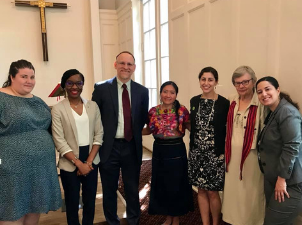
On Thursday, May 23, 2019, NETWORK joined faith partners in a prayer vigil for children who have died in the custody of Border Patrol. Rabbi Jason Kimelman-Block shared the following remarks: 

Rabbi Abraham Joshua Heschel recounted a story of when he was a little child in Europe, he was studying the book of Bereshit, Genesis with his teacher.  They began studying the story of Akedat Yitzhak, the binding of Isaac.  They read about God’s command to Abraham to sacrifice his child. They read about the three day journey. They read about Abraham and Isaac carrying the wood to Mount Moriah, of Abramac tying Isaac to the altar, and grasping the knife in his hand.  Little Heschel, as a young boy, began to weep. The teacher reassured him – “No, child — please read the rest of the story — don’t you know? Isaac was spared! An angel comes and rescues him at the last moment!

Heschel responded.  “But the angel came at the very last second!”  What if the angel was delayed and had arrived too late?  That would have been the end of Isaac — and the story of the Jewish people would have ended there on that alter?!”

The teacher responded — “Young boy — don’t you know; an angel cannot be late!”

Heschel then instructed all of us “It may not be possible for an angel to be too late, but is all too possible for a human being, of flesh and blood, to be too late.”

We say this morning, with broken hearts and with tears in our eyes that we were too late.

We were too late for Carlos, 

We were too late for Wilmar, 

We were too late for Jakelin, 

We were too late for Felipe, 

We were too late for Juan.

And we were too late for Claudia Patricia Gómez González, who one year ago today was shot was shot in the head by a Border Patrol agent while seeking safety in the United States. 

May all of their memories be blessings — 

And may we be blessed to see this society finally declare “no more”  and act decisively to stop this cruelty.

Let us declare this morning that all of us, this entire society, must take responsibility for these children’s deaths.  In the words of the grown-up Rabbi Heschel “in a free society, some are guilty, but all are responsible.” 

Let us confess the fact, that despite our protests, despite our opposition, despite our support for immigrants, for these children — for Carlos, Wilmar, Jakelin, Felipe, Juan, Claudia — we failed and we were too late.

And let us also resolve that we will not be too late for the next children.

By demanding accountability to those in charge of detention facilities; 

By demanding accountability for ICE and CBP — and demanding that Congress rein them in – by demanding Congress defund hate;

By calling for the resignation of the government officials in charge of implementing immoral and cruel immigration policies.

Let us resolve, not in words or in tears, but in action that we will not be too late.


Rabbi Jason Kimelman-Block is the Washington Director​of BEND THE ARC: Jewish Action.

Trump Budget Fails to Mend the Gaps

Trump Budget Fails to Mend the Gaps

Tralonne Shorter
May 24, 2019

In March, President Trump released his federal budget for Fiscal Year 2020 (FY 2020). The budget proposed across-the-board spending cuts by at least 5 percent.

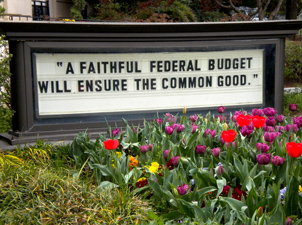
At NETWORK, we believe the budget is a faithful, moral document that should reflect our values as a country.  What’s not faithful is the President’s FY 2020 budget which proposes drastic cuts to non-defense discretionary spending by $2.7 trillion over 10 years (a 10% reduction from FY 2019), $8.6 billion to fund a superfluous Southern border wall, the elimination of dozens of social programs for working families, while also siphoning billions of dollars into defense programs through the Overseas Contingency Operations slush fund.

Historically, Congress rarely passes a president’s budget without any changes. However, because of sequestration caps imposed in 2011, without agreement by Congress to lift spending caps, steep cuts to discretionary funding will take effect.  The caps set in the Budget Control Act of 2011 would trump even the President’s proposed FY 2020 budget by imposing a 10 percent cut ($125 billion) across the board in 2020.

NETWORK urges Congress to reject the Trump administration’s abandoning of vital investments in affordable housing, healthcare, Medicaid, SNAP, and an accurate 2020 Census –instead calls on Congress to raise the budget caps and pass a faithful budget that invests in the common good.

A faithful budget would invest in healthcare and nutrition, housing, and a fair and accurate 2020 Census.

Here’s how President Trump’s FY 2020 budget proposal would impact the Common Good:

Irresponsible, Superfluous Spending to Secure the Southern Border  

  • $5.4 billion in border security technology, infrastructure, and equipment at the Department of Homeland Security (DHS).
  • $3.6 billion in new military construction resources at the Department of Defense
  • $478 million to hire and support 1,750 additional law enforcement officers and agents at Customs and Border Patrol and Immigration and Customs Enforcement (ICE).
  • $2.7 billion in total funding for 54,000 average daily ICE immigration detention beds.
  • $4.5 billion of additional funding to cope with a surge of migrants at the U.S. southern border in a supplemental budget request to Congress.

Prioritizes Profits over the Health and Well-Being of the Common Good

  • Proposes more than $1.2 billion in net mandatory health savings
  • Repeals the Affordable Care Act and Medicaid Expansion
  • Replaces ACA coverage with an inadequate block grant, while also imposing a per-capita cap on the rest of the federal Medicaid program.
  • Decentralizes the administration of Medicaid to the states by creating a new federal-state partnership

Inadequately Funds 2020 Census

  • The President’s FY 2020 budget request sets aside $12.2 billion for the Department of Commerce and provides a $6.1 billion budget for the Census Bureau — an increase of more than $2.3 billion from fiscal 2019 enacted levels.
  • The budget request is $900 million short of Secretary Ross’ previous estimate of $7.4 billion for decennial operations alone; despite the need to conduct field tests of the new IT systems the Census Bureau plans to implement in 2020.
  • Inadequate funding has contributed to the cancellation of two of the three end-to-end field tests originally planned and could threaten the accuracy, and ultimately increase the overall cost of the Census.
  • The Census Bureau now estimates the 2020 Census will cost $15.6 billion, $3 billion more than original estimates. including better efforts to collect despite a $1.2 billion in contingency funding

Citizenship Question
For the first time since 1950, the decennial Census would ask households whether their members were U.S. citizens. In response, 18 states have sued the Commerce Department to prevent the inclusion of this question, more than 160 mayors from both parties wrote Secretary Ross requesting removal of the question, and several former Census directors warned about the risks and costs associated with including a citizenship question.

Inadequately Supports Working Families in the Workplace

  • The Trump budget would offer a limited paid family leave proposal only targeted to families with newborn or newly adopted children.  The president’s budget excludes adult children caring for aging parents or parents caring for disabled children.
  • Further, the budget’s budget only funds 6-weeks of leave, which is inconsistent with the 12-weeks of guaranteed leave offered through the existing FMLA law.
  • The Trump budget provides a one-time, mandatory investment of $1 billion for a competitive fund aimed at supporting underserved populations and stimulating employer investments in child care for working families; placing the burden on states to sustain.

Housing Proposals Would Increase Poverty and Put Families on the Street

  • Overall, the administration proposes to cut HUD by an astounding $9.6 billion or 18% below 2019 enacted levels, imposing deep cuts to affordable housing and community development, as well as other essential programs that ensure basic living standards.
  • The President’s proposal would eliminate or deeply cut essential housing and community development programs like the national Housing Trust Fund, the HOME Investments Partnership program, and public housing capital repairs.
  • Additionally, the budget would eliminate the Community Development Block Grant (CDBG) program, the HOME Investment Partnerships program, Choice Neighborhoods grants, the Section 4 Capacity Building program, and the Self-Help Homeownership Opportunity Program.
  • There is no discussion of how eliminating CDBG would impact future disaster relief efforts, which heavily rely on CDBG-Disaster Recovery funds to address unmet housing and infrastructure needs.
  • The budget would increase rents and imposing work requirements on current and future tenants requiring tenants to pay 35 percent of their gross incomes, compared to 30 percent of their adjusted incomes previously, on their rents. The very poorest elderly and disabled families would also see their rents triple up to 30 percent of their gross incomes or $50, whichever is higher.
  • The budget would cut funding for tenant-based rental assistance (TBRA). The request provides $22.244 billion for TBRA. At this amount, the budget request does not provide enough funding to ensure that all contracts are fully renewed. As a result, NLIHC and others expect that this would result in the loss of thousands of vouchers.
  • The budget proposal would provide $12.021 billion to renew project-based rental assistance (PBRA) contracts, an increase of $274 million from the FY19 funding level. This will likely not be sufficient to renew all existing contracts.
  • Public housing takes a huge hit under the Trump budget proposal. The public housing capital fund, which received $2.775 billion in FY19, would be eliminated in FY19. The allocation for the operating fund would fall significantly, from $4.65 billion in FY19 to $2.86 billion, or 38 percent.
  • President Trump would fund homeless assistance programs at $2.599 billion, or $34 million less than 2019 enacted levels.
  • The budget provides $644 million to the Section 202 Housing for the Elderly program, a $34 million decrease from this year’s funding level.

The GAP Index: An Important Measure for Our Future

The GAP Index: An Important Measure for Our Future

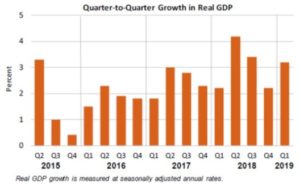
Did you hear the great news?  At the end of April the Bureau of Economic Analysis (BEA) released its “advance” estimate of economic growth for the first quarter of 2019: Real gross domestic product (GDP) increased 3.2 percent!1  To put that in perspective, in the last quarter of 2018, real GDP only increased 2.2 percent.  So by all accounts, the U.S. economy is thriving and strong, right? Not exactly.

BEA produces some of the most closely watched economic statistics that influence decisions of government officials, business people, and individuals.  The most familiar and hackneyed is the GDP—it provides a great talking point but minimal insights for policymakers. Nonetheless, policy decisions continue to be based on promised GPD growth gains.

The problem is that the real GDP measurement doesn’t comprise “all accounts.” This single top-line number conceals a less-rosy and complicated reality in which the richest three Americans hold more wealth than the bottom 50% of the country. While CEO pay rose 8 percent on average in 2018 to $7.4 million, the average median wages for employees at the same companies stayed about the same. And the CEOs made about 150 times what a typical worker did last year.2

GDP measures national economic growth, which combines inputs like jobs, savings, business opportunity, consumption and profits into such a macro-level snapshot that it has little significance for the daily, lived reality of average people.

Overdependence on GDP as the primary measure of our economic health is not only misleading, it distracts us from arguably more pressing issues. The pervasive and damaging myth that “growth is always good” relegates economic inequality as an unfortunate feature of economic growth or, even worse, as a necessary side effect. This myopic focus on maintaining endless growth even at the expense of the lived reality has damaging implications. In Laudato Si, Pope Francis posits that the near exclusive focus on economic growth and ever-increasing consumption as solutions to social problems is a fundamental cause of global crisis and economic injustice.

NETWORK hosted “Town Halls for Tax Justice” during our Nuns on the Bus tour in 2018. To begin the town halls, Sisters role-played individuals along the spectrum of income (one character, Diana, was among the lowest 20% of income earners while another, George, was in the top 1% of earners). After introducing themselves and talking about their financial hopes and concerns, each character took steps forward (or backward) based on how much their income bracket experienced growth over the past 35 years. The physical gap between the richest and poorest widened significantly based on the economic impacts of trickle-down policies since the 1980s. Then each character took additional steps depending on the tax return that they could anticipate under the 2017 Tax Law, creating an even larger divide.

According to audience feedback, these Town Halls were eye-opening and impactful—the breakdowns demonstrated how policies are making the rich richer while the poor and middle class fall further and further behind. We need our government to begin quantifying and regularly reporting on these dynamics of economic growth. With the data analysis capabilities available to us in the 21st Century there’s no reason we cannot have a meaningful economic measure generated to capture this each quarter.

GDP 2.0—what NETWORK calls the “GAP Index”—is a campaign to change how the United States reports economic progress. Instead of a one-number release, the U.S. Bureau of Economic Analysis might instead release four or more numbers describing growth for those at different levels of income. Eventually, the agency might also break down growth benefits by demographic or geographic characteristics. Such quarterly reports would dramatically change the narrative around economic growth and stability by refocusing our statistics on the lived experience of the average individual or family in the United States.

The U.S. Government already has the necessary data; three simple policy fixes would enable the BEA to generate GDP 2.0 data and report it on a quarterly basis:

  • Require BEA to include distributional breakdowns in its aggregate income tables.
  • Make IRS tax return data accessible to the BEA under section 6103(j)(B) of the tax code.
  • A small increase in BEA funding to create capacity for these new statistics.

Congress is working on dual tracks to make this a reality: legislatively and via the appropriations process.  Legislatively, The Measuring Real Income Growth Act has been sponsored by Senators Chuck Schumer and Martin Heinrich as well as Representative Carolyn Maloney. Concurrently, there are efforts to incorporate the recommended policy fixes into the Commerce, Justice and Science appropriations legislation which ultimately funds the BEA.

Having a quarterly Gap Index could have profound political impacts, because the new data will enable economists, interest groups, and scholars to produce studies showing how various groups are faring as the economy grows. Richer economic measures like GDP 2.0 allow law-makers and advocates like NETWORK to more clearly show how policies diminish or contribute to inequality in our nation.

New HUD Rule Aims to Harm Immigrant Families

New HUD Rule Aims to Harm Immigrant Families

Bridget Falzon
May 20, 2019

On May 10, 2019, the Department of Housing and Urban Development (HUD) released a proposed rule titled “Housing and Community Development Act of 1980: Verification of Eligible Status.” The rule would significantly change HUD regulations by further restricting eligibility for federal housing assistance based on immigration status. If finalized, the proposed rule will effectively evict 25,000 immigrant families from their homes, affecting over 55,000 children (citizens or legal residents) who are fully eligible for housing assistance under federal law.1

NETWORK is deeply concerned about the impact of this proposed rule on families. Housing security supports the dignity and well-being of every person; all people deserve access to housing regardless of their socioeconomic standing or immigration status. It is wrong to forced families to choose between staying together and risking homelessness or splitting their family up.

The proposed rule prohibits “mixed-status” families from living in federally subsidized units subject to immigration status restrictions under Section 214 of the Housing and Community Development Act of 1980 (“Section 214”). Mixed-status families are households comprised of members who have eligible and ineligible immigration statuses defined by Section 214. Currently, families with at least one U.S. citizen or eligible immigrant are permitted to live in a subsidized housing unit. Mixed-status families receive housing assistance on a prorated basis—where the amount of the housing subsidy for the household is decreased to account for family members with ineligible immigration status.

Under current HUD regulations, only family members that are applying for housing assistance need to have their immigration status verified. Family members who would not qualify for assistance based on their immigration status can elect not to contend eligibility for the housing assistance, allowing the family to receive assistance on a prorated basis. The proposed rule would eliminate an individual’s ability to elect not to contend their eligibility for the subsidy, and would require all household members under the age of 62 to submit verification of their immigration status through the Department of Homeland Security’s Systematic Alien Verification for Entitlements (SAVE) system.

Under the proposed rule, U.S. Citizens and Nationals, who currently must only provide a signed declaration of U.S. citizenship or U.S. nationality, would also need to submit documentation of their citizenship status. Furthermore, noncitizens who are 62 years old and older, who currently are only required to provide a signed declaration of eligible immigration status and a proof of age document, would also be required submit immigration documentation, although the documentation would not be verified through SAVE. If these individuals are not able to produce the documentation in the required timeframes, they risk losing their housing assistance.

NETWORK Lobby is gearing up to fight this proposal and will soon be inviting NETWORK members to submit comments about this rule to HUD by July 9.  We can work to stop the Trump administration’s attack on immigrant families if we raise our voices in opposition to this cruel proposed rule.


Submit a comment opposing this rule here.

House Healthcare Package Seeks to Lower Drug Prices and Stabilize the Marketplace

House Healthcare Package Seeks to Lower Drug Prices and Stabilize the Marketplace

Siena Ruggeri
May 13, 2019

The House has released a newly-combined package of healthcare bills that will have a positive effect on both prescription drug prices and the affordability and accessibility of health insurance coverage. NETWORK supports all seven bills included in the Strengthening Health Care and Lowering Prescription Drug Costs Act (H.R. 987). The package contains three bills concerning drug pricing and four bills addressing the stabilization of the healthcare marketplace created by the Affordable Care Act. The prescription drug pricing legislation would mainly increase generic competition, which can help make affordable drugs available more quickly to consumers. The four bills in the package designed to strengthen the Affordable Care Act would increase support for consumers and state marketplaces and ensure health care plans offer full coverage.

Prescription Drug Bills

The prescription drug pricing bills included in the package are:

  • The Protecting Consumer Access to Generic Drugs Act of 2019 (H.R. 1499)
  • The BLOCKING Act of 2019 (H.R. 938)
  • The CREATES Act of 2019 (H.R.965)

The Protecting Consumer Access to Generic Drugs Act of 2019 would make it illegal for brand-name and generic drug manufacturers to enter into agreements in which the brand-name drug manufacturer pays the generic manufacturer to keep a generic equivalent off the market. These agreements are known as “pay-for-delay” deals.

Two other two drug pricing bills are bipartisan proposals. The BLOCKING (Bringing Low-cost Options and Competition while Keeping Incentives for New Generics) Act of 2019 discourages an exclusivity period for generic applicants wanting to produce a drug that is no longer patented.

The CREATES (Creating and Restoring Equal Access to Equivalent Samples) Act of 2019 would help generic drug manufacturers quickly acquire the samples they need to start making an affordable generic version of a drug. Currently, brand-name drug companies can game safety protocols to delay generic entry into the market. If enacted, this legislation would help generic competition get on the market faster and ensure consumers have affordable options for the prescriptions they need.

ACA Stabilization Bills

The bills concerning the Affordable Care Act in the package are:

  • The MORE Health Education Act (R.987),
  • R. 1010, Limiting the availability of “junk plans”
  • The State Allowance for a Variety of Exchanges (SAVE) Act (R.1386)
  • The ENROLL Act of 2019 (R.1386)

The Marketing and Outreach Restoration to Empower (MORE) Health Education Act would provide funding for outreach to underserved communities to help community members enroll in healthcare plans on the ACA marketplace. This funding has been slashed by the Trump administration in the past couple of years, making it harder for consumers to stay informed about the health insurance options.

H.R.1010 reverses the Trump Administration expansion of short-term, limited-duration insurance plans. These “junk plans” do not cover maternal or mental health, can discriminate based on age, gender, and preexisting conditions, and leave users without care in a medical crisis.

The SAVE Act provides federal funding to help states set up state-based health insurance marketplaces and expand healthcare to more people in their states.

The ENROLL Act would provide $100 million in funding to the Federally-Facilitated Marketplace (FFM) navigator program. Navigator programs are an essential part of the ACA’s success and have faced devastating cuts for the past couple of years.

Restoring the Affordable Care Act

These fixes would restore important provisions in the original Affordable Care Act that ensured low-income and medically underserved communities had access to information and support to decide between their health insurance options. All healthcare coverage must be comprehensive and reliable in an emergency—short-term insurance is no substitute. In order to provide accessible, affordable, and high-quality healthcare, we must ensure these ACA provisions stay in place to protect consumers and support them in their healthcare choices.

NETWORK Calls for Affordable Drugs in NAFTA 2.0 Negotiations

Congress Must Demand the Administration Remove New Pharmaceutical Monopoly Protections from the Text of NAFTA 2.0

Laura Peralta-Schulte
May 10, 2019

Laura Peralta-Schulte, NETWORK Senior Government Relations Advocate, participated in a briefing on Capitol Hill to raise concern for policies included in the Trump administration’s ongoing trade negotiations. Read Laura’s speech below:

Good afternoon. My name is Laura Peralta-Schulte and I am a Senior Government Affairs Advocate for NETWORK Lobby for Catholic Social Justice. NETWORK is a Catholic leader for justice founded over forty years ago by Catholic Sisters and open to all who share our passion. Some of you may know us by our campaign, “Nuns on the Bus.”

People of faith across traditions believe every life has dignity and is sacred. NETWORK Lobby grounds our work in the principles of Catholic Social Justice, which hold that access to healthcare is human right because it is necessary for well-being. The Catholic Sisters and activists of NETWORK reject the notion that only the wealthy should have access to care. Our most sacred texts urge us to “Learn to do good. Seek justice. Help the oppressed.” (Isaiah 1:17)

We acknowledge the genius of scientists who create cures for disease and the role industry plays in our health system. Business is a noble calling if performed in the service of the common good.

Provisions in the current NAFTA 2.0 text, however, are not pro-patient and do not promote the common good. Instead, they prioritize profits over patients.

Powerful companies are attempting to use complicated trade negotiations to lock in current U.S. drug policies and prevent Congress from taking reasonable steps to curb drug price gouging. The new agreement creates new roadblocks for generic companies to compete with brand name products after a patent has expired. It also attempt to export our bad policies to our neighbors.

This is the wrong way forward.

The provisions of the World Trade Organization’s Agreement on Trade-Related Aspects of Intellectual Property Rights (TRIPS), currently in effect in all NAFTA countries, should continue to be the standard in the new NAFTA agreement. TRIPS calls for respect of intellectual property rights, including those for medicines. It also recognizes each nation’s right to take necessary steps to ensure that medicines are available to all of their residents.

We urge your offices to insist that the Administration change the text of the current Agreement to get rid of the following anti-competitive, anti-patient provisions:

First: The current text of NAFTA 2.0 locks in a minimum 10-year marketing exclusivity period for new biologic medicines. (Article 20.49.1).  These medicines include many new treatments for cancer, heart disease and even vaccines.

This provision would lock in current rules and stop from Congress from being able to make change.

The faith community has particular concern about how this rule would affect Mexico, where access to medicines for many patients is already simply out of reach. According to the OECD data, seven of every 10 Mexicans live in or near poverty.1 If unchanged, even fewer people will be able to afford needed medicines causing preventable suffering and death.

Second: NAFTA 2.0 expands what drugs get special biologic protections and doubles exclusivity for some medicines. This is in Article 20.49.2. Congress expressly excluded certain drugs from additional monopoly protections. This provision, and others, must be changed to conform to U.S. law.

Third: NAFTA 2.0 extends monopoly protection through “evergreening” provisions. It requires nations to extend patents through minor changes without any increased therapeutic benefits for patients well beyond the original 20-year patent. This is in Article 20.36.2.

Lastly, the agreement requires nations to provide patent term extensions or grant longer protections for perceived administrative delays. This is Article 20.44. This provision would block competition from the marketplace and limit Congress from making changes.

No matter what your position is on trade policy, we believe Congress should establish U.S. healthcare policy, not trade negotiators and industry lobbyists.

We believe each nation has a right to ensure residents have access to life-saving treatments.

At the beginning of his pontificate, Pope Francis wrote a letter were he sharply condemned what he called an “an economy of exclusion.” He wrote, “Just as the commandment “Thou shalt not kill” sets a clear limit in order to safeguard the value of human life, today we also have to say, “thou shalt not” to an economy of exclusion and inequality. Such an economy kills. “

Today, high prescription drug prices force people to choose whether to take the medicines they need, or, instead, to ration or simply go without needed treatments in order to be able pay for other necessities like food and shelter. This is wrong.

Congress must say no to an economy of exclusion and insist the Administration remove these provisions from the current text.


View NETWORK’s Principles of Drug Pricing.


  1. https://www.oecd.org/fr/mexique/global-and-mexico-economic-outlook-2018.htm 

Legislative Update: Drug Pricing Reforms

Legislative Update: Drug Pricing Reforms

Siena Ruggeri
May 7, 2019

Congress is making drug pricing reform a bipartisan priority. While there has been an overwhelming amount of legislative activity around the issue of drug pricing, much of the legislation responds to a few core ideas. The strongest pieces of legislation align with NETWORK’s own principles of drug pricing reform: companies must justify their price increases, companies cannot block their competition from entering the market, and drugmakers must disclose how they set prices. While they seem small, if implemented, all of these details will have a dramatic impact on overall prescription drug affordability. Put together, these reforms would save the federal government billions of dollars a year and ensure countless people can access to the drugs they need.

One of the most straightforward reforms is allowing government agencies to negotiate drug prices. Other government agencies like the Bureau of Veterans’ Affairs  already negotiate prices with suppliers, yet Medicare Part D is not able to negotiate their drug prices. Medicare Part D covers prescriptions Medicare users fill at pharmacies. As the largest purchaser of prescription drugs in the world, Medicare has significant bargaining power that is not being leveraged. There are multiple pieces of legislation addressing Medicare negotiation, including H.R. 1046, the Medicare Negotiation and Competitive Licensing Act. This bill would use the mechanism of competitive licensing to incentivize companies to negotiate with government buyers. House leadership is currently working on a drug pricing bill that will include drug pricing negotiations, but bill text has yet to be released.

An ongoing issue that keeps drug costs high is the delay tactics the pharmaceutical industry employs to block competition and charge monopoly prices. The CREATES Act (H.R. 965) addresses tactics that large pharmaceutical industries use to prevent generic competition from entering the market, which provides consumers with more affordable options. The Preserve Access to Affordable Generics and Biosimilars Act (S.64) and the Protecting Consumer Access to Generic Drugs Act (H.R. 1499) are other reforms that prohibit these delay tactics.

Finally, there is an overall lack of justification for how prices are being set and no accountability for unjustified price spikes. There are a few pieces of legislation that address the issue of price gouging. The aptly-named Stop Price Gouging Act (H.R.1093/S.378) would require companies to report on their price increases and would fine companies for excessive, unjustified price increases. These revenues would be reinvested in future drug pricing research in the public interest. The Stopping the Pharmaceutical Industry from Keeping drugs Expensive (SPIKE) Act of 2019 (S.474) and the CURE High Drug Prices Act (S.637) take similar approaches.

These reforms work together to address the root causes of why our prescription drug prices are abnormally high. While the industry would like you to believe it’s simply a case of bad actors or pharmacy benefit managers, in reality, the system itself is designed to exploit vulnerable patients and maximize profits. In order to make a substantial impact on the affordability of prescription drugs, we have to enable transparency measures like government agencies negotiating prices, ending delay tactics that prevent healthy competition, and holding companies accountable for price gouging life-saving drugs. The innovations of prescription drugs are only useful if people can actually access lifesaving treatments. We must mobilize around these issues to ensure no one else has to die because they can’t afford treatments as simple as insulin or a rescue inhaler. There is bipartisan energy to do something about drug pricing, but these reforms will only materialize if we continue to put pressure on our lawmakers to act.

Paid Leave Proposals Shouldn’t Slash Social Security

Paid Leave Proposals Shouldn’t Slash Social Security

Siena Ruggeri
May 2, 2019

We are at a rare moment of bipartisan agreement on the importance of paid leave. The Trump administration has expressed support for the idea of paid family leave, and suggests six weeks of paid parental leave in its 2020 budget proposal.  Senators Marco Rubio and Mitt Romney’s New Parents Act (S.920) offers a leave option for new parents. Senators Joni Ernst and Mike Lee have introduced the Child Rearing and Development Leave (CRADLE) Act, a discussion draft that is very similar to the Rubio bill. Finally, Senators Bill Cassidy and Kyrsten Sinema are collaborating on a bipartisan paid leave proposal.

While there is hope in the bipartisan enthusiasm for paid leave, the details of these proposals are highly concerning. We must be diligent in informing our members of Congress what a truly robust paid leave program looks like.

These proposals have a narrow view of what constitutes paid leave. The proposals would only offer leave for parents caring for a new child through birth or adoption. While this type of leave is important, family leave is used for many other reasons. Three out of four workers have a caregiving responsibility, and a lack of paid leave makes it incredibly difficult for them to remain financially secure while providing the care their family members need. If a worker has a child with a disability, an aging parent, or a spouse with a serious illness, they would not be covered under these proposals. Paid leave legislation is not family-friendly unless it addresses all the types of caregiving situations workers live with.

When looking closely at the funding of these proposals, it becomes apparent that the paid leave is not responsibly paid for. Both the New Parents Act and the CRADLE Act are funded by cuts to Social Security. In order to access their “paid leave,” new parents have to borrow from their Social Security benefits. As a result, parents would have to either delay their retirement by half a year or take a 3% overall cut to their lifetime benefits. Working parents already lose an estimated $10,513 in wages for taking 12 weeks of unpaid leave. Instead of addressing this problem, the proposed legislation punishes working parents in a different way by cutting their benefits. Cuts to Social Security are irresponsible and unacceptable.

These legislative proposals ignore how women and people of color, are most impacted by paid leave policies. Of the estimated 43.5 million unpaid caregivers, 60% are women. Among Millennial caregivers, over half are people of color. These populations are taking on the most caregiving responsibilities yet face pay and benefits cuts for doing so. Due to structural barriers in the workplace, 73% of Latinx and 62% of Black workers qualify for FMLA yet cannot afford to take it. These proposals do nothing to remedy these disparities. Instead of addressing the wealth gap, workplace discrimination, and unpaid labor caregivers face, these proposals force them to make more impossible choices between work and family.

We must reach out to the writers of these proposals and emphasize that family-friendly workplace legislation must be comprehensive and responsibly funded. The FAMILY Act provides a self-sustaining family and medical leave fund that includes all types of caregiving. Instead of taking away Social Security benefits, it is funded by a modest payroll tax that costs employees $1.50 a month. If Congress wants to improve workplaces for families, any reform must be universal, inclusive, and responsibly funded.


Feature image courtesy of Demos

Faces of Our Spirit-Filled Network: John Noble

Faces of Our Spirit-Filled Network: John Noble

John Noble
May 3, 2019

Tell us a little about yourself and the work you do.

I’m a Roman Catholic activist and student pursuing a Master of Divinity degree at Brite Divinity School, a Disciples of Christ seminary in Fort Worth, Texas. When I’m not in class, I work part-time as a tutor. I’m also an intern with Pastors for Texas Children, a ministry to Texas schools that advocates for fair and equitable public school funding. I’m passionate about ecumenical cooperation, solidarity, and building a mass movement for transformative social change.

How did you first learn about NETWORK and what inspired you to get involved?

I first encountered NETWORK at a Call to Action conference, where I met Ashley Wilson (NETWORK’s communications manager). I was struck by NETWORK’s commitment to transformative change, and I’ve been hooked ever since. In college, I worked for Iowa Citizens for Community Improvement, who co-sponsored the Des Moines stop of the 2014 Nuns on the Bus tour. I’m also close friends with Sister Jeanie and Sister Elaine Hagedorn, who have been “Nuns on the Bus.” As someone who’s been “NETWORK-adjacent” for a long time, it’s exciting to get involved at a deeper level!

What issue area are you most passionate about?

I’m very passionate about Church renewal and reform efforts. I’m currently a part of the Re/Generation young leaders project with Call to Action, and I work closely with several church reform initiatives like CTA, Equally Blessed, and the Women’s Ordination Conference.

How are you engaging your community on important social justice issues?

As an intern with Pastors for Texas Children, I work to mobilize local faith leaders in support of Texas’ public school system. This involves both direct service ministries and policy change at the statehouse level. I’m also blessed to be at a divinity school that prioritizes justice in their mission. Through Brite, I’ve been involved with several initiatives for gender/sexual justice and immigration rights.

How has your advocacy for social justice shaped your view of the world?

One of my favorite quotes is from Episcopalian activist William Stringfellow, who says that “vocation is simply being a human being.” Social justice advocacy has allowed me to affirm my own human dignity, and to affirm the human dignity of my neighbors.

How does your faith inspire you to work for justice?

Catholic social teaching and liberation theology, particularly thinkers like James Cone and M. Shawn Copeland, have been long-standing inspirations in my faith journey. Through involvement with movements like the Catholic Worker, I’ve learned that the recognition of humanity, through building a sacred and justice-oriented relationship with myself, my God, and my neighbor is what underpins the deepest expressions of my faith.

Who is your role model?

I’ll cheat and name 2: Jennifer Harvey, my undergraduate advisor, and Fr. Terry Moran, a peace and justice activist who encouraged me to apply for the NETWORK board.

Is there a quote that motivates or nourishes you that you would like to share?

“There’s really no such thing as the ‘voiceless’. There are only the deliberately silenced, or the preferably unheard.” ― Arundhati Roy

What social movement has inspired you?

I’m so inspired by the Sunrise Movement, a movement of young people working to end the climate crisis, and the King’s Bay Plowshares 7, a group of anti-nuclear protestors facing jail time for their bold stand against militarism and white supremacy. On a personal note, I had the opportunity recently to join a rally at the Texas Statehouse organized by Texas teachers’ unions, and that was extremely inspiring.

What was your biggest accomplishment as an activist in the past year?

I recently launched a podcast, the People’s Parish, that focuses on the intersections of Catholicism and progressive politics.

What are you looking forward to working on in the coming months?

I’m really excited about my first NETWORK board meeting, for more episodes of the People’s Parish to drop, and to finish my M.Div. program!

NETWORK Strongly Supports the Equality Act

NETWORK Strongly Supports the Equality Act

Siena Ruggeri
April 26, 2019

NETWORK Lobby for Catholic Social Justice urges a yes vote on H.R. 5, the Equality Act. NETWORK is open to all who share our passion. We are proud to raise our voices for our LGBTQ+ friends and colleagues to ensure they live free from discrimination. We know that all people have inherent dignity. No one should tolerate hate or discrimination towards any member of our human family. In our efforts to mend the gaps in our society, we will leave no one behind.

Guided by our Catholic Social Justice values and founded by women religious, we welcome and affirm all LGBTQ+ members of our human community. In the spirit of our founders, our work is guided by relationship and encounter. We have seen the pain, alienation, and violence that our society has inflicted upon members of the LGBTQ+ community. We call upon Congress to end these grave injustices.

We cannot mend the gaps of our society without changing how our nation has permitted discrimination on the basis of sexual orientation and gender identity. Those who identify as part of the LGBTQ+ community live in fear of being denied a place to live, losing their job, barred from bathrooms, and refused medical care because of who they are and who they love. We must act for the common good and heal our nation. We must end the unique oppression LGBTQ+ people encounter in their daily lives.

Passing the Equality Act would offer legal protections in every aspect of the lives of members of the LGBTQ+ community. It builds upon existing federal civil rights laws to explicitly prohibit discrimination on the basis of sexual orientation and gender identity in education, employment, housing, credit, federal jury service, public accommodations, and the use of federal funds. While many aspects of LGBTQ+ equality have been affirmed by the courts, it is important to enshrine LGBTQ+ civil rights protections into law to provide certainty for all people.

As people of faith, we are disturbed by how our beliefs have been used to deny the sacredness and dignity of members of our community. Our scripture tells us that we should walk towards everyone—no exceptions. We are called to radical acceptance and see God in all people. Guided by this prophetic vision of justice, we urge Congress to vote yes on H.R. 5 and pass the Equality Act.