

Category Archives: Front Page

NETWORK Congressional Voting Record Released

NETWORK Congressional Voting Record Released

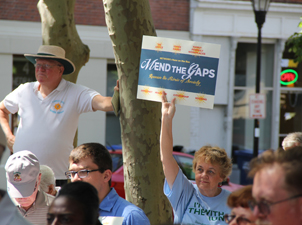
Today NETWORK Lobby for Catholic Social Justice announced the release of its 2018 Catholic Social Justice Voting Record. This annual scorecard reflects how Members of Congress voted in accordance with Catholic Social Justice and evaluates if they worked to mend the gaps in economic and wealth inequality.

From Sister Simone Campbell, SSS, Executive Director of NETWORK Lobby for Catholic Social Justice:

The second year of the Republican-led 115th Congress was another year of chaos and struggle. The Trump administration doubled down on tax breaks for the wealthy, cuts to human needs programs, and relentless attacks on immigrants and asylum seekers. Catholic Sisters and activists struggled tirelessly against these proposals. The Republicans in Congress decided to follow the President’s lead and support this barrage on the common good, and they paid the price on Election Day.

“The voters rejected incumbents and embraced those who defend the common good. These defenders of the common good are reflected in our 2018 Catholic Social Justice Voting Record.

“2019 brings great change for Congress, and we at NETWORK Lobby for Catholic Social Justice are especially excited to work with the new Democrat-led House of Representatives. The Catholic Sisters and activists of NETWORK Lobby will work to undo the damage that the Trump presidency has inflicted on our nation, and we will support a visionary agenda that supports the 100%.

In 2018, NETWORK Lobby prioritized the most important votes from the past year that fit with its 2020 policy vision to Mend the Gaps. NETWORK Lobby scored 15 votes, eight in the Senate and seven in the House. We recommended nine ‘No’ votes on bills that attacked immigrants, cut healthcare and food assistance, and doubled down on the harmful effects of the 2017 GOP Tax Law. NETWORK Lobby recommended six ‘Yes’ votes on bills that protected Dreamers, ensured food security, and took the first steps toward broad criminal justice reform.

Last year, seven state delegations received perfect Catholic Social Justice voting scores: Connecticut, Delaware, Hawaii, Massachusetts, New Hampshire, Rhode Island, and Vermont. Every single House and Senate member from these states voted 100% of the time with in accordance with NETWORK Lobby’s Catholic Social Justice values.

There were also four states that had their entire delegations fail on their Catholic Social Justice Scorecards, receiving scores below 70% in 2018. Every single member of the Arkansas, Kansas, Utah, and West Virginia delegations consistently voted against the recommendation of the Catholic Sisters and activists of NETWORK Lobby.

NETWORK Lobby members will be contacting their members regarding their 2018 Catholic Social Justice Scores.

The voting records and each member’s score is online at https://networklobby.org/votingrecord2018pdf

Voices from the Sunrise Movement: Local Activism Against the Mariner East Pipeline

Voices from the Sunrise Movement: Local Activism Against the Mariner East Pipeline

Olivia Freiwald
February 12, 2019

I met two-year-old Brooke and four-year-old Jack in late June of 2018 on a scorching 91 degree summer day in Exton, Pennsylvania. Their bubbly laughs brought out the big sister in me and we chased each other around the yard. Then Danielle, their mom, and neighbor Ginny walked me and my housemates over to what I was really there to see. Not even 100 feet from where my game with Jack and Brooke had taken place, rows of endlessly long, beige sections of pipe lay in a fenced off strip of land, the pipes bending slightly as they sloped down the hill.

Ginny explained this was the Mariner East Pipeline Project, which included refurbishing a petroleum pipeline from the 1930s and the addition of two more pipes running across the state of Pennsylvania. Sunoco and Energy Transfer Partners poured over $4 billion into this project that was now years behind schedule due to painful, avoidable complications.

Sinkholes formed inches from people’s homes, an underground freshwater aquifer that 15 houses relied on for clean drinking water was destroyed, and the soil, water table, and acres of natural land cleared for the job were damaged beyond repair. Ginny, a geologist by training, had been involved in the growing community of pipeline opposition since the beginning.

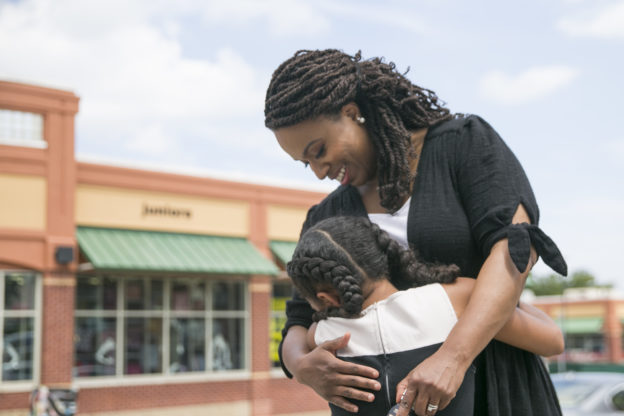
Danielle and Ginny met at a community meeting and became active in the Mariner East Resistance. It didn’t take long for Danielle to decide to run for Pennsylvania State Representative, to protect her children, her home, and the safety and dignity of her community being threatened by natural gas companies and corrupt politicians.

I was a native of the Philly suburbs just 40 minutes from Mariner East, hearing all of this for the first time. For years I lived and went to school 40 minutes from the pipeline intended to carry ethane, butane, and propane: three extremely volatile natural gas liquids undetectable if leaked, and terrifyingly easy to ignite. Danielle made the decision to run for office look easy; no one was standing up for her community, so she decided to do it herself.

For the next six months I lived with five other 20-somethings in subsidized housing and volunteered full-time to win Danielle’s election as a state representative. We learned together through countless conversations what Danielle’s community cared about. We listened to pipeline workers and NRA members, conservatives, liberals, independents, indignant non-voters, and everyone in between. We spent hours and hours with Danielle and Ginny combing the suburbs of southeastern PA, our shared mission coursing through my veins like fire, grounding me in purpose even when doors were slammed in my face.

One of the most humbling and rewarding moments of my time in Downingtown, PA was the night my housemates and I attended the public risk assessment presentation at one of the local high schools. The pipeline companies and the Pennsylvania Utilities Commission (PUC) had refused and ignored requests for a state environmental risk assessment, so the community members fighting for their lives decided to do it themselves. We walked in to the high school auditorium and immediately saw our friends from Food and Water Watch, gave hugs to the folks who recently were released from jail after our protest on the pipeline easement, shook hands with local state candidates, caught up with Danielle and Ginny, and beckoned the mayor of Downingtown to come sit by us. Over two hundred people filled the room and we never stopped catching the eye of someone we knew, worked with, or otherwise recognized. The community effort behind stopping Mariner East finally had a face. The cause for which many in the room had put their lives on hold or even at risk felt strong, capable, and worthwhile.

On November 6, Danielle Friel Otten won the election by 3,000 votes. My team of six 20-somethings had identified 5,000 supporters while knocking on doors – the margin of victory.

We successfully got a non-career politician, woman, activist, community leader into the Pennsylvania House of Representatives to replace an incumbent who had failed to represent his constituents’ best interests. Since then, Chester County launched a criminal investigation into the construction of Mariner East, while the PUC and Sonoco quietly opened the pipelines and began the transportation of the lethal natural gas liquids.

I don’t know what the future holds for Chester County’s safety at this point. Right now it feels a lot like trying to stop a powerful tidal wave. On the other hand, in lots of ways, we won. We met and inspired students at West Chester University, registered first-time voters, and rallied with thousands of people in DC, demanding a Green New Deal. The word “politician” has become a cringe-inducing word, but the woman I helped into that position exemplifies everything the job is meant to be. We, the people, the children, and the fighters of PA-144, are not up against our elected official anymore to build a world of justice and love. Finally, I witnessed honest representation, massive grassroots victory, and a growing hope for a future where true democracy reigns.


Olivia Freiwald grew up outside of Philadelphia and is now a sophomore at Tufts University studying Climate Organizing and Sustainable Development. Olivia was a fellow with the Sunrise Movement from June-November 2018, living and working full-time in Downingtown, Pennsylvania, and continues her involvement with Sunrise while in school.

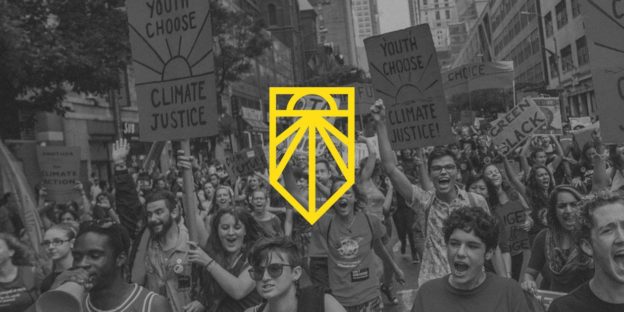
Feature photo from Waging Nonviolence.

Faith Community Supports Back Pay for Federal Contractors

Faith Community Supports Back Pay for Federal Contractors

Sister Quincy Howard, OP
February 8, 2019

This week, NETWORK joined fellow faith organizations asking Members of Congress to provide back pay to federal contractors who were unable to work and receive their paychecks during the five-week partial government shutdown. Without legislation from Congress providing this back pay, federal contract workers will suffer the most as other federal workers return to work and receive back pay for the weeks they were furloughed.

Read the letter below or as a PDF here.


February 4, 2019

Dear Members of Congress:

We write as faith-based organizations and religious bodies representing Jewish, Christian, Muslim and other faith traditions to urge you to support efforts to secure back pay for employees of federal contractors who were unpaid during the recent government shutdown. All of our faith traditions uphold the critical importance of the dignity of work and the obligation of employers to compensate workers for their efforts. Just as Congress rightly provided back pay for federal employees who were furloughed or unpaid during the shutdown, Congress should also provide back pay for the contract employees who face extreme financial hardship because they went more than a month without their paychecks.

Over the past few decades, the federal government has contracted out more and more of the jobs and functions it used to perform. For every federal worker hired, there are nearly double the number of contract workers hired, reaching about 3.7 million according to 2015 estimates from the Volcker Alliance. These jobs include the women and men who clean federal buildings, staff cafeterias and concession stands, who process payments, and who provide vital tech support to federal agencies.

These federal contract workers help keep our nation running even when their paychecks aren’t cut directly by the U.S. government, and they need their paychecks just as badly as federal employees. Many of these workers are struggling right now to pay their bills for necessities like food, medicine and housing. They deserve to be paid.

As Congress negotiates a deal to secure funding for the rest of the fiscal year, we urge you to do everything within your power to provide back pay for the contract workers throughout this country who have suffered just as grave a financial injury as federal employees during this shutdown. Equity and justice demands they too receive compensation for the injuries they suffered.

Sincerely,

National Council of Jewish Women
The Episcopal Church
Interfaith Worker Justice
The United Methodist Church – General Board of Church and Society
First Universalist Church of Auburn, Unitarian Universalist
Union for Reform Judaism
Ecumenical Poverty Initiative
National Advocacy Center of the Sisters of the Good Shepherd
NETWORK Lobby for Catholic Social Justice
American Baptist Home Mission Societies
Faith in Public Life
Office of Public Witness
Congregation of Our Lady of Charity of the Good Shepherd, US Provinces
United Church of Christ, Justice and Witness Ministries
Alliance of Baptists

Presidential Failures to Mend the Gaps

Presidential Failures to Mend the Gaps

Colleen Ross
February 8, 2019

Over the course of 2018, the Trump administration set numerous policies into motion that are sure to harm vulnerable communities and exacerbate the gaps in our society. Our spirit-filled network took action to denounce the harmful actions taken by the Trump administration and prevent them from going into effect. By writing and submitting comments on proposed rules in the federal register, organizing and attending protests, and raising awareness of these issues, you acted in solidarity with the individuals and families impacted by these unjust decisions.

Healthcare

In January 2018, the Trump administration announced that the Centers for Medicare and Medicaid (CMS) would begin approving states’ requests to impose burdensome Medicaid Work Requirements. Since then, work requirements have been approved in five states, and are pending in ten more states. These work requirements target already vulnerable low-income adults, many of whom are already working or doing their best to secure steady work that pays sufficient wages.

Nutrition

The Agriculture Department released a proposed rule to enforce stricter SNAP (Supplemental Nutrition Assistance Program) Work Requirements right at the end 2018. This happened just after Congress had finally reached agreement after months of bipartisan negotiations, resulting in a majority of Congress voting to not include these restrictive work requirements in the Farm Bill. This unilateral action from the administration is clear rejection of Congress’s hard-won, bipartisan agreement.

Census

President Trump’s Secretary of Commerce Wilbur Ross announced they would be adding a Citizenship Question to the 2020 Census just as it nears the final stages of preparation. The addition of a citizenship question is likely to further depress Census responses from communities of color (which are already undercounted), due to fear of immigration enforcement in the current climate. Additionally, concerning information about persuasion from the White House and undisclosed communication with the Department of Justice encouraging Secretary Ross to add the citizenship question, has become public.

Immigration

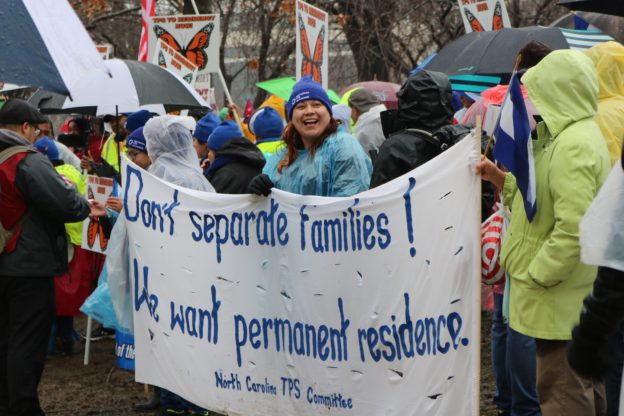
In September, the Trump administration released a proposed regulation that the advocacy community refers to as the Flores Rule. This new regulation would dismantle the current “Flores” standards, now allowing the indefinite detention of immigrant children and families, including asylum seekers. In addition to being morally reprehensible, this proposal rejects proven alternatives to mass detention, which are more humane and effective. This proposed rule would allow the federal government to set their own standards for holding families and children in detention and undermine independent oversight of conditions; it also reduces vulnerable families’ access to due process and humanitarian protections.

The Trump administration’s proposed “Public Charge” Rule, published in October, would make it more difficult for immigrants to apply for and receive legal immigration status in the United States. This proposed rule seeks to drastically redefine what it means to be a “public charge” in the immigration system. This would increase the probability that legal immigration applications would be denied based on factors such as age, health, family status, financial status, education, skills, and employment history and would hurt and potentially separate families. Even the threat of this rule is already causing parents to choose between needed public assistance to keep their families housed, fed, and healthy or making their family vulnerable to separation.

Throughout the year, the Trump administration has threatened immigrants with legal status through two programs. Temporary Protected Status (TPS) is a legal immigration status for nationals of a country experiencing ongoing armed conflict, environmental disaster, or another extraordinary and temporary condition. Deferred Enforced Departure (DED) allows foreign nationals to be protected from deportation and have the opportunity to work. Currently, the Trump administration is in the process of ending protections for TPS or DED holders from 11 countries. Many of these TPS/DED holders have been here for more than 20 years, have families in the United States, and would continue to face conflict or other difficult conditions in their home countries.

Judicial

The Senate approved 66 of President Trump’s Judicial Appointments in 2018, including Supreme Court Justice Brett Kavanaugh. This is a significant number of appointments and these confirmations will have a strong impact on the makeup of our judicial system.


This story originally appeared in the January 2019 issue of Connection Magazine. Read the full issue here.

In Order to Call Itself Family-Friendly, the U.S. Must Examine its Workplaces

In Order to Call Itself Family-Friendly, the U.S. Must Examine its Workplaces

Siena Ruggeri
February 5, 2019

February 5th is the anniversary of the Family Medical Leave Act, which was passed in 1993. This law gives employees up to 12 weeks of job-protected, unpaid leave. The Family Medical Leave Act (FMLA) was a huge step forward for working families, but it still excludes many. The Washington Center for Equitable Growth estimates that half of all working parents and 43 percent of women of childbearing age are excluded from FMLA coverage due to outdated eligibility requirements.[1] Family leave policies need to be updated for 21st century workplaces and include low-wage earners.

Even if a worker qualifies for FMLA coverage, in many cases, they can’t afford to take it. Quite simply, far too many people can’t weather the sudden loss in income, and often fear they will lose their job if they take unpaid leave. Family leave needs to be paid for workers to utilize it, but paid leave remains rare in U.S. workplaces: 93% of low-wage workers have no access to any paid family leave.[2].

In 2019, the United States remains the only industrialized nation that does not provide universal paid leave benefits. After 26 years without landmark paid leave legislation, the time has come to not only offer family leave, but ensure all working families can access it. We need a federal universal paid leave policy to accomplish this goal.

A lack of family-friendly workplaces is bad for both employers and their workers. Employers must deal with the costs associated with high turnover, and employees are forced to choose between advancing their career and caring for family members.

The growing demands of caregiving can’t be ignored by federal policymakers any longer. According to a recent Harvard Business School study, almost three quarters of U.S. workers are caregivers in some capacity. Of those, 80% said that their caregiving responsibility made it harder to do their job. As a result, 32% of all employees surveyed said they left a job to accommodate their caregiving responsibilities.[3]

With women taking on a huge majority of caregiving, they are disproportionately impacted by a lack of paid leave. Women are twice as likely to stay home to care for a sick child, and three in five women say they have their care responsibilities on their mind when they’re at work. [4] Our society can’t achieve true economic justice for all women when we offer them no support or legal protections to balance caregiving and a career.

Government inaction on paid leave also reinforces the racial wealth gap. Already paid lower for the same work as their white peers, people of color are deeply impacted by inaccessible leave policies. Black women are the primary breadwinners for 70 percent of their families.[5] They’re also more likely than white women to leave or lose their jobs after birth.[6] By refusing to support black women in their careers, we create yet another structural barrier to push women of color out from opportunities for economic advancement.

Let’s take the anniversary of the FMLA to push Congress to give working families, and especially working moms, the relief they need. It is not just the smart thing to do, it’s the right thing. We cannot call ourselves a family-friendly country until we do so.


[1] https://equitablegrowth.org/research-paper/paid-family-and-medical-leave-in-the-united-states/?longform=true

[2] United States Department of Labor, Bureau of Labor Statistics, “Table 32. Leave benefits: Access,private industry workers,” National Compensation Survey, March 2018, https://www.bls.gov/ncs/ebs/benefits/2018/employee-benefits-in-the-united-states-march2018.pdf.

[3] https://www.hbs.edu/managing-the-future-of-work/Documents/The%20Caring%20Company%20-%2001.17.19.pdf

[4] “Modern Family Index,” Bright Horizons, https://solutionsatwork.brighthorizons.com/~/media/BH/SAW/PDFs/GeneralAndWellbeing/MFI_2017_Report_v4.ashx

[5] Sarah Jane Glynn, Breadwinning Mothers. (taken from this link: https://www.clasp.org/sites/default/files/publications/2018/12/2018_pfmliscriticalfor_0.pdf)

[6] Lynda Laughlin, Maternity Leave and Employment Patterns. (taken from this link: https://www.clasp.org/sites/default/files/publications/2018/12/2018_pfmliscriticalfor_0.pdf)

New Congress, New Methods of Communication: Social Media’s Evolving Political Influence

New Congress, New Methods of Communication: Social Media’s Evolving Political Influence

Lindsay Hueston
January 31, 2019

Multiple progressive politicians have cemented a new way of campaigning and keeping constituents informed: showing their authentic selves online, as a means to engage with their constituents and a national audience more genuinely. The embrace of social media as a legitimate political tool reflects a changing dynamic in U.S. politics, one which favors real people and experiences over polished messages and canned rhetoric.

Rep. Alexandria Ocasio-Cortez

Examples abound: newly-elected Representative Alexandria Ocasio-Cortez making mac and cheese on Instagram, with Senator Elizabeth Warren mimicking the strategy and opening a beer after announcing her exploratory committee a few weeks later. Texas Senate candidate Beto O’Rourke even live-streamed his visit to the dentist.

These politicians are unabashedly using their platform to deliver not only glimpses into their personal lives, but to convey more authentic reactions and opinions, providing the public with a sense of participation. Bringing people into the political process—even if it is from the screen of a smartphone—is a surefire way to engage unlikely voters in politics.

No longer are today’s politicians glossed over, seemingly flawless, and untouchable. Instead they broadcast themselves to the public through the likes of Instagram and Twitter. It is the very popularity of their unscripted humanity—their willingness to cook on camera, drink, share their skincare routine, or get their teeth cleaned—that reveals the general population’s thirst for approachable politicians. In a world where high-power Washington officials have become increasingly stratified from the people they represent, this type of refreshing social media engagement narrows the gap between representative and constituent.

Sen. Elizabeth Warren

Politics are ultimately about human issues, and the use of social media brings these topics back down to a human level. The greater public can instantly connect with a representative from their mere fingertips; political power is becoming more democratized as people decide who their most popular elected officials are via social media. Political clout, then, lies only a few viral tweets away.

Texas Senate candidate Beto O’Rourke

Yet social media’s glimpse into the inner workings of today’s politicians does not always produce a positive result. Notably, President Trump continues to fire off tweets in lieu of consulting with his staff and making thoughtful major policy decision. The power of social media in politics, however, is far vaster than merely his rapid-response, incendiary tweets may indicate.

The fact that these stories are now more accessible (due in no small part to the most diverse Congress we’ve ever seen) is a sign of our changing political times. As a Communications Associate at NETWORK, I witness firsthand how social media influences people’s beliefs and perceptions. In this past election cycle I saw an incredible influx of representation of women, people of color, LGBTQ folks, varying religions, and more. This new representation further illustrates the rich narrative that tells the story of the people of the United States.

Featured image from @ocasio2018

A Special Message from Nuns on the Bus

A Special Message from Nuns on the Bus

“We the People” Can Create Change!

Meg Olson
January 29, 2019

What a month it has been! As we recover from the anguish of the longest shutdown in our nation’s history, I’ve heard from activists all across the country what a whirlwind of emotions it has been. Despite the cruel insistence for wasteful spending on a border wall from Republicans in the Senate and the White House, it’s been comforting for us to remember the people we met along the road last year during our Nuns on the Bus tour.

During Nuns on the Bus, we heard from people all across the country committed to the common good. We are so inspired by you and all activists working for a more kind and generous vision for our nation and lobbying our elected officials, together. November 6, 2018 was a great day because “We the People” came together to create change.

We created the video above to renew our hope and commitment for the work ahead. Help us continue to care for the 100% in our nation, and take this message to newly elected officials by staying involved with NETWORK and sharing this video on Facebook or Twitter.

Rural Roundtable: New Mexico

Rural Roundtable: New Mexico

Erin Sutherland
January 28, 2019

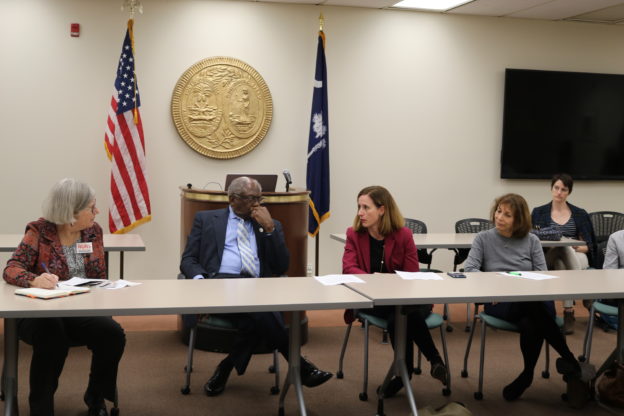
Two weeks ago, Sr. Simone and I traveled to New Mexico to facilitate NETWORK’s first-ever Rural Roundtable.  The idea for a Rural Roundtable came when NETWORK realized that while we have a good understanding of how federal policies impact people in the urban and suburban areas, we needed to gain a better understanding of the lived realities for people in rural areas to be better advocates for the 100%.  The stops on some Nuns on the Bus tours had been in rural areas, but we wanted to make a more intentional commitment to specific communities by building upon events we would already be having in the state.

The day after we arrived, Sr. Simone and I spent the morning meeting with residents from the Laguna Pueblo.  We visited St. Joseph Mission School in San Fidel, NM, where we met 40 amazing students and staff who are actively committed to learning about and rectifying the environmental and health damage that was a result of decades of uranium mining.  Merrick, an eighth grade student, showed us a video he had made that  recently won first place in a regional competition.  The video featured the story of his grandmother, who had worked in the Jack Pile uranium mine and now has pulmonary-related health problems.  In the coming year, the entire school was planning to test their water for uranium, and the eighth-grade class was planning to travel to the University of Notre Dame to present their findings.  In the midst of such mature and thoughtful leadership and community engagement, it was heartbreaking to think of the health effects that these students and their families could face because of reckless extractive policies.

Later that night, we convened our roundtable in Albuquerque and spoke with service providers and community leaders from women’s health, childcare, rural dental care, indigenous communities, food security, and immigration sectors.  During our two-hour long conversation, Tina Cordova of Tularosa Basin Downwinders Consortium described the decades-long treatment of New Mexico as a “sacrifice zone” where corporations and government agencies have come in and extracted resources and conducted tests with little regard for the residents.  New Mexico has an endowment fund that is mostly invested and managed out of state.  Another community member described how this treatment has affected people’s view of their self-worth: if your government treats your community like it’s dispensable and not worth the investment, you eventually start to believe it.

As I reflect on everything I learned during my trip to New Mexico, it is empathy for all those who feel forgotten or left behind by their government that has stayed with me.  It is my faith, which upholds the dignity and value of every human life, coupled with my patriotism for “We the People,” that firms my resolve that everyone deserves to feel and be treated like a valuable member of society.  One thing Sr. Simone does so well is to help people move past helplessness and despair and towards hopeful action.  At NETWORK, this first roundtable gave  us an opportunity to reflect on how we can lobby for policies that will include the 100%- not just the people with whom it is easiest to engage.  This experience has given me and NETWORK an opportunity to listen more, listen first before acting, and then to act with intentional inclusion.  I am so grateful for the opportunity to have gone to New Mexico and to have met with so many amazing activists  heavily invested in bettering their communities.

To see more photos from the Rural Roundtable in New Mexico, click here

Faces of Our Spirit-Filled Network: Elena Hung

Faces of Our Spirit-Filled Network: Elena Hung

Elena Hung
January 24, 2019

Tell us a little about yourself and the work you do.

I am a mom, a lawyer, and as I like to refer to myself, an accidental activist.  Like so many across the country, I started speaking up and becoming involved after Inauguration Day in January 2017.

In response to threats of health care repeal efforts, I became very concerned about what would happen to my family and families like mine if we were to lose the protections for pre-existing conditions, ban on lifetime limits, and guaranteed coverage for essential health benefits like emergency care, hospitalizations, and prescription drugs.  I co-founded Little Lobbyists, a family-led group advocating for children with complex medical needs and disabilities, and showed up on Capitol Hill with our children to tell our health care stories.

I am also a co-chair of Health Care Voter, a national campaign to hold elected officials accountable for their votes on health care.

How did you first learn about NETWORK and what inspired you to get involved?

I heard Sister Simone speak while she was with the Nuns on the Bus, and I was hooked!  I loved her message on the fight for social justice and for the common good.

What issue area are you most passionate about?

For the past two years, my public advocacy has focused on health care and disability rights.  However, at the core of everything I do and believe is that we are only true advocates if we engage in inclusive advocacy.

When I advocate for health care for those with complex medical needs and disabilities like my daughter, that includes immigrants with disabilities, LGBTQ people with disabilities, people of color with disabilities, people of all faiths with disabilities, those living in poverty with disabilities.  And when I say disabilities, that includes all disabilities whether it be mobility, sensory, mental health, intellectual or developmental disabilities.  It includes our friends with chronic health conditions, in recovery from substance abuse, and those living with trauma.

Elena Hung speaks at the Fiesta for the Common Good, the Nuns on the Bus’ closing event of the 2018 Tax Justice Truth Tour.

How are you engaging your community on important social justice issues?

I have worked really hard to put the stories of medically complex and disabled children front and center.  This includes empowering families with the tools to share their stories and working closely with a number of organizations to build a platform to make that possible.  Little Lobbyists families across the country have shared their stories at press conferences, rallies, town halls, social media, local and national media interviews, published op-eds and articles in digital media, and other public events and forums.

How has your advocacy for social justice shaped your view of the world?

I believe in the power of stories to change hearts and minds.  I also believe that these stories bring us together, for we have more in common than not.

How does your faith inspire you to work for justice? 

I feel a great responsibility and an even greater honor to be part of something so much bigger than myself.

Who is your role model?

In the past two years, I have had the opportunity to work closely with Speaker Nancy Pelosi and her team.  She is simply amazing.  Her record speaks for itself — she is a master legislator, a talented leader, and a fierce advocate — but what you don’t hear in the news often enough is that she is also incredibly warm and kind. She’s a living example of how you are never too important or too famous to be kind to someone.  I have introduced her to countless families and children and the respect she shows them is mesmerizing.  She takes the time to listen — and somehow remembers everything!

She is also really tough; I am so inspired by the way she is able to shrug off the constant public attacks against her and focus on doing her job.  She is a one-of-a-kind role model not just for me but also for my daughter.

Is there a quote that motivates or nourishes you that you would like to share?

“Go big or go home.”  This is what I kept saying at the beginning when I first started speaking up and what I say to this day.  Every act, every message, every plan — I want to reach as many people as we can in the most powerful and authentic way possible.  I believe in dreaming big dreams and aiming high … and surrounding myself with people who aren’t afraid to do the same.

What social movement has inspired you?

The leadership by young people has been incredible.  Whether it is the March of Our Lives students against gun violence or Dreamers for a path to citizenship, their voices have been life-changing.  I too believe the young people will win.

What was your biggest accomplishment as an activist in the past year?

I co-founded and led an organization that was often credited with helping put a face on health care.  I am so proud to have helped educate so many on the needs of medically complex children by empowering families to speak up and normalize disability.

What are you looking forward to working on in the coming months?

There is so much work to do!  I look forward to growing the Little Lobbyists community, helping more families share their stories.

I want to highlight the intersections between disability and all the social justice issues; There is not a single issue — whether it be health care, immigration, climate change, criminal justice, education, gun violence, employment, or voting — that does not impact the 1 in 5 Americans that lives with a disability.

Working Towards a Livable Income: The Raise the Wage Act

Working Towards a Livable Income: The Raise the Wage Act

Siena Ruggeri
Quincy Howard, OP
January 22, 2019

Working Americans are getting left behind. While corporations have reaped the benefits of economic recovery, taken advantage of the Tax Cuts and Jobs Act, been pocketing record profits, and making trillions of stock buybacks, the American worker is in a state of crisis.  Wages have stagnated since the 1970s with any gains mainly going to the highest-paid workers.  The federal minimum wage ($7.25 an hour) has not budged in a decade.  These realities threaten the financial stability of millions and mean that the purchasing power of most workers today is the same as it was in 1978.[1]

The concept of a minimum wage establishes a floor of compensation below which workers cannot hope to support themselves: our floor has been set at $7.25/hour since 2009.  That federal minimum wage has not increased with inflation, either, so it loses value over time.  Over those 10 years, it has become increasingly difficult for someone working a full-time minimum wage job to cover their basic needs. Earning the minimum wage does not ensure a livable income but having a fair minimum wage goes a long way towards helping low-income workers get by.

Minimum wage workers are parents, caregivers, and community members. They include home health workers that support the independence of people with disabilities, preschool teachers who serve low-income students, and the cabin cleaners and baggage handlers that ensure our air travel runs smoothly. It is reprehensible that millions of people work full time, yet are a paycheck away from acute poverty and homelessness. Raising the minimum wage is a common sense step that would bring dignity back to the millions of employees that have been left behind.

Since Congress has failed to increase the minimum wage, states have been leading the way.  Twenty-nine states have raised their minimum wage; the 2018 midterm election brought about successful statewide minimum wage raises in both Missouri and Arkansas, with incremental increases to $12 and $11, respectively.[2] Minimum wage increases in numerous and diverse states around the nation tell us that not only is it the right thing to do, but it makes good economic sense.

[3]

The introduction of the Raise the Wage Act of 2019 is a top legislative priority for the 116th Congress and for NETWORK Lobby’s livable income policy initiatives.  This legislation gradually increases the federal minimum wage to 15 dollars an hour by 2024. It also addresses the inflation issue by automatically raising the minimum wage based on subsequent increases in the typical worker’s wages. The bill also addresses inequities built-in to our current minimum wage by applying the same wage requirements for tipped workers and workers with disabilities.  The Raise the Wage Act offers an impactful and targeted policy which would immediately help people and families living in poverty: 27% of beneficiaries are working parents with children and half have family incomes of less than $40,000 per year.  While an incremental raise is not going to immediately fix the deep inequities low-wage workers have been dealing with for decades, it offers a much-need relief that will have an immediate impact on their quality of life.

Even as we push for passage of the Raise the Wage Act of 2019, NETWORK continues to lay the foundation of pay justice for workers.  Advocating a livable income for workers means promoting a broad array of policy changes in addition to increasing the minimum wage.  A livable income would enable workers to accrue savings and assets, retirement security and protection against unemployment.  What we consider “livable” allows workers to earn a disposable income, making possible leisure, educational and skills enhancement.  A livable income incorporates opportunities for continued wage growth and promotion at a job.

For the lowest wage earners in the country, the Raise the Wage Act would double their pay; potentially enabling them for the first time to afford safe and stable housing, sufficient amounts of food, adequate transportation, and reliable child care.  Now is the time to put pressure on our representatives to do the morally responsible thing: raise the wage and provide a desperately needed economic safety net to the millions who have been left behind.


[1] http://www.pewresearch.org/fact-tank/2018/08/07/for-most-us-workers-real-wages-have-barely-budged-for-decades/

[2] https://www.cbsnews.com/news/voters-approve-minimum-wage-increases-in-midterm-elections-in-missouri-arkansas/

[3] https://www.cbsnews.com/news/voters-approve-minimum-wage-increases-in-midterm-elections-in-missouri-arkansas/