


Category Archives: Front Page

Prodigal Son

Prodigal Son

Jeremiah Pennebaker
April 12, 2018

“I hope you gettin’ in that Word!” I can hear my Pops telling me every time I pick up the phone to dial him, and I’m flooded with premature guilt because I am in fact not “gettin’ in that Word.” I can’t really remember the last time I really sat down and had a dedicated devotion or spent intentional time studying the Bible. Don’t tell my dad that – it’s looks bad if the pastor’s kid is skipping out on Bible study. It’s not that I’m rejecting the gospel or trying to rebel against my parents, but it’s more so just a disconnect for me. I feel much more faith-adjacent than I do faithful. I have a desire to be faithful and to understand what it means to have a relationship with God, but I feel that I’m living in a strange and distant land far from the luxuries of “The Kingdom.”

I spent all of my formative years in the church. Travelling to different churches across Louisville, I heard my dad speak fervently and passionately about Jesus and put together sermons that would “hit you on the way home” and really make you think. There was one point in my adolescence that you couldn’t tell me that my dad and Rev. Martin Luther King, Jr. weren’t the same person. I was all in for this Christianity and faith stuff. I was involved in any aspect I could be with the church, even to the point that we started our own gospel rap group (I still cringe when I remember some of my “raps”). We had a church of our own, we had worked hard and gotten a building, membership was growing, and I was convinced that we were supposed to be the next megachurch… until we weren’t.

It still feels like a blur, but the disconnect happened in 2011 when we lost the church amongst a series of unfortunate events for my family. I know so many stories in the Bible discuss how the believers and the disciples struggled, but their faith remained or that God showed them the way. But that hasn’t been my experience. My experience has been watching my parents grapple with debt and discouragement while clinging to their faith traditions. Around the same time, I began learning about how faith has been used as propaganda for domination since the beginning of time. My experience has been attempting to reconcile my beliefs with a world that I’m constantly learning is much more nuanced than black and white or good and evil. I’m trying to reason with all the things that I think versus the things I know, all the while I feel my relationship with God fading away. It feels like the disconnect grew into a gap and then that gap into a chasm. To me Jesus went from a friend to the friendless to that friend on Facebook who you don’t talk to anymore, but they’re always reposting inspirational quotes.

Despite all of this confusion, I’ve never necessarily left the faith space. My passion for justice has led me to being in several faith spaces. I went to a Jesuit college where I was heavily involved in the Center for Faith and Justice, and I currently work for a Catholic non-profit, but there’s still this chasm. I recognized this when I was asked at NETWORK, “How does your faith inform your desire to do justice?”. To be honest, I’m not sure how it does. My desire to do justice comes from my frustration with injustice, but I’m not sure where my faith comes in outside of “be a good person and you get to heaven.”

On one hand I’m a very rational person. I can rationalize a lot of the reasons that I should and could create this relationship with God. I can rationalize and recognize how my foundation of faith has led me to my passion for social justice. I can rationalize that the racist, sexist, and homophobic interpretations of the Bible are not the only context in which “that Word” can be understood. I can rationalize and recognize who I believe God is and recognize and validate my friends who are LGBTQIA+. On the other hand, I’m an unashamed hopeless romantic and I can recognize when that connectedness of a relationship is there and when it isn’t. I can recognize my feelings whenever I’m in a space trying to explain my faith or talk about God. And I can recognize that my heavenly father (or mother) feels more like a step-parent. It’s those things I haven’t been able to reconcile, and maybe I’m not supposed to. I just hope that God’s still waiting on me to come home if I ever do figure it out.

What American Dream? The Dangers of the Proposed Republican Public Charge Rule

What Are Members of Congress Saying on Public Charge?

NETWORK will be updating this page with the latest statements.

“Such a rule would essentially force families, including those with U.S. citizen children, to choose between getting the help they need to prosper — from crucial programs that provide medical care, food assistance, housing assistance, and early childhood education — and reuniting with those they love. These are not the ideals of our country and we urge the Department to reconsider this ill-advised proposal.”-Letter to Kirstjen M. Nielsen and Mick Mulvaney signed by 85 Members of Congress.

The original letter can be found here.

“What will the Trump Administration do next? Since day one, we have witnessed a series of attacks by the administration targeting immigrant communities around our nation. This latest back-door attempt to leverage public health and efforts to deny legal immigration benefits, seeks to circumvent Congress and ultimately restrict family reunification. This ill-advised proposal will make it difficult for individuals seeking legal entry or permanent residency in the United States to care for their family through the use of social services that they are legally entitled to use. This rule fails to uphold the values of our nation and will force individuals to choose between putting food on the table for their children and being granted legal status.” –Rep. Adriano Espaillat (NY-13).

“Let’s be clear— current law already prevents the vast majority of immigrants from accessing Federal means-tested public benefits. That’s not what this proposed rule is about. This is about denying immigration benefits and keeping families apart. It would essentially force families, including citizen children, to choose between getting the help they need—like medical care or Head Start—and reuniting with loved ones.  This rule will not only harm immigrant families, it will undermine decades-long efforts to improve the health and well-being of our communities and our nation.” –Rep. Zoe Lofgren (CA-19).

“The Trump administration’s proposed ‘public charge’ rule is a dangerous attack on immigrant families. For centuries, immigrants fleeing economic hardship, persecution, and violence have found opportunity in our country to do what is best for their families. This proposal imperils that ability and forces immigrant families to make the tragic decision between basic necessities and their future in our country. I urge the Trump administration to rescind this heartless proposal, cease its baseless attacks on immigrant communities, and stop inserting nativist principles into policies that directly contradict American values.” – Rep. Raúl M. Grijalva (AZ-03). 

Original post with statements can be found here.

What American Dream? The Dangers of the Proposed Republican Public Charge Rule

Mary Cunningham
April 11, 2018

At the heart of the American experience lays the dazzling idea of the American Dream. We profess the dream proudly, holding it as a symbol of our nation’s deepest values: acceptance, equal opportunity, and prosperity achieved through hard work. Yet, how can we profess this to be true if not everyone is given an equal chance to prosper and if we penalize people for utilizing the very programs that are designed to help them get ahead?

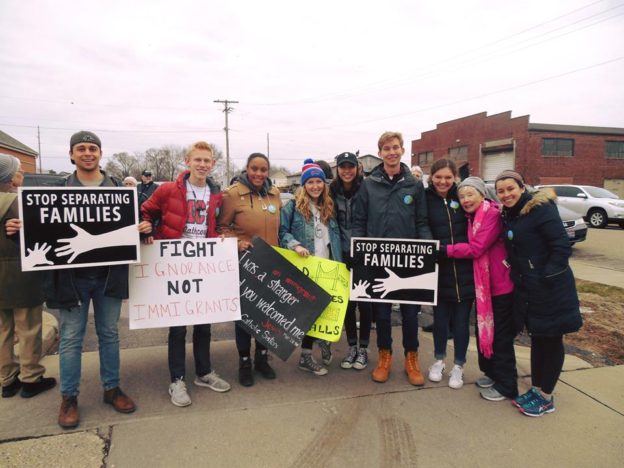
On March 28, 2018 the Washington Post relayed the latest update on the proposed public charge rule, which could change the process for immigrants seeking legal residency. The draft of this change has not been formally published and is currently being reviewed by the Office of Management and Budget for approval. This proposed public charge rule demonstrates another attempt by the Trump administration to restrict family-based immigration and cut off access to public benefits that help families meet their basic human needs. Yes, this rule, if it comes to pass, would apply to families who have come to the United States legally in search of a better life. These are the people who have gone through the system and as our Republican friends like to say patiently “waited their turn in line” to obtain green cards. These are the families and individuals who would be penalized if this proposed rule comes to fruition.

So what exactly does public charge entail?  Under the proposed draft, individuals would be required to indicate their reliance – and for the first time any family members’ reliance – on public aid programs such as the Supplemental Nutrition Assistance Program (SNAP), housing assistance, the Children’s Health Insurance Program and even refundable tax income credits obtained through the Earned Income Tax Credit (EITC). People who depend on these programs, or who have children who rely on them, could potentially be derailed on their path to a green card or even deported. The draft regulation penalizes those applying for lawful permanent resident status if they have big families and if they have limited income. This would be particularly harmful to mixed-status families with U.S. citizen children where parents will have to decide whether their child should use programs like Medicaid or school lunches if such use could lead to deportation of a family member seeking a green card.

So basically, individuals would be forced to choose between catering to their basic human needs or protecting their immigration status. If this rule passes it will have a deleterious effect on families. It would separate families who rely on public aid and increase the risk of falling into poverty for those who do not enroll in public aid programs for fear of being forced to abandon family reunification. An article in the Huffington Post estimates that this proposal puts 670,000 children at risk of falling into poverty. While there is bipartisan consensus that our nation’s children should have access to food, healthcare, and other basic necessities, this rule threatens to upset the balance completely.

The argument in favor of instituting a public charge rule is that those applying for a green card should be “self-sufficient.” However, it is estimated that around the same percentage of native-born Americans use public assistance as foreign-born individuals. Will our brothers and sisters not be able to achieve the American Dream solely because they need health insurance, food or housing for their families? I surely hope not.

We expect more information on the public charge rule soon and will keep you updated with analysis and ways to engage

Still Striving for Equal Pay

Still Striving for Equal Pay

Tralonne Shorter
April 10, 2018

Today is Equal Pay Day and it marks another reminder that the vestiges of “separate and unequal” persist.

Last week thousands of advocates across the country joined together to commemorate the life and legacy of Dr. Martin Luther King, on the 50th anniversary of his assassination. Upon reflection, despite the progression of political and economic gains by many women and people of color over the past 50 years, today’s issues of racial, gender and economic inequality have little variance from the issues that similarly unified those who marched alongside Dr. King 50 years ago.

For women, especially women of color, the journey for equal justice and opportunity is long and arduous. Women make just 80 cents for every dollar a man does. African American, Latina, and Native women are the most disadvantaged by the gender wage gap because they earn the least of all women– between 56 cents to 63 cents for every dollar earned by a white man.

Furthermore, in 4 out of 10 households with children, women are the primary or sole breadwinner in their household, yet many of these women are employed by companies and organizations that penalize them for being a working woman. Women of color in particular, are traditionally more likely to have caretaking responsibilities for young children, spouses, and aging parents and face greater barriers to sustaining employment. Without mandated paid family and medical leave benefits, women must decide whether it’s more affordable to take a loss in wages in order to have a baby or care for themselves, a sick child, or relative.

The United States is the only industrialized nation that does not provide universal paid leave benefits despite technological advances that have revolutionized the way we connect at home and in the workplace. The reality is women are here to stay in the workplace.  Yet, laws and policies that govern worker pay and benefits promote a time-warped, second-class society.  Women who do the same work as men, must be afforded equal pay.   The doctrine of separate and unequal must be laid to rest. As people of faith, we bear the burden of being intolerant and outraged by systemic efforts to divide us and are called to work for justice.

Undocumented Immigrants Deserve Mercy

Undocumented Immigrants Deserve Mercy

David D. Porter
March 28, 2018

Next time you hear the President whipping crowds into a frenzy by promising to build The Wall or attacking “illegal immigrants” there are a few facts you need to know.

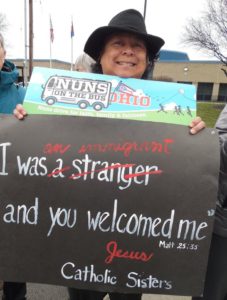
Last weekend I got a real education on the topic of undocumented immigrants while visiting my daughter in Cincinnati. We attended a presentation by Nuns on the Bus, a progressive group of Catholic nuns who are social-justice warriors, (I have a soft spot for nuns because I was educated by Dominican sisters.)

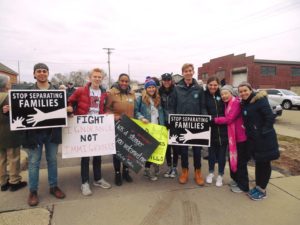
Justice and humane treatment of undocumented immigrants are among the causes the sisters and their supporters fight for.

During this Lenten season it’s worth remembering that Jesus, Mary and Joseph were undocumented immigrants.

Here are a few questions for you to consider:

What would you do if every other night death squads swept through your town randomly kidnapping and killing people?

What if there were no jobs and your children were starving?

What would you do?

I don’t know about you, but if those dangerous situations dominated my home country, I would do everything within my power to escape.

Those are the conditions and choices people in many places around the world face. Their only hope for survival is to leave and become refugees. And yes, some of them come to the United States without documentation because, frankly, getting legal long-term or permanent residency in the United States is next to impossible — unless you’re wealthy or white.

What happens to many of these undocumented immigrants in the United States is heartbreaking.

First, here are a few facts provided by the Intercommunity Justice and Peace Center:

  • There are 11.3 million undocumented immigrants in the United States.
  • 8 million are currently in the workforce (Think they’re stealing jobs from hard-working Americans? Well why don’t you go down to Plant City, Florida, and pick tomatoes from sun up to sun down.)
  • 10.2 million have never been convicted of a crime (that’s 92.5% of undocumented immigrants.

Here’s the real kicker.

These undocumented immigrants, who include children, are being hunted day and night by federal agents.

When caught they are put in prison as though they are murderers and held pending deportation hearings. Some have been held for as long as four years. Many don’t have access to lawyers or anyone to help them.

  • More than 350,000 of them are currently being held behind bars.
  • More than 260,000 of them are being held in private, for profit jails and prisons. (Most of them didn’t steal anything or hurt anyone.)

You see, it’s not really about homeland security, or protecting our borders. It’s about keeping jail beds full, especially in the for-profit jails and prisons.

The private-prison industry has donated millions to Congressional candidates. One private prison company donated $250,000 for Trump’s inaugural celebration festivities.

Ultimately, it’s the taxpayers who take the weight. We’re paying an average of $20,000 a year per undocumented immigrant to keep them locked up.

Nationally the annual detention budget for undocumented immigrants is $2.6 billion of taxpayer dollars.

It’s a money thing. People are getting rich off imprisoning desperate refugees. Don’t take my word for it, click here to read an article reported by National Public Radio.

Somehow, I don’t think that’s what Emma Lazarus had in mind when she wrote the poem inscribed on a plaque at the Statue of Liberty:

“Give me your tired, your poor
Your huddled masses yearning to breathe free
The wretched refuse of your teeming shore
Send these, the homeless, tempest-tossed to me
I lift my lamp beside the golden door!”

Shame on us!

David D. Porter is an Orlando-based writer and the son of an immigrant.

Congress Finally Passes a FY2018 Budget

Congress Finally Passes a FY 2018 Budget

NETWORK Government Relations Team
March 22, 2018

At long last, Congress will pass a bipartisan FY 2018 spending bill that will send communities across the country much anticipated resources. This legislation is six months overdue, and Congress should be ashamed. That being said, while it is not perfect, the FY 2018 consolidated appropriations measure contains robust investments in vital safety net programs.

Many of NETWORK’s Mend the Gap issues were among the programs that fared well. The spending measure significantly boosts funding for the 2020 Census, low-income housing, as well as healthcare for seniors, children, and people who are disabled. Investing in safety-net programs is paramount to ensuring the common good.

We are disappointed that Congress did not muster the courage to include a permanent fix for more than 800,000 DACA recipients. That being said, we know the Trump Administration wanted – and failed – to expand their mass deportation agenda. NETWORK continues to support our champions in the House and Senate for their unwavering commitment to protect Dreamers and their families from harmful attempts to tear apart families.

All of us at NETWORK Lobby for Catholic Social Justice look forward to working with Congress throughout the FY 2019 appropriations process to ensure passage of a Faithful Budget.  It’s our hope that Congress will turn a new leaf and set aside petty partisanship in order to complete its work on time.

Below is a detailed look at how the omnibus bill affects NETWORK’s Mend the Gap priorities:

Department of Agriculture

  • Decreases funding for the Supplemental Nutrition Assistance Program (SNAP) by $4.5 billion primarily due to declining enrollments

Department of Commerce

  • Fully funds the 2020 Decennial Census at $2.814 billion, an increase of $1.344 billion above the FY 2017 enacted level

Department of Housing and Urban Development (HUD)

  • Increases the HUD budget by $4.6 billion in additional program funding compared to FY 2017, and more than $12 billion above the president’s FY 2018 request
  • Renews all Housing Choice Vouchers and provides new vouchers to veterans and people with disabilities—the president’s budget request proposed to eliminate 250,000 Housing Choice Vouchers
  • Allocates nearly $1 billion in additional funding to repair and operate public housing
  • Boosts funding for the HOME Investment Partnerships program to the highest level in seven years
  • Does not include any of the rent increases proposed by the president in his FY 2018 budget request

Department of Health and Human Services (HHS)

  • HHS would receive approximately $98.7 billion, an $11.6 billion increase above the FY 2017 enacted level, including $2.6 billion in new funding
  • Tweaks Medicare reimbursement status of several prescription drugs
  • Increases the Child Care Development Block Grant from $2.9 billion in FY 2017 to $5.2 billion in 2018
  • Raises funding for the Low Income Heating Assistance Program by $250 million to $3.6 billion, although the Trump administration requested elimination of the program for the second year in a row
  • Fails to stabilize the health insurance market by providing subsidy payments to insurers and allowing states to develop more flexible insurance requirements

Department of Homeland Security

  • $1.6 billion as down payment for border wall construction and to make repairs of existing fencing structure
  • Scales back on detention beds: includes 40,520 beds with a glide path down to 39,324 by the end of the fiscal year, a decrease of 12,055 from the FY 2017 enacted level.
  • Freezes number of ICE agents at FY 2017 level
  • Cuts Homeland Security Investigations agents from 150 down to 65

Department of Labor

  • Prevents the Trump administration from carrying out a controversial rule that might have resulted in employers of tipped workers restricting how the tips were distributed
  • Increases funding for employment and training services to $3.5 billion, compared to $3.3 billion in FY 2017

Returning to Others This Lent

Returning to Others This Lent

Mary Cunningham
March 22, 2018

“Even now,” declares the LORD, “return to me with all your heart, with fasting and weeping and mourning.” – Joel 2:12

I have always been struck by the phrase “return to me” in Joel. In fact, I worked on a Lenten reflection guide during college bearing that very name. And yet, it was not until this year that I started to grapple with what the phrase really means and how it applies to me personally. Perhaps by working so closely on a project called “Return to Me” I felt I already fully understood the phrase, giving myself a pass to engage more deeply.

I tend to think of Lent as a personal practice, a way to evaluate my own faith life and identify where I can do better. While this is certainly important in returning to God, this Lenten season, that phrase took on a new meaning for me. As I began my Lenten practice, I realized that returning to God does not just mean focusing on my own prayer life; it also means returning to others.

I moved to Washington, D.C. at a pivotal moment in our nation’s history: a new president was elected who has a blatant disregard for the poor and marginalized. We were in new and unchartered territory. Now, working at a lobbying organization, I am often overwhelmed by the deluge of bad news. I constantly question if the work I am doing is making a concrete difference. At the same time, I’ve never felt like I was in a better position to change things.

This year at NETWORK one of my responsibilities was researching and compiling our Lenten resource on 21st Century Poverty. Working on this guide, I realized the importance of being both a witness to the suffering in our world and present to my neighbors. This takes place on both a small and large scale. Who are the people I interact with every day who might silently be suffering? And who are the people that I may not see every day, but who struggle from food insecurity, lack of housing, or low wages that keep them in poverty? I realize that I cannot complete alleviate anyone’s suffering, but I can be more attuned to it and help by asking myself, where can I return to others?

For me, Lent is coming to God, in my own brokenness and in my sadness at the brokenness of the world. In doing so, I am able to see where I can invest my energy and return to others. Then, the approach of Easter brings a promise of spring and new life for the world, where by returning to our neighbors, we return to God.


The Acute Need for an Accurate Census

The Acute Need for an Accurate Census

Mary Cunningham
March 19, 2018

With the 2020 Census rapidly approaching, it is important to consider exactly what is at stake. Although the census is not a process which typically figures into the public consciousness, the information we obtain from it is vital. Census data is used, among other things, to determine the distribution of federal funds for healthcare, housing, infrastructure programs and more.  An accurate census is sorely needed to ensure communities –particularly marginalized communities–receive their fair share of resources.

There is a plethora of programs that depend on census data to determine funding distribution. During fiscal year 2015, 132 programs used Census Bureau data to allocate $675 billion to communities across the United States. These programs included: Medicaid, the Supplemental Nutrition Assistance Program (SNAP), the Section 8 Housing Choice Voucher, the Section 8 Housing Assistance Payment Program, the School Breakfast Program, the State Children’s Health Insurance Program, Low-Income Home Energy Assistance, Highway Planning and Construction and others.[1] In order to distribute funds, these programs rely on a variety of datasets such as Population Estimates, Poverty Guidelines, Per Capita Income and more. Without an accurate census count, states may not only receive inadequate funds, but they also may experience lower reimbursement rates for expenses accrued from the programs.[2]

If there is an undercount, areas that need funding the most will not get the resources they need. This is now an issue of particular concern due to a new citizenship question introduced by the Department of Justice that is currently under consideration. The Justice Department is requesting the census ask participants to indicate their citizenship status on the questionnaire. This is highly intimidating for immigrants who are already feeling vulnerable in the current political climate. They may fear that an honest answer would expose them or their families to deportation despite the fact that census data is anonymous and protected information.

The decennial census survey has always counted both citizens and noncitizens. In fact, the Constitution calls for a census which accounts for the “whole number of persons in each State” (14th Amendment, Section 2), not just citizens. Adding this question threatens to undermine efforts to gather a fair and accurate count by dissuading immigrants from participating. This could have a severe effect on Latino communities in particular.  This potential citizenship question, along with anti-immigrant language and increased ICE funding by the Trump Administration, together creates an environment of heightened anxiety and mistrust towards the census.[3]

What is there to take away from all of this? That participation in the 2020 census is vital! An accurate census, which includes members of the immigrant community, will ensure proper funding to communities in need and proper apportionment of seats in the U.S. House of Representatives. Everyone counts and everyone should be counted! Let’s make sure everyone gets their fair share for the next 10 years and beyond.

[1] https://www2.census.gov/programs-surveys/decennial/2020/program-management/working-papers/Uses-of-Census-Bureau-Data-in-Federal-Funds-Distribution.pdf

[2] https://gwipp.gwu.edu/counting-dollars-role-decennial-census-geographic-distribution-federal-funds

[3] https://www.salon.com/2018/02/25/why-the-2020-census-should-not-ask-about-your-citizenship-status_partner/

Revisiting the History of Irish American Progressives

Revisiting the History of Irish American Progressives

Timothy Meagher
March 16, 2018

On this St. Patrick’s Day, when Republicans in Congress named Ryan and McCarthy mutter darkly about the corruption of the poor by big government, it is important to remember that for most of their history in America, most men and women with such names, Irish Catholics, embraced government and what it could do for them and others.  It was not because Irish American Catholics were unwilling to work hard, they were; or to live frugally, and put money in the bank, they did.  Yet as a people so poor, with no useful skills or capital, and confronting discrimination in the private marketplace (“No Irish need Apply”)  work and frugality alone  were often not enough for them to survive, much less prosper in America.  Private philanthropies, run by hostile elites, offered them little help: only “charity scrimped and iced,” as John Boyle O’Reilly, the editor of the Boston Pilot, wrote, “in the name of a cautious, statistical Christ.” Empowered by their voting numbers, many Irish American Catholics thus looked to government for jobs, and pushed politicians to provide the small services they needed to tide them over crises: coal in the winter; a place to live after a fire.

By the 1890s, however, as the second major depression in twenty years rocked the American economy, immigration escalated into the tens of millions, and festering slums spread throughout cities, politicians’ petty handouts and charities’ cautious penny pinching was no longer enough.  Reformers, bearing the new name “Progressives,” began to insist that the government address the problems of workers and the poor. These Progressives are often described as enlightened middle or upper class, WASP women and men awakening to the crises of the city.  Many of them were, but Irish American Catholic people and politicians became involved in this struggle too.  Newly powerful Irish American Catholic representatives in the New York New Jersey, Massachusetts, and Illinois legislatures fought for causes such as: a minimum wage, worker’s compensation, factory safety, and public housing.  In Oregon, Irish American Catholic settlement worker, Caroline Gleason, teamed with Fr. Vincent O’Hara to pass a minimum wage and maximum hours law for working women, the first in the country.  Meanwhile Irish Catholic women like Mary Shinnick and Elizabeth Moloney were in the forefront of fights for “mothers’ pensions” in Illinois and Massachusetts.

Twenty years later, more than fifty Irish American Catholics served in the House of Representatives at the high point of the New Deal and the vast majority consistently delivered strong support for the Roosevelt administration’s government relief, social security, public housing, and federal minimum wage legislation.  Meanwhile, veterans of Catholic Charities services, Jane Hoey and Mary Irene Atkinson worked in the Roosevelt administration, as Head of the Bureau of Public Assistance and Director of Child Welfare services respectively

This tradition would not end in the 1930s, but has endured among many to our own time.  It has drawn inspiration from Catholic Social Justice, from people like Monsignor John A. Ryan, for example, called “the Father of the Minimum Wage,” and from common good and anti-aristocratic themes in American and Irish republicanism.  For the most part, however, Irish American Catholics eschewed theories of left or right.  They were looking for practical solutions to concrete needs.  They had no fear that government help would somehow sap their commitment to work or self-improvement, but they could remember when a government’s failure had left a million of their relatives dead on the hillsides of a Famine-stricken Ireland.  They saw no reason, then, why a democratic government like the United States, should not help its people when they were in need.

Peacebuilding in Polarized Times

Peacebuilding in Polarized Times

Claire Guinta
March 15, 2018

In February, Sister Simone came to Marquette University to speak about “21st Century Poverty and the Challenge of Healing Our Nation.” Hearing about current divisions in our country, it struck me how connected polarization is to the isolation between different economic groups and the assumptions we make of “the other.”

During her talk I thought of isolation I see around me. I am a senior at Marquette, a Jesuit University that “strives to develop men and women who will dedicate their lives to the service of others, actively entering into the struggle for a more just society.” Yet, through perceptions of poverty and violence, there is often an “othering” of those who live in the Milwaukee neighborhoods directly surrounding my campus. These assumptions create barriers between us in the “bubble” and those living just a few blocks away.

“Individualism and polarization are driving us apart because we don’t know each other’s stories,” Sister Simone Shared, “And we don’t see this. So, what do we do?”

She proposed four simple ways each of us can be a part of revitalizing community and reclaiming hope:

  • Virtue of curiosity: Have a holy curiosity to build community with folks we don’t know. Listen to other people’s stories.
  • Virtue of sacred gossip: Share those stories that you discovered. It brings us together and spreads knowledge.
  • Virtue of joy: Joy is in the relationship, joy is in the discovery, joy is in being woven together in community.
  • Virtue of doing your part: Don’t try to do it all—we are all one part of the body.

Through my own journey I have seen how these virtues can transform an individual and a community. As a research assistant with the Marquette University Center for Peacemaking, I went door-knocking in the neighborhoods surrounding campus to collect survey data used to inform community initiatives. My first day door-knocking, I stepped onto the streets that had been described like the “shadowland from the Lion King.” I wrestled with that image in my head and tried to leave my assumptions behind. Quickly, I realized that the neighborhoods surrounding my campus were home to a diverse group of people (racially, economically, religiously, culturally). People were excited to share their opinions about their community and ready to see new community initiatives. When Sister Simone said that “hope is a communal virtue,” I thought of the people I met door-knocking.

When I returned to campus, I shared the survey results with the data team, but I also shared their stories with my friends. I found joy in making the connection with the neighborhood residents, but also in sharing what I had learned. It didn’t solve any headlining issues, but I was a part of a team working to revitalize a community. By making connections with “the other,” my assumptions faded away and were replaced by stories.

So, when I approach peacebuilding in these polarized times, I will be sure to have some holy curiosity, engage in sacred gossip, practice the virtue of joy, and seek out how I fit in to the greater picture.

Glaire Guinta is a senior at Marquette University in Milwaukee, Wisconsin where she studies International Affairs, Spanish, and Peace Studies. Throughout her university career, Claire has been involved in various activities supporting immigrants and refugees, including trips to the borderlands and providing interpretation services in Milwaukee. She currently works at the Marquette University Center for Peacemaking.

A Muslim and Black Woman in the Workplace

A Muslim and Black Woman in the Workplace

Aichetou Waiga
March 12, 2018

It was Saturday afternoon and I was well into my weekend routine of pajamas and catching up on my favorite daytime talk shows on YouTube. The day’s topic of discussion? A recent question posed by The New York Times: “Should you be yourself in the workplace?” I chuckled the moment I heard the question. I’ve never dedicated time to reflect on it, but it was already deeply rooted in me and in most women of color: being yourself in the workplace is simply not an option.

I know it may seem ridiculous to write about racial identity in the workplace in 2018, in a supposedly progressive America where more and more companies are celebrating and embracing diversity. However, I find that diversity in the workplace typically means a two-hour conference on race that leaves white people nervous to offend anyone, and people of color feeling dissatisfied. Diversity is much more complex than that; it should be a long-term commitment to hold people accountable for the ways company cultures lead to a lot of discomfort for the one-in-twenty person of color on the team. We could have endless conversations about what’s offensive and what to avoid saying, but the truth of the matter is that I can’t run to management every time a coworker says something inappropriate or offensive to me; I’d literally never get anything done. Furthermore, I don’t want to reinforce the stereotype of the “angry Black woman.”

I wasn’t always so wise though. I was under the impression that workplaces who value diversity would also want diversity of thought. I thought my disdain for Trump would be appreciated, if not celebrated. I thought my mourning of Philando and Trayvon would be understood. But that was not the case. Instead, I was summoned to a meeting with managers who were confused at the idea that someone would want to be themselves–that a person of color would be so bold as to carry their political views and emotions to their desk.  I was equally baffled that a company that celebrated diversity and wanted people of color as part of their culture would expect their workers to be “normal” when something so tragic happens within my community.

That was my awakening. No matter how much a company celebrates diversity, Black women must still water down our identities. These companies want us to be ourselves just enough to add some color, (and to be able to say 6.4% of their employees are African-American) but not so much that white people get uncomfortable. We as Black women have to master the art of code-switching, of learning to speak office language so as not to be deemed “ratchet” or unprofessional. We must know whiteness so well so we can be delicate with it. I find that white women—not all, but many — have mastered the art of crying wolf. As with many other aspects of my life, this is of course deeply rooted in slavery. White women have always been deemed more feminine, and therefore needing more protection from the dangerous Blacks. It’s no surprise that the aftermath of this can still be seen in our daily lives today.

My Muslim identity adds another layer of complexity, so I’ve also learned to hide that as well. For the first week or so at a new position, I always wear a turban, as opposed to my traditional hijab. I do not know how to explain this except that people of color know that everything we do must consider white people’s comfort. Everything I say, wear, and express must be white-washed enough to let white people into my world, but not to the point of shoving my identity in their faces. There’s always been this unspoken vibe that my identity is not the default in the workplace (or anywhere in mainstream culture). So I must know just how Black, just how Muslim, just how feminine I can be in public spaces without further perpetuating the stereotypes associated with these identities.

Black women must show up to work every day knowing that everything we do will be associated with our race. We show up to work knowing that our performance will be used, for better or for worse, in the hiring process of future candidates of color. We come to work every day knowing that we must be someone else for the next eight hours. Being our authentic selves is a privilege most of us will never experience at work.

Aichetou Waiga is a recent college graduate with a B.S. degree in Biology, Spanish and Peace and Justice studies. She is originally from Mauritania, West Africa, but has been living in the U.S. since 2007. She was recently accepted into Ohio University School of Medicine and aspires to be an OB/GYN and work with underrepresented women around the world. Before then, Aichetou is taking advantage of her time off from school by indulging in her hobbies which include her YouTube Channel (Bintou Waiga), reading, traveling and writing for her blog.