

Category Archives: Spirit Filled Network

Mom Taught Me: To Love Your Neighbor Is To Suffer For Them

Mom Taught Me: To Love Your Neighbor Is To Suffer For Them

Deacon Art Miller
February 14, 2022

“I wanted to talk to you over dinner tonight. There’s something very important that your dad and I are going to require of you.”

This was not the normal dinner banter my family and I had at the dinner table back in 1957. My brothers and I – aged 9, 11, and 13 – normally fought over who would get the best piece of whatever we were having that night, playfully teasing one another as our 18-year-old sister Carol dismissed us with sisterly disdain.
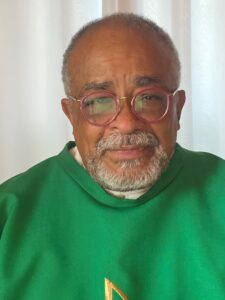
Deacon Art Miller is a permanent deacon of the Archdiocese of Hartford, Connecticut.

After a glowering look from our father, Mom continued: “There’s a country in Africa, called South Africa that has a system of governing the people that is horrible and evil. It’s called apartheid. It means to separate. They require that their Negro citizens carry passes with them at all times. These passes are so they can make sure the Negro people don’t go anywhere they are not supposed to go. The Black people have no rights. They can’t vote. They are put in jail and are treated very poorly.”

My older brother Pete, whose friend and classmate at McCosh Elementary School was Emmett Till, was suddenly quiet.

He found his voice and whispered; “That sounds a lot like Mississippi.”

Mom responded; “Yes, it does. That’s one of the reasons we in this family, are going to protest, like they are doing in the South. There’s a company here in America that’s helping the South African government create these passes. The name of the company is Polaroid. They make a camera that makes a picture instantly. So the government of South Africa is buying these cameras to make it easier to create those dreadful passes. So we are not going to allow anyone to bring a Polaroid camera into our home. We will not buy one, and we don’t want anyone to take your picture with one. Do you understand?”

We all quickly agreed with the family mandate.

Mom was rarely so severe. She was an elegant woman, profoundly intelligent and deliberate, but always gentle in her approach to our learning. We knew she was very, very serious. Even Dad was quiet, almost bowing his head in deference to her passion.

I looked up to see a most remarkable thing, rare for a man who was as impassionate as she was passionate. He reached out and touched her hand, very gently. Almost startled by the gesture, Mom smiled at him. He returned the smile and removed his hand from hers. With that it was done. Polaroid Corporation had lost a customer.

That company would never know that a Black family in a little third floor apartment on the south side of Chicago had taken a stand against a horrid injustice. The South African government, more than 8,000 miles away, had no idea nor could it care that this little family had stood up against its ungodly tyranny. But we did. We knew.

That night I learned what social justice truly meant. We learned there was a new and important way to love your neighbor, even if you didn’t know them. Even if you had never met them, they were still your neighbor. We learned on that long ago night that to love your neighbor was to suffer for them.

This idea of deep love was embodied by our mother. She was a friend to Mamie Till-Mobley, Emmett’s mother. We prayed for her and Emmett when all the terrible things happened. The women in the neighborhood had brought food and comfort to Ms. Mobley during those days of torment.

Mom particularly embraced our Catholic faith as a safe harbor during that time, where she found the comfort only God can provide. In every difficult moment we faced, her faith got us through. We, that small family from the south side of Chicago, learned well the tenets of our faith, that faith is never restricted to the Sunday morning Mass.

Our faith is not static but transportable. We are to apply our faith to the moments we live outside the building we call church. For we are the church, we are where the deposit of faith is to be made manifest. We are the church that lives in the world which breaks down anger and injects love, which enables generosity to overcome selfishness, which causes humility to be more important than pride.

The church lives as long as our faith lives.

Deacon Art Miller is a permanent deacon of the Archdiocese of Hartford and former head of the archdiocese’s Office for Black Catholic Ministries, which has since closed.

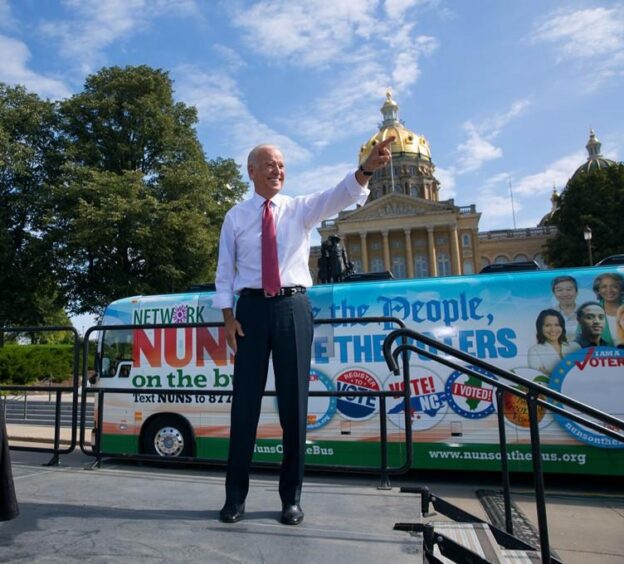
Let Us Dream: January Community Conversation

Let Us Dream: January Community Conversation

Virginia Schilder
February 9, 2022

On Thursday, January 27, members of the NETWORK community joined together for our first Community Conversation of 2022. The theme was: “Let us Dream — Reflecting on 2021; Dreaming about 2022 and Beyond.”

The evening’s topic was inspired by Pope Francis’ book, Let Us Dream: The Path to a Better Future. NETWORK Executive Director Mary Novak welcomed community members, saying, “This is the time of year to remember and dream. And it is a sacred gift to do it in community.”

The facilitator for our conversation, Colin Longmore, NETWORK Grassroots Outreach and Education Specialist, spoke with excitement about the possibilities for the upcoming year of advocacy. He described the intention of this conversation as a space to look back on the year behind us and to dream together about the year ahead — to connect what we’ve learned to our hopes and our goals.

Colin explained that while NETWORK community conversations usually feature a guest speaker or a presentation from a NETWORK staff member, for this conversation, the community was the “featured speaker.”

The reflective element of this community conversation aligned with the emphasis on learning and deep listening that characterizes the synod on synodality launched by Pope Francis last year. It also parallels the reflection that NETWORK is undertaking as we celebrate our 50th anniversary, thinking intentionally about who we are and where we came from so that we can work toward our future with clarity. As Mary Novak said, “Our quest to the future must begin with remembering.” And this remembering, in particular, entails examining the consequences of being founded as a predominantly white organization, and how NETWORK lives out its commitment to racial justice in our political ministry today.

The instructions for discussion were simple yet bold: “Dream big and dream detailed!” We broke into small groups to discuss the questions: What were your top three learnings of 2021, and what are your top three hopes for 2022? Together we responded to these questions across personal, local, and societal levels.

In our discussion, a major “learning of 2021” was a realization of the fragility of our democracy, and the grave effects and injustice of voter suppression. Another common learning was a more acute understanding that our pandemic response must not be an attempt to “go back to normal” — because “normal,” in the United States, means inequality. Several community members expressed finding Catholic Sisters and the work of groups like NETWORK to be a source of courage and fortitude throughout the tumult of 2021.

As we turned to our dreams for 2022, community members shared hopes of ending voter suppression, advancing racial justice, combating polarization, and promoting environmental justice. We voiced hopes for the passage of legislation like Build Back Better, and that more people in our country will join in working to create a truly just, multiracial society. Many expressed a hopefulness found in the engagement of younger generations and the example of Catholic Sisters.

This community conversation was rooted in a belief in the transformative political power of dreaming and of articulating visions in community. As Fr. Brian Massingale writes in his book Racial Justice and the Catholic Church,

“Visions illumine possibilities that are overlooked, paths not taken, potentials that lie dormant, and capacities not yet developed. Visions spring from and fuel the nonrational centers of the human person from which come the courage, fortitude, and determination needed to engage and persevere in protracted struggles against injustice. … We will never get our theorizing about justice right, nor truly understand African American praxis for justice, without some account of the power of vision, in particular, the visions of the welcome table and the Beloved Community.”

In sharing our learnings as well as our dreams and visions at our “welcome table,” we named and offered one another our vulnerability and laments as well as our resilience and hopes. Sharing our dreams in community is not only the ground of justice work; it also serves as an important and refreshing time of connection and relationship-building. (Some members of my small discussion group delighted as they learned that they have a mutual friend!)

Our first Community Conversation of 2022 grounded us in a reflection of the past year and sent us into the year ahead with renewed resolve. This resolve emerged from an uplifting community of solidarity, shared vision, and collective discernment. The community member who spoke last in our conversation captured the spirit of the evening when she expressed a commitment to becoming more involved with NETWORK — because, as she said, working to change our hearts and enact a vision of justice is up to all of us. “The invitation is to do this together… to let go of those boxes we put people in. There is a role for all of us!”

A Catholic President at One Year

A Catholic President at One Year

Mary J. Novak
January 20, 2022

In January 2021, NETWORK celebrated the historic inauguration of the United States’ second Catholic President and first female Vice President “heartened by the administration’s focus on racial equity and economic justice.” Let us take a closer look at how their leadership has lived up to our values of Catholic Social Justice.

The first year of the Biden administration has largely been a series of responses to the crises that surfaced during the previous administration. These included the COVID-19 pandemic and subsequent economic downturn, racist policies enacted at the U.S.-Mexico border, and growing distrust in our elections, which has led to the passage of restrictive voting legislation across the country.

In March 2021, President Biden signed the American Rescue Plan – a $1.9 trillion COVID relief package – into law. It provided relief to families in the form of healthcare, rental assistance, housing vouchers, access to food programs, and other benefits. It also expanded Child Tax Credit payments and made the credit fully refundable, meaning that families most struggling from poverty had access to monthly payments of cash through December of last year.

The expansion of the Child Tax Credit in the American Rescue Plan was an incredible achievement, providing millions of families funds that they used for necessities including housing, food, clothing, utilities, and education, and living up to NETWORK’s values of supporting families’ economic security. However, if the credit’s refundability is allowed to expire this March, 65 million kids will pay the price.

The passage of the Infrastructure Investment and Jobs Act last November – with its investments in broadband internet, climate-friendly public transit, and clean water –  was an important step toward building our country anew. Unfortunately, the Build Back Better Act – the administration’s landmark proposal to invest our nation’s families and communities – has stalled in the Senate. So have efforts to protect voting rights, which President Biden said should be passed even if it required a Senate rules change in the form of altering or eliminating the filibuster. Given the filibuster’s racist history, NETWORK fully supports this call.

A major disappointment for the NETWORK community has been President Biden’s failure to roll back the previous administration’s cruel and xenophobic border policies: the Migrant Protection Protocols and the misuse of Title 42. Under these measures and in violation of international law, asylum seekers are either expelled from the U.S. without being allowed to claim asylum or being turned away and told to wait in Mexico while they await their pending court dates. Both of these policies are resulting in assaults and significant harm against our siblings seeking asylum.

In solidarity with migrant-led organizations, President Biden’s continuation of these unjust border policies brought over 80 Catholic Sisters to Washington in early December to process prayerfully past the White House to protest these policies. In 2022, President Biden must significantly shift his administration’s border policies to align with our faith teaching to “love our neighbor.”

Every year of our 50-year existence, NETWORK has analyzed the voting records of Members of Congress, but we have never reflected on one year of a Catholic president’s administration. This is certainly a significant milestone for Catholic justice-seekers, even as the lived reality has included both progress and setbacks for our justice agenda.

President Biden has credited Jesuits and Catholic Sisters with keeping him Catholic, and he has taken office at a time when the vision of a Jesuit – Pope Francis – and the witness of Catholic Sisters offer him a roadmap to rebuilding solidarity, based in encounter. NETWORK advocates for policies that center people who have been pushed to the margins by our systems and structures. And Pope Francis calls us, individually and at the structural level, to seek out, encounter, and integrate those living on the periphery.

Joe Biden is the son of a working class Catholic family who prides himself on remembering his roots. The clear moral measure for his administration going forward is whether it has prioritized the struggles of individuals and families over powerful interests, whether at the border, the ballot box, or simply their day-to-day efforts to stay safe and healthy.

Transforming our politics from a system that upholds the status quo to one that honors the dignity of every person requires dismantling systemic racism, cultivating inclusive communities, and rooting our economy in solidarity. One year into the Biden administration, we can see with greater clarity than ever just how daunting these challenges are and how much work we have to do. We call on President Biden to join us in this necessary transformation.

Christians Should Honor Dr. King With United Witness on Voting Rights

Christians Should Honor Dr. King With United Witness on Voting Rights

Minister Christian Watkins
January 17, 2022

With Rev. Dr. Martin Luther King Jr.’s son calling for “No celebration without legislation,” the milestone of Dr. Martin Luther King Jr. Day resonates differently this year. Never in recent memory have voting rights been so hotly at the center of our country’s policy debate. The Senate has a historic opportunity to restore our democracy and protect our right to vote by passing the Freedom to Vote Act, and the John Lewis Voting Rights Advancement Act, which have now been combined into one bill, H.R.5746. We need immediate action to protect our democracy.

In his 1957 speech “Give Us the Ballot,” Rev. Dr. Martin Luther King, Jr. called the denial of the sacred right to vote “a tragic betrayal of the highest mandates of our democratic tradition.” With the passage of 34 laws restricting access to voting in 19 states across the country last year, this tragic betrayal is becoming a reality.

In the Senate, the filibuster has been used to block popular bills to stop lynching, end poll taxes, and fight workplace discrimination. The weaponization of the filibuster is racism cloaked in procedure. Now, this Jim Crow-relic is being used to block crucial voting rights protections. Today, Dr. King’s family is joining with faith leaders, civil rights leaders, and voting rights advocates to call on the Senate to end the filibuster and deliver on legislation that protects the right to vote.

This is a crucial moment for people of faith to come together around this issue, and it couldn’t be more apt. January 18-25 is the Week of Prayer for Christian Unity, an annual observance among Christians who want to see their collective witness in the world live up to the prayer of Jesus in John’s Gospel, “that they all may be one” (John 17:21). For over a century, this has primarily taken the form of theologians gathering to dialogue about issues that divide one church denomination from another — and in many cases finding commonalities and ways to bridge these divides.

But equally important is the pursuit Christian unity through what some call a “dialogue of service,” a shared witness to build up the common good. The commitment to upholding human dignity through the right to vote – and, , the election of leaders who will enact policies that build up the common good as Dr. King rightly pointed out – is something that should draw Christians across denominational lines very close together. Indeed, simply collaborating with my coworkers at NETWORK finds me, a United Methodist, working alongside a Catholic Sister and Presbyterian organizer to push Congress to protect the right to vote.

Now is the time to pass the H.R. 5746, the Freedom to Vote: John R. Lewis Act, a transformative piece of legislation that sets national standards to increase access to the ballot box, neutralizes partisan and racial gerrymandering, protects our elections from interference, increases transparency in campaign finance to prevent dark money from buying our politicians, and more. Unfortunately, this bill is at risk of being blocked by the filibuster. These anti-democratic efforts cannot be allowed to sabotage passage of robust voting rights legislation.

Why Catholics Should Be Actively Engaged in Efforts to Protect Our Democracy

Why Catholics Should Be Actively Engaged in Efforts to Protect Our Democracy

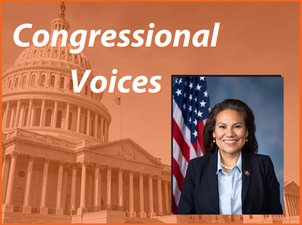
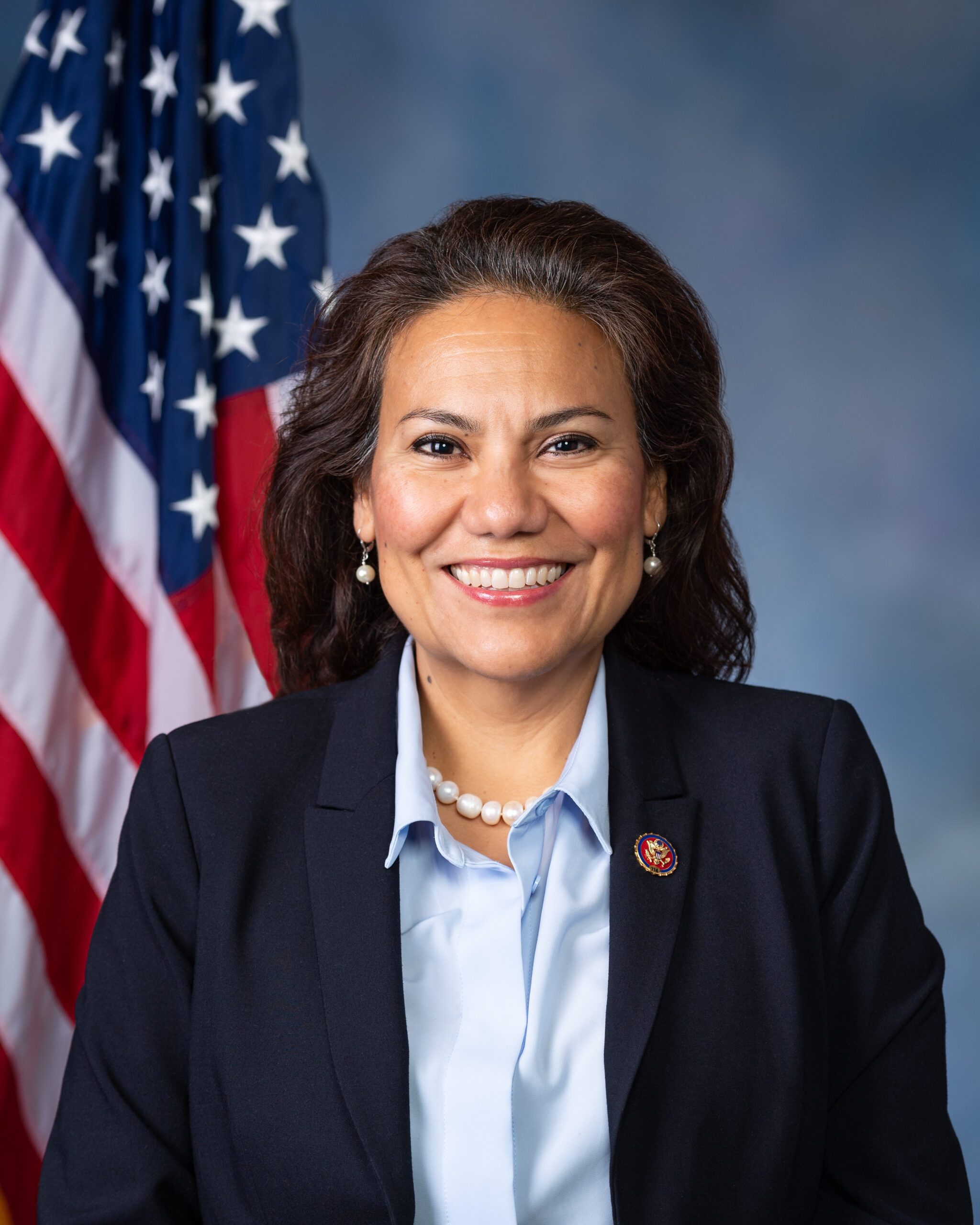
Congresswoman Veronica Escobar
January 6, 2022

Rep. Veronica Escobar represents Texas’ 16th Congressional District. She took office on January 3, 2019, making history as the first woman elected to this seat. This reflection appears in the First Quarter 2022 issue of Connection magazine, NETWORK’s official member publication.

When Catholics think about how they can live out the values of their faith through their politics, protecting their democracy is probably not the first thing that comes to mind. But it should be. Not only does the church support democracy as the form of government best suited to guarantee the protection and flourishing of all people, but people of goodwill have the responsibility to exercise solidarity toward those on the periphery who become the most vulnerable when democracy comes under threat.

Some threats are easier to see. On January 6, 2021, our nation and the world witnessed the most direct assault on U.S. democracy in our history: violent insurgents storming the U.S.

Capitol in an effort to stop me and my colleagues from certifying the 2020 presidential election. Not only were the insurgents trying to upend a Constitutionally mandated process, but they were trying to silence the voices of Black and Latino voters in places like Arizona and Georgia who decided the election for President Joe Biden.

The pushback from Republicans was swift and unmistakable.

Some 17 states, including my state of Texas, enacted restrictive voting laws that disproportionately burden voters of color and limit their access to the ballot box. In November, the Justice Department sued Texas, noting its strict limits on assisting voters at the polls burdens people with disabilities and limited English proficiency. This is just one example of why our country urgently needs the John Lewis Voting Rights Advancement Act and the For the People Act, both of which passed the House in 2021 but have languished in the Senate.

“Democracy is based on mutual respect, on the possibility that each person can contribute to the good of society and on the consideration that different opinions do not threaten the power and security of states, but through honest debate mutually enrich them and enable them to find more suitable solutions to pressing problems,” Pope Francis argued in early 2021.

Shutting people out of the voting process is no way to ensure honest debate, and it’s telling that the lawmakers most adamant on enshrining these restrictions into law are also the ones least serious about finding solutions to the pressing problems mentioned by the pope: climate change, mass migration, and unprecedented economic inequality. Those who benefit from these crises know very well that including the voices of marginalized people in these systems could reduce their power and influence, as it did in 2020.

And it’s this awareness that should galvanize the 70 million Catholics in the U.S. and all people of goodwill to fight alongside those who stand to be the most impacted by the erosion of our democracy. The House of Representatives is doing the work — we sent the John Lewis Voting Rights Advancement Act and the For the People Act to the Senate. We have been patient, we have been willing to work with the Senate, and even supported the Senate-authored Freedom to Vote Act as an alternative to our bills.

But we are running out of time. We must urge the Senate to work for the American people. Whether that means passing the For the People Act or the Freedom to Vote Act, the Senate must act now.

“If one part of the body suffers, then the whole body suffers with it,” St. Paul wrote (1 Cor 12:26). The same applies to threats to democracy. My district is over 83 percent Latino, and we know what it means to have destructive policies inflicted on our communities and families without them ever having a say.

A threat to one person’s voice is a threat to everyone’s. As Pope Francis has reminded us in his teachings on caring for the environment, we are all connected. Women have had the right to vote in this country for only a century, and the original Voting Rights Act passed in 1965 only to be gutted by the Supreme Court nearly 50 years later.

We must take seriously our responsibility to ensure that the rights of all, not just the wealthy and influential few, are protected equally. The Senate and President Biden must pick up where the House left off on voting rights. A democracy that ensures the participation of only the wealthy and powerful is not worthy of its name.


This story will be published in the upcoming First Quarter 2022 issue of Connection. Become a NETWORK member to receive a copy mailed to your home. 

Running from the past is no way to dismantle racism

Running from the past is no way to dismantle racism

Julia Morris
November 23, 2021

Did you know that the Catholic Church was one of the largest slave holders in North America? Me neither.

I have spent over a decade in the church and in countless hours of schooling, Mass, and service projects no one mentioned this to me once. I went to Catholic school for 12 years, 5th grade through college, but it was not until my post-grad Catholic year of service that I learned that the Catholic Church played a role in American slavery.

The private Catholic education system did not just forget to teach me and countless other, predominantly white students about this history. The Catholic Church is and was, running from an uncomfortable past.

The church’s history runs parallel, overlapping, and intertwined with white supremacy United States. The Catholic Church was a major player in the transatlantic slave trade, and the effects of white supremacy are still felt today, as researcher Robert P. Jones reports that white Christians who regularly attend church on Sundays are more likely to hold racial bias.

While the church did not teach me about racism, it did teach me about sins of omission, or leaving out parts of the truth to manipulate your listener. Leaving out parts of our history is lying. If the public education system in the United States was to do the same, it would not only be immoral but contribute to the increasing distrust our citizens have towards our own institutions.

What kind of effects could excluding teaching students about racism have on the American public? Take a look at Catholic politicians.

President Biden was Catholic educated yet he upholds Title 42. A Trump era immigration policy instated under the guise of containing the spread of COVID, which former CDC officials reveal they found no evidence that it would have any control to slow the spread of COVID were “forced to do it”, by the Trump administration. Biden’s choice to uphold Title 42 shows his either lack of care for or his inability to see the policy’s xenophobia.

Senator Joe Manchin is Catholic, in spite of foundational Catholic teachings that uphold the family and caring for children, he still pushed for work requirements for the Child Tax Credit that would benefit 400,000 children in West Virginia. Work requirements are a well-known dog whistle aimed at demonizing Black and Brown folks living in poverty.

Lets face it: This is a lose, lose, lose situation. Pandering to racists doesn’t help advance good policy. Refusing to reconcile is hurting the church’s numbers. People of color, as usual, are paying the price with food insecurity, facing bigotry, and their lives.

If the Catholic Church is actually serious when it says that racism is an intrinsic evil, then Catholic educators, politicians, and voters are going to need to start acting like it. So take it from me and the 87% of Americans who want this to be taught in schools -– not teaching about racism helps no one.

As Pope and President Meet, A Call for Interconnectedness

As Pope and President Meet, A Call for Interconnectedness

Mary J. Novak
October 28, 2021

Existential threats to the environment, a global refugee crisis, anti-democratic movements at home and abroad, and the COVID-19 pandemic are among the challenges surrounding President Joe Biden’s meeting with Pope Francis on Oct. 29. As collaboration between these two world leaders takes shape, a key to its success will be their both recognizing and then acting upon the interconnectedness of everything that confronts them.

This ability to see interconnection is constitutive to the spirituality of the Catholic sisters whose legacy lives on in the U.S. Church and at NETWORK in particular where it is my honor to continue that legacy. And it is not difficult to see this ability lived out by the pope and the president themselves. Both men are of the same generation. Both came into leadership positions in their 30s, have weathered periods of darkness and were entrusted with power late in life. They share the opportunity to use that power to guide the world toward a much brighter future than is currently being offered and both feel called by God to this role at this time.

Their meeting will be the 31st of its kind, starting with the 1919 meeting of Woodrow Wilson and Benedict XV. But to connect this week’s meeting with a comparable example of a pope and president meeting amidst great upheaval and positioned to build the future anew, we should look to the October 1965 meeting in New York between Paul VI and Lyndon Johnson.

Two months before that meeting, President Johnson signed the Voting Rights Act, offering legal protection to millions of people whose rights were violated by racist laws. The ground lost on this issue in recent years would have once been unthinkable to many well-intentioned white people. But now, as that ugly truth confronts us, we urgently need to protect the right to vote under federal policy with the John Lewis Voting Rights Act.

Two months after the New York meeting, Pope Paul closed the Second Vatican Council and instituted the Synod of Bishops, setting a trajectory of engagement with the world and encounter with people at the peripheries. Communities of women religious were among the most robust adopters of the council’s vision, and Pope Francis ardently pursues it for the whole church to this day.

Biden, himself a proponent of that vision and an ally to women religious, has proposed a formidable economic agenda, reminiscent of LBJ, which seeks to help people where they are, in their everyday struggles. These struggles are worsened by the egregious income and wealth disparity in this country, a fact the Catholic Church rightly condemns. In 1965, the U.S. sought to go to the moon in a shared spirit of scientific exploration. Today billionaires have begun traveling to outer space for fun.

The last time Francis and Biden spent significant time together was the pope’s 2015 visit to the United States, where Francis challenged our country to live up to our own ideals. The same year, Francis published his letter on care for the environment, “Laudato si,” again highlighting the interconnection of all creation. A lot has happened since then, and at times the pope seems to grasp the threats we face more acutely than our own elected officials do.

Shortly before the election of Donald Trump, Francis spoke against building walls and the manipulation of fear, which he said “anaesthetizes us to the sufferings of others, and in the end makes us cruel.” He later noted that those who manipulate fear reject the interconnection of all people and shift blame onto a “non-neighbor.”

These words proved prophetic in heralding the racist immigration policies of the Trump administration. They also highlight why it’s so unacceptable for the Biden administration to have continued Title 42 and other policies that make life even more difficult for people seeking refuge in our country. Disapproval for the president’s handling of immigration is now at 58 percent (Grinnell College National Poll), and it is senseless to allow these cruel policies to jeopardize his entire agenda.

If our Catholic president wants to be a world leader in keeping with the vision of Pope Francis, he should follow the lead of women religious and enact policies that better recognize the interconnected nature of all people, all creation, and the common good. He must ensure the protection of the people most targeted by the anti-democratic forces he denounces. I pray Pope Francis can provide him the spiritual strength and fraternal correction he needs to act on the interconnectedness that we know he sees, making it real for the millions of folks who have been left behind for so long.

Cultivating Inclusive Community during LGBTQIA+ History Month

Cultivating Inclusive Community during LGBTQIA+ History Month

Virginia Schilder
October 25, 2021

One of the four cornerstones of NETWORK’s Build Anew agenda is cultivating inclusive community. This means fostering life-giving relationships – in communities and movements – that recognize our fundamental interrelatedness and the intrinsic dignity and worth of each living being. During LGBTQIA+ History Month this October, we reflect on the long history of LGBTQ+ people who have educated, organized, and lobbied for justice. We also recognize how cultivating inclusive community requires affirming our LGBTQ+ siblings and working to end all dehumanizing structures.

We are called to welcome and honor LGBTQ+ people. LGBTQ+ folks have always been a part of our communities, though their stories have often been obscured. Sister Grace Surdovel, IHM creates space for sharing and uplifting these stories in editing Love Tenderly: Sacred Stories of Lesbian and Queer Religious, a recent anthology of personal essays. The book not only makes visible the experiences of queer Catholics, but is also a work of community-building: centering compassion, vulnerability, solidarity, and hope. The religious in the communion that is this anthology are but one part of the vast body of LGBTQ+ justice-seekers calling us to shape more liberative community today.

While anti-trans legislation has been on the rise, Sister Louisa Derouen, OP has ministered among transgender people for over two decades, spending thousands of hours accompanying folks through experiences with churches, families, and transitions. Sr. Louisa writes, “Transgender people are far more attuned than most of us to the reality that we human beings are a complex, mysterious, body-spirit creation of God, and they want nothing more than to honor that reality… They are part of the body of Christ, and they deserve to be treated as the body of Christ.” Sr. Louisa captures the spirit of cultivating inclusive community: acknowledging everyone – but especially those marginalized by dominant society’s refusal to tolerate human diversity – as indispensable members of the body of Christ.

Father Bryan Massingale is a tremendous example of someone who recognizes that affirming LGBTQ+ people is inseparable from advancing a wider vision of social justice. Fr. Massingale is a Catholic priest and an ethics professor at Fordham University who came out as a gay in 2019. His leadership on racial justice as well as LGBTQ+ inclusion in the Church highlights the intersections of race, gender, sexuality, and Catholicism in the U.S. Fr. Massingale’s witness calls attention to the ways in which our structures of power deny the humanity of Black people, LGBTQ+ folks, and those with intersectional identities.

As Fr. Massingale leads us to understand, embracing queerness is not only about including LGBTQ+ people in community, but also about breaking free of all oppressive and unjust social systems.  As a queer Catholic, I understand my queerness not just as my sexual identity, but as a mode of being that means challenging categories and structures that stifle flourishing, and living into life-affirming ways of relating to myself and others — which is exactly the work of social justice. In this sense, Jesus’ ministry was a beautiful example of queerness as he subverted the gender, family, and social norms of his time in radically just and life-giving ways.

To me, queerness is deeply Catholic, in that it means being attuned to how God made me as a relational being with inherent dignity and capacity to love. It means looking to God’s creation and finding a rich plurality of forms of life — each “fearfully and wonderfully made.” Justice work requires seeing each person in the fullness of their humanity, which requires affirming the varied ways in which humans love and live in authenticity. In my view, queerness is a powerful, creative basis for envisioning alternatives to structures that seek to suppress, homogenize, and limit possibilities for real flourishing and loving relationship.

By their witness and ministry, Sr. Grace, Sr. Louisa, and Fr. Massingale call us to center people and experiences on the margins over ideology in our work for justice. As we strive to enact the Build Anew agenda, let us ensure that our policies — especially in health care, housing, taxes, and workplace and family policy — include and protect members of the LGBTQ+ community and their families.  Let us remember to ground our advocacy work in our encounters with our neighbors, in all their vibrant variety of gender and sexuality. And let us see queerness as a mode of being that invites us to creatively challenge oppressive social structures and imagine new forms of community that truly honor the wondrous diversity of God’s holy creation.