


Category Archives: Spirit Filled Network

NETWORK Lobby invites you to join your Lent 2022 journey with ours. Our weekly Lenten lesson includes reflections and a video series on individual bias and racism and racist policy built into the US tax code

Lent 2022: Lent Calls Us to See Injustice and Build Anew

Lent 2022, Week 3: Lent Calls Us to See Injustice and Build Anew

Now that we’re aware of government discrimination, we may balk at feeling responsible for it. But, we’ve seen it. The discrimination has been laid bare. We can’t unsee the injustice.

View other 2022 Lenten Reflections: Ash Wednesday | Week 1 | Week 2 | Week 4 | Week 5|
Week 6

Meg Olson
March 18, 2022
Watch Tax Justice For All – Week 3 (at the 14 minutes and 24 seconds mark).
This week, we see how wealth and education intersect to impact economic outcomes for our families. Consider how tax codes and laws can cause real harm. We’ve compared current marginal tax rates to those of the 1960’s and have seen how the 1960’s tax schemes contributed to equitable economic prosperity. Today we tolerate a destabilizing stratification of wealth where the ultra-wealthy and wealthy are favored under the tax code. Why should those who earn exponentially more than the rest of us, like CEOS, be exempt from paying their fair share of taxes?

Questions for reflection:

  1. When is a time that I have benefitted from something I didn’t earn?
  2. When I encounter someone who is suffering some misfortune such as poverty, do I assume they somehow deserve it? Does my opinion change based on that person’s race?
  3. What am I prepared to do to ensure that structures in my world are more equitable?

Thank you to NETWORK Grassroots Mobilization team members Sr. Emily TeKolste, SP and Colin Martinez Longmore for leading us through these lessons. We’ll watch more together next week!

View earlier Lenten Reflections: Week 1Week 2Ash Wednesday

When we encounter something unpleasant, we sometimes say we ‘can’t unsee’ that, and residual trauma can linger for years, or even decades. Seeing can change us forever – so it’s important that we do it. When we navigate through life with blinders on, we don’t see the harm we cause, but Lenten repentance relies on clear and honest reflection. Without clarity, how can we achieve true conversion and foster a deeper relationship with Jesus and His Father?

We know that you want to create change that makes life more just. But before we advocate for policies that dismantles systemic racism, we must free ourselves from harmful biases, like the idea that wealth correlates to deservingness. In this Sunday’s Gospel, Jesus underscores this point: “Those eighteen people who were killed when the tower of Siloam fell on them—do you think they were more guilty than everyone else who lived in Jerusalem? By no means!” (Luke 13:4-5). It’s a striking comment on our culture that people are tempted to expect bad things to happen, like drive-by shootings or failing schools, in rougher neighborhoods; and good things to happen, like new single-family homes and dog parks in good neighborhoods.

Federal, state, and local laws have negatively impacted economic progress for Black and Brown people. From post-WWI federal public housing policy, red-lining, and the tax code to the ‘War on Drugs’ and school funding, the dire gap in wealth disparity between white and Black families can be traced to government intervention. A 2015 study by the Federal Reserve Bank of Boston showed that the median net wealth of Boston’s white households is nearly $250,000, while that of Black households is $8. Let that sink in. All Black and Brown people aren’t prevented from wealth-building opportunities like buying a home, contributing to a child’s 529 college savings plan, and saving for retirement. But as the Boston data shows, far too many have been unable to overcome the obstacles of discriminatory lending, housing, and tax policy to live the liberative, dignified life that God wants for ALL OF US.

Now that we’re aware of government discrimination, we may balk at feeling responsible for it. But, we’ve seen it. The discrimination has been laid bare. We can’t unsee the injustice.

Before the COVID-19 pandemic, a market spawned for on demand, short term contracted work. This “gig economy” boomed during the COVID-19 shutdown as services like Lyft, Uber Eats and dog walking were in high demand. The people in these jobs may  provide vital services, but they don’t enjoy wages, benefits and labor protections that traditional employers must provide. A significant portion of gig economy workers are Black, Brown, and immigrants. Their wages are unpredictable and stagnant and they are practically barred from the opportunity to build wealth.

St. Joseph’s feast day is tomorrow. Use his example to see the sacred character of all who seek to make a home for themselves and provide for their families. Consider how what we’ve seen together in the Tax Justice For All resource can help us Build Anew the economic and social structures that are just for all, especially those who struggle to overcome racist policies and laws.

Good and gracious God, as we prepare ourselves to share in the joy of Easter, open our hearts and minds. Help us to see what we would rather not see, especially the suffering caused by the injustice of systemic racism. Help us reflect on these painful realities and see them for what they are. Help us to avoid despair and to move from reflection to action, galvanized by your Spirit. Grant us the courage to speak out and the clarity to cooperate with your grace in building the world anew. Amen. NETWORK Prayer to Move from Reflection to Action

Equal Pay Day: Privilege Should Not Predict Pay

Equal Pay Day: Privilege Should Not Predict Pay 

Gina Kelley
March 15, 2022

This year Equal Pay Day is March 15th, symbolizing how far into the year women have to work to earn what men earned the year before [1]. Women are not a monolith, a woman’s race, assigned gender at birth, ability, or sexuality can widen the gap. Therefore we mark multiple ‘equal pay’ days throughout the year to raise awareness for the persistent gender and racial income gaps that have become the norm.  

May is AAPI Women’s Equal Pay Day, marking the 85 cents Asian American, Native Hawaiian, and Pacific Islander women earn for every dollar a white man does. June and July have LGBTQIA+ and Moms Equal Pay Days respectively. Black Women’s Equal Pay Day is in September marking the 63 cents they earn in comparison to white male counterparts.  

Both Native and Latina equal paydays are in December with Native women earning 60 cents on the dollar and Latina women earning 57 cents. Meaning that Native and Latina women have to work over two years just to earn what a white man earns in one. 

Cents on the dollar can seem abstract. A recent study found that in 2021 the difference in median earnings nationally found that in U.S workers employed full-time last year women earned $10,000 less. This difference in median earnings varied by states with states and territories like Wyoming, Washington, D.C., and Utah having gendered wage disparities of more than $15,000.  

In an even bigger picture, some reports have estimated that women earn over 400,000 dollars less than their male counterparts do over the course of a 40-year period. The total wage differences between men and women on average is more than $799 billion every single year. 

These gender and racial discrepancies are harmful examples of the ways our society undervalues women and communities of color. There are multiple ways labor laws and employment practices create this loss of women’s wages.  

Blatant pay is discrimination is only one of the ways these inequities are formed. Job segregation is a subversive way that women are overrepresented in lower-paying (and often) service-providing industries due to assumptions about the types work different genders are best suited due to an imagined inherent gendered quality. However, compounding on top of job segregation is that across occupations women are most often employed at the lower end of the wage distribution. A powerful example of this is that women make up 52.8% of legal positions in the U.S but only 37.4% of lawyers are women—meaning that women disproportionately occupy lower-paying positions like legal assistants and paralegals.  

NETWORK continues to actively support policies that address economic inequalities. This includes major labor law reform like the Protecting the Right to Organize Act because we know that collective bargaining agreements and implementing standard wage policies are critical steps to closing these gaps for women and people of color. We also know that creating a national paid family and medical leave program is instrumental in making sure women are not punished for the caretaking responsibilities they disproportionately hold. We also support legislation that implements equitable employment practices like the Paycheck Fairness Act, the Schedules That Work Act, and the Part-Time Worker Bill of Rights.  

This Equal Pay Day and this Women’s History Month we have to recognize that labor issues are women’s issues and these issues matter and demand prioritization. Women’s issues require our attention now more than ever and what women need is economic stability and just labor laws.  


1 All studies referenced compare women’s earnings to non-Hispanic white men—even if something more general like “male counterparts” is used. There are also harmful disparities between men of color and white men.  

International Women’s Day: Celebrating NETWORK Foundresses’ Spirit, Wisdom, and Legacy

Celebrating NETWORK Foundresses’ Spirit, Wisdom, and Legacy

March 8, 2021

In honor of International Women’s Day (March 8) and to kick off Catholic Sisters Week (March 8-14), watch NETWORK’s Foundresses tell the story of creating a Catholic, woman-led organization to educate, organize, and lobby for justice in their own words!

Featured in This Video:

NETWORK Foundresses Carol Coston OP, Dr. Mary Hayes SNDdeN, Angela Marie Fitzpatrick OSU, Teresina Grasso SP, Mary Reilly RSM, Marilyn Huegerich OSF, Peggy Neal, Liz Morancy and NETWORK Executive Director Mary J. Novak

NETWORK Lobby invites you to join your Lent 2022 journey with ours. Our weekly Lenten lesson includes reflections and a video series on individual bias and racism and racist policy built into the US tax code

Lent 2022: Lent Calls us To Recognize Our Limits

Lent 2022, Week 2: Lent Calls us To Recognize Our Limits

This Sunday’s Gospel, the Transfiguration, offers a vivid account of the disciples being shown what was hidden from them, the divine reality of Jesus’ identity. We too must strive to recognize the divine in every person and learn to reverence them and their stories in ways that reflect and honor the truth embedded in them. 

View other 2022 Lenten Reflections: Ash Wednesday | Week 1 | Week 3 | Week 4 | Week 5 | Week 6

Sr. Erin Zubal, OSU
March 11, 2022

Watch Tax Justice For All – Week 2 (at 7:47)

In this week’s reflection we’ll explore inequities and racist policies embedded in our tax structures with individual and family scenarios. I encourage you to reflect on financial issues like college savings and student loan debt, and how they impact communities disparately. For instance, student debt and slower income growth are among drivers of the growing racial wealth gap.

More than 84% of college-educated Black households in their 30’s have student debt, up from 35% three decades ago, when today’s Baby Boomers were the same age. The amount of debt has also soared higher. Yet, many older people assume that today’s young adults have the same advantages they did and should have no problem achieving the similar success.

Questions for reflection:

  1. What are privileges I enjoy in my life without fully appreciating it?
  2. When have I avoided seeing or recognizing the suffering of another person?
  3. How does it make me feel, emotionally and physically, to realize the depth of the disadvantage or injustice faced by another person?
  4. What keeps me from recognizing God in every person?

Thank you to NETWORK Grassroots Mobilization team members Sr. Emily TeKolste, SP and Colin Martinez Longmore for leading us through these lessons. We’ll watch more together next week!

Lent calls us to repent

In Lent, God challenges us to let go of pride and recognize our limits and our dependence on the divine. When we fast during Lent, we seek to escape the limits of our experience by being in solidarity with those who go without food and feeling the pain of hunger even briefly. But we also need to recognize the limits of our perspective and life experience in other areas.

When we only experience our own background and its privileges, it’s easy to assume that everyone is like us. In many ways, I had to become a social worker providing direct service in the county jail to realize what I had taken for granted growing up as a middle class white woman in Ohio. Those early years as a social worker, and then as an educator, formed and shaped me to be a better woman religious, social worker, and educator who could name and understand her privilege. Pope Francis preaches integral ecology, which is the recognition that we are all interconnected. This recognition should extend to our neighbors we can’t see. Especially those pushed into the margins in ways we don’t understand and are disadvantaged by our very laws and policies.

Good and gracious God, as we prepare ourselves to share in the joy of Easter, open our hearts and minds. Help us to see what we would rather not see, especially the suffering caused by the injustice of systemic racism. Help us reflect on these painful realities and see them for what they are. Help us to avoid despair and to move from reflection to action, galvanized by your Spirit. Grant us the courage to speak out and the clarity to cooperate with your grace in building the world anew. Amen. NETWORK Prayer to Move from Reflection to Action
NETWORK Lobby invites you to join your Lent 2022 journey with ours. Our weekly Lenten lesson includes reflections and a video series on individual bias and racism and racist policy built into the US tax code

Lent 2022: Lent Calls us to Individual and Communal Repentance

Lent 2022: Lent Calls us to Individual and Communal Repentance

View our Lenten Reflections: Ash Wednesday | Week 1Week 2Week 3 | Week 4 | Week 5

Joan Neal
March 4, 2022

Lent calls us to repentance. It calls us individually and as a community. Sometimes it can be difficult to see our individual failings. Sometimes they’re right in front of us, whether we like it or not. It can be even harder to see our collective failings.

But Robert P. Jones of the Public Religion Research Institute (PRRI) has unearthed and distilled one collective failing that should distress justice-seekers in the United States. Studying public opinion data year after year, he has found that white Christians are consistently more likely than religiously unaffiliated whites to deny the existence of systemic racism.

This disturbing fact is a driving force behind next month’s NETWORK-sponsored event, “White Supremacy and American Christianity,” featuring Dr. Jones, Father Bryan Massingale of Fordham University, and Dr. Marcia Chatelain of Georgetown University.

But as we look forward to that event and prepare ourselves for the joy of the Resurrection at Easter, it is appropriate that we hone our capacity to recognize systemic racism and to be equipped to act in response to it. As writer, activist, and NETWORK board member Leslye Colvin puts it, “We can’t have reconciliation when you are unwilling to do your own work, as painful and difficult as it is for you.”  As Dr. Jones points out, this is work that Christians, particularly white Christians, must do and Lent is an opportune time to do it.

“We can’t have reconciliation when you are unwilling to do your own work, as painful and difficult as it is for you.”  ~Leslye Colvin, writer, activist, and NETWORK board member
So for the next six weeks, we will explore systemic racism in a form truly obscured from our view in a system we take for granted: the U.S. tax code. We will do this by intentionally working our way through the NETWORK resource Tax Justice for All, which pinpoints inequities and racist policies embedded in our tax structures.

While Lent and taxes may seem like an unusual combination, the reality is summed up by comedian and commentator John Oliver: “If you want to do something evil, put it inside something boring.”

And so it’s incumbent on us to learn. If we can’t see it, how can we ever repent and make amends? So I encourage you to watch the introduction to this resource and begin to wrestle with the questions below. To confront systemic racism, we must move from reflection to action. And that begins with understanding this reality.

Watch the Introduction to NETWORK’s Tax Justice For All Experience

Watch the first 7 minutes and 45 seconds of the Tax Justice for All workshop to learn from NETWORK Grassroots Mobilization team members Sr. Emily TeKolste, SP and Colin Martinez Longmore why it is so important to learn about the inequities embedded in the U.S. tax code. Next week, we’ll watch more together!

Questions for reflection:

  • What are privileges I enjoy in my life without fully appreciating it?
  • When have I avoided seeing or recognizing the suffering of another person?
  • How does it make me feel, emotionally and physically, to realize the depth of the disadvantage or injustice faced by another person?
Good and gracious God, as we prepare ourselves to share in the joy of Easter, open our hearts and minds. Help us to see what we would rather not see, especially the suffering caused by the injustice of systemic racism. Help us reflect on these painful realities and see them for what they are. Help us to avoid despair and to move from reflection to action, galvanized by your Spirit. Grant us the courage to speak out and the clarity to cooperate with your grace in building the world anew. Amen. NETWORK Prayer to Move from Reflection to Action
President Biden in front of a microphone

Centering Solidarity and Healing for Our Democracy

Centering Solidarity and Healing for Our Democracy

A Response to President Biden’s 2022 State of the Union
Mary J. Novak
March 3, 2022

President Biden in front of a microphoneIn his 2022 State of the Union, President Joe Biden addressed people across the country who are anxious and weary as Vladimir Putin threatens the use of nuclear force in his quest for more power and the COVID-19 pandemic continues to shatter a sense of normalcy, claiming close to one million lives in this country alone. President Biden named the pain felt by families and recommitted himself to supporting policies that benefit all families and communities. This vision is grounded in his faith, which prioritizes community and solidarity over individualism and greed. He illuminated a path forward for our national community, marked by dismantling long-standing racist policies and building both a vibrant economy that prioritizes shared prosperity and a truly representative, multi-racial democracy.

Shaping an Economy Rooted in Solidarity

In this time of increasing economic stratification, President Biden spoke forcefully about the need to reorient our economy with a new economic vision built on respecting and protecting the rights of workers and putting people over profits. Given rising costs facing families, his statement: “Capitalism without competition isn’t capitalism. It’s exploitation” likely resonated with many listeners. We know that ensuring jobs pay a living wage is one of the most effective ways we can uphold the dignity of work. I appreciated hearing the President’s call to raise the minimum wage and for the Senate to pass the PRO Act to protect workers’ right to unionize.

Building Anew and Protecting the Sacred Right to Vote

President Biden’s commitments to advancing just policies in NETWORK’s Build Anew policy areas are deeply rooted in the faith values of solidarity, community, respecting the rights of workers, and caring for creation; they include strengthening our democracy and voting rights; making our tax code more just; and, investing in communities by expanding the Child Tax Credit, affordable housing, and healthcare for all. NETWORK strongly supports these efforts to build a more justice union and looks forward to partnering with the Biden administration to achieve these goals. Together, we still have a great amount of work to be done, including passing the Freedom to Vote Act and the John Lewis Voting Rights Act, but we know it is possible by working together.

Confirming a New Supreme Court Justice

Another important step for protecting the rights of everyone in our county will be the Senate voting to confirm Judge Ketanji Brown Jackson, President Biden’s nominee to the Supreme Court Justice. The NETWORK community celebrates Judge Jackson’s nomination and the perspective she will bring to the highest court because of her years of service on the federal district court of D.C. and D.C. Circuit as well as her formative service as a public defender.

Defending the Lives of Immigrants and Asylum Seekers

While we commend President Biden clear commitments to advancing just policies for our economy and democracy, we continue to call on the President to be bold in his defense of asylum seekers at our nation’s Southern border. The President was mindful in his speech about the importance of welcoming refugees fleeing Ukraine. Likewise, we call on the President to meet that mission here. Pope Francis has said each person seeking refuge “has a name, a face and a story, as well as an inalienable right to live in peace and to aspire to a better future.” We ask President Biden to take heed of those words and end the cruel and unjust policies that he is perpetuating at the border, and end detention and deportation.

President Biden, our nation’s second Catholic President, often credits the Jesuits and Catholic Sisters with keeping his faith strong. The vision he laid out in his State of the Union reflects a roadmap to rebuilding solidarity, based in encounter. As President Biden said “We can’t change how divided we’ve been. But we can change how we move forward—on COVID-19 and other issues we must face together.”  If we want to rebuild the soul of the nation, we must rebuild it together, with a broad embrace of our human family.

2022 State of the Union Bingo

2022 State of the Union Bingo

Julia Morris
February 23, 2022

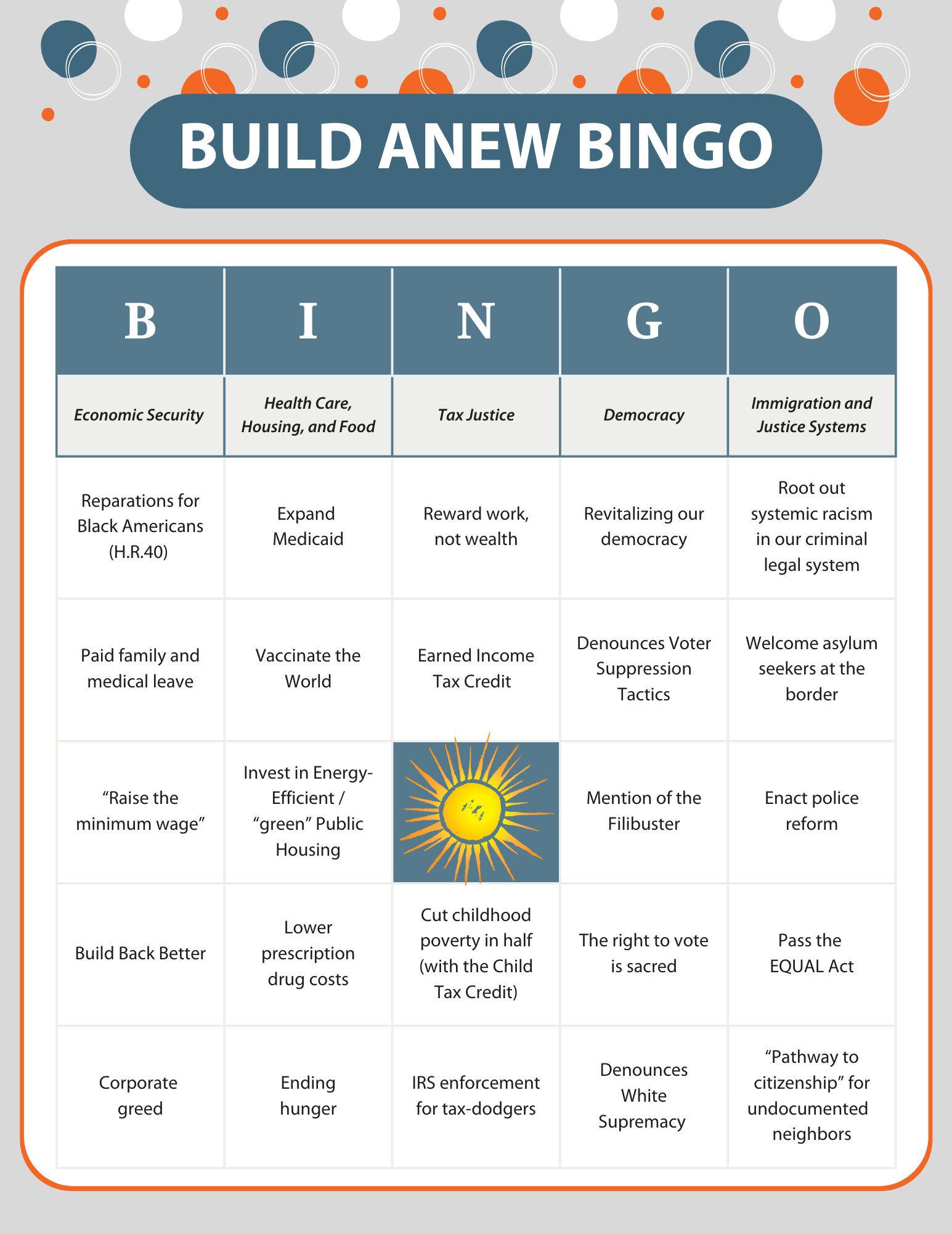
Based on our Build Anew Policy Agenda, we’ve created the #BuildAnew Bingo card to use during President Biden’s first State of the Union address to Congress to see how well the administration lines up with our Build Anew policy areas.

In February 2021, NETWORK introduced Build Anew: A Justice Agenda for All of Us.
This policy agenda is inspired by the principles of Catholic Social Justice and comes from encounter with individuals and families across the United States.

We hope to see President Biden address these important policy areas to work towards Dismantling Systemic Racism, Cultivating Inclusive Community, Rooting Our Economy in Solidarity, and Transforming Our Politics.

Diane Nash: Civil Rights Leader of My Generation

Diane Nash: Civil Rights Leader of My Generation

Nita Clarke
February 25, 2022

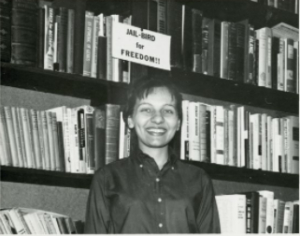
As I watched the evening news with my parents and saw reports on the Civil Rights activities of the early 1960s, human rights activist Diane Nash was coordinating peaceful sit-ins at segregated lunch counters in Nashville, Tennessee. The success of the sit-ins in Tennessee and North Carolina, along with her participation with the Freedom Riders, would bring Nash to the forefront of the student campaign of the Civil Rights Movement and her co-founding of the Student Non-Violent Coordinating Committee (SNCC).

As we stand on the shoulders of those who came before us, we must continue their stride for equality because we have not reached that gateway yet. “Freedom, by definition, is people realizing that they are their own leaders,” Nash said. As a member of my generation, her story resonates with my own and challenges me still.

Diane Nash in Louisville, Kentucky, February 1963, Carl and Anne Braden Papers, WHS

As the product of a military family, living most of my childhood on military bases, I experienced overt racism only when visiting or traveling to my southern roots in Louisiana. Diane Nash was born in 1938 to a middle-class Catholic family and raised in Chicago. “Because I grew up in Chicago, I didn’t have an emotional relationship to segregation. I understood the facts and stories, but there was no an emotional relationship,” she later noted.

Nash chose to attend Howard University in Washington, D.C. but after one year transferred to Fisk University in Nashville, Tennessee, where she would experience the intensity of Jim Crow laws and the efforts of Black people to gain their equal rights. She was furious but used her anger against segregation to become a renowned activist.

While travelling to my tiny hometown of Opelousas, Louisiana, my family met with racism at motels, restaurants, and gas stations as we motored across country from Army Base to Army Base. My parents would trade off driving all night long to avoid having to search for a hotel that welcomed Black people. They also packed lunches in a cooler to avoid trying to find a restaurant that would serve us. When having to stop for gas, we were forced to either use the filthy restrooms for “coloreds” or stopped alongside of the highway while my father stood guard.

“Diane, you’ve gotten in with the wrong people!” Nash’s grandmother said to her about her affiliation with the Civil Rights Movement. But Nash was not only affiliated with the movement, she had become a leader. She encouraged the students in Nashville to protest the segregated lunch counters by sitting peacefully in seats, while being beaten, where paying white customers would usually sit.

The Student Non-Violent Coordinating Committee (SNCC), co-founded by Nash, was also founded in 1960 because of the student sit-ins and became the major channel of participation for the students in the Civil Rights Movement. Members of the SNCC worked closely with other major organizations such as the National Advancement of Colored People (NAACP), the Congress of Racial Equality (CORE), and Martin Luther King’s Southern Christian Leadership Conference (SCLC). Nashville became the first southern city to desegregate lunch counters in the United States.

Nash would meet and marry James Bevel, a Minister as well as a Civil Rights Activist, in 1961. They would have two children. In 1961, Nash was arrested for “contributing to the delinquency of minors,” because she led young people in the fight against segregation. She would be arrested many times including spending 30 days in jail in South Carolina and once while she was six months pregnant.

On May 1, 1961, 13 activists joined together to plan one of the most dangerous challenges to segregation; the Freedom Riders, a non-violent protest designed to end segregation on interstate buses and in bus terminals. The protesters began in Washington and traveled throughout the South on Greyhound and Trailway buses. When the buses were burned and the Freedom Riders beaten by white mobs, the Nashville Student Central Committee was alerted, and Diane Nash led the new group.

Because of the violence that the Freedom Riders were subjected to, Attorney General Robert Kennedy objected to the protests and had his assistant, John Seigenthaler, speak to Nash directly. Nash explained that the Freedom Riders were well aware of the dangers they faced and had even written their wills, in case they died on one of the rides, and given them to Nash.

In 1963, after the bombing of the church in Birmingham, Alabama, and the death of four little girls, Diane Nash and her husband took on the issue of voting rights. Nash was also a member of the committee that promoted the passage of the Civil Rights Act of 1964. Today, at 83 years of age, Nash still advocates for fair housing in Chicago, where she works in real estate. All of these issues are still with and demand our urgent attention and participation today.

Nita Clarke is a Black Catholic writer who attends St. Peter Claver Catholic Church in Lexington, Kentucky.

‘White Too Long’ Details Why Christians Should Be Uncomfortable With History

‘White Too Long’ Details Why Christians Should Be Uncomfortable With History

Laura Peralta-Schulte
February 22, 2022

As I write from my home in Arlington, Virginia, newly elected Governor Glenn Youngkin has opened a “hotline” for parents of school-age children and teens to report teachers for teaching lessons that make students feel “uncomfortable.” Under the guise of stamping out “critical race theory” in public schools, Youngkin has radically politicized the classroom.

I wonder how my former high school teaching colleagues, who are required by law to teach about slavery, the use of violence to control slaves, and later freed Black persons, are faring. Do they worry that a student –- or their parents -– may be uncomfortable with lessons on the freedom riders or the beating of John Lewis at the Edmund Pettus Bridge?

Robert P. Jones’s book, “White Too Long: The Legacy of White Supremacy in American Christianity” provides valuable insight into what is happening in Virginia and other states. The attempt at erasing history, replacing it with a sanitized restoration of a “golden age” is all too familiar. While the role of white supremacy is well documented in political and economic historical analysis, less understood is the primary role religion played to maintain white power and white institutions. Whatever the new governor says, it really should lead to white discomfort.

Jones, a Southern, white Christian who founded the Public Religion Research Institute (PRRI), traces the historical record of white supremacy in white Christian churches from the beginning of the colonization of America and institutional slavery, through the use of Bible texts and racist structures moving through our founding period before and during the Civil War.

He details how politicians supporting slavery served as church leaders legitimizing their standing in the community. Churches were dependent on contributions from slaveholders who used their wealth to fund the construction of churches as well as seminaries to teach the next generation of church leaders.

After the defeat of the Confederacy, white Christianity adapted both its theology and structures enabling it to spread from the Southern Christian churches to become mainstream throughout white Christian and Catholic churches in the latter half of the 20th Century.

From the creation post-Civil War of individualist theology, which insists that Christianity has little to say about social injustice, shielding white consciences from the evils and continued legacy of slavery and segregation, to the use of religious and cultural symbols honoring leaders of the Confederacy in an attempt to whitewash slavery, white Christian leaders bare responsibility for “damage to those who live outside the white Christian canopy.”

Jones ultimately challenges white Christians to live into their call for justice both to redeem relationships with those who suffer oppression and to claim their own humanity.  His book is a must-read particularly for those of us who are white and who want to do the work of racial justice and racial healing. We need an unvarnished telling of the many ways white supremacy has infected white churches. May this book disturb us in order to imagine and work towards dismantling and healing of our collective past.

Hear more from Robert P. Jones at NETWORK’s upcoming event, “White Supremacy and American Christianity” April 9 at 12:30 PM Eastern. Register for the event here.

Yes, Please Contact Your Member of Congress “Even If”

Yes, Please Contact Your Member of Congress “Even If”

Catherine Gillette
February 16, 2022

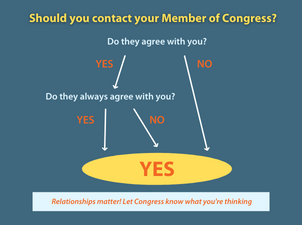
As a NETWORK organizer, I spend a lot of time talking with our field about how they can most strategically engage to advance our policy priorities.  We discuss tactics like making phone calls, sending emails, writing letters to the editor, attending town halls, hosting rallies, canvassing in their communities, and so much more.  In these conversations, folks often have questions about how to choose a tactic or implement it successfully. However, more than anything else, folks ask me…

“Should I still contact my Member of Congress even if they ALWAYS agree with me?”

or

“Should I still contact my Member of Congress even if they NEVER agree with me?”

My response is always the same, “YES! Absolutely! Please, please, please! Call them! Email them! Let them know what you are thinking!” And here is why…

If your Member of Congress “always” agrees with you, contact them! Here’s why…

  • Every point of contact is an opportunity to be in relationship with your Member of Congress and their staff, and we know that relationships are POWERFUL. You want them to know exactly who you are and what you believe in. You want them to pick up the phone when you call and help you to get the lobby visit that you need.  You want to be viewed as a both resource and trusted messenger.  Relationships are power.
  • There’s always the opportunity to address an angle or perspective that they might have not considered before. Several years ago, one of my NETWORK Advocates Teams met with a Democratic Senator’s staff about the importance of fully funding the U.S. Census.  The staff indicated it was the first time anyone had addressed the issue with them but promised to investigate it further. That same Senator ended up being a HUGE advocate for making sure the U.S. Census had the funding it needed to be successful. Members of Congress and their staff work hard and are very knowledgeable about many things.  However, it is a mistake to assume they know everything: you could be the one to bring an issue or piece of legislation to their attention!
  • Members of Congress have to make hard choices about what gets included in legislation. Even if they generally agree with you, it is important for them to hear what YOUR policy priorities are. If they are picking from a list of 25 generally good priorities, you want them to pick the 5 that matter most to you. Similarly, it can be an opportunity to tell them where you’d like to see them provide leadership.
  • Stories are powerful, and Members of Congress want to hear them! I am convinced that one of the major strengths of NETWORK’s field is how connected our members and supporters are to their communities. You all know and love your neighbors so well.  You know, in a very real way, how different policies might help or harm your community.  Members of Congress need to hear that. They need to hear about the lived experiences of their constituents.  Furthermore, it’s not uncommon for them to then take those same stories to the Floor to share them with their colleagues.  Again, stories are powerful!
  • Share your faith perspective! It is important to let Members of Congress know that people of faith care about an issue and are holding them accountable on it. This can be particularly important if another group from your faith perspective is advocating on the other side of an issue.  Help them to understand that your faith does not take a singular position.  You can be the one to provide them with cover! Beyond all that, it is particularly powerful if you can get a group of folks from diverse religious traditions advocating together on an issue.
  • You better believe they’re getting calls and emails from folks with perspectives different than your own. Members and their staff need to hear your perspective too!
  • Working for a Member of Congress is a tough job. Supportive calls mean a lot to staff morale!

If your Member of Congress “never” agrees with you, contact them! Here’s why…

  • Even if you don’t always agree with one another, relationships are POWERFUL. Many of our advocates have found that a relationship with the local state or district level staff is both possible and meaningful (as long as they are respectful in sharing their views).  In the past, these relationships have helped our advocates both to more easily schedule lobby visits with staff and to better understand a Member of Congress’ policy position (which often helps the NETWORK staff). Plus, you never know, you may agree on something! That leads me to my next point…
  • It is possible to find common ground! In 2021, NETWORK hosted a Virtual Lobby Day focused on the EQUAL Act (legislation addressing racial sentencing disparities in the criminal legal system).  As part of this event, over 120 NETWORK advocates went on 50 lobby visits with both Democratic and Republican Members of Congress.  In the days following the event, the EQUAL Act gained 10 new co-sponsors (3 Republicans and 7 Democrats). Don’t give up—your Member of Congress might surprise you!
  • You can help gather intel for NETWORK. If your Member of Congress opposes a piece of legislation, find out why! Do they have a specific concern? Is it something we can fix? As constituents, you sometimes have more information available to you than the NETWORK staff.  Your report-backs can help us tremendously!
  • Stories are powerful! Share your stories, and share your community’s stories! Remind them of the impact of their actions. You never know what seeds you will plant or what the impact will be.
  • Share your faith perspective! It is important to let Members of Congress know that people of faith care about an issue and are holding them accountable on it. This can be particularly important if another group from your faith perspective is advocating on the other side of an issue.
  • Changing policy positions is possible! My favorite example is related to health care. As it turns out, Americans like having their pre-existing conditions protected and aren’t shy about saying so.  They called their Members of Congress en masse, wrote letters to the editor, rallied, and marched in the streets! A 2018 Kaiser Family Foundation poll even found that 75% of respondents supported the Affordable Care Act’s protections for pre-existing conditions.  In response, a number of GOP candidates suddenly came out in loud support of same the protections they had once fought to end. It was all due to public opinion and pressure!
  • As people of faith, we are people of hope. The work of advocacy is often long and difficult, but we can take comfort in knowing that we don’t journey alone. We are accompanied in our efforts by NETWORK advocates from across the nation and are guided by the many saints who have come before us.  Most importantly, the Holy Spirit is present with us each time we pick up the phone, write an email, or attend a rally. With that in mind, I believe it is possible to change hearts, minds, and votes!

Finally, in our increasingly polarized society, it seems like everyone puts their Members of Congress into one of these two categories.  If we write our elected officials off that easily, they will never hear from us! So, YES, please contact your Members of Congress even if they “always” agree with you or “never” agree with you. Your advocacy matters!