

Category Archives: Spirit Filled Network

Spirituality and Advocacy in El Paso

Spirituality and Advocacy in El Paso

A Reflection on Jornada por la Justicia
Melissa Cedillo
October 23, 2019

Right when I landed in El Paso I immediately felt a sense of home. It was refreshing to be back in a place where I could hear Spanish everywhere.

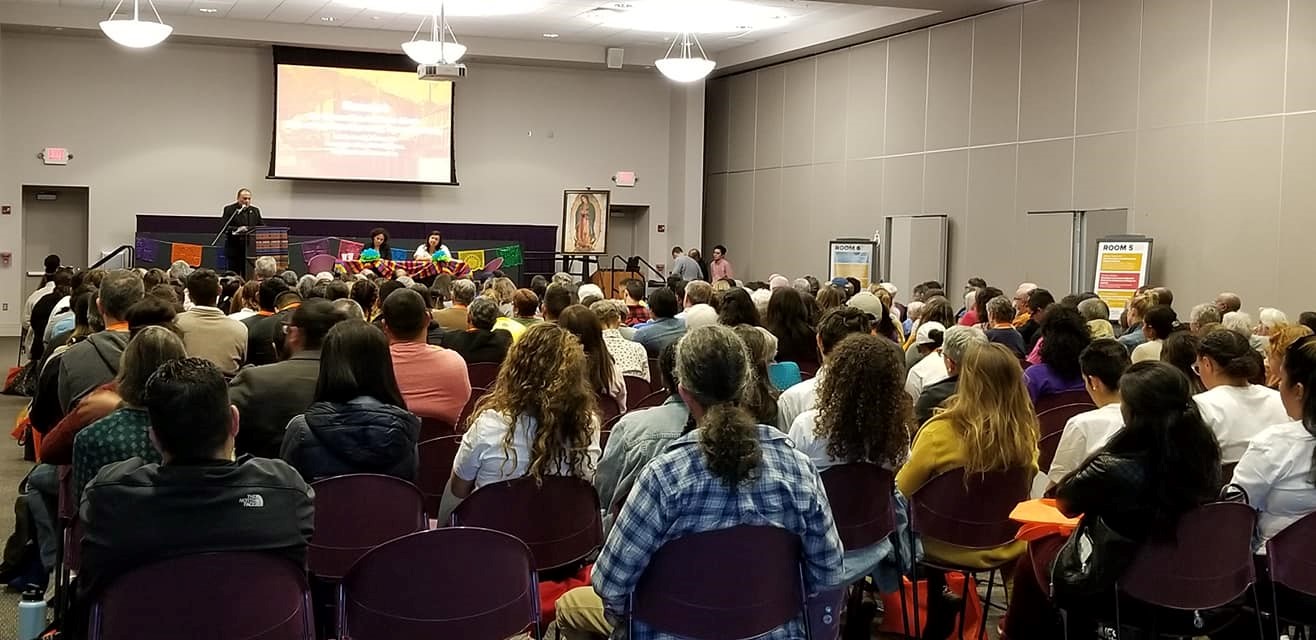
It had been a while since I was in a space that was majority Latinx. Because Jornada por la Justicia was in El Paso, the teach-in focused a lot on the massacre that took place in August. El Paso is also a border city so the themes of borderlands, immigration, and white supremacy were also present. There were various panels and workshops to attend. Everything from ‘Know Your Rights’ to Latinx spirituality were available. Most importantly, the panelists and the workshops were all lead by Latinx folks, which was empowering because the majority of Catholic conferences I have previously attended were not. I didn’t even have to tell someone the correct way to pronounce my last name.

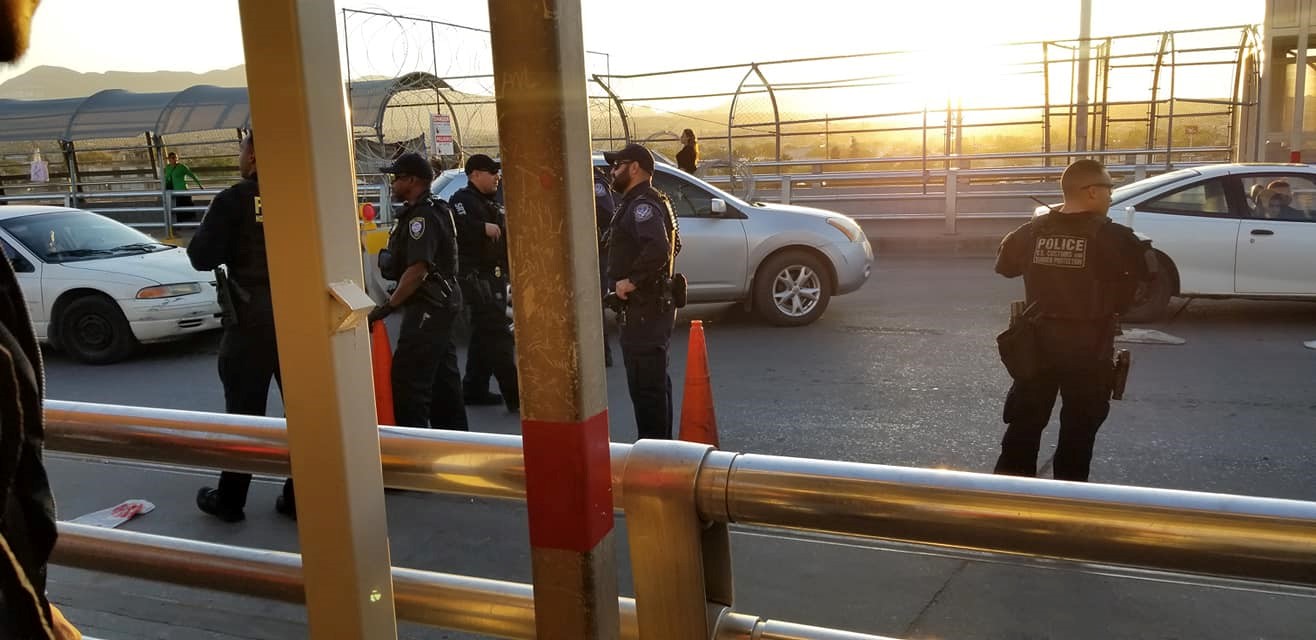
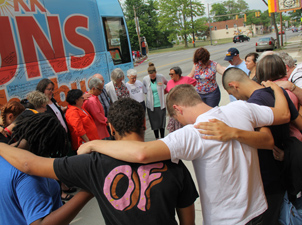
Saturday night, we crossed into Juarez and prayed with a family getting ready to seek asylum. There were tents and families everywhere. The mother I spoke with held a beautiful nine-month-old baby in her arms. They had traveled three weeks to arrive in Juarez. Another two year old climbed across her tired father smothering him with kisses. Seeing the many families was another reminder that militarizing the border against innocent families is in stark contrast of our Catholic identity.

On Sunday, Bishop Mark Seitz introduced his new pastoral letter ‘Night Will Be No More.’ The letter is about these very topics. He signed it into action after Mass. After the massacre on August 3rd, my heart yearned for a homily that would approach the violence that had happen and extend a message of hope to our familia in El Paso. It was never brought up. But on October 13th, Bishop Seitz’s letter provided my heart with consolation. Bishop Seitz called out White Supremacy for what it is. He used his power and privilege to uplift the same people Jesus did. As the Catholic Latinx population continues to grow in the U.S., I hope Catholic communities across the country look towards Hope Border Institute and the Latinx Catholic Leadership Coalition as leaders.
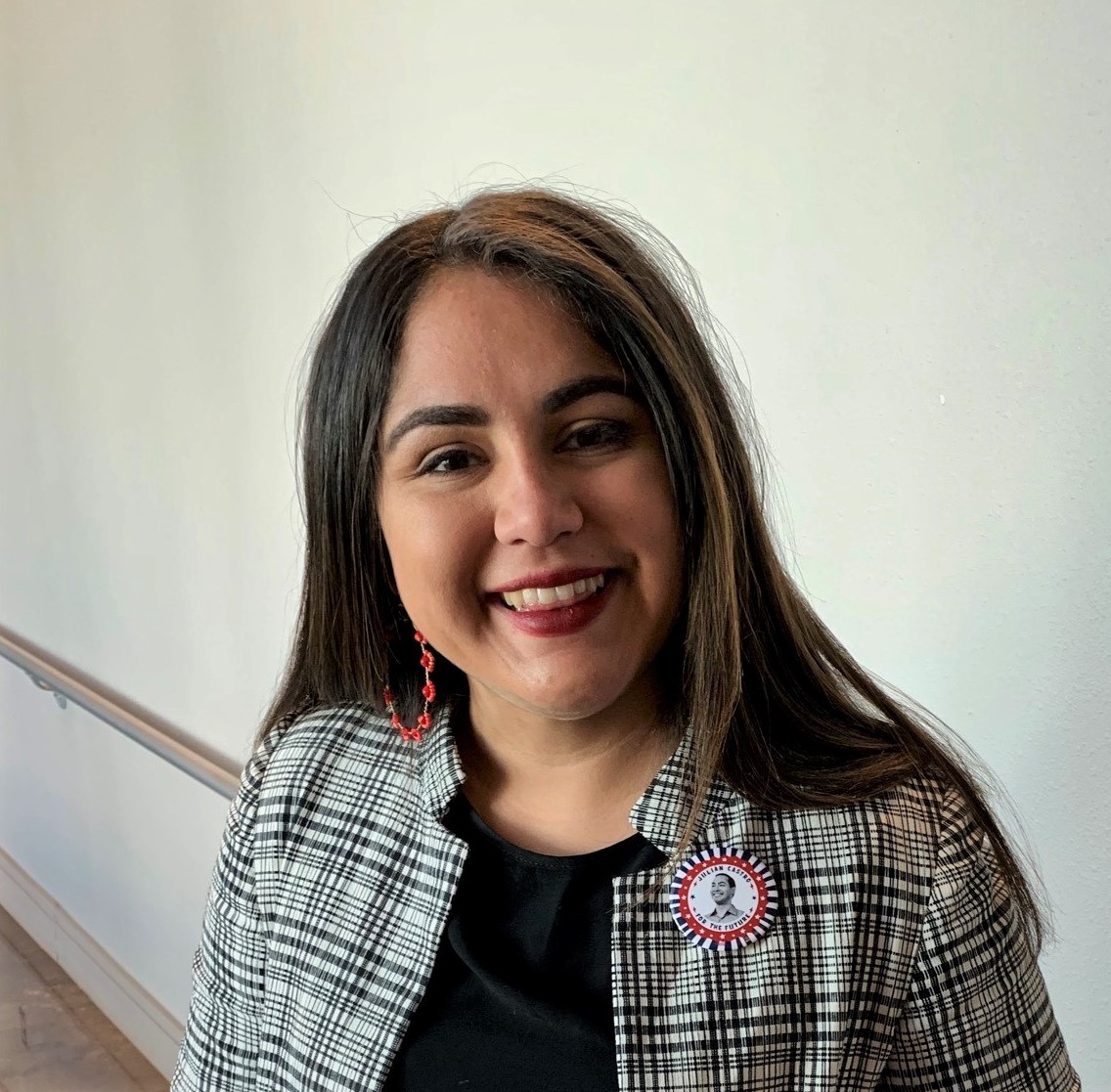

Melissa Cedillo is a graduate student at Harvard Divinity School. She participated in Jornada por la Justicia, a three-day gathering of a powerful network of Catholic Latino organizers, labor leaders, scholars and activists in El Paso, Texas. The Teach-In 2019: Jornada por la Justicia was co-presented by the HOPE Border Institute and the Latinx Catholic Leadership Coalition. Learn more: https://www.hopeborder.org/jornadaporlajusticia.

Gathering to Work for Justice in El Paso

Gathering to Work for Justice in El Paso

Andres R. Lopez
October 22, 2019

This past weekend, I participated in the Teach-In: Jornada por la Justicia, it was a great meeting and learning experience. First, to see great mentors and friends, second, to meet people from different parts of the United States, and finally, the amazing knowledge acquired by the different workshops and plenaries presented. This without forgetting the public witness activity that we had at the international port of entry.

The Teach-in was attended by around 400 people; people from New York, Chicago, California, the Washington D.C. area, and other parts of the United States, as well as from residents of El Paso and Ciudad Juarez, Mexico.

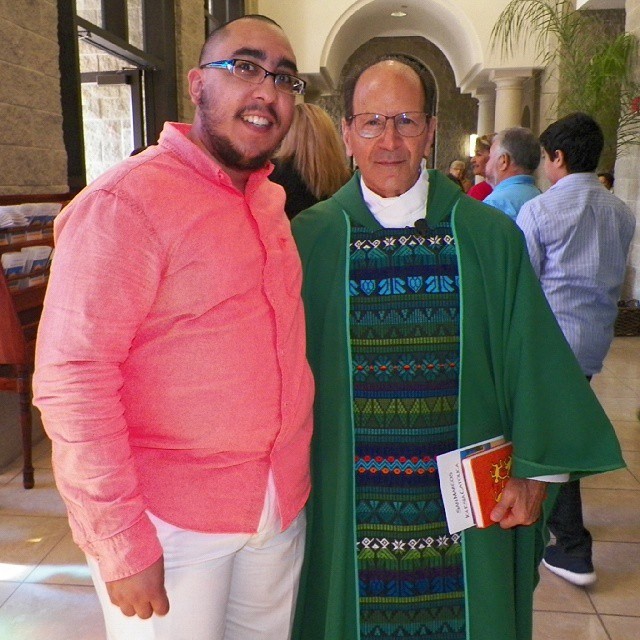
The Teach-In started off with a beautiful prayer and song interpreted by Ilka Vega from Hope Border Institute, the prayer reminded us that where there is love and kindness, God is present, Ubi caritas et amor, Deus ibi est. Then, Monsignor Arturo Bañuelas from St. Mark’s Catholic Church in El Paso, and Dr. Dulcinea Lara from New Mexico State University, addressed the issue of white supremacy, and how Latinx and Hispanic communities have been under attack for many years now. Monsignor Arturo reminded us that to undermine racism and white supremacy, we must do so with solidarity. He also said that “solidarity must become more than mere acompañamiento.”

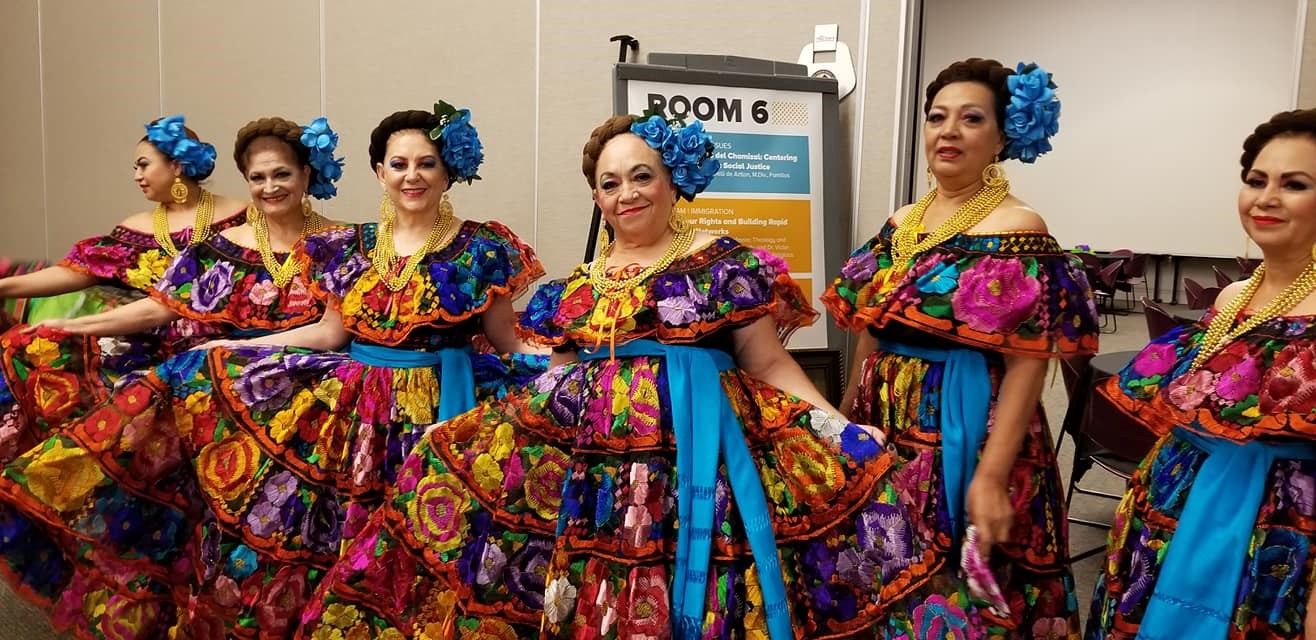
The first day of the Teach-in ended with a dinner full of joy and networking, as the Folklórico de San Marcos danced on the stage, and the Mariachis sang at the lobby of building.

During the Teach-In, I met with some great friends like Wayne Romo from the Center for Life at St. Mary’s University of San Antonio, and Dr. Neomi de Anda an associate professor of Religious Studies at the University of Dayton, and current president of the Academy of Hispanic Theologians of the United States.

I also ran into friends and partners that have been part of El Otro Lado – El Paso for the past years, like Monsignor Arturo Bañuelas, Dylan Corbett director of Hope Border Institute, Dr. Nicholas Natividad from NMSU and graduate of Cathedral High School, Alonzo Mendoza organizer for the Texas State Teacher Association and also a graduate of Cathedral High School, Lorena Andrade, Director of La Mujer Obrera in El Paso, Jaclyn Ross, a previous Lasallian Volunteer and El Otro Lado assistant at San Miguel High School in Tucson, and the Most Reverend Mark J. Seitz, Bishop of El Paso.

Saturday was an intense day of workshops and presentations. For the breakout sessions, I attended Overcoming Racism: Resources for Faith Communities, and a second talk titled Borderland Theology and Spirituality for Activism Today. The first talk was a reminder of how we all have implicit biases, and how “racism denies salvation.” During this talk, we learned to speak up against certain comments or racist ideologies. During the second talk, we used Visio Divina, sacred seeing, to meditate on the word of God through images.

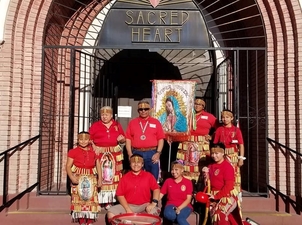
In the afternoon, the group of 400 people met at Sacred Heart Catholic Church in Downtown El Paso, here we divided into two groups. One group stayed in El Paso, and the other group crossed the international bridge in to Ciudad Juarez.

In this group, we all crossed the bridge peacefully and rather quickly, and as soon as we crossed, we were able to see families that are now living along the margins of the international bridge, due to the MPP or the Remain in Mexico Policy. As our presenter at the Juarez side exclaimed, we were able to see asylum under attack. After a quick moment of prayer, we all proceeded to form a line at the bridge, and to make our way back to El Paso. The only difference was that we did it in a slower manner because each one of us used Holy Water to sprinkle and bless the international bridge by saying: “I bless this bridge for those who cannot cross it.” We all also attempted to bring with us a group of three families for a total of 15 people seeking asylum. Ten CBP officers waiting in the middle of the bridge, barbed wire, and only one line of cars opened, but we were successful, and they let them through to continue their process in the U.S.

Blessing the bridge with Holy Water was a very simple action, but with a very powerful meaning.

The Jornada ended on Sunday, with a bilingual celebration of the Eucharist. After the mass, Bishop Mark Seitz formally made the announcement of his new pastoral letter: “Night will be no more” where he addresses the issue of racism and “the false god of white supremacy.” The pastoral letter was written in memory of those who lost their lives in the August 3, 2019 massacre in El Paso.

You can read the pastoral letter here: https://www.hopeborder.org/nightwillbenomore


Andres R. Lopez is the director of El Otro Lado Border Immersion Program at Cathedral High School in El Paso, Texas. El Otro Lado is a 5-day border immersion experience in which schools from around the country, come to El Paso to learn about immigration, and life at the border. During this week-long experience, we visit border patrol, the border fence, we hike, we go to the shelters that receive refugees, we visit the unaccompanied minors, we go to Ciudad Juarez, we receive Catholic Social Teaching presentations, and many other activities. Hope Border Institute is a community partner of El Otro Lado.

The Loretto Community Works to Mend the Gaps

The Loretto Community Works to Mend the Gaps

Alice Kitchen, Loretto Co-member
August 29, 2019

Recently, the Loretto Community went through a period of dialogue and discernment about how we can mend the gaps within our sphere of influence. Our considerations were guided by NETWORK’s 21st Century Poverty guide. Sisters and Co-members of the Loretto Community gathered in 19 community groups from California to New York. The groups discussed raising the hourly pay of low-wage workers to a livable wage. Each group’s job was to explore the issues facing low-wage workers in the communities where they live.

We already knew that low-wage workers undergird daily life in our communities. Low-wage workers care for children, staff nursing homes, and keep our airports functioning. Often these women and men have no steady schedule and have little control over their hours. Many work more than one job to get by. Their employers often have no regard for the multiple jobs they are juggling or their childcare needs. In our study, we learned that the cost of housing, transportation, childcare, and utilities far exceed the hourly incomes of most low-wage workers.

The need for these discussion groups emerged from our Loretto Assembly in August 2018. There, the community group in Kansas City put forth a proposal for the whole Loretto Community to hear, consider and vote on. The proposal advocated for Loretto administrators to “review the compensation of all our employees, working toward the goal of providing a living compensation package as nearly as is sustainable with our financial resources.”

Attendees from all over the U.S. and two overseas countries participated in the bi-annual Loretto Assembly. Participants were vowed members, Co-members, and Loretto employees, all of whom had previously affirmed the goal of a pay structure for all Loretto employees based on justice as a mission priority.

Last summer’s proposal was a spur to move forward on this goal. As a follow-up in January 2019, Loretto leadership approved an $1.50 an hour pay increase for Loretto Motherhouse and Infirmary employees and a 2 percent increase for those same employees who had worked 1,000 hours or more in 2018.

The next step in this ongoing process is collecting the thoughts and ideas of all 19 community groups and determining how to take this commitment to the next level. Much of Loretto’s social justice work lies in persuading decision-makers to make needed changes in both our living rooms and in the halls of power. We hope, therefore, that we can find ways to change our own community and beyond.

Some Loretto groups have natural allies in their communities where they can team up to support raising wages at either the local or state level. We are following the Raise the Wage Act (H.R. 582) in Congress and sending out alerts to call our Representatives in support of the bill.

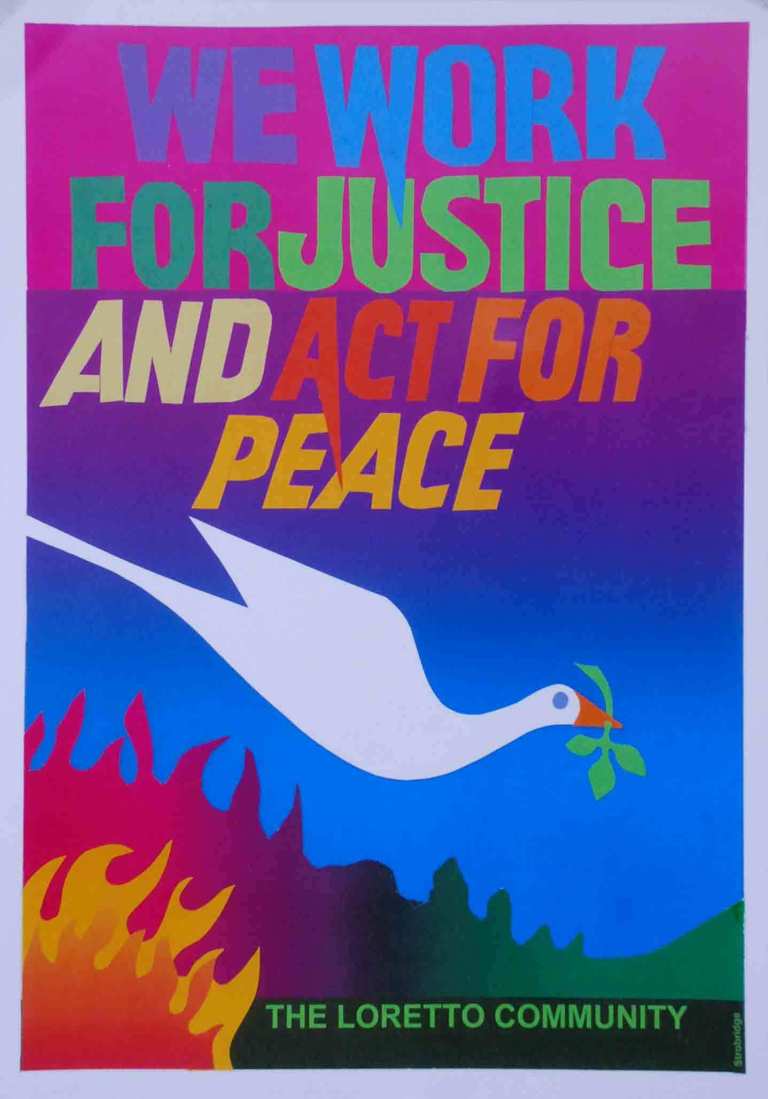
This is all about living our Loretto mantra: We work for justice and act for peace.

______________________________________

Alice Kitchen is a Loretto Co-member as well as a NETWORK Board member. She is based in Kansas City, Missouri.

This story was originally published in the July 2019 issue of Connection magazine. Read the full issue.

Understanding VAWA’s Importance for Native Communities

Understanding VAWA’s Importance for Native Communities

Laurel J. Robertson, Odawa Tribal Member
August 26, 2019

For a long time, I was really unaware of the severity of Indigenous missing, murdered, and abused women and girls in the USA and Canada until it hit close to home.

I was aware and appalled, as most are, by the large number of women and girls of all races who are affected by this tragedy. Then, my husband and I were invited to a walk in support of these women and girls on a nearby reservation. Under a canopy, pictures and stories were displayed of a few of the victims, both survivors and murdered. But most disturbing was the fact that most of these cases were unresolved. A short time after that, a friend of ours’ granddaughter was raped, beaten, and killed. Because our friend is a well-known and famous person, the killers were finally apprehended. But for average Indigenous families, the prospect of finalization and justice for their loved ones is not as certain.

So I started to study and read what I could find on the subject. As it stands, almost every Native woman will experience violence: 8 in 10 Native women will be raped, stalked, or abused in the course of a lifetime. Prosecuting these crimes is difficult. The vast majority (96%) of crimes against Native victims are committed by non-Natives. Due to a complex web of federal laws and statutes, tribes have long been unable to prosecute non-Natives who commit their crimes on tribal land.

The 2013 Violence Against Women Act reauthorization changed that — to some extent — by restoring tribal jurisdiction over non-Native perpetrators of domestic violence and dating violence. However, the 2013 bill excluded tribes in Alaska and Maine from this expanded jurisdiction and excludes non-domestic violence related crimes from tribal jurisdiction including child abuse, sex trafficking, rape, or murder.

I can go on with the statistics and numbers, but my emotions start to get involved. Tribal nations must also have the ability to advocate for their citizens living in urban areas. This courtesy is extended to all other sovereign nations. When a citizen is killed while living or traveling outside their nation, the nation is notified of their death and can advocate for their citizen’s case. This basic respect must be afforded to tribal nations. Currently, this is not extended, and rarely is a tribe notified or given access to the data regarding their tribal citizens.

All of these facts and numbers are accessible online from the National Congress of American Indians. The emotion is from the real life stories that have been lived and shared with me over the years.

I hope that drawing attention to the violence will help bring change.

Legislative Update

In April 2019, the House of Representatives passed an expanded Violence Against Women Act (VAWA). This VAWA reauthorization legislation would strengthen protections and expand access to justice to even more victims of abuse.

Key provisions of the 2019 House VAWA bill include: increased protections for unmarried victims from dating violence, expanded access to justice for Native victims of all crimes committed by non-Native perpetrators, and finally closing the “boyfriend loophole.” This legal glitch fails to extend for dating partners or former partners the prohibition on the purchase or possession of guns that is enforced for domestic abusers who are (or were) married, living with, or co-parents with the victim of abuse.

Unfortunately, partisan politics in the Senate has stalled further legislative action for this expanded VAWA reauthorization, placing victims in undue danger.


Mrs. Laurel J. Robertson is Secretary of the All Nations Veterans Council of Detroit, Treasurer of Turtle Island Dream Keepers of Monroe, Michigan, and a member of the Monroe County Community College Diversity Committee. Her tribal affiliation is Odawa.


This story was originally published in the July 2019 issue of Connection magazine. Read the full issue.

Putting More Money in the Pockets of Working Families

Putting More Money in the Pockets of Working Families

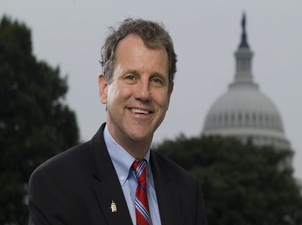
U.S. Senator Sherrod Brown
August 21, 2019

People in the United States are working harder than ever before to make ends meet. But the cost of everything – from childcare to prescription drugs to a college education – is up, while wages are largely flat.

That’s why I led my colleagues to introduce the Working Families Tax Relief Act. This plan will cut taxes for workers and families by expanding the Earned Income Tax Credit (EITC) and Child Tax Credit (CTC).

Research has shown that these credits are two of the most effective tools we have to put money in the pockets of working people, pull children out of poverty, and help families with the cost of living. EITC and Child Tax Credit are simple to administer, and they give families in the United States what they need most – extra dollars. We worked to expand the EITC and make it permanent in 2015, and the following year, it lifted nearly six million people out of poverty.

As Americans filed their taxes this spring, more and more people saw President Trump and Congressional Republicans’ tax scam for what it really is – a handout to millionaires and billionaires at the expense of working families. Many families didn’t get the large refunds they were expecting, and some even owed money. Our plan is targeted directly to working families, and would boost the incomes for more than 114 million Americans.

And while the president’s tax scam left out 26 million children, our bill would fix that by making the Child Tax Credit fully refundable for the first time, helping to lift three million children out of poverty. The plan would also create a new Young Child Tax Credit, to provide families of very young children extra help when they need it most. Families would receive an extra $1,000 for each child under age five, up to $3,000 per family, because research shows investing in children in these formative years can set children up for success later in life.

The Working Families Tax Relief Act would also make sure workers can no longer be taxed into poverty. Right now, five million young workers without children are taxed into or taxed deeper into poverty. These are young people working hard at jobs that don’t pay high wages – they’re too young to qualify for the EITC under current law, but they still get hit by state and local taxes, and those taxes can push them below the poverty line. Our plan raises the maximum credit for these workers, and expands the age range to cover all workers from age 19 to 67.

Our plan would also stop families from having to turn to predatory payday lenders in an emergency, by allowing people to draw a $500 advance on their EITC. Right now, 4 in 10 Americans say they couldn’t afford an emergency expense of $400 without borrowing money. And we know what so often happens to those families – they’re forced to turn to payday lenders or car title lenders, and become trapped in a cycle of debt. A one-time, interest-free advance on people’s EITC payment would give families a real alternative. The plan would also establish minimum competency standards for paid tax preparers, to give families better peace of mind that they won’t get ripped off during tax season.

Right now, Democrats are united around this plan, and we want Republicans to join us.

Many of my colleagues on both sides of the aisle have said over and over that they want to cut taxes for working Americans and support families. We have a plan to do it, and put more money in the pockets of millions of families.

_________________________________________

Senator Sherrod Brown is represents the state of Ohio and is a champion of middle-class families. Senator Brown supports workers and just trade policies and is proud of his work to help pass the historic health care law that made health insurance more affordable and accessible for American families. Informed by his faith as a member of the Evangelical Lutheran Church in America (ELCA), Senator Brown is committed to social and economic justice.

This story was originally published in the July 2019 issue of Connection magazine. Read the full issue.

Listen: Interfaith Partners Oppose the Trump Administration’s Public Charge Rule

Listen: Interfaith Partners Oppose the Trump Administration’s Public Charge Rule

Lee Morrow
August 15, 2019

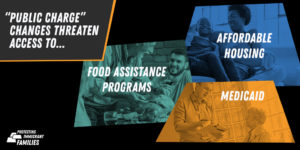
This week the Trump administration announced that their proposed changes to our nation’s public charge rule are scheduled go into effect in October. NETWORK and our fellow faith-based advocacy partners were compelled to respond. Representatives from MAZON: A Jewish Response to Hunger, Church World Service, the National Council of Jewish Women, and Faith in Public Life joined Sister Simone Campbell to denounce this harmful change to our nation’s immigration policy.

“The Trump Administration is making history in all the wrong ways,” said Liza Lieberman, Director of Public Policy for MAZON: A Jewish Response to Hunger. “For the first time, U.S. immigration officials will be instructed to consider non-cash basic needs benefits (including vital food assistance from the SNAP) in considering immigrants’ qualifications for admission or adjustment of status. This is completely unacceptable—nobody should be forced to choose between accepting government assistance and living in safety in the country they call home. This policy is an affront to our Jewish values of compassion and nondiscrimination, as well as our deeply-held belief that everyone deserves access to the resources they need to feed themselves and their families.”

Faith William, Senior Manager of Government Affairs at the National Council of Jewish Women added, “Jews are an immigrant and refugee people – it’s part of our cultural DNA. We recognize that the rule, reportedly Stephen Miller’s “singular obsession,” is part of a larger effort by this administration to criminalize and marginalize people of color, including immigrants of color. The National Council of Jewish Women will not cease in its fight against this and other harmful anti-immigrant, anti-asylee, and anti-refugee policies.”

Sister Simone Campbell stated “This public charge rule is a full scale assault on hard working low wage workers…  These essential programs that they are legally entitled to are really the keys to being able to support their families and thrive here in the United States. President Trump is literally taking food off the tables of our neighbors.”

Share on Social Media:

National faith-based organizations condemn Trump Administration’s draconian #publiccharge rule. This is not who we are. Listen here: https://networklobby.org/20190815publiccharge/ @NETWORKLobby @MAZONusa @global_cws @NCJW @FaithPublicLife

.@DHSgov issued a final rule to radically expand the criteria for who could be considered a #publiccharge under U.S. immigration law. This will separate families & impact millions of people including U.S. citizens. @NETWORKLobby @MAZONusa @CWS_global @NCJW @FaithPublicLife Our interfaith response: https://networklobby.org/20190815publiccharge/

Trump’s #publiccharge rule change is sinful. Learn more about how faith-based organizations are fighting back: https://networklobby.org/20190815publiccharge/. @NETWORKLobby @MAZONusa @CWS_global @NCJW @FaithPublicLife

We’re proud to stand with our interfaith partners in opposition to Trump’s vindictive #publiccharge policy. This is the latest in a string of attacks on immigrant families, and it goes against our most basic values. #ProtectImmigrantFamilies https://networklobby.org/20190815publiccharge/ @NETWORKLobby @MAZONusa @global_cws @NCJW @FaithPublicLife

Christian Nationalism Slams Door on Those Seeking Refuge

Christian Nationalism Slams Door on Those Seeking Refuge

Sue Smith
August 9, 2019

Christian nationalism is on the rise.

Proponents would have us believe that our faith tradition is threatened by religious and cultural diversity, and that a stronger tie between church and state is necessary to save our nation from ruin.

But this dangerous way of thinking is based on fear, paranoia and a desire for conformity that only serves to polarize our nation.

Christian nationalism seeks to merge Christian and American identities, which results in a distortion of both the Christian faith and constitutional democracy in the United States.

It’s more concerned with political power, control and influence than with any desire to impart or practice Christian values, as some would have you think.

Consider the issue of migration. Christian nationalism suggests that anyone who is different from “us” is not welcome. Immigrants and refugees are not welcome, nor are different languages, cultures or religions.

With an emphasis on the rule of law and the criminalization of unauthorized entry into the United States, we have convinced folks that people who wish to enter our country are criminals: rapists, murderers, drug dealers and human traffickers.

We’re threatened when we hear others speaking in another language because “they might be talking about me.”

And it’s unthinkable to engage in the idea that God could be working outside the Christian faith.

This is not the model of Jesus.

Jesus’ parents were members of an ethnic and religious minority that was a threat to those in power.

The word was that one of those Jewish babies was going to grow up to be King of the Jews, and the rulers really couldn’t allow that to happen.

The family fled, living as refugees in a neighboring country until it was safe to return home.

A desire for power corrupts religious practice. In the end, it was a small group of religious leaders who took advantage of political power systems that led to Jesus’ crucifixion. He was simply too controversial, and he needed to be eliminated.

In today’s toxic religious and political environment, Christian nationalism aligns more closely with those who opposed Jesus, not those who followed him.

Christian nationalism is consistent with those who used political power to silence a prophetic voice that ran counter to their own orthodoxy.

Jesus is present today through the migrant and refugee experience. While many Christians are horrified at the current treatment of migrants and cry out for justice and mercy, Christian nationalism seeks to close the doors.

But the Jesus I follow rode the train through Mexico with José and his toddler son, Jeycob, Hondurans who were fleeing for their lives after the entire family received death threats.

Jesus was there on the day Jeycob saw his father handcuffed and taken away by Immigration and Customs Enforcement (ICE) agents during a routine check-in for asylum-seekers, and when social workers took Jeycob to foster care.

Jesus sat, hungry and uncomfortable, in the bus station for two days in Ciudad Juárez with Claudia and her 4-year-old daughter as they waited for a friend, another young indigenous mom from Guatemala, who never returned from a trip to the restroom. They fear she was abducted. Claudia is seeking asylum.

Jesus was in ICE detention with Beatriz, a Mexican mother of two who spent two weeks in solitary confinement because she couldn’t stop crying hysterically; Beatriz had been raped by traffickers and police just before crossing the border.

Jesus was with Hector, 14, an unaccompanied minor from Honduras who attempted suicide while in ICE custody awaiting release to his mom.

The anniversary of the murder of his father and death of his grandparents who had raised him triggered a deep depression. No mental health services were available to help him with feelings of grief and loss.

Jesus was with Juan, an indigenous young man from Guatemala who is a victim of labor trafficking. Juan worked for five years without pay in Virginia before he was able to leave and obtain a legitimate job and legal assistance.

When we think of the story of Jesus and his encounter with the woman at the well, Scripture tells us that Jesus “had to” go through Samaria on his journey from Judea to Galilee (John 4:4).

It was “necessary,” but why? There were other, more traditional routes that were safer, better traveled and more comfortable.

Jesus’ route through Samaria serves as a model for us. Jesus intentionally chose a path that took him and his followers to a place that required interaction with people of a different race, ethnicity, culture and religion.

He consistently modeled concern for those who society saw as less valuable – women, children, persons in poverty and with disabilities. He spoke against the systems that oppressed and devalued them.

Jesus stayed away from those who sought rigid religiosity and political power. What should that tell us about Christian nationalism today?


This article was originally published at EthicsDaily.com as part of a series focused on Christians opposing Christian nationalism. It is published in conjunction with the launch of the BJC-led initiative ChristiansAgainstChristianNationalism.org. The articles in the series are available here.

Threat of Christian Nationalism Has Reached High Tide

Threat of Christian Nationalism Has Reached High Tide

Amanda Tyler
August 8, 2019

While summer usually means beach reads, my reading list hasn’t been so light this year.

I’ve spent these last few months studying up on Christian nationalism, as my Baptist Joint Committee (BJC) colleagues and I felt called to dig deeper into this political ideology that seeks to merge American and Christian identities.

Christian nationalism is not new. It has ebbed and flowed over many decades, but we seem to be stuck at high tide now. For Christian nationalists, to be a true American is to be a Christian.

Of course, that conclusion is at odds with our constitutional principles. The First Amendment protects religious freedom for everyone, and Article VI states that there will be no religious test for public office.

Christian nationalism threatens religious freedom for all. It asks the government to show preference for Christianity over other religions or religion over nonreligion.

Working with other Christian leaders, BJC is providing a way for individuals to stand up to this problem and make clear that not all Christians think this way.

There is a short statement, available at ChristiansAgainstChristianNationalism.org, which repudiates this political ideology as harmful to our faith and to our unity as Americans.

It is not a statement of faith – we are Baptists, after all – but rather an explanation of what Christian nationalism is, the threats it poses and a list of unifying principles that we hope will appeal to Christians of many different denominations and affiliations. Anyone who self-identifies as a Christian is invited to sign the statement online.

Initially, BJC approached this project with the idea of interfaith partnership. But we quickly learned that our partners did not have the same level of comfort in calling out Christian nationalism that we – as Christians – do.

This makes sense, though it is upsetting to think that by calling out a Christian nationalist, a Jewish or Muslim person may be placing themselves in harm’s way.

I have already learned a great deal from my conversations with other leaders and in speaking to experts for a special podcast series on Christian nationalism, which begins this week.

There are various definitions and understandings of Christian nationalism. We should not assume we have a common vocabulary or frame of reference around this topic.

I have found it helpful in conversation to ask questions to find out what people mean when people claim we are a “Christian nation.”

A majority of Americans – around seven out of 10 in most surveys – identify as Christian, so I would agree we are a majority-Christian nation.

But I don’t agree that the country was founded by Christians, for Christians, leaving other faiths to second-class status.

We also recognize the overlap between Christian nationalism and white supremacy and the fact that not all Christians will view the connection in the same way.

The deep, abiding problem of racism in this country is much larger than this project, and yet it is undoubtedly connected to this conversation.

Many see a pressing need for this kind of response right now. The Christian leaders I’ve spoken with approach this subject in ways as diverse as their theology and experience, but they are unified in their sense of urgency to counter Christian nationalism.

We have been working on this initiative for several months; it is not in response to any single event. It seems likely that persistent challenges will demand that we continue this effort. This campaign can help Christians have a place to respond.

We will learn more over the coming months as people begin to add their names and voices to ChristiansAgainstChristianNationalism.org.

If we are going to be successful in responding to this threat, we will need to join with Christians from across the ecumenical spectrum. I believe both the vitality of our faith and the enduring strength of our country depend on it.


This article was originally published at EthicsDaily.com as part of a series focused on Christians opposing Christian nationalism. It is published in conjunction with the launch of the BJC-led initiative ChristiansAgainstChristianNationalism.org. The articles in the series are available here.

We are E Pluribus Unum, Not Christian Nationalists

We are E Pluribus Unum, Not Christian Nationalists

Leslye Colvin
August 2, 2019

In the United States, Christian nationalism is a disingenuous oxymoron spawned by the conflation of a distorted view of Christianity and a political ideology that romanticizes parts of the nation’s history. A variety of peoples participating in a series of events collectively resulted in the founding of the United States of America. The desire was to form a nation, a republic, governed by the participation of a pluralistic citizenry. Despite their flaws, the founders established a constitutional government with the motto E Pluribus Unum – “Out of Many, One.”

Recognizing the diversity of thoughts and beliefs among themselves, this motto affirmed the heterogeneous nature of the young nation. Understanding and respecting the different purposes served by government and religion, they enshrined religious freedom in the First Amendment of the Constitution:

Congress shall make no law respecting an establishment of religion, or prohibiting the free exercise thereof; or abridging the freedom of speech, or of the press; or the right of the people peaceably to assemble, and to petition the Government for a redress of grievances.

Historically, citizens with electoral power have sought to secure and maintain privilege for themselves. This was modeled by the signers of the Declaration of Independence who established the right to vote as an exclusive privilege for white men who owned property. For almost 250 years, the nation’s people have kindled a burning desire to perfect her ideals. As a result, our participative democracy has been enriched by the expansion of voting rights to include women and African-Americans.

Intimately familiar with forms of government in western Europe, our nation’s founders  did not establish a monarchy, a theocracy, or a christocracy. Many of them were Christians with firsthand experience of living in a society where the sanctioning of a state religion led all other faith traditions to be outlawed or marginalized. This would be in direct conflict with both E Pluribus Unum and the teachings of Jesus Christ who consistently embraced those on the margins.

Some of our greatest atrocities as a nation have been justified by distorting the fundamental teachings of Christianity. This in itself gives many of the faithful reason to pause. Wrapping a Christian banner around a political ideology in a pluralistic society is an invitation to proffer privilege to those who publicly claim to follow a religious belief system, while simultaneously, in effect, dismantling the safeguards of religious freedom.

We, as a nation, are better because of the contributions of those from many and no faith traditions. The ideals expressed in our founding documents transcend religious beliefs and faith traditions. These are the very ideals that inspire the citizenry to move ever closer to becoming “a more perfect union.” As one who is both a citizen of this country and a Christian, I denounce Christian nationalism as the antithesis of the ideals of the United States of America, and the Gospel of Jesus Christ.

Sign the Christians against Christian Nationalism Statement here: https://www.christiansagainstchristiannationalism.org/

_________________________________

Leslye Colvin works for Gathering for Mission, a project of Catholic Committee of the South inspired by Pope Francis that provides practicums in dialogue in dioceses across the country. She is also a member of the Barmen Today circle, and the NETWORK Board.

Faith Values Are Social Work Values

Faith Values Are Social Work Values 

Afton Neufeld
July 31, 2019

Anyone interested in entering the field of social work is quick to learn that they cannot do so without a deep belief in the social work core values. These core values are what guide everything from social work ethics to how the profession is carried out across the country and at times our world. As a person of faith, I believe that my relationship with the creator and conviction of scripture led me to believe in these core values long before I was aware of their importance in social work. So, how exactly do the social work core values and faith values line up?  

I will examine the six social work core values and how they line up with a faith calling (I am pulling from my Christian faith lens, but these values can transcend across multiple faiths): 

1. Service 

Service is something we see Jesus doing throughout the gospel. In John 13, we see Jesus washing the disciples’ feet, a gesture of humility and service. Soon after, he instructs his followers to “wash one another’s feet,” not just literally, but also in how they were called to humble themselves serve others.  

2. Social Justice 

Social justice is another theme we see in stories and commandments across the Bible. From the Old Testament to the New Testament, we see references to welcoming those on the margins of society. A specific call in Deuteronomy 27:19 warns against withholding justice from the immigrant, orphan, or widow.  

3. Dignity and Worth of the Individual  

A parable in Matthew 18 describes a shepherd who leaves his herd of 99 sheep to go find the single sheep that is lost, and compares that situation to the way God pursues his people. This highlights the heart of the text, illustrating that God cares so deeply for his people that he desires a personal relationship and values each and every person 

4. Importance and Centrality of Human Relationships 

From Genesis we see the Trinity as the Godhead three in one, living in relationship before time even existed, and we see relationships (between people and God, between individuals, and between groups) referenced in pretty much every chapter onward. From giving to one another to pursuing conflict resolution with your neighbor, human relationships (and healthy ones at that) are central to the Bible.  

5. Integrity 

Integrity, simply put, is the value of honesty. The Bible tells us, quite literally, “Do not lie” in Leviticus 19:11. We also see God calling upon humankind to have integrity, both with God and with one another, in several scriptures including the Ten Commandments in Exodus 20.  

6. Competence 

Competence is interesting in a faith/social work cross over. Usually when we see things relating to a person’s ability to do something successfully (i.e. competent) in the Bible, it is either attributed to God, or emphasized as something you don’t need for Jesus to accept you. However, the Bible does warn us against laziness and lack of work ethic. In Colossians 3:23 it reads, “Whatever you do, work at it with all your heart.In Proverbs we also read wisdom around the correlation of a strong work ethic and the blessings that come from it.  

While there weren’t social workers in biblical times, the same urgings all those years back are still applicable to our work and relationships today. An honest and competent day’s work for a social worker is certainly not for those without belief in individual dignity, valuing the importance of relationships, integrity, and a strong work ethic 


____________________________________________________________________________________ 

Afton Neufeld is a NETWORK volunteer currently obtaining her Masters in Social Work at University of Nevada, Reno. Her social justice heroes include Jesus, Rev. Martin Luther King Jr., and Catholic Sisters.