


Category Archives: Front Page

NETWORK Urges House YES Vote on Justice in Policing Act

NETWORK Urges House YES Vote on Justice in Policing Act

Joan Neal and Mara Rutten
March 3, 2021

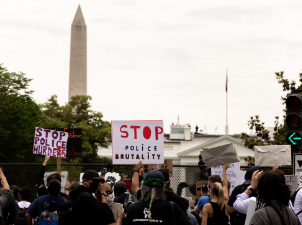
Due to threats of further violence at the U.S. Capitol on Thursday, March 4, House Democratic Leadership accelerated the debate and vote on the George Floyd Justice in Policing Act, which was originally scheduled for Thursday. Ahead of the vote, NETWORK contacted all member of the House of Representatives, urging them to support this legislation that would ban chokeholds and support implicit bias training and community policing.

We know the time is long overdue for enacting policing reforms that hold law enforcement accountable and equally responsible for protecting and serving everyone in society. Failure for Representatives to act would be an abdication of their moral and civic duty and a blatant disregard for the humanity of Black lives.

NETWORK urged members to include and adhere to the following principles in any legislation that addresses police brutality and accountability:

  1. Require a federal standard that use of force be reserved for only when necessary as a last resort after exhausting reasonable options, and incentivize states to implement this standard; require the use of de-escalation techniques, and the duty to intervene; ban the use of force as a punitive measure or means of retaliation against individuals who only verbally confront officers, or against individuals who pose a danger only to themselves; and require all officers to accurately report all uses of force;
  2. Prohibit all maneuvers that restrict the flow of blood or oxygen to the brain, including neck holds, chokeholds, and similar excessive force, deeming the use of such force a federal civil rights violation;
  3. Prohibit racial profiling, and require robust data collection on police-community encounters and law enforcement activities. Data should capture all demographic categories and be disaggregated;
  4. Eliminate federal programs that provide military equipment to law enforcement;
  5. Prohibit the use of no-knock warrants, especially for drug searches;
  6. Change the 18 U.S.C. Sec. 242 mens rea requirement from willfulness to recklessness, permitting prosecutors to successfully hold law enforcement accountable for the deprivation of civil rights and civil liberties;
  7. Develop a national public database that would cover all police agencies in the United States and its territories, similar to the International Association of Directors of Law Enforcement Standards and Training’s National Decertification Index, which would compile the names of officers who have had their licenses revoked due to misconduct, including but not limited to domestic violence, sexual violence, assault and harassment, criminal offense against minors, excessive use of force, violation of 18 U.S.C. § 242; perjury, falsifying a police report or planting and destroying evidence, and deadly physical assault; as well as terminations and complaints against the officers; and
  8. End the qualified immunity doctrine that prevents police from being held legally accountable when they break the law. To overcome the defense of qualified immunity, require that a victim must show that law enforcement violated “clearly established” law by pointing to a case arising in the same context and involving the same conduct.

Read the full NETWORK vote recommendation on H.R.1280, George Floyd Justice in Policing Act of 2021.

How To Write A Letter to the Editor

How To Write A Letter to the Editor

Audrey Carroll
March 1, 2021

When you want to make your voice heard on an issue, writing a letter to the editor is a very effective advocacy practice. Letters to the editor work because they are widely read local content, Members of Congress pay attention to them, and LTE campaigns help create movements.

To learn how to write a letter to the editor, watch this training from NETWORK Press Secretary Lee Morrow and follow the tips below.


Writing Your LTE:

Start with your qualifications.

“As a multi-issue Catholic voter, I cannot stay silent while Congressman Jones vilifies our immigrant neighbors in his Feb. 10th op-ed “Illegal Immigrants Don’t Deserve Handouts.”

Tell them what you think!

“Dreamers and undocumented immigrants are essential workers who have helped keep this community running during the pandemic. They deserve access to COVIDD relief and citizenship.”

Bring it together with a legislative ask.

“I pray that Congressman Jones opens his heart and listens to his constituents. Undocumented people are our neighbors, community members, friends, and family. Catholic voters like me expect Congressman Jones to support the Dream Act.”

Find submission guidelines on your local paper’s website and send.

  • Found on the same page where you found length rules.
  • Submission will either be to an email address or online form.

Quick Tips:

  • You can write to multiple local papers.
  • It helps to tie your LTE into a recent story run by the paper.
  • Wait three weeks before repeating.

We Cannot Sit on the Sidelines

We Cannot Sit on the Sidelines

Colleen Ross
February 26, 2021

During Black History Month when we are called to honor the “accomplishments of Black Americans in every area of endeavor,” I’m inspired by recent events. Three Black leaders — Cardinal Wilton Gregory, Vice President Kamala Harris, and Senator Rev. Raphael Warnock — made history in the past year and are shaping the future of our country and the Catholic Church.

When Pope Francis named Washington, D.C.’s Archbishop Wilton Gregory to become a Cardinal, he made history as the first African-American Cardinal in the Catholic Church. A few months later,  Senator Warnock defeated Kelly Loeffler to become the first Black Senator from Georgia, and on January 20 the country watched Vice President Harris become the first woman of color sworn in as Vice President. Cardinal Gregory, Vice President Harris, and Senator Warnock are well suited for these roles and our country will benefit from their knowledge and experience.

While we celebrate Black history makers past and present, we should also consider the many times racism prevented their predecessors from reaching the same positions. Vice President Harris said, “I’m honored to be considered a ‘first,’ but I always think about the people who came before and paved the way for me to get where I am today. From Rosa Parks to Shirley Chisholm to Congressman John Lewis, I stand on the shoulders of so many great men and women before me.”

How much have we lost, socially, economically, and theologically by allowing systems of exclusion and oppression to keep Black people from authority and positions of power?

As we celebrate these groundbreaking achievements, we cannot think the work is finished. We must do everything we can to dismantle systemic racism and ensure these “firsts” are not also lasts. Cardinal Gregory, speaking to the Archdiocese of Washington, D.C.’s Theology Tap last year said, “You cannot be a Catholic and sit on the sidelines.” No matter your religious tradition, as we celebrate and honor Black History Month, let us resolve not to sit on the sidelines, but instead actively work to end racism and move towards racial equity.

Calling for Global Vaccine Creation and Access

Calling on the Biden Administration to Support Increased Global Access to Vaccines

Sr. Simone Campbell
February 26, 2021

Today, I joined partners in calling on the White House to support an emergency COVID-19 waiver of World Trade Organization (WTO) intellectual property rules, so that greater supplies of vaccines, treatments, and diagnostic tests can be produced in as many places as possible as quickly as possible.

We have learned over the past year that pandemics are communal struggles. We are all vulnerable, and we all can help control the virus. In our nation, over 500,000 people have died and millions have been infected. The U.S. government has invested over $13 billion in taxpayer funds to create vaccines, and other developed nations have invested as well. Now, we in these rich nations have an obligation to share with the global community. That is the only way to protect the vulnerable here and abroad. Both faith and pragmatics demand it. When we faithfully care for our neighbors, we pragmatically care for ourselves.

The global COVID-19 pandemic has cost too many lives and devastated communities not only in the United States but around the world. At the World Trade Organization’s upcoming General Council meeting March 1-2, I hope the Biden Administration reverses course from the Trump administration and supports a waiver to help speed up the end of this pandemic.

Watch the Press Conference and read other participants’ comments below.

U.S. Representative Rosa DeLauro (D-CT.), House Appropriations Committee chair
“The COVID-19 pandemic knows no borders and the need for vaccine development and dissemination across the globe is critically important. The TRIPS waiver raised by India and South Africa at the WTO would help the global community move forward in defeating the scourge of COVID-19 by making diagnostics, treatments, and vaccines available in developing countries. We must make vaccines available everywhere if we are going to defeat this virus anywhere. The U.S. has a moral imperative to act and support this waiver at the WTO, and I am hopeful that the Biden Administration will support this waiver to help our allies around the globe bring an end to this pandemic.”

 U.S. Representative Earl Blumenauer (D-OR), House Ways and Means Subcommittee on Trade chair
“As a global community, we must come together and use every tool at our disposal to stop this pandemic,” Blumenauer said. “Unfortunately, we have seen intellectual property rules and corporate greed have disastrous impacts for public health during past epidemics, and we need to ensure that this doesn’t happen again. Working to ensure that trade rules do not stunt the developing world’s access to vaccines, treatments, and diagnostic tests is a clear step. It’s the right thing to do not only for our country, but for the entire world.”

U.S. Representative Jan Schakowsky (D-IL), House Senior Chief Deputy Whip and Energy and Commerce Consumer Protection and Commerce Subcommittee chair
“I support the proposed TRIPS waiver because I support equitable vaccine distribution worldwide, because if vaccines aren’t available everywhere, we won’t be able to crush the virus anywhere. The new COVID-19 variants, which show more resistance to vaccines, prove that further delay in immunity around the world will lead to faster and stronger mutations. Equitable access is essential. Our globalized economy cannot recover if only parts of the world are vaccinated and have protection against the virus. We must make vaccines available everywhere if we are going to crush the virus anywhere.”

Paul Farmer, Co-Founder, Partners In Health
“If we want to stop COVID-19 here, we have to stop it everywhere. The world does not have time to wait for the usual, slow, and unequal distribution of treatments, diagnostics, and vaccines. We can take a lesson from the global AIDS movements and make sure patent laws don’t block access to lifesaving therapies for the poor. It’s a similar story for vaccines, which in the case of covid19 we’re so lucky to have and in such short order. Moderna has waived these rights and others should follow suit as we deploy one of the mainstays required to end this pandemic.”

Racism and the Church: A Black History Month Community Conversation

Racism and the Church: A Black History Month Community Conversation

Audrey Carroll
February 25, 2021

On February 18, NETWORK hosted a community conversation in honor of Black History Month. At the event, NETWORK members discussed racism in the Church and our role in naming it and ending it. Board member Leslye Colvin shared her reflection on racism in the Catholic Church. Watch the conversation below, and read more reflections from Leslye on her blog Leslye’s Labyrinth

Black History Month: Honoring those who Resisted Voter Suppression

Black History Month: Honoring those who Resisted Voter Suppression

India-Grace Kellogg 
February 22, 2021

During this year’s Black History Month after a contentious election, we honor the Black women and men who organized and advanced Black voting power and political representation and recognize the ways white supremacy has shaped the U.S. political system to minimize Black votes and voices.

Following the 2020 election, which hinged on record-breaking voter turnout – especially Black voter turnout – in Georgia, Nevada, Pennsylvania, Wisconsin, and Michigan, multiple sitting Members of Congress refused to certify the Electoral College vote. President Trump’s claims of voter fraud in Detroit, Philadelphia, and Georgia were overtly racist, and even after the violent mob attack on the Capitol, when the vote to certify was held in the early hours of January 7, 2021, eight Republican Senators and over 100 Representatives held firm with former President Trump.

This challenge to Black voters’ power echoed our nation’s last challenge to the Electoral College in 1876 during the election between Samuel Tilden and Rutherford B. Hayes.

1876: A Backlash to Black Political Participation during Reconstruction

Prior to 1876, there had been a surge of mobilization within the Black community. During the first two years of Reconstruction after the Civil War, Black people throughout the South organized Equal Rights Leagues and held state and local conventions to demand suffrage and equity. Congress granted Black men the status and rights of citizenship in the 14th and 15th Amendments to the U.S. Constitution and state constitutional conventions held in formerly Confederate states between 1867-69 were the first time that Black and white Americans participated in political life together. 265 African-American men were elected delegates to these conventions that re-wrote state constitutions, almost half in South Carolina and Louisiana.

Initially, under the protection of the 15th Amendment and because of the overwhelming majority of Black citizens in the South, Black voters had strong voting power during Reconstruction. In Congress, 16 Black men served during Reconstruction and more than 600 Black state legislators were elected, with hundreds more holding local offices across the South. The first Black men to serve in Congress were Senator Hiram Revels of Mississippi and Representative Joseph Rainey of South Carolina. (It was nearly a century from their elections in 1870 until voters elected Representative Shirley Chisholm the first Black woman in Congress in 1968.)

Challenging the Electoral College Results

The outcome of 1876 election between Samuel Tilden and Rutherford B. Hayes was unclear from the beginning. When the electoral vote was received by Congress, Tilden held 184 votes and Hayes held 165 votes. However, claims of fraud, intimidation, and violence that had been used to invalidate votes in the South, and Oregon delivered two sets of conflicting electoral votes to Congress.

These conflicting results presented an opportunity for Southern Democrats who had lost power in the South after the Civil War. They wanted to restore their control of governments in the South and to remove the last of the federal troops whose purpose had diminished to protecting governments in small areas surrounding state houses in the capitals of New Orleans and Columbia. An agreement was reached for Hayes to pull out the remaining federal troops in the South in return for a pledge to uphold the civil and voting rights of Black and white Republicans. As a result, filibusters were ruled out of order and Southern Democrats forced through the vote, declaring Hayes the winner with 185 electoral votes two days before he was inaugurated.

White Supremacy Curtails Reconstruction

The Supreme Court had already begun to limit the scope of the Reconstruction laws and Constitutional Amendments, beginning with the Slaughterhouse Cases which limited protection of the privileges and immunities clause of the 14th Amendment of the United State Constitution. However, with the removal of federal troops following President Hayes’s inauguration, white political leaders in the South began suppressing Black votes as the pledge to protect voting rights was quickly abandoned. While the Reconstruction Amendments remained in the Constitution, a new web of laws and requirements made voting nearly impossible for Black citizens. Under new gerrymandered election districts which reduced Black voting power, the Jim Crow era swept the South, creating a framework of voter suppression that has continued to evolve in face of reforms.

White political leaders in Southern states put in place literacy tests, poll taxes, moral character tests, and grandfather clauses targeting Black voters. Black voters who could pass these barriers then faced the threat of violence or property or job loss in retribution for attempting to vote. Additionally, the disenfranchisement of felons blocked many black voters. Black people were often arrested in the South on false charges or for vague crimes, such as “crimes of moral turpitude”, and sent through a criminal justice system that profited from black prisoners’ free labor when they were incarcerated. The over-criminalization of the Black community meant that the disenfranchisement of felons disproportionately affected Black voters in the South. These strategies reversed much of the progress that had been gained since the Civil War, with Black voting power reduced to less than 1% and the upward trend of Black men elected to office from southern states quickly ended.

Continued Voter Suppression

While the Voting Rights Act of 1965 changed the landscape of voting in the South for Black voters especially, voter disenfranchisement still continues throughout the U.S. With Black Americans still overrepresented in the prison population, bans on voting due to criminal history continue to impact Black communities more than any other. Since Shelby County v. Holder, struck down the requirements of federal oversight, many states have passed additional voting requirements that are only subject to litigation after the fact. State across the country have begun to redistrict, require stricter voter identification, shut down polling locations, and limit early voting. While on their face these changes may seem to be aimed at reducing voter fraud, the reality is that these new restrictionsdisproportionately disenfranchise voters of color and minority communities.

The rhetoric surrounding voting, amplified by former President Trump, has disguised the true effect of the changes to voting requirements. Government-issued photo ID requirements effect minorities more than white voters, as minorities are less likely to have the needed forms of identification. Despite the argument that voting roll purges prevent voter fraud, the real impact of these purges is that many valid votes cannot be cast because voters were unaware that they had been removed from the voter rolls. Polling location closures, overwhelmingly in communities of color, result in longer wait times or travel time. This makes voting much more difficult and in some cases impossible due to lack of transportation or working hourly jobs. The conversation surrounding voter fraud and the barriers that are put in place to “fix” this so-called fraud have strong ties to the compromise of 1876 which marked the beginning of the Jim Crow era.

But the fight to achieve true voting rights and equity remains strong and in the last two elections there has been a resurgence of energy to fight voter suppression. While a major struggle in 1876 was the end of Reconstruction in the South, the 2020 election was a demonstration of the power of Black people successfully organizing against the racial inequality still existent today. The result of the Jim Crow laws put into place after Federal troops were withdrawn still haunt our nation and dog communities of color with their pervasive legacies and new iterations. Despite this, representation of black communities has grown steadily over the past 20 years. In fact, the most recent Congress, was the most diverse Congress ever to be elected to office.

Black Voting Rights Advocates Continue Leading the Movement

This progress would not have been possible without Black organizers’ efforts to mobilize voters. Black-led movements to equip and encourage voters, especially in swing states, were spurred on by the disproportionate impact of COVID-19 on Black communities and the nation-wide protests against police brutality. During the 2020 Nuns on the Bus tour, we met Black organizers like Rev. Tawanda Davis of Soul 2 Soul Sisters in Denver and the staff of BLOC by Bloc in Milwaukee who led successful voter turnout initiatives in key states.

While this was a national movement, the 2020 Senate run-off election in Georgia was one of the most historic. This success mainly came from the efforts of Stacey Abrams. Abrams founded Fair Fight to ensure all eligible Georgia voters could vote after her historic 2018 run for Georgia Governor ended with clear mismanagement of the election by now-Governor Kemp’s Secretary of State office. Stacey Abrams with other organizers worked to mobilize the vote and were met by Black voters in Georgia as trusted voices. Senator Rev. Raphael Warnock’s successful campaign makes him Georgia’s first Black Senator. This and other elections prove that the power that was seen in the Black vote during Reconstruction is just as strong, but still has not been fully released from the remnants of the Jim Crow laws that sprung up after the 1876 compromise.

Introduced and sponsored by Black members of Congress, the For the People Act and John Lewis Voting Rights Advancement Act present an opportunity to correct injustices in our voting system. With the swearing in of the first woman of color as Vice President, Vice President Kamala Harris, our nation may have come a long way since the end of Reconstruction, but we must remember that the work is not done.

American Rescue Plan Is Needed Now

American Rescue Plan Is Needed Now

Caraline Feairheller
February 12, 2021

In the face of multiple crises, President Biden and Congress have a moral responsibility to quickly deliver another COVID-19 relief package to prevent more needless suffering. Nearly a year into the pandemic, the nation continues to face high unemployment rates, food insecurity, and limited access to health care and safety net programs, and it is clear that communities of color are hardest hit by negative impacts of COVID-19. The sinful legacy of structural racism has led to Black, Latinx, and Native American individuals disproportionately contacting the virus and dying. This racial disparity must be addressed in our legislation and our nation’s vaccine distribution. NETWORK Lobby for Catholic Social Justice calls on Congress to quickly pass the American Rescue Plan in order to support families, protect our communities, and revitalize our nation.

NETWORK applauds House and Senate Democrats for their February 5, 2021 vote to adopt a final budget measure, which will allow Congress to pass the next COVID-19 relief package through the budget reconciliation process by requiring only 50 Senate votes instead of 60. Using the reconciliation process allows Congress’s Democratic Leadership to push forward bold and urgent COVID-19 relief with or without Republican support.

As COVID-19 deaths continue rising, all members of Congress expressing concerns about COVID relief should keep in mind that more than two-thirds of Americans support this COVID-19 response package, including strong support for $1,400 emergency payments and raising the minimum wage. Across the country, people navigating these unprecedented health and economic crises know what is needed for their families and their communities.

In the coming weeks, Congressional committees will be meeting to decide the specifics of the next relief package with the goal of bringing the package to the House floor by Monday, February 22. The latest extension of expanded unemployment benefits will expire on March 14, 2021, so it is of the upmost importance  that the American Rescue Package is passed before the aid ends.

In order for the American Rescue Plan to uphold the dignity of each person, NETWORK asks that it:

  • Provide an $1,400 emergency payment and a robust, refundable Child Tax Credit and expanded Earned Income Tax Credit
  • Extend expanded COVID-19 unemployment payments and increased SNAP benefits
  • Fund emergency housing programs and rent and mortgage assistance
  • Raise the minimum wage to $15
  • Fund equitable vaccine distribution
  • Protect people who are incarcerated from coronavirus

Download the full list of NETWORK asks in the next COVID-19 relief package.

Don’t miss your chance to advocate for the American Rescue Plan with NETWORK. Text “JUSTICE” to 877-877 to sign up for NETWORK’s text alerts.

Black History Month – and Beyond – Watch List

Black History Month – and Beyond – Watch List

Audrey Carroll
February 11, 2021 

During Black History Month, we honor and celebrate the history and contributions of Black people in our country. Whether in politics, art, sports, or pop culture, Black people have continually overcome racism and bigotry to become national heroes and international icons. These films recognize the central role of Black Americans in U.S. history during Black history month and beyond:

American Masters: How It Feels to Be Free

This PBS documentary tells the stories of trailblazing Black female entertainers Lena Horne, Abbey Lincoln, Diahann Carroll, Nina Simone, Cicely Tyson, and Pam Grier. The film explores how the women overcame racism and sexism in their careers and has commentary from contemporary Black entertainers such as Halle Berry, Lena Waithe, and Alicia Keys. Available for free on PBS until February 16, 2021.

Becoming

Partly based on her memoir, Becoming is an intimate look at the life of former first last Michelle Obama. The documentary follows Obama on her book tour and features footage of her travels, talk-show appearances, and work during her eight years as First Lady. Streaming on Netflix.

Black Art: In the Absence of Light

Inspired by the 1976 exhibition “Two Centuries of Black American Art,” this documentary explores the erasure and exclusion of Black artists. Despite making some of the most captivating, conceptual American art, Black artists are rarely featured in major museums and exhibitions. The film includes interviews with artists and showcases their work and stories. Streaming on HBO Max.

Black Is King

This visual album by Beyoncé reimagines the morals from Disney’s The Lion King. The film tells the story of a young African prince who is exiled after his father’s death. The prince’s journey is an allegory for the African diaspora, reclaiming culture and heritage, and explores Black identity. Streaming on Disney+.

BlacKkKlansman

From director Spike Lee and producer Jordan Peele, Ron Stallworth, the first Black police officer in Colorado Springs, infiltrates the local Ku Klux Klan group in with the help of his Jewish counterpart. Together, they attempt to take down the hate group from the inside-out. Based on a true story. Stream on Hulu or Amazon Prime Video.

Black Panther

Based on the Marvel comics, Black Panther tells the story of T’Challa, played by the late Chadwick Boseman, who is crowned king of Wakanda after his father’s death and is challenged to abandon the country’s isolationism and begin a revolution. Black Panther earned seven Oscar nominations and is the third highest-grossing film by a Black director. Streaming on Disney+.

I Am Not Your Negro

Filmmaker Raoul Peck looks at modern institutionalized racism through the lens of the James Baldwin’s unfinished manuscript of a personal account of the lives and assassinations of three of his close friends — Medgar Evers, Malcolm X and Martin Luther King, Jr. Narrated by Samuel L. Jackson, I Am Not Your Negro connects the past of the Civil Rights movement to the present of #BlackLivesMatter. Stream on Netflix, Hulu, Amazon Prime, and Kanopy.

Judas and the Black Messiah

Starring Daniel Kaluuya, this film tells the story of the betrayal of Fred Hampton, chairman of the Black Panther Party in the 1960s by William O’Neal, an informant for the FBI. The long awaited Hampton biopic explores the themes of oppression and revolution with a stark relevancy to present day America. Based on a true story. Streaming on HBO Max.

Just Mercy

Young lawyer Bryan Stevenson moves to Alabama to represent people who have been wrongfully condemned. One of his first cases is that of Walter McMillian, an innocent man on death row. Despite enduring racism in America’s justice system, Stevenson perseveres with the McMillian case and goes on to found the iconic Equal Justice Initiative. Based on a true story. Streaming on HBO Max, Hulu, and Amazon Prime Video. The Equal Justice Initiative also has a discussion guide for the film available to download.

Soul

Disney and Pixar’s Soul follows the journey of Joe Gardner, a middle school jazz teacher whose soul becomes separated from his body on the day he lands the gig of a lifetime. Soul explores what it means to be human and find your “spark” in life.  This is the first Pixar film to feature a Black protagonist. Streaming now on Disney+.

Toni Morrison: The Pieces I Am

Nobel-prize winning writer Toni Morrison reflects on her life and journey in publishing some of the most important books in history such as “Beloved” and “Song of Solomon.” The film features interviews with Angela Davis, Oprah Winfrey, Sonia Sanchez, and more. Streaming on Hulu and Amazon Prime Video.

The Black Church: This Is Our Story, This Is Our Song

This series reveals the 400+ year history of the Black church and discusses its role as the bedrock of African American survival, resilience, and freedom. The series includes interviews with faith leaders such as Rev. Al Sharpton, Rev. William Barber II, Pastor Shirley Caesar, and more. Premieres February 16, 2021 on PBS.

The Black Power Mixtape 1967-1975

After sitting in the basement of a Swedish television studio for 30 years, some of the most iconic footage and material of the Black Power movement was recovered and compiled. The documentary contains some of the most candid interviews ever given by thought leaders such as Angela Davis, Stokely Carmichael, Kathleen Cleaver, and Bobby Seale. Streaming on Amazon Prime Video.

The Hate U Give

Based on the Angie Thomas novel, The Hate U Give tells the story of teenager Starr Carter, who lives in a poor, Black neighborhood but attends a mostly-white, wealthy prep school. The worlds collide when Starr witnesses her best friend get fatally shot by a police officer. Available on Hulu and YouTube Movie.

The Tuskegee Airmen

In 1942, a group of Black college graduates were selected to train as pilots in the Army Air Corps in Tuskegee. Despite facing racism and prejudice from their peers and the general population, the Tuskegee Airmen would go on to become the first African-American pilots in the US military, flying missions in Europe. Based on a true story. Available on HBO Max, Hulu, and Amazon Prime Video.

Whose Streets?

This documentary tells the story of the murder of Michael Brown and the Ferguson uprising. The film is composed of interviews with activists and community leaders who played key roles in the Ferguson protests and explore what needs to happen next in the movement for justice. Streaming on Amazon Prime Video and Kanopy.

Black Immigrants are People Too

Black Immigrants are People Too

Joan Neal
February 9, 2021

Black Lives Matter and that includes the lives of Black immigrants. In the United States, the narrative around immigration usually focuses on Latinx people coming across the southern border from Mexico and Central America, but Black immigrants from these countries, from the Caribbean, and from Africa comprise a significant and growing part of the story of our immigration story. Black History Month provides an important opportunity to learn about stories and struggles of Black immigrants.

There has long been a large population of Black immigrants in this country since the sixteenth-century slave trade began. This should not be surprising to Americans. According to the Trans-Atlantic Slave Trade Database, 12.5 million Africans were shipped to the New World. Of the 10.7 million who survived the Middle Passage, 388,000 disembarked in North America. The rest ended up in the Caribbean, and Central and South America. Over time, many of the descendants of those enslaved persons migrated to the United States seeking asylum, family reunification, work, or higher education. Today, about 50% of all Black immigrants come from the Caribbean region, around 4% from South America, and nearly 45% from the African continent, particularly from sub-Saharan Africa.

Moreover, Black people are a growing segment of the immigrant population in the U.S. According to the Census Bureau’s American Community Survey, in 1980 there were 816,000 Black immigrants. By 2000, the number of Black immigrants in the country had risen 71% to 2.4 million. Six years later in 2016, that number had increased to 4.2 million, meaning nearly 10% of all Black people living in the U.S. were foreign born . Such rapid growth in the Black immigrant population is expected to continue, especially in large metropolitan areas. According to the Census Bureau, by 2060 16.5% of all Black people in the U.S. will be immigrants.

But these statistics are not the whole story. With few exceptions, the lived experience of Black immigrants very much mirrors the experience of U.S.-born Black people. Black immigrants encounter anti-Black discrimination and racial prejudice because of the color of their skin. Similar to U.S.-born Black people, they are often subject to the same risks of poverty, lack of access to quality health care or affordable housing, over-policing, and increasing incarceration.

More than other immigrant groups, undocumented Black foreign-born people find themselves caught in the prison to deportation pipeline. In fact, Black immigrants account for a disproportionate number of criminal-based deportations. Guilt or innocence aside, 76% of Black immigrants are deported on criminal grounds compared to 45% of all immigrants. Like the prevailing experience of U.S.-born Black people, there is no other explanation for these statistics than that it is because they are Black. When they arrive in the U.S., Black immigrants are no longer Ghanaian, South African, Jamaican, Haitian, or Nicaraguan. They are simply Black, and in this society, their lives do not matter.

Anti-Black racism has been present in this country since its founding. Despite the fact that Black people were forcibly brought here, when it came time to answer the question ‘who belongs in this nation’, the country’s overwhelming answer was only white people. History and our founding documents show that anyone who was not considered white was not meant to be a citizen. This was quickly incorporated into the immigration system where it persists even today. Despite the words that are etched on the Statue of Liberty –“Give me your tired, your poor, your huddled masses yearning to breathe free…”, the United States continues to demonstrate it is unwelcoming to Black people, citizen or not.

Whatever it was about the murder of George Floyd last year that opened America’s eyes, indeed the eyes of the world, about the enduring persistence of systemic racism, the fact is that there is no going back from that realization. As a people, we must deal with it. The fundamental question before the United States, indeed before the world since anti-Black racism is global, is what is to be done about it?

This moment in our history invites us to finally address the issue of pervasive, instututionalized anti-Black racism. It calls us to transform our society, our laws, our systems, including the immigration system, to ensure that all lives matter equally. No exceptions. Time will tell if we are up to the challenge.

Sources:

Trans-Atlantic Database, https://archive.slavevoyages.org, David Eltis, David Richardson, ed.

U.S. Census Bureau Current Population Survey, March 2016

US Immigrant Population Projected to Rise Even as Share Falls Among Hispanics and Asians, Anna Brown, Pew Research Center, 03/09/2015; “Historical Census Statistics on the Foreign-Born Population of the United States: 1850-2000” and 2014 population projections, U.S. Census Bureau

U.S. Department of Homeland Security, Yearbook and Transactional Records Access Clearinghouse, 2000

NETWORK Supports Swift Passage of FAMILY Act

NETWORK Supports Swift Passage of FAMILY Act

Audrey Carroll
February 8, 2021

Last week, on the 28th anniversary of the passage of the Family and Medical Leave Act, Representative Rosa DeLauro (D-CT-03) and Senator Kirsten Gillibrand (D-NY) officially re-introduced the Family and Medical Insurance Leave (FAMILY) Act. The FAMILY Act would establish a national insurance fund to provide workers a portion of their wages for up to 60 days, or 12 weeks. States such as California, New York, and New Jersey already have successful personal medical leave programs in place to protect and support their workers. The FAMILY Act provides up to 12 weeks of paid leave annually for self-care, the introduction of a new child into a family, care for an ill family member, and care related to military deployment. NETWORK supports the passage of the FAMILY Act to support and sustain working people and families, and work towards a just and equitable economic system.

The COVID-19 pandemic has illustrated the need for investment in workers and families in order to keep our nation healthy and keep people employed. Paid leave protections are essential in crises like global health emergencies. In order to ensure long-term economic and health security, a national paid leave program must be implemented. According to the Bureau of Labor Statistics’ final 2020 job report, over 5 million women lost their jobs in the last year, and accounted for 100% of job loss in December. Job losses were even steeper for women of color. To help reduce disparities in our workforce and the continued existence of the racial wealth and income gap, people need a guarantee of paid family and medical leave.

NETWORK has joined our partner organizations in advocating for emergency paid leave in President Biden’s American Rescue plan and supporting a permanent paid leave program. Our organization signed on to a letter urging Members of Congress to ensure strong paid leave protections. A portion of the letter read,

“We cannot safely return to in-person learning, reopen businesses and public spaces, or end this pandemic without the guarantee that workers can stay home with pay when they are sick or when they need to care for loved ones. Even before the pandemic, workers and their families lost an estimated combined $22.5 billion in wages each year due to a lack of paid family and medical leave. The lack of access to paid leave also leads to higher costs in unemployment, health care, and compounding financial losses. We must act now. Paid leave is one of the best and most cost-effective solutions we have for our public health and economic recovery and there is a path to finally pass paid leave for all in this country. We needed it the last time we faced a pandemic. We need it now. And we need it permanently.”

Read the whole letter here.