

Category Archives: Front Page

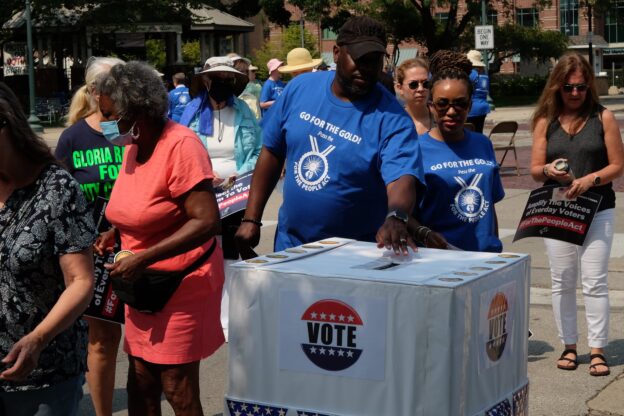
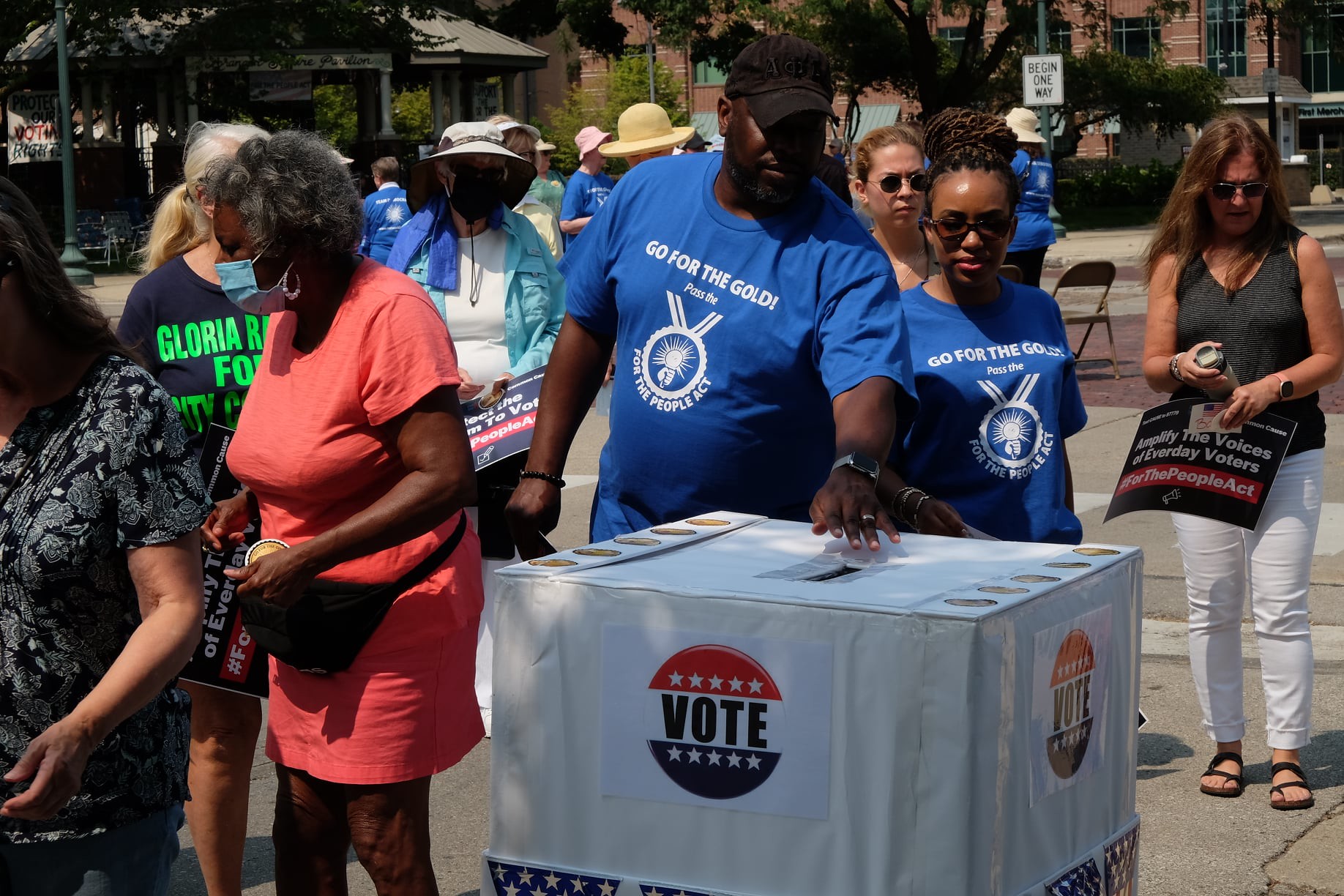
People cast their votes for federal democracy reform as part of NETWORK’s “Team Democracy” events across the country in 2021. Voting rights, which have come under threat at the state level since the U.S. Supreme Court gutted the Voting Rights Act in 2013, are a key component of NETWORK’s efforts to defend democracy.

The Faith-Filled Push To Save Democracy

The Faith-Filled Push To Save Democracy

A Stark Choice of Futures Faces Voters in 2022
Melissa Cedillo
October 7, 2022
People cast their votes for federal democracy reform as part of NETWORK’s “Team Democracy” events across the country in 2021. Voting rights, which have come under threat at the state level since the U.S. Supreme Court gutted the Voting Rights Act in 2013, are a key component of NETWORK’s efforts to defend democracy.

People cast their votes for federal democracy reform as part of NETWORK’s “Team Democracy” events across the country in 2021. Voting rights, which have come under threat at the state level since the U.S. Supreme Court gutted the Voting Rights Act in 2013, are a key component of NETWORK’s efforts to defend democracy.

Upholding a democracy is a daunting task this year. According to the elections data website FiveThirtyEight, 195 out of 529 GOP nominees on the ballot this year “fully denied” the outcome of the 2020 U.S. presidential election. Dozens of others “raised questions” or accepted the results “with reservations.” Only 71 respondents say they accept the results fully.

As statistics like these surface the vulnerability and fragility of the system, faith groups in Washington and around the country are attuned to the moral urgency that this moment requires.

As the 2022 midterm elections grow closer, the NETWORK Lobby for Catholic Social Justice is just one entity among this patchwork of organizations, interfaith coalitions, and campaigns are coming together to respond to election deniers, Christian nationalism, and all the forces that currently threaten democracy in the U.S.

A Particular Threat

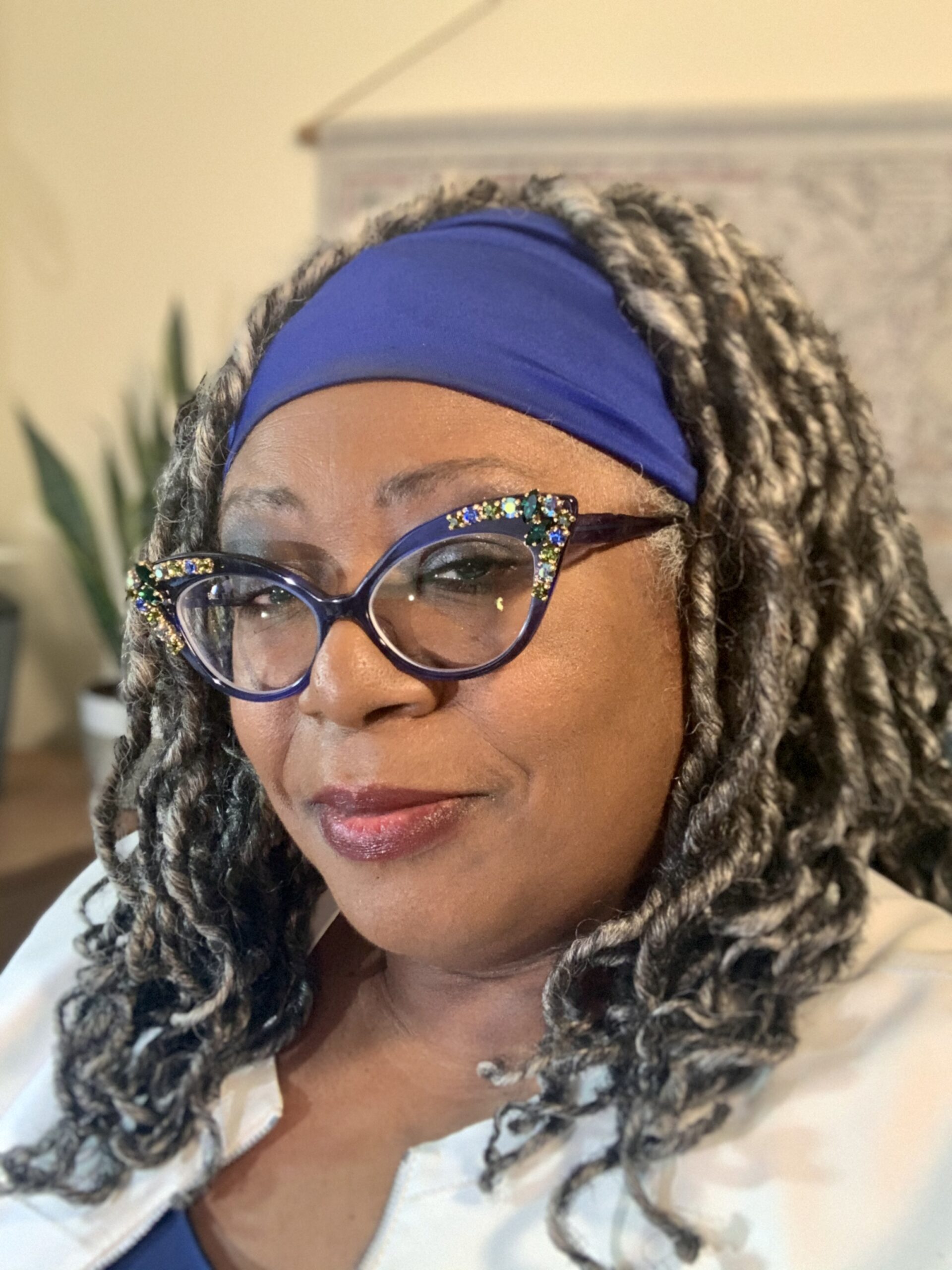
Anthea Butler, chair of religious studies at the University of Pennsylvania

Anthea Butler

Anthea Butler, chair of the department of religious studies at the University of Pennsylvania and a historian of African-American and U.S. religion, notes that one of the long lasting threats to democracy continues to be Christian nationalism. Butler has written and studied the intersection of race, religion, history, and politics extensively. In her book “White Evangelical Racism: The Politics of Morality in America,” she outlines the long history of Christian Nationalism and racism in the U.S.

“The first thing to understand about a lot of Christian nationalists is that they don’t want democracy,” Butler says. “Because at [Christian nationalism’s] core, it really wants to set up God’s law, rather than the Constitution, as an operating document for what this country is supposed to be.”

Butler says this form of nationalism poses a threat not only to people who immigrated to the country to flee religious persecution, but also to Christians who do not follow the same political beliefs. Denying the separation of church and state, ignoring the fact that many people who are not Christian live in the U.S., or simply not taking the outcome of the 2020 election seriously are some of the ways Christian nationalism erodes the foundation of a country that celebrates religious freedom.

One group responding to the threat of Christian nationalism is the Center for Faith, Justice, and Reconciliation.

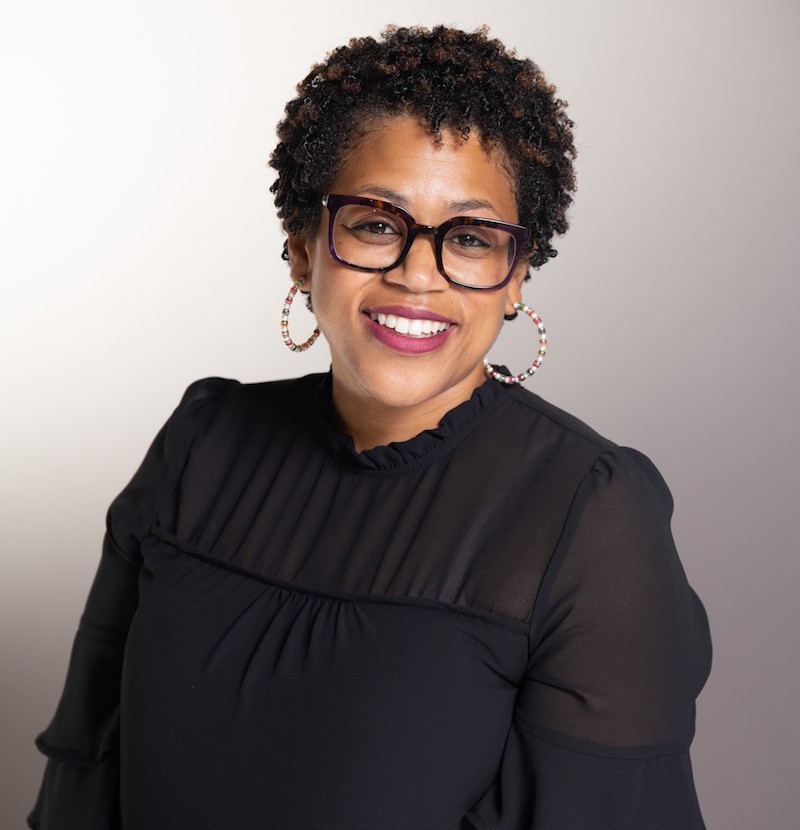
Sabrina Dent of the Center for Faith, Justice and Reconciliation

Sabrina Dent

“The ideology that is being promoted by a small group of people that identify as Christians that causes great harm and moral injuries to the community as a whole,” explains Sabrina E. Dent, president of the center.

The center is a community of scholars, faith leaders, organizers, and citizens working to expand the idea of religious freedom in the U.S. The center also works to put on educational programming. The center has worked on immigration issues, LGTBQ+ issues, reproductive health issues, voting rights, environmental issues, criminal justice issues, church and state issues, and voting rights. Whenever the center feels that there is a justice issue, especially when looking at racial and religious minorities, they are willing to speak up and support these groups.

“A lot of our work is done in collaboration with other groups as well because, like I say all the time, this is not work that we could do by ourselves, “ Dent explains.

The Range of Issues

Others, including NETWORK, also see the work of protecting democracy as extending to other freedoms, especially voting rights. Senator Raphael Warnock of Georgia, himself a Baptist minister, has explained the political as a way to embrace the dignity of all of humanity in his case for expanding voting rights.

“There is no question that voting rights is a moral issue. I have often said that democracy in a real sense is the political enactment of a spiritual idea. This notion that each of us is a child of God, and therefore we ought to have a vote and a voice in the direction of our country and our destiny within it,” Warnock told NPR at the beginning of the year.

“If we don’t have democracy in this country, all human rights in this country are going to be denigrated. We need to fight for democracy,” says Barbara Hazelett, a member of NETWORK’s Virginia Advocates team.

Her group attends public town halls to make comments about justice issues like paid family leave or eliminating practices like solitary confinement. She has attended the local events to hand out leaflets on different topics and talk about state legislation with Virginians. She has also traveled to Washington to advocate for bills.

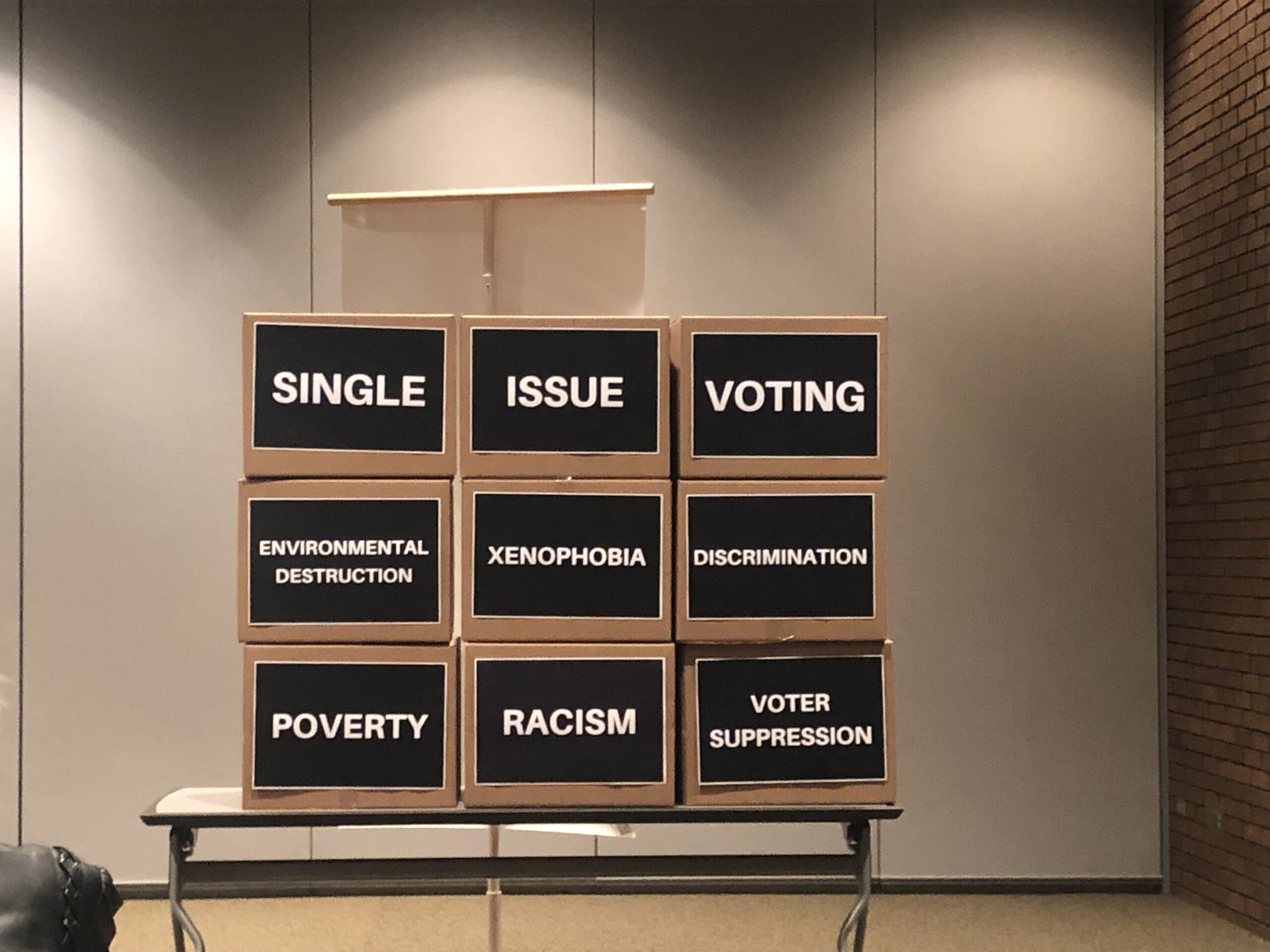
The comprehensive nature of this work, focusing across a range of issues, exposes a friction that is especially prevalent in Catholic circles, the issue of single-issue voting. Pope Francis, in his 2018 letter Gaudete Et Exsultate, spoke against this approach when he spoke of poverty and human life issues as being “equally sacred” to one another.

He revisited this rhetoric in a June 2020 general audience, in which he noted that “we cannot tolerate or turn a blind eye to racism and exclusion in any form and yet claim to defend the sacredness of every human life.”

Min. Christian S. Watkins, government relations advocate at NETWORK, is quick to tie the work of defending democracy to the hyper-racialized rhetoric happening in the U.S. The risk that poses to a healthy democracy is that it continues to feed racist policies that only benefit a few and which intentionally suppress others, especially Black and Brown people. In other words, the system has to live up to its own ideals to protect it in the future.

For the structure of democracy in the U.S. to be authentic, says Watkins, it must include the people that have historically been — and continue to be — left out of democracy: “We have to realize our common bonds, our mutual experiences, our interconnectedness.”

A New Social Fabric

A New Social Fabric

We Must Heed the Warning Signs and Save Our Democracy
Mary J. Novak
October 6, 2022

Turbulent times can take a toll on our imagination. As our politics grow ever more volatile and extreme, we interpret events through the lens of our total experience and assume that, sooner or later, events will settle back into our notion of “normal.”

This is a faulty view. If the last several years have taught us anything, it’s that our imaginations are not prepared for what might come next. And as the midterm elections rapidly approach, this warning is especially urgent.

Last January, my faith and public life colleagues in Washington held their annual retreat, and we had the privilege of hearing a presentation by Dr. Rachel Kleinfeld, senior fellow for the Democracy, Conflict and Governance Program at Carnegie Endowment for International Peace. She clarified that, while we in the U.S. often credit ourselves with being the world’s oldest democracy, we in fact started as a fairly limited democracy – we did not incorporate our Black community – and have only tried to be an inclusive democracy for 60 years, with the passage of the Voting Rights Act of 1965. Sadly, this also marked the point at which our political parties began sorting racially, a process that has continued to present day.

But what Dr. Kleinfeld shared next was more disturbing: When identity aligns with party, it increases political instability: “When more than one identity marker lines up, it actually increases chances of civil war by 12 times.” And in the U.S. our major parties are divided by geography (rural vs. urban), religion, and a host of other things.

The U.S. is among the most polarized countries in the world. People who are trained to see and understand democracies and civil wars across the globe, who study the data on civil wars, were not surprised by what happened on Jan. 6 of last year. They agree that the U.S. has high risk factors for civil war or significant harm to our democracy.

Dr. Kleinfeld explained: “Globally, four factors really elevate risk of election violence: competitive elections that decide balance of power, parties divided by identity, election rules that allow you to win by calling on identity because of how districts are drawn, and a security sector that leans to one side.”

We in the U.S. have all four. We also have alarming upward trends of actual violence against public officials, the politicization and extremism of law enforcement and military (1 in 10 rioters on Jan. 6 had service backgrounds), and the skyrocketing of new gun sales. We also have nearly two thirds of state and federal offices being sought by Republicans who do not fully accept the outcome of the 2020 presidential election.

In many Catholic churches, however, we can find people of all races and identities under the same roof. These are the kinds of places where peacebuilding can happen, where we can create the conditions for building the understanding we need to turn away from this downward spiral. As we look back on the Jan. 6 Committee hearings and all the violence of recent months, I hope we can all agree that we need to pay attention and start reaching out to those who do not agree with us on every issue.

Dr. Kleinfeld left us with this: “Hope, family, connection: A country rent by dissension must see, feel, and touch how it might come together. Families pulled apart by politics, conspiracy, disagreements over COVID, must find a way back to one another. Social fabric must be darned and re-sewn in a stronger tapestry.”

To help actualize this, churches can lead the way by saying no to violence of any type. Dr. Kleinfeld also called for the subordination of politics below religion, rather than making power into a religion unto itself. These are especially powerful admonitions as we enter into what may be the most consequential U.S. election since the Civil War.

We should also employ our imaginations to envision how the future can be profoundly more just and given to human flourishing, one that is vastly better for all than the old status quo we somehow accepted. At NETWORK, we keep this vision before us in the work we do, and especially as we approach this election. As followers of Jesus and collaborators with the Spirit, we walk in hope. We envision a new, inclusive social fabric, one that is ever durable and resplendently vibrant.

Listen to Just Politics Podcast!

Listen to Just Politics Podcast!

October 4, 2022

Exciting news!

In collaboration with our friends at U.S. Catholic, we have launched a new podcast: Just Politics.

Hosted by Sister Eilis McCulloh, H.M., Colin Martinez Longmore, Joan F. Neal, and Sister Emily TeKolste, S.P., Just Politics is a biweekly podcast about the intersection of Catholic teaching and politics.

In each episode, Catholic sisters and their NETWORK coworkers will engage a variety of guests, including members of Congress and justice-seekers across the country, to explore the question, “What does a better kind of politics look like and how can we make it a reality?”

The first two episodes are already out, and you can listen to them on the U.S. Catholic website, as well as on Apple Podcasts, Spotify, or wherever you listen to podcasts. Don’t forget to subscribe!

Check out Just Politics press at www.uscatholic.org/justpolitics where you can also sign up for email updates, learn more about each episode, and find additional reading on each episode’s topics.

We are excited to launch Just Politics, bringing NETWORK’s 50-year tradition of political ministry to a new medium and a new audience in partnership with U.S. Catholic. As we work to dismantle systemic racism, address rising political extremism, and protect our democracy, it is more important than ever to share these spirited conversations about how our faith calls us to respond to the existential threats of our time.”  —Mary J. Novak, NETWORK executive director 

The next episode of Just Politics comes out on October 17th — don’t miss it!

And, don’t forget to join the conversation about #JustPoliticsPod on social media!

Senate Republicans Block the DISCLOSE Act, Leaving Elections Vulnerable to Influence by dark money

Dark Money Remains Unchecked in U.S. Elections

Senate Republicans Block the DISCLOSE Act, Leaving Elections Vulnerable to Influence by dark money 

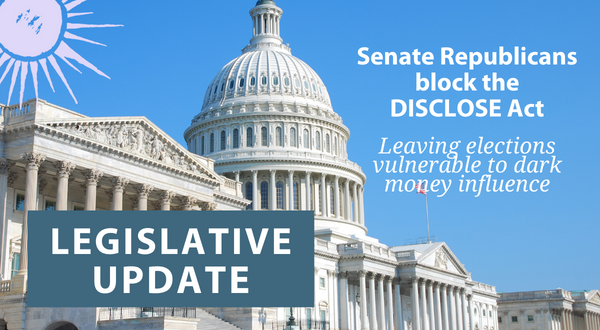
Thursday, September 22nd– Senate Republicans Block the DISCLOSE Act, leaving elections vulnerable to influence by dark money. The legislation (the DISCLOSE Act of 2021, or S.4822) was reintroduced to remove the influence of anonymously donated funds in politics. It would have required major political donors (those who give more than $10,000) to disclose their identity. And it would have increased the transparency of political advertisements by requiring donors that underwrite ads supporting or attacking judicial nominees, to reveal their identities.

This legislation was designed to ensure free and fair elections and protect the right of voters to have their voices heard in a truly representative, multi-racial, and multi-faith democracy.

Unfortunately, Republican Senators filibustered to block debate on the issue. Their refusal to collaborate with their colleagues across the aisle to protect our democracy from the inappropriate influence of dark money, is an affront to the Constitution. They have shirked their legislative duty and responsibility to voters. It is another disappointing example of Republican Senators prioritizing corporate interest over the people in our country.

The optics of their action suggests a concerted effort to preserve the ability to line their coffers with large sums of money without transparency. And it leaves the fairness of election results to hang in the balance as deep-pocketed lobbyists and donors enjoy an open lane to subvert the will of the people with their dark funds.

“The gall of senators who blocked even moving forward with debate on secret money and the DISCLOSE Act is a slap in the face to our democratic ideals and should leave every American deeply concerned. Without legislation like the DISCLOSE Act shining a light on secret financial donations, corporations, billionaires, and foreign interests that are seeking to influence our elections will continue to have free rein to continue their anonymous spending.”

       Christine Wood, co-Director for the Declaration for American Democracy   NETWORK’s Democracy Reform coalition partner 

At a time when extremist legislators across the country are erecting barriers to voting and trying to sabotage future elections, Senate Republicans had the opportunity to prevent special interests, corporations, billionaires, and foreign interests from perverting elections and possibly gaining control of our government. They chose not to.

Our Constitution calls for a democratic republic where legislators are elected to craft policies and laws that serve the will of the people. These Senators prioritized greedy lobbyists, special interests, and the like who prefer to do their political maneuvering in the dark. How does giving them free reign to influence our elected officials serve the will of the electorate?    

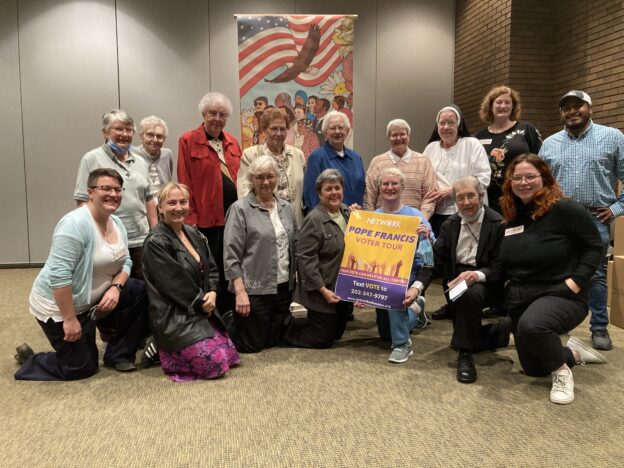
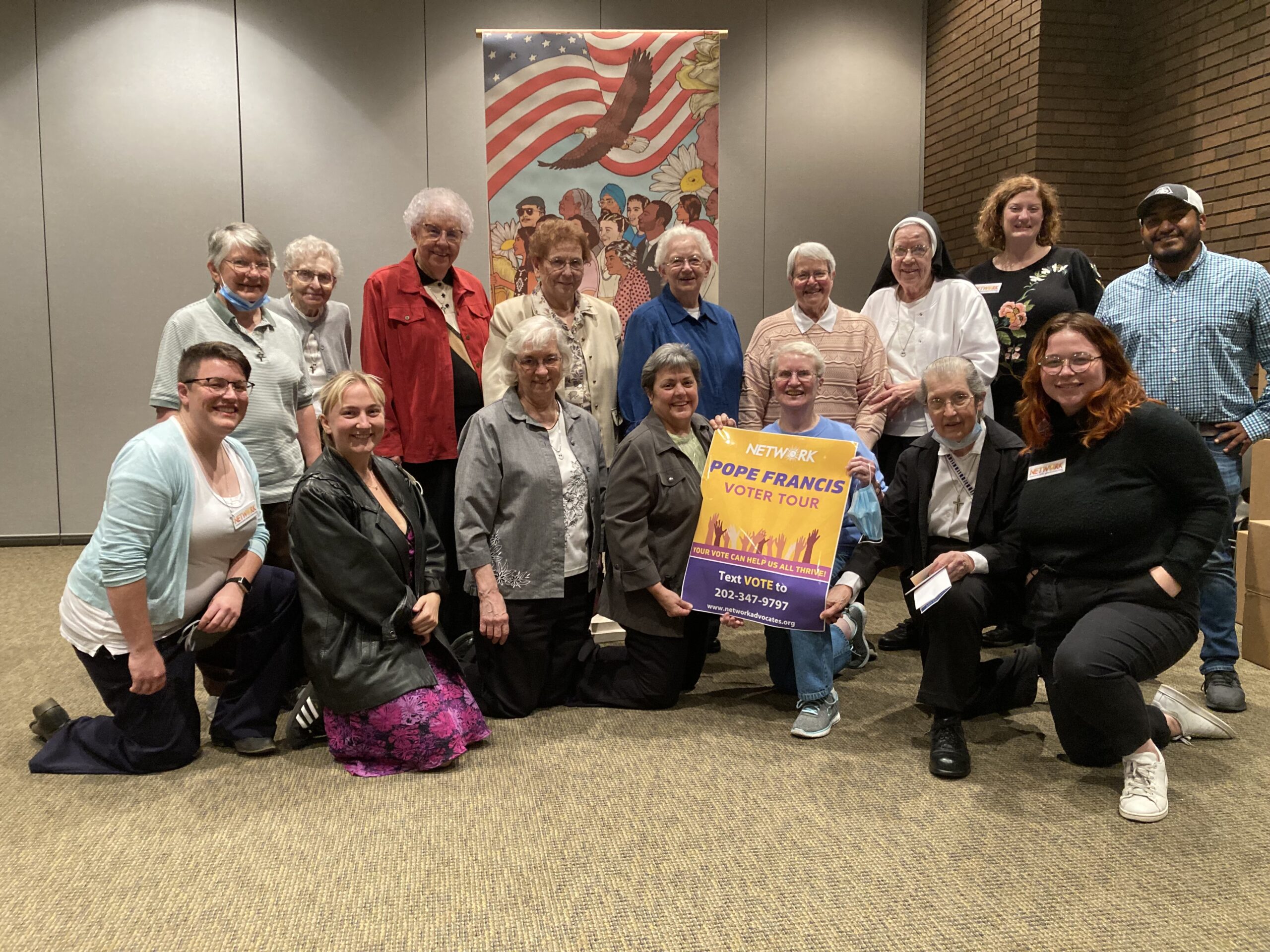
NETWORK will continue our faithful advocacy for federal democracy reforms. And we need your advocacy too! Prepare with NETWORK staff to be a multi-issue Pope Francis Voter and transform our politics! Sign up for the next workshop here. Can you invite three (3) friends to sign up, too?  

Now that Congress has failed to weed dark money out of politics, It is up to the Biden Administration to protect and strengthen our democracy. President Biden can sign executive orders to help shine a light on secret money spending by contractors that receive federal dollars, ensuring transparency, so that American voters can identify the influencers of our federal elections. 

Resources

How would Pope Francis Vote?
We invite you to speak out too by signing this letter
NETWORK Voter Training: learn how faith, social justice, and voting help us build anew

A good Catholic meddles in politics -- Pope Francishe best of hiself, so that those who

Catholics Speak Out for Democracy and Our Freedoms

Add your name to this important statement from Faith in Public Life, the Sisters of Mercy, the National Black Sisters’ Conference, the Leadership Conference of Women Religious, the Franciscan Action Network, and Catholic scholars and leaders across the country.

Catholics Speak Out for Democracy and Our Freedoms

As Catholic social justice leaders, sisters, clergy, theologians and Catholic university presidents, we are compelled to speak out at a time when democracy and the future of our nation’s freedoms are threatened by powerful interests.

White Christian nationalism —  an ideology heretical to authentic faith — represents a clear and present danger to building a multi-faith, multiracial democracy. Testimony and evidence from Congressional hearings on the violent insurrection against our country last January 6th have only strengthened our urgency to confront attacks against the principle that voters choose our leaders in free and peaceful elections.

We are increasingly alarmed by the signs of the times. Threats of political violence and dehumanizing rhetoric toward elected officials have increased in recent years.The Supreme Court, which in 2013 dismantled key provisions of the landmark Voting Rights Act, will in its upcoming term hear a case that experts warn could empower gerrymandered partisan legislatures to override the will of the voters in the 2024 elections. Lawmakers in states across the country have passed dozens of laws, many based on completely false political premises, specifically designed to make voting more difficult. These laws disproportionately impact Black and Brown citizens — a shameful echo of our country’s ugly history of racial discrimination.

Catholics must not be silent in the face of growing threats to voters, fair elections and democratic principles.

Our faith tradition teaches that every person deserves equal access to participate fully in our democracy. Pope Francis has said that “democracy requires participation and involvement on the part of all.” The Second Vatican Council declared in Gaudium et Spes: “It is in full accord with human nature that juridical political structures should, with ever better success and without any discrimination, afford all their citizens the chance to participate freely and actively in establishing the constitutional bases of a political community, governing the state, determining the scope and purpose of various institutions, and choosing leaders.”

Powerful institutions and political leaders are working to rig the system and erect racially discriminatory obstacles to voting and full participation in American life. Voter suppression is a sin and silence is complicity. The struggle to ensure our government represents and serves all regardless of color, class or creed is a defining moral challenge of our time. We urge our elected officials in Congress and in state legislatures, especially our fellow Catholics, to support legislation that protects and strengthens the freedom to vote without barriers or interference.

Democracies are fragile. In recent years, this timeless truth has been shown in stark ways as demagogues and nationalists in the United States and around the world have attacked the very existence of pluralistic societies. It’s now time for a renewed commitment to the common good that makes full, equal participation in political life a moral priority.

This action alert is now closed. Thank you for your participation!

NETWORK Lobby for Catholic Social Justice Urges Yes Vote on Respect for Marriage Act

NETWORK Lobby for Catholic Social Justice Urges Yes Vote on Respect for Marriage Act

Audrey Carroll
August 1, 2022

Today NETWORK Lobby for Catholic Social Justice sent a vote recommendation to Senators calling on them to vote YES on the Respect for Marriage Act. The legislation repeals the discriminatory Defense of Marriage Act and codifies the right to civil marriage, regardless of sexual orientation or race. The Respect for Marriage Act recently passed in the House of Representatives with a 267 – 157 vote.

See a copy of the letter to the Senate below:

On Immigration, Be Angry For the Right Reasons

Sadly, U.S. Immigration Policy Has No Shortage of Outrages

Ronnate Asirwatham
September 15, 2022

Tune in any news outlet with a right-wing editorial slant, and it won’t be long before you encounter stories, narratives being pushed, of activities at the U.S.-Mexico border intended to frighten or enrage you, the viewer. This could be how drug seizures are depicted as if the government is somehow not doing its job, or it could be the dehumanizing portrayal of men and women seeking asylum in this country as some kind of threat to the safety of people living in the United States.

The racism, xenophobia, and fear-mongering wrapped up in these narratives are a gross misuse of the responsibilities held by the media. Their job is to inform, not to poison people’s minds with distortions and misinformation. But what’s also really tragic here is that, when it comes to immigration and issues at the border, there are plenty of issues that are worthy of our rage! But that rage is misplaced time and again, as a result of campaigns based on fear, not compassion.

The real issues worth being mad about are the result of a very deep hole the U.S. has dug in recent decades through both inaction on immigration policy and direct action, most notably by the previous presidential administration, to make life somehow even more hellish for some of the most marginalized people in the world — those who’ve fled their homes and countries in hopes of finding peace and security in a new land.

An especially egregious example of this was the previous administration’s March 2020 move to invoke Title 42 of the U.S. Code to prohibit entry of asylum seekers, using the possible spread of COVID-19 as the excuse. This order has been misused for over two years to illegally block migrants at the border, even though public health experts repeatedly declared the order has no true medical basis or justification. Title 42 has resulted in over 1.6 million expulsions of asylum seekers back to harm and over 10,000 incidents of kidnapping, torture, rape, and other violent attacks against migrant people.

No court in the United States has yet said the policy itself is legal, as legal challenges so far have only upheld it from the standpoint of administrative practice and capacity. The Immigration and Nationality Act says that seeking asylum is legal no matter how you cross the border.

As Joan F. Neal, NETWORK’s deputy executive director and chief equity officer, has noted: “Seeking asylum is a fundamental human right. The continuation of unjust, immoral Title 42 expulsions dishonors the God-given dignity of migrants and violates the internationally-recognized right to seek asylum. We must restore asylum at our southern border.

Delays by the current administration in rescinding this policy prompted more than 80 Catholic Sisters from across the U.S. to come to Washington last December. Carrying signs and praying, they marched past the White House, demanding an end to this racist policy. When President Biden finally moved to rescind Title 42 expulsions this spring, a federal judge issued an injunction blocking the administration’s action.

The inability to rise above our dysfunctional immigration policies is also worth people’s anger. Administration after administration, Congress after Congress, has failed to pass meaningful immigration reform, despite the fact that they have the power to bring millions out of the shadows and into the recognition of their dignity as citizens. Bishops and popes have called for these very policies — whether some version of the DREAM Act for people who entered the U.S. as children or comprehensive reform that provides a path to full inclusion and participation in society for everyone. Rather than recognizing the power they have to affect transformation of so many people’s lives, our leaders have squandered this opportunity, instead allowing our politics and society to indulge the lies of racism and white supremacy.

Christians should allow their hearts to be broken open by the plights of the people who think that, for all its flaws, the U.S. is still somewhere they want to make a home. We could build something beautiful, an inclusive future for our immigrant neighbors in this country, in which everyone’s contributions are valued and rewarded — if we just let the right things make us angry.

Biden Administration Restored Pre-Trump Era Public Charge Regulations

The Biden Administration Restored Pre-Trump Era Public Charge Regulations (And Makes an Improvement)

Biden Administration Restored Pre-Trump Era Public Charge Regulations

On Friday, September 9, 2022, The Biden Administration restored pre-Trump era public charge regulations when the U.S. Department of Homeland Security (DHS) issued a final public charge regulation that provides critical protections to secure immigrant families’ access to health and social services. This is a welcome update to the policy shift (flagged in March 2021) made to public charge regulations instituted in 2019 under the Trump administration

“The 2019 public charge rule was not in keeping with our nation’s values. It penalized those who access health benefits and other government services available to them,” said Secretary of Homeland Security Alejandro N. Mayorkas. (DHS)

The Trump administration upended public charge rules that had existed for 20 years prior to their one term in office. Their changes were not consistent with Catholic Social Justice or NETWORK’s Build Anew Agenda, That administration considered noncash public benefits, such as the Supplemental Nutrition Assistance Program (SNAP), Medicaid, or housing assistance, in applications for green cards or temporary visas. immigrant persons, families, and children.

The Biden administration’s reversal not only restores the policy to the pre-Trump era, it also includes an improvement sought by more than 1,000 organizations coordinated by the Protecting Immigrant Families coalition (PIF): DHS will not consider use of health care, nutrition, or housing programs when making immigration decisions. NETWORK Lobby is in the PIF coalition.

Reacting to the publication of the final public charge regulation, PIF issued the following statement:

“The final Biden public charge regulation is a major win for immigrant families. We know that anti-immigrant politicians will attack this reform through partisan litigation, but there are solid grounds for a court to uphold the rule. The new rule clarifies what is and is not considered in a public charge determination, providing assurances that eligible immigrant families can use health care, nutrition, and housing programs without public charge concerns.

“The more than 600 members of the PIF coalition are emboldened in our broader fight to repeal provisions in immigration law that are racist and discriminate against low-income people of color. Congress must strike public charge from the law and eliminate other barriers to the health and social services safety net. We will continue to push our leaders for action.” (PIF director, Adriana Cadena)

Note: This DHS decision was met with broad support by House Leadership. Ways and Means Committee Chairman Richard E. Neal (D-MA) and Energy and Commerce Committee Chairman Frank Pallone, Jr. (D-NJ) applauded the Biden Administration’s final rule restoring longstanding policy on the treatment of noncitizens seeking government assistance.

Additional background

The Trump-era regulations had a chilling effect on immigrants, causing many fearful to reach out for public assistance. An Urban Institute study examined immigrant families living with children under the age of 19 under the Trump policy in a Well-Being and Basic Needs Survey. The study found a significant preference to avoid health and social services benefits in order not to jeopardize their immigration application. This, of course, compromised their safety and well-being (and that of their children)–especially in light of the COVID-19 pandemic.

One in 5 adults in immigrant families with children (20.0 percent) and almost 3 in 10 of those in low-income immigrant families with children (28.8 percent) reported that they or a family member avoided one or more noncash public benefits or other help with basic needs in 2020 because of concerns about green card status or other immigration-related reasons. (Urban Institute)

Learn more with these resources:

To Die to White Supremacy - End Racism

Be Alive In Christ To Die To White Supremacy

White Christians Need To Recognize the Ingrained Racism That Keeps Them From Seeing God in Everyone

Spirited Sisters

September 13, 2022

When confronted with racist or nativist violence or policies, many white Americans respond with the assertion “This is not who we are!” Others claim that calling out white supremacy is an indictment of the very foundation of the United States. And this second group is actually right, though not in the way they intend. White supremacy is indeed the foundation of our nation, and it continues to show up in the attitudes of people as well as the policies and structures on which our society is built.

NETWORK Lobby Hosted a Discussion on White Supremacy and American Christianity with Father Massengale, Dr. Jones, and Dr. Chatelain“White supremacy is the non-rational, instinctual, visceral conviction that this country – its public spaces, its political institutions, its cultural heritage – that these belong to white people in a way that they do not and should not belong to others,” says Father Bryan Massingale of Fordham University. NETWORK’s April 9 conversation with Father Massingale, Dr. Robert P. Jones, and Dr. Marcia Chatelain laid bare that this is precisely who we are – and especially who white American Christians are.

Faced with the stark data from Jones’ research as founder and CEO of the Public Religion Research Institute (PRRI), that just sitting in the pews (in a white congregation) increases your chances of holding racist views, what are Christians – and especially white Christians – to do? According to Jones, “The biggest problem is that white people think they have nothing at stake in this conversation.”

In other words, racism harms all of us. As an organizer, I talk about self-interest regularly, because self-interest can be a fruitful place for people to work together for a shared good. And in this case, that shared good is economic opportunity and a basic standard of living. My grandparents got it as beneficiaries of the GI Bill. Their wealth paid for much of my college (with significant tax benefits that are not granted to those who have to take out student loans).

But as soon as public goods started to open up to people of color, elite white people rebelled and began convincing poor and middle-class white people to choose their racial interests over their class interests – to ensure that Black people didn’t get access to public goods – and in doing so, to prevent themselves from accessing those same public goods. We need a multi-racial coalition to overturn that and build an economy that works for everyone and not just the ultra-wealthy elite. We can’t do that if we continue as we have been.

But this coalition has hurdles to overcome as, in the words of Father Massingale, “The Gospel of white supremacy is the functional religion of many white Christians and many white Catholics.” Which is to say, “white identity is the primary source of their locus, their commitment, their loyalty.”

This kind of truth-telling is critical if we want to move to real racial reconciliation. Conversion requires knowing we are wrong and acting to make amends. As St. Paul tells the Romans, “We’ve been buried with Jesus.” To be buried with Jesus is to be buried with the brown-skinned Jew in occupied Palestine. But we must be buried with Christ if we have any hope of being “alive to Christ.” We must embrace the death of white supremacy and act to bring about the death of white supremacy so that we can be alive to Beloved Community.

Dr. Marcia Chatelain of Georgetown University asked us if we could imagine a church that was seriously willing to give up power “in order to show that another world is possible.” Father Massingale asked us if we could imagine Jesus in Black and Brown bodies.

Imagination is a spiritual practice, especially when we want to imagine something that doesn’t yet exist. But the kin-dom of God doesn’t yet exist in its entirety, so we must imagine it. We must create and use images of Christ in Black and Brown bodies. Because if we only see God as a white man, then our subconscious will continue to tell us that only white men should be able to rule here “on earth as it is in heaven.”

All of this calls us to act. So what will you do this week?

Name it here: _________________________________

Now go do it.

Emily TeKolste, SP, is a Sister of Providence and NETWORK Grassroots Mobilization Coordinator. Her article originally appeared in the Third Quarter 2022 issue of Connection, NETWORK’s quarterly magazine – A Time to Build. Read the entire issue here.

Be a Multi-Issue Voter, a Pope Francis Voter and Improve Our Economy, Reduce Racism, and Safeguard Freedoms

Be a Multi-Issue Voter and Be a Pope Francis Voter. Sign Up to Learn How!

Election Workshops Teach You How to Be a Pope Francis Voter and Transform Politics!

Are you a multi-issue voter who is ready to be a Pope Francis Voter and build toward a multi-racial, inclusive democracy? Not sure what that means, but interested in how you can connect your faith, Catholic Social Justice, and voting? Then “Transform Our Politics! Becoming a Pope Francis Voter,” a virtual three-part election workshop series, is for you!

Each week, you will explore one of NETWORK’s Cornerstones to Build Our Country Anew: Dismantling Systemic Racism, Cultivating Inclusive Community, and Rooting Our Economy in Solidarity. The vision and skills you’ll acquire will help you during this election season and beyond. Download the Build Anew Agenda.

Your vote is your voice! Prepare with NETWORK staff to be a multi-issue Pope Francis Voter and transform our politics! We hope to see you at each 90-minute workshop. Session will be recorded.

Workshop I: Dismantle Systemic Racism

Learn how single-issue voting can be a cover for racism, nationalism, and extremism. Key policies that have begun to dismantle systemic racism in the U.S will be highlighted, and we’ll explore more that needs to happen.

Message training will help you take what you’ve learned into conversation with friends and family. Election season can complicate relationships, and so can talk of dismantling racism. NETWORK staff will model how you can use effective messaging to engage in transformative conversations.

Mon., Sept. 12, NOON Eastern/9:00 AM Pacific

Wed., Sept. 14, 7:00 PM Eastern/4:00 PM Pacific

Workshop II: Cultivate Inclusive Community

Explore your understanding of ‘inclusive community’ and break open the Catholic case for democracy. Some assert that inclusive communities create division and foster animosity toward people outside of the group.

NETWORK staff will show how inclusive communities are not exclusionary and are the polar opposite of White Christian Nationalism. We will envision how we can be part of creating a multi-racial, inclusive democracy this election season.

Mon., Sept. 19, NOON Eastern/9:00 AM Pacific

Wed., Sept. 21, 7:00 PM Eastern/4:00 PM Pacific

Workshop III: Root Our Economy in Solidarity

Learn about policies that address the racial wealth and income gap so that everyone has the economic stability needed to thrive. NETWORK staff will help you practice promoting these policies with the people in your life.

Engage in a discussion on the power and benefits of cross-cultural relationships and understanding to build racial solidarity. This must happen to bring NETWORK’s Build Anew Agenda into existence so we can build an economy of inclusion that values people and planet over profit. Participants will also learn how storytelling plays a role in transformative conversations.

Mon., Sept. 26, NOON Eastern/9:00 AM Pacific

Wed., Sept. 28, 7:00 PM Eastern/4:00 PM Pacific