
Category Archives: Front Page

The Pope Francis Voter Tour Comes to Cleveland!

The Pope Francis Voter Tour Comes to Cleveland!

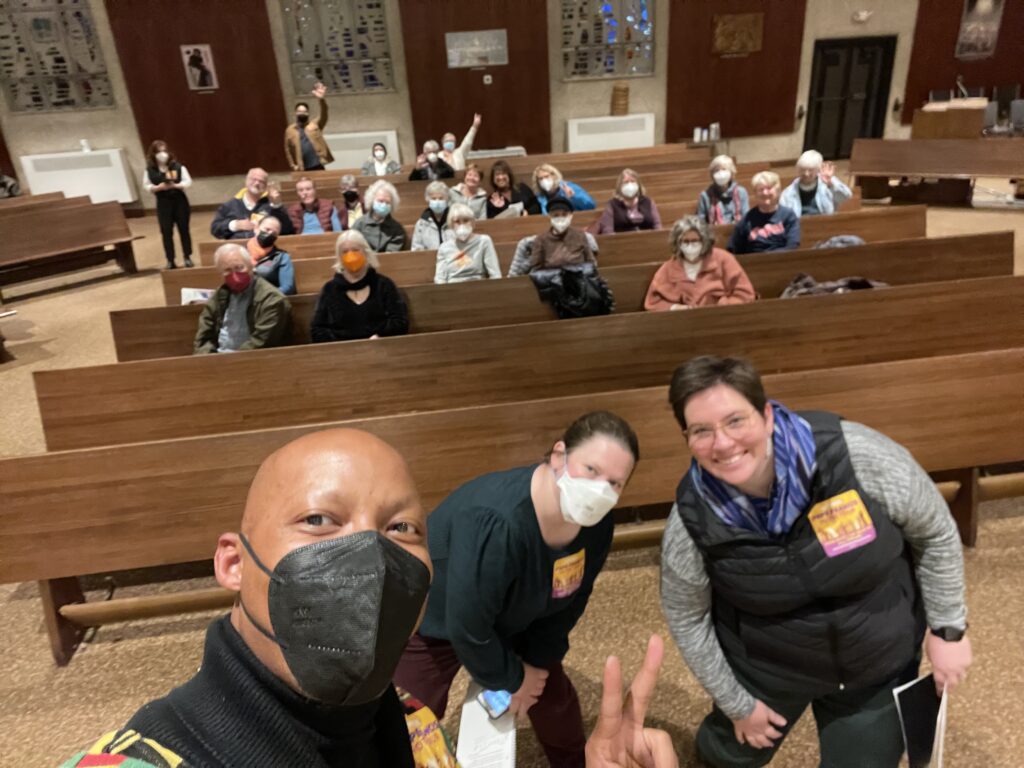
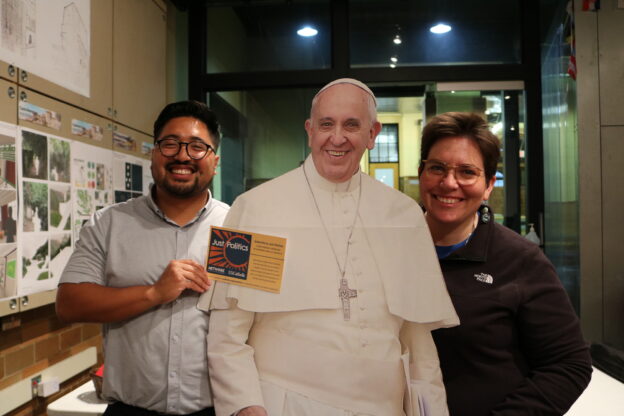
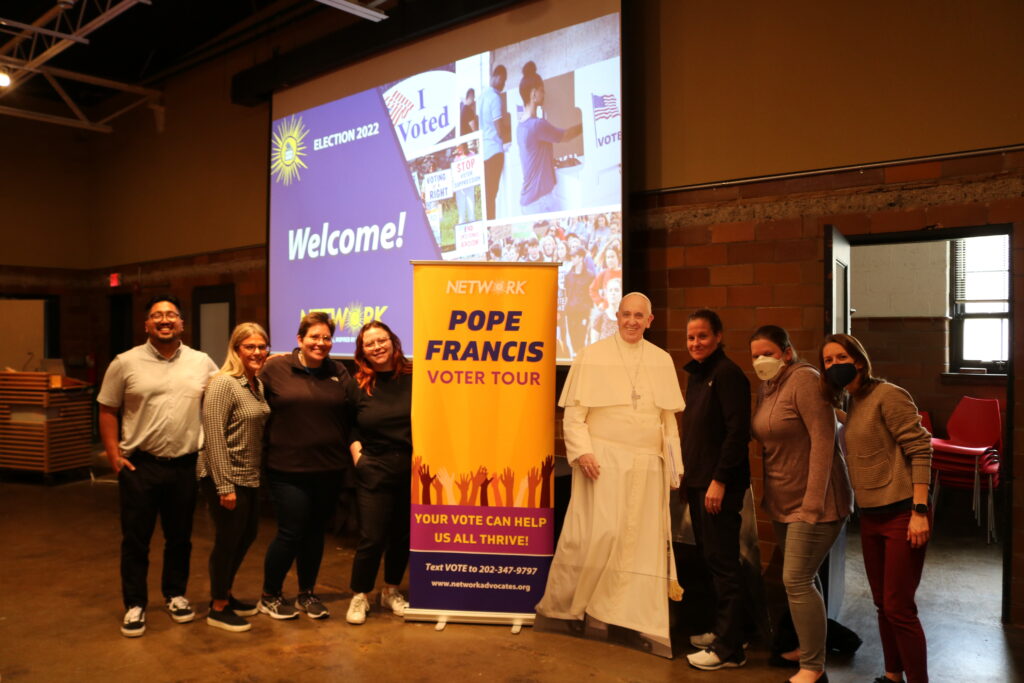
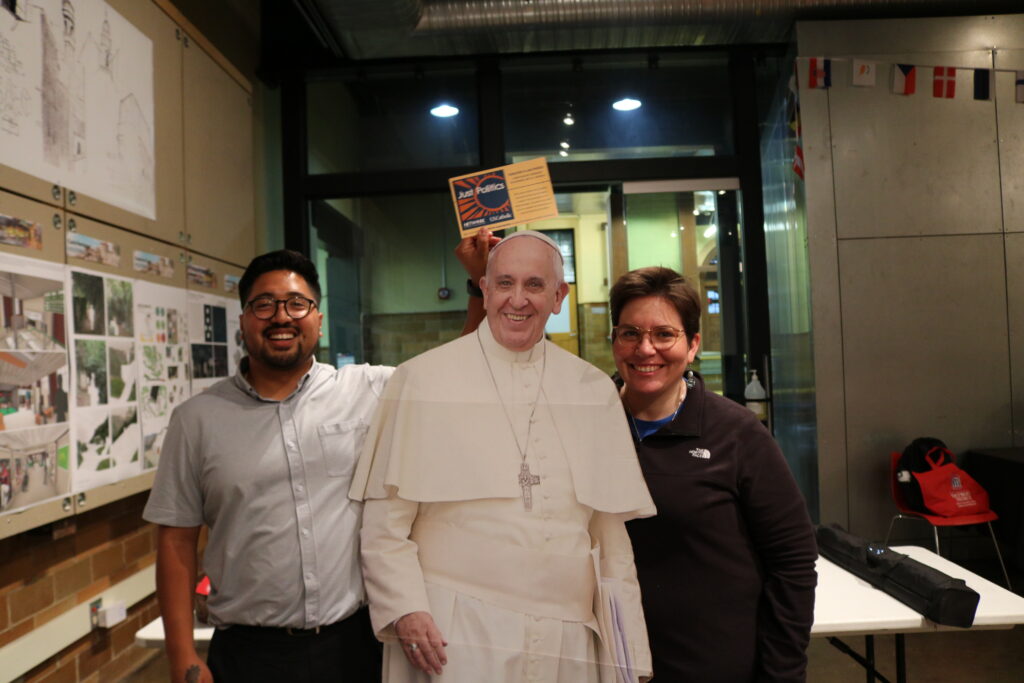
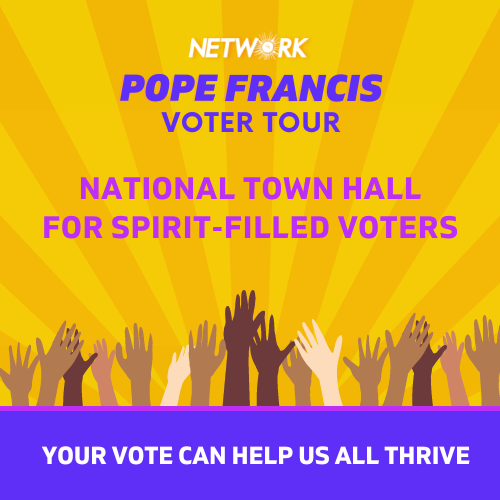
On October 18th, NETWORK’s Pope Francis Voter Tour stopped in Cleveland, OH and visited Esperanza Threads and hosted a Town Hall at Blessed Trinity Parish. At both the Site Visit and Town Hall, each speaker lifted up the power of community and connection. For three NETWORK staff members on tour — Eilis, Erin, and Julia — this stop was a homecoming and a chance to lift up the ministry of our community, parish, and hometown.

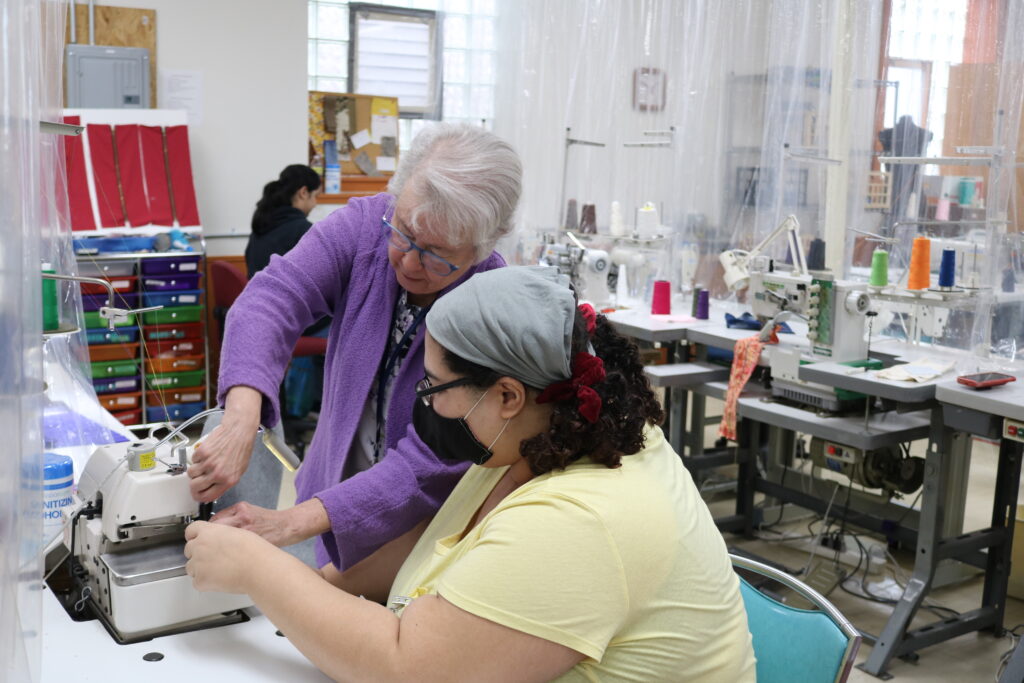
Founded by Sr. Mary Eileen Boyle, OSU in 1990, Esperanza Threads teaches low-income individuals how to sew industrially and works with local social service agencies and companies to place students in jobs. Many of the students at Esperanza Threads are former refugees who are looking for a job after having been resettled in Cleveland. For Eilis, this site visit was like coming full-circle. Prior to joining the staff at NETWORK, she ministered in refugee resettlement and sent many clients to Esperanza Threads for sewing and job skill training. Listening to the prophetic, community-building vision of Sr. Mary Eileen and Esperanza’s Executive Director Emily Tiell, reminded us about why we are Pope Francis voters who are committed to doing the work to build a multi-racial, inclusive democracy.

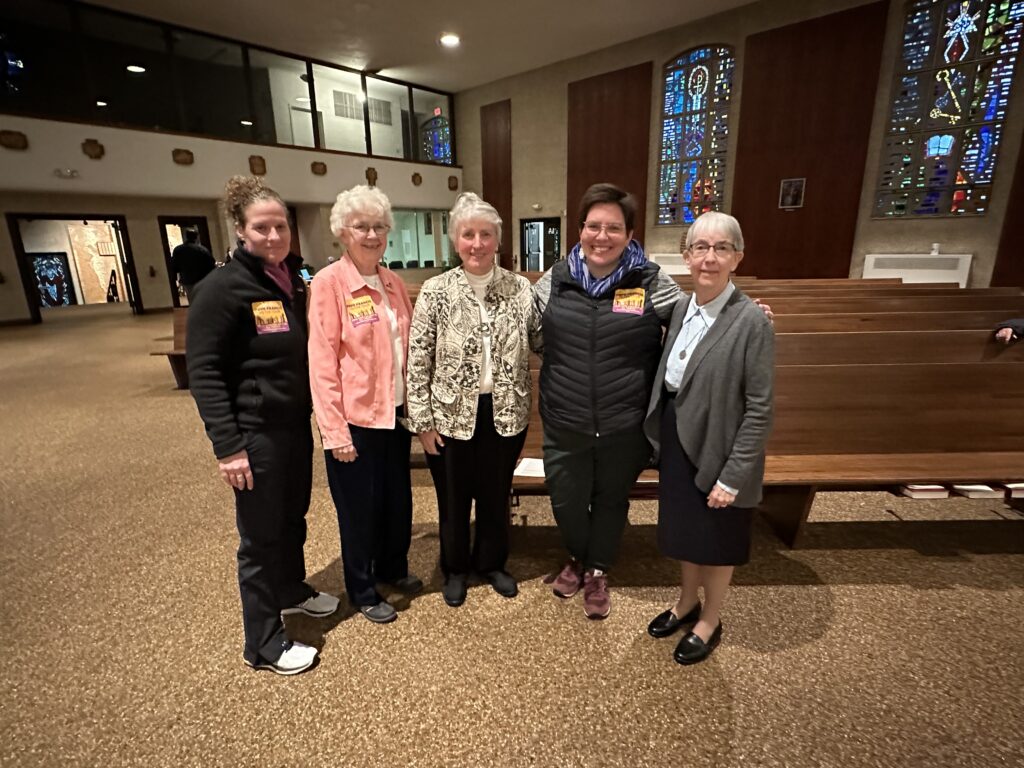
Following our inspiring site visit, on the evening of October 18th, NETWORK hosted our Town Hall for Spirit-Filled Voters. The Cleveland Town Hall featured three sisters from three different congregations: Humility of Mary Sister Anne Victory, Sister of St. Joseph Marilyn Nickol, and Incarnate Word Sister Margaret Taylor. Drawing on their life experiences, community charism, and ministry, each sister helped all of us see and understand the importance of multi-issue voting. In addition, our buzz question was asked by Jon Gromek, former NETWORK associate and longtime friend.

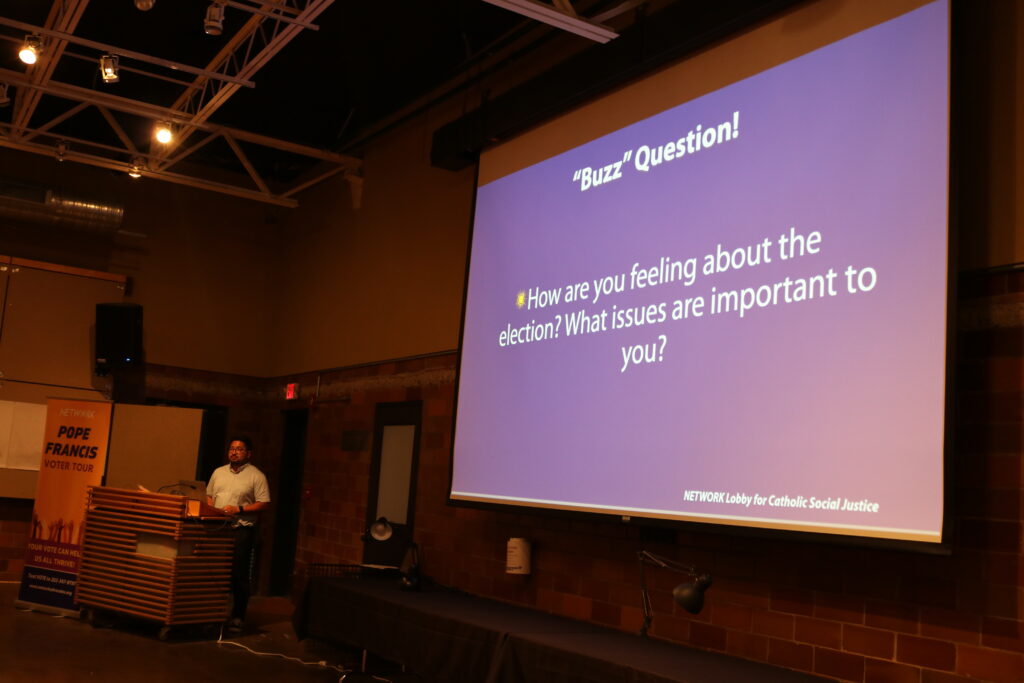
We begin each Town Hall with a buzz question. Part of that question and invitation to share with a neighbor is “What brings you hope.” Time and time again, we hear that NETWORK gives folks hope for the midterm elections. As one sister told me after the Town Hall finished, “it’s so easy to see that everything is horrible, but you all gave us hope to keep on fighting the good fight.” Another sister added, “it’s about the people and you all center that.” Each person with whom we spoke echoed this sentiment.

Sr. Margaret added to this idea when she explained her reasoning for being a multi-issue voter. She said, “My parents were faithful voters which inspires me to be one as well. We are people of good will who desire that all people have the opportunity to live a good life that promotes the freedom to vote; a life free from discrimination; a life that responds to the challenges of climate change; a life that does not tolerate racism and exclusion; a life that addresses the issues of poverty; a life that welcomes immigrants.”

The encounters we had in Cleveland can be summed up in one word: Community. It is clear that this is a place where people come together to support and celebrate one another.  The community of Cleveland shows up for each other, and we have no doubt this community will show up at the polls as Pope Francis Voters.

Sr. Barbara Beasley, RGS

Black Sisters Testify: To Oppressed People, Let Us Bring New Life

Black Sisters Testify: To Oppressed People, Let Us Bring New Life

Sr. Barbara Beasley, RGS
November 1, 2022
Sr. Barbara Beasley, RGS

Sr. Barbara Beasley, RGS

When I think about my own story and the story of every Black woman religious, there is a unifying theme, whatever the congregation we have membership in: We all testify that we have experienced the hand of God laid on us and a strong invitation to follow, to surrender to being loved by God and called to love and serve God’s people and to live together in a way that generates life.

The power of God’s call has been, and continues to be, the “why” and the “how” behind the determination and courage to move into the storm, whatever it feels like, whatever its form.

I often fall back to the beautiful lyrics by Curtis Burrell:

“I don’t feel no ways tired.

Come too far from where I started from.

Nobody told me that the road would be easy.

I don’t believe He brought me this far to leave me.”

In 1968, when the National Black Sisters’ Conference was founded, I was 30 years old and had been perpetually professed for three years. For that first meeting I traveled from Denver to Pittsburgh, to the Mercy Sisters’ campus to meet about 100 of myself! Although I had not seen many other Black Sisters before, I knew immediately the feeling of home.

Sister Martin De Porres Grey, RSM, was the woman of vision who convened us. Together we reclaimed (or reaffirmed) our identity, with the realization that Blackness is Gift to ourselves, our people, our congregations, the church, and beyond. From that first meeting until now, I have seen NBSC as a support and resource for the continuing growth of Black women religious, an advocate for justice for all people and a voice of conscience within the structure of the Catholic Church.

Nearly 40 years after the founding of NBSC, in 2007, Dr. Shannen Dee Williams stumbled upon an old news article, with a photo of four smiling African-American nuns at the first NBSC meeting. Dr. Williams was intrigued to discover that Black Catholic Sisters existed, not to mention that this large group of them had met to strategize on how to strengthen their impact for the sake of the liberation of their people.

As historian and educator, Dr. Williams knew she needed to find out more about these women, but little did she know that her own life would be radically changed by the work she was about to undertake. Her research led her to locate and interview the hidden storytellers who knew the story of the foundation of NBSC and wanted to share it.

Dr. Williams eventually tracked down Dr. Patricia Grey, formerly Sr. Martin De Porres, founder of NBSC. Dr. Grey’s prophetic words to Shannen were: If you can, tell the whole story of Black nuns in the United States. “Subversive Habits: Black Catholic Nuns in the Long African American Struggle for Freedom” did indeed tell the whole story.

As I read the book, what stirred a strong and painful reaction in me was the narrative of the foundation of the three Black religious Orders: the Oblate Sisters of Providence, the Sisters of the Holy Family, and the Franciscan Handmaids of Mary. No doubt it would be terribly difficult for small bands of Black women doing works of mercy on behalf of oppressed people. To those served by the Sisters, education, health care, social services, and advocacy would serve as lights on the path to a new life.

What was so deeply painful was the description of the outrage and resistance by white nuns to the mere thought of African-American women becoming consecrated religious in the Catholic Church and offering the ministry they were called to give. That the three Black Congregations are alive today gives witness to the mighty power of God’s Spirit ablaze within these faith-filled women.

I am profoundly grateful that this book about Black Sisters has been written. Dr. Williams did more than full justice by chronicling so magnificently what has been achieved, at what cost, and that the struggle goes on.

I venture to think that most/many congregations would welcome the gifts of Black recruits. There is awareness that each congregation has an obligation to support and encourage the culture of the persons who enter, a new level of responsibility on the side of the religious communities these young people come into. Like their predecessors in religious life, I pray that young religious today feel God’s hand firmly upon them and know in their hearts that God is and ever will be a Promise-Keeper.

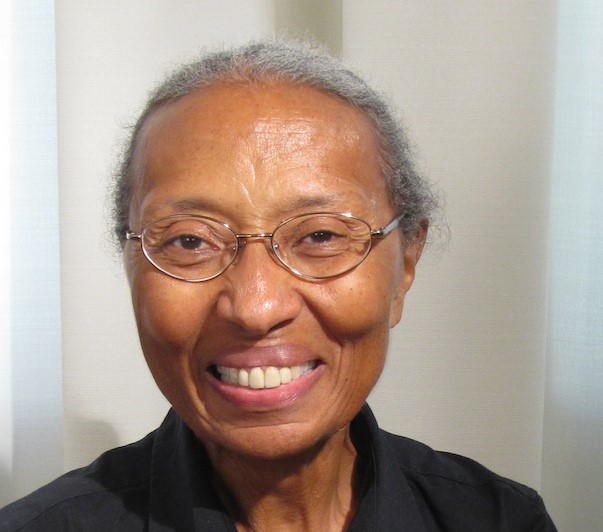
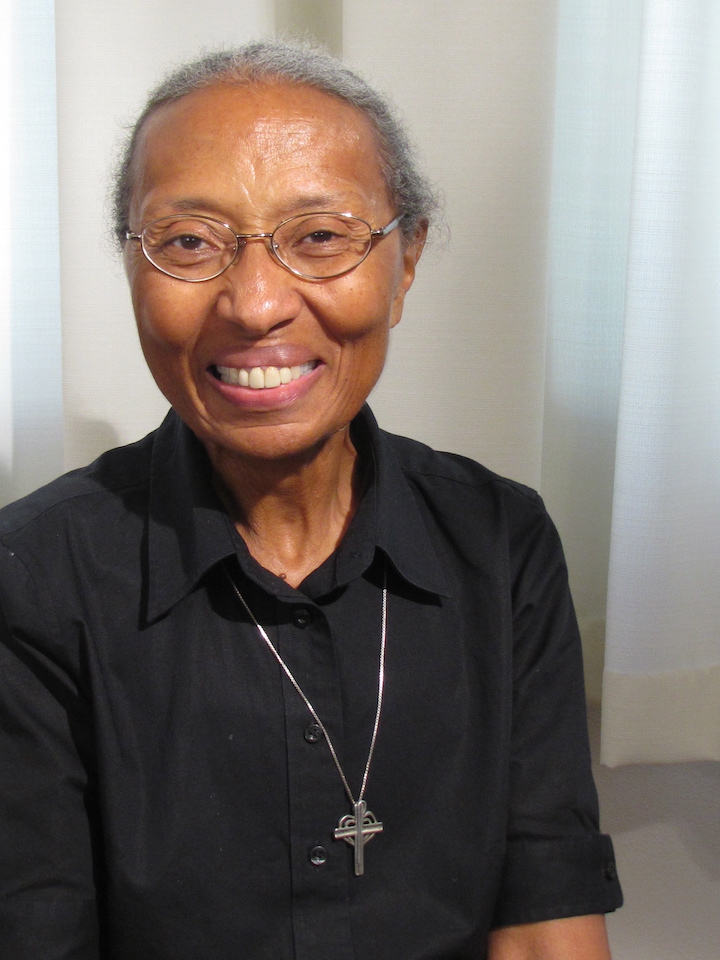
Sr. Barbara Beasley, RGS, is a Sister of the Good Shepherd and a founding member of the National Black Sisters’ Conference.

This November, NETWORK observes Black Catholic History Month in collaboration with the National Black Sisters Conference, centering the voices of Black Sisters and sharing their testimonies with our spirit-filled network of justice-seekers.

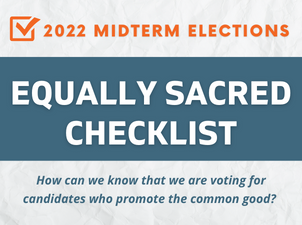
Equally Sacred Checklist - text graphic

Download and Share the Equally Sacred Checklist

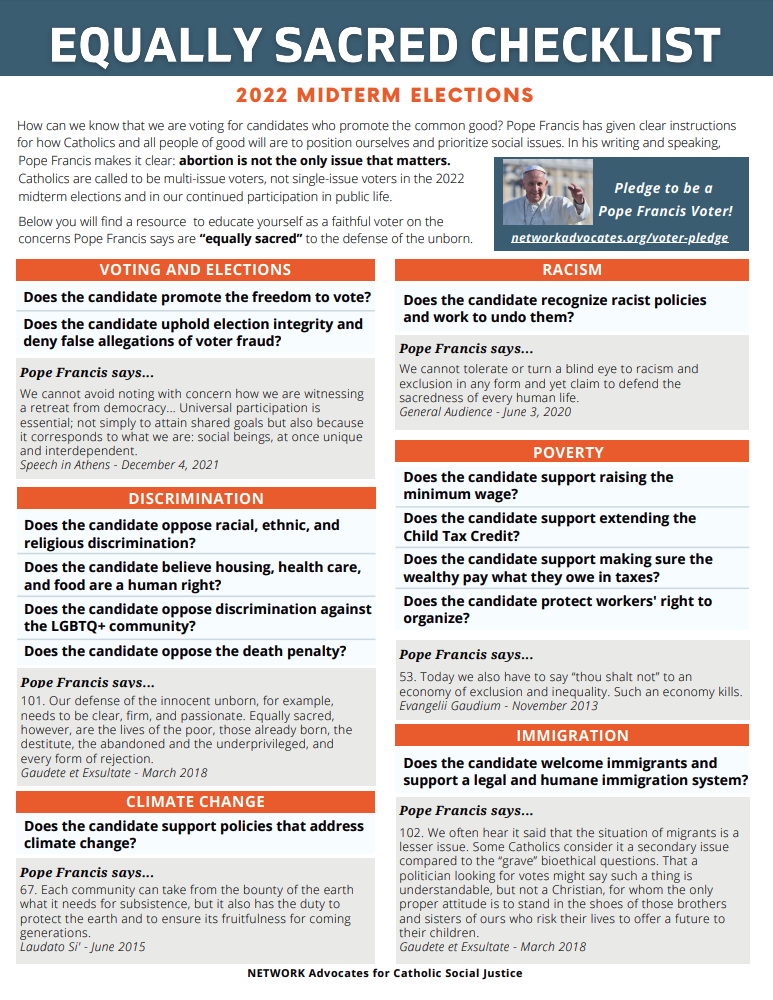
The Equally Sacred Checklist is Here!

October 25, 2022

How can we know that we are voting for candidates who promote the common good? Pope Francis has given clear instructions for how Catholics and all people of good will are to position ourselves and prioritize social issues.

In his writing and speaking, Pope Francis makes it clear: abortion is not the only issue that matters. Catholics are called to be multi-issue voters in the 2022 midterm elections and in our continued participation in public life. Use the Equally Sacred Checklist as a guide to reflect on the concerns that Pope Francis says are “equally sacred” to the defense of the unborn.

Share the Equally Sacred Checklist with your friends, family, fellow activists, and faith community members.  

Check out these sources to learn more about what Pope Francis says:

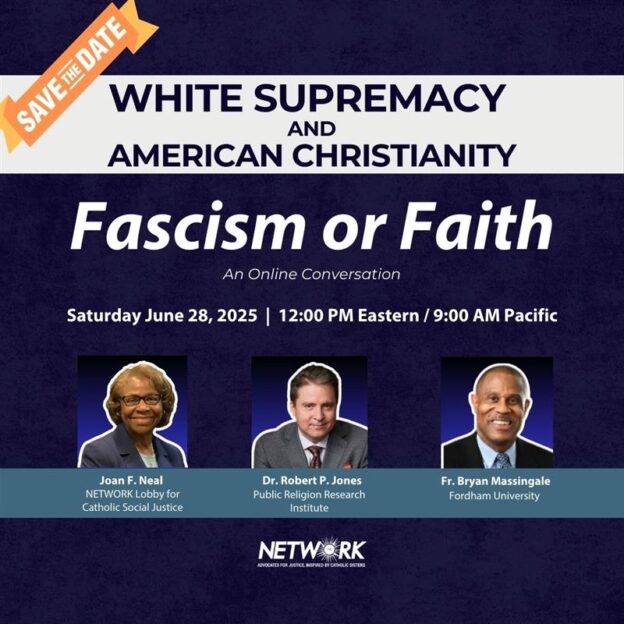
White Supremacy and American Christianity: Fascism or Faith

Take Action After Watching White Supremacy in American Christianity

White Supremacy and American Christianity Series

Fascism or Faith

Budget Reconciliation Toolkit

Bring the discussion to your community with messaging and resources from our NETWORK team.

Watch Only: Joan, Dr. Jones, and Fr. Massingale
Watch Only: Joan's Conversation with Amanda Tyler

What is White Christian Nationalism?

NETWORK partner, the Baptist Joint Committee for Religious Liberty (BJC), released a joint project with the Freedom From Religion Foundation (FFRF) detailing Christian nationalism’s prominence in the January 6 insurrection. In it, Amanda Taylor of BJC shares, “Christian nationalism is a political ideology and cultural framework that seeks to merge American and Christian identities, distorting both the Christian faith and America’s constitutional democracy. Christian nationalism relies on the mythological founding of the United States as a ‘Christian nation,’ singled out for God’s providence in order to fulfill God’s purposes on earth. Christian nationalism demands a privileged place for Christianity in public life, buttressed by the active support of government at all levels.

Christian nationalism is not Christianity, though it is not accurate to say that Christian nationalism has nothing to do with Christianity. Christian nationalism relies on Christian imagery and language.”

Watch Previous White Supremacy and American Christianity Conversations

White Supremacy and American Christianity, Part 5
We Choose Freedom
White Supremacy and American Christianity, Part 4

With previous discussion laying out the roots, influences, and threats to democracy posed by white supremacy in our churches and politics, Fr. Bryan N. Massingale, Dr. Robert P. Jones, and NETWORK’s Joan F. Neal looked to the future and explored how we the U.S. can move beyond Christian nationalism. And young adult justice-seekers shared how they connect their work for democracy to their faith. White Supremacy and American Christianity: Moving Towards Beloved Community was a special conversation, focused on the future and the possibility of a vibrant, multi-faith, multi-racial democracy where every person can thrive, without exception.

White Supremacy and American Christianity, Part 3

In October 2023, ethics professor Fr. Bryan N. Massingale, author Robert P. Jones, and NETWORK’s Joan F. Neal gathered for White Supremacy and American Christianity: A Consistent Ethic of Hate Threatens Our Democracy. The country was on the precipice of a budget crisis. House extremists didn’t want to negotiate, they wanted a government shutdown–they were a threat to our democracy. Their actions, rooted in white supremacy and Christian nationalism, were positioned to harm those they view as other: Black and Brown citizens and non-English speaking Black and Brown immigrants. Instead of building a pluralistic democracy, they aimed to diminish the progress and presence of non-white people in our country and throw our government into chaos.

White Supremacy and American Christianity, Part 2

In October 2022, ethics professor Fr. Bryan N. Massingale and author Robert P. Jones participated in an enlightening conversation ahead of this year’s midterm for an exploration on the influence of  White Supremacy in American Christianity on our politics. The conversation was moderated by NETWORK’s Joan F. Neal.

White Supremacy and American Christianity, Part 1

In April 2022, NETWORK engaged experts working at the intersection of racism, nationalism, and Christianity for a conversation on the poisonous effect that White Supremacy has on American Christianity. Fr. Bryan N. Massingale, Dr. Robert P. Jones, and NETWORK’s Deputy Executive Director and Chief Equity Officer Joan F. Neal were joined by Georgetown University’s Dr. Marcia Chatelain.

White Supremacy and American Christianity Guest Speakers

Darcy Hirsh is the Senior Director of Policy & Advocacy at Interfaith Alliance, (Part 3) where she leads the organization’s policy work at the local, state, and federal levels, as well as its critical advocacy in the courts.

Dr. Robert P. Jones is the President and Founder of PRRI, and author of White Too Long: The Legacy of White Supremacy in American Christianity. Robert P. Jones speaks and writes regularly on politics, culture, and religion in national media outlets including CNN, NPR, The New York Times, The Washington Post, and others. Dr. Robert Jones’s latest book is a New York Times best-seller. You can buy it here: The Hidden Roots of White Supremacy and the Path to a Shared American Future and follow Dr. Jones through his newsletter at https://www.whitetoolong.net/.

Fr. Bryan Massingale is the James and Nancy Buckman Professor of Theological and Social Ethics, as well as the Senior Ethics Fellow in Fordham’s Center for Ethics Education and author of Racial Justice and the Catholic Church. Fr. Massingale is a noted authority on social and racial justice issues, particularly in Catholic spaces. Read Fr. Massingale’s Op-Ed in National Catholic Reporter, “As the election cycle cranks up, Christians need to call out white Christian nationalism” and his keynote address at the 2022 Outreach Conference: “Intersectionality and LGBTQ Ministry”

Professor Marcia Chatelain, Ph.D., is the winner of the 2021 Pulitzer Prize in History (Part 1) her book Franchise: The Golden Arches in Black America. She is a professor of history and African American studies at Georgetown University and the leading organizer behind the #FergusonSyllabus, an online educational resource that has shaped educational conversations about racism and police brutality since 2014. 

Keep Up with NETWORK

Just Politics Catholic Podcast Season 2

Pope Francis Voter Tour Takes Toledo!

The Pope Francis Voter Tour Takes Toledo!

Colin Martinez-Longmore
October 26, 2022

The Pope Francis Voter tour made a stop in Toledo Ohio, where we took a few days to get some much needed rest and recharge before another week of political ministry.

Our site visit for Toledo was at the Center of Hope Family Services, a family-led nonprofit organization that provides a vast array of programs and services for both youth and adults in the community. We arrived on a cloudy Monday morning and were greeted warmly by Dr. Tracee Perryman, the CEO and Co-Founder of the Center of Hope. Dr. Perryman gave us a tour of the Center’s facility that is in the process of expanding. The impressive facility includes offices, meeting spaces, a direct service and programming area, and even a recording studio! After our tour, we all sat down in their conference room to hear more about the ways the Center of Hope has been a positive change agent for the community.

The Center of Hope Family Services has been serving youths, adults and families in Toledo for 25 years. It started from Center of Hope Community Baptist Church, and thanks to its success and growth, it was able to expand into its own 501©-3 nonprofit. One of the wonderful services we learned about was their court advocacy services that helped countless young people navigate the often-complex and daunting juvenile justice system. We also learned about their ELEVATE program which serves local students from grades K-4 who are at risk for academic failure. The program was such a success that it was expanded into a published curriculum, outlining an eight month afterschool education program that helps children thrive.

After our visit, we held a Speak out in their lobby to a small group of NETWORK supporters and members, and our broader online audience. Dr. Michael Carter, a pastor, community leader and an Elevate parent who has had his children involved in the program, was a featured speaker. He shared his experience about how the ELEVATE program has benefitted his son through their homework assistance program and even some at-home cooking classes that taught him how to cook quiche and dump cakes!

Organizations like the Center of Hope Family Services are inspiring for their innovation and unwavering commitment to underserved communities. We see the Pope Francis Voter spirit alive in their efforts as they tackle the multiple issues affecting their communities. If you are interested in supporting their organization, we encourage you to visit their website: https://www.cohfs.org/

Pope Francis Voter Tour: Detroit Town Hall for Spirit-Filled Voters

Celebrating Community at the Detroit Town Hall for Spirit-Filled Voters

Catherine Gillette
October 26, 2022

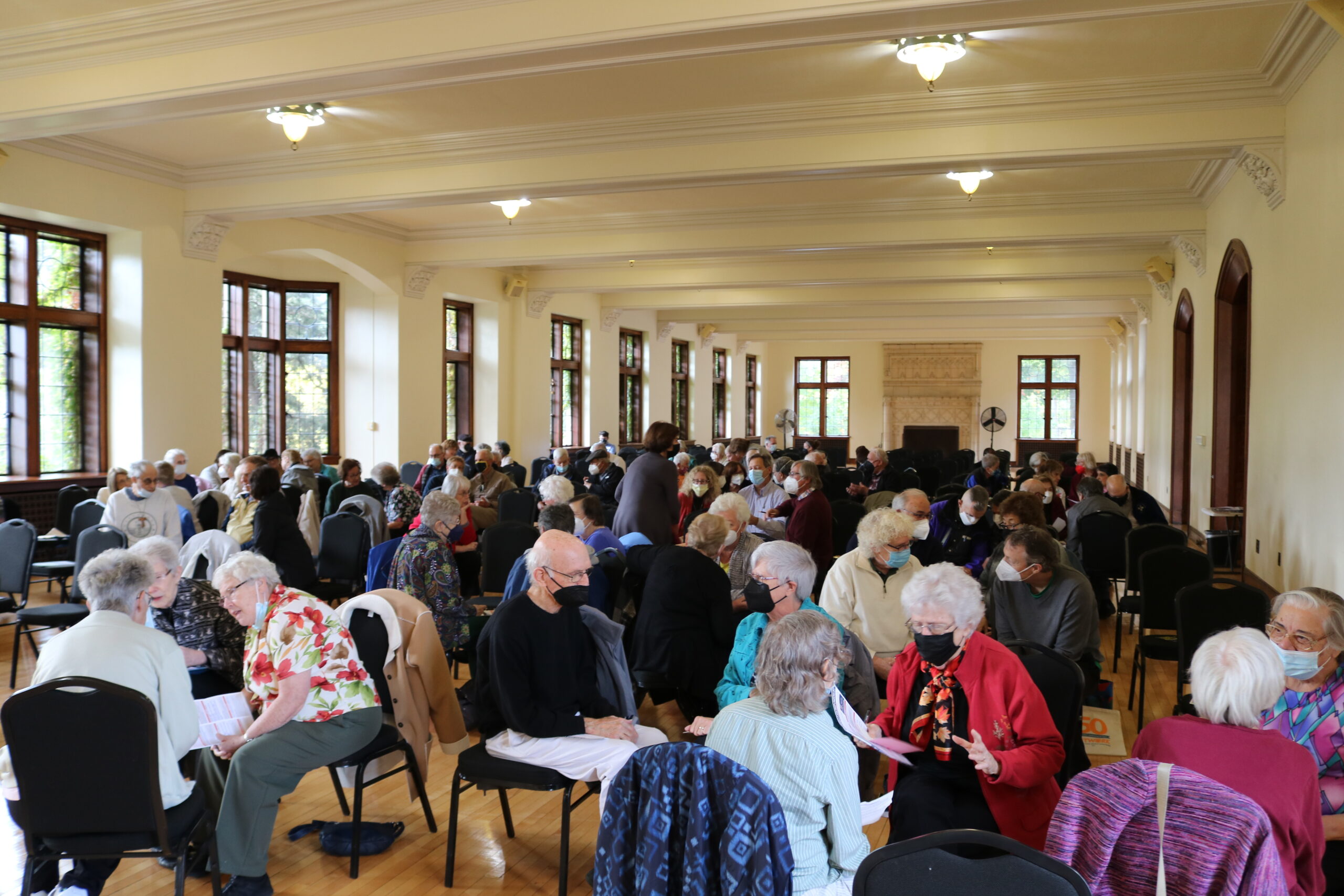
On October 13, NETWORK’s Pope Francis Voter Tour continued on  with a Town Hall for Spirit-Filled Voters in Detroit, Michigan.  With more than 100 Spirit-filled advocates in attendance, this event was co-hosted by the IHM Sisters, the Sisters of Mercy of the Americas Justice Team, and the Elephants in the Living Room.  It was held at the Marygrove Conservancy.

Due to the pandemic, I haven’t done many in-person trainings over the past few years.  While Zoom is nice (and certainly has its benefits), there is such a richness to spending time together…in-person! Perhaps that is why “community” was my big takeaway from this town hall. It popped up in a number of ways.

First, it is important to understand the significance of today’s Town Hall venue.  The Marygrove Conservancy was formed after Marygrove College’s 2019 closure.  It is a non-profit organization that cares for the 53-acre campus and “envisions the campus as an anchor and hub of a thriving Northwest Detroit community, in which all children and families are engaged in transformative educational experiences from cradle to career…”  It is a continuation of the Marygrove College legacy and a powerful commitment to the surrounding community.

Three older white ladies with gray hair wearing masks look at the camera

Local sisters (left to right) Sr. Elizabeth Walters, IHM, Barbara Beasley, IHM, and Karen Donahue, RSM, all spoke about the reasons they are Pope Francis Voters at the Detroit Town Hall

Beyond that, I have to give another shout-out to our hosts.  We are always grateful when someone is willing to collaborate with us to host a NETWORK event. That said, it is particularly exciting when multiple entities join forces and collaborate on an event.  Being hosted by the IHM Sisters, the Sisters of Mercy of the Americas Justice Team, AND the Elephants in the Living Room was a treat. All of the folks I encountered throughout the day were open-minded, curious, supportive of our vision, and enthusiastic about engaging on the upcoming election. Being with the community our hosts brought together was an absolute joy.

Our program today began with a Buzz Question—asking folks how they are feeling about the upcoming election and where they find hope. To be honest, many people were feeling afraid, worried, or nervous. However, when we asked where they found hope, we heard “being here,” “young people,” and “community.” During challenging times, there is such comfort and power in coming together as a community.

Finally, I am perhaps most grateful for our Town Hall attendees’ willingness to take their learnings plus NETWORK’s Equally Sacred Checklist and share them with their own communities—parishes, congregations, schools, community groups, and more!  A significant part of being a Pope Francis Voter is a willingness and commitment to do the work. We must commit to having hard conversations with our families and friends. We must work together to grow the community of Pope Francis Voters, and I’m confident that our Detroit Town Hall attendees will go forth and do just that!

Our community is passionate, committed, and growing. That is what gives me hope during this election season.

This Saturday: White Supremacy and American Christianity

CLICK HERE TO REGISTER!

Earlier this year, thousands of justice-seekers joined us to hear from experts working at the intersection of religion and race — Fr. Bryan Massingale, Robert P. Jones, and Dr. Marcia Chatelain.

Join us this Saturday as Fr. Bryan Massingale and Robert P. Jones return to speak with NETWORK for a follow-up conversation on white supremacy and American Christianity, this time in light of the upcoming midterm elections. Together, we’ll continue learning about the intersection of white supremacy and American Christianity, with a focus on our politics.

If you’ve already registered — help us spread the word!
*Retweet Here*  * Share to Facebook*

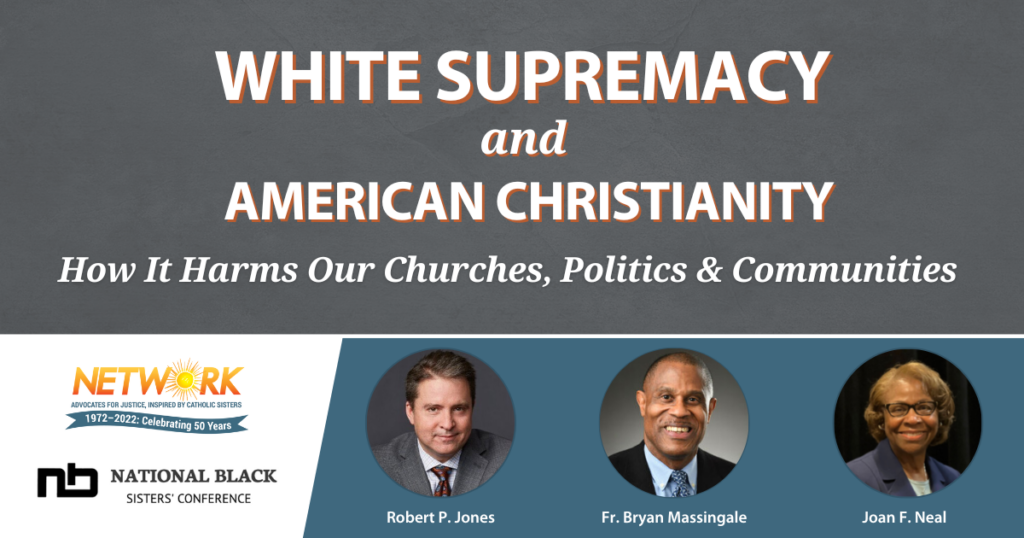
White Supremacy and American Christianity
Saturday, October 29, 2022 | 12:30-2:00 PM Eastern

This event will take place on Zoom.
Co-Sponsored by the National Black Sisters’ Conference

Register and invite your friends and family!


Meet Our Speakers

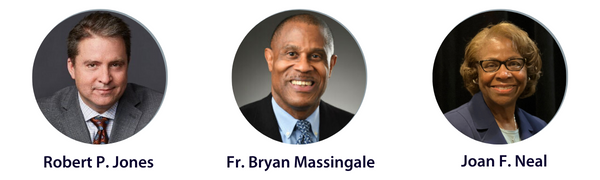
Fr. Bryan Massingale, Robert P. Jones, Joan F. Neal headshots

Robert P. Jones is the President and Founder of PRRI, and author of White Too Long: The Legacy of White Supremacy in American Christianity. Robert P. Jones speaks and writes regularly on politics, culture, and religion in national media outlets including CNN, NPR, The New York Times, The Washington Post, and others.

Fr. Bryan Massingale is the James and Nancy Buckman Professor of Theological and Social Ethics, as well as the Senior Ethics Fellow in Fordham’s Center for Ethics Education and author of Racial Justice and the Catholic Church. Fr. Massingale is a noted authority on social and racial justice issues, particularly in Catholic spaces.

Joan F. Neal is the Deputy Executive Director and Chief Equity Officer at NETWORK where she shares overall leadership of the organization and leads strategic planning and racial equity and justice transformation work. Joan F. Neal is an experienced organizational leader and an authority on the intersection of faith, justice, and federal policymaking.

The Pope Francis Voter Tour Visits the University of Detroit Mercy

The Pope Francis Voter Tour Visits the University of Detroit Mercy

Colin Martinez-Longmore
October 25, 2022

The Pope Francis Voter Tour made its first college stop in Detroit at the University of Detroit Mercy. UDM is a Catholic school sponsored by both the Jesuits and the Sisters of Mercy, serving over 5,000 students all throughout the metro Detroit area. The student body is diverse and vibrant, which provided a wonderful atmosphere of interfaith and ecumenical encounters during our time there.

We connected with the University Ministry for our visit, specifically with Sr. Erin McDonald, CSJ, who was our gracious host and collaborator for our events. Sr. Erin is a social worker and serves as the University Minister for Service and Justice, where she is in charge of building community relationships, as well as programming various service and social justice opportunities. Together, we planned to bring our Becoming Pope Francis Voters workshop to the students, to help mobilize and encourage young voters of faith to do the work of being multi-issue voters during the midterm elections!

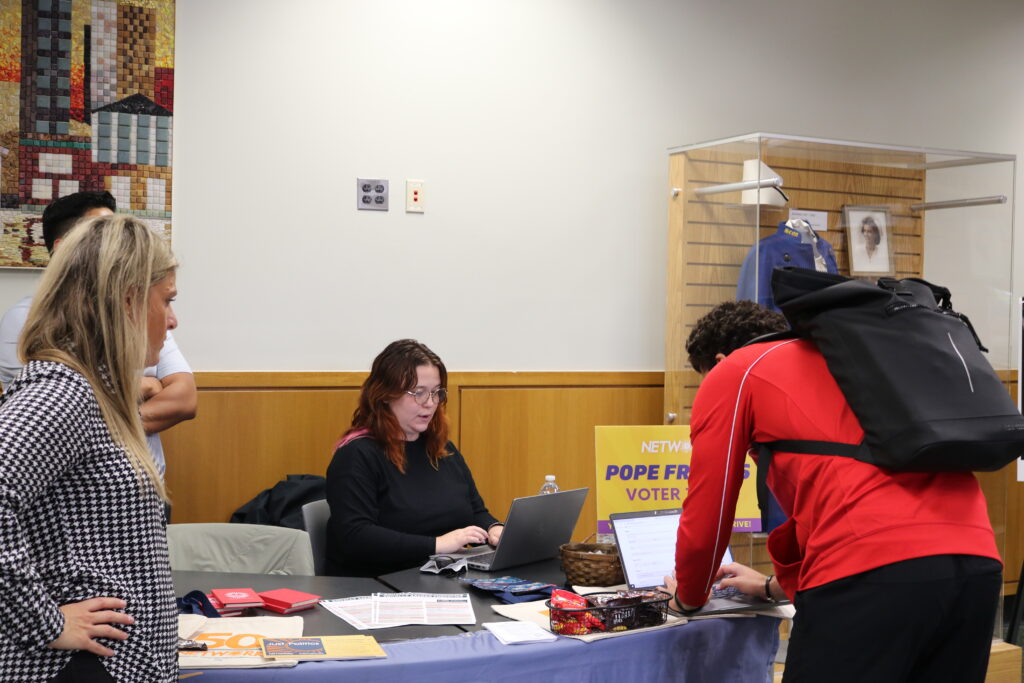
Our day began with a bit of tabling at the University Library. We set up shop near the entrance, and began to have conversations with some of the students who were walking by. Using our website Turbovote link, we were able to help students check their voter registration status and register themselves if needed. We also shared some NETWORK resources, like our Equally Sacred Checklist, and invited them to join us for our workshop that evening. And since no tabling is complete without some fun goodies, we gave away lots of Halloween candy as well.

Later that evening, we moved over to the university’s beautifully designed Loranger Architecture Building, where we hosted our workshop. There were about 20 students who participated in the interactive workshop, where we talked about what it means to be a Pope Francis Voter. The room buzzed with conversation during the breakout small group sessions and we heard honest reflections from a few students about their hopes for the midterm elections and beyond.

It was a blessing to be able to spend time with the University of Detroit Mercy community. We’re grateful to Sr. Erin McDonald, CSJ, the University Ministry and all of the students who joined us in doing the work to build a multi-racial and inclusive democracy.

“Time for a Renewed Commitment to the Common Good”

“Time for a Renewed Commitment to the Common Good”

Joan F. Neal Speaks on Catholic Panel on Protecting Democracy
October 18, 2022

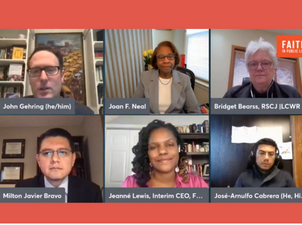
Joan F. Neal, NETWORK Deputy Executive Director and Chief Equity Officer, spoke on a panel last week organized by Faith in Public Life, Protecting Democracy & Voting Rights: A Conversation with Catholic Activists.

Joan spoke with fellow Catholic activists Jeanné Lewis, CEO of Faith In Public Life; José-Arnulfo Cabrera, Co-Executive Director of Programs and Policy at the Young Latino Network; Milton Javier Bravo, Vice President for Mission, Values and Inclusion at Edgewood College; and Sr. Bridget Bearss, Associate Director for Transformative Justice, Leadership Conference Of Women Religious. The panel was moderated by John Gehring, Catholic Program Director at Faith in Public Life.

As we approach midterm elections, the dangerous and unjust effects of racist voting restrictions and suppression tactics are as clear and urgent as ever. Joan and her fellow panelists discussed how their faith compels them to act—and how Catholics can take action to uphold voting rights and promote democracy. As Pope Francis says, “Democracy requires participation and involvement on the part of all.”

National Catholic Reporter covered the event, quoting Joan:

“As Catholics, we are called to be multi-issue voters,” Neal said. “Whatever else you do, make sure that you vote.”

Missed the event? No problem! You can watch the conversation here:

NETWORK and Faith-based Organizations Urge the Swift Passage of the Protecting the Right to Organize Act (The PRO Act)

NETWORK and Faith-based Organizations Urge the Swift Passage of the Protecting the Right to Organize Act (The PRO Act)

Laura Peralta-Schulte
October 18, 2022

Dear Senator,

We, the undersigned national, regional, and local faith-based organizations, urge the swift passage of the Protecting the Right to Organize Act. Last year, the House of Representatives passed H.R. 842 and it is time for the Senate to send this critical legislation to President Biden’s desk.

As an interfaith community, we believe all workers should be free to act in solidarity with one another and make their voices heard. Our belief in the intrinsic worth of both work and workers leads us to strongly support the PRO Act, which will strengthen and expand the right of workers to bargain collectively, form unions, and engage in collective action without fear of retaliation from their employers. Such assurances are also better for the employers as they contribute to better productivity, mutual collaboration, and sustainability.

Our current labor laws are no longer effective in protecting the lives and dignity of workers and fall woefully short of allowing workers to effectively advocate for their needs from a position of mutuality with employers. As union membership has fallen due to counter-productive laws and amendments, inequality has skyrocketed leaving the working class with little constructive power over their own economic security; and thus, also harming sustainable business models.

The PRO Act addresses these current inadequacies by empowering workers to effectively exercise their freedom to organize and bargain. Critically, it also ends employers’ practice of punishing striking workers, strengthens the National Labor Relations Board and allows it to hold corporations accountable for retaliating against workers, and would help us collectively do better for all our needs by repealing “right to work” laws which are a harmful legacy of the Jim Crow Era.

“Right to work” laws originated in the 1940s as a way to reinforce Jim Crow by maintaining labor segregation and further exploiting workers of color. These laws allowed states to ban unions from requiring workers who benefit from collective bargaining to help pay for bargaining costs. Today, 8 of the 10 states with the highest percentage of Black residents have “right to work” laws, which prohibit fair share fees. These restrictions strip funding and bargaining power from unions which have a devastating effect on the economic stability of people of color.

Martin Luther King Jr. spoke on “right to work” laws, preaching that “In our glorious fight for civil rights, we must guard against being fooled by false slogans such as ‘right to work.’ It is a law to rob us of our civil rights and job rights. Its purpose is to destroy labor unions and the freedom of collective bargaining by which unions have improved wages and working conditions for everyone…Wherever these laws have been passed, wages are lower, job opportunities are fewer, and there are no civil rights.”

The PRO Act is more than labor reform, it is civil rights legislation. A union contract is generally one of the best tools we have to close the racial and gender wage divide. A union contract also often ensures dignity and due process for workers, regardless of where they were born, who they are, or what industry they work in. Removing barriers to organizing and bargaining is critically important to workers who have been marginalized or those working in segregated fields such as the service industry. Such barriers are forms of structural violence. Finally, expanding collective bargaining will increase protections for women, people of color, immigrants, and the LGBTQ+ community in areas where our laws still fall short. Such attention to those most marginalized benefits all of us as a community.

With all of this in mind, it is not surprising why the PRO Act, and unions in general, are popular. Research shows that more than 60 million people would vote to join a union today if given the opportunity—that is nearly half of all nonunion workers. Union density increased in 2020 amid the federal government’s failure to protect workers from the COVID-19 Pandemic. Finally, polls have found that union approval stands at 65 percent which is one of the highest marks in the last 50 years.

When left without regulation and enforcement, corporations, employers, and the government have forced the working class to accept poverty wages and stymied the enactment of necessary benefits such as paid family and medical leave. They have allowed income inequality to exponentially rise, leaving essential workers and their families with little to show for their labor.

A commitment to human dignity, worker justice, and the common good of all demands support for the PRO Act. This legislation would better the lives of tens of millions of workers and their families by creating an economy that is rooted in solidarity and supports working people as well as sustainable business models. We urge you to act and vote in the best interest of workers, employers, and the economy: Pass the PRO Act today.

In Solidarity,

ALEPH: Alliance for Jewish Renewal
Alliance of Baptists
American Baptist Home Mission Societies
American Friends Service Committee
Arise Chicago
Arizona Faith Network
Association of United States Catholic Priests
Bend the Arc: Jewish Action
CAIR Arizona
Carolina Jews for Justice
Catholic Labor Network
Christian Methodist Episcopal Church
Christians for Equality
Church World Service
Clergy and Laity United for Economic Justice
Coalition For Economic Justice
Columban Center for Advocacy and Outreach
Congregation of Our Lady of Charity of the Good Shepherd, U.S. Provinces
Disciples Center for Public Witness
Disciples Justice Action Network
Disciples Refugee & Immigration Ministries
Dominican Sisters ~ Grand Rapids
Dorothy Day Catholic Worker, Washington D.C.
Ecumenical Ministries of Oregon
Episcopal Church of New Hampshire
Farm Worker Ministry Northwest
Franciscan Action Network
Friends Committee On National Legislation
Glenmary Home Missioners
Granite State Organizing Project (GSOP)
Greater Birmingham Ministries
ICNA Council for Social Justice
Ignatian Solidarity Network
Interfaith Worker Justice – New Mexico
Interfaith Worker Justice of East Tennessee
Interfaith Worker Justice of San Diego County
Interreligious Network for Worker Solidarity
Jewish Alliance for Law and Social Action
Jewish Council on Urban Affairs
Jewish Labor Committee
Kairos Center for Religions, Rights, and Social Justice
Kalmanovitz Initiative for Labor & the Working Poor, Georgetown University
Labor-Religion Coalition of NYS
Leadership Conference of Women Religious
Maine Council of Churches
Meriden Congregational Church, UCC
Missionary Oblates of Mary Immaculate
National Advocacy Center of the Sisters of the Good Shepherd
National Council of Jewish Women
National Council of Jewish Women, South Cook Section
National Council of the Churches of Christ (USA)
National Farm Worker Ministry
National Missionary Baptist Convention of America
NCJW Chicago North Shore
NETWORK Lobby for Catholic Social Justice
New Hampshire Conference/United Church of Christ, Economic Justice Mission Group
New Hampshire Council of Churches
New Hampshire Faith & Labor Coalition
North Carolina Council of Churches
Pax Christi USA
Peace & Justice Committee, Congregation of Mission, Western Province, U.S.A.
Poor People’s Campaign
Presbyterian Church (USA), Office of Public Witness
Presbytery of Grand Canyon, Presbyterian Church (USA)
Progressive National Baptist Convention, Inc.
Reconstructionist Rabbinical Association
Religions for Peace USA
Repairers of the Breach
Sema Foundation
Society for Humanistic Judaism
Sojourners
Southwest Conference United Church of Christ
T’ruah: The Rabbinic Call for Human Rights
Tempe Interfaith Fellowship
The Episcopal Church
The Labor Guild
The United Methodist Church – General Board of Church and Society
Unitarian Universalist Action New Hampshire
Unitarian Universalist Association
Unitarian Universalist Association Pacific Western Region
Unitarian Universalists for a Just Economic Community
Unitarian Universalists for Social Justice
United Church of Christ Justice and Witness Ministries
Uri L’Tzedek: Orthodox Social Justice
WHEAT (World Hunger Ecumenical Az Task Force Inc)
Wisconsin Council of Churches
Worker Justice Wisconsin