

Category Archives: Front Page

Hispanic Heritage Month Media Guide

Hispanic Heritage Month Media Guide

Cristal Flores
October 11, 2021

Education has the power to humanize people who, because of larger structural inequalities, have been dehumanized or seen as lesser than. However, the U.S. educational system has not always benefited everyone equally. For decades, Hispanic and Latinx Americans have struggled and pushed to help create a more just educational system. Here are some notable pieces of media to educate yourself on the resilience of the Hispanic community in education: from landmark legal cases to high schoolers on strike.

Cristal Flores is a first generation Mexicana Americana in Orange County, CA. She is currently enrolled in her first year of her doctoral program for her Ph.D in Education with an emphasis on Cultural and Curricular Studies. Her research focus on the Latina/o/x communities in education especially parental engagement and migrant youth experience. As a practicing Catholic, Cristal sees her work, research, and advocacy as a way to further use the gifts that she learned in ministry and in her faith.

2021 Hispanic Heritage Month Playlist

2021 Hispanic Heritage Month Playlist

Colin Longmore
October 4, 2021

We’re back with part two of our Hispanic Heritage Month playlist. Here are some selections that highlight a small part of the diverse kaleidoscope that is the Hispanic and Latinx world. We hope you enjoy these songs of celebration, reflection, lamentation, and pride!

La Jaula de Oro by Los Tigres del Norte


[youtube https://www.youtube.com/watch?v=BnvNfE9fOv4&w=560&h=315]


The issue of immigration on the U.S. southern border can become so two-dimensional in our public discourse, that the nuanced lived realities of migrants are often lost.  This song, by beloved Norteño band Los Tigres del Norte, paints an honest and heartbreaking picture of the life of an undocumented immigrant living in the United States. The title, which translates to “The Golden Cage,” highlights the internal and external tensions that migrants face when building a new life in an unfamiliar place. The linked video is from the band’s recent live concert that they performed at Folsom State Prison (50 years after Johnny Cash’s famous concert), for both the men’s and women’s facilities. You can check out the documentary on Netflix.

La Negra Tiene Tumbao by Celia Cruz


[youtube https://www.youtube.com/watch?v=imeXSRNRMeg&w=560&h=315]


The Queen of Salsa, Celia Cruz, left a significant mark in the music industry thanks to her illustrious 50 year career that made fans all around the world get up and dance. However, her late-career smash hit “La Negra Tiene Tumbao” (which can be roughly translated to “The Black Woman Has Style”) is a standout for its joyous and unapologetic celebration of Black womanhood. Give this one a listen whenever you need an extra dose of azucar in your life!

Breathe (from In the Heights) by Lin-Manuel Miranda


[youtube https://www.youtube.com/watch?v=hSQFjtszBYg&w=560&h=315]


After reimagining the story of the U.S. Founding Fathers in Hamilton, Lin-Manuel Miranda received widespread praise for his gifts of song and lyricism. These skills are seen in another one of his projects, In the Heights, a musical about the lives of several Black and Latinx residents of the Washington Heights neighborhood in New York City. In this production, the song “Breathe” is sung by Nina, a first-generation Latina college student who is returning to her neighborhood after dropping out of Stanford University. It’s a heartfelt reflection on the support and pressure that comes from community, and the struggles faced by many first-generation students. In the Heights was adapted into a movie which was released this past year.

Como La Flor by Selena


[youtube https://www.youtube.com/watch?v=FwZTgDjRLM0&w=560&h=315]


Tejano is more than just a musical genre — it’s the unique culture of the descendants of Spanish settlers in the Tejas area, established over 100 years before modern-day Texas became a U.S. state. And no one is more synonymous with Tejano culture than Selena Quintanilla-Perez, known widely as just Selena. Her music is a fusion of various Mexican and U.S. influences that is “ni de aquí, ni de allá” (neither from here, nor there). It also embodies the wonderful complexities of being a Hispanic/Latinx American. Selena’s life (and tragic death) was made into a biopic in 1997, with Jennifer Lopez playing Selena. Most recently it was also re-made as a Netflix series.

Mi Gente by J Balvin & Willy Williams


[youtube https://www.youtube.com/watch?v=wnJ6LuUFpMo&w=560&h=315]


If you’ve been to any quinceanera in the past 4 years, chances are that you’ve heard the infectious beat of Mi Gente playing loudly. J Balvin is a singer from Medellin, Colombia, and is often referred to as the “Prince of Reggaeton,” a musical genre from Latin America that has taken the world by storm and flooded dancefloors everywhere. The song is a collaboration between J Balvin and French DJ, Willy Williams, and has gained broad international success thanks to its wildly fun energy and bilingual lyrics which invites everyone to be part of mi gente (my people).

Watch Live: Keep the Faith, Build Back Better

Watch Live: Keep the Faith, Build Back Better

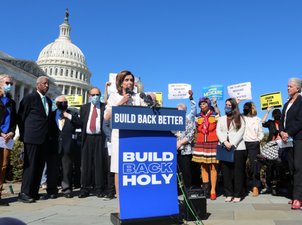
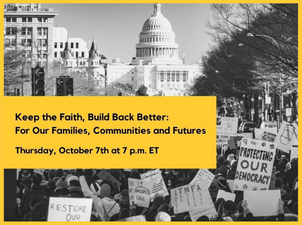
Right now, what’s happening in Congress is complicated but we are firm in our values and moral vision. Congress has an opportunity to pass a once-in-a-generation investment in our families, communities, and futures. Build Back Better is our chance to rebuild and repair our communities devastated by COVID-19’s impact and decades of under-resourcing.

The next few weeks are critical for both ensuring the Build Back Better legislation is shaped to meet the daunting challenges of our time and that it passes to become law. Right now, your Representative and Senators are in their districts and states until October 18th and they need to hear from YOU! We invite you to join people of faith across the country in taking action while your elected leaders are back home and in the coming weeks.

Advocacy Outreach Ideas:


1. Drop the Build Back Better summary off at your members of Congress offices. Take a photo and share on social media to voice your support for Build Back Better.  Use the hashtag #BuildBackBetter and tag your elected officials when you post the photo on social media.

​2. Write and pitch a letter to the editor at your local paper. Check out this resource  for a step by step guide and messaging to write your letter.

3. Call your Representative to tell them you support big, bold, faithful investments in our communities and to pass Build Back Better. Call 888-738-3058 to be connected to your Representative’s office!

4. Talk to your community about the importance of Build Back Better. This package encapsulates a wide range of policies and can feel overwhelming, so we want to provide you with a concise overview of the faithful priorities in the Build Back Better bill so that you can confidently talk about these priorities with your friends, neighbors, and Members of Congress. Check out this resource for members of Congress to guide your conversations.

EQUAL Act Passes House

EQUAL Act Passes House!

Julia Morris
September 30, 2021

On September 28, the House overwhelmingly voted to pass the EQUAL Act 361 to 66! While there are many issues leading to racial disparities in the criminal legal system, passing the EQUAL (Eliminating a Quantifiably Unjust Application of the Law) Act is a huge step forward to ending mass incarceration in the United States. The EQUAL Act (H.R.1693/S.79) is faithful, bipartisan legislation introduced by Representatives Kelly Armstrong (R-ND-AL), Hakeem Jeffries (D-NY-08), Bobby Scott (D-VA-03), and Don Bacon (R-NE-02). It seeks to eliminate the disparity in sentencing for cocaine offenses, a major contributor to mass incarceration, and apply retroactively to those already convicted or sentenced.

According to FAMM, in 2019 alone, 81% of those convicted of crack cocaine offenses were Black, even though historically, 66% of crack cocaine users have been white or Hispanic. It is time to end this racist policy and restore proportionality in sentencing.

This May, more than 100 justice-seekers participated in NETWORK’s first virtual lobby day, conducting 50 lobby visits with their Representatives to push for the passing of the EQUAL Act, it is always rewarding to see our hard work pay off.

Before the House vote, NETWORK sent a letter urging all Representatives to support this legislation, saying: “We call on all Representatives to take a firm stance against institutional racism embedded within the criminal legal system by voting yes on the EQUAL Act so that it can swiftly make its way to the Senate floor. ”

Read NETWORK’S Vote Recommendation on the EQUAL Act here.

Now it’s time for the Senate to pass this legislation. Sign up for our action alerts to join our team to put pressure on the Senate to pass this legislation. Text JUSTICE to 877-877 to sign up for text alerts or sign up for emails here.

Nearly 50 Years of Celebrating Hispanic Heritage Month

Nearly 50 Years of Celebrating Hispanic Heritage Month

Audrey Carroll
September 29, 2021

The annual observation of National Hispanic Heritage Month began this year on September 15 and continues until October 15. In September 1968, President Johnson signed the National Hispanic Heritage Week bill into law. The following year, Representative Esteban E. Torres of California proposed extending Hispanic Heritage week to a month, saying supporters of the bill “want the public to know that we share a legacy with the rest of the country, a legacy that includes artists, writers, Olympic champions, and leaders in business, government, cinema, and science.” Unfortunately, Torres’s bill died in committee, but 20 years later in 1988, Senator Paul Simon of Illinois succeeded in passing a similar bill lengthening Hispanic Heritage Week to Hispanic Heritage Month. President Reagan signed the bill into law in August 1988.

The start date of September 15 coincides with Independence Day celebrations in many Hispanic countries like Costa Rica, El Salvador, Guatemala, Honduras, and Nicaragua. Mexico and Chile also celebrate their Independence Days in September.

Hispanic and Latinx individuals and communities have made a substantial impact on politics, pop culture, art, music, and more in our country. Hispanic Heritage Month serves as a time to honor and celebrate achievements and contributions made by Hispanic Americans in the U.S.

Check out the Calendar of Events from the Library of Congress to learn more and find out how you can celebrate this month.

The Legacy of Hispanic Americans in Congress

The Legacy of Hispanic Americans in Congress

Audrey Carroll
September 29, 2021

During Hispanic Heritage Month from September 15-October 15, we celebrate the impact and achievements of Latinx and Hispanic Americans in the United States. Latinx Americans have a centuries-long legacy in Congress, engaging in politics, as Pope Francis writes in Fratelli Tutti, as “a lofty vocation … inasmuch as it seeks the common good,” breaking representation barriers, and passing common good legislation.

Joseph Marion Hernández was the first Hispanic American to serve in Congress was Joseph Marion Hernández. Hernández was born in Florida while it was still a Spanish colony, and became the first Hispanic American to serve in the House of Representatives when Florida became a territory in 1822.[1] He served as a Delegate in the 17th Congress for a year, submitting legislation advocating for residents of newly incorporated Florida. In 1877, Representative Romualdo Pacheco was elected the first Hispanic American to serve as a U.S. Representative. The first Hispanic American to serve in the Senate was Octaviano Ambrosio Larrazolo in 1928, completing the term of the previous New Mexico senator.[2] According to the History, Art, and Archives website of the House of Representatives, 136 Hispanic Americans have served in Congress in some capacity since 1822.[3]

The Congressional Hispanic Caucus (CHC) was formed in 1976 and is comprised of 38 Hispanic and Latinx members of Congress. The purpose of the CHC is to “advocate for issues important to Hispanics through the Congressional legislative process.”[4] Originally formed as a bipartisan group, Republican members disbanded in the 1990s and formed the Congressional Hispanic Conference, which currently has six members.  Follow the CHC on Facebook and Twitter to stay up to date on their work.

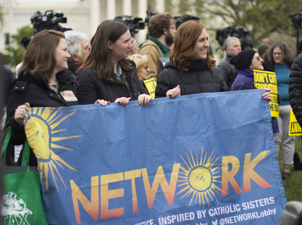
NETWORK is grateful for all the contributions Hispanic and Latinx Congressmembers have made to shape a more economically and racially just society. Many Latinx Congressional leaders have been essential partners in championing policies in NETWORK’s Build Anew agenda, including as a pathway to citizenship, paid leave, worker’s rights, and more. Our appreciation for the hard work and dedication of Hispanic and Latinx Members of Congress extends well beyond October 15!

————————————————————

[1] https://history.house.gov/HistoricalHighlight/Detail/35356

[2] https://www.senate.gov/artandhistory/history/common/generic/Hispanic_Heritage_Month.htm

[3] https://history.house.gov/Exhibitions-and-Publications/HAIC/Hispanic-Americans-in-Congress/

[4] https://chc.house.gov/

Update: House Negotiations on Build Back Better

Update: House Negotiations on Build Back Better

Laura Peralta-Schulte
September 27, 2021

Over the weekend, the House Budget Committee voted to advance the Build Back Better plan, a $3.5 trillion comprehensive infrastructure and economic recovery package, to the House Rules Committee in preparation for a full vote on the House floor. The full vote in the House could take place as soon as this week.

Watch a new NETWORK update on the budget process:

This week, the House is negotiating — and with your help, passing — the Build Back Better plan through the budget reconciliation process.  This is a critical time to pray and make your voice heard.

By un-rigging our tax code so that the ultra-wealthy and tax-dodging corporations pay their fair share, the Build Back Better plan will begin to reverse the persistent evil of the racial wealth gap and extreme economic inequality. It’s time to pass a budget that is truly equitable and inclusive for all, regardless of background or birthplace. It’s time for We the People to truly include all of us.

Call Your Representative Now: 888-738-3058
Tell them to vote Yes on the Build Back Better plan!

The House of Representatives has a choice this week: they can make childcare, health care, and housing more affordable and establish a national paid leave program OR protect tax breaks for the ultra-wealthy. Extending the Child Tax Credit alone would reduce child poverty in by almost half. With your help, Congress will vote to shape our federal policies to align more closely with our values.

Last week, NETWORK’s Sr. Emily TeKolste joined national faith leaders calling on Congress to pass a bold recovery package. Read the event’s coverage in National Catholic Reporter.

Thank you for acting to support a more just and equitable future!

Arizona ‘Ballot Review’ Demonstrates Why We Must Protect the Freedom to Vote

Arizona ‘Ballot Review’ Demonstrates Why We Must Protect the Freedom to Vote

Sister Quincy Howard, OP
September 24, 2021

Today we saw the end of a costly, partisan, and unreliable review of Arizona’s Maricopa Country ballots. Shortly after the 2020 election, this nearly $6 million ballot review was initiated by a small number of partisan extremists over the objections of the Republican-led county leadership. Repercussions and anti-voter initiatives like this one might be the single most insidious tactic to undermine voter confidence growing out of the 2020 election.

According to the Washington Post, “the Florida-based firm that led the review, Cyber Ninjas, had never before been involved in administering an election or recount” and “by May, all of Maricopa’s seven elected officials — including five Republicans — joined to demand the Senate put an end to the review, calling it a ‘con’ and a ‘sham.’”

We know that states often serve as laboratories to innovate and improve our democratic systems. For example, Colorado’s experience with vote-by-mail systems provided tips and best practices for states across the nation conducting elections last winter in the midst of a deadly pandemic.  Sadly, states can also serve as laboratories for sabotage, which is what we’re seeing in Arizona—and other states like Georgia and Wisconsin are watching closely to see if this shameless power-grab will work.

This was a partisan attempt to cast doubt on our elections. Proper election reviews are 1) fully transparent and fully observable; 2) have proper procedures in advance; 3) conducted by bipartisan teams; maintain the integrity of voting machines and ballots; and maintain chain of custody of ballots throughout. It has been widely documented that none of these critical procedures and guidelines are being followed in the sham election reviews.

This is another example of the GOP dividing and distracting the people while undermining trust in our elections. The entire endeavor was birthed and conducted based on the “Big Lie” (that the Arizona and the presidential election was stolen). The operation conducted by Cyber Ninjas has been illegitimate from its original rationale rooted in the lie of voter fraud to its financing by mysterious dark money sources to the contractor, an obscure Florida tech company with hard partisan leanings and no prior elections experience.

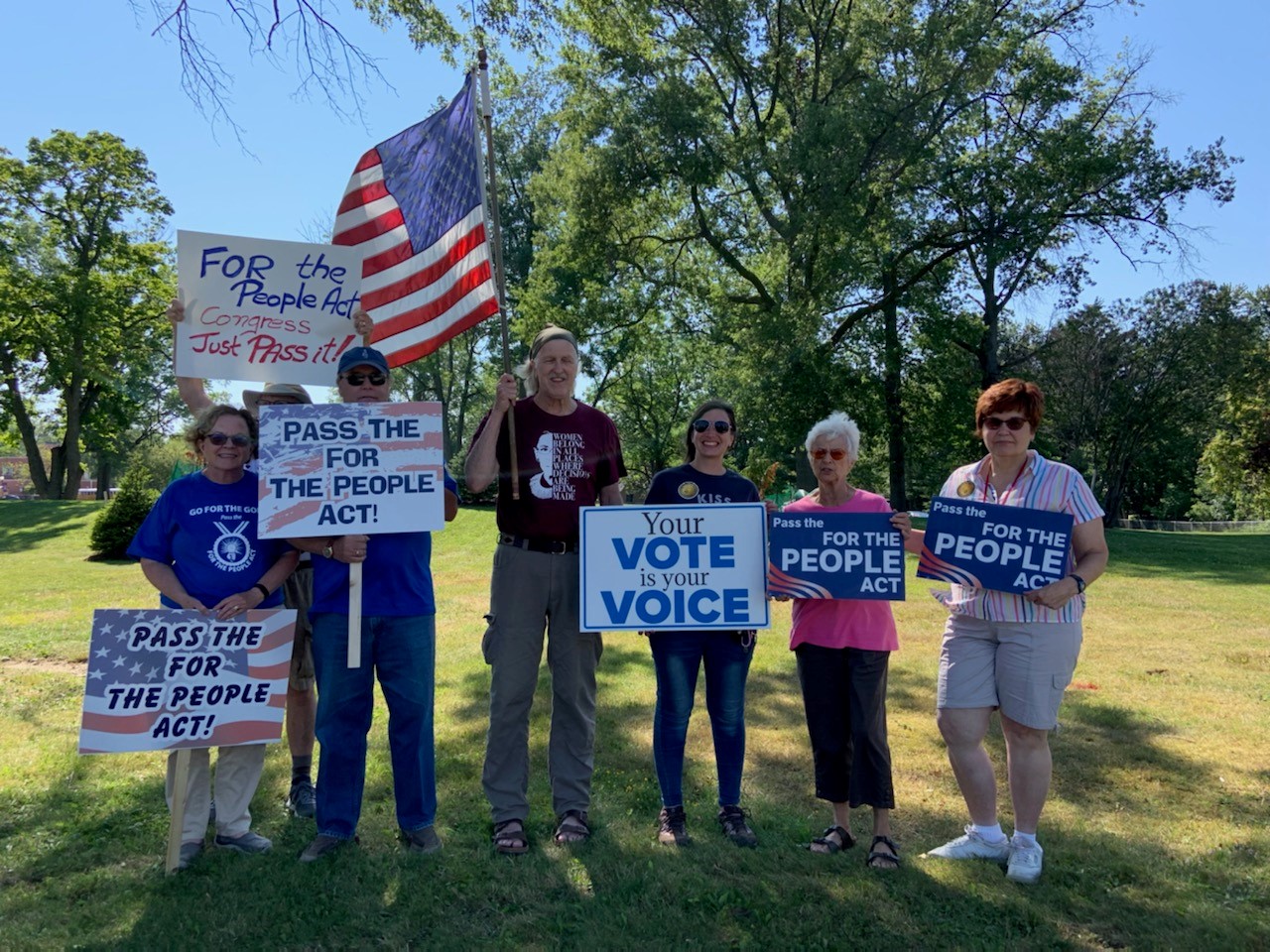
Some politicians want to pick and choose which votes to count to decide the results of elections for themselves. The Arizona operation has made clear that our democracy needs additional protections to ensure that trusted local election officials count every vote—that the results of elections are held sacred and protected from partisan manipulation. The Freedom to Vote Act—the newly-introduced bill that would ensure fair representation and make the promise of democracy real for us all—has adds needed protections to the transformative reforms included in S.1 the For the People Act.

Whatever our color, background or zip code, in the United States we value our freedom and the right to vote. The freedom to have a say in decisions that impact our lives—from curbing the pandemic to creating jobs to making health care affordable. But right now, the same faction that spread lies about COVID and election, and fueled the deadly attack on our Capitol are trying to block the Freedom to Vote Act, which U.S. voters support by huge margins across race, place, and political ideology.

NETWORK and our advocates are demanding that our leaders exercise their majority and pass the Freedom To Vote Act. It would set national standards for safely and freely casting our ballots, ensure that trusted local election officials count every vote, and prevent state lawmakers from sabotaging our elections in order to take and hold power. The Freedom to Vote Act is a critical step to ensure that, in our elections, the will of the people prevails.

——————————————————————————————-

Take Action: Call Your Senator Now! Tell Them to Vote YES on S.2747, the Freedom to Vote Act

The Freedom to Vote Act is an important step to protect the sacred right to vote after months of delay and obstruction. The Freedom to Vote Act contains the main pillars of the For the People Act, including protecting the right to vote, ending partisan gerrymandering, and decreasing the power of big moneyed special interests. Call 888-885-1748 to be connected to your Senators. (Call twice to be connected to both Senate offices.)

Investing in Housing to Build Back Better

Investing in Housing to Build Back Better

Chiquita Jackson
September 24, 2021

Build Back Better will make a historic investment in affordable housing in the United States. The House’s Financial Services Committee voted to include language in the reconciliation bill to see $207 billion in federal outlays for NETWORK’s housing priorities. Housing vouchers were allocated ($75 billion); maintenance of existing public housing properties received $80 billion, and the Housing Trust Fund will get $37 billion.

What do the practical implications in these investments mean for affordable housing? The Center on Budget and Policy Priorities’ analysis (below) says that 750,000 housing vouchers will be produced. That means 1.7 million people will be housed. Furthermore, we’ll see a roof over the head of 663,000 children, 331,000 people with disabilities, and 181,000 seniors.

Email Congress today to make sure this down payment in housing makes it to the president’s desk so he can sign it into law. Your neighbors, friends, and family are counting on you.

Email the House and the Senate to Support the Build Back Better Plan!

A child wearing a cap walks with a backpack and a stuffed animal at the US-Mexico border

164 Catholic Organizations Call on President Biden to End Title 42 on Vatican World Day for Migrants and Refugee

164 Catholic Organizations Call on President Biden to End Title 42 on Vatican World Day for Migrants and Refugee

Ronnate Asirwatham
September 23, 2021

164 Catholic organizations joined together to send a letter to President Biden ahead of the World Day for Migrants and Refugees demanding he end the misuse of Title 42. Title 42, first invoked by the Trump administration and affirmatively continued by the Biden administration, has been used to expel an unknown number of asylum seekers at the U.S.-Mexico border, putting them in harm’s way and denying them the opportunity to seek life-saving protection.

After a federal district court ordered the Biden administration to stop using Title 42 to expel migrant families with children on September 16, giving the Administration two weeks to comply, the Biden administration doubled down on its support for this unjust policy by immediately appealing the decision. President Biden can and must take action to stop the misuse of the policy once and for all.

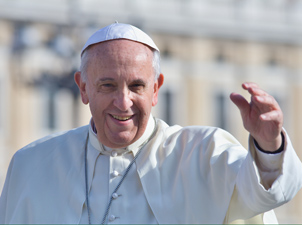
The letter calls on the President to listen to and act on Pope Francis’ message to the world for this Sunday’s  107th World Day for Migrants and Refugees, to make, “no distinction between natives and foreigners, between residents and guests, since it is a matter of a treasure we hold in common, from whose care and benefits no one should be excluded.”

The letter was co-lead by the Catholic Legal Immigration Network, Inc., or CLINIC and NETWORK Lobby for Catholic Social Justice. Notable signatories include: Jesuit Refugee Service/USA, Maryknoll Office for Global Concerns, National Black Sisters’ Conference, Sisters of Mercy of the Americas, U.S. Federation of the Sisters of St. Joseph, Pax Christi USA, Kino Border Initiative, Hope Border Institute, the Center for Social Concerns at the University of Notre Dame, Catholic Charities Atlanta, Catholic Charities of North Louisiana, and many more. See the letter and full list of 164 signers here.