
Category Archives: Front Page

NETWORK Applauds the Passage of Bipartisan Criminal Justice Reform

NETWORK Applauds the Passage of Bipartisan Criminal Justice Reform

Joan F. Neal
February 15, 2018

Today, by a vote of 16-5, the Senate Judiciary Committee passed the Sentencing Reform and Corrections Act of 2017, SRCA (S.1917) and cleared the path for a Senate floor vote.  This bill, which was first introduced in 2015 and re-introduced in October 2017, has enjoyed wide bipartisan support from the start and is an important beginning in addressing some of the egregious injustices in the criminal justice system without compromising public safety.  Among other provisions, SRCA reforms, not eliminates, mandatory minimum sentences for low-level drug offenders making them more proportionate to the crime and giving judges more discretion in sentencing.  The bill makes The Fair Sentencing Act of 2010 retroactive, remedying excessively long sentences for non-violent, non-gun offenses handed down in the past.  It also introduces reforms in the nation’s federal prisons that are designed to provide pathways to rehabilitation for people who are currently incarcerated as they prepare to re-enter society as productive citizens.

The United States incarcerates more people than any other developed nation in the world, especially as it relates to drug crimes.  Moreover, even though drug use is roughly equivalent among Whites and other groups, African-Americans and Latinos are grossly over-represented in the system compared to their percentage of the population.  This injustice affects individuals, families and entire communities and is a major driver of generational poverty.

While the Sentencing Reform and Corrections Act of 2017 does not solve all of the problems in our criminal justice system, it is a good first step in making the system fairer, slowing the flow of people into the system, and reducing the disproportionate impact on communities of color.

We congratulate those Senators who had the courage to support this bill and encourage them to convince others to join them.  We urge all Senators to heed the view of 96% of the American people who support criminal justice reform and vote ‘yes’ when the bill comes to the Senate floor for final passage.  This is the opportunity to change the lives of over 3,000 men and women currently incarcerated and restore equity and fairness to the system for years to come.

NETWORK joined a coalition of more than 60 interfaith organizations in signing on to a letter to the Senate Judiciary Committee urging passage of the Sentencing Reform and Corrections Act.  Read the text of the letter below or download as a PDF.


February 14, 2018

RE: Faith community calls for the Judiciary Committee to pass the Sentencing Reform and Corrections Act, S. 1917

Dear Chairman Grassley and Ranking Member Feinstein,

The 60 undersigned faith organizations write today in support of the Sentencing Reform and Corrections Act (S. 1917). We are delighted by the re-introduction of this critical legislation and the broad bipartisan consensus calling for an end to the federal prison crisis. We share your commitment to criminal justice reform and look forward to the hearing on this legislation and eventual passage in the Senate Judiciary Committee.

Our faith communities are on the ground in neighborhoods ravaged by a broken criminal justice system. We see this nation’s reliance on mass incarceration to solve drug addiction, poverty, mental illness, and joblessness – societal problems that are exacerbated in communities of color by racial disparities – as an affront to justice and human dignity. As people of faith, we are called both to comfort and to serve those harmed by crime, as well as to support accountability, rehabilitation and restoration for those who offend. To that end, we are joined in our commitment to advancing the Sentencing Reform and Corrections Act.

The ongoing crisis of overcrowding in our federal prison system, resulting from excessive mandatory minimum sentences, is exacerbated by high levels of recidivism due in large part to a system that provides limited rehabilitative opportunities. Our moral sensibility compels faith leaders across the country to call for reform. We can no longer wait for action. The politics in Washington may have changed, but we know firsthand that the injustices of mass incarceration across the country have not. To miss the opportunity to pass the Sentencing Reform and Corrections Act would be a major deferral of justice for thousands of people who need a fairer sentencing system and rehabilitation.

We support the drug felony sentencing reductions proposed in the Sentencing Reform and Corrections Act, including the elimination of the excessive “three strikes” life imprisonment for prior drug felony convictions, out of a shared belief in fairness and second chances. People are more than their offenses and have the human capacity for growth, change, and redemption. This belief is why our faith organizations also support provisions giving judges greater discretion to take individual details into account when sentencing below or above the formulaic mandatory minimums required under current law.

Moreover, we believe continued inaction will harm children and families across the country. The burden of mass incarceration is felt most intensely by children with parents in prison or labeled with a criminal record. The long absence of mothers and fathers, who are loved, valued, and critical to maintaining their children’s well-being, has a lasting impact. Many families lose income when a parent is incarcerated. On average, households with an incarcerated family member owe more than $13,000 in court fees alone, an amount that is nearly half of the average annual income of low-income households. Consequently, according to a recent study by the Ella Baker Center for Human Rights, nearly two-thirds of families with an incarcerated member were unable to meet their family’s basic needs, such as food and housing for children. Nationally, 1 in 28 children has an incarcerated parent, as does 1 in 9 African-American children. Their likelihood of incarceration increases when this disruption enters their life. In order to strengthen family relationships and make sure proportionate justice is meted out, we support the provisions to limit federal life sentences for youth and adults and the elimination of youth solitary confinement.

We are also eager to see this legislation provide for further resources for rehabilitative programming, including expanding access to treatment, restorative justice/diversion programs, and education for those in prison.

We do not support the new mandatory minimum sentences and sentencing enhancements currently prescribed in S.1917, including the sentencing enhancement for fentanyl of up to five years. There is no empirical evidence supporting the notion that new sentencing enhancements will have any impact in reducing the trafficking or use of this or any other drug. Further, this kind of enforcement-first policy in previous legislation has led to the problems we are now seeking to correct. Nevertheless, we acknowledge the nature of compromise and the bill’s overall contribution to furthering a fair and proportional justice system not disproportionately focused on retribution and damage.

Our faith in the divine and commitment to the inherent worth and dignity of every human life  compels us as a faith community to call for reforms that bring us closer to the end of mass incarceration. We are united in our belief that criminal justice policies based solely on the intention to punish the offender are both ungodly and ineffective. Individuals from specific communities or groups are not born onto this earth predetermined to become violators of the law. We support policies based on principles of rehabilitation and redemption of the human spirit. Rehabilitation is defined as the act of restoring something to its original state. The  formerly incarcerated so restored can return to our communities as contributing members of society. We look forward to moving this legislation forward through the Judiciary Committee and call for Senators to vote in favor of S.1917.

Thank you.
Sincerely,

Adorers of the Blood of Christ, U.S. Region
Africa Faith & Justice Network
African American Ministers In Action
Alliance of Baptists
American Baptist Home Mission Societies
American Friends Service Committee
Bend the Arc Jewish Action
Bread for the World
BuddhaFest
Buddhist Association of the United States (BAUS)
Catholics in Alliance for the Common Good
Church of the Brethren
Church of Scientology National Affairs Office
Conference of Major Superiors of Men
Congregation of Our Lady of Charity of the Good Shepherd, U.S. Provinces
Disciples Center for Public Witness
Disciples Home Missions
The Episcopal Church
Evangelical Lutheran Church in America
ExodusFoundation.org
Faith Action Network – Washington
Faith in Public Life
Franciscan Action Network
Friends Committee on National Legislation
The Global Justice Institute
Ignatian Solidarity Network
Insight Meditation Society
Islamic Society of North America, Office for Interfaith & Community Alliances
Jesuit Conference, Office of Justice and Ecology
Jewish Council for Public Affairs
Kentucky Council of Churches
Lutheran Services in America
Mennonite Central Committee – Washington Office
Methodist Federation for Social Action
Metropolitan Community Churches
National Advocacy Center of the Sisters of the Good Shepherd
National Alliance of Faith and Justice
National Council of Churches
National Council of Jewish Women
National Religious Campaign Against Torture
NETWORK Lobby for Catholic Social Justice
Nichiren Order of North America
Office of Justice, Peace and Integrity of Creation, Comboni Missionaries, North American Province
Office of Social Justice, Christian Reformed Church
Pax Christi USA
Presbyterian Church (U.S.A.)
Provincial Council of the Clerics of St. Viator (Viatorians)
Riverside Church – New York City
Samuel DeWitt Proctor Conference
Sisters of Mercy of the Americas, Institute Justice Team
The Society of the Divine Savior USA
Sojourners
Tampa Bay Center for Community Transformation – Florida
T’ruah: The Rabbinic Call for Human Rights
Union for Reform Judaism
Unitarian Universalist Association
United Church of Christ, Justice and Witness Ministries
The United Methodist Church – General Board of Church and Society
United (Vietnamese) Buddhist Churches
Volunteers of America

Live Immigration Updates

Live Updates on Congressional DACA Debate

Updates are listed in reverse chronological order from the top of the page

Tuesday, February 20, 2018

Sana Rizvi

Members are out for recess this week after an intense immigration debate that ended with the failure of four immigration bills. Although there is much bad news to go around about DACA, the one silver lining of last week’s votes was the overwhelming number of votes against the Administration’s immigration bill led by Senator Grassley: “The Secure and Succeed Act of 2018.” The Senate made clear that although it was fractured on the issue of what a DACA fix should look like, there is unity on what it should not look like (See: NETWORK and partners ask Congress to vote against Senator Grassley’s immigration bill.)  On the House side, Republican leadership attempted to whip votes for a similar anti-immigrant bill and determined that they did not have enough votes to pass.

Now, we must raise immigration from the ashes of last week’s debacle and find an immediate solution for DACA, 13 days from its cessation. We cannot allow Congress to drop this issue. Remember that after March 5, about 1,400 DACA recipients will lose their status every day.  We are using this recess to gather information and plan next steps for action and we are grateful that many NETWORK advocates are meeting in district with key members of Congress arguing them to pass bipartisan DACA legislation when they return to work next week, February 26.  We are keeping our eye on the process for a solution going forward and will update this space as we learn more and continue advocating for a solution.

Thursday, February 15, 2018, 6:00 pm

Sana Rizvi

The Senate has voted, and all four amendments have failed. Read Sister Simone’s response. 

Thursday, February 15, 2018

Sana Rizvi

Majority Leader Mitch McConnell has filed for motion to cloture vote on four amendments and we could see a vote on the amendments individually sometime between today and Friday evening. Once an amendment reaches 60 votes it is attached to the final bill. The four amendments will be voted on in the order they have been filed. Below, please find NETWORK’s vote recommendations on those amendments for the Senate.

  • NETWORK strongly supports the “Uniting and Securing America Act” Senate Amendment #1955 led by Senator Coons (DE) and Senator McCain (AZ). The USA Act is a strong bipartisan bill which provides Dreamers with a pathway to citizenship and authorizes funding for data-driven border technology in consultation with border communities. This bill upholds the human dignity of those affected by DACA with a narrow bipartisan, bicameral solution.
  • NETWORK strongly opposes “Stop Dangerous Sanctuary Cities Act” Senate Amendment #1948 led by Senator Patrick Toomey (PA).   This bill threatens to break the trust between local law enforcement and immigrant communities and will make our communities less safe. This bill fails our test of upholding human dignity. NETWORK asks Senators to vote NO on this bill and urges Members to support a narrow, bipartisan solution for Dreamers with a pathway to citizenship.
  • NETWORK strongly opposes “Secure and Succeed Act of 2018 (S. 2192),” Senate Amendment #1959 led by Senator Charles Grassley (IA). This bill would permanently ban families from reuniting in the United States. Families belong together and this bill violates the sanctity of family. NETWORK asks Senators to vote NO on this bill and urges Members support a narrow, bipartisan solution for Dreamers with a pathway to citizenship.
  • NETWORK does not take a position on the “Rounds-King” proposal, Senate Amendment #1958.  We are grateful that this amendment provides Dreamers with a pathway to citizenship. We are, however, deeply concerned about the impact this bill will have on domestic immigration enforcement, wasteful spending at the border, and concerned that it removes discretion for considering the situations of families as well as limiting family reunification. We are a nation that values families and that should be recognized in our law.

We must recognize that passing a solution for our country’s immigrant youth is paramount. Since September 5, Dreamers and their families have lived in fear of deportation and Congress delayed a solution until the last minute, wherein thousands of Dreamers have already lost their DACA protections. This is the place we are in with a Republican-controlled Congress and a Republican-controlled Administration which has refused to let us pass a clean Dream Act to protect Dreamers. After March 5th, 1,400 DACA recipients will lose their status every day. This amendment raises some serious concerns for us and our immigrant communities but it is our last chance to pass a solution for DACA recipients. As people of faith, we cannot sit back and watch our immigrant youth be ripped away from their homes.

Wednesday, February 14, 2018

Sana Rizvi

The immigration debate continues in the Senate today and amendments are expected to hit the floor as members hurry to draft language from bipartisan negotiations with a possible vote in the next couple of hours. Fourteen amendments have been filed to date.  Most of them our Republican messaging bills aimed at making Democrats who are up in 2018 take tough votes on immigration hot button issues.  One of the amendments filed is the Secure and Succeed Act of 2018 sponsored by Senators Grassley (R-IA and Cornyn (R-TX) which contain the provisions President Trump has laid out for any DACA deal.  NETWORK and our partners sent a letter to Senators this morning urging them to vote NO on this bill which includes the Administration’s four immigration pillars. Read the letter here.

Thus far, there is only one bipartisan bill sponsored by Senators McCains (R-AZ) and Coons (D-DE)  – which is a narrow bill providing a pathway to citizenship with minimal border security.  There are also two other bipartisan efforts aimed at finding a compromise that garners the 60 votes needed to get a bill voted out of the chamber.  Democratic leaders and Republican moderates are currently meeting with the goal of finalizing a deal by the end of the day.

We are monitoring the floor closely today for narrow bipartisan amendments which include a pathway to citizenship for Dreamers and continue to urge members to vote NO on bills which are harmful to our immigrant communities.

Tuesday, February 13, 2018

Sana Rizvi

As floor debate continues into today, Senate leadership will negotiate terms of amendment proposals and we will begin seeing amendments after the terms are set. As negotiations continue, we expect significant amendment action tomorrow.

The Congressional Black Caucus weighed in the immigration debate yesterday urging a no vote for any Republican plan that cuts family and diversity visa programs.  They further argued that the Administration is pitting black and brown immigrants against each other by offering a pathway to citizenship for Dreamers in exchange for tearing families of color apart.

We continue to see members of the Senate float “compromise” proposals to try to get to 60 votes.  They range from bills that have a pathway to citizenship for dreamers with limited border security to broad proposals that provide a pathway to citizenship paired with the Administration’s four immigration pillars, allocating $25 billion for a border wall, increase to interior enforcement and cuts to family based visas.

NETWORK urges Congress to pass a narrow bipartisan bill which upholds human dignity, family unity and provides Dreamers with a pathway to citizenship.

Monday, February 12, 2018

Sana Rizvi

With less than a month to go until the end of DACA, Congress is heading into a week of debate on immigration to find a solution for DACA recipients. Early last week, in an effort to avert another government shutdown, Senator Mitch McConnell and Senator Chuck Schumer came to an agreement on a two-year budget deal which advocates hoped would be paired with a DACA solution. As part of a budget deal, Senator McConnell asked to have DACA decoupled from the budget in exchange for a promise to create a fair process of debate for a DACA fix immediately following the passing of a budget. The strategy was agreed to by Democrats and the budget bill was passed with wide bipartisan support. Today as promised, Senator McConnell will begin the immigration debate which is expected to go through the week. The process will allow Republicans and Democrats to bring forth a number of immigration amendments to the floor for votes. The goal of the process is to pass a bill that gets at least 60 votes.

There are different perspectives of what should be in the bill. Anti-immigrant hardliners – including the Trump Administration – want to pair a DACA fix with major reforms to the immigration system that limits family visas, substantially increases border and interior enforcement and limits protections for unaccompanied asylum seekers. Moderate Republicans and Democrats are seeking a more limited bill that provides a pathway to citizenship for Dreamers and includes more limited border enforcement funding. This weekend, hardline Senate Republicans introduced a proposal that contains priorities of the Trump Administration. It will likely be put on the floor this week as one option, although it will not have the votes necessary for passage. Democrats have signaled they will bring the Dream Act forward with the possibility of some border measures to get 60 votes as one of several options to get to 60 votes. Negotiations are underway at the Member level.

All eyes are on the Senate this week for the immigration amendment process…Things are moving quickly – Stay tuned, we will be updating this page as the amendment process proceeds. Senators need to hear from us now more than ever on the issue of DACA and the importance of a narrow solution for Dreamers which is includes a pathway to citizenship.

Honoring Melba Pattillo Beals

Honoring Melba Pattillo Beals

NETWORK Staff
February 29, 2024

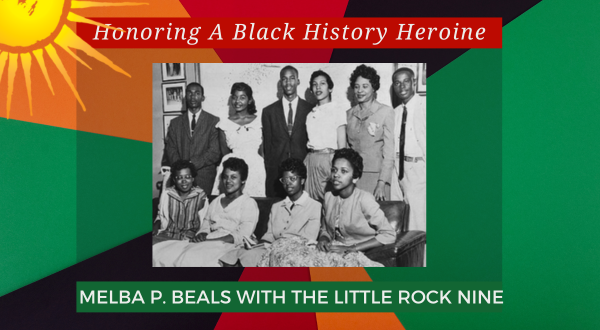
NETWORK is honoring Black History Month this week with a spotlight on Melba Pattillo Beale with a re-post from our archives that reflected on Ms. Pattillo Beals’ experience with her classmates, known as the Little Rock Nine. These young activists hold a vaunted place in U.S. history. Their brave effort to integrate the all-white Central High in Little Rock Arkansas in 1957 following the Brown v. Board decision in 1954, made them some of our youngest Civil Rights-era heroines and heroes.

Mary Cunningham
February 9, 2018

“The task that remains is to cope with our interdependence – to see ourselves reflected in every other human being and to respect and honor our differences.”-Melba Pattillo Beals

Two years ago a friend and I got into a deep conversation about faith. We navigated the winding roads of what it means to believe in God, where we felt God’s presence, and how to maintain our faith when met with resistance. After our conversation my friend recommended a book to me – Warriors Don’t Cry, a memoir written by Melba Pattillo Beals about her experience integrating Little Rock High in Arkansas.

A few months later, I bought the book and was ready to delve in. As I sat down to read, Melba’s words washed heavy over me. I was pulled out of my own world of petty fears into the sharp reality of a young girl who feared for her life because of the color of her skin; at age 14, Melba was forced to grow up fast, saddened by the childhood experiences she never got to have. My friend and I talked about how to maintain faith during moments of resistance, but this was on a whole other level.

Melba Pattillo Beals was one of the Little Rock Nine, a group of African American students chosen to integrate the all-white Central High in Little Rock Arkansas in 1957 following the Brown v. Board decision in 1954. Upon entering Little Rock High School on the first day of classes, a huge white mob shouting racial slurs and threats greeted Melba and the other students. Melba and her mom barely escaped. Even when the students were finally able to enter the school, they were harassed and condemned by white peers, teachers and staff members. Melba had peanut and glass smeared on her seat, she was tripped, pushed, and almost blinded by a student who threw acid into her eyes. President Eisenhower sent in members of the 101st Airborne Division to accompany the students to and from their classes just because the violence was so bad. Physically and mentally tormented, Melba’s faith and her family support remained her inner strength. Despite all the hatred around her, she continued to push forward, paving the way for women and men of color who came after her.

Warriors Don’t Cry woke me up. It made me realize how powerful it is when men and women – particularly people of color — are brave enough to go against the grain to fight for their rights and whose inner strength defies the often negative, hateful world we live in. They are the ones pushing against, resisting, and reshaping our society. I am inspired by Melba who despite all the negative energy around her, not only managed to persist, but managed to trust in God and to forgive. Even when she was stripped down to survival mode, she prevailed.

The book also forced me to identify and confront my own white privilege. Melba and other women and men of color have made sacrifices and continue to make sacrifices that I know as a white woman I will never have to face. I will never undergo racial discrimination, physical attacks, or fear for my life because of the color of my skin. Instances of racism like the ones in Melba’s story may seem less prevalent in today’s society. However, they still exist – just in varying forms. Racism is entrenched in our society, its practices, its institutions. And white privilege continues to inform our outlook and our actions. In order to truly confront these issues, we need to go beyond our comfort zones, educate ourselves, and truly confront our own white privilege if we are not men and women of color. Black History Month is a great time to start this journey. I am honored to share Melba’s story in hopes that others will take the time to learn about the amazing African American men and women who have moved our nation forward and made us more racially accountable.

The Legacy of the Family and Medical Leave Act

The Legacy of the Family and Medical Leave Act

Tralonne Shorter
February 5, 2018

It’s hard to imagine that 25 years ago, pregnancy was a cause for termination. Back then, pregnancy discrimination was a legal workplace norm in which pregnant women were regularly fired from jobs, demoted, and denied interviews or access to health benefits. Moreover, women of color−who traditionally are more likely to hold caretaking responsibilities for young children, spouses and aging parents−faced greater barriers to sustaining employment.

The passage of the Family and Medical Leave Act (FMLA), enacted on February 5, 1993, granted employees legal protections to “balance the demands of the workplace with the needs of families.” The law permits 12 weeks of unpaid leave allowing parents to care for and bond with new babies or adopted children; and 26 weeks of intermittent leave to care for sick relatives. Over the years, the law has been expanded to provide protections for military service members, private contractors, and airline flight personnel. Today the law has been used more than 200 million times, including twice by former First Lady Michelle Obama, who was the primary breadwinner in her family at the time. Unfortunately, FMLA does not provide paid benefits and is available to fewer than 60 percent of workers because many can’t afford to take it. Only a handful of states have passed their own laws that would provide paid leave to employees for reasons beyond maternity leave such as: paternity, bereavement, or paid sick leave for men, women and domestic violence victims.

Our faith bestows great value to the institution of family. One example is the highly regarded historical woman who was a devoted wife, mother and business woman, seamlessly managing work-life balance, much to the chagrin of the modern woman. Today, technological advancements have revolutionized the way we connect at home and in the workplace. Employees can connect to email, video conferencing, cell phones, and text messaging, permitting round the clock productivity and virtually eliminating the need for physical presence in the workplace. Yet, the United States is the only industrialized nation that does not provide paid leave benefits.

Employers’ efforts to place profits over people diminish the common good and devalue the important roles of women and men within our families, the economy, and the workplace. Today more and more dads are requesting parental leave, same-sex couples are welcoming children, adult children are caring for aging parents, the loss of a loved one devastates an entire family, and domestic violence victims deserve time to recover and heal. Thus it is time for Congress to pass an updated law that requires employers to develop personnel policies that reflect 21st century norms without shortchanging employees.

25 years ago, I was a carefree, high school senior—determined to make my mark in Washington.  Today, I am a social justice advocate and also the mother of a three-year-old son, a partner, and primary breadwinner. I am grateful for the opportunity to work at NETWORK Lobby, a social justice organization I that provides a paid maternity leave policy and truly supports families. It is my sincere hope that 25 years from now, my son will reap the benefits of our collective efforts to create a new world where employers in the United States prioritize family-friendly workplace benefits and policies.

Sister Simone’s Analysis of the State of the Union

My Analysis of the 2018 State of the Union

Sister Simone Campbell
February 1, 2018

In the State of the Union, President Trump gave lip service to the importance of faith and family. The reality is the vast majority of his proposals have actually hurt families and violate the faith principles that we at NETWORK Lobby for Catholic Social Justice value.

Here are my three takeaways from the State of the Union:

1. My faith teaches that we are all one human family and we belong to each other. But, President Trump used faith and family to divide us. His dog whistles and racist inferences are, in fact, the antithesis of faith and family. For example, President Trump’s hyper-concern for the flag and the national anthem shows lack of understanding of free speech, religious liberty, and constitutional rights. It is appalling that the peaceful protests against police brutality draw public presidential indignation, while the marches of white supremacists, which resulted in a woman’s death, go unchallenged.

2. President Trump used buzzwords that might have sounded good on the surface, but lacked substance.  While President Trump used phrases like paid family leave and job training, there are no policy proposals to make the buzzwords real. We see this causing problem after problem on Capitol Hill. I think of it as ‘tweeting out of the both sides of his mouth.’ President Trump pushes Congress to act, without clarity about policies that are – or aren’t – on the table for negotiation. He misstated his involvement in successful policies and at the same time lied about the repercussions of his proposals.

3. President Trump let his true colors show on immigration. While he mentioned a solution to DACA that includes a pathway to citizenship, his anti-immigrant rhetoric shows his real motive. Led by White House staff John Kelly and Stephen Miller, it is clear that the Administration will use this DACA crisis to push more anti-immigrant policies. When he uses hateful rhetoric like “chain migration,” he villainizes immigrants and refuses to address the real needs of families in the U.S. Our nation’s immigrant story is one of hope and aspiration. It is not the story of fear and hate that President Trump spun in his talk.

As a lobby, NETWORK’s primary focus is on legislation. We look for every chance we have to advance an agenda for the common good. The only way we will be able to do this is if we are all equipped and prepared to bring the truth to conversations, not just sound bites.

A few truths:

  • Immigrants make our country better, and Dreamers and their families are here to stay.
  •  The gaps in economic inequality are still wide, and the recently passed tax bill will make them wider.
  •  The reality of 21st Century Poverty is that wages are insufficient to lift people out of poverty. Safety net programs like the EITC, SNAP, Medicaid, and more are critical because jobs are not paying enough and businesses are not providing benefits.

NETWORK’s response to the State of the Union is this:  NETWORK is committed to our mission to make sure that Congress and the Administration create policies to mend the gaps in economic and wealth inequality, not exacerbate them.

Congress Continues to Fail to Unify and Protect Dreamers

Congress Continues to Fail to Unify and Protect Dreamers

Sana Rizvi
January 19, 2018

Congress is still divided on a plan to protect DACA recipients from deportation. As bills emerge, NETWORK will continue to analyze and describe the differences between all possible proposals. Read NETWORK’s summary of the Dream Act, Bridge Act, and more bills introduced months ago.

As always, NETWORK continues to urge Congress to pass a bill as close to the Dream Act as possible, that includes a pathway to citizenship and doesn’t include a high cost for family migration or increase border expenses.

Uniting and Securing America Act (Hurd – Aguilar Bill H.R. 4796)

This bill, also known as the USA Act, is the House compromise bill that sponsors believe can garner support from House Democrats as well as a core group of Republicans.  The bill currently has 26 Republicans and 27 Democrats as cosponsors. It provides a pathway to citizenship for Dreamers and TPS holders and carries over language from the Dream Act requiring eligible recipients to have been brought to the US before the age of 18, pass a background check and meet requirements for either work or education. It also calls for more immigration judges to push through the backlog of cases and authorizes tech on the border as a form of border security.  This bill was written in consultation with border community organizations and the Hispanic Caucus. The List of current cosponsors can be found here.

Durbin-Graham Proposal

Senators Dick Durbin (D-IL) and Lindsey Graham (R-SC) have been working for months on a bill that can pass with a majority of Senators.  While no concrete language exists to date, their proposal provides a pathway to citizenship for Dreamers and mirrors language from the Dream Act. It also authorizes $2 billion for border security, eliminates the visa lottery system and limits family-based migration by preventing Dreamers from sponsoring their parents. 3 Democrats (Durbin, Bob Menendez (D-NJ),  and Michael Bennet (D-CO)) and 3 Republicans (Jeff Flake (R-AZ), Cory Gardner (R-CO) and Graham) created this proposal and are currently trying to garner support from their colleagues.  Four Republican Senators – Susan Collins (R-ME),  Lamar Alexander (R-TN), Lisa Murkowski (R- AK) and Mike Rounds (R-SD) – signed on in support of the proposal.

“Securing America’s Future” Act (Goodlatte Bill H.R. 4760)

NETWORK opposes Representative Goodlatte’s bill because it fails to meet the most important criteria for a compassionate solution. H.R. 4760 does not offer Dreamers a pathway to citizenship, and it authorizes money for a border wall and aims to overhaul the entire immigration system by making severe cuts to family reunification programs. This bill would be devastating to our communities by taking an “enforcement first” approach by attacking the federal funding of sanctuary areas and heavily criminalizing visa overstays. Simply put, this is a terrible bill.

It’s time for Congress to stop playing with peoples’ lives and pass legislation to protect Dreamers in our country. Call your Senators today at 1-888-410-0619 (Call twice to reach both your Senators) and tell them to protect Dreamers. Call your Representatives at 1-888-496-3502.

A Woman’s Place Is in the Resistance

A Woman’s Place Is in the Resistance

Allison Berkowitz
January 20, 2018

To say 2017 has been transformative for the United States — especially for women — would be an understatement.

January 21st, 2017. Maybe it was because Carrie Fisher had recently died, Star Wars was back in the lime light, or because I needed a spark, but the movies’ themes rang true and deep to me. Before leaving for the Women’s March, an image of Ms. Fisher was seared into my mind: Princess Leia, guns drawn, with the text, “A Woman’s Place is in the Resistance.” It stuck with me. When I arrived in D.C., the first protest sign I saw was a quote from Rogue One: “Rebellions are Built on Hope.” I marched proudly all day, hand-in-hand with my feminist husband, reflecting on these themes (a call to duty, class war, fearing for the future, to name a few). We vowed 2017 would be a year of action. A promise kept.

I didn’t realize it, but the march was a major turning point for many (I can’t tell you how many incredible activists I met this year whose efforts were born out of the march). For me, the changes were profound. In 2016, I moved to Maryland so I could attend a prestigious PhD program. I had a background in community organizing and intended to get back to the good fight, but I felt learning research skills would allow me to better speak truth to power. I had good intentions, but more and more of my time was being spent in the resistance. In March, I helped lead a group of social work students from all over the country to the Capitol, where we lobbied our legislators to vote for people-centered laws being considered. In April, I did several teach-ins on how to be a legislative advocate. I got very involved in the fight to protect undocumented immigrants by analyzing and defending proposed laws which sought to protect them, both at the state and federal levels. I also wrote countless op-eds.

Much of May through July was spent working with the grassroots, anti-poverty group, “RESULTS.” The Baltimore chapter’s leader was on maternity leave so I co-led in her stead. I helped keep the group organized, met with legislators, and pleaded to protect the Earned Income Tax Credit (EITC): an evidence-based method of combatting poverty. We also fought to protect other safety nets, such as Medicaid and SNAP (formerly known as “food stamps”). You see, by August, we knew the tax reform fight was coming and we were trying to sound the alarm.

By the time September rolled around, it became clear I needed to quit the program and enter an uncertain future. Making the decision to leave research was scary, but confirmation came quickly that I’d made the right choice. Within a week, I began working on a US Congressional campaign I’d volunteered for in the past for a single mother, Allison Galbraith, in MD-01. Advocating during the day, campaigning at night, it was hectic but electric. I felt energized by this new sense of purpose. In November I was accepted into a doctoral program which allowed me to continue this work, something a purely research focused program could not offer me. I also found a job as an Adjunct Professor, teaching Advocacy & Social Action to master’s level social workers. Dr. King said you don’t have to see the whole staircase, just take the first step in faith. I felt very lucky steps were continuing to appear beneath my feet.

While my colleagues and I had been beating the “tax reform” drum since August, in December, we went to war. We fought passionately and painstakingly. Much of my time was spent calling, emailing and visiting legislators, writing op-eds, attending town hall meetings, and protesting the unjust bill in D.C. I was in excellent company, routinely storming the Capitol alongside fierce fighters like Linda Sarsour, Bob Bland, Ady Barkan, and many other wonderful individuals from around the country. We shared our stories, and many of my friends — including clergy, people in wheelchairs, teenagers, and 80 year olds — participated in nonviolent civil disobedience. They chose to be arrested to bring attention to the “abomination of a bill” as one clergy member put it. Despite our best efforts, as you know, the tax bill passed and Trump signed it into law on December 22nd. We cried that day. But as I’d done on Wednesday — November 8th, 2016 – I encouraged my friends to take the time to weep, and then come back to the fight.

Now here we are. We madly mourn our losses and wildly celebrate our successes, like the special election of Doug Jones or our victories in Virginia. And we plot how to get out of this mess. I am comforted everyday by the myriad of Americans stepping up to run for office. I myself learned last month no Democrat was going to run for an open seat in my district for the Maryland House of Delegates, so I’m doing it, and you can too! For those of you contemplating running, someone gave me this gift, so let me pass it on to you: you ARE qualified, and if you’re waiting for someone to ask, I’m asking you: don’t just march – RUN! For those not interested or able to run for public office, please support those around you. We are better together, and we can turn our country around. To get back to those Star Wars’ metaphors, it’s been an incredible year in the resistance and we’re just getting started. To those struggling in these trying times, take heart, things can be different if we work for it. That said, it’s my great hope to see you in the rebellion!

Allison Berkowitz is a social work doctoral student, an instructor of social action to master’s-level social workers, and an active legislative advocate for several groups and causes. Originally from Florida, she spent three years in Alaska and has settled down in Maryland. Allison believes in people and tries to make the world a little better each day. Find her on Twitter@AllisonForAll

Work Requirements: A Harmful Shift for Medicaid

Work Requirements: A Harmful Shift for Medicaid

Kaitlin Brown
January 18, 2018

You may have heard a lot about work requirements in the news lately. Last week, the Centers for Medicare and Medicaid (CMS) announced that they would begin approving states’ requests for Medicaid work requirements, allowing states to make access to healthcare conditional based upon workforce participation. What’s worse, this new process could potentially open the door to other expensive and ineffective requirements for recipients of healthcare. Last Friday, Kentucky’s Medicaid work requirement was the first approved in over fifty years of the Medicaid program, and it is likely that other states will quickly be approved (nine other states have already submitted proposals). We believe that access to healthcare is a human right, and receiving coverage should not be conditional on employment status.

The vast majority of adults receiving Medicaid are either working, in school, or caregivers. Many other adults receiving Medicaid have serious health issues that preclude them from working. With work requirements in place, cancer patients for instance who are no longer on traditional employer insurance, would now need to go through a waiver process to prove that they are not able to work, adding an undue burden for people who are medically vulnerable.

Before the Affordable Care Act’s Medicaid expansion (when many states increased eligibility for people earning up to 138% of the federal poverty line, about $33,948 for a family of four), there were fewer working adults on Medicaid. Now, more than half of Medicaid recipients are working, many in jobs that neither provide employee health coverage nor pay enough for employees to buy their own insurance on the marketplace. This might be a family where both parents are working in low-wage jobs in a company that isn’t large enough to provide insurance, or an individual working multiple part-time jobs.

Medicaid recipients who are not working report that they cannot because of their own medical issues, lack of employment options in their area, and/or caring for children or elderly family.1 Moreover, Medicaid is not structured like other social safety net programs, such as the Supplemental Nutrition Assistance Program (SNAP), to provide job training. Imposing work requirements therefore would leave many recipients stuck in low wage jobs with little chance of advancement.

Work requirements will also disproportionately hurt women. Women are more likely to be caregivers for children or other family members, or to be employed in non-traditional settings that do not provide high wages or employer-sponsored insurance. These women would then be forced to choose between high-cost childcare and losing their access to healthcare.

The administration’s decision to institute work requirements for the most vulnerable goes against what we stand for. It puts an additional burden on people who are sick or experiencing poverty, and puts the burden on a system that is not set up to provide adequate training for those joining the workforce.


Read more:

“Understanding the Intersection of Medicaid and Work.” Rachel Garfield, Robin Rudowitz. The Henry J. Kaiser Family Foundation. https://www.kff.org/medicaid/issue-brief/understanding-the-intersection-of-medicaid-and-work/

“Medicaid and Work Requirements: New Guidance, State Waiver Details and Key Issues.” MaryBeth Musumeci, Rachel Garfield, and Robin Rudowitz. The Henry J. Kaiser Family Foundation. https://www.kff.org/medicaid/issue-brief/medicaid-and-work-requirements-new-guidance-state-waiver-details-and-key-issues/

Sisters Advocate for a Faithful Budget

Sisters Advocate for a Faithful Budget

Catherine Gillette
January 17, 2018

Congress is once again struggling to reach a deal on the federal budget in order to avoid a government shut-down.  With so many important programs and the lives of so many people on the line, NETWORK believes that passing a faithful budget is absolutely essential. And we are not alone in that belief.

This past fall, NETWORK collected nearly a thousand letters written by Catholic sisters to House Speaker Paul Ryan about the federal budget. While the sisters come from different congregations, live in different parts of the country, and work on many different issues, the underlying message of their letters was the same: our federal budget must prioritize programs that help our nation’s most vulnerable people.

In December, Sister Erica Jordan, OP and Sister Ruth Brings, SSSF (both Speaker Ryan’s constituents) flew from Wisconsin to Washington, D.C. to meet with Speaker Ryan’s Deputy Chief of Staff and deliver the letters.  Shortly after they already arrived in D.C., their meeting was abruptly canceled.  They flew back to Wisconsin without being able to share their concerns or the collected letters with Speaker Ryan’s office.

Fortunately, the story doesn’t end there.

NETWORK is committed to working with Members of Congress and our partners to ensure that these stories are lifted up and the letters, delivered. We call on Speaker Ryan and the rest of Congress to listen to these faithful voices and pass a faithful budget.

Here are just a few of the voices and issues raised up in the letters we received:

“Tax cuts for the wealthy do not serve the needs of the most vulnerable and marginalized.  This year, natural catastrophic storms have devastated and impacted thousands of people.  How will your tax cuts rebuild these lives and communities that we know from past storm experience take 5 to 10 years for full recovery? Will these homeless families truly benefit from your budget plans?” –Sister Roberta Feil, SC

“Catholic Social Justice requires all of us to act as our sisters’ and brothers’ keepers.  One way we can meet the needs of our human family is by ensuring all people have access to quality, affordable healthcare.” –Sister Kathleen Quigley, SC

“I have witnessed first-hand the violent and senseless ripping away of parents from their children by ICE.  These are people who are hard-working and contributing members of our church and communities.  Every family deserves stability and security and children in our nation should not have to live with the fear that their parents could be taken from them at any moment.  I urge you to reject additional funding for border enforcement, including but not limited to building a border wall.  As a nation of immigrants, we are called to welcome the stranger and love our neighbor.” –Sister Sharon Costello, CSJ

“I am asking you to promote a federal budget that is a reflection of the values of the nation and the principles of Catholic Social Teaching.  The federal budget is a moral document that reflects the priorities of the nation.  A budget worthy of this nation must prioritize human needs programs, ensure funding to care for the vulnerable members of society, restore economic opportunities, and invest in the common good.” –Sister Colleen Dauerbach, SSJ

Finally, before leaving Washington, Sisters Erica and Ruth took the time to share their message to Speaker Ryan with us at the NETWORK office. Watch the video below: