

Category Archives: Front Page

Blog: Sentencing Reform – We’re Almost There!

Sentencing Reform – We’re Almost There!

By Joan Neal
May 26, 2016

Momentum is building in Congress toward comprehensive criminal justice reform.  There are several bills working their way through each chamber but the Senate seems poised to take action.  Since The Sentencing Reform and Corrections Act of 2015 (S.2123) passed out of the Judiciary committee last October, the bill has garnered additional support across the board.  Not only does it have 37 bi-partisan Senate co-sponsors but also, more than 400 organizations, including law enforcement and federal, state, and local prosecutor groups, have publicly called for its passage.  Although the pace of progress has been slower than supporters desired, the fact that there is forward movement is something to be celebrated!

Since the bill was introduced, a few changes have had to be made to garner additional support from mostly conservative Republican senators.  While the bill still lowers mandatory minimum sentences for most low-level drug offenses, the new language specifically eliminates anyone previously convicted of a violent felony and allows prosecutors the right to ask for a higher minimum sentence for drug crimes involving an opiate drug called Fentanyl.  Despite these changes, the bill is still worthy of support.

In fact, the Congressional Budget Office recently determined that The Sentencing Reform and Corrections Act of 2015 will save hundreds of millions of dollars over the next 5 years, starting in 2017!  Very few bills that have come out of this Congress save taxpayers this much money!

The Sentencing Reform and Corrections Act of 2015 is not a perfect bill.  It does not go as far as many would like.  But it is a place to start in the effort to put more proportionality and fairness in the criminal justice system.  It will affect the lives of nearly 2,000 men and women currently serving time in federal prisons.  It will help families reunite and allow returning citizens a second chance to live stable, productive lives.  And, at the end of the day, it will make our communities safer by helping those who have paid their debt to be better prepared to return to society.

There is only one thing standing in the way of making sentencing reform a reality.  Despite all of the bi-partisan support in the Senate, Majority Leader Mitch McConnell refuses to schedule it for a floor vote.  With over a third of the Senate officially co-sponsoring the bill and many more informally indicating they would it, there is no excuse for McConnell’s obstructionism.

The faith community has been instrumental in pushing this bill toward passage and we must keep up the pressure.  Your voice counts more than ever right now.  Contact your senators and tell them you want Leader McConnell to bring The Sentencing Reform and Corrections Act of 2015 to the Senate floor for a vote.  Criminal justice reform can pass this year.  Let’s make it happen!

Blog: Something New from NETWORK

Something New from NETWORK

By Sister Simone Campbell
May 24, 2016

It’s hard to believe that it’s been four years since the infamous Vatican report, our first Nuns on the Bus trip, and all the notoriety that came with it. During these four years, NETWORK has been blessed with growth in our reach, effectiveness, and most importantly, our community.

With this growth came conversation: How can NETWORK best represent our growing community of Spirit-filled activists? While I’ve resisted the term “branding,” I realized that we need to ensure that the NETWORK image (reluctantly called “brand”) models our growth as a community of activists across the country and inspires the creation of the just world that we seek. Thus, a refresh was needed to update how we all understand and talk about ourselves.

I’m writing today to introduce that refresh to you:

You’ll notice a few things:

NETWORK_Logo_LARGE_RGB

New Logo

We hope you’ll agree with us that this logo inspires forward movement, while still staying true to our roots of our founding name and sunburst, to more clearly communicate NETWORK’s current and growing identity.

New Tagline

One of the most remarkable areas of growth for NETWORK during the past four years has been the energy and interest from people who don’t identify as Catholic, but feel an affinity with Catholic Sisters and are inspired by the teachings of Catholic Social Justice. Our new tagline “Advocates for Justice, Inspired by Catholic Sisters” captures the reality of our community and acknowledges the continued leadership of Catholic Sisters in communities across the country.

New Parallel Name Structure.

While “Advocates for Justice, Inspired by Catholic Sisters” captures the NETWORK identity as a whole, NETWORK is actually two organizations with one mission. The partnership of these two organizations allows us to expand our reach even further into educational settings, meetings on Capitol Hill, and more. Our “new” names will hopefully bring more clarity:

NETWORK Lobby and NETWORK Advocates are sister organizations that work closely together, and we hope that this new take on the relationship between the two will provide more clarity: two organizations, one mission.

I am so grateful for you, the members of the NETWORK community, for making this growth possible and I’m excited to take these steps forward with you. Together we can reweave the torn fabric of our society and realize our 2020 Vision. Let’s take a deep breath, share a prayer to the Spirit alive in our midst, and dive again into the world of justice-making. We are the community that can help make justice a reality and I am so grateful that we are in it together. You give us life!

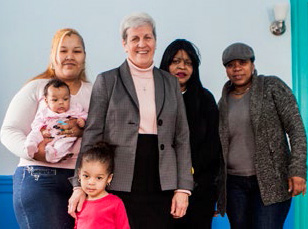
Sister Janet standing with residents of Providence House

Guest Blog: Without Living Wages, Women Face Instability

Guest Blog: Without Living Wages, Women Face Instability

Sister Janet Kinney, CSJ
May 12, 2016

As the Executive Director of Providence House – a Brooklyn nonprofit providing transitional and supportive housing to formerly incarcerated women and homeless women and their children – I hear every day the heart wrenching stories of women struggling to make ends meet, and their searches for suitable employment that will help them care for their children and get back on their feet. Each of them desperately wants to return to the mainstream of life, living in their own apartments. Time and again the frustrations they express are very real – because the wages they receive for the hours they work, just don’t match up to the cost of living here in New York City.

Stories like Marisa’s, a 35-year-old Hispanic woman with a three-year-old daughter who entered the New York City shelter system in September 2015 due to domestic violence abuse. Prior to moving to Providence House she had been working for five years in a bookstore as a barista. In those five years her wage crept up to a mere $9.50/hour. Before taxes this would equate to an income of $1,520/month: barely enough rent for a one bedroom apartment. Add utility costs, food costs, and general living expenses, it was clear that as a single wage earner she needed to either find higher paying employment, take on a second part-time job, or do a combination of the two. Because Marisa did not have a high school diploma her options were limited. She received training as a Home Health Care Aide, and was able to add 15-25 hours of health care work at $10/hour, though the hours are inconsistent: a worry for Marisa as she tries to save while juggling these two jobs.

Then there is Thomasine, a 31-year-old African-American woman with an eight-year-old son. Thomasine is already working two jobs – one as a security guard and the other as a waitress in a restaurant. Her combined income from these two jobs barely hits $1,500/month before taxes. She has now resided in our shelter for two years.

Mary Lou, age 34, a white woman with two children has lived at Providence House just over a year. She is a delivery supervisor at a restaurant, earning $11.25/hour, with a before taxes monthly income of $1,800. Mary Lou is working hard to save her money for the security deposit and first month’s rent of a two bedroom apartment – which range from $1,500-$1,800/month – but again, it is an upward battle.

The economic divide here in New York crosses racial lines, although people of color are disproportionately affected. In New York the minimum wage has just been raised to $9.00/hour and both the mayor and governor are challenging the legislature to adopt a $15.00/hour minimum wage phased in over three years. Across the country, the federal minimum wage is even lower, only $7.25/hour.

Fighting for a living wage is more complicated than simply raising the hourly minimum wage. Workers today face multiple challenges, such as employers increasing part time and contract work, receiving different wages for tipped work, and decreasing benefits.

Living wages also depend on having access to affordable housing and maintaining savings. There was a time when ‘the norm’ was an individual or family dedicating 30 percent of their income to rent, which allowed them to not only pay for other living costs (food, utilities, clothing, medical, transportation) but also contribute to a savings account or pursue further education. The women I work with will be lucky if two-thirds (67 percent) of their income is dedicated to rent. Savings become difficult, if not impossible, so even when one of our group of women can earn enough to afford her own apartment, without savings, she lives on the precipice of future homelessness if any part of her fragile income stream falters.

Living wages ensure workers can care for themselves and their families and meet their housing, nutrition, health, and other needs regardless of where they live. A minimum wage is not enough; we must have living wages.

Sister Janet Kinney, CSJ is the Executive Director of Providence House in Brooklyn, New York,  www.providencehouse.org

This story originally appeared in NETWORK’s Connection magazine. See the full issue here.

Pope Francis’ Impact on the Catholic vote in 2016

Commentary: Pope Francis’ Impact on the Catholic vote in 2016

By Simone Campbell, SSS
May 5, 2016

When the Bernie Sanders campaign announced plans to visit the Vatican, more than one journalist asked me for comment on the oddity of a progressive candidate seeking to associate himself with an institution whose views are antithetical to much of what he espouses. This, I believe, is a fundamental misunderstanding of how the majority of Catholics in America view the role of their faith in their political and civic life. Call it the Pope Francis effect. It is real and, because Catholics are the preeminent swing voters, it will matter a great deal.

In this, the first presidential election in the era of Pope Francis, attempts to control the “Catholic vote” through issues of personal sexuality – often nothing more than a crass political calculation – will no longer work as well, if at all. Instead, those who seek to divide our nation will find themselves up against a spiritual leader who has taken the teachings of our faith that have resided for many in the dusty tomes of Catholic scholarship and philosophy and made them breathing realities in our daily lives. In doing so, he has energized Catholics to embody the center of our faith – active concern for the common good and attention to the needs of those around us.

And then he has taken this sacred work a step further. The pope has reminded our elected leaders and all of us that individuals, churches, and communities, while vital to the work of taking care of each other, cannot be expected to do it all alone. The work of ending the vast disparities of wealth and opportunity in America and around the world can only be accomplished by implementation of policies on a grand scale, a political scale – a tax policy under which everyone and every corporation pays its fair share and all employers pay their workers a living wage; policies that encourage a “family-friendly workplace,” recognizing that the economy is at the service of workers, not the other way around.

This call has not been the least bit coy or veiled. In his speech before Congress in 2015, Francis told our elected officials, “You are called to defend and preserve the dignity of your fellow citizens in the tireless and demanding pursuit of the common good, for this is the chief aim of all politics. A political society endures when it seeks, as a vocation, to satisfy common needs by stimulating the growth of all of its members, especially those in situations of greater vulnerability or risk.”

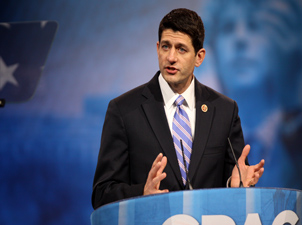
The pope’s words have clearly broken through to the professional political class, though whether it is through their hearts as well as their talking points, I leave to others to decide. For proof, look at House Speaker Paul Ryan’s public apology for his past rhetoric blaming the poor for their own poverty. Were Ryan to also publicly recognize, for example, that his mea culpa did not go far enough, and that the full implementation of the Affordable Care Act and the expansion of Medicaid to those who are most vulnerable is a pro-life position, perhaps the transformation would be more believable.

Ultimately, though, Francis recognizes that politicians are essentially stand-ins for the rest of us. It is the electorate who must heed the call to become politically active. It is up to us to recognize that in the wealthiest nation the world has ever known, the fact that there is still a vast difference in life expectancy between the rich and the poor is a collective wrong that we have a moral obligation to make right.

Hence the pope’s repeated calls for Catholics to “meddle in politics,” his repeated calls to, yes, feed and house and meet basic human needs from our parishes, but also to go out into the world and call for, vote for, big change – a reformed immigration policy that recognizes and embraces the dignity of our brothers and sisters, regardless of where they happened to be born; national spending priorities that recognize the need for safe, affordable housing as greater than the excitement over a newer, faster, deadlier weapon of war.

While Catholics do not vote as a single bloc, they are nonetheless a renowned bellwether in the political world, having voted for the winner of the popular vote, with one exception, in every presidential election since Roosevelt.

This year will not be different. When the chattering class analyzes the “Catholic vote,” as it will inevitably do – both before and after the primary and general elections – it will find that in this year of mercy, our votes stretched far beyond our self-interest and to the common good, that we turned out and voted for the needs of those who are most often left out of our care. We will be called the “Pope Francis voters.”

Originally published in The Philadelphia Inquirer.

Blog: During Women’s History Month Don’t Forget Women Behind Bars

During Women’s History Month Don’t Forget Women Behind Bars

Joan Neal
March 29, 2016

March is Women’s History month and this year’s theme is “Working to Form a More Perfect Union.” This is certainly a noble goal and one we should aspire to attain. But as we celebrate and honor women this month, let’s not forget that women still suffer, often unjustly, in the United States. Take the criminal justice system for instance. Not only are women treated unequally in this system, they are more often than men, victimized by it. To form a more perfect union we must address this issue.

The number of women in prison has exploded over the last couple of decades. Between 1997 and 2007, the female prison population grew at nearly twice the rate of men. Today, over 100,000 women are imprisoned in federal and state institutions – a 646% increase over the last 30 years! Nearly 58% of these women were jailed for drug offenses because women are more likely than men to be imprisoned for drug and property offenses. (Bureau of Prisons) We can’t form a more perfect union while this inequity exists.

To make matters worse, a quarter of women in state prisons and one third of females in federal prisons are pregnant when they are locked up. This has resulted in a 131% increase in the number of children with a mother in prison compared to a 77% increase in those with a father in prison! (The Sentencing Project) The pipeline of women into the prison system because of mandatory minimum sentencing has left thousands of children without stable homes and deprived them of the experience of a relationship with their birth mother.

While it is certainly clear that some women are guilty of non-violent drug offenses and should be held accountable for their crimes, it is also true that many women are victims of overly long mandatory minimum sentences. We can’t form a more perfect union until judges are able to give sentences that afford women greater opportunity to be treated fairly by the criminal justice system and to be held accountable in a manner that is proportionate to their offense.

Congress can honor women and make history during this National Women’s History Month by passing much needed sentencing reform. The Sentencing Reform and Corrections Act of 2015 (S.2123) is a vital reform that will reduce some mandatory minimum sentences for people convicted of non-violent drug offenses and help right past wrongs by retroactively applying the Fair Sentencing Act of 2010 to approximately 6,000 women and men currently in prison. Although much more reform is needed, these changes are an important first step toward addressing some of the causes of the unsustainable increase in the number of women in the federal prison system.

Now is the time to pass sentencing reform. The Senate Judiciary Committee passed S.2123 over 4 months ago and it is time for the bill to come to the Senate floor for an up or down vote. Senate Majority Leader Mitch McConnell should put justice before partisan interests and bring S.2123 to the floor for a vote right away. Passage of this reform will go a long way toward honoring National Women’s History Month while at the same time helping the country ‘Form a More Perfect Union.’

Blog: The Crucifixion Keeps Happening, Over and Over Again

The Crucifixion Keeps Happening, Over and Over Again

Simone Campbell, SSS
March 14, 2016

The story of Jesus’ passion and death has stirred my imagination since I was a child. In an act of profound mystery, Jesus walks towards the conflict swirling around him. Jesus accepts his arrest and does not raise his voice. His willingness to embrace the consequences of truth-telling leaves him silent in the face of his accusers. His judges repeatedly say they can find no fault in this man, but the people want more. They want someone to blame.

It makes me think of the fear and anger roiling in our nation and capitalized on by some of our presidential candidates. Whom can we blame? Whom can I direct my anger toward? Many holler to deport those who are different. Many demand that the stranger at a rally be expelled. Many people with white skin fear those who have a darker pigment. And those with a darker pigment fear what will happen to them when white fear runs rampant. Fear and hate cause people to demand that those who are different be crucified so that those who are yelling will feel less uncomfortable in our complex society.

But this is the deeper truth: Hate and fear have no place in the Gospel. Jesus welcomes everyone, including Pilate, Herod, Simon of Cyrene, and the women of Jerusalem. He stands in the midst of conflict with reflection and respect. Facing groundless charges, he doesn’t retaliate. He either answers simply or stays silent and lets the scenes play out trusting in the presence of a deeper truth. We are challenged, as a nation, to journey into this deeper truth. This deeper truth is the embodiment of love beyond understanding.

In September 2015, while on our Nuns on the Bus tour in advance of Pope Francis’ visit to the United States, I met women whom I think of as Jesus in the story of the passion. They are in the grip of suffering for their children, yet they do not cry out or retaliate. I met Amy, an African-American mom in St. Louis who worries every day about the safety of her two sons, one in tenth grade and the other in eighth grade. She quizzes them regularly about what to do when stopped by the police. She tells them that they need to keep their hands out of their pockets and their arms away from their body. They need to say “yes sir,” “no sir,” and don’t demonstrate any teenage attitude. She showers her boys with worry and advice so that they might be safe.

Her eighth grader asked her, “Mommy, how long is this going to go on?”

Amy, in her love, told him the current truth. She said, “The rest of your life.”

This is the worry of moms in a society where young African-American teens can be seen too quickly as a threat. It is her worry which is quite like the worry of the women of Jerusalem. On his way to Calvary, Jesus says to them, “Do not weep for me. Weep for yourselves and your children.”

“The question for me is: Was I there when they crucified my Lord?” —@sr_simone

Jesus in his love knows that it is not about him, but the struggles of our families and our destructive tendencies. It is the toxicity of racism that is crucifying our young men in the streets of our cities. We need to weep so that we may act differently.

Also on the bus trip, in Missouri we met the two mothers who started Just Moms STL. They live near the superfund clean-up site known as West Lake Landfill. This buried toxic heap was created by the waste from the creation of the atomic bomb in World War II. This nuclear waste was buried, but has been emitting radiation for over 70 years. Now these mothers have come together because their children have been diagnosed with brain cancer. They discovered that there is a 300 percent increase in the level of childhood brain cancer for those living near this site. Not only that, but we were told that the waste itself has caught fire underground and is gradually smoldering its way towards the Missouri River. And yet, no one is cleaning up the mess. Rather, the corporations are arguing about who should pay for it. They are doing this while children suffer and our land cries out to be rid of the toxicity of human making.

This is the road to Calvary. How do we become Simons of Cyrene to help with these crosses? Are we willing to let our hearts be broken open by the anguish and struggle of our time so that we might find some form of conversion and change?

Jesus walked step by step toward those who condemned him. He revealed the truth either in accepting the title he was given (King of the Jews), or his concern for the women of Jerusalem. In the midst of his anguish, he felt another’s pain. This is the gift of love that is not preoccupied with itself, but rather sees the needs of others. Dare we love enough to move beyond our nation’s endemic racism and embrace Amy and her sons so that their story might have a different ending? Do we love enough to move toward helping the moms trying to save their children from the toxicity that is consuming our planet?

Some presidential candidates breed fear and hate, becoming like the mob in Jesus’ time demanding someone’s life. They nourish the toxicity rife in our society. We as Christians are challenged by Jesus to live differently. We are challenged to stand up for Amy and her sons and the mothers at the West Lake Landfill. Do I act to change the future of our nation or do I too call for blood? The question for me is: Was I there when they crucified my Lord?

This article originally appeared at On Scripture.

Blog: A Conversation with Sister Robbie

A Conversation with Sister Robbie

Sarah Spengeman, PhD
March 11, 2016

This interview was conducted with Sister Robbie Pentecost, OSF by Sarah Spengeman, NETWORK Grassroots Mobilization Manager following the Sisters in Public Leadership training in Washington, D.C. on MarcSister Robbie Pentecosth 3-4, 2016.

Q: Sister Robbie, why do you think Catholic sisters are such a powerful voice for justice?

A: Catholic Sisters are seen as people of integrity, faithful to the Gospel. Society does not see us seeking power for ourselves, but rather using our power to lift up the poor and marginalized. Our way of life, as seen by others, is consistent with who we say we are and we are passionate about making a difference in the life of others. Thus, we are seen as a trusted source without a hidden agenda.  People listen!

Q: How did being a Nun on the Bus prepare you for the leadership training? 

A: Being a Nun on the Bus provided a practical context for the leadership training. On the Bus you must be ready for anything, particularly challenging questions and comments that may divert from the core purpose of the Bus. Prior to actually getting on the Bus, sisters are given a mini preparation on how to stay focused and to respond to interview questions. However, this day and a half of leadership training was far more in-depth and provided a broad landscape to use these tools.

Q: What was the most surprising part of the training?

A: Perhaps the biggest surprise of the training was in discovering the vast network of resources available to people of faith who want to advocate for justice issues.  Faith in the Public Life staff, along with NETWORK and a host of other groups have materials on many current justice concerns that they are more than willing to share and will help in the research as well.  But more amazing is their willingness to practice with you and help you prepare to advocate.

Q: What was the most valuable skill you learned or developed?

A: Staying focused on the core message that you are trying to get across and telling a story in a concise way to hit home the core message. Remaining focused in an environment that may be rather hostile can be challenging, but staying rooted in why you are doing what you are doing and not seeing those who disagree with you as the enemy helps to keep you focused.  You don’t have to know answers to everything that comes your way.  Speaking your truth, as you understand it, is an effective method of communication.  Perhaps an even more valuable learning was how essential meditation and prayer are to effective advocacy.

Q: How do you plan to use these skills in your work for justice?

A: My current ministry, as the Coordinator of Donor Relations for my Congregation, is not necessarily seen as a direct advocacy role.  However – mission should be at the forefront of our work in Advancement and we should seize upon opportunities to speak with donors or the public about the values our Congregations hold.  Justice is at the heart of our mission and thus speaking about justice and why the Sisters are passionate about many issues facing our world today can engage our donors, as well, in furthering our mission.  Often times we let fear keep us from speaking about issues of justice, fearing the loss of donations.  The ability to engage donors on issues of justice, without alienating them, is critical to the work of our Congregational Advancement offices and this training helped me develop and hone these skills.

Q: What advice would you give other sisters and/or other people who want to advocate for social change?

A: Trust your heart and just do it!  But preparation and practice are vital steps in the process.  Stepping beyond our fear of disagreeing with another or concern about what others may think of us is part of our faith journey.  When we develop an ability to offer another perspective without disregarding the other person’s perspective, there is a sense of freedom.  Advocating for social change, even though a rather slow process, brings a sense of renewed energy.  It is also about building community, recognizing we cannot reach the Kingdom of God alone.

Op-Ed: Defining Disgraceful

Op-Ed: Defining Disgraceful

By Sister Simone Campbell, SSS
February 24, 2016

Originally appeared in The Hill 

Donald Trump’s repeated promise on the campaign trail to defend Christianity if elected President has been of concern to us.  When he recently called Pope Francis’ critique of his immigration stance “disgraceful,” we hit our tipping point. Mr. Trump cannot defend that which he does not seem to understand.

Christian faith teaches love of neighbor and love of the stranger, not sentimental love but real life-giving love.  The Bible speaks of two types of love: phileo and agape. Both are Greek terms that appear at different points throughout Scripture but agape is the most powerful, noblest type of love: sacrificial love, an act of the will. Christians are to love one another with agape love as in Jesus’ parable where the Good Samaritan saw an injured man and helped him without regard to race or religion; he just saw a person in dire need. Christianity is not the only faith that speaks of willful love. Every world religion has at its core a commitment to caring for humanity: the orphan, the widow and the stranger.

It’s clear what’s going on. Mr. Trump is executing a political strategy that has been around for millennia: channeling anger born of fear. He is not the only candidate to do so, but his microphone seems to be the loudest and the angriest. We understand that much of this fear is coming from those who see their majority status – white and Christian and male – changing. They have not felt that they have someone standing alongside them. But Mr. Trump’s promise to defend their Christianity is merely a political ploy to grab their votes. It’s not just manipulative and cynical, it diminishes the deep wisdom of our Christian faith, and that is offensive to us.

Millions of Americans, including those whose fear Mr. Trump is channeling, have dedicated their lives to doing the good works of their faiths. His fear mongering is personally insulting and publicly dangerous. It is building a wall between American citizens — of all faiths, colors and cultures.  Our faiths deserve far more respect than has been shown thus far.

Mr. Trump says the Pope’s suggestion that his immigration policies are not Christian is “disgraceful.” What is disgraceful is Mr. Trump’s xenophobic zeal. Stirring up fear of immigrants by calling them rapists and then offering a giant wall as a solution is anything but a solution. Nor are the current administration’s actions that detain immigrants in for-profit detention centers; or deport parents, leaving their children behind to fend for themselves. I know. As a Methodist Bishop, I held a little boy from Honduras at an immigrant center in South Texas as he showed me pictures he had drawn and he described the perilous journey he had just taken as an unaccompanied immigrant child. I knew then, as I know now, that the solutions offered by Mr. Trump or the administration are not the answers and certainly not expressions of Christian faith.

Walls separate us from the possibility of exercising life-giving love; bridges offer us the possibility and Christians are to be counted among America’s bridge builders. We stand with the New Sanctuary churches and synagogues that provide safe haven to families threatened with being ripped apart – parents from children, wives from husbands — neighbors from our communities. I know. During our “Nuns on the Bus” campaign to honor the Pope’s U.S. visit and message of economic inclusion, I met 16-year-old Kathryn who was caring for her five siblings after her hard-working parents were deported. Her 11-year-old sister, Stephanie, in her anguish, attempted suicide, believing that it would be better for her family that she not be alive. Luckily these children were wrapped round with their neighbors’ care and the love of their parish community that continues to support them.

That is agape love. Powerful, willful, Christian love.

The holier-than-thou claims by presidential candidates wearing Christian costumes will not effectively address immigration reform or the problems of U.S. poverty and economic inequality, institutional racism, educational inequity, and still having too many people in this country living without health insurance. It will take more than holding up a false placard declaring that one understands what it is to be Christian.

All presidential candidates are invited to join the courageous witness of persons of faith and love – the bridge builders. But they cannot do so through shallow words. Being a leader requires taking on the tough, real-life issues that our nation faces with integrity. Even if we disagree on policies, we cannot disagree on the need for integrity.

About the Authors:

Bishop Minerva G. Carcaño is Los Angeles Area Resident Bishop of The United Methodist Church, the first Hispanic woman to be elected to this episcopacy; and a leading advocate for U.S. immigration reform. www.calpacumc.org/bishop

Sr. Simone Campbell, SSS, is executive director of NETWORK and leader of NETWORK’s “Nuns on the Bus”, Washington, DC. She is author of A Nun on the Bus: How All of Us Can Create Hope, Change, and Community. www.NETWORKLobby.org and @Sr_Simone

Blog: Housing Bill H.R.3700 Passes Unanimously!

Housing Bill H.R.3700 Passes Unanimously!

Bethan Johnson
February 5, 2016

On Tuesday, February 2, 2016 the House of Representatives did something it hasn’t done in recent memory: passed a bill unanimously. While a significant event in and of itself, this vote is particularly important because it meant the passage of a sweeping piece of bipartisan legislation that will help millions of families and individuals live in dignity by increasing the availability of safe and affordable housing.

The unmitigated support of H.R. 3700, The Housing Opportunities through Modernization Act, is a key step for the House of Representatives and our nation because it brings America one step closer to guaranteeing people’s essential right to housing and lays the groundwork for future cooperation in the House.

H.R. 3700 is a piece of common-sense legislation that specifically addresses the current crisis in the affordable housing market. Key features of the legislation and its approved amendments include:

  • Shortening extremely long waiting-lists for public housing by limiting housing assistance for those with incomes above 120% of the poverty line.
  • Reducing wait times for public housing units by expediting inspections on voucher-rented units, while guaranteeing the same safe and decent standards previously required.
  • Making more housing vouchers available to those in need by allowing conditional approvals on units in which non-life threatening deficiencies have been found, mandating their repair within one month.
  • Working to end our nation’s homelessness crisis, particularly as it relates to veterans, by streamlining homelessness and housing assistance programs, as well as requiring the Department of Housing and Urban Development and the Department of Veterans Affairs to give Congress annual reports on homelessness and the housing assistance needs of veterans.
  • Addressing the often under-discussed issue of rural housing instability and creating the Multifamily Housing Revitalization Program to provide affordable rural housing and alter regulations around loans programs to allow more families in rural areas to be home owners.

In addition, the bill addresses the specific needs of our nation’s most vulnerable: improving the Housing Opportunities for Persons with AIDS program, preserving public housing assistance standards for persons living with disabilities, and protecting laws for dependent and child care income deductions.

The passage of H.R. 3700 is a success for advocates not just because of the bill itself, but also because of the creation and discussion around it. This bill exemplifies what positive changes Congress can make when it sets aside dogma in favor of common-sense legislation.

Bipartisan almost from its inception, the bill united both parties toward a common goal: promoting the common good. The discussions on the floor of the House were respectful and filled with praise for the bipartisan efforts of members; even when amendments failed or disagreements cropped up, representatives refused to close themselves off to debate or hold the entire bill hostage.

In essence, the House of Representatives chose to govern, and we will all benefit from that decision. This is the behavior we need and expect from Congress, and we hope that this bill will set them along a better path this year.

While advocates should look at the events of Tuesday night with excitement, the work is not complete. The Senate has yet to take up this issue or put forth a companion bill. Without such a bill, the great attempts at progress made by House will never have the opportunity to help millions. It is critical that we build on the momentum of the House and push the Senate to draft and pass its own version of this bill so that these vital reforms to our nation’s housing policies take effect as soon as possible. In doing so, we will ensure the comfort and stability of a safe, affordable and decent home for millions of people, which, as Pope Francis tells us, “represents the most precious human treasures….a crucial place in life, where life grows and can be fulfilled, because it is a place in which every person learns to receive love and to give love.”

Blog: A Year of Forgiveness is Necessary for Justice

A Year of Forgiveness is Necessary for Justice

By Rachel Schmidt
January 04, 2016

On Tuesday, Dec. 8 Pope Francis established a Jubilee Year of Mercy, which is considered a “year acceptable to the Lord” (Is 61:2). Its origin comes from the Bible in Leviticus 25. The scripture states that every fiftieth year was considered a sacred time to return property, forgive debts, and free people who were considered “slaves.” It was a year to reset, refresh, and allow those subjugated by societal actions to reconnect with society in a more holistic way. The Christian version of the Jubilee turned into a season of pilgrimage to sacred places around the 14th century and had less focus on societal forgiveness. Therefore, Francis’s emphasis of this Jubilee year as a return to mercy is radical and will be educational for how forgiveness is necessary for a just society.

It is significant that Francis departed from tradition for this year’s Jubilee. First, Jubilees are supposed to be every 25-50 years and the most recent one was in 2000. The pope knows it has only been 15 years, but he finds the message of mercy to be too important for our age to wait another 10-35 years. He also broke from the tradition of the pilgrimage-type Jubilee and goes to the spirit of the original Jubilee described in Leviticus with this Year of Mercy. The word “radical” comes from the Latin radix, which means “forming the root.” Francis is radical not only in revisiting the original purpose of the Jubilee; he is also forming strong roots in the Church and the world for cultivating social justice.

Pope Francis said, “a little mercy makes the world less cold and more just.” How can forgiveness create a warmer, more loving world? Imagine if we held to the original Jubilee ideals. In current times, perhaps there would be no more student debt, we could provide hardworking people around the country with a living wage and healthcare, and the ills that a capitalistic society inevitably produces would be righted through stronger controls on our economy led by a political system concerned for the common good. Society would be held accountable for the ways it causes harm and creates brokenness. The Jubilee would uplift the people society puts in dehumanizing situations and improve their quality of life, or liberate them from systems of oppression. Imagine the cycle of poverty being swiftly uprooted and interrupted. If we can be inspired only slightly by Pope Francis’s Jubilee Year of Mercy, we will certainly create more justice in the world.

There is so much fear in many people who unjustly criticize this kind of societal forgiveness for those who struggle in oppressive conditions. For example, this seems to be a constant point in the narrative around our social safety net and programs designed to help lift people out of poverty and support those struggling in our economy. Should we judge those who receive government assistance? How many chances should we give repeat offenders of the law? The answer is no, we shouldn’t judge, and we should give people as much support as they need because we are all connected. We are one body and all of us are sick when one of us is hurting.

Peter Maurin, a founder of the Catholic Worker Movement, wrote Why Not Be a Beggar? (below), which illustrates how those pushed to the margins are our shared redemption.In the end, we are all susceptible to marginalization and all have pain and darkness within us. We must have consciousness of this common fragility and realize “the other” is not other at all; this person is another self and their struggles can illuminate the necessity of our own pain. In a capitalistic society where “being the best” is often considered the point of existence, the person who is most economically vulnerable has a lot to teach us about our shared humanity.

In this Jubilee Year of Mercy let us remember the necessity of forgiveness of ourselves and others for the benefit of creating the common good. We can “form the root” of society by interrupting cycles of poverty and giving people a hand up with our legislative policies. We can structure society in ways that don’t ostracize folks for some of the difficult choices they have made. We must continually remember that we and others are welcome to the table no matter how many times we’ve been pushed away. Let us refresh, reset, and restructure into a community of forgiveness that knows how much we need one another.

Why Not Be A Beggar?
1. People who are in need
and are not afraid to beg
give to people not in need
the occasion to do good
for goodness’ sake.

2. Modern society
calls the beggar
bum and panhandler
and gives him the bum’s rush.

3. The Greeks used to say
that people in need
are the ambassadors of the gods.

4. We read in the Gospel:
“As long as you did it
to one of the least
of My brothers
you did it to Me.”

5. While modern society
calls the beggars
bums and panhandlers,
they are in fact
the Ambassadors of God.

6. To be God’s Ambassador
is something
to be proud of.