


Category Archives: Immigration

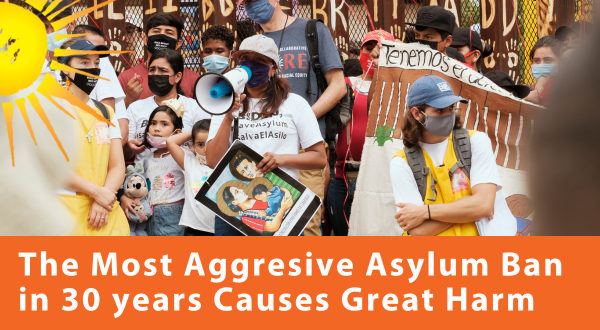
Biden's Aggressive Asylum Ban Causes Great harm

Care for the Border

Care for the Border 

True Investment Means a Move from Militarization to Community 

Briana Jansky
July 25, 2023

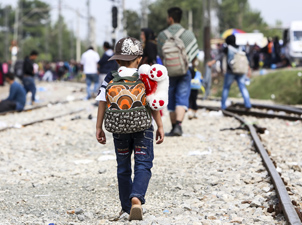
A child wearing a cap walks with a backpack and a stuffed animal at the US-Mexico borderWhen the COVID-19 pandemic stopped the world in its path in 2020, the Trump administration used it as an excuse to prevent asylum seekers from coming through at the U.S.-Mexico border. These policies aggressively restricted access to ports of entry for those who were fleeing imminent danger. Now, three years later and with the state of emergency officially ended, migrants still face unjust policies and unethical barriers that prevent them from safely seeking asylum in the United States. 

Asylum is a necessity and a human right. In his message for the 2023 World Day of Migrants and Refugees, Pope Francis writes that “even as we work to ensure that in every case migration is the fruit of a free decision, we are called to show maximum respect for the dignity of each migrant; this entails accompanying and managing waves of immigration as best we can, constructing bridges and not walls, expanding channels for a safe and regular migration. In whatever place we decide to build our future, in the country of our birth or elsewhere, the important thing is that there always be a community ready to welcome, protect, promote and integrate everyone, without distinctions and without excluding anyone.” 

In contrast to a witness like this from the world’s most prominent religious leader, in the U.S., policymakers struggle to provide ethical and welcoming pathways and policies for migrant people. The U.S. government refuses to enforce the law, where asking for asylum is legal regardless of the manner of entry to the country, and continues to focus on more militarization. Increased militarization at the border continues to make life even more difficult for incredibly vulnerable people and harms the fabric of solidarity in communities. 

Policy Breakdown  

The Title 42 expulsion policy, a pandemic rule put in place by President Trump and continued under President Biden, allowed U.S. officials to swiftly turn away migrants seeking asylum at the border. While Title 42 ended on May 11, when President Biden ended the public health emergency, the Administration has expanded and enacted other policies to further attack the right to asylum, despite President Biden’s promise to put an end to such practices. The new laws are the most aggressive ban on asylum the U.S. has seen in almost 30 years, preventing access to protection for migrants at the border by over 50 percent.  

A May 11 statement from 16 Catholic organizations — including NETWORK, Jesuit Refugee Service/USA, Hope Border Institute, Kino Border Initiative, Franciscan Action Network, Maryknoll Office of Global Concerns, and Pax Christi USA — gave voice to Catholic outrage over the move: 

“Through continued restrictions on asylum and the militarization of the border, the U.S. government has shut the door to many of our siblings who are calling out for help. This failure to provide welcome sends a clear message to the rest of the world that the U.S. will not keep its previous asylum promises and instead continues to turn away from those most in need,” the statement said.  

The Biden administration’s new rule — the “Asylum Ban” — guts current asylum law. Currently, it is legal and right for people seeking asylum to come into the U.S. and ask for asylum at the border or after crossing it and encountering any government agent. The Biden administration has superimposed the Asylum Ban onto this law.  

“The current Asylum Ban policy is set for one goal and one goal only — to keep people out. Policies supporting asylum must uphold the national and international protection norms, and this rule does not do that,” says Ronnate Asirwatham, Government Relations Director at the Network.

The current rule makes setting up an appointment via app the sole means of accessing asylum in the U.S. Use of the CBO One app disproportionately affects Black, Brown and Indigenous immigrants because their access to technology is harder, and they are discriminated against three times as much as lighter skinned immigrants.  

“The proposed rule seeks to make migrants passing through other countries first claim asylum in those countries, and in most cases, especially for Black, LGBTQ+, and Indigenous immigrants, that is impossible,” notes Asirwatham. “The ways in which these laws are applied target the only way that people can seek asylum and this truly affects the most vulnerable.”  

“These people who are migrating are still there, and still need our help,” points out Marisa Limon Garza, executive director of Las Americas Immigrant Advocacy center. “It’s troubling that so many people are unclear about their path forward. We’re still unclear about a lot of the logistics and what will come next.”  

“In our attempt to provide fundamental humanitarian aid to those most vulnerable, our community gets policed as though we are criminals for being good Samaritans.”
—Patrick Giuliani
 

Many migrants face dangerous conditions in their home countries, including extortion and torture, only to be met with resistance and restraint at the border. Turning them away from safety and security doesn’t make those problems go away, and deterring and detaining them only leads to a host of other issues.  

“People on the move face lots of dangers,” says Mayte Elizalde, communications specialist at the Hope Border Institute. “Migrants in different countries are targets for violent attacks. In Mexico, there are reports of people being extorted by authorities.”  

The Footprint of Militarization 

Instead of creating policies that result in an intricate system of oppression of human rights, the government could enforce the Immigration and Naturalization Act of 1965, which clearly states that seeking asylum is a legal right regardless of the way one enters the United States. The U.S. government could also fund and train more people to help evaluate asylum seekers’ applications and assist the organizations at the border and in the interior that welcome migrants with food, water, and adequate shelter, and promote agency and well-being. The U.S. government aids detention centers significantly more, funding them up to 200 times more than organizations that are focused on serving and caring for migrants.  

In Mexico, there is a lack of transparency around the conditions of the detention centers, and the human costs are catastrophic. The sordid conditions rose to U.S. national news back in April, when 40 migrants died in a fire that broke out at a detention center in Ciudad Juárez.  

“Based on reports of the detention center in Ciudad Juárez, it showed that the center was lacking clean water, food, or hygiene products,” notes Elizalde. “What happened in these detention centers was a reflection on what our immigration system does. Mexico has now become a host country and has not met the humanitarian needs of the people they have accepted to host. … The U.S. creates policies that force people to be in a country where they are not taken care of, but instead put in danger.” 

It is not only detention centers outside of the U.S. that are failing to meet the basic needs of immigrants, but ones within the U.S as well. There have been repeated warnings and reports of inhumane and illegal policies and practices that take place in CBP custody, and yet the U.S. government has not done anything. In May, Anadith Alvarez, an 8-year-old Panamanian girl, died at a U.S. detention center in Texas. She was the third child to die in U.S government custody in six months.  

“These people who are migrating are still there, and still need our help.”
—Marisa Limon Garza

As NETWORK lobbies Congress and the Administration to move the U.S. government away from militarization and toward building community, organizations such as the Hope Border Institute, Kino Border Initiative, and the Haitian Bridge Alliance see first-hand how current policy harms everyone.  

“We often welcome groups from all across the country to learn about the binational community at the border and what people migrating today are facing. Last year we had to complain to port officials because we noticed that students of color were being more frequently sent to secondary inspection or asked more questions, even though they were born in the U.S.,” says Sr. Tracey Horan, Associate Director of Education and Advocacy for the Kino Border Initiative in Nogales, Ariz. “It is frustrating to see how my coworkers of color who cross the border regularly face more checks and interrogation both at the ports and at checkpoints in the interior.”  

Patrick Giuliani, policy analyst at the Hope Border Institute in El Paso, Texas, concurs: “We see the U.S. surge resources that are used to further criminalize migrants and police not only the border but our community. In our attempt to provide fundamental humanitarian aid to those most vulnerable, our community gets policed as though we are criminals for being good Samaritans.”  

Briana Jansky is a freelance writer and author from Texas. 

This column was published in the Quarter 3 2023 issue of Connection. 
Restore and Protect Asylum - -watch the NETWORK Lobby Webinar, Sign-on the the Letter to Congress, and more

Take Action to Restore and Protect Asylum

10,000 Signatures Needed from Catholic Advocates!

We are no longer accepting signatures for the letter.

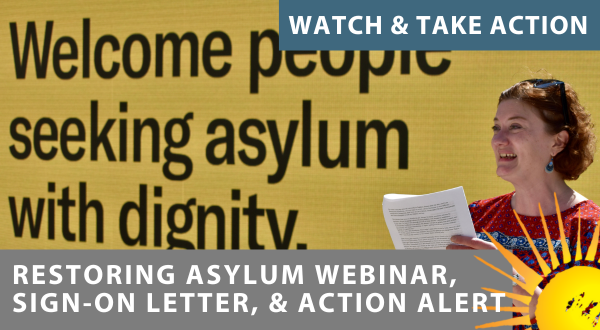
Watch: Restoring Asylum & Dignity for Immigrants

The Restoring Asylum and Dignity for Immigrants webinar makes it clear — our country needs a well-funded, law-abiding asylum process that respects people seeking a new life in the U.S. All immigrants deserve dignity — no exceptions! Catholic justice-seekers*, we are collecting 10,000 signatures to let Congress know that NOW is time to invest in better, equitable immigration policy.

*NETWORK is offering another immigration justice action — in addition to the sign-on letter — for all justice-seekers. With one click, you will be taken to a letter that you can personalize, or just send, immediately. Click here to send an email to your Member of Congress. 

Help friends, family, & parishioners sign-on, too.

Action Everyone Can Take for Immigration Justice

Resources to support you when you take action to restore and protect asylum

Blogs
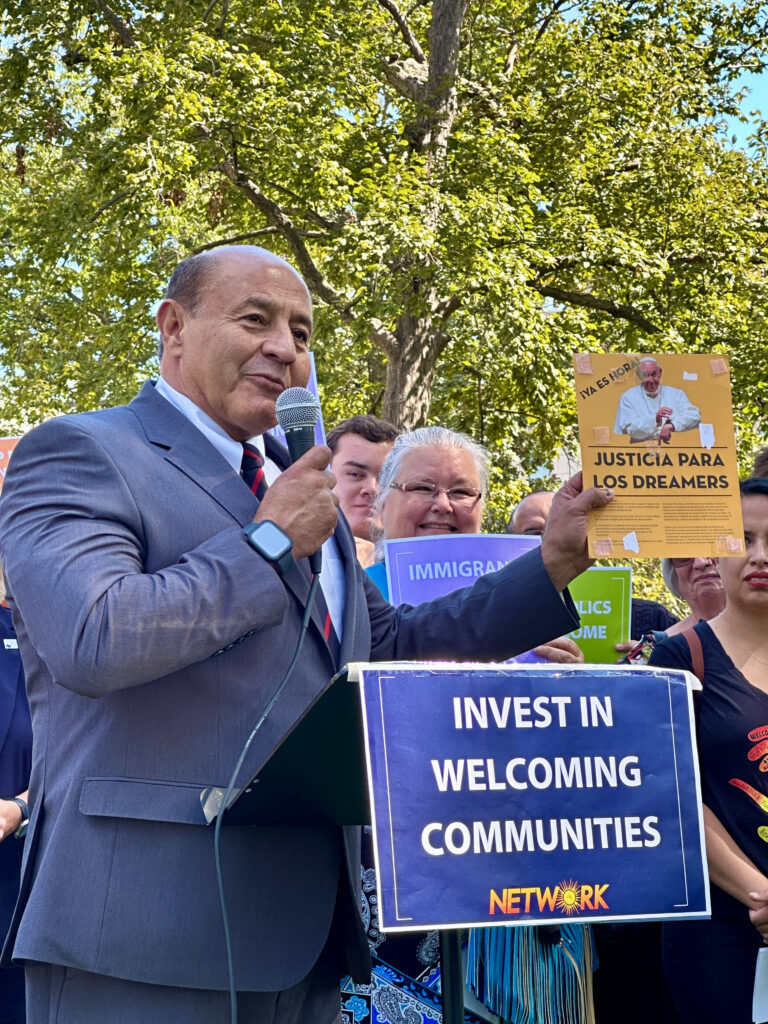
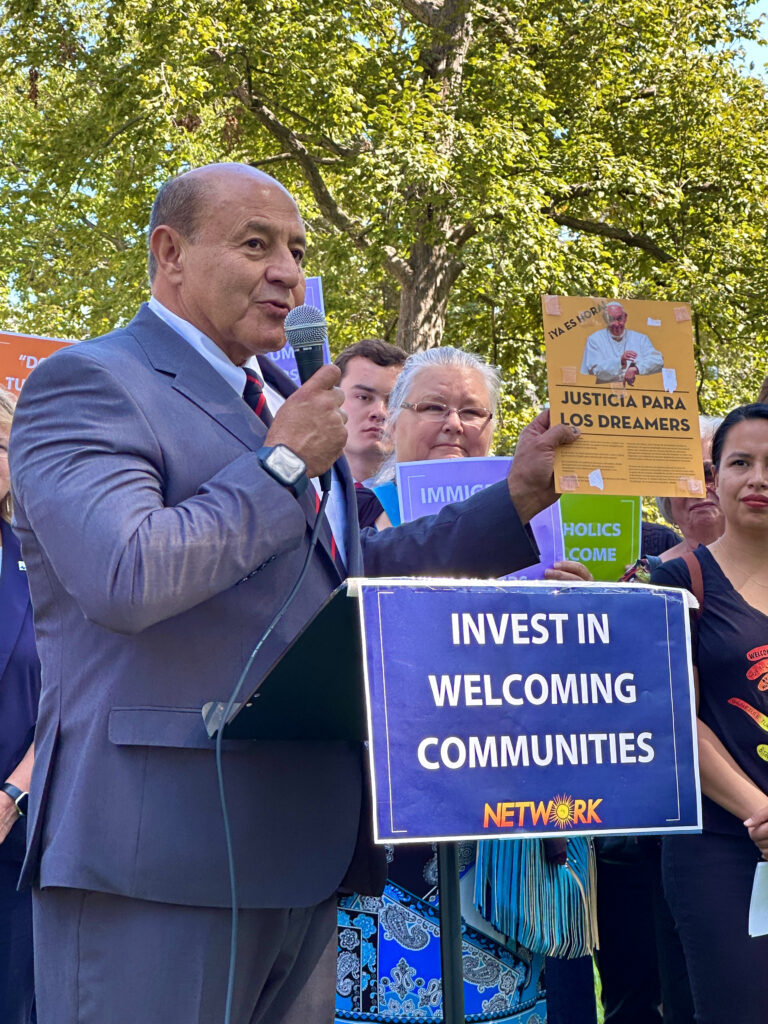
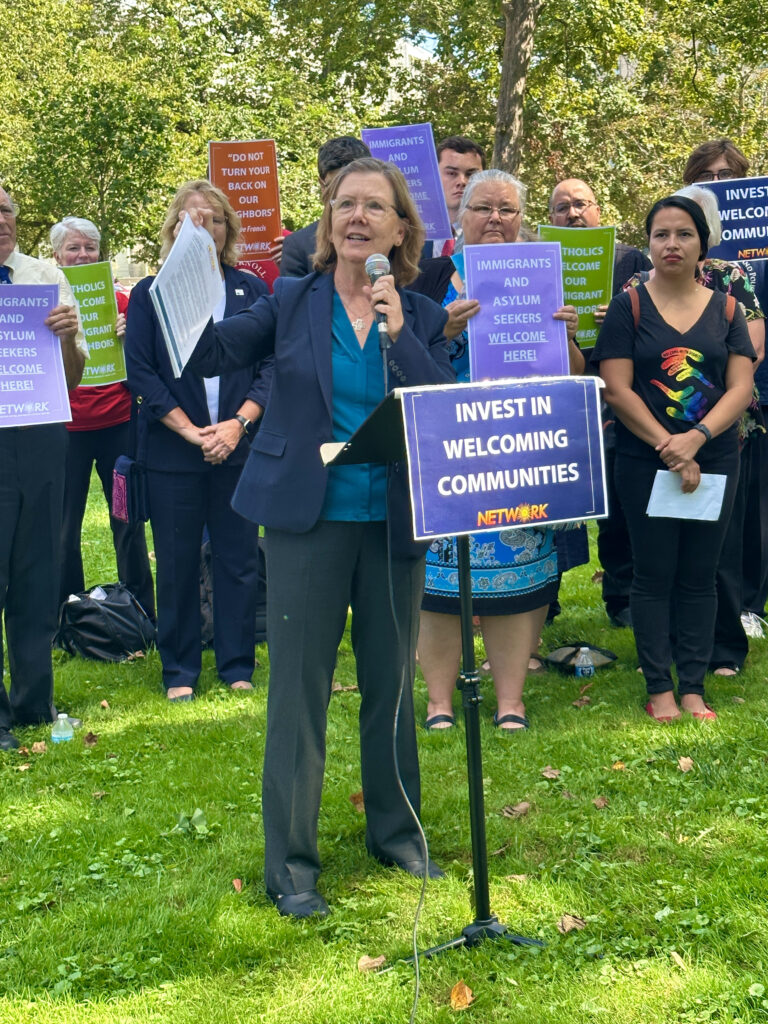
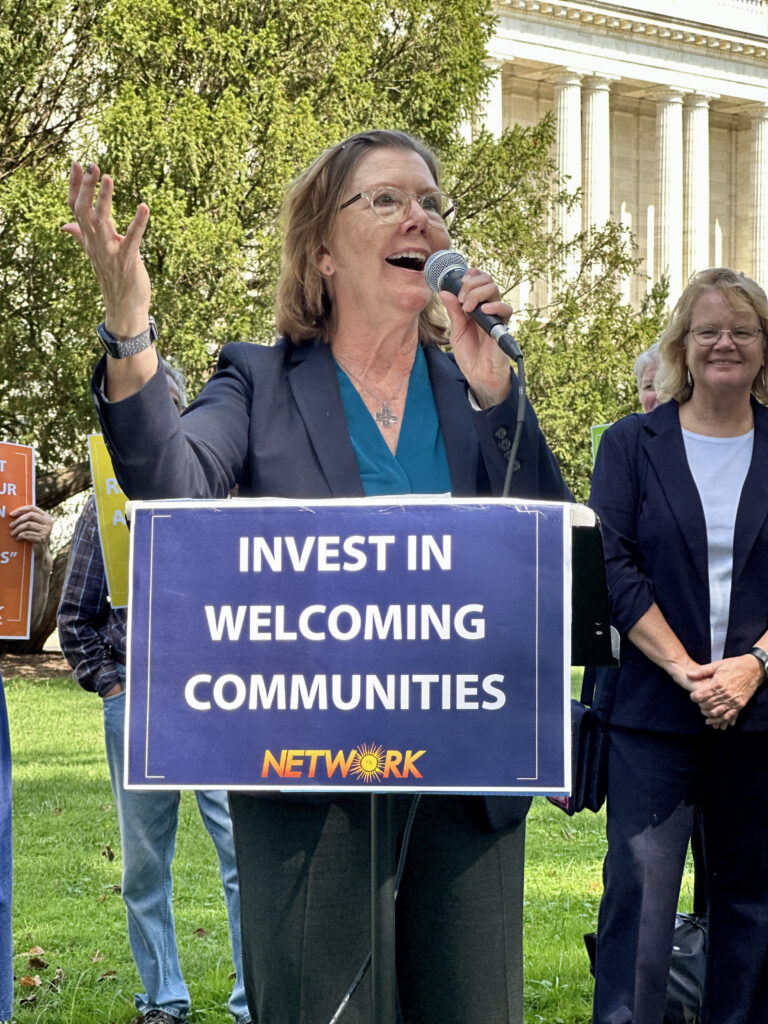
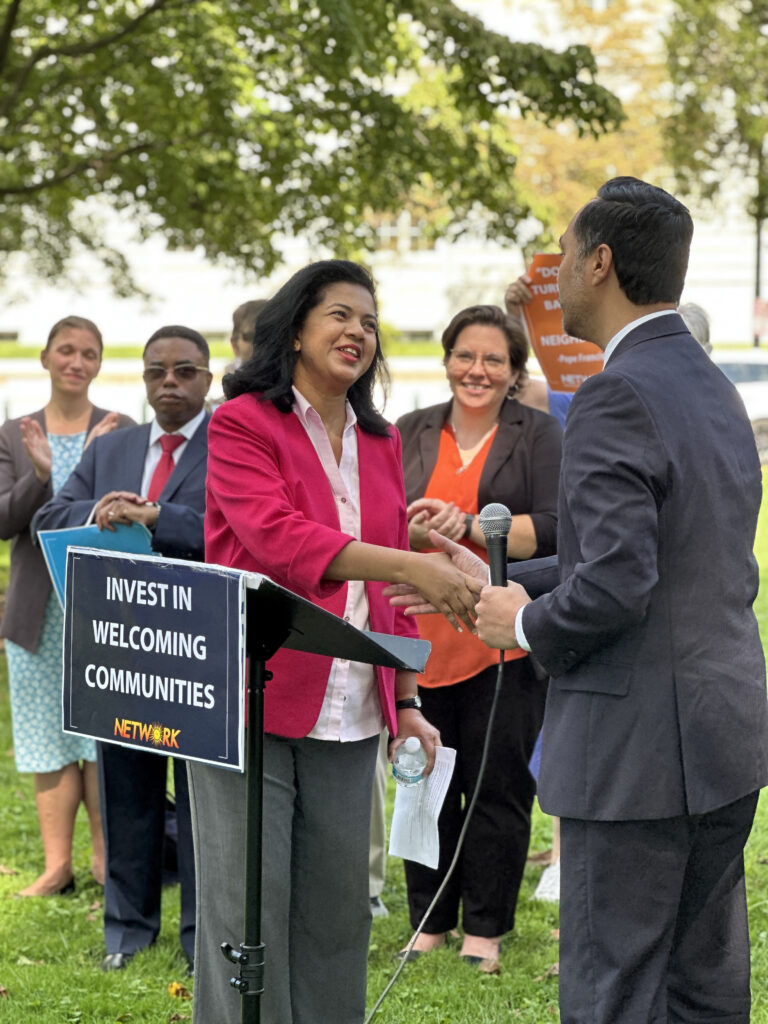
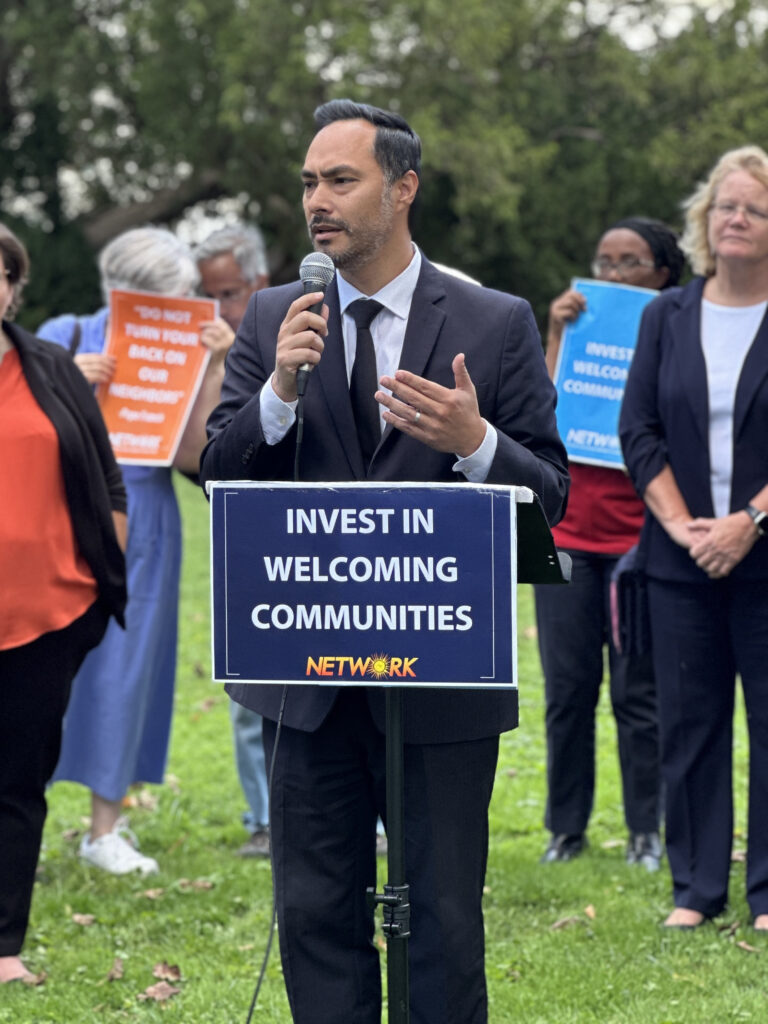
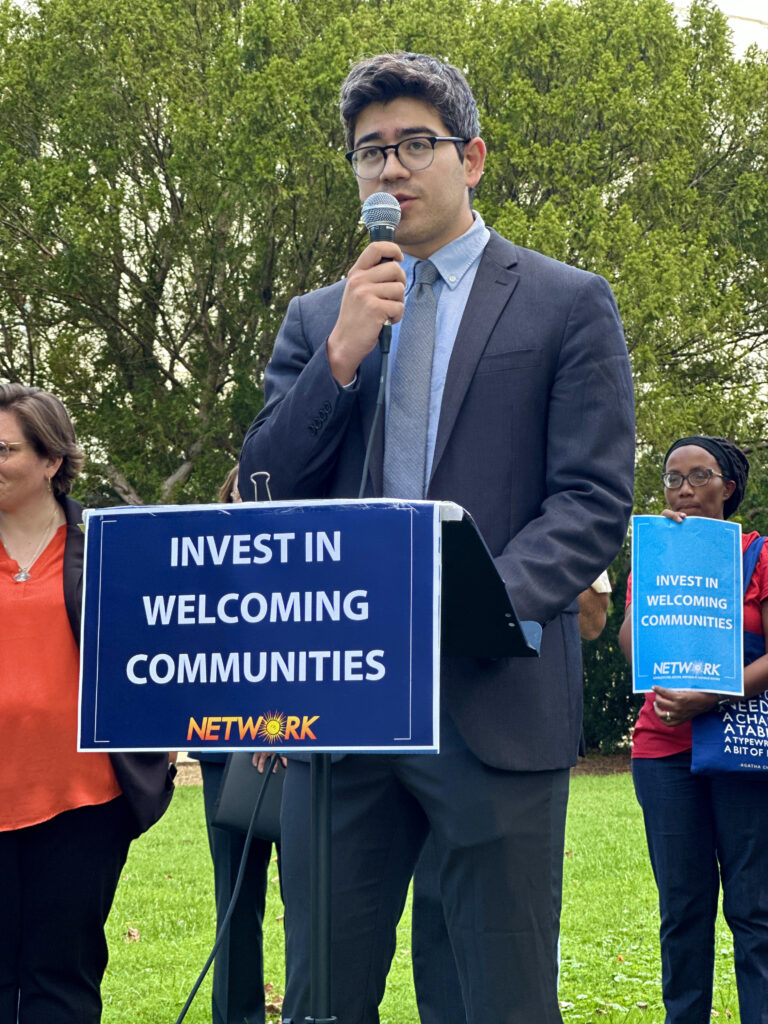
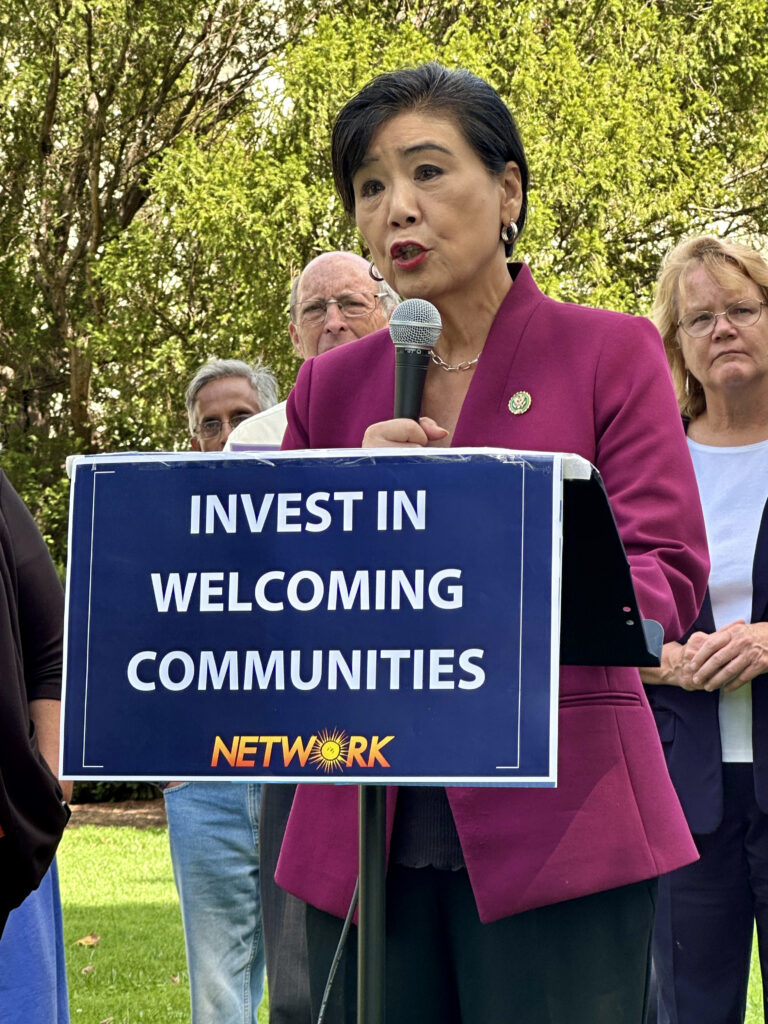
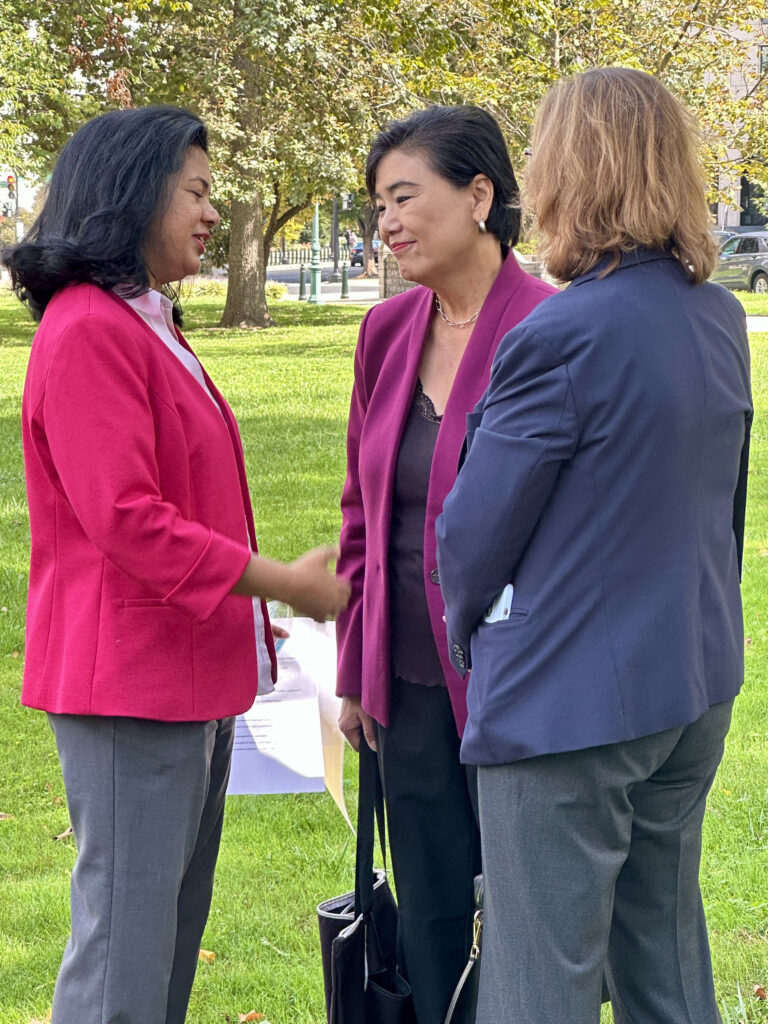
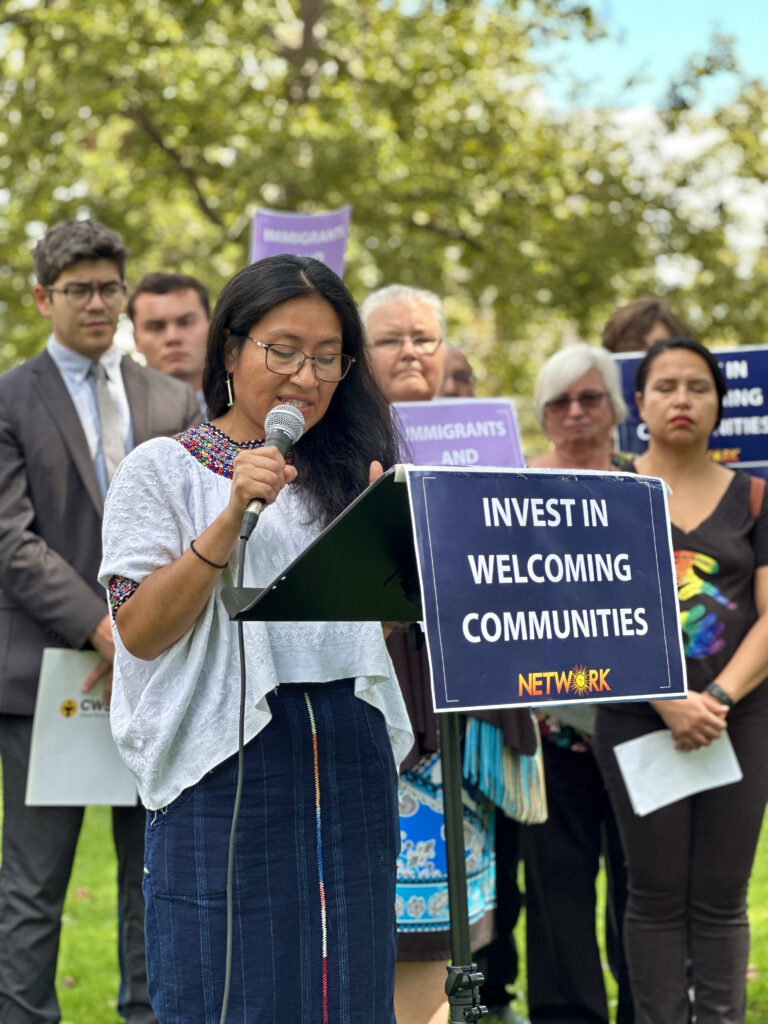
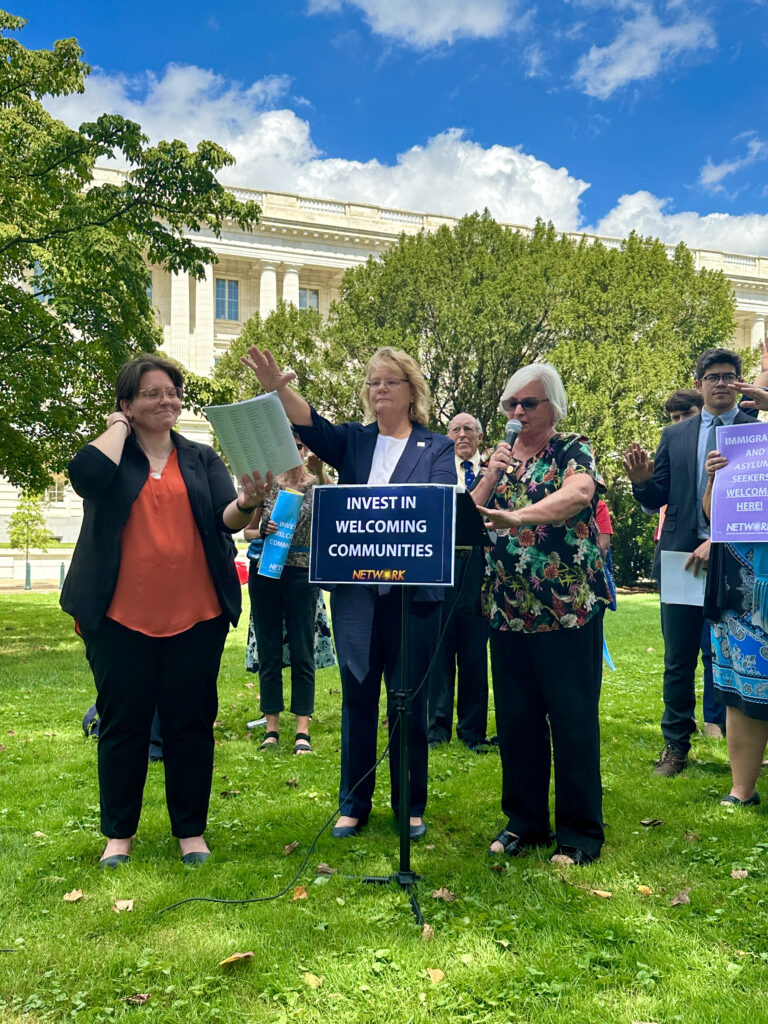
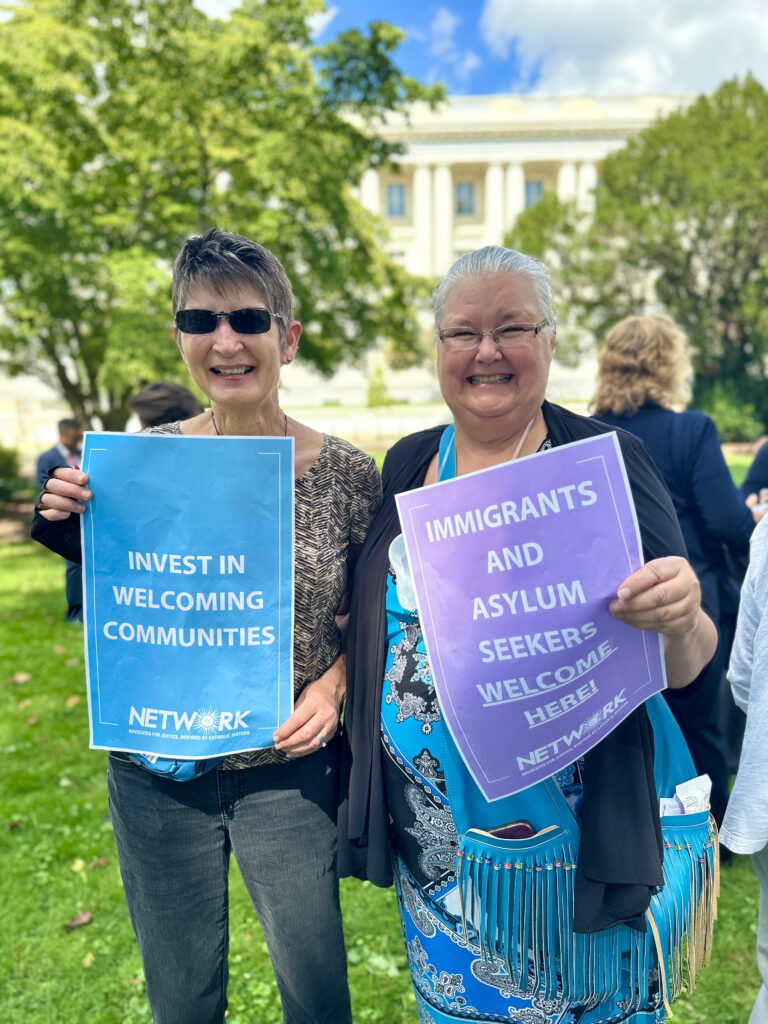
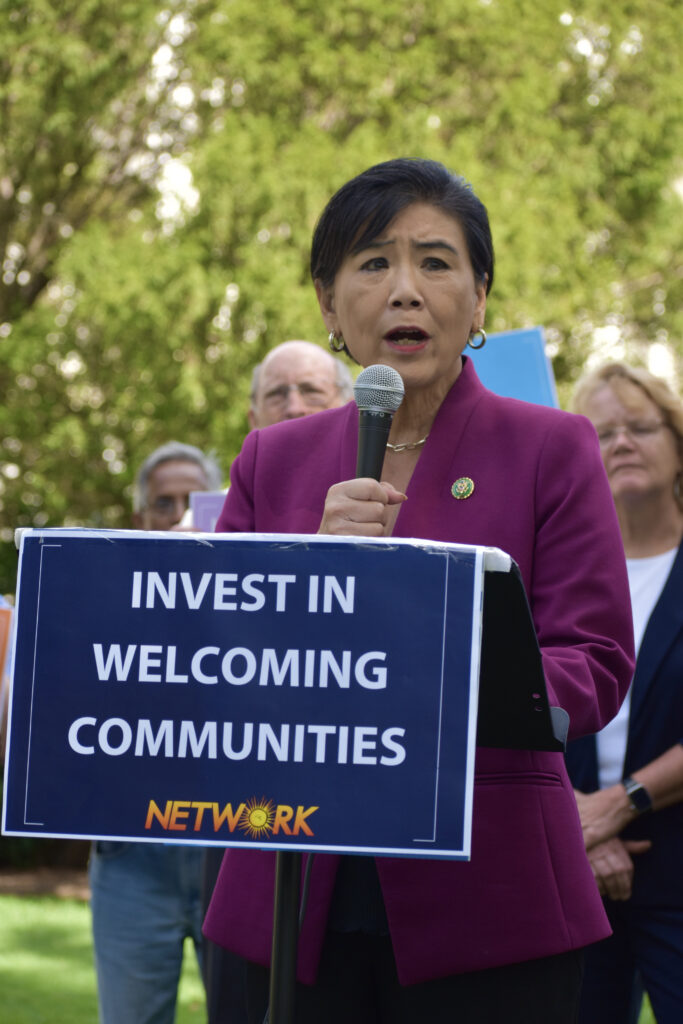
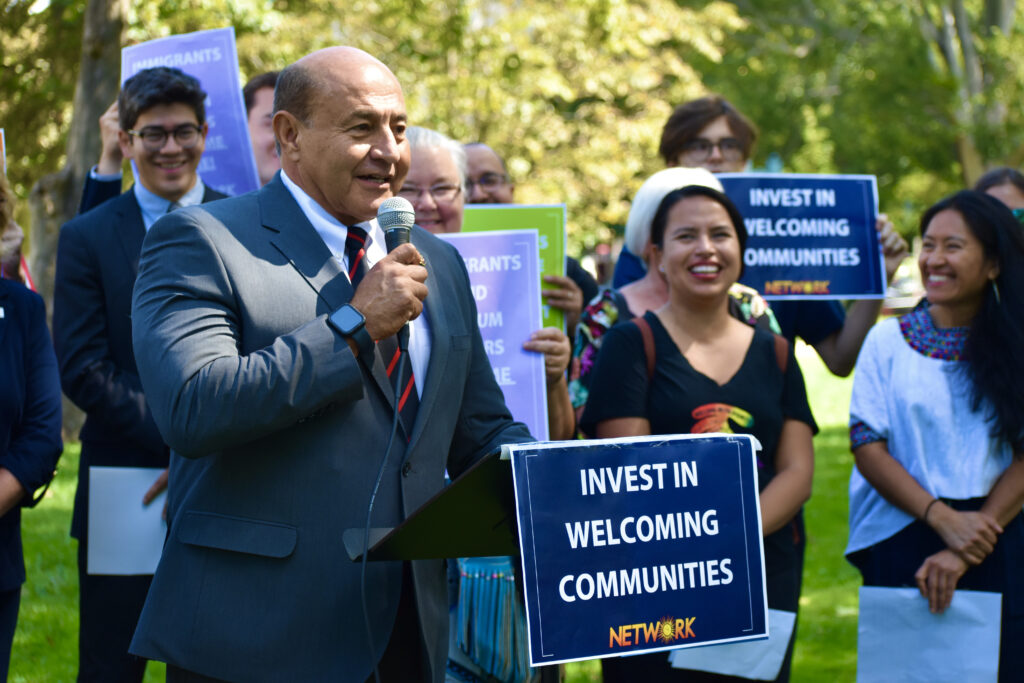
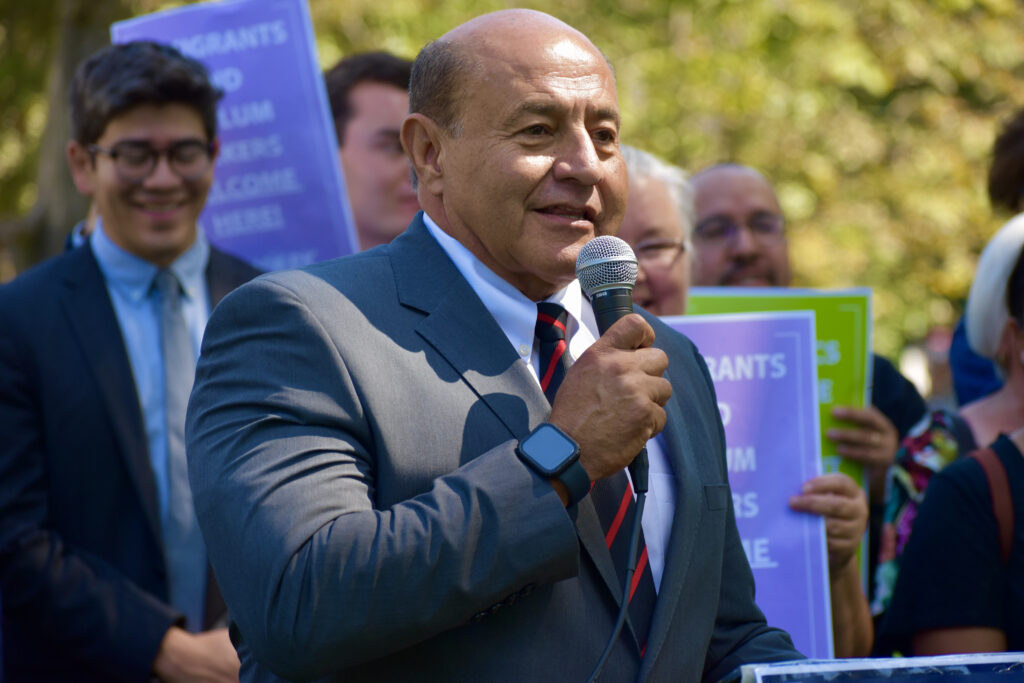
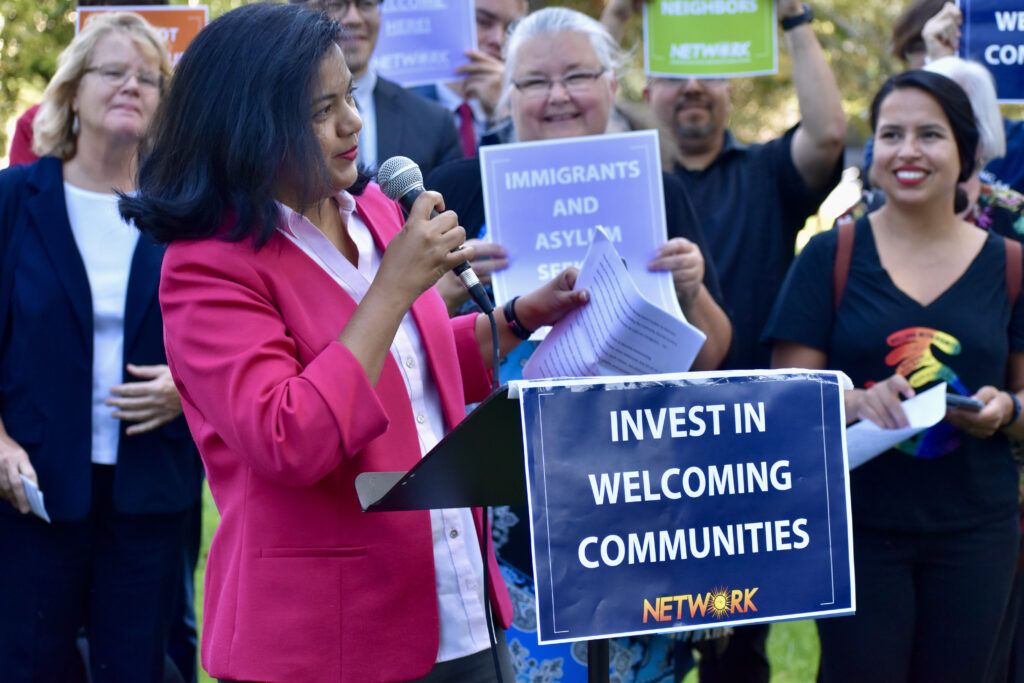
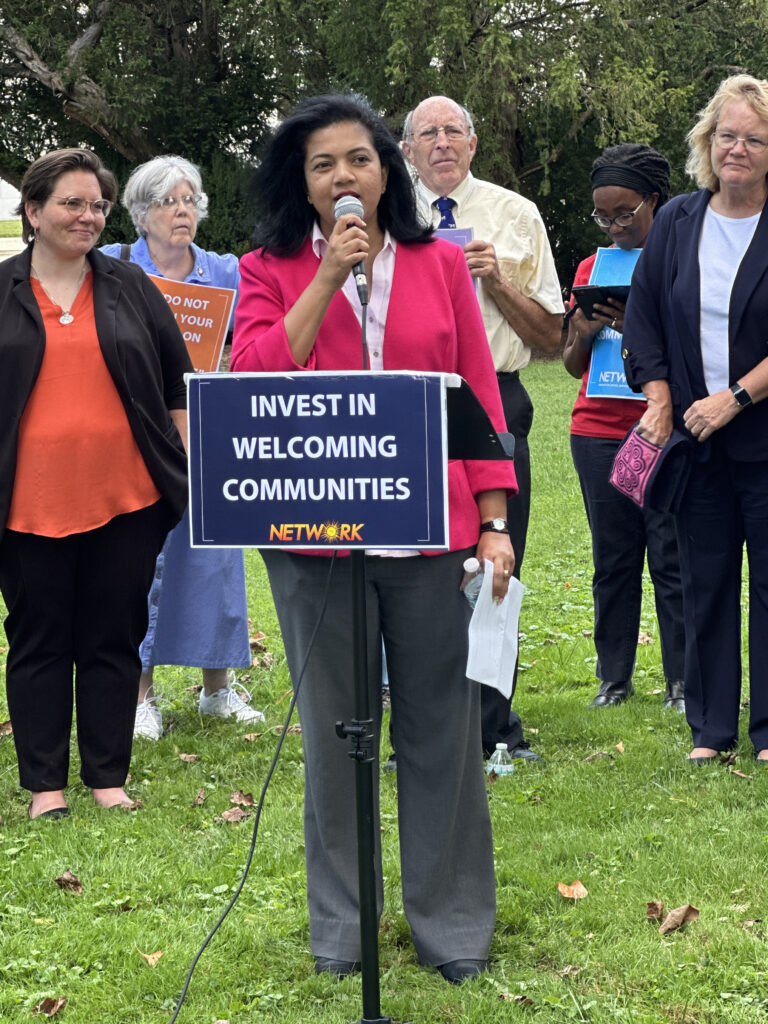
Images from the Catholic Immigration Letter press conference in September 2023

Keep Up with NETWORK

Just Politics Catholic Podcast Season One

Catholic Organizations Urge Safety and Rights of Asylum Seekers as Title 42 Ends

Catholic Organizations Urge the U.S. Government to Promote the Safety and Rights of Asylum Seekers as Title 42 Ends

May 11, 2023

As Catholic organizations serving asylum seekers and people seeking safety, we urge the U.S. to promote the safety and rights of asylum seekers as Title 42 ends.

Today, we mark the termination of Title 42, a policy that critically limited or denied access to asylum for thousands of individuals and families seeking refuge and protection. But with the end of Title 42, we are appalled by the continuation of asylum restrictions through different measures enacted and proposed both by the Biden administration and Congress. With the new rules and proposed Congressional policies, the U.S. government is changing the asylum system as we have known it since 1980 and is failing to improve and provide protection to people seeking safety in a just and humane manner. Despite the government’s previous promises to protect the right to seek asylum, the new measures make asylum seekers pay the ultimate price.

We are deeply concerned by the Administration’s announcement yesterday that the Title 42 expulsion policy will be replaced by the final asylum ban rule. This rule will further restrict access to asylum by requiring individuals to first seek asylum in another country before coming to the U.S. It also includes extremely limited exceptions that will place many individuals and families in dangerous and life-threatening situations.

The Administration will continue to require that asylum seekers apply through CBP One application, a process that limits access to asylum due to its language, technical glitches, and requirement that individuals have a smartphone in order to seek protection. We also fear the use of Title 8, paired together with the new policy on credible fear interviews in CBP custody and other rushed processes of adjudication, will gut due process for immigrants all together.

The Administration’s announcement that 1,500 additional troops will be sent to the border raises additional concerns. We fear that further militarization of the border may compromise the safety and rights of those seeking safety and traumatize communities who live at the border.

In late April, the Biden Administration announced a new proposal to manage regional migration. We recognize that the Administration is taking steps to expand refugee resettlement and family reunification parole, measures that will provide a life-saving pathway for individuals and families in need of protection. Yet these expansions are part of a proposal that further restricts access to asylum for those arriving at the U.S.-Mexico border.

Meanwhile, in Congress, we oppose bills in both the House and Senate that would severely cut access to asylum and limit the rights of asylum seekers. We call upon Congress to find long-term solutions to ensure that the U.S. has the processes in place to welcome and provide refuge for asylum seekers.

As organizations guided by Catholic values, we see it as our duty to welcome those in need of refuge. As recently stated by Pope Francis, “How sad and painful it is to see closed doors. The closed doors of our selfishness with regard to others; the closed doors of our individualism amid a society of growing isolation; the closed doors of our indifference towards the underprivileged and those who suffer; the doors we close towards those who are foreign or unlike us, towards migrants or the poor.”

We urge the U.S. government to promote the safety of asylum seekers and protect their rights. Through continued restrictions on asylum and the militarization of the border, the U.S. government has shut the door to many of our siblings who are calling out for help. This failure to provide welcome sends a clear message to the rest of the world that the U.S. will not keep its previous asylum promises and instead continues to turn away from those most in need.

Signed,

NETWORK Lobby for Catholic Social Justice
Jesuit Refugee Service – USA
Hope Border Institute
Kino Border Initiative
Franciscan Action Network
Catholic Charities of Southern New Mexico
Maryknoll Office of Global Concerns
Dorothy Day Catholic Worker – Washington DC
St. Columban Mission for Justice, Peace and Ecology
Pax Christi – USA
Jesuit Conference Office of Justice and Ecology
Franciscan Network for Migrants – USA
Diocesan Migrant and Refugee Services Inc
Sisters of Mercy of the Americas – Justice Team
Catholics Against Racism in Immigration (CARI)
Quixote Center

Photo of produce on grocery store shelves.

End of Health Emergency Will Impact Immigration, Other Human Needs

End of Public Health Emergency Will Impact Immigration, Other Human Needs

JoAnn Goedert, Ignatian Volunteer Corp Member
Government Relations Special Contributor
May 8, 2023

President Biden has announced that the federal government’s COVID-19 Public Health Emergency (PHE) will end on May 11. The Emergency has been in effect since early 2020, and its termination signals a welcome easing of the tragic impact of the COVID-19 pandemic. But for millions of our neighbors who struggle at or near the poverty in the U.S., and for those hoping to enter the country at our borders, the implications of the PHE’s end will be significant.

Impacts on Domestic Human Needs

In recognition of the economic devastation of the pandemic, benefits were added and eligibility and reporting requirements were suspended for many federal programs, but only until the end of the PHE. For individuals and families living at or near the poverty level, the consequences of terminating these protections will be serious, especially in the areas of health care and food assistance.

“Unwinding” of Medicaid Continuous Enrollment Protections: Pandemic legislation provided enhanced Medicaid funding and authorized Medicaid recipients to keep their coverage until the end of the PHE without having to re-certify their eligibility on a regular basis. Not surprisingly, enrollment in Medicaid grew by over 23 million during the pandemic. However, in December Congress prematurely ended this enrollment protection and instead allowed states to begin “unwinding” the continuous enrollment in April.

Some states already have aggressively begun disenrolling Medicaid recipients, many of whom may be unaware that their enrollment is in jeopardy and even more who will struggle to rapidly document their current eligibility. The Department of Health and Human Services estimates that up to 15 million individuals will be disenrolled in the coming months, and that nearly half of those who lose coverage are in fact eligible but unable to surmount the bureaucratic challenges of proving it. As a result of the unwinding of Medicaid continuous enrollment, the number of uninsured adults and children in the U.S. is predicted to soar, with tragic consequences for families and massive new burdens on health care system.

Restoration of SNAP Benefit Limits for Individuals Without Jobs: The Supplemental Nutrition Assistance Program (SNAP) has strict and complex work requirements for “able bodied adults without dependents” under age 50 that terminate their benefits after three months unless they can prove that they are employed or in a job training program. In response to widespread unemployment during the pandemic, the government suspended that three-month limit. With the end of the PHE, however, this suspension will cease for most SNAP participants on June 30, and these individuals will once again be limited to only three months of SNAP eligibility while unable to meet the work requirements in any three-year period.

March 1 Termination of SNAP Emergency Benefit Allotments: It is important also to note that increases in SNAP benefits provided as pandemic relief were ended nationwide by March 1. This substantial reduction in benefits amounted to an average of approximately $90 per month per individual and over $200 per month for most struggling families. Soup kitchens and food banks nationwide already have reported an overwhelming increase in need since the cut.

Phase-out of SNAP Benefit Expansion for Students: In addition, pandemic legislation extended SNAP eligibility to many more higher education students. With the end of the PHE, their eligibility will be phased out over the next year. Here is an explanation of this change in student SNAP eligibility.

Impact on Immigration

Termination of Title 42: Title 42 expulsion policy is a Trump administration order issued in 2020, purportedly as a public health measure, that allowed border authorities to expel migrants without giving them the opportunity to seek asylum. Public health experts have long declared that Title 42 is not related to any health measure. Reports are that the rule has been used more than two million times to abruptly turn back immigrants since 2020.

Title 42 will expire with termination of the PHE, and the expulsions are set to end on May 11. However, NETWORK is deeply alarmed that, the new measures announced by the Biden administration to purportedly ease pressures at the border, comes at the expense of the right to seek asylum at our southern border and does not support a just and humanitarian immigration policy.

NETWORK is monitoring the critical impacts of these policies and protections that end with the termination of the PHE. We will share this information with you, along with any calls for action that they may require to safeguard the welfare of our neighbors in the U.S. and at the southern border.

Your Public Comments Against the Asylum Ban are Appreciated

Your Public Comments Against the Asylum Ban are Appreciated

Your Public Comments Against the Asylum Ban are Appreciated

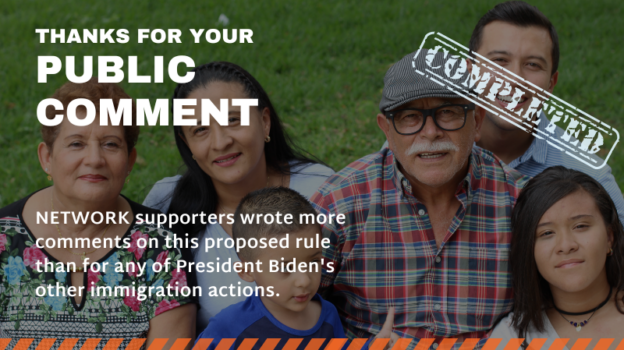
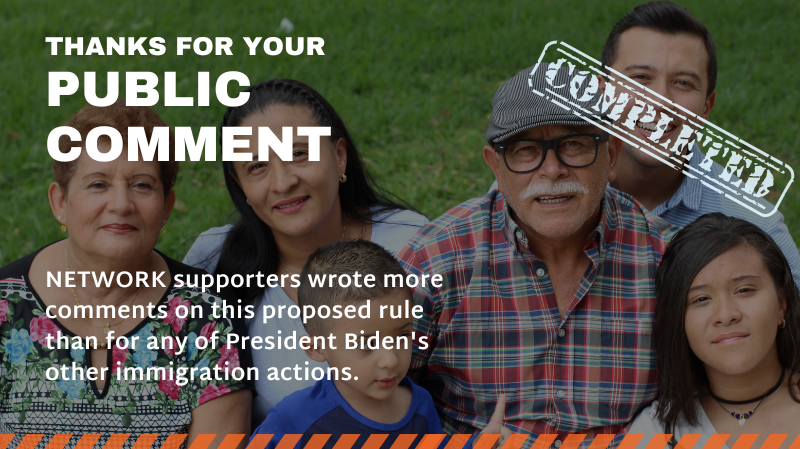
NETWORK’s Spirit-filled community submitted over 850 public comments in response to President Biden’s proposed asylum ban. Thank you, this is the largest response we have ever had to a call for our supporters to write an immigration comment!  And you did not act alone. Supporters of our faith and secular partners, and individuals across the country, also contributed to the 51,952 total submissions (as of Sunday, April 2).

It’s not too late to let President Biden know that justice-seekers demand a fair asylum — or tell hime again. Will you use the form below to let President Biden know that you oppose his asylum ban?

Thank You!

NETWORK justice-seekers recently came together to submit public comments against an immigration ban proposed by the U.S. Citizenship and Immigration Services (officially called Circumvention of Lawful Pathways). The ban is essentially a retread of the asylum ban that President Trump instituted and was found to be in violation of immigration law. Together, nearly 900 NETWORK supporters made their voices heard on this issue.

As an immigration lobbyist and passionate advocate for a safe and dignified asylum process, I am awed and humbled. But we must continue our efforts to protect people seeking safety in our country — the asylum process as we know it is still in jeopardy!

This is not the end. Continue to Take Action!

The Biden Administration is doubling down on anti-asylum policies. After the Title 42 expulsion policy expires on May 11th, the Administration is highly likely to push through parts, if not all, of this rule. We cannot remain silent about the deterrence policies that do not work and lead to great harm, and even death, of people who are seeking protection.

Let President Biden know that his asylum ban must be rescinded, and that justice-seekers like you oppose any asylum policy that creates new barriers for vulnerable people seeking freedom and security in our country.

The U.S. has been a beacon for fair and humane asylum for people seeking refuge and opportunity. Thank you for acting to preserve this shared, honored value.

In solidarity,

Ronnate Asirwatham

Take Action!

Take Action: Let President Biden Know, Justice-seekers oppose harmful asylum changes!

Keep Up with NETWORK

Just Politics Catholic Podcast Season 2
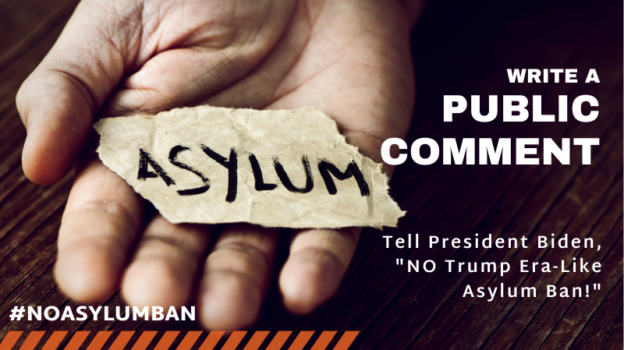
Write a Public Comment to Oppose the Proposed Biden Administration Asylum Ban

Write a Public Comment to Oppose the Proposed Biden Asylum Ban

Write a Public Comment to Oppose the Proposed Biden Asylum Ban

THIS CAMPAIGN HAS ENDED.

The Biden Administration is taking comments on a proposed asylum ban. NETWORK justice-seekers recognize it as a new version of a harmful Trump-era anti-asylum seeker policy and are coming together to oppose the proposed asylum ban. Join us and write a Public Comment to oppose the proposed Biden asylum ban!

March 9-27

THIS CAMPAIGN HAS ENDED.

This campaign is to oppose a proposed Biden Administration asylum policy change that would violate our faithful call to welcome our neighbor and decades old U.S. immigration law. Write a Public Comment to oppose the proposed Biden Administration asylum ban to stand in solidarity with our siblings seeking safety from harm at the southern border.

  • Introduce yourself. Be sure to include your religious order, career title, or any involvement in your community, including a house of worship you may attend.
  • Choose a reasons or two why you oppose the policy.  Need some help? Scroll below for Talking Points, but don’t rely too much on them!
  • Highlight why you oppose the proposed ban Share any immigration support work you’ve done, share a moral tale, use examples of Jesus welcoming travelers or God sending people on safe passages.
  • If you have a story to share, share it! Asylum seekers have found safety in our communities, churches, workplaces, etc. Do you have a personal story, or will you share one that belongs to a friend or family member?

Here’s what to do after you’ve written your public comment:

  • Check for uniqueness. Before you press send, check to be sure that at least one-third (33%) of your public comment is original to you. Submissions that are copy and paste regurgitations of talking points will not be considered by reviewers.
  • Share your submission on social media:  After you submit your form, you will see a prompt to share your advocacy action on Twitter or Facebook. It’s important that our words spread, so please take the time to share on one your social media accounts.  #ImmigrationPublicComment or #NoAsylumBan or @NETWORKlobby. If you have any questions or concerns, please email us at [email protected].

More Talking Points

  • President Biden’s Administration has proposed a new asylum ban that is eerily similar to one that existed in the Trump era. It will close the southern border to asylum seekers and change asylum law and practice as we know it. During the Trump era, the court declared such a ban illegal. This ban will separate families, expose asylum seekers to violence at the border, and discriminate against black, brown and indigenous asylum seekers
  • Our neighbors seeking asylum are amongst the most vulnerable people in the world and we are called by faith, and our sense of the common good, to welcome them to safety. U.S. immigration law provides a legal process to apply for safety in our country. Sadly, President Biden’s revival of an asylum ban similar to President Trump’s is a moral failure that disregards decades of settled law.
  • NETWORK supporters will come together to show solidarity to migrants and oppose the Biden Administration asylum proposal by writing a Public Comment against the harmful policy.
  • While the administration has attempted to distinguish its asylum ban from Trump’s policies, it still has the same effect: denying asylum seekers the protection they need in the United States. The rule they are proposing would ban many refugees from asylum protection in the United States based on their manner of entry into the United States and transit through other countries.
  • This asylum ban, like Trump’s, will separate families and lead to the return of asylum seekers to harm and possible death. It will disproportionately harm Black, Brown, and Indigenous asylum seekers requesting safety at the U.S. southern border – who often cannot afford to arrive in the U.S. by plane.
  • Indigenous women and girls, many of whom will likely be barred by the rule, are at heightened risk for sex and human trafficking, extortion, and violence due to the continued erasure of their Indigenous identities, language exclusion, and ongoing discrimination they face throughout their journeys.
  • Our U.S. laws and treaties protect asylum seekers and prohibit their return to persecution and torture. Our laws also explicitly guard an asylum seeker’s right to seek protection regardless of how they arrive in the United States.
  • The rule would unlawfully deny protection to asylum seekers and require them to seek asylum in countries that do not have functional asylum systems and where they may still be in harm’s way.

Join the Campaign!

This campaign has ended.

Our Values Root Our Call to Welcome Our Siblings

Our communities are enriched by the diversity of experiences, cultures, and traditions that all of us, including people who are immigrants, bring to our neighborhoods. All of us want to provide our family with the food and shelter needed to live a thriving life. For too long, our immigrant siblings at the southern border have been harmed by a broken U.S. asylum system. Instead of enacting policy to build anew an equitable asylum process, the Biden Administration has chosen to make life dangerous and difficult for people seeking safety and freedom — especially Black, Brown, and indigenous people. People of faith must demand better.

More Details

The Administration is asking the public to share opinions on this rule and will consider our comments before issuing the final version. Please write a unique comment to tell them how this rule will harm asylum seekers.

The government is required to review and respond to comments in writing in the Federal Register. You can see in this proposed asylum ban that there are dozens of pages with anonymized summarizations and responses to public comments, including rules changes that were made in response to public comments. To make sure the government counts and considers your comment, please edit our pre-drafted text to make it unique – duplicate comments will otherwise be lumped together and responded to as one.

Recent Immigration Blogs

Louisiana’s Lack of Care

Most Louisianians are so much closer to being in those positions than they realize. Yet our government chooses to go the punitive and carceral route instead of addressing root causes: shortage of affordable housing, surging property taxes and insurance premiums, and stagnate wages under the weight of inflation. 

A System Built on Waiting

Long processing delays can seriously affect people’s ability to work, stay with family, and plan their lives in any stable way. It’s not just a legal issue since it becomes something that shapes everyday decisions in a very real way. I’ve seen that on a smaller scale in my own life. Even when people are doing everything “right,” things could change depending on timing or decisions outside their control. It makes long-term planning feel different. Not impossible, but less certain. 

Keep Up with NETWORK

Just Politics Catholic Podcast Season 2
Biden Administration Restored Pre-Trump Era Public Charge Regulations

2023 Immigration Policy Update

Ronnate Asirwatham, Government Relations Director
February 9, 2023

The 118th Congress has been sworn in and Speaker of the House Kevin McCarthy (CA-22), who presides over the House with a slim four-person majority, has completed his House Chair and Committee assignments. While there is a shift in power in Washington D.C., this immigration policy update will show that when it comes to immigration policy in 2023, things are much the same.

We all want to live in safe communities with our families and friends, and our faith compels us to help our neighbors when they are in distress. Recent activity and policy proposals from Congress and the Administration will lead to harm for our siblings fleeing violence in their communities (and hoping for a chance to thrive in the U.S.) as well as people without legal status. In this blog, I will look at immigration policy activity in Congress, the Administration, and give you next steps.  

Congress 
A Win for Immigration Activists and Just and Humane Policy 

This year, the House led off with a bill aimed at discouraging people from certain countries from seeking asylum in our country. Republican Congressman Chip Roy (TX-21) sponsored H.R.29, The Border Safety and Security Act as the first of ten pieces of legislation to go to the floor. H.R.29 would effectively seal the southern border to all asylum seekers.  

Due to the slim majority in the House, this bill, that is an affront to our sacred call to welcome the stranger, would have will most likely passed in the House, but Democratic control of the Senate made it highly unlikely that it would pass in that chamber. 

Immigration advocates knew that H.R.29 would set the stage for attacks on immigration – especially those thinly veiled with racism, like this one. Faith-based and secular immigration advocates aggressively lobbied against Roy’s bill. Several letters were sent to Congress noting that this bill would kill the right to seek asylum at our southern border and breach U.S. and international law, including letters signed by:   

  • 300 immigrant advocacy organizations (including NETWORK)   
  • Faith-based organizations (including NETWORK)
  • Bishop Mark Seitz, chairman of the U.S. Conference of Catholic Bishops’ Migration Committee, a ministry started 100 years ago, which got the attention of several members of the House Republican Caucus. 

Justice-seekers united to stand up to power guided by the knowledge that a fair asylum process can only be built on just and humane policies. A significant number of Republican legislators signaled that they would not support H.R.29, and realizing that there were not enough votes to pass the bill, House Leadership pulled the harmful legislation from the floor,  

This was a huge victory for people seeking asylum and activists who support their freedom to seek asylum under U.S. law. And for NETWORK advocates, and all concerned with the common good, this win is evidence that when we work together to protect vulnerable people seeking a better life, we can defeat harmful, racist policy proposals. 

Interestingly enough, after the failure to pass H.R.29, some House Republicans tempered their anti-immigration rhetoric. Even Rep. Chip Roy took a pause. In public remarks he said, “Nobody is against asylum.” Friends, we cannot rest on our laurels. This is a momentous but, temporary, victory.

H.R.29 is not dead, it has limped off to the House Homeland Security Committee, where amendments can be made. As part of the legislative process, if it passes out of committee, we can see it again (that is, it receives enough yes votes in the smaller group that it is passed along for a full chamber vote). And NETWORK, and our coalition partners, will be ready to act against it if it returns to harm our siblings in the borderlands. 

Impeachment Talk for Secretary Mayorkas 

The Republican-led House has vowed to impeach Department of Homeland Security (DHS) Secretary Alejandro Mayorkas. As a first step, the House Judiciary Committee held a hearing called “Biden’s Border Crisis – Part I” on February 1st and the House Oversight Committee also held a hearing the first week of February. The purpose of these hearings is to gather evidence to impeach Secretary Mayorkas.  

On the other side of the aisle, the Democrats are working to stop President Biden from enacting rules banning asylum and an expanded Title 42 policy. More on that below. 

The Administration

On January 5, President Biden announced four policies that affect persons seeking safety in our country: 

  1. A parole program for Cubans, Haitians, Nicaraguans and Venezuelans that sets up a series of ‘hoops to jump through’ for nationals from these countries – to find safety in our country’s borders. If they have a passport, can pay for their own ticket to the U.S., have not crossed into Panama or Mexico without papers, and fulfill eligibility criteria (including having a sponsor who can support them financially for two years), they may be granted a U.S. visa. It’s more of a lottery than a legitimate program, since the total number of visas granted across all nationalities is capped at 30,000 per month. 
  2. Expanded Title 42 expulsion policy to include Cubans, Haitians, Nicaraguans and Venezuelans.
  3. Increased use of a Customs and Border Protections app (called CBP One) for asylum seekers waiting at the border to get an appointment at the port of entry. This is for land border crossers only.  
  4. A proposed update to the asylum ban similar to a Trump-era policy. The new rule prevents people from presenting their case for asylum if they enter between ports of entry at the southern border, and if they do not seek asylum in a third country that they have crossed through, to reach the United States. When President Trump issued a similar rule, it was deemed illegal in court because under U.S. law, anyone can ask for asylum regardless of how they enter the country. They are not guaranteed asylum but are guaranteed a right to seek asylum. It is appalling that President Biden is seeking to re-instate this ban that destroys due process at our southern border. Congressional Democrats are in opposition and are trying to discourage President Biden from officially proposing the rule. 

NETWORK opposes these proposals.

The expansion of Title 42 expulsion policy keeps vulnerable people in dangerous conditions as they wait to plead their case for immigration status. And attaching Title 42 to narrow parole programs that favor immigrants with the most resources does not support fair American values, and it fails to protect those most in need.  

The CBP One app favors asylum seekers with a phone and a data connection. The majority of people fleeing their homes and communities don’t have the means for such a luxury. And the app is fundamentally racist. It has consistently not recognized the faces of Haitian and other Black migrants, because it does not allow them to take their photographs. Effectively, racism in the technology has meant that a majority of Black migrants do not get CBP appointments.  

What’s Happening in the Courts? 

On March 1, the Supreme Court will hear (and hopefully decide) if states have the right to intervene at this late stage in the Title 42 case that has been working its way through lower courts. If they rule yes – the case will continue if they rule no it will be the end of Title 42 in April.  

There also might have DACA ruling that might come down. Read JoAnn’s blog for the present state of DACA in the courts (as of February 3, 2023) DACA is Under Immediate Threat from my NETWORK colleague, JoAnn Goedert. 

What’s Next for NETWORK? 

The Government Relations team is focused on the Biden proposals mentioned above, and I spend considerable time tracking committee action, keeping an eye out for bills in the making. This work to defend our freedom and justice is not ours alone. We are in coalition with secular and religious groups, and we follow the lead of Pope Francis. 

“Through his deeds and messages, the pope has placed the issue of migration—and the human rights of persons forced to migrate—at the center of his papacy.” America Magazine 

And, of course, NETWORK will call upon you for your advocacy to help us stop harmful bills and polices that violate the dignity of people seeking a life where they can work to pay their bills and raise their children in peace. We will also ask for your help to promote policies restore the right to seek asylum at the border.  

DACA is Under Immediate Threat

DACA is Under Immediate Threat

JoAnn Goedert, Ignatian Volunteer Corp Member
October 12, 2023, Updated
Previous posts appeared on June 15, 2023, January 23, 2023 and October 27, 2022

In JoAnn Goedert’s latest DACA update, she shares that once again, the DACA program has received a disheartening blow from Judge Andrew Hanen in the U.S. District Court of the Southern District of Texas. The policy under which Dreamers have built homes, attended schools, and raised children remains on course to be struck down. And once again, U.S. policy fails to match the welcoming tradition of which our country aspires. 

As I’ve previously shared, the Deferred Action for Childhood Arrivals (DACA) program has faced threats and an uncertain future because of anti-immigrant politicians and judges for nearly a decade. On September 13, DACA endured yet another blow to its survival when Judge Andrew Hanen ruled that DACA is unlawful. The judge’s decision in Texas v. U.S., et al, is the latest step in a long-standing court battle waged by a group of Republican state attorneys general against DACA. 

If you’ll recall from my January 23, 2023 update below, in 2021, Judge Hanen allied with anti-immigrant officials and ruled DACA unlawful. His order barred the approval of new DACA applications, but it included a stay allowing current participants to remain in the DACA program. On appeal, the Fifth Circuit Court of Appeals affirmed Judge Hanen’s reasoning and returned the case to him for further proceedings.  

Judge Hanen’s latest order is not surprising. It means that thousands of Dreamers who should have become eligible for DACA since 2021 are still shut out, and those previously approved can remain in the program. But sadly, they are forced to live under a continuing cloud of uncertainty–building lives that could be dismantled if a future ruling guts DACA and finds they must return to their country of origin. NETWORK believes the Administration will  appeal this disappointing ruling, but it is unlikely that the Fifth Circuit will reverse its position. The case will then be appealed and moved to the Supreme Court.

Most experts believe that the Fifth Circuit will continue to grant DACA protections to current participants as the current case winds through the Supreme Court appeals process. Considering that this process always takes many months to reach resolution, it is possible that the Supreme Court may not rule on DACA’s legality until the end of 2024 and, perhaps, not until 2025.

Meanwhile, there is some hope that the Administration will attempt to provide partial safeguards for Dreamers. NETWORK hopes that the threats posed by the latest court action will move Congress to finally protect DACA with decisive legislation.

Be assured that NETWORK will continue its efforts to promote positive immigration reform that offers permanent protection for our young immigrant Dreamers. We will keep you up to date on future developments in the DACA litigation and any responses to it by the White House and Congress.


In  JoAnn Goedert’s most recent DACA update, we learn that  Judge Andrew Hanen’s final order on the policy under which Dreamers have built homes, attended schools, and raised children is imminent. 

June 15, 2023

There may soon be a decision in the court case brought against the Deferred Action for Childhood Arrivals program (DACA). In previous updates (see below), NETWORK has shared why DACA is under threat and the progress of Texas v. U.S., et al., the continuing court battle waged by a group of Republican state attorneys general to have DACA declared unlawful. On June 1, Judge Andrew Hanen held another hearing. The judge’s final order could come any day—or it could take months. The timing is entirely up to his discretion.

In 2021, Judge Hanen issued his first ruling in this case and agreed with these anti-immigrant officials that DACA is unlawful. His order barred the approval of any new DACA applications but included a stay that allowed current participants to remain in the DACA. On appeal, the Fifth Circuit Court of Appeals affirmed Judge Hanen’s reasoning, returned the case to him for further proceedings, and continued to stay the enforcement of the decision against current DACA participants.  The Fifth Circuit’s actions resulted in last week’s hearing and will end with a final order by Judge Hanen.

For now, the status of the DACA program is unchanged, with no new approvals permitted and current DACA participants able to continue to benefit from it. Unfortunately, most legal immigration experts and advocates expect that Judge Hanen will once again declare DACA unlawful when he issues his next decision. Assuming that disappointing outcome, DACA will surely remain closed to new applicants and the government will appeal the decision to the Fifth Circuit Court of Appeals. Since the Fifth Circuit has already taken the position that DACA is likely unlawful, it is sadly likely that the Administration’s appeal of a negative decision by Judge Hanen will be unsuccessful, and that the case will then be appealed to the Supreme Court.

Judge Hanen is expected to continue to allow current DACA participants to continue in the program while the appeal process takes place. Otherwise, the Administration will rapidly seek a continuation of the current stay that protects their participation, and experts believe that the Fifth Circuit will allow it. If the Fifth Circuit were to change its position, the Administration would likely seek an immediate continuation of the stay in the Supreme Court. Few expect the courts to end DACA protections for current participants for at least as long as the current case is winding through the appeals process.

An appeal through both the Court of Appeals and the Supreme Court almost always takes many months to be resolved. Thus, it is possible that the Supreme Court would not rule on the legality of the DACA program until well into 2024 and, perhaps, until 2025. Meanwhile, there is some hope that the Administration will attempt to provide alternative, partial safeguards for Dreamers, and that there may be renewed interest in Congress to finally protect them with legislation.

Be assured that NETWORK will continue its efforts to promote positive immigration reform that offers permanent protection for our young immigrant Dreamers. And, we will alert justice-seekers and supports of developments in the DACA court case–  and any potential responses to it by the White House and Congress.


Updated on January 23, 2023 

Previously, JoAnn Goedert shared that DACA was under immediate threat. Sadly, the message in this update remains the same — the policy under which Dreamers have built homes, attended schools, and raised children remains on course to be struck down.

Whether Dreamers are teachers, landscape artists, or doctors, they are integral members of families, churches, and communities. Some people with political and judicial power fail to see their humanity, but we know they are our siblings in God’s beloved community and should not suffer as pawns in court proceedings. 

As JoAnn writes, “Once Judge Hanen issues his final decision, the case almost certainly will be appealed to the Fifth Circuit Court of Appeals and then to the Supreme Court.” As people of faith, we must be vigilant in our efforts to protect DACA. Working together, we can overcome the forces who want to remove our neighbors and family members from our country.

NETWORK will let you know when there is action you can take. For now, read on for JoAnn’s update and scroll further for her original blog. 

Texas v. U.S., et al.: In response to Texas v. U.S., a lawsuit challenging DACA’s legality by a group of Republican state attorneys general, Judge Andrew Hanen in the U.S. District Court of the Southern District of Texas ruled in 2021 that DACA is unlawful. He held that DHS failed to follow required regulatory process when it established DACA and that the agency did not have the power to create the program without Congressional legislation. The judge issued an order barring DHS from approving any new DACA applications but he allowed current participants to retain protection under DACA for now. On appeal, the Fifth Circuit Court of Appeals agreed with Judge Hanen’s reasoning and returned the case to him for further proceedings.


In October 2022, Judge Hanen held a hearing where he stated that he would likely decide to end DACA in the near future. His ultimate decision has been delayed, however, to give the parties an opportunity to file additional briefs in the case. At this time, we don’t expect movement until mid-Spring. DACA is under immediate threat and daily life for DACA recipients remains in jeopardy.

What Happens Next: In the October hearing, Judge Hanen reiterated that current DACA participants can continue in the program and apply for renewals, but that DHS cannot accept any new DACA applications. This means that current DACA holders still have all of the program’s protections. Once Judge Hanen issues his final decision, the case almost certainly will be appealed to the Fifth Circuit Court of Appeals and then to the Supreme Court. This process will likely extend into 2024, and it is hoped that, at least, the courts will allow the program to continue for current DACA participants during this time. Meanwhile, we know the Biden Administration is exploring alternative protections for Dreamers in preparation for negative court actions.

Congress’ Failure: As in earlier Congresses, legislation was introduced in 2021 to give DACA recipients permanent U.S. residency status. There was some hope, too, that Congress would act to ensure the program’s future during the final weeks of 2022. But once again, legislative efforts failed. There is little optimism that the program will fare better in the 118th Congress. Given the worrying signs from both the courts and Congress, we must all heed the warning of DACA advocates at United We Dream: “DACA is dying.”

October 27, 2022

10 Years of DACA: After repeated efforts to reform the U.S. immigration system failed—for lack of adequate Republican support—President Obama’s Department of Homeland Security (DHS) established the Deferred Action for Childhood Arrivals (DACA) program in 2012. DACA has provided children brought to this country in violation of established federal immigration law protection from deportation, employment authorization, and access to Social Security and Medicare benefits.  It has been a lifeline to young immigrants, also known as Dreamers, who came to the U.S. as children with undocumented status. While 800,000 participants have been able to build a life in this country under the program, DACA is under immediate threat, its future is in jeopardy.

The Trump Administration’s Attack on DACA: In 2017, the Trump administration cruelly attempted to rescind DACA, but the Supreme Court ruled that the rescission did not comply with the federal Administrative Procedures Act and narrowly upheld the program’s continuation. DACA has endured with support from the Biden Administration which recently issued proposed regulations–scheduled to take effect on October 31–under the APA to continue DACA permanently.   

The Current Threat to DACA in the Courts: Nonetheless, a group of Republican state attorneys general filed yet another challenge to DACA in a federal district court in Texas. In July 2021, Judge Andrew Hanen ruled that DACA is unlawful on the grounds that DHS did not follow proper APA procedures when it established the program, and that the agency lacked the authority to establish the program without Congressional authorization. The judge issued an injunction barring DHS from approving new DACA applications, but allowed current participants to continue in the program.

On appeal, the Fifth Circuit Court of Appeals, known for its conservatism, upheld Judge Hanen’s decision. However, with the DHS’s new DACA regulations set to kick in on October 31, the Court of Appeals remanded the case to Judge Hanen for further consideration. 

What Happens Next:  In a hearing last week, Judge Hanen indicated that, despite the new regulations, he will very likely decide to end DACA in the near future. His final decision has not been issued yet, so current DACA participants can continue in the program and apply for renewals.  However, there is little reason for optimism.  As DACA advocates at United We Dream have warned, “DACA is dying.”

Judge Hanen’s signal makes it clear that DACA is under immediate threat. It is crucial that the Biden administration and Congress act to ensure the program’s future with immediate legislation. Congress will return shortly after the Midterm elections. Faith communities, and all people of good will, must advocate for DACA legislation this year to provide permanent protection for our nation’s Dreamers.

Biden Administration Restored Pre-Trump Era Public Charge Regulations

Major Developments in the Temporary Protected Status (TPS) Program — December 2022

Major Developments in the Temporary Protected Status (TPS) Program -- December 2022

JoAnn Goedert, Government Relations Special Contributor
December 13, 2022
Major Developments in the Temporary Protected Status (TPS) Program

For immigrants from countries beset by violence, natural disasters and other turmoil, TPS provides protection from deportation and other benefits–at least temporarily. The Department of Homeland Security (DHS) estimates that over 504,170 immigrants from 15 countries have or are eligible for TPS in the U.S. The program has been much in the news lately and, in recent weeks, the news has been good.

What is Temporary Protected Status? 

DHS grants TPS to immigrants in the U.S. from countries that it identifies as unsafe due to political unrest, natural disasters, and other hazardous conditions. Immigrants with TPS can remain in the U.S. temporarily without fear of deportation and can work and travel regardless of their immigration status, even if they were otherwise here without lawful authorization.  Typically, DHS grants TPS for 18-month periods that are often extended, and it applies it to immigrants already in the U.S. at the time of their home country’s TPS designation. TPS is not a direct path to permanent residency or citizenship, but it temporarily provides solid protection from deportation and a means of employment for hundreds of thousands of TPS recipients.

TPS Re-Designation for Haiti

On December 5, DHS announced the TPS re-designation of Haiti, a country struggling with government upheaval, widespread gang violence, the aftermath of hurricanes and earthquakes and, now, a cholera outbreak. The TPS status of approximately 100,000 Haitian immigrants who arrived in the U.S. in recent years was scheduled to expire on February 3, 2022 unless the Biden Administration took action. With the new re-designation, Haitian nationals who arrived in the U.S. by November 6, 2022 will be eligible for TPS through August 3, 2024.

The Biden Administration’s TPS Expansion

The Biden Administration’s expansion of the use of TPS was especially welcome, and a departure from Trump Administration efforts to dismantle the program (which were impeded by court action). The Biden Administration tried to legislate permanent protections for TPS recipients, but that failed when Republican Senators refused to consider immigration reform.

The Biden Administration has extended prior TPS protections for immigrants from South Sudan, Sudan, and Syria. It also added eight new countries—and more than 175,000 newly eligible immigrants–to the TPS list, including Venezuela, Myanmar, Somalia, and Yemen in 2021, and Afghanistan, Cameroon, Ukraine, and Ethiopia earlier in 2022.

A Crisis Averted

On October 25, a threat to long-standing protections for TPS holders from El Salvador, Honduras, Nicaragua, and Nepal abruptly surfaced, resulting from the revival of a 2018 court challenge to Trump Administration efforts to dismantle TPS. While immigration advocates initially succeeded in federal district court, the Ninth Circuit Court of Appeals overturned that decision and held that Trump’s actions were lawful. When the Biden Administration took over in 2021, the parties entered into many months of settlement negotiations that stayed further court action. But those talks broke down in late October with no settlement, leaving the future of nearly 370,000 immigrants whose TPS was scheduled to terminate on December 31, 2022 at serious risk.

On November 11, that crisis was averted when DHS announced an 18-month extension—to June 31, 2024 for existing TPS recipients from El Salvador, Honduras, Nicaragua, and Nepal who were subject to the December 31 deadline. This extension was an act of simple humanity, especially since most of the individuals caught up in the court case have been in the United States for decades. NETWORK joined with the TPS-DED Administrative Advocacy Coalition, a coalition of over 100 representatives of faith-based and secular organizations, in urging the Administration to take quick action to announce a prompt TPS extension.  (https://static1.squarespace.com/static/60b79f3630f94f1039bd0125/t/635a9dde506660168de54139/1666883038701/2022-10-27+Press+Release+re+Ramos+Settlement.pdf).  To the great relief of the faith community and all people of good will, that call was answered.

The Future of TPS

At this time, more than 500,000 immigrants in the U.S. are secure in their TPS protection, but TPS remains only a temporary benefit, and any future extensions or expansions of the program will be decided by whoever is in the White House. NETWORK will monitor future developments in the TPS program and continue to advocate for TPS holders and all of our immigrant neighbors.