

Category Archives: Spirit Filled Network

Reflections on 58th Anniversary of Bloody Sunday in Selma

The 58th Anniversary of Bloody Sunday in Selma Alabama

Reflections on the 58th Anniversary of Bloody Sunday in Selma Alabama

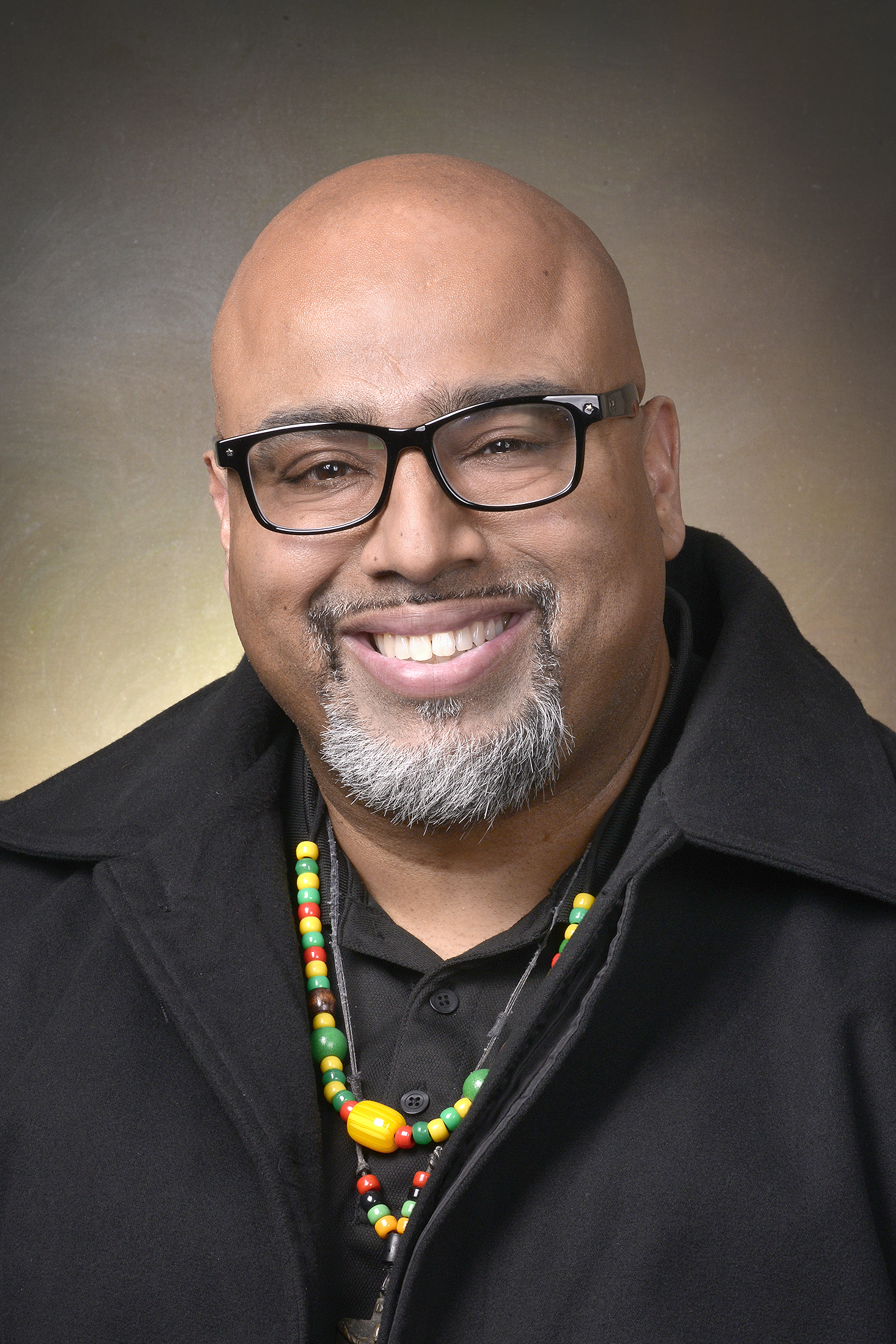
Min. Christian S. Watkins, Government Relations Advocate
March 7, 2023

On the 58th anniversary of Bloody Sunday in Selma, Alabama, my thoughts are focused on the brave justice marchers who sacrificed their safety to advance racial justice. Can you imagine rising to pray and prepare for the 54-mile march from Selma to Montgomery in 41-degree weather? What must it have felt like to be a stitch in the fabric of the interracial, intergenerational, and interfaith crowd that blanketed this place in the Deep South seeking justice for Black Americans knowing that Jim Crow’s grip in this neck of the woods could not be tighter? And, that the threat to their lives was real.

The Selma to Montgomery march was one in a series of public actions, part of a slow but growing movement for racial equity, voting rights, and policy change. Civil rights leaders organized this march to protest the murder of Jimmie Lee Jackson, an activist shot to death by an Alabama state trooper on February 18 for defending his mother against police violence. Can you imagine what the marchers experienced as they stood in solidarity with 600 likeminded folks knowing the lengths racist power would go to protect segregation?

Certainly, fear and anxiety were present, but their purpose was clear: march to the Alabama state capitol in a unified show of support for lives that should matter to all, but were abused, demeaned, and often snuffed out by private citizens and state actors. These justice warriors would not be moved by the bastion of white supremacy committed to racist violence and terror. 

In the Company of 600 Justice Coconspirators 

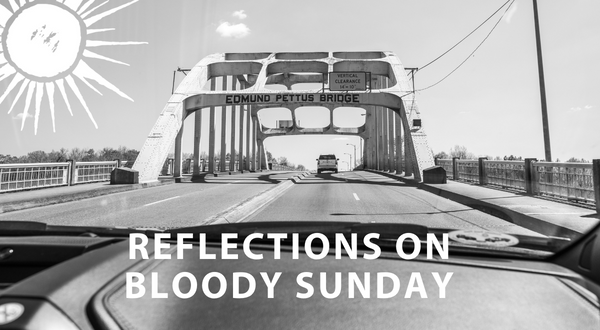
Can you imagine advancing toward Selma’s Edmund Pettus Bridge and seeing the resistance from authorities dressed in riot gear? Their clubs and gas masks are a major threat to your life, but you stand firm in your resolve to stand for liberty for Black people and bring America closer to the promises of the Constitution.

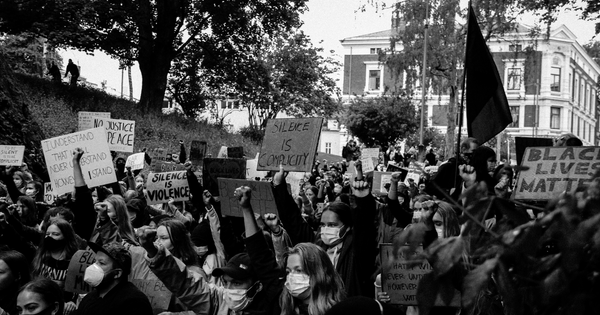
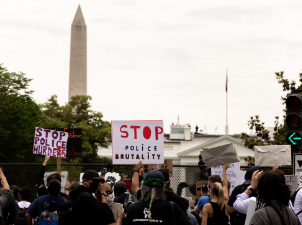
If over the past few years, you’ve stood with Black Lives Matter protesters, or have marched alongside Black and Brown people for civil rights since Rev. Dr. Martin Luther King’s time, you may have felt the anxiety that comes with meeting law enforcement face to face. Even if they served to protect you and the group, unsettling feelings often arise with the fight for freedom. The threat of violence is always a possibility. The state-sponsored vitriol and violence that showed up to squash activists in places like Selma in 1965, Ferguson in 2014, and Standing Rock in 2016 reminds one that freedom fighters can be seriously wounded, or have their lives stolen, by those sworn to protect and serve the public.

On Bloody Sunday, the march for voting rights came face-to-face with racist power motivated by Christian nationalism (an ideology that promotes God aligned with patriotism and a certain race of people) and white supremacy (the belief that white people are preferred over other races). Eventually, freedom overcame race-based illiberal ideology, undeniably because of the heroes who stood for justice on March 7, 1965.

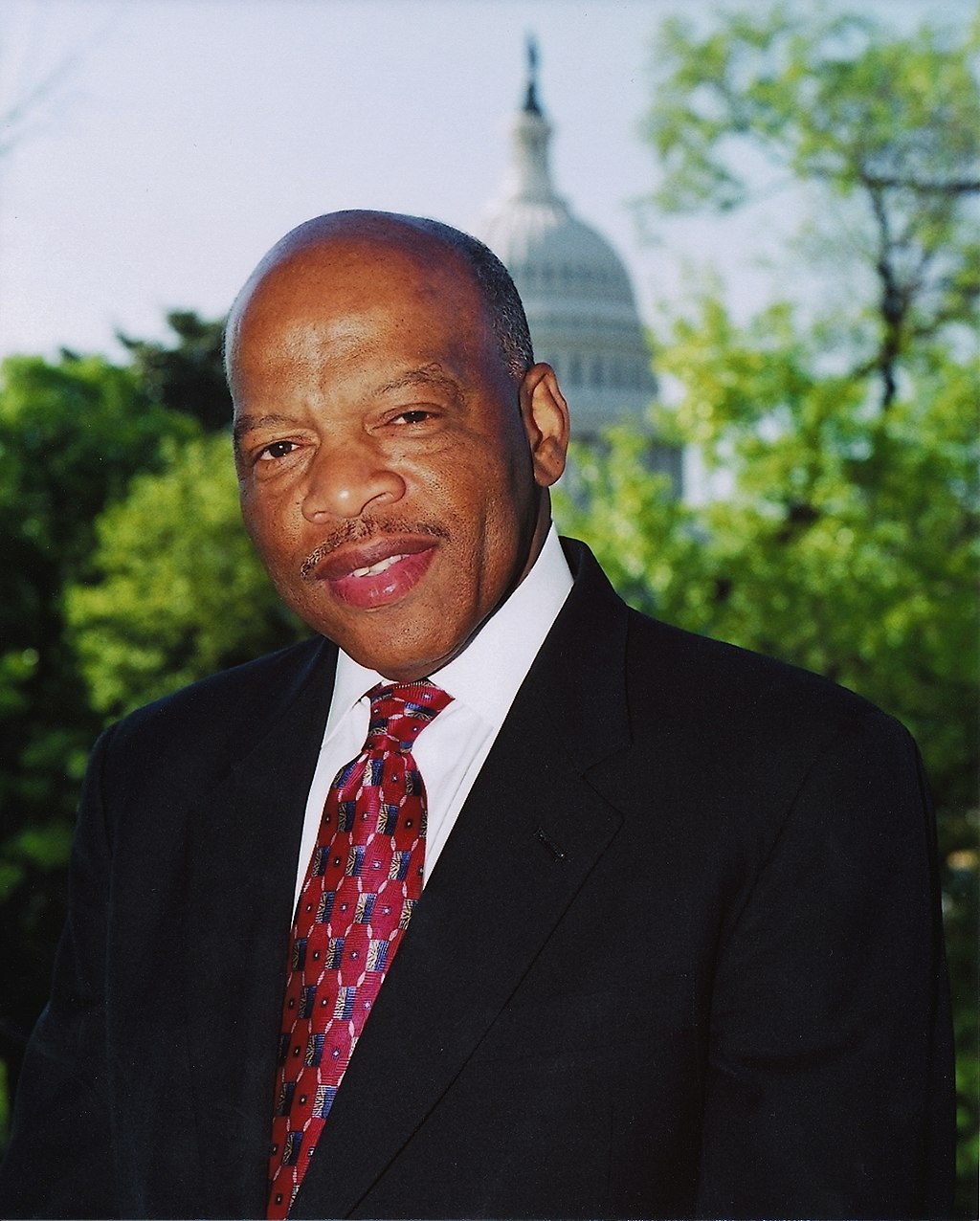
And some rose to prominence on the national political stage like the late Representative John Lewis (GA).  He was among those beaten by police that day, and he went on to serve in the U.S. Congress for 33 years. Can you imagine what it was like to witness this great man get his skull fractured?

Bloody Sunday Progressed Civil Rights, But Significant Transformation Is Still Needed

Yes, voting rights were secured for Black people a few months after the Selma March when President Johnson signed the Voting Rights Act of 1965, but racial violence and discrimination persists in policing. And, over fifty years later, racist power in ‘red’ states persist in efforts to circumvent the federal law with voter suppression tactics. My mother finds it unbearable that the rights she marched and voted for in the ‘60s are vulnerable to attack, and that some police forces continue to abuse, harm, and kill Black people. 

The ongoing reality of hyper-militarized police violence against Black and Brown people is why NETWORK supports the George Floyd Justice in Policing Act, legislation introduced in the 117th Congress. If passed, essential oversight and protections would be secured at the local, state, and federal levels. And NETWORK’s efforts to strengthen voting rights, through the John Lewis Voting Rights Advancement Act and other legislation, would advance our vision for communities that thrive with economic, criminal legal system, and other social justice policy reforms.

With God, Change Is Possible  

Spirit-filled justice seekers cannot wait for change to come. We must fervently care for communities and commit ourselves to the pursuit of safe, equitable, and thriving lives for everyone who lives in them. The soil in which God has planted us, must be enriched with love and kindness. It’s time to root out the fear and hatred that thrives with racism. Let’s not just imagine a world of renewed intimacy between people of all backgrounds and all of Creation through the work of our Messiah: Jesus of Nazareth. Let’s radically pursue it!

God didn’t give us a spirit of fear, but of power, love and sound minds (2 Tm. 1:7). How will you use your divinely creative mind to employ love out loud for justice?  

Dr. Martin Luther King, Jr. prayed: “My great prayer is always for God to free me from the paralysis of crippling fear, because I believe that when a person lives with fears of the consequences for his personal life, he can never do anything in terms of lifting the whole of humanity and solving the social problems which we confront in every age and every generation.”  

On this day we remember the devastating events of Bloody Sunday, the glories that were revealed in its aftermath and even those yet to be seen.  

My Prayer for Spirit-Filled Justice Seekers  

On the 58th Anniversary of Bloody Sunday in Selma, Alabama, I am grateful to the 600 who defied racial terror on the Pettis Bridge and sacrificed their safety and security to advance civil rights in our country. Because they braved racist police power, I, and millions of other Black men, women, and children, can take any seat on a public bus, attend integrated public schools, and vote in elections. But I am not content. More needs to be done to protect Black lives, especially in interactions with the police. I offer a small prayer for justice-seekers:

Lord, help me to love freely and serve You.
Guide my efforts to bring change to communities so that all of Your children thrive, regardless of race, religious affiliation, gender, or sexual orientation.
God, give me the courage to act for divine justice without reservation nor fear of impediments.
God, give me the strength to do this until justice rolls down like a waterfall, and righteousness like an ever-flowing stream. Amen.

President's Day Letter Writing Campaign to President Biden

President’s Day Letter Writing Campaign to President Biden

President's Day Letter Writing Campaign to President Biden

This campaign has ended. Please read here to see pictures from our advocates and to view a special message from Jarrett Smith, Government Relations Advocate.

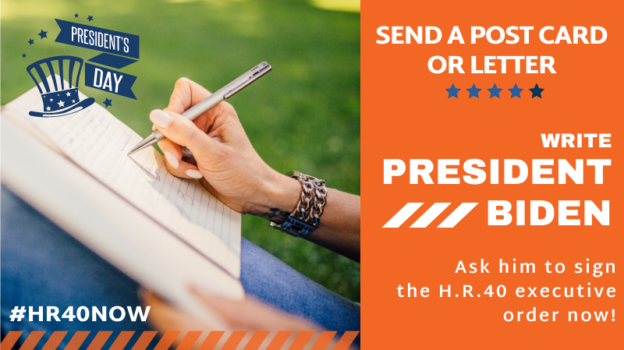
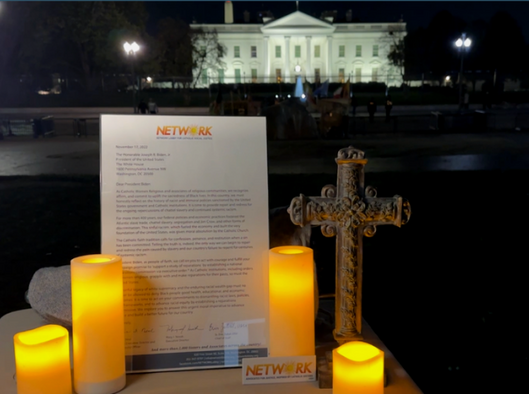
For over a year, NETWORK supporters have attended educational webinars, prayer vigils, and other reparations-related events to learn about, and advocate for, an executive order for a federal reparations commission to study reparations like the one proposed in H.R.40. And now, justice-seekers are coming together to fill the White House’s MAILBOX with a President’s Day Letter Writing Campaign to President Biden.

President's Day Letter Writing Campaign to President Biden

FEB. 17 to MAR. 3

Justice-seekers are filling the MAILBOX at the White House during NETWORK’s President’s Day Letter Writing Campaign to President Biden to urge him to create a federal reparations study commission by April. Will you join the campaign?

This campaign has ended. Please read here to see pictures from our advocates and to view a special message from Jarrett Smith, Government Relations Advocate.

Here’s what to include in your letter to President Biden (written by hand or printed from your computer):

  • Introduce yourself. Be sure to include your religious order, career title, or any involvement in your community. Also share your city and state.
  • Choose a few reasons why it is time to establish a Commission to Study Reparations. Scroll below to download H.R.40 Talking Points.
  • Highlight why you support establishing an H.R.40-style reparations commission and detail any anti-racism work you’ve done.
  • If you have a story to share that would let the President know how a reparations study would benefit you, your family, or your community, share it!

Here’s what to do after you’ve written your letter:

  • Take a selfie (photo) with your letter at the mailbox or post office to share with NETWORK
  • Share your selfie with us: On your social media accounts, share with #HR40NOW or #ReparationsNow; or email us at [email protected].
  • Stamp your correspondence and mail it to the White House

The White House
1600 Pennsylvania Avenue, NW
Washington, DC 20500

Join the Campaign!

This campaign has ended. Please read here to see pictures from our advocates and to view a special message from Jarrett Smith, Government Relations Advocate.

Our Values Root Our Call for Reparations

All of us want the freedom to live where we want and to have the resources we need to care for the people we love. For too long, law makers in D.C., state politicians, and businesses, have created inequity in home ownership, the job market, safe police tactics, and more — harming Black economic progress. Some blame and shame Black people for the negative outcomes that flow from this inequitable treatment.

But we know that this is wrong. By divine right and according to our Constitution, all of us are to live free, equitable, and thriving lives. To do this, we must reckon with the original sin of slavery–as it is at the root of racist policy, abuse, and violence that we see in our politics, churches, and economy today. The time is now for a federal reparations study commission.

Talking Points

When writing your letter, consider using these talking points:

What Would Establishing an H.R.40-Style Commission Do?

  • H.R.40 sets a framework that would establish a 15-member commission to study the effects of chattel slavery on African slaves and their African American descendants. This panel cannot grant money directly.

 Why NETWORK Supports H.R.40 Commission

  • Reparations is where we must start in order to chart a pathway to a just future
  • Slavery didn’t end, it merely evolved (a quote from Reparations For Slavery)
  • President Biden promised during his presidential campaign to support a study of reparations
  • H.R.40 embodies cornerstones of our political advocacy: dismantling systemic racism and cultivating inclusive community
  • President Biden must act on their commitment to dismantling racist laws, policies and frameworks, and to advance racial equity
  • The Catholic Church played a major role in the Atlantic slave trade and supported slavery in the States, Jim Crow, and other forms of discrimination. The Catholic Church gave slave ownership moral absolution, and helped it propagate.
  • Catholic teaching demands confession, penance and restitution when a sin has been committed
  • Catholic Social Justice advocates must stand up to diminish the impact of historical and contemporary racism in today’s political, social and economic systems, frameworks, and institutions
  • The sinful legacy of white supremacy and the enduring racial wealth gap must no longer be allowed to deny Black people good health, educational, and economic outcomes.
Pledge to Pray for Reparations

Keep Up with NETWORK

Just Politics Catholic Podcast Season 2

2023 State of the Union Bingo

2023 State of the Union Bingo

February 6, 2023

Based on NETWORK’s  Build Anew policy agenda, we’ve created the #BuildAnew Bingo card to use during President Biden’s second State of the Union address to Congress. Download your Bingo card and watch the State of the Union live to see how well the President Biden’s speech covers our Build Anew policy areas.

We hope to see President Biden address the need to work towards Dismantling Systemic Racism, Cultivating Inclusive Community, Rooting Our Economy in Solidarity, and Transforming Our Politics.

Pray for Reparations during Black History Month 2023

Pray for Reparations during Black History Month 2023

Pledge to pray for reparations NOW!

Pray for Reparations

During Black History Month, we invite you to pray that President Biden establishes a Commission to Study Reparations. The H.R. 40 commission is a research study that will be the development of a report and a set of data that will quantify and assess the damage systemic racism has inflicted on the descendants of enslaved Africans in the United States. The study will also make recommendations on the path to repair this damage.

For the past year, you have attended Vigils for Reparation and educated yourselves about H.R. 40 (Commission to Study Reparations).

NETWORK partners in faith, let’s join together and pray that the path to reparations begins this month.

See the prayer here!

Pledge to Pray for Reparations

Joining our prayers, we can urge President Biden to sign the executive order for a reparations commission.

Watch Faith in Reparations Again...and Share it with Friends and Family

Faith leaders led a Spirit-filled call for reparations in November 2022. Watch, re-watch, and share!

Keep Up with NETWORK

Just Politics Catholic Podcast Season One

Racism, Reconciliation, and Repair

Racism, Reconciliation, and Repair

Racial Justice is Central to Renewing Society, Politics, and Church

February 1, 2023
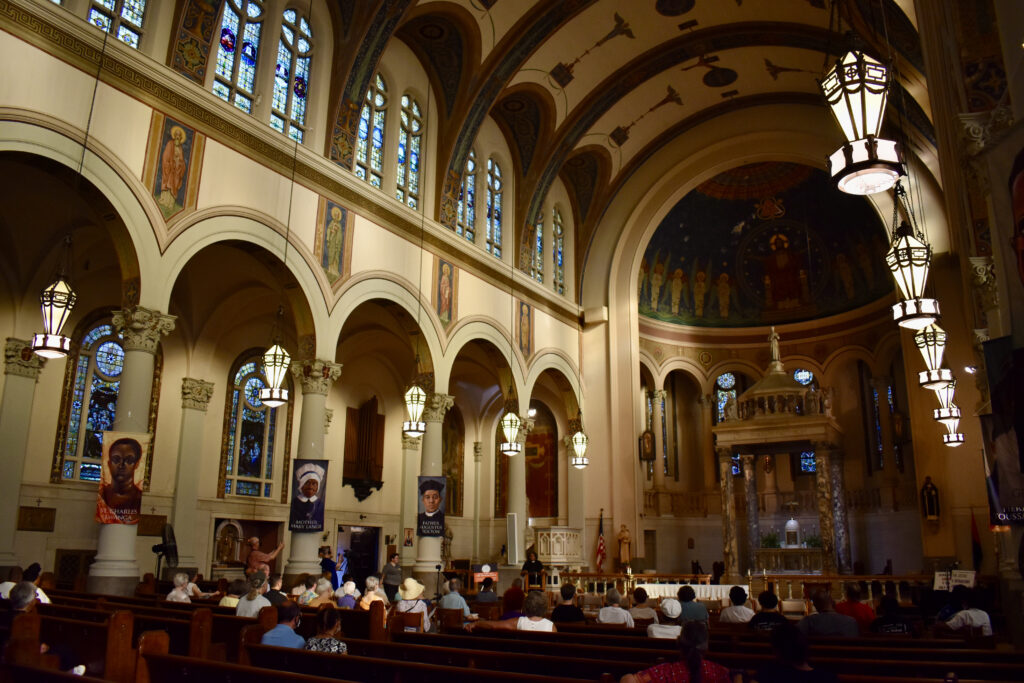
On June 15, 2022, NETWORK advocates organized a prayer vigil for reparations at St. Aloysius-St. Agatha Parish in Cleveland, Ohio.

After a consequential election year, the re-election of Senator Rev. Raphael Warnock of Georgia finalized the composition of the 118th Congress. His election, in many ways, symbolizes how the U.S. struggle toward progress is bound up in how the country deals with racism, white supremacy, and reparatory justice. The election of a Black man in a former Confederate state, while certainly symbolically powerful, doesn’t capture the work undone in securing racial justice in U.S. politics, including in elections themselves.

The first cornerstone of NETWORK’s Build Anew agenda is “Dismantle Systemic Racism,” and its placement rightly suggests that racism must be confronted at every level of our social structures for economic injustices and other wrongs to be fully addressed. The many in-person and online actions taken by NETWORK in 2022 also reflected the central prioritization of racial justice in Catholic Social Justice.

Talk About White Supremacy

Fr. Bryan Massingale

In the second installment of NETWORK’s  White Supremacy and American Christianity event in October, Fr. Bryan Massingale of Fordham University, author of “Racial Justice and the Catholic Church,” dialogued with Dr. Robert P. Jones, founder and CEO of the Public Religion Research Institute. They discussed data gathered by Jones that showed almost half of white evangelicals and almost four in 10 white Catholics in the U.S. believe that their country should be a place that privileges people of European descent and that God intends this.

“That attitude has become hardened and more dangerous,” said Massingale. “What we’re seeing now is a willingness among those who hold that ideology to use any means necessary to achieve that end… a country that says only white Americans are true Americans and all others are Americans only by exception or toleration or not really at all.”

Massingale referenced the aftermath of the 2020 presidential election, with a growing number of people questioning the legitimacy of elections themselves and adopting the position of “If my candidate loses, then by defi­nition it was an illegitimate election.” This, coupled with very open use of voter restrictions and voter suppression, as well as the insurrection of Jan. 6, 2021, made clear to Massingale that “any means necessary” includes political violence.

Concerned that the normalization of political violence is the next stage after voter suppression and election denial, Massingale cited the violent attack on Paul Pelosi, husband of House Speaker Nancy Pelosi, drawing a connection to the rhetoric of Christian nationalist rallies across the country in the weeks preceding the attack.

“God’s angel of death is coming,” Massingale noted one rally speaker proclaiming in reference to their political opponents. “Let’s connect the dots here. … One needs to understand that even though people don’t necessarily call for overt political violence, if you say enough about divinely inspired victory and gun rights and God’s angel of death, then we can’t be surprised when people take violent means.”

Massingale also cited the “failure of religious leaders to connect the dots,” noting that Catholic bishops offered only cursory statements in response to the Pelosi attack.

Dr. Ansel Augustine

Massingale’s observations also reflect a Black Catholic doing the work of educating a white, predominately Catholic audience, about the pernicious implications of racism. This is an unfair burden placed on Black people, says Dr. Ansel Augustine — to educate colleagues on racism, while continuing to endure its effects.

Author of the new book, “Leveling the Praying Field: Can the Church We Love, Love Us Back?,” Augustine told Connection, “Ministering in the church, which at times perpetuates this ‘original  sin,’ constantly has us questioning and renewing our commitment to the faith,” Augustine told Connection. “It is tough having to be an ‘expert’ on something that is trying to destroy your dignity as a human being, especially within an institution that is supposed to empower you and be your safe space to simply ‘exist.’”

James Conway, a cradle Catholic in the Archdiocese of Baltimore, notes that the last two years have been different for Black Catholics.

“People no longer seem to be afraid to show any racist tendencies that they may have secretly harbored for years,” he told Connection. “Now it’s just blatant and in your face under the guise of being cultural ignorance.”

He also sees “an uptick in instances of racial aggression and microaggressions against minorities in the church.” He was told by a now former member of his parish that, because they sing gospel music, she would be taking her money and her family elsewhere, and that the parish would be closed within six months without her fi­nancial support. Two years later, the parish is still open.

Focus on Reparations

Sr. Patricia Rogers, OP

The church not living up to its own teaching on human dignity when it comes to race is a problem that goes back centuries, Sr. Patricia Rogers, OP shared in a conversation on NETWORK’s “Just Politics” podcast in November.

She asked, “Why is it that Black Catholic children were denied a Catholic education before the Civil Rights Movement? I never saw a Black nun, and then I learned that the first Black nuns had to establish their own congregations because they were not welcome. And it still makes me wonder, what happened to the dignity of all humans? You just don’t know what to do with that sometimes.”

This raises the question of reparatory justice for harm inflicted over generations and the need for reparations in the U.S. today. In that area, NETWORK has hosted and participated in numerous events, including a June action near the White House calling on President Biden to take executive action to set up a commission on reparations, as called for in H.R. 40, a bill first introduced in Congress in 1989.

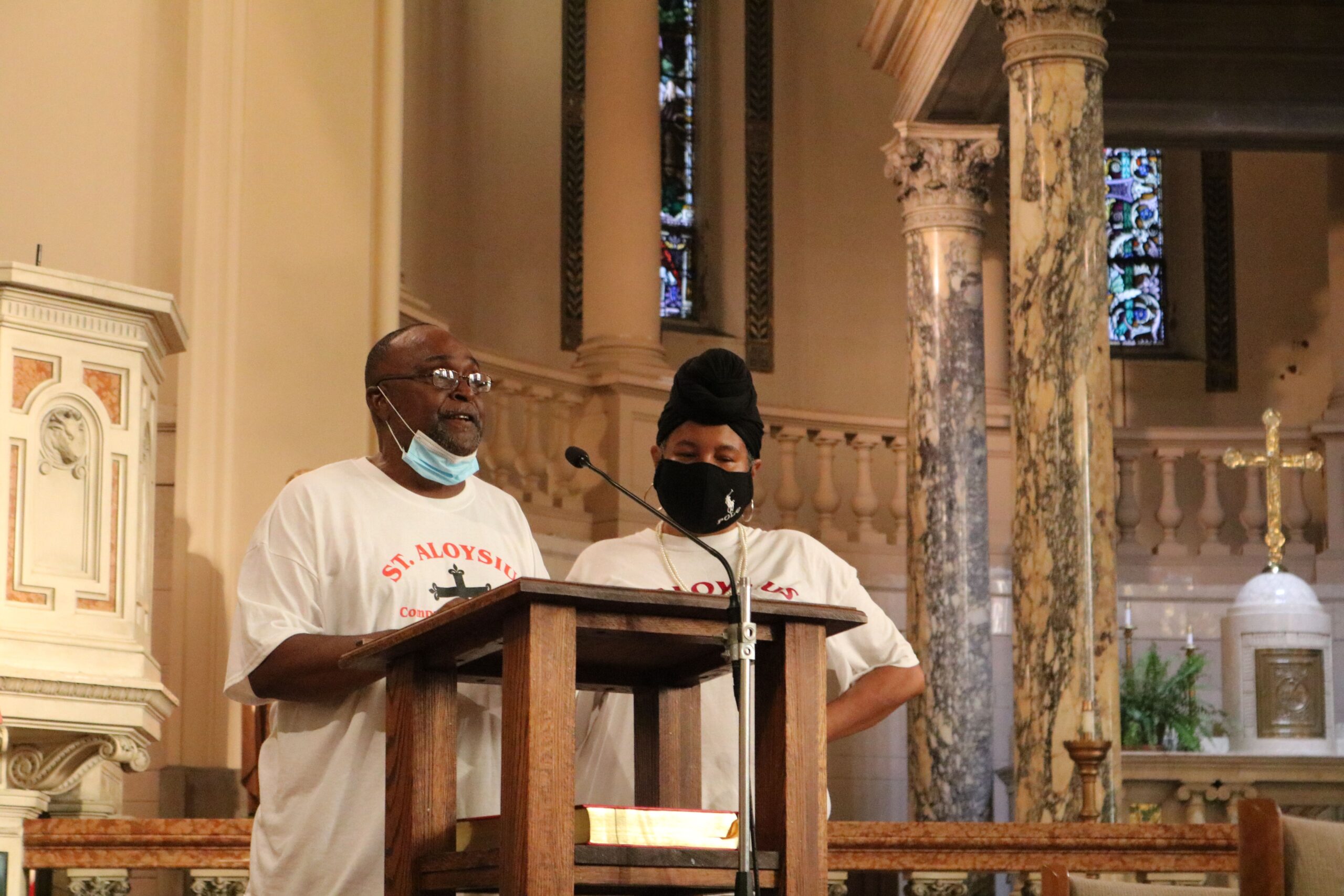
Cleo and Yvonne Nettles speak at the June 15 prayer vigil for reparations at St.
Aloysius-St. Agatha Parish in Cleveland.

In June, NETWORK also helped organize an in-person event Repair and Redress: A Vigil for Reparations at St. Aloysius-St. Agatha Parish in Cleveland.  The parish and school community, Sisters, the Cleveland NETWORK Advocates Team, justice-seekers, and NETWORK staff together made a stand for reparations for Black Americans and called for a reparations commission by Juneteenth.

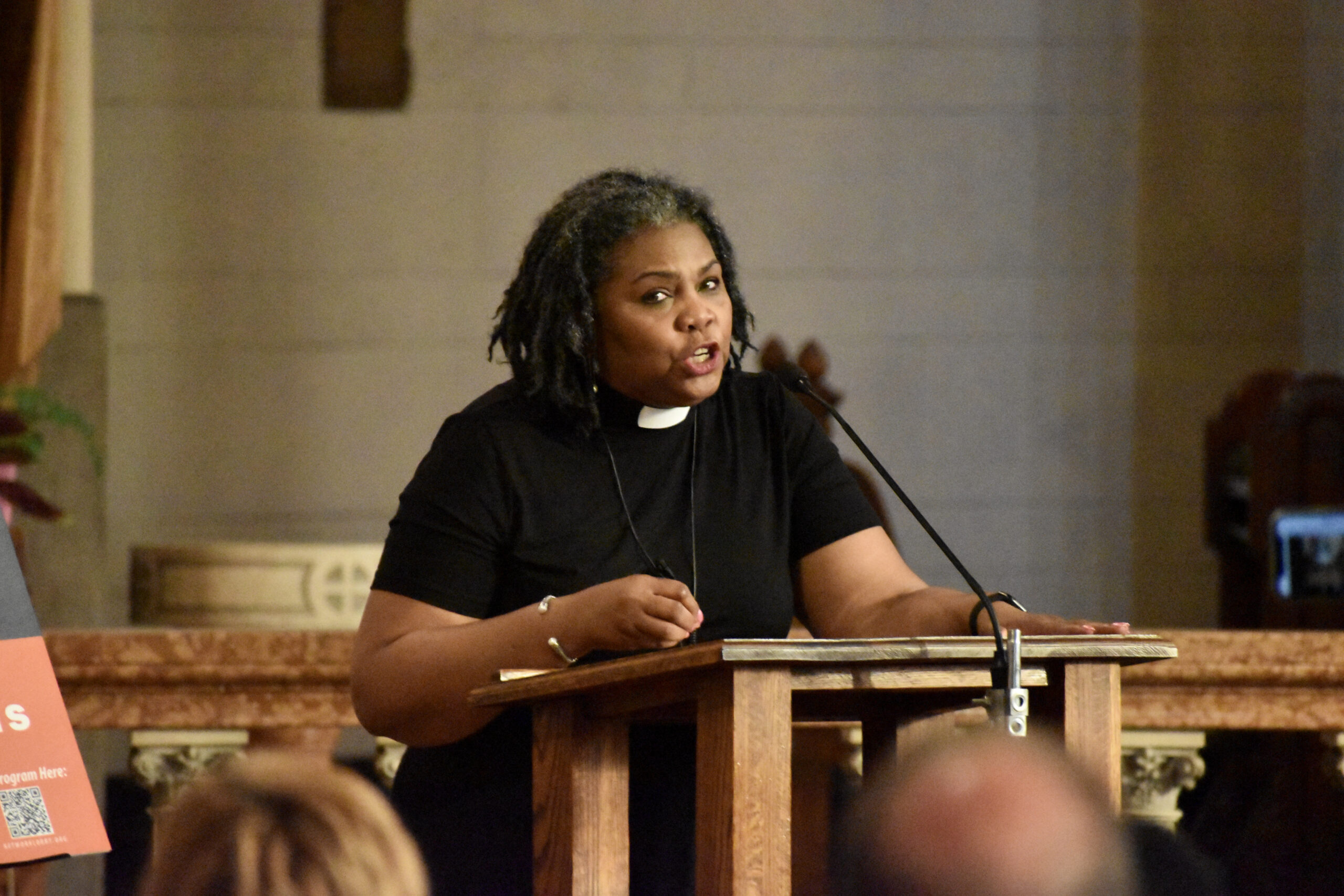
Rev. Traci Blackmon of The United Church of Christ spoke to the theological call to repair a society broken by the sin of chattel slavery and the racism that has followed in its wake, as well as of the need to atone and provide redress.

Rev. Traci Blackmon, Associate General
Minister of Justice & Local Church Ministries
for The United Church of Christ, speaks at
NETWORK‘s reparations vigil in Cleveland.

“The reason we have not reckoned with racism in this country,” she said, is that “decision-makers have decided that God cannot be Black, that God cannot be Brown, that God indeed must be white. And therefore we have created a fractured… society.”

NETWORK continued the push to set up a reparations commission by executive action following the November elections with the event Faith in Reparations.”

“I’m so sick of living in a nation that treats white rage as a sacrament and black grief as a threat,” Rev. Dr. Jacqui Lewis, senior minister at Middle Collegiate Church, said at that event.

“White rage is why we had Jim Crow. White rage is why we had redlining. All of the structures in our nation are built around white rage’s disdain for Black people’s beauty and body and joy,” she continued. “I’m so tired of the permanent pernicious nature of white supremacy in this nation that is now in a wicked dance with Christianity, blessing with Jesus’s name and in the name of God this vile hatred that is always directed to my people.”

Sr. Anita Baird, DHM

Sr. Anita Baird, DHM, founding director of the Archdiocese of Chicago’s Office for Racial Justice, said:

“Reparations are…about America fulfilling her promise of life, liberty, and the pursuit of justice for all. And until this injustice is acknowledged and rectified, there can be no healing and no moving forward. The Biden administration must uphold its promise to African Americans. It is a matter of justice. It is a matter of life. Now is time.”

The NETWORK community will continue calling on Congress and President Biden to act on their commitments to dismantle racist laws, policies and frameworks, and advance racial equity.

Leticia Ochoa Adams and Elissa Hackerson contributed to this feature.

This story was originally published in the 1st Quarter issue of Connection. Download the full issue here.
The National Black Sisters’ Conference Calls for “Justice for Tyre!”

The National Black Sisters’ Conference Calls for “Justice for Tyre!”

Mary J. Novak and Joan F. Neal
January 31, 2023

On January 30, the National Black Sisters’ Conference (NBSC) published a powerful statement addressing the murder of 29-year old Tyre Nichols by Memphis police officers. We join the NBSC in grieving the loss of Tyre Nichols’ life and calling for the immediate passage of the George Floyd Justice in Policing Act and reforms to policing at all levels.

Read the National Black Sisters’ Conference Statement on the murder of Tyre Nichols:

Listen to Season 1 of Just Politics Podcast!

Listen to Season One of Just Politics Podcast!

January 23, 2023

Just Politics podcast season 1 logo

Our first season of the Just Politics podcast, produced in collaboration with U.S. Catholic magazine, is complete! This exciting new avenue for our political ministry wrapped up its inaugural seven-episode season earlier this month.

Throughout Season 1, our hosts — Colin Martinez Longmore, Sr. Eilis McCulloh HM, Joan F. Neal, and Sr. Emily TeKolste SP — spoke with Catholic Sisters, Members of Congress, and other justice-seekers on the path toward building a more just politics.

Episodes explored topics at the intersection of U.S. politics and the Catholic faith, including racismelections, immigration, and care for families.

You can listen on the U.S. Catholic website, as well as on Apple PodcastsSpotify, or wherever you listen to podcasts. Don’t forget to subscribe, and join the conversation about #JustPoliticsPod on social media!

STAY TUNED: We’re happy to share that the first episode of Season 2 will start Monday, February 6! 

2022 Voting Record

2022 Congressional Voting Record

At the start of each new year, NETWORK staff compiles an assessment of Congress’s voting record. The 2022 Voting Record is our evaluation of Members of Congress based on the votes they cast to advance, or thwart, social justice policy and our Build Anew agenda. Take action for justice and deliver your Members of Congress’s 2022 Voting Record results in January or February 2023.

Webinar Recording & PDF

Download the 2022 Voting Record

Let Congress know what you think about the 2022 Voting Record

Email Congress

We’ve got great news: 270 current Members of Congress scored 100% on the 2022 Voting Record! Can you act now to reach out to Members?

Legislators who scored 100% deserve praise, and it is vital that we hold those who received a less-than-perfect score accountable. And, as new Members begin their work on Capitol Hill, advocates must let them know about NETWORK’s Voting Record!

Will you send a quick email to let your Members of Congress know how you feel about their Voting Record? Don’t worry about what to say, we’ve prepared a message that you can edit. Click below!

Deliver the Record

NETWORK advocates (like you!) will deliver Voting Records to Members of Congress in January and February in-person, on Zoom, and by email. Thank you for helping to create the multi-faith, multiracial democracy we must build anew so that we can all thrive.

Note: NETWORK creates special Voting Record certificates of excellence for Members of Congress with a 100% Voting Record score. 

There are three ways to deliver the NETWORK 2022 Voting Record. Be sure to sign up for one of them. Click below!

Tax Fairness
CTC
Voting Rights
Justice Served
Medicaid
End Title 42
Marriage Rights
H.R.40
.
Election Safety
Mental Health
Gay marriage

Keep Up with NETWORK

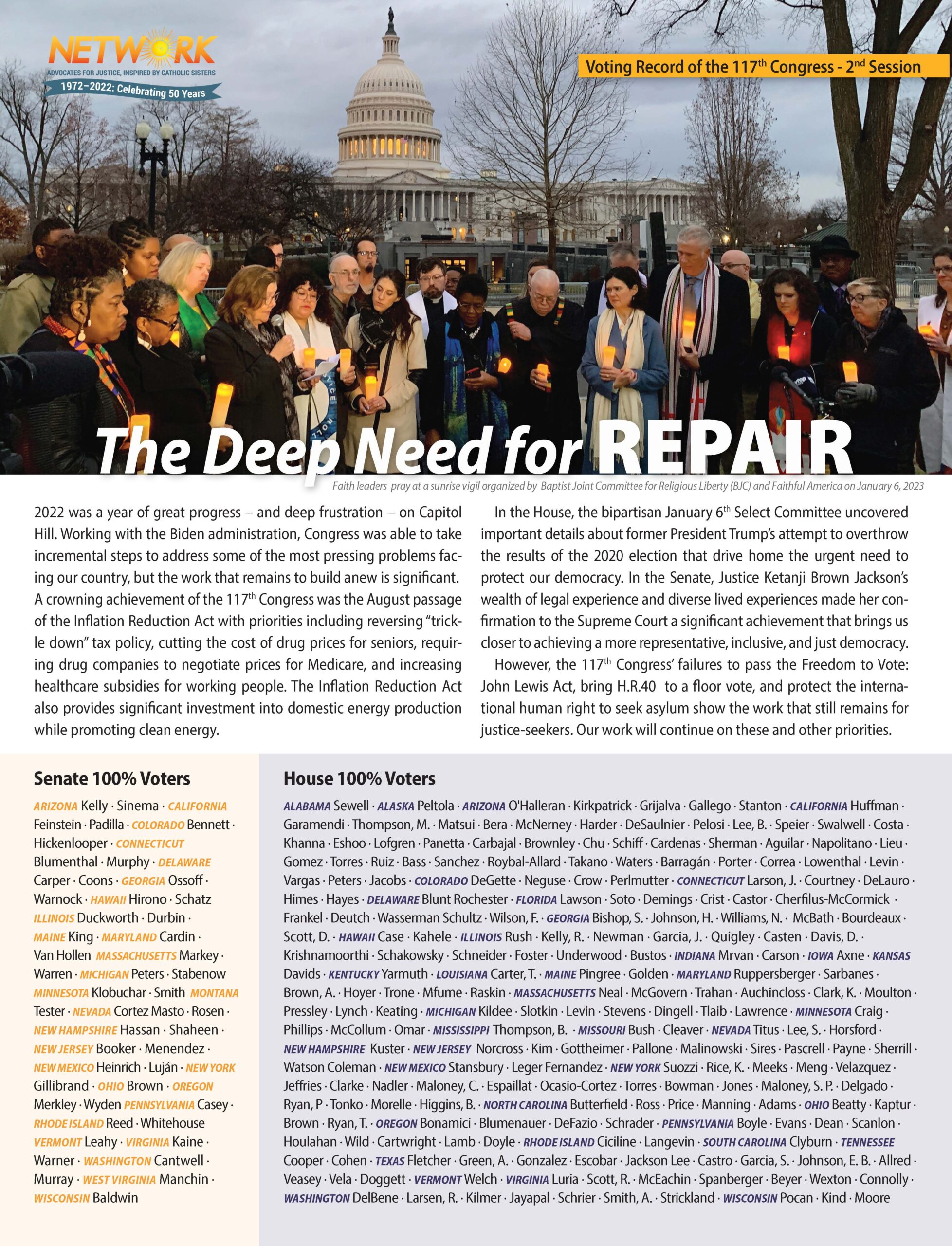
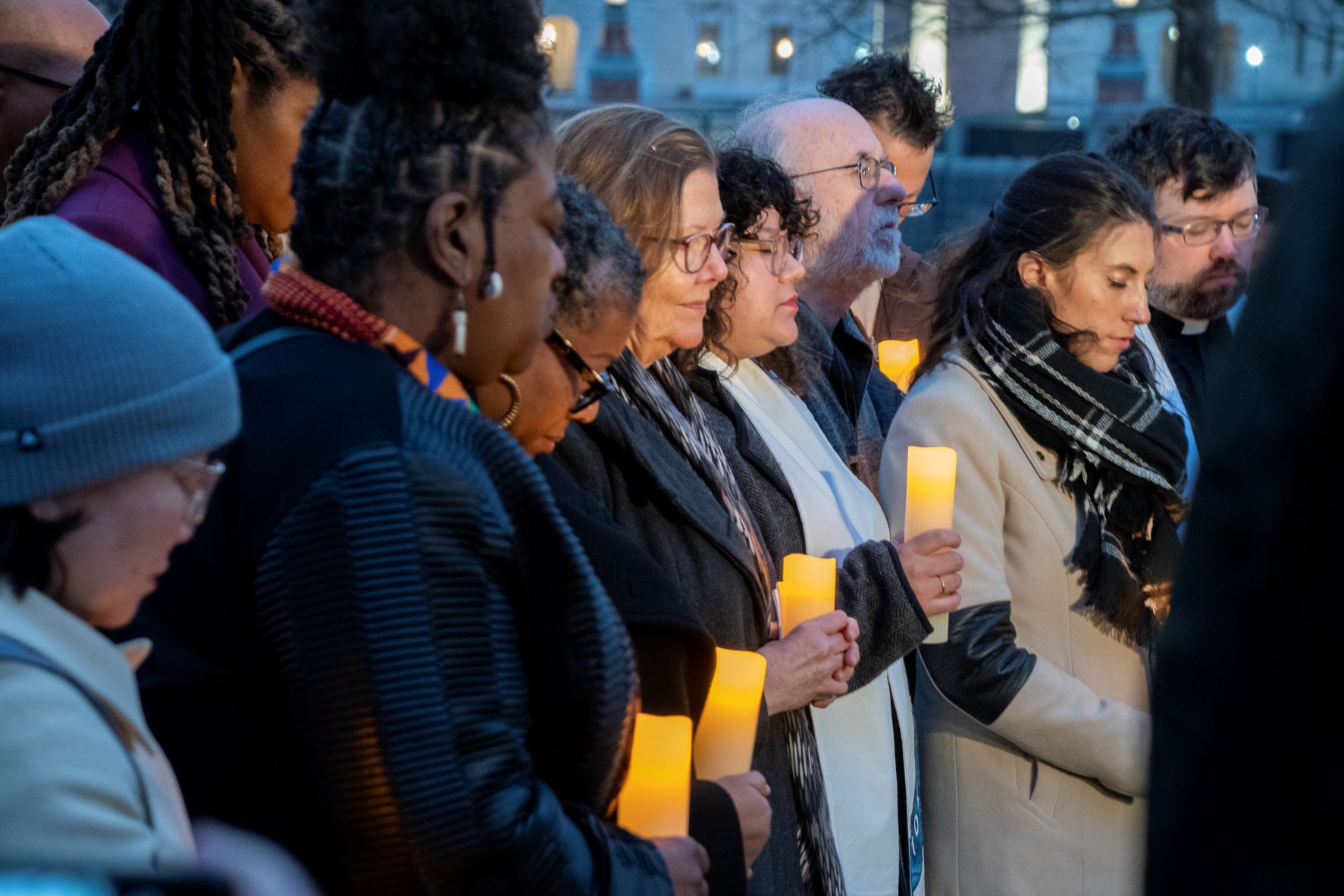
Christian leaders gather across from the U.S. Capitol Building for a sunrise vigil marking the second anniversary of the January 6 insurrection. Photo courtesy of Baptist Joint Committee for Religious Liberty.

Healing Our Politics

Healing Our Politics

We Can Build a Better World by Participating in the Systems That Shape Our Destiny

Joan Neal
Jan 11, 2023
Christian leaders gather across from the U.S. Capitol Building for a sunrise vigil marking the second anniversary of the January 6 insurrection. Photo courtesy of Baptist Joint Committee for Religious Liberty.

Christian leaders gather across from the U.S. Capitol Building for a sunrise vigil marking the second anniversary of the January 6 insurrection. Photo courtesy of Baptist Joint Committee for Religious Liberty.

With the 2022 midterms behind us and a new Congress coming into session, it’s fitting for people of faith to survey the “Signs of the Times.” Where is God speaking to us and trying to lead us as a people as we enter a new year, with a new Congress, in one of the oldest democracies on earth? The answer that NETWORK has discerned in the face of an increasingly volatile political landscape is that we must work to heal our politics.

Our political life has suffered a wound, a laceration that has exposed us to further injury and infection. This wound is reflected in the divisions in our society today that allow hateful, dehumanizing rhetoric to become normalized, and violent, resentful action to become a part of everyday life. The Signs of the Times are clear: We are a divided country. Even the composition of the new Congress – with the narrowest of majorities in both houses – suggests a body politic that has been torn asunder.

This situation has been building for a long time. The fact is, we are witnessing the ugly final acts of a power struggle in the U.S. that began half a century ago as an effort to strip away the gains made toward equity and justice for anyone who is not white, male, and socioeconomically privileged.

This struggle has played out in every aspect of our politics and now, most concerning, in our judiciary. For the first time in our history, we are seeing recent rulings that take rights away from Americans instead of expanding them, rulings that seem wholly untethered from any sense of the common good and even reflect bias toward a particular political ideology. Sadly, we also see allegations of corrupt dealings between justices and right-wing groups. Even the objectivity of our judicial system seems caught up in this fight.

The repercussions of this power struggle have been as painful as they have been predictable: stratospheric economic inequality; the dismantling of the power of organized labor; the rise of Christian nationalism with its view that America is only for white Christians; increasing threats to our planet and our public health; rising homelessness, and so much more. These are signs that our politics and our society are in desperate need of healing and repair.

As we look back on 2022 and the legislation passed in the second session of the 117th Congress, we can imagine each bill as a tiny swatch of material trying to patch the frayed social fabric of our current reality. The field hospital imagery of Pope Francis is apt language as we try to bind societal wounds while also addressing their root causes.

This is where we see our mission. At our core, NETWORK is a political ministry, which calls us to respond first with empathy and then with truth-telling and concrete actions that lead to economic and racial justice.  We decry the divisions and seek to be a prophetic voice for peace, reparatory justice and reconciliation in order to reshape our politics and center the voices of those whose voices are not heard – those who are not privileged; those who lack the money and power to wield influence; and those who are most impacted by the evils of unfettered capitalism, white supremacy and extreme individualism in our politics and in our society.

At NETWORK, we have endeavored to do this by first listening to and seeking out other justice-seekers, such as the National Black Sisters’ Conference, to partner with us in raising an authentic witness for the common good. We have also sought to amplify the call for justice through our new podcast. “Just Politics,” a collaboration of NETWORK and U.S. Catholic magazine, launched in September 2022 and will have its season 2 premiere in February. We have used this new platform to center the voices of women religious, impacted communities, and other justice-seekers.

In his 2020 encyclical Fratelli Tutti, Pope Francis argues for “a better kind of politics” and makes a key distinction between political movements that are populist – the forces that weaponized people’s anger for personal gain – and those that are truly reflective of “the people’s voice”. Our work seeks to put the Pope’s words into action, to insure that our politics includes the needs and voices of all people in order to build a more inclusive and equitable community. Through healing our politics, we can all play a part in shaping our common destiny and building a better country, a better society, a better world for everyone.

Joan F. Neal is NETWORK’s Deputy Executive Director and Chief Equity Officer.

This story was originally published in the 1st Quarter issue of Connection. Download the full issue here.
Take Action to End Child Poverty with the Child Tax Credit

Watch the #CTCNow press conference and share it with friends. Scroll for call-in and Tweet details to take action to end child poverty with the Child Tax Credit.

Child Poverty is a Policy Choice

2021’s expanded Child Tax Credit (CTC) lifted a historic number of kids out of poverty. It is poor policy, and morally repugnant, to extend tax breaks for corporations without also enacting robust expansion of the CTC. Congress must pass a fully refundable, monthly Child Tax Credit before the New Year.

Call the Senate: 1-888-738-3058!

Submit the Tweet below.

Call Your Senators NOW: 888-738-3058! *Dial twice to reach both of your Senators* 
Tell them no tax breaks for corporations without including the Child Tax Credit.
When you call, here’s what you might say:

“Hello, my name is [YOUR NAME] from [YOUR TOWN]. As your constituent and a member of NETWORK, I ask you to support the expansion of the Child Tax Credit in any end of the year tax package. This is urgent. Millions of children who were lifted out of poverty by the expanded credit are now living in poverty again. This is a moral outrage. Will the Senator support passing the expanded Child Tax Credit before the end of the year?

After you call, send a tweet, too! Use the form below to direct a tweet to Congress.

Resources to support you when you take action to end child poverty.

Blogs
Talking Points
  • Last December, Congress allowed the expanded credit to expire, pushing nearly 4 million children back into poverty.
  • Census Bureau surveys found that 91 percent of low-income families—those with incomes below $35,000—used their monthly CTC payments to cover the cost of basic necessities such as food, housing, utilities, clothing, and education
  • Critics charge that the extended CTC is too generous. Some claim it reduces the incentive to work. They are wrong! Data conclusively shows that the CTC did not precipitate workforce reductions. Ironically, many parents who thrived in the workforce when the CTC was in place have left jobs since it expired.
  • The expanded CTC was an anti-poverty program AND a middle-class stabilization tool. Payments were a crucial financial lifeline to millions of families across the country; a wide range of families across income levels, racial and ethnic groups, and education levels received and benefited from these payments in 2021. Middle-income families, white families, and those without a college degree made up larger shares of recipients than low-income families, families of color, and those with a college degree.
Advocate’s CTC Testimonials

Many families with young children that I know, including my own, live paycheck-to-paycheck, and the significant inflation that we are facing has caused many of us to deplete our savings and increasingly rely on credit cards to get us through the month. With interest rates as high as they currently are, this is digging us into a deeper financial hole. An expansion of the Child Tax Credit could help us avoid using credit at a time when financial experts advise us to do so.Natalie M., Shaker Heights, OH

“[The CTC] will allow my children the opportunity to participate in extracurricular activities and expose them to new experiences and friends, promoting the growth of their whole self.” Ivelisse C., Cleveland OH

“I have nieces in Ohio who are struggling to make ends meet to feed and clothe their children and also to afford daycare so they can get a job. The Child Tax Credit helped them before and it can help them again!” Sr. Joyce K., CPPS, Dayton, OH

“Several of my church families along with others in the community are struggling to make ends meet and to provide for their children. Some are looking at the loss of homes and eviction. The expanded Child Tax Credit will help to minimize theses effects of inflation and low paying work situations.” Rev. Karen B., Jeffersonville, IN

Keep Up with NETWORK

Just Politics Catholic Podcast Season One
Take More Action