

Category Archives: Voting and Democracy

The Current State of Democracy Reform Legislation in Congress

The Current State of Democracy Reform Legislation in Congress

Sister Quincy Howard, OP
September 14, 2021

Democrats have put voting rights, along with an overhaul of election and campaign finance laws, at the forefront of their agenda upon return in September.  The John Lewis VRAA (H.R.4) would restore the Justice Department’s authority over election law changes in jurisdictions with a history of discriminatory voting practices against minorities. The For the People Act (S.1) sets minimum state standards for early voting and voting by mail, and overhauls campaign finance and election laws. Now, a new democracy bill – the Freedom to Vote Act (S.2747) – contains many of the same provisions to protect our elections as the For the People Act, and reflects the feedback the House Rules Committee received from state and local elections officials. Find a summary of the Freedom to Vote Act here. 

Previously, the House has passed both the For the People Act and the John Lewis Voting Rights Advancement Act along party lines. Senate Majority Leader Schumer promised that voting rights would be a top priority for the chamber after the Senate’s August recess. He reiterated the promise right after they returned. New state laws passed by Republican-controlled legislatures and the kick-off of the redistricting process this month makes passing legislation that protects our democracy urgent.

H.R.4 responds to the Supreme Court’s 2013 Shelby County v. Holder decision that invalidated the mechanism the Department of Justice (DOJ) used to determine which jurisdictions needed approval before they could change voting laws. Named for the late Representative John R. Lewis, H.R.4 focuses on the DOJ oversight. In addition to restoring its authority over election law changes in some states and jurisdictions, the bill would update criteria used to determine when preclearance is needed for changes. Any state or jurisdictions that had 15 or more violations in the past 25 years would need preclearance. H.R.4 passed the House — for the first time along party lines — in mid-August and will be taken up by the Senate.

These democracy reform efforts also have a subtext: this is a key issue used by progressives to call for an end to the Senate filibuster. The Senate filibuster makes it all but certain that no voting bills can proceed under current Senate rules. Twice this summer the Senate tried to advance the For the People Act but failed to reach the 60-vote threshold.

Senator Mitch McConnell (R-KY) appears to still have Republicans universally lined up against the measures. Republicans have labeled both House bills an attempted “power grab” by Democrats and have refused to support them on the self-fulfilling rationale that they are too partisan.

There’s no way this legislation or anything like it will get 10 Republican votes in the Senate to overcome a filibuster. Still, our democracy is on the line. It’s now a matter of Democrats finding a strategy to pass it in the Senate with a simple majority.

In a 50-50 Senate, Democrats are under intense pressure to do away with the filibuster. Two Senators, Senators Joe Manchin (D-WV) and Kyrsten Sinema (D-AZ) have thus far resisted that pressure. Prospects for voting bills hinge on whether they will change their views on the filibuster — or whether President Biden will engage to bring them along. The newest bill, the Freedom to Vote Act, was unveiled by Senator Amy Klobuchar (D-MN) on September 14 and builds on a framework offered earlier this year by Senator Manchin. Its reception by Republican Senators will be pivotal. Stacey Abrams supports the new Freedom to Vote Act, saying that it takes the necessary steps to protect our democracy.

At this point, advocates’ attention is focused toward President Joe Biden, a veteran of the Senate, and Senator Joe Manchin to reform the filibuster.  Both of them have resisted pressure — along with Senator Sinema — to eliminate the filibuster.

Team Democracy: Go for the Gold, Pass the For the People Act

Team Democracy: Go for the Gold, Pass the For the People Act

Meg Olson
August 25, 2021

In the weeks following the Senate’s 50-50 vote which filibustered further consideration of S.1, the For the People Act, NETWORK members, activists, and supporters raised their voices and showed up for our democracy. Under the banner of “Team Democracy,” hundreds of people called on the Senate to find a way to pass the For the People Act to protect the right to vote.

o Brentwood, Rockaway, Hempstead, and Albany NY

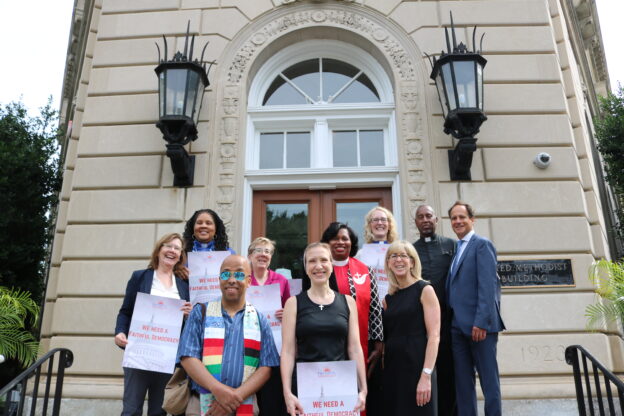
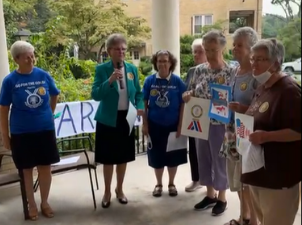
In Long Island, New York, Catholic women religious from the Sisters of St. Joseph of Brentwood along with Mercy and Dominican Sisters gathered to pray, sing and deliver a letter signed by 3,685 Catholic Sisters nationwide to Senate Majority Leader Chuck Schumer’s office. The letter urged Senator Schumer “not to let minority opposition prevent the Senate passing the For the People Act any longer.”  Read the full text of the “Nuns’ Letter.”

At additional events in Rockaway, Hempstead, and Albany, New York, members of the Sisters of St. Joseph of Brentwood and Sisters of Saint Joseph of Carondelet (Albany Province) organized gatherings to rally for the For the People Act with fellow members of their congregations.

o Cleveland, Ohio

The Cleveland NETWORK Advocates Team went to Cleveland Metroparks Zoo where they handed out flyers and stickers in support of the For the People Act. The Sisters of St. Joseph in Cleveland also organized a public witness in support of democracy reform.

o Northern Virginia

In Northern Virginia, NETWORK members showed up to canvass at the Herndon, McLean, Falls Church, Reston, and Alexandria farmers markets. At the markets, they engaged local voters in conversation about the importance of passing democracy reform legislation before the end of the summer.

o Indianapolis, IN

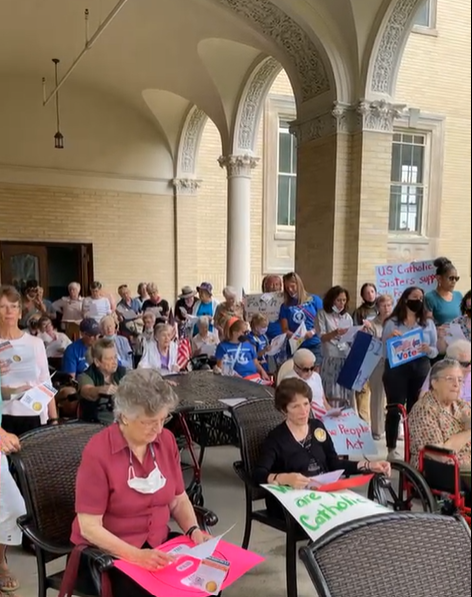
In Indianapolis, Catholic Sisters and other concerned Hoosiers rallied to support federal democracy reform near the Indiana State Capitol Building. The “Carry the Torch of Democracy” rally was cosponsored by Faith in Indiana, Concerned Clergy of Indianapolis, Pax Christi Indianapolis, Indianapolis Urban League, Hoosier Action, Sisters of St. Francis of Oldenburg, Sisters of Providence, Common Cause Indiana, ACLU of Indiana, League of Women Voters Indianapolis, Indiana Black Legislative Caucus, and Our Revolution Indiana. Re-watch the livestream of the rally here.

Following the rally, six Catholic Sisters delivered a copy of NETWORK’s “Nuns’ Letter” signed by 3,685 Catholic Sisters across the country to Senator Mike Braun’s office.

o Monroe, MI

In Monroe, the IHM Sisters and the Stronger Together Huddle held a Vigil for Democracy in front of the IHM Sisters’ Senior Living Community. They also organized a “Relay to the Ballot Box” in downtown Monroe where participants carried symbolic “ballots” and had to get through “hurdles” along the way.  At each hurdle, participants received a “For the People” pass to get through, representing the ways in which the For the People Act would preempt restrictive state-level voting laws. Finally, the participants reached the ballot box near City Hall and the event concluded with music, short speeches, and prayer.

o Philadelphia, PA

On Saturday, August 21, 2021, NETWORK activists organized a Carrying the Torch of Democracy Rally at Independence National Park in Philadelphia, PA. The rally was cosponsored by Common Cause of Pennsylvania, Our Mother of Consolation Parish, St. Vincent de Paul Parish, Catholic Peace Fellowship, Sisters of St. Joseph, Sisters of Mercy, Chestnut Hill College, Colonial Area Anti-Racism and Social Equity Alliance (CAARSEA), and Indivisible Philadelphia. Catholic Sisters, local elected officials, and activists spoke about the need to pass S.1 the For the People Act. Re-watch the livestream of the rally here.

View images from all of the Team Democracy events below:

Team Democracy: Go for the Gold, Pass the For the People Act

Catholic Sisters to President Biden and Senator Schumer: Pass S.1!

Catholic Sisters to President Biden and Senator Schumer: Pass S.1!

Meg Olson
July 26, 2021

Today, NETWORK members delivered a letter signed by 3,685 Sisters in support of S.1, the For the People Act, to President Biden and Senate Majority Leader Schumer. The letter urges President Biden and Senator Schumer not to let minority opposition prevent the Senate passing the For the People Act any longer. Click here to tweet about the Nuns’ Letter or share it with your friends on Facebook.

The Sisters’ message: “As Catholic women religious, we see and affirm the dignity of every person. Knowing that all people are made in the image and likeness of God, we cannot tolerate policies or practices that suppress voters’ ability to participate fully in our democracy, especially Black, Brown, and Native American voters.”

Sister Quincy Howard, OP, NETWORK Government Relations Specialist, who helped organize the letter, said, “Sisters feel a real urgency to respond to the rising threat to our democratic institutions. A healthy democracy is our means for creating a better world and therefore this is a moral issue of the utmost importance.”

Sr. Susan Wilcox, CSJ, a NETWORK member and the Justice, Peace, and Integrity of Creation Coordinator for the Sisters of St. Joseph of Brentwood, helped to deliver the letter to Senator Schumer’s district office. She said, “Voting is a right and a responsibility, but voting rights are under attack. Strict voter registration requirements, extreme partisan gerrymandering, voter purges, and long waits times are disruptive and disenfranchising. We need democracy reform now to protect our next election.”

After receiving the letter, Senator Chuck Schumer said: “Republican state legislatures across the country are engaged in the most sweeping voter suppression in 80 years, and I applaud the Sisters of St. Joseph in Brentwood and beyond for their support of American democracy and for S.1, The For The People Act. The Senate vote I held last month, with all 50 Democrats voting in favor, represented the starting bell – not the finish line – in our fight to protect democracy, and as majority leader, I am exploring all options to bolster voting rights and advance democracy-reform legislation for another vote on the Senate floor.”

Amplify the Sisters’ Message, Join Team Democracy

With Congressional redistricting starting soon, now is a critical time to protect our democratic institutions. NETWORK members are organizing local events to raise support for the provisions included in S.1. If you are in one of the cities below, be sure to join your local “Team Democracy” event. (More local events still to be announced!)

  • Indianapolis, Indiana
  • Cleveland, Ohio
  • Flourtown, Pennsylvania
  • Monroe, Michigan

Learn more about these events and R.S.V.P. at networklobby.org/TeamDemocracy.

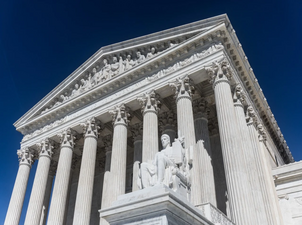
Recent Supreme Court Decisions Highlight Urgent Need for Voting Rights Legislation

Recent Supreme Court Decisions Highlight Urgent Need for Voting Rights Legislation

Allison Baroni
July 14, 2021

On July 1, the Supreme Court released rulings on two highly significant cases: Brnovich v. DNC and Americans for Prosperity Foundation v. Bonta. Both decisions (each decided 6-3) were disastrous to efforts to strengthen and protect the integrity of United States elections. This tells us what we already knew: the courts will not save us. Now more than ever, we must demand Congress pass the For the People Act (H.R.1/S.1) and the John Lewis Voting Rights Advancement Act. Only through such legislative action can we ensure the protection of our democracy — or, rather, build anew the democratic society that the United States has only imagined itself to be.

The right to vote is often presented as sacrosanct, as if voting has been free and fair since the inception of this nation. But we know that at the time of the first presidential election in 1789, only 6% of those living in the United States (i.e., property-owning white men) were able to vote. And, although gains have been made thanks to organizing and advocacy from marginalized communities pushing to expand that 6%, the right to vote is still denied to many today.

Still, through the efforts of activists we have made historic gains for free and fair elections across the centuries. These gains are not linear and have always been accompanied by losses and by the pushback of those seeking to protect an oppressive status quo. In terms of advancing the freedom to vote in the United States, the July 1st Brnovich v. DNC ruling was a travesty for voters who have historically been disenfranchised by our systems and structures.

The court’s decision in Brnovich v. DNC reverses a Ninth Court decision that had struck down two Arizonan laws, one of which bans third parties from collecting others’ ballots to turn in, and another requiring precincts to throw out ballots accidentally cast at the wrong location. These laws both disproportionately hurt voters of color, and it was on this basis the Ninth Court struck them down, arguing that they violated Section 2 of the 1965 Voting Rights Act. In reversing this decision, the Supreme Court fundamentally gutted this section of the Voting Rights Act, establishing a precedent for which further laws can be passed without concern for their disproportionate impact on Black, Brown, and Indigenous communities’ access to the ballot box.

In Americans for Prosperity Foundation v. Bonta, the Court ruled in favor of major donors to charities and nonprofit groups, striking down a California law that had attempted to mitigate the impact of invisible money on our politics. Instead of supporting efforts to address the growing control of money on our elections and institutions, this decision prioritizes the interests of wealthy donors and dark money under the guise of protecting First Amendment rights. This justification for the decision begins to collapse upon only a little investigation: the California law had only required disclosure to the Attorney General, not the public, already protecting these donors from pushback from public opinion.

Fortunately, the impact of both rulings can be remedied by passing legislation currently before Congress. The For the People Act would ensure a basic standard of access to the ballot for everyone ­— no matter one’s zip code. It would also apply disclosure laws for big donors and dark money and strengthen our federal enforcement of campaign rules. Additionally, the John Lewis Voting Rights Advancement Act would protect the disenfranchised by preventing states from passing racially discriminatory laws moving forward. We have come too far to move backwards. Passing both of these bills is the only acceptable Congressional response to these decisions from the Supreme Court. Doing so, continuing to build an equitable democracy, is how we bring into existence the world we wish to live in.

Allison Baroni is a rising senior at Villanova University where she studies Peace and Justice & Theology. Allison is a member of the NETWORK Government Relations team this summer.

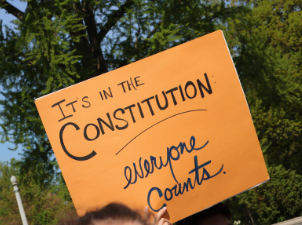
Orange sign that says "It's in the Constitution: Everyone Counts"

State Voting Restrictions Reinforce the Need for the Democracy Reform

State Voting Restrictions Reinforce the Need for the Democracy Reform

Alex Budzynski
June 21, 2021

Right now, a record number of bills that restrict the vote are moving through state legislatures and becoming law. A recent study from the Brennan Center for Justice found that at least 14 states have enacted 22 restrictive voting bills since January. In particular, Florida, Georgia, and Iowa have introduced overarching bills that further constrict already narrow voting laws. Montana and Arkansas have already ratified four bills apiece, and Arizona has proposed two dozen bills which target voting by mail specifically. Several of these laws are being challenged in court.

The Brennan Center study determined that these provisions stem from “the racist voter fraud allegations behind the Big Lie and a desire to prevent future elections from achieving the historic turnout seen in 2020.” Over 300 restrictive bills have been introduced in 48 states, and 61 bills are currently moving through state governments. With voting rights jumping to the top of state legislative agendas, “the United States is on track to far exceed its most recent period of significant voter suppression” by the end of this year.

States are imposing an assortment of the following provisions making it more difficult to vote in person or to cast ballots in the mail:

  • Shortening the timeframe to request and deliver mail ballots
  • Making it harder to remain on absentee voting lists
  • Eliminating or limiting mail ballots to those who do not specifically request them
  • Restricting assistance when returning mail ballots
  • Limiting the number and location of mail ballot drop boxes
  • Imposing stricter signature requirements for mail ballots
  • Tightening voter ID requirements
  • Expanding voter purges
  • Banning snacks and water at in-person polling stations
  • Eliminating same-day registration
  • Reducing the availability of polling locations and hours
  • Limiting early voting days and times

The principles of Catholic Social Justice insist that all people have a right to participate in our shared public life. Voting should be readily accessible, but these laws make it harder to cast a ballot under the guise of election security. In turn, these bills jeopardize the integrity of our democracy and actively disenfranchise voters.

Moreover, these restrictive laws disproportionately affect marginalized communities, creating hurdles for Black and brown voters, disabled people, immigrants, and low-income folks. A 2019 study published in Scientific American found that voters in predominantly Black neighborhoods waited an average 29% longer than voters in White neighborhoods. Now, states with large minority populations, including Florida and Georgia, have introduced provisions which will continue to suppress minority votes due to technicalities and unchecked intimidation techniques. These policies are rooted in and reminiscent of Jim Crow-era poll taxes and literacy tests. They must be undone to ensure all people have access to the polls.

Organizations across the nation are taking notice of these dangerous and undemocratic pieces of legislation. The Black Votes Matter Fund recently announced their “Freedom Ride for Voting Rights,” a series of events from Jackson, Mississippi to Washington D.C. which will advocate against widespread voter suppression. The organization’s goal “is to increase power in our communities. Effective voting allows a community to determine its own destiny.”

In order to preserve our democracy and uphold the right to vote, we must act. The For the People Act (S.1) is a comprehensive, once-in-a-lifetime bill that protects and expands voting rights, ends partisan gerrymandering, and gets big money out of politics. S.1 would overrule the restrictive laws being passed in states by dictating new, national voting standards that make it easier to vote in person or by mail. NETWORK urges the passage of the For the People Act in the Senate to undo the constricting and oppressive provisions that are being imposed nationwide. The integrity of our democracy is at stake.


Alex Budzynski is a rising senior at Xavier University where he studies communication and public relations. He hails from Fairfax, Virginia, and he is one of the summer volunteers at NETWORK this year.

Both the For the People Act and the John Lewis Voting Rights Advancement Act are needed to Build Our Democracy Anew

Both the For the People Act and the John Lewis Voting Rights Advancement Act are needed to Build Our Democracy Anew

Two critical bills, the For the People Act and the John Lewis Voting Rights Advancement Act, are being considered in Congress to transform our politics and safeguard our democracy. These bills have key similarities and differences, but both are essential in ridding our democracy of systemic racism and exclusion and building a new democracy that honors both the dignity of each individual and the value of community.

What is The For the People Act (H.R.1/S.1) and what does it do?

  • The For the People Act is a once-in-a-generation bill that reimagines American democracy into one that works for the people. It protects the freedom to vote, ends partisan gerrymandering, gets big money out of politics, and strengthens government ethics and accountability.
  • From a voting rights perspective, it creates a national floor of accessibility to the ballot box that doesn’t currently exist, making same-day voter registration, no-excuse vote by mail, and at least two weeks of early voting the law of the land no matter where a voter lives. Many of the challenges of voting during COVID, for example, would be addressed through For the People Act.
  • And, in terms of the voter suppression laws currently moving in the states, S.1 would override many of them by requiring all states to meet this baseline of accessibility.

What is the John Lewis Voting Rights Act (H.R.4) and what does it do?

  • The John Lewis Voting Rights Act (VRAA) would restore the full power and protections of the 1965 Voting Rights Act.
  • In 2013, in the disastrous Shelby County v. Holder decision, the Supreme Court struck down the pre-clearance provision of the Voting Rights Act. This provision required states with a history of enacting racist anti-voter laws to get pre-clearance from the Department of Justice before their state’s election laws could be changed.
  • This bill would restore the pre-clearance provision of the Voting Rights Act and hopefully expand the list of covered states.
  • This would prevent future discriminatory laws from being allowed on the books — like we are seeing proliferate across the country now.

How they work together

  • These bills are complementary and are both sides of the same coin — so if you hear folks talking about how we need to pick one or the other — that is a false choice and needs to be called out as such.
  • We should not be picking one — both of these bills are wildly popular — and both are 100% necessary to protect the freedom to vote. They accomplish different things.
  • If we’re thinking of this as a battle for voting rights the For the People Act can be seen as a sword—an assertion of rights and reclaiming the power of the people. The VRAA can be thought of as the shield, our defense against racist, discriminatory voting laws.

Different Bills on Different Timelines: Why aren’t the bills aren’t moving together or combined?

This is because of the John Lewis Voting Rights Act — it requires a legislative record of field hearings on voter discrimination to protect it from a potential legal challenge in the future. So that means it is moving at a somewhat slower pace than the For the People Act, and it hasn’t yet been introduced in 2021 because there is a lot to incorporate into the record from the 2020 election.

The For the People Act is ready to go and is on an aggressive timeline: it passed the House in March and we need it to be signed into law by the end of the summer. It will impact redistricting and it could positive impact voting laws for the 2022 election, but its reforms need time to take effect, so it is critical this bill moves in the next couple of months

We need to move forward with passage of S.1 now and take up JLVRAA as the next immediate step in our democracy agenda. Think of American democracy as a sick patient.  The For the People Act is the treatment the patient needs to survive, H.R.4 is the vaccine to ensure it doesn’t get sick again. If we want to nullify the laws that have passed in states or those that will pass in the coming months, we need the For the People Act to pass.  The voting rights provisions of H.R.1 came straight from the late John Lewis’s Voter Empowerment Act, which he originally introduced in 2012 and reintroduced every session since.

NETWORK Honors 159th Anniversary of D.C. Emancipation Day

NETWORK Honors 159th Anniversary of D.C. Emancipation Day

Audrey Carroll
April 16, 2021

Today, April 16th, NETWORK celebrates Emancipation Day. On this day in 1862, slavery was abolished in the District of Columbia through the Compensated Emancipation Act. This was a key milestone in the struggle for racial justice that still continues today. 

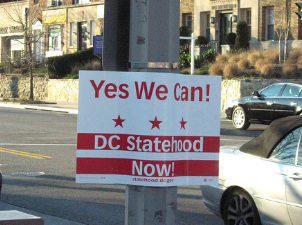
Emancipation Day honors an important day for people who were enslaved, and invites us to reflect on the larger issues of racial equity, freedom, and democracy. We know that D.C. statehood is a racial justice issue, and until all 706,000 D.C. residents have equal representation, justice cannot be achieved. 

As we celebrate D.C. Emancipation Day, we call on all Members of Congress to join Representative Eleanor Norton and pass H.R.51 to work towards achieving long-awaited racial equity and building a new, just system of political representation. 

Earlier today, Washington faith leaders gathered to call for D.C. Statehood and honor the significance of Emancipation Day. If you missed it, you can watch on NETWORK’s Facebook.

The Racist Filibuster Must Go for Us to Build Anew

The Racist Filibuster Must Go for Us to Build Anew

Sister Simone Campbell
March 25, 2021

The Senate filibuster — currently 60-vote threshold to close debate on a bill and move to a vote — is a relic of the Jim Crow-era that has blocked democracy reform, civil rights protections, and health care expansion for far too long. Since its inception in 1806, the filibuster has been weaponized against people of color to block bipartisan legislation that addresses structural racism and inequality in the United States. Catholic Sisters and NETWORK advocates do not accept antiquated traditions steeped in a racist past to prevent progress and will mobilize across the country to end the racist filibuster.

Constitutionally, bills require a simple majority to pass — just 51 votes in the Senate.  However, the filibuster is a procedural tool which allows senators to block legislation from receiving a vote at all if there are 41 of them that oppose the bill. For centuries, elected officials in the minority have used the filibuster to stop common good, anti-racist legislation from passing and becoming law. In the 19th Century, white Southern Senators used the filibuster to kill Reconstruction and the earliest civil rights bills in order to maintain white supremacy. In the 20th Century, anti-lynching legislation which was widely popular among Congress and the United States people was consistently blocked by a small minority in the Senate. The use of the anti-democratic filibuster as a tool of white supremacy had direct consequences: racist lynching mobs killed an estimated 4,400 Black Americans throughout our nation’s history. To this day, Congress has failed to pass federal anti-lynching legislation. In the Civil Rights Era, Senators employed the filibuster to prevent desegregation and voting rights legislation from becoming law.

The racist application of the filibuster is a clear legacy of the rule, and it continues today. Senators are exploiting the power of the filibuster to block critical legislation meant to dismantle systemic racism and known injustices in the 117th Congress.  The For the People Act, the Justice in Policing Act, the Equality Act, the PRO Act, are all bills that deserve a vote and stand a real chance of passing but for the filibuster rule.  The filibuster is not protecting voters in the minority party; it protects politicians set on preserving the status quo. We cannot allow an arbitrary Senate rule with no grounding in the Constitution to block legislation that enjoys widespread bipartisan support by voters across the country.

The Senate has a moral duty to use this opportunity to end the filibuster.

Add your name to join the Catholic Sisters and activists of NETWORK calling for the elimination of the Senate filibuster.

Statehood and Self-Determination for Washington, D.C.

Statehood and Self-Determination for Washington, D.C.

Ms. Andrea Renee Reed
March 22, 2021

Ahead of the House Oversight Committee hearing on H.R.51 the Washington, D.C. Admissions Act, I sent the following message to all committee members in a letter asking them to support D.C. statehood.

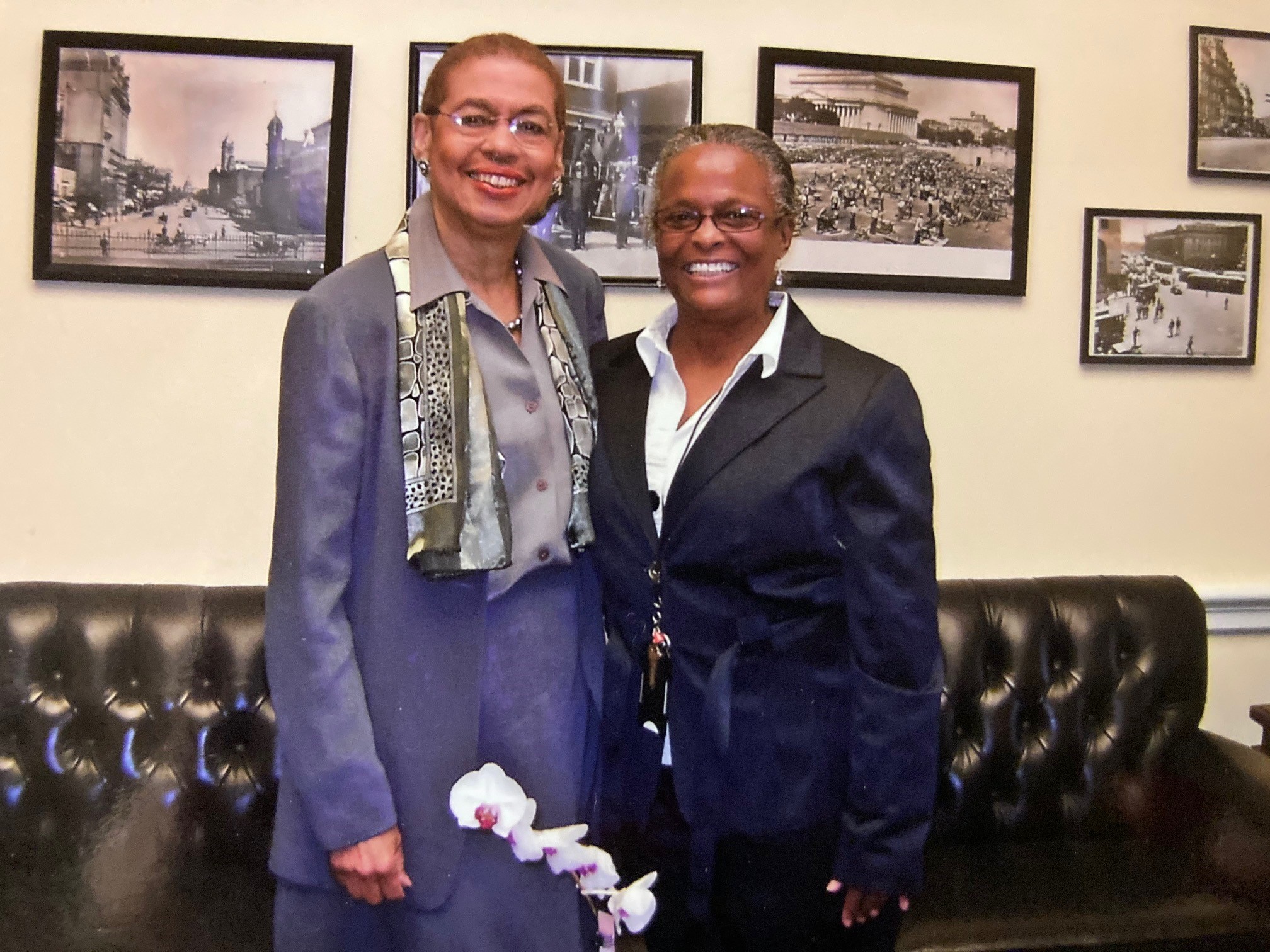
Rep. Eleanor Holmes-Norton and Ms. Andrea Renee Reed, 2010

My name is Ms. Andrea Renee Reed.  I’m a resident and native of DC, a 62 year-old, grateful African-American woman. Growing up in Washington, D.C. was hard. In the 60s there were several assassinations of civil rights leaders such as President John F. Kennedy, then Malcom X, then Martin Luther King Jr., and then Robert Kennedy—all in the prime of their lives. They led with strength, character and faith.  I can remember overhearing adult conversations about events that were filled with disillusionment, hopelessness, and disempowerment.

In the following years, I have witnessed a downward spiral of disenfranchisement and an economic free fall in the District. It felt like our communities were suffering and the politicians were indifferent. Like they were only interested in using the resources of our city without reinvesting them to meet the needs of the community. Which is why I am writing in support of the Washington, D.C. Admission Act (H.R.51/S.51). This legislation guarantees right of voters to participate fully in federal elections. The more than 700,000 D.C. residents, the plurality of which are Black and Brown citizens, deserve full congressional representation and the self-determination that comes with statehood.

I moved around a lot within the District during my younger years but wherever I lived, nobody in the surrounding community owned their own homes. We all lacked ownership in the places we lived.  Every place I stayed, it was a constant struggle for me and for others in these neighborhoods. My entire experience was an attempt to escape.

It was by God’s grace that I met Ms. Carolyn Byrd who supported destitute young Black people by showing curiosity about their dreams and offering encouragement. Ms. Byrd trusted me with the great responsibility of caring for her disabled daughter, LaShonya.  She showed me that I could make choices about the direction of my life and didn’t have to live in a state of reactivity.  I still believe she could have been an effective, powerful community leader or even city council member had she had the resources available to her.  She held a vision for the District and felt ownership of it as a place to grow and to thrive, and she tried to make it better in her own way.

With her encouragement, I realized I could follow my path, so I left the District and lived many places trying to find somewhere that felt like home.  It was also during that time that I slowly and steadily gained independence and confidence.  An awareness of my contributions and capabilities became more clear to me and I also learned that unaddressed, undiagnosed mental illness had contributed to some of my struggles. With a newfound freedom I slowly began to thrive and feel like a whole person with agency. Mental health issues stagnate the abilities of citizens to meet their highest potential for growth and economic development.

Now, many years later, I chose to return to Washington, D.C. looking for healing and to reclaim my roots.  I reside in a safe environment, with a supportive community in the Petworth neighborhood.  It finally feels like home. This community has inspired me to work for change and I can see now where Ms. Byrd found her inspiration to help others. I feel the same call and that’s why I’m writing today.

I can see with new eyes how the District, as a broader community, suffers like I did growing up: discouraged, disempowered, and held down with little control of its path forward.  In addition to many of the same problems I saw growing up, now with gentrification happening, it compounds the lack of ownership for the native population.  Again, a community left out in our own home.

It is 2021, we are tired of being marginalized and having others dictate our path and our goals. Those of us who call the District home refuse to have our choices undermined or overruled by politicians from other states, some with fewer residents than Washington, D.C. We deserve to have statehood status, with proper representation and agency over our own affairs. I believe DC statehood would improve all aspects of residents’ lives including addressing homelessness and the psychological condition of the broader community, generally uplifting our spirits.

We are ready to claim our home—to TRULY take ownership—and be properly represented in Congress. We are capable of managing our own affairs just like other states. It is time to give us our agency and give the power of the vote to courageous heroes like Rep. Eleanor Holmes-Norton who has been speaking truth to power for 30 years.

Ms. Andrea Renee Reed is a member of the Assisi Community, an intentional community in Washington, D.C. committed to living simply and working for social justice.

Moving Toward a Culture of Encounter on Inauguration Day

Moving Toward a Culture of Encounter on Inauguration Day

Sister Simone Campbell, SSS
February 4, 2021

Two weeks ago, our nation’s 46th President Joe Biden woke up and, with our first woman Vice President Kamala Harris, brought our nation’s Congressional leadership – men and women of both parties, of various religious backgrounds – to a morning Catholic mass at St. Matthew’s Cathedral in Washington, D.C. From that private, socially distanced mass, President Biden went on to take the oath of office on the balcony of the Capitol in a ceremony imbued with themes of Catholic Social Justice.

With so many challenges facing our nation, I cannot think of a more important time for Catholic Social Justice to take center stage, inviting people of all faiths or secular backgrounds to come together in this critical work of rebuilding our nation and guiding our way forward together. For too many years, racism, sexism, and growing economic inequality have been promoted by White House policy. In Congress, we’ve maintained the status quo with harmful repercussions for Black people, Native Americans, Latinx and AAPI communities, women, families and individuals on the economic margins, and all those with intersecting identities.

On Inauguration Day, the whole country witnessed speech after speech testifying to the value of caring for one another, especially those members of our community facing the most difficult circumstances. We also heard about the critical importance of caring for our planet, being active participants in our communities – what Pope Francis calls “meddling in politics,” and more. These values, inspired by principles of Catholic Social Justice, call us to put the common good above the benefit of any individual or small group. This is what is needed in our nation right now.

Putting the Focus on Listening

In his inaugural address, President Biden said, “Let us listen to one another. Hear one another. See one another.” In his own words, President Biden called us to what Pope Francis has been promoting for years – a culture of encounter. This is the culture fostered by Nuns on the Bus, traveling to different cities and states, meeting people and families and just listening to their stories. I invite you to listen to these stories, which we’ve shared over the years.

In Fratelli Tutti, Pope Francis writes, “The ability to sit down and listen to others, typical of interpersonal encounters, is paradigmatic of the welcoming attitude shown by those who transcend narcissism and accept others, caring for them and welcoming them into their lives. Yet today’s world is largely a deaf world…” As we move forward we must do whatever we can to change from being a world closed off from listening and meeting one another. We are called by our faith and patriotism to create something new. We are challenged to create a culture of encounter out of a culture of indifference. As President Biden said, “We must end this uncivil war…  We can do this if we open our souls instead of hardening our hearts.”

However, it was quickly evident that for us Catholics the “uncivil war” does not just refer to the insurrection in the Capitol on January 6, 2021. It was also evident in the attack by Archbishop Gomez, president of the US Conference of Catholic Bishops, on President Biden before he was inaugurated and then on Inauguration day itself. Archbishop Gomez’s actions were not endorsed by the Bishops’ conference and, in fact, have been criticized by many of its members. Pope Francis recently affirmed the Archbishop’s work on immigration reform. With the specific reference, it seems to me that there is an implicit critique of his attack on our new president.

In order to end this “uncivil war,” I believe that we at NETWORK need to continue our effort at encounter and listening. I know from listening to women across the country that the focus of some of our leadership on the criminalization of abortion does nothing to respond to many of their real needs. Let’s begin working to end the uncivil war by lifting up women’s stories and their real needs.

Building Anew Together

In her powerful inaugural poem “The Hill We Climb,” Amanda Gorman, our nation’s youngest inaugural poet and a young Black Catholic woman, declared, “We will rebuild, reconcile, and recover.”

Now, we must come together to face our history and build anew. In the midst of this COVID-19 pandemic, economic crisis, and acting out of white supremacists, the time to boldly respond to the needs of the common good is now. We must ensure that all have access to health care. All people need to be able to feed, clothe, and house their families. We must dismantle structural racism and end white supremacy. This is the building anew that is called for.

We need a new imagination to create a way forward in these unprecedented times. What is old is not working and something new needs to emerge. But I have hope that we can meet this challenge. As Ms. Gorman concluded, “There is always light, if only we’re brave enough to see it. If only we’re brave enough to be it.”