

Category Archives: Front Page

Inflation Inequality and the Common Good

Inflation Inequality and the Common Good

Claire Guzdar
November 6, 2019

In the summer of 2013, I accepted a position at NETWORK as the incoming Field Associate and prepared to pack up my things and move to Washington DC. It was a big change, but I knew it was the right choice when I saw Sister Simone testify in front of Congressman Paul Ryan’s House Budget Committee.

In her testimony, Sister Simone emphasized the injustice of people being hungry, bankrupt, and without healthcare in our wealthy nation. She painted a picture using statistics and stories to reinforce one another. And she refused to accept the conservative, neoliberal economic narrative Representative Paul Ryan tried to advance about the “free market” being the solution to inequality.

NETWORK taught me there are changes we can make to have a more just economy today. There is no such thing as a “free market”–our economy is made up of millions of interactions each day, and the rules of the economy are set by a series of choices made by policymakers to deliver the desired economic outcomes. To influence economic outcomes, reduce inequality, and improve the lives and well-being of people experiencing poverty, we need policymakers to make different choices.

I’m still advocating for those better choices as the Associate Director of Campaigns and Partnerships at the Groundwork Collaborative, where we’re working to develop and advance a coherent progressive economic worldview. To do this, we’re supporting research that helps us more clearly understand the ways in which our economy excludes marginalized communities.

This week, Groundwork partnered with Christopher Wimer and Sophie Collyer from the Columbia Center on Poverty and Social Policy and Xavier Jaravel from the London School of Economics on a new policy brief that reveals we have undercounted the number of Americans in poverty and the real wages of low-income families. This research shows there are at least 3.2 million more people in poverty in 2018 than official reporting suggests because of a phenomenon called inflation inequality, which essentially means that inequality is so extreme it has been driving inflation to rise more quickly for low- and middle-income people than for the wealthy.

Further, when adjusted for inflation inequality, household income for the bottom quintile of income earners declined from 2004 to 2018 by more than 7% — much more than the 1% originally reported. Stunningly, the average middle-income household lost about $1,250 in 2018 due to higher prices caused by inflation inequality.

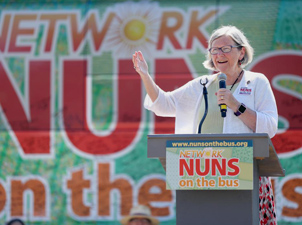
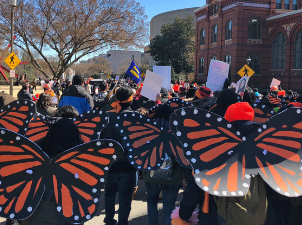
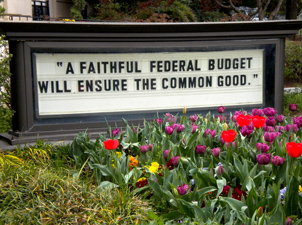
The data Groundwork released this week is also proof of what lived experience has been telling us — what people all over the country continue to tell Sister Simone as she travels and brings back their stories back to DC: inequality is not just an outcome of an unjustly designed economy, it is a cause of the squeeze being felt by economically struggling people. During the 2016 and 2018 Nuns on the Bus tours, I watched as NETWORK traveled the country calling for policies that mend the gaps and advocating for tax justice. All around the country, families and individuals shared stories of wages stagnating while the cost of housing, transportation, and healthcare continue going up. Along with these stories, this research on inflation inequality from Groundwork helps us more accurately understand the state of poverty, wages, and inequality so we can work for the best, most affecting solutions. It is time for us to reshape our economy so that it works for the common good, not just for those at the top.

Claire Guzdar is the Associate Director of Campaigns and Partnerships at Groundwork Collaborative, working to advance a cross-cutting economic narrative for the progressive movement. Prior to her work with Groundwork, Claire was Associate Director of the Faith and Progressive Policy Initiative at the Center for American Progress and a Field Associate at NETWORK.

Restoring Trust and Faith in Our Democracy

Restoring Trust and Faith in Our Democracy

Sister Quincy Howard, OP
November 5, 2019

We know how quickly a year passes. Today is the first Tuesday of November; we have exactly one year before Election Day 2020 and so much is at stake. The presidency and control of Congress depend on the outcome next November, but the well-being of our democracy itself also hangs in the balance.

Winston Churchill once said “Democracy is the worst form of government except for all those other forms that have been tried.” Over 70 years later, his assessment still rings true.

Our democracy has never been perfect, but in 2020 we are at a pivotal moment for the democratic ideals of our nation. It is time to affirm that the people elect their government and that every vote counts.  Creating a fairer, more representative democracy should always be the goal.

While our democracy has always been a work in progress, there are key ways that it’s been undermined, particularly in the past 20 years. We are watching as these broken pieces come together, culminating in very real implications for how our government works — or doesn’t — and who benefits. NETWORK and our partners in the faith community are marking this benchmark occasion with a call to Restore the Voters Covenant. Our statement of purpose highlights the moral concerns about the state of our democracy in 2020 and articulates the principles we hold dear.

We at NETWORK are working with the Faithful Democracy coalition, a multifaith collaborative effort.  We are united around these basic democratic principles and are called to draw attention to the ways that our foundational democratic systems are under threat. Our community of congregations and faith-based advocacy organizations are ready to take a faithful and hard look at the state of our democracy. Together we will commemorate this important year by highlighting some of our biggest democratic hurdles and how we can overcome them as faithful individuals, communities and policy makers. Beginning in late November 2019, Faithful Democracy will roll-out bimonthly toolkits, each focusing on a different threat to our democratic systems.  It is time to faithfully repair the voters’ trust in our elections and ensure that our system aligns with our democratic ideals.

Stay tuned for future information about:

  • Protecting the right to vote and equal access to the ballot
  • Ending the corrosive influence of money on our democracy
  • Securing the integrity of our elections systems from foreign interference
  • Ensuring that redistricting and representation is fair and reflective of voters
  • Getting out the vote!

Updating Tax Policy in Public Education Works Toward Racial and Economic Justice

Updating Tax Policy in Public Education Works Toward Racial and Economic Justice

Daniela Zelaya
October 29, 2019

Every year, our lawmakers decide where they are going to spend taxpayer dollars. The past few years, the administration has unfortunately decided to cut funds for welfare programs such as SNAP, Medicaid, Social Security Income, housing assistance and a few others. Along with cuts to the welfare system also goes the education system. Last year, entire school systems around the country had to go on strike due to lack of funding. In fact, the Washington Post declared 2018 as ”The Biggest Year for worker protest in a generation.” They not only went on strike for their unfairly low salaries, but also for the overall lack of support from the government to fund public schools.


As many know, funding for public schools comes in many ways but mostly derives from property taxes. In turn, public schools benefit when they are in areas where property values are high. However, it is the opposite in areas where property values are not as high. That tends to be in areas with a high population of low-income families and families of color. As a result, teachers in these schools earn less and receive less and outdated resources for their students. No matter how much the Every Student Succeeds Act and the Common Core State Standards aim towards closing the achievement gap, the education of minority and low-income students is still incomparable to the education of white wealthy students. It is hypocritical for the United States government to want its students to rank high in comparison to the rest of the world but refuse to support their education. That is why this tax policy should be updated to create another mode of funding for the public education system in the United States.


A popular critique from people is that the government cannot just throw money at issues and expect them to be solved overnight. But governmental institutions cannot run properly without sufficient funding. Creating modern tax policies that reroute money into education helps teachers, students, the community, and the country as a whole.


Increasing teacher wages means giving them more time to prepare their lessons because they will not have to go to their second job after school or on the weekends. It will also give them the time to be able to pursue their master’s degrees to become even more effective teachers. Additionally, it will encourage more high school students to become teachers and pursue a traditional four-year education degree.


Additional funding for schools can also provide for opportunities to coach new teachers through their first two years. For most rookie teachers, the first year is the “survival” year. During this year, teachers stay at school until nine at night trying to figure out how they can improve things the next day. Because of this, some burn out and leave the teaching profession, leaving classrooms full of children without a teacher. Resources that provide a mentor to first year teachers are valuable and are mostly being implemented in alternative teacher preparation programs, like Teach For America. However, it should be offered to proper public-school teachers who have already been trained for four years.


Changing tax policy to reroute money into public schools is an option to help the future of the United States, no matter where children come from or what their family’s socioeconomic status is. A modern way of funding education would prevent the system from exclusively helping students from white and wealthy families.

Daniela was born in the city of San Salvador, El Salvador. She came to the United States at the age of 3. As an undocumented person, and as the first person in her family to attend college, she understands the idea that a quality education should not be a privilege, it is a human right. She is currently a senior at Trinity Washington University, double-majoring in Early Childhood Education and Sociology. Daniela hopes to one day become the first Latina U.S. Secretary of Education.  

Advocating for Justice in El Paso

Advocating for Justice in El Paso

Xorje Olivares
October 29, 2019

During a Saturday session at the ‘Jornada Por La Justicia’ Teach-In earlier this month, the lecturer asked attendees to use a single word to describe their thoughts upon hearing the word ‘border.’ I heard someone say “division,” followed by a “wall” in the back. I believe there was a submission for “political” along with “crisis.” It was at that point that I shouted, “home,” the only positive connotation ascribed to our weekend venue during that particular exercise. Honestly, that fact stunned me, but it also warmed my heart to know it was true.

Because the border has always been home for me. I grew up in Eagle Pass, Texas, roughly an 8-hour drive from the conference in El Paso, but my body knew the area well. I like to say that all border natives speak the same language of biculturalism, so I very much felt in my element. This was the second time I’d been to El Paso, but the first since the arguably safest city in the nation witnessed one of the most devastating events in recent American memory. I was nourished by the presence of #ElPasoStrong at every corner and by the devout folks seeking to use the Teach-In as an opportunity to unite, heal, and evangelize both on a spiritual and political front to make sure that form of violence never happened again. Not to mention empowering the ongoing movement led by border residents, such as those in El Paso, to protect our undocumented brothers and sisters amid this fabricated “national emergency,” many of whom are putting their faith in Christ as they literally wait in a bullpen next door.

Knowing that we were going to address several topics over the course of the conference, I was incredibly honored to have been invited to specifically participate on a panel about harnessing our political power as Latinx Catholics through mobilizing our theological narratives. My narrative, which I talk about regularly on my weekly SiriusXM Satellite Radio show and various online columns, proudly incorporates my queer identity, and it dictates how I view a myriad of issues facing the various communities of which I identify with. I was grateful to the organizers for allowing an ‘out’ gay man to talk about his grievances with the Church and its hierarchy with regards to its anti-LGBTQ rhetoric and exclusionary tendencies. Having never attended a Catholic conference before, I was thoroughly moved with just how welcoming the space felt and with how my message was received by its roughly 400 participants. I eventually spoke with three student attendees who shared their own queer struggles, which made everything so worthwhile for me. Belonging never felt so special.

I also love that I engaged with so many progressive-minded folks who use their spirituality as a motivating factor for their advocacy work. Whether with regards to ending the prison industrial complex, assisting asylum seekers, or ensuring that Latinx people aren’t erased from the national discourse, this Teach-In proved that being bold isn’t necessarily a gift, but a shining characteristic that we, as a collective, hold. And I’d like to think we hold onto it pretty tightly.

Xorje Olivares is a radio host/producer and social commentator who specializes in LGBTQ, Latino, and millennial issues. His writing on politics and intersectional identity has appeared in VICE, Playboy, Rolling Stone, them., and Vox, among others. He is the content creator behind HeyXorje.com and has been profiled by ABC News, MSNBC, NPR, PBS, and FOX News.

Not Our Job: Grappling With the Struggle of Being Black and Compassionate

Not Our Job: Grappling With the Struggle of Being Black and Compassionate

Charlotte Hakikson
October 24, 2019

On September 6, 2018, Amber Guyger entered the home of Botham Jean, mistaking it for her apartment, and fatally shot him. Both Guyger and Jean lived in the same apartment building; she lived on the third floor and he lived directly above her. The details of the case are tricky but please feel free to read more about it here. After hearing the case, the jury found Guyger guilty of murder and sentenced her to 10 years in prison. While there are mixed reactions to the sentence, I want to bring our attention to a few events that happened in the courtroom during and after the trial.

Cathy Odhiambo, Guyger’s Black coworker and friend, took the stand in defense of Guyger and spoke to her character. This felt very performative. Was there not anyone else who knew her work ethic and personality, and could speak in defense of her? The Black bailiff comforted and fixed Guyger’s hair while Guyger cried after hearing the verdict. That was extremely difficult to watch. Judge Tammy left her stand to hug Guyger after the trial. That was outright unprofessional. Finally, Brandt Jean, the brother of Botham, said to Guyger, “I don’t even want you to go to jail … I love you as a person, I don’t wish anything bad for you,” then proceeded to hug her.

There was a lot of outrage with what was displayed in the courtroom and I came across a tweet that said, “If you think this is crazy, remember the cross.” As a person of faith, I agree that we should live out Jesus’s teaching to love our neighbor, however I am weary that this message is being targeted solely to Black people.

Black people should not be expected, or forced, to invoke any form labor that makes their oppressor look good. Odhiambo should not have to perform the physical labor of taking the stand in defense of Guyger. Brandt, the bailiff, and Judge Tammy should not have to perform the emotional labor of consoling her. I believe that had the roles been reversed, neither Guyger, nor the white community, would be as compassionate. It is not required for Black people to play the role of Jesus, take up the cross, and forgive their oppressors for oppressing them. I do not want people to feel compelled by any means, whether it be family, friends, or even their faith, to perform an act that has not proven to be beneficial to them in that instant. We mustn’t use the teachings as a way to be complacent and too forgiving for our own good. As Zora Neale Hurston once said, “If you are silent about your pain, they’ll kill you and say you enjoyed it.”

Spirituality and Advocacy in El Paso

Spirituality and Advocacy in El Paso

A Reflection on Jornada por la Justicia
Melissa Cedillo
October 23, 2019

Right when I landed in El Paso I immediately felt a sense of home. It was refreshing to be back in a place where I could hear Spanish everywhere.

It had been a while since I was in a space that was majority Latinx. Because Jornada por la Justicia was in El Paso, the teach-in focused a lot on the massacre that took place in August. El Paso is also a border city so the themes of borderlands, immigration, and white supremacy were also present. There were various panels and workshops to attend. Everything from ‘Know Your Rights’ to Latinx spirituality were available. Most importantly, the panelists and the workshops were all lead by Latinx folks, which was empowering because the majority of Catholic conferences I have previously attended were not. I didn’t even have to tell someone the correct way to pronounce my last name.

Saturday night, we crossed into Juarez and prayed with a family getting ready to seek asylum. There were tents and families everywhere. The mother I spoke with held a beautiful nine-month-old baby in her arms. They had traveled three weeks to arrive in Juarez. Another two year old climbed across her tired father smothering him with kisses. Seeing the many families was another reminder that militarizing the border against innocent families is in stark contrast of our Catholic identity.

On Sunday, Bishop Mark Seitz introduced his new pastoral letter ‘Night Will Be No More.’ The letter is about these very topics. He signed it into action after Mass. After the massacre on August 3rd, my heart yearned for a homily that would approach the violence that had happen and extend a message of hope to our familia in El Paso. It was never brought up. But on October 13th, Bishop Seitz’s letter provided my heart with consolation. Bishop Seitz called out White Supremacy for what it is. He used his power and privilege to uplift the same people Jesus did. As the Catholic Latinx population continues to grow in the U.S., I hope Catholic communities across the country look towards Hope Border Institute and the Latinx Catholic Leadership Coalition as leaders.


Melissa Cedillo is a graduate student at Harvard Divinity School. She participated in Jornada por la Justicia, a three-day gathering of a powerful network of Catholic Latino organizers, labor leaders, scholars and activists in El Paso, Texas. The Teach-In 2019: Jornada por la Justicia was co-presented by the HOPE Border Institute and the Latinx Catholic Leadership Coalition. Learn more: https://www.hopeborder.org/jornadaporlajusticia.

Denouncing The Tech Industry’s Support For Detention, Deportation, & Family Separation

Denouncing The Tech Industry’s Support For Detention, Deportation, & Family Separation

Alex Burnett
October 22, 2019

In the past month, thousands of demonstrators staged dozens of internationally acclaimed protests across the United States. These protesters demanded major tech companies, such as Amazon and Palantir Technologies, cut ties with Immigration and Customs Enforcement (ICE), Customs and Border Protection (CBP), and the Department of Homeland Security (DHS) because of their role enforcing the Trump administration’s white supremacist and xenophobic immigration policies.

On Thursday, September 5, approximately 1,000 protestors organized by the Jewish activist group Never Again Action marched from the New England Holocaust Memorial to Amazon’s Cambridge Headquarters. Outside of Amazon’s headquarters,  they unfurled banners and gave speeches denouncing Amazon’s widely documented relationship with ICE, which protestors compared to IBM’s role in assisting Nazi Germany during the Holocaust. Less than one week later, a coalition of Latinx and Jewish organizations, including Mijente and Jews for Economic and Racial Justice, rallied outside Palantir’s New York and San Francisco offices. Together they called for the multi-billion dollar tech giant to end its $49 million contact with ICE.

As anti-ICE demonstrations intensify and the Trump administration’s immigration policies become even deadlier, Catholics should heed the Gospel’s to “love thy neighbor” and demand that tech giants stop profiting from federal agencies that terrorize, torture, and attack immigrants.

Many immigrant justice organizers including Movimiento Cosecha, ICE Out of L.A., and other organization have repeatedly denounced the tech industry’s support for ICE’s deadly raids and CBP’s “filthy” concentration camps. Outrage swelled after the Immigrant Defense Project, Mijente, Empower LLC, and The National Immigration Project published their October 2018 report, “Who’s Behind ICE?” In this 74-page document, the authors outline how “a handful of huge corporations,” including Forensic Logic Inc. and Salesforce, annually receive billions of federal dollars in exchange for database services, case management software, fingerprinting technology, facial recognition software, and “social media analytics.” These tech services allow ICE agents to “surveil, track, and…deport immigrants” with ease.

Using the information from this report, Mijente, alongside thousands of university students, and workers at Salesforce and Amazon have disrupted dozens of recruitment events and press conferences to prevent companies that contract with ICE from conducting “business as usual.” As investigative journalist David Dayen explained in a 2018 article, “ICE relies on private contractors to carry out its detention operations, so one way to abolish ICE might be to make its association so toxic that it loses its collaborators.”

Pope Francis repeatedly calls for world leaders to build a “Hundreds of Catholic Sisters, Priests, Brothers, and lay people, including NETWORK’s own Sister Quincy Howard and Laura Peralta-Schulte, already answered this call by putting their bodies on the line to protest DHS’s illegal family separation policy. By shaming multi-billion dollar corporations that do business with ICE and CBP, Catholics can advance Pope Francis’s vision of a “moral economy” rooted in peace and love for our neighbors.

Gathering to Work for Justice in El Paso

Gathering to Work for Justice in El Paso

Andres R. Lopez
October 22, 2019

This past weekend, I participated in the Teach-In: Jornada por la Justicia, it was a great meeting and learning experience. First, to see great mentors and friends, second, to meet people from different parts of the United States, and finally, the amazing knowledge acquired by the different workshops and plenaries presented. This without forgetting the public witness activity that we had at the international port of entry.

The Teach-in was attended by around 400 people; people from New York, Chicago, California, the Washington D.C. area, and other parts of the United States, as well as from residents of El Paso and Ciudad Juarez, Mexico.

The Teach-In started off with a beautiful prayer and song interpreted by Ilka Vega from Hope Border Institute, the prayer reminded us that where there is love and kindness, God is present, Ubi caritas et amor, Deus ibi est. Then, Monsignor Arturo Bañuelas from St. Mark’s Catholic Church in El Paso, and Dr. Dulcinea Lara from New Mexico State University, addressed the issue of white supremacy, and how Latinx and Hispanic communities have been under attack for many years now. Monsignor Arturo reminded us that to undermine racism and white supremacy, we must do so with solidarity. He also said that “solidarity must become more than mere acompañamiento.”

The first day of the Teach-in ended with a dinner full of joy and networking, as the Folklórico de San Marcos danced on the stage, and the Mariachis sang at the lobby of building.

During the Teach-In, I met with some great friends like Wayne Romo from the Center for Life at St. Mary’s University of San Antonio, and Dr. Neomi de Anda an associate professor of Religious Studies at the University of Dayton, and current president of the Academy of Hispanic Theologians of the United States.

I also ran into friends and partners that have been part of El Otro Lado – El Paso for the past years, like Monsignor Arturo Bañuelas, Dylan Corbett director of Hope Border Institute, Dr. Nicholas Natividad from NMSU and graduate of Cathedral High School, Alonzo Mendoza organizer for the Texas State Teacher Association and also a graduate of Cathedral High School, Lorena Andrade, Director of La Mujer Obrera in El Paso, Jaclyn Ross, a previous Lasallian Volunteer and El Otro Lado assistant at San Miguel High School in Tucson, and the Most Reverend Mark J. Seitz, Bishop of El Paso.

Saturday was an intense day of workshops and presentations. For the breakout sessions, I attended Overcoming Racism: Resources for Faith Communities, and a second talk titled Borderland Theology and Spirituality for Activism Today. The first talk was a reminder of how we all have implicit biases, and how “racism denies salvation.” During this talk, we learned to speak up against certain comments or racist ideologies. During the second talk, we used Visio Divina, sacred seeing, to meditate on the word of God through images.

In the afternoon, the group of 400 people met at Sacred Heart Catholic Church in Downtown El Paso, here we divided into two groups. One group stayed in El Paso, and the other group crossed the international bridge in to Ciudad Juarez.

In this group, we all crossed the bridge peacefully and rather quickly, and as soon as we crossed, we were able to see families that are now living along the margins of the international bridge, due to the MPP or the Remain in Mexico Policy. As our presenter at the Juarez side exclaimed, we were able to see asylum under attack. After a quick moment of prayer, we all proceeded to form a line at the bridge, and to make our way back to El Paso. The only difference was that we did it in a slower manner because each one of us used Holy Water to sprinkle and bless the international bridge by saying: “I bless this bridge for those who cannot cross it.” We all also attempted to bring with us a group of three families for a total of 15 people seeking asylum. Ten CBP officers waiting in the middle of the bridge, barbed wire, and only one line of cars opened, but we were successful, and they let them through to continue their process in the U.S.

Blessing the bridge with Holy Water was a very simple action, but with a very powerful meaning.

The Jornada ended on Sunday, with a bilingual celebration of the Eucharist. After the mass, Bishop Mark Seitz formally made the announcement of his new pastoral letter: “Night will be no more” where he addresses the issue of racism and “the false god of white supremacy.” The pastoral letter was written in memory of those who lost their lives in the August 3, 2019 massacre in El Paso.

You can read the pastoral letter here: https://www.hopeborder.org/nightwillbenomore


Andres R. Lopez is the director of El Otro Lado Border Immersion Program at Cathedral High School in El Paso, Texas. El Otro Lado is a 5-day border immersion experience in which schools from around the country, come to El Paso to learn about immigration, and life at the border. During this week-long experience, we visit border patrol, the border fence, we hike, we go to the shelters that receive refugees, we visit the unaccompanied minors, we go to Ciudad Juarez, we receive Catholic Social Teaching presentations, and many other activities. Hope Border Institute is a community partner of El Otro Lado.

DACA Heads to the Supreme Court

DACA Heads to the Supreme Court

Giovana Oaxaca
October 16, 2019

The executive action known as Deferred Action for Childhood Arrivals (DACA) has withstood a number of legal challenges over the years. In a few short weeks, however, the delicate future of more than 700,000 DACA recipients will face yet another test. On November 12, 2019, the Supreme Court will hear oral arguments for the DACA cases that the Supreme Court is considering to review this fall term. Although there exist legislative solutions, such as the Dream and Promise Act which passed the House and the Dream Act and SECURE Act (introduced in the Senate), Congress has so far failed to pass meaningful protections for undocumented immigrants eligible for deferred action and temporary protected status. This has deferred the DACA matter to court cases, which have put a halt to the Trump administration’s decision to terminate DACA in September 2017. The Supreme Court’s decision will have far-reaching effects by deciding the fate of the program for the near future.

The stakes have never been higher. In a recent survey, over fifty percent of DACA recipients reported that they fear being detained or deported from the United States at least once a day. An even greater share of DACA recipients surveyed reported that they feared being separated from their children. The Supreme Court’s decision will alter the reality for the millions of DACA recipients living and working in the U.S. If the Supreme Court rules with the Trump Administration, this would leave thousands stranded with few recourses, in the very place they call home.

Brief Overview

On September 5, 2017, the Trump administration announced that it was terminating DACA, a decision that was been met with instant legal pushback. More than ten cases were filed challenging the administration’s decision. After a number of judges issued preliminary injunctions protecting the program, the administration appealed to the Supreme Court.  Earlier this summer, the Supreme Court granted the administration’s petition, agreeing to hear arguments for three cases on November 12th, 2019. The Supreme Court’s ruling on the DACA cases and an array of other high-profile cases are expected in June 2020.

Speculated Outcomes

Legal advocates, allies, and organizations are bracing for the court’s ruling.

  • The court may conclude it may review the administration’s decision. It may then rule that the termination is unlawful or lawful. A ruling stating that the action was unlawful would be good for DACA recipients because it would mean that the administration should not have terminated DACA under its reasoning at the time. The court may rule that the administration’s decision was lawful. This would be bad for DACA recipients because it would mean the administration could begin rolling back the program. It is also possible that the court could find DACA itself unlawful at this time. This would mean that the government could stop accepting renewals of applications.
  • The Supreme Court may decide not to review the administration’s decision to terminate. A ruling along these lines would mean that the administration could commence rolling back the program; it could also mean that a future administration could reinstate it.

High-profile businesses, higher education institutions, former national security officials, and religious organizations have joined a litany of amicus briefs in support of DACA recipients. The plight of Dreamers clearly resonates with the majority of Americans. As it stands, an overwhelming majority of Americans support a pathway to citizenship. For now, the decision to stay DACA rests in the hands of the Supreme Court.

Texas v. Azar: One Court Ruling Could Affect the Lives of More Than 20 Million People

Texas v. Azar: One Court Ruling Could Affect the Lives of More Than 20 Million People

Anne Marie Bonds
October 9, 2019

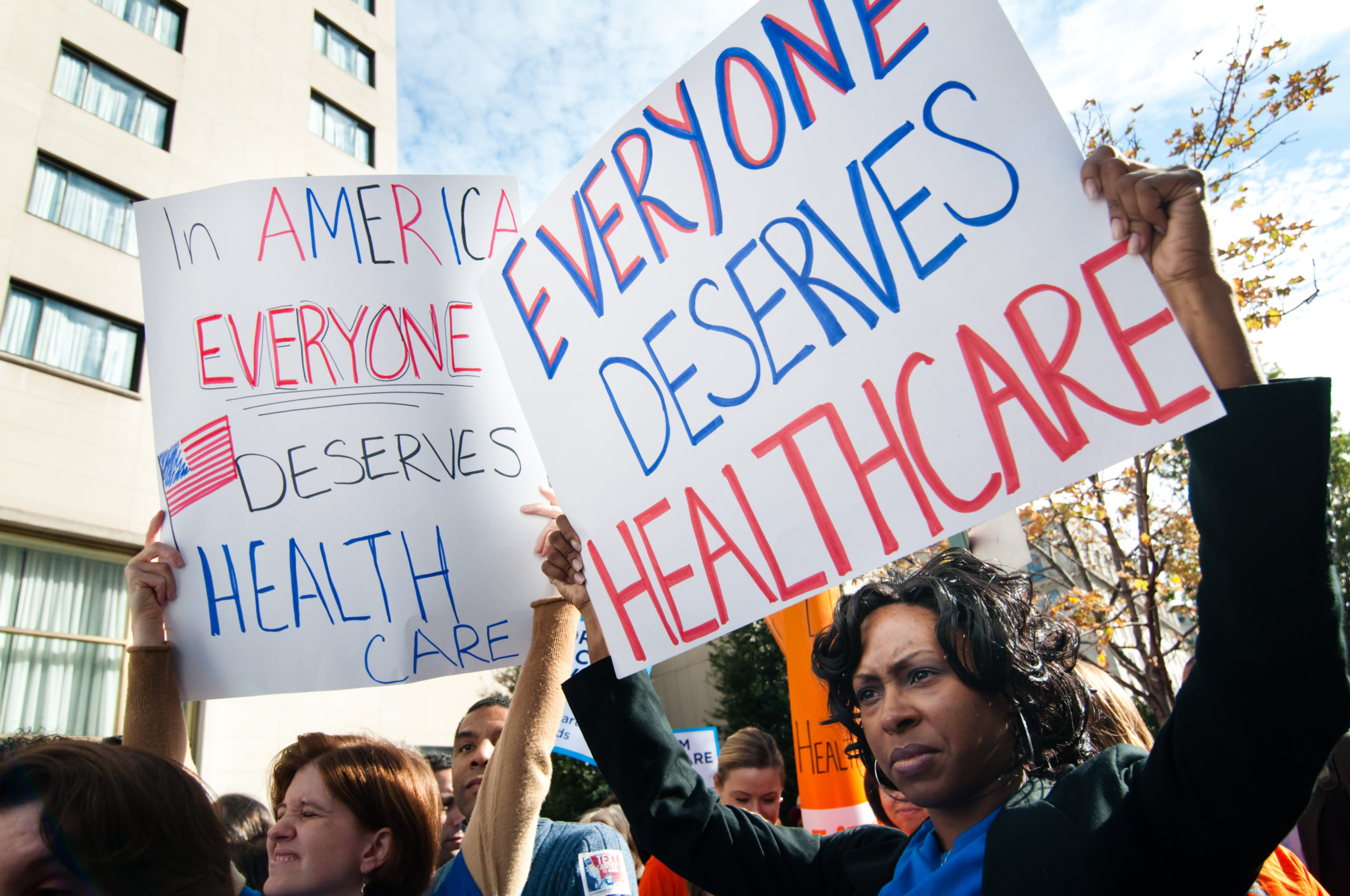
Passed in 2010, the Affordable Care Act (ACA) was meant to decrease the number of uninsured people in the United States. Too many people simply hoped to stay healthy every day, avoiding hospitals and ambulances because they couldn’t afford thousands of dollars in medical bills. The ACA has made insurance accessible for over 20 million people since 2010 and has helped even more by making preventative care, such as annual physicals, free. It also prohibits all insurance companies from discriminating against people with pre-existing conditions, meaning people who are already sick cannot be rejected because of their illness.

For the last seven years, Republicans attempted to repeal the ACA numerous times through the legislative, executive, and judicial branches. In 2017, the repeal of the ACA came down to one vote in the Senate. Senator John McCain’s historic thumbs down vote effectively ended the Republican movement to repeal the ACA through legislation.

Now, the ACA is at risk again. This time, it is back in the courts. In February 2018, twenty Republican-led states filed a lawsuit, Texas v. Azar, to invalidate the ACA. Now, the lawsuit has made its way up to the 5th Circuit Court of Appeals, which is only one step down from the Supreme Court. The 5th Circuit is expected to make a ruling sometime this week, a decision that could potentially shake the nation’s entire health system.

If you know me you would probably ask: Anne Marie, why do you care so much about the Affordable Care Act? You’re an upper-middle class, 22-year-old white girl from Alabama. How has the ACA affected your life in any way? Well, the short answer is that it hasn’t. Not directly. I’ve been covered under my parents’ employer health insurance since I was young, and I’ve had the privilege of never needing to worry about how my medical bills were going to be paid. In fact, I never really cared about Obamacare until November of 2013, when I realized how the ACA impacts every single person in our nation.

In November of 2013, my father was diagnosed with ALS, or Lou Gehrig’s disease. It’s a terminal, degenerative disease that slowly atrophies muscle over time. Those with an ALS diagnosis have 3-5 years left to live, but for many, those years are not pleasant. Before my Dad got sick, he worked in an aluminum plant, and when he was diagnosed, he had to quit his job because he couldn’t lift anything anymore. Because of this, he lost his employer’s health insurance coverage, as many with ALS do.

Without the ACA, my father would not have been able to find private insurance, as insurance companies could have easily denied him due to his pre-existing condition. Thousands of ALS patients are dependent on this non-discrimination clause within the ACA to receive care that can prolong their lives for months. Without the ACA, ALS patients are left without a safety net and no way to pay for their care. Other people with chronic conditions, such as multiple sclerosis, fibromyalgia, and heart disease, depend on the ACA to protect them from private insurance discrimination. Although 20 million people directly depend on the ACA to provide them with quality, affordable health insurance, an innumerable amount of people in the U.S. depend on the ACA indirectly by prohibiting pre-existing condition discrimination and making preventative care services free.

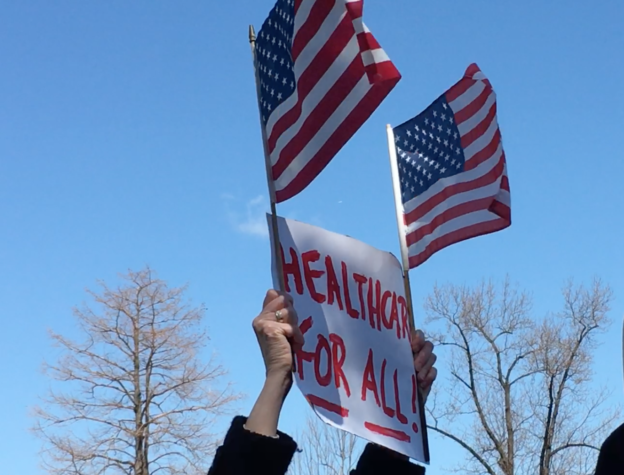
Depending on how the 5th Circuit rules, there’s a good chance we’ll see this case in the Supreme Court next year. Although conservatives would have you believe the ACA only helps the uninsured, in reality, the positive effects of the ACA extend to almost every person in the nation. The ACA has faced a bevy of criticism for nine years, even though it is a vital aspect of our nation’s health care system. It is time to stop our partisan arguing over the ACA. It is time to stop making the health of our people an ideological argument. It is time to support the ACA and work to stop those who continue attempting to repeal and destroy it.