

Category Archives: Front Page

Keeping the Momentum for Affordable Housing

Keeping the Momentum for Affordable Housing

Siena Ruggeri
December 28, 2018

During NETWORK’s journey across the country , we were energized by the many community organizations we encountered that are doing fantastic work reducing homelessness and housing instability. In Detroit, we met Cass Community Social Services, an organization that bought three blocks of land in their neighborhood to build tiny homes for low-income community members. In Miami Beach, we saw how the Elderly Housing Development and Operations Corporation develops and manages housing for seniors. These apartments provide vital spaces for seniors; the average wait time for seniors in need of affordable housing is four to eight years. The Women’s Community Revitalization Project develops affordable housing for women and families in Philadelphia, a city coping with opioid addiction and housing instability, and we were able to see their tangible impacts in their community.

Direct service providers across the country are implementing creative solutions to housing instability, but their efforts are not adequately supported in Washington. These communities rely on federal funding and tax credits. We must connect the work being done at a community-level to our federal housing policies. The federal government’s approach to housing has barely budged for decades—solutions that were prescribed in the 1960s are insufficient to meet the complex challenges of housing in the 21st century.

Only 1 in 4 people who qualify for federal housing assistance receive it. Once they obtain a Section 8 voucher, it’s another battle to find a landlord who will accept the voucher. This is an antiquated system and an affordable housing supply that is dwarfed by the magnitude of the housing crisis. A minimum wage worker can afford a one-bedroom at a fair market rate in only 22 out of more than 3,000 counties nationwide. It’s not a small minority that’s struggling to find an affordable place to rent. Teachers, college graduates, and white collar workers alike are struggling to find housing. With the middle-class feeling the pinch, low-income families who have always struggled with secure housing are pushed out even farther. With wages stagnant, someone can have a full-time job and still not be able to keep up with rapidly rising rent prices.

Our nation’s lack of investment in housing exacerbates social inequalities and widens the racial wealth gap—housing is a key means to acquiring generational wealth. It is unfortunate the housing crisis has only recently been emphasized in the media because it now impacts people outside of traditionally housing insecure groups. It does present an opportunity to demand our legislators give the housing struggle their attention.

There is legislative momentum building on the idea of affordable housing. The 115th Congress included the Rent Relief Act, a bill introduced by Senator Kamala Harris that would assist renters who spend more than 30% of their income on rent. Senator Elizabeth Warren introduced the American Housing and Economic Mobility Act, which would invest $445 billion dollars in the national Housing Trust Fund over 10 years, providing resources to build housing for the lowest-income households. The bill also expands protections against housing discrimination, provides down payment assistance to first-time homebuyers living in formerly redlined or officially segregated areas, and includes local incentives to reduce the cost of middle-class housing. Senators Maria Cantwell and Orrin Hatch introduced the Affordable Housing Credit Improvement Act, which expands the low income housing tax credit (LIHTC) by 50%, enabling the construction of more homes for people with extremely low incomes.

While there are innovative ideas being introduced, those ideas are not making it to the finish line of being passed into law and actually impacting real lives. With the shadow of the 2020 elections looming over Congress, affordable housing could easily be seen as simply a messaging tool to strengthen congressional resumes before the primaries. Housing demands urgency and action in order to advance meaningful legislation in the next Congress. While our new Congress looks hopeful, it is only as good as the legislation it produces on issues that directly impact families and communities in our country.

There is also an opportunity to advocate for affordable housing via the budget process. Congress has yet to pass a spending bill for 2019. The Department of Housing and Urban Development budget proposed by the Senate ensures that HUD does not have its funding cut further. If Congress does not pass an updated HUD budget, housing will be funded by a continuing resolution. Since a continuing resolution does not reflect market-rate rents, housing programs would face deep cuts. Any cut to HUD funding decreases the government’s ability to serve people who depend on assistance for affordable housing, including seniors, people with disabilities, families with young children, and people experiencing homelessness or people on the verge of homelessness. Congress needs to pass a budget for the 2019 fiscal year that adequately funds key programs that protect vulnerable groups from homelessness.

Recognizing the Holiness of Bethlehem

Recognizing the Holiness of Bethlehem

Alannah Boyle
December 24, 2018

As I reflect on the story of Jesus’s birth, I am struck each time about the openness and generosity this story is contingent upon. An innkeeper opening the doors to his stable and allowing a stranger to stay allowed for the circumstances of Jesus’s birth. Ten months ago, I had the opportunity to visit Bethlehem, the birthplace of Jesus. When in Bethlehem, I was able to focus on this same openness and experience it in the people I met, sharing stories, and breaking bread. We shared this deep human connection and recognition of the holiness of where we were standing.

As the season of Advent draws to a close and Christmas quickly approaches, I find myself reflecting on my time in the birthplace of Jesus. Preparing to spend Christmas with my family, I saved many gifts made of olive wood native to the area. The holiness of the land, and bringing something tangible back from Bethlehem for my family was important to me.

One of my favorite videos from my trip is in Manger Square where I filmed the bustle of businesses and tourists in the square, capturing the Church of the Nativity. The Muslim Call to Prayer is playing loudly throughout the city and the square. This moment, like many during my trip, reminded me of the ways in which we are all interconnected and how deeply the roots of multiple religions stem from this region of the world. In such a divisive time in our country and world, the interconnection I witnessed during my trip to Bethlehem is important to keep at the front of our minds as we at NETWORK continue our work for justice.

NETWORK Celebrates First Step Act Becoming Law

NETWORK Celebrates First Step Act Becoming Law

Joan Neal
December 21, 2018

NETWORK congratulates Congress for passing the FIRST STEP ACT with strong bi-partisan support and becoming law.  It is rare to see any legislation pass with such backing from both sides and we commend all those who worked so hard to achieve this victory.

While the law offers only modest changes, it begins at long last, the process of making some much-needed improvements to the federal criminal justice system.  Among its more laudable provisions, the legislation reduces the mandatory minimum sentences for certain drug offenses, gives judges more leeway in sentencing, revises the ‘good time’ credit calculation, improves conditions in federal prisons, including prohibiting the use of restraints on pregnant incarcerated women, and provides additional resources for rehabilitation, job training, and recidivism reduction programs that increase the chances for success for those who will eventually re-enter society.

At the same time, some of the provisions fail to go far enough.  Many of the sentencing reductions are prospective–forward looking only.  This potentially leaves thousands of people in prison, continuing to serve time under the very outdated laws this bill revises.  Additionally, it allows private prison companies to profit, fails to address parole for juvenile offenders, and exposes inmates of color to the possibility or disparate treatment due to racial bias in the risk assessment tool.  As its name implies, the FIRST STEP ACT is a beginning, a place to start to make our federal criminal justice system more just and humane.

Nevertheless, we commend lawmakers for taking this ‘first step’ at reform.  Clearly, there is more work to be done to reduce the number of people entering the system, to eliminate racial disparities and to create second chances for all those impacted.  Our faith teaches us that redemption and rehabilitation are possible even for people who have committed crimes against society and our criminal justice system should reflect that value.  This can be the beginning of such transformational change.

Our System of Mass Incarceration: Seeing the Parallels between Black Americans and Immigrants

Our System of Mass Incarceration: Seeing the Parallels between Black Americans and Immigrants

José Arnulfo Cabrera
December 19, 2018

In the last 40 years, the incarcerated population in the United States has increased 500%. There are currently 2.2 million people in U.S. prisons and jail. We incarcerate more people than any other country in the world thanks to drug and sentencing policies that disproportionately affects people of color. According to the NAACP, the effect of this callous approach to policing is riveting: Black people are incarcerated more than five times the rate than whites, the Black women prison population is twice that of white women, and Black children represent 32% of children who are arrested.  Then upon release, returning citizens face a myriad of obstacles that impede reintegration: employment background checks, low wages, and lack of affordable housing, coupled with banishment from government-sponsored safety net programs. For people of color, an encounter with the penal system could be its own death sentence. This is not how we as a country ought to be leading.

Yet, it doesn’t look like the U.S. will lose its standing as the world leader in mass incarceration with the presidency of Donald Trump, who campaigned as the “Law and Order” candidate.  Since Trump took office, a new Jim Crow 3.0 has emerged: the criminalization of undocumented immigrants. Undocumented Immigrants are considered criminals because they committed a misdemeanor crime, the equivalent to running a red light, for staying, or entering the U.S. without documentation. Under President’s Trump’s administration 448,000 undocumented immigrants have been returned or removed and includes those with and without prior convictions. Because President Obama’s DACA policy gave prosecutorial discretion to immigration judges, there are no records available for undocumented immigrants without prior convictions.

As a Government Relations associate responsible for managing a legislative portfolio that includes both immigration and criminal justice reform policy, I find it dangerously easy to spot the similar tactics used to criminalize immigrants and Black Americans. During Trump’s presidential campaign he said Mexican immigrants are rapists, and that they bring drugs and crime to the U.S. This past mid-term election cycle President Trump retweeted a fear-mongering campaign ad that portrayed immigrants as dangerous criminals who we must keep out of the U.S. The video bore a notable resemblance to the 1988 Republican “Willie Horton” presidential campaign ad now infamous for the “dog-whistle” racism it employed. While I’d like to believe these fear-mongering tactics don’t work, 34,000 of the 2.2 million people incarcerated in the U.S. are immigrants held in ICE facilities, and 60% of those incarcerated are people of color.

When we begin to look at how immigrants and Black Americans are incarcerated, we find another scary similarity. Since 2000, the amount of people incarcerated in private prisons has increased by 47% and the amount of immigrants held in private facilities has increased 442% since 2002. The corporations that manage these prisons and detention facilities are GEO Group, Core Civic, and Management and Training Corporation, which require the states in which they are located to arrest and imprison a center amount of people in their prison to make a profit. Because of this practice, it is in their best interests that the U.S. incarceration and detention rate does not decline. Additionally, the prisons owned by these corporations are almost always located in the middle of nowhere, making it difficult for the families and lawyers of incarcerated people to visit them. These tactics are used to make it harder for people of color to seek the justice they deserve.

The United States has created a system that values incarcerating individuals more than helping them return to their communities to be self-sufficient and contribute to society as we all do. Our country views a criminal as people who have always been bad, and will continue to be bad. But the only true evil in this system is mass incarceration.


(feature image courtesy of the California Innocence Project)

Congress Takes First Step to Lower Maternal Mortality and Improve Health Equity

Congress Takes First Step to Lower Maternal Mortality and Improve Health Equity

Siena Ruggeri
December 17, 2018

There’s a silent but deadly epidemic occurring across the United States: women are dying during childbirth at an alarming rate. The United States is the only developed country where the maternal mortality rate is rising. Pregnancy-related deaths increased from 7.2 deaths per 100,000 live births in 1987 to a high of 17.8 deaths per 100,000 in 2009 and 2011. On top of that, 50,000 mothers a year experience dangerous complications that have the potential to kill them. U.S. women had a better chance of surviving their pregnancy thirty years ago than they do today. The fact women are worse off than thirty years ago is an embarrassment and a terrifying reality for women who are choosing to start families. If we truly care for one another, we must put a special focus on this critical issue impacting women across the country.

The rising maternal mortality rate is a public health crisis that is receiving a woefully low amount of coverage and legislative responses. California is the only U.S. state that has successfully lowered their maternal mortality rate. From 2006 to 2013, the state cut its maternal death rate in half. This was accomplished by a thorough investigation of the care process, and an implementation of better practices. California hospitals work in a collaborative that shares information and best practices specifically about maternal care. In order for other states to replicate California’s success, Congress must act.

Recently the House and the Senate passed the Preventing Maternal Deaths Act, which was introduced by Rep. Jaime Herrera-Beutler, with bipartisan support and a companion bill in the Senate introduced by Senator Heidi Heitkamp.  It creates maternal mortality review committees in every state that gather data and report their findings back to the Department of Health and Human Services.

(image courtesy of the Southern Coalition for Social Justice)

The U.S. healthcare system denies far too many women the care they need before, during, and after giving birth, a fact that needs to be remedied through legislation. Due to the medical racism that permeates the healthcare system, women of color are frequently ignored by providers when they advocate for their medical needs.

Black women are almost four times more likely to die of pregnancy-related causes, pointing to a shocking racial disparity. This is intensified in maternal health care deserts, where women lack access to critical healthcare. In rural and urban areas with limited OB-GYN services, women of color suffer greatly. In her congressional testimony, Stacey Stewart, the president of the women’s health nonprofit March of Dimes, emphasized that women of color often feel less trusted and feel less listened to in the medical system. She pointed to the fact that there are no obstetrical services east of the river in Washington, D.C.’s predominantly Black neighborhoods—women must cross the river to receive any sort of prenatal care. She also observed that in New York City, women of color are 12 times more likely to die as a result of pregnancy than white women. Women of color are disproportionately vulnerable to deadly pregnancy complications, making the maternal mortality crisis a horrifying manifestation of racial injustice.

In his testimony to the House Energy and Commerce health subcommittee in September, maternal healthcare advocate Charles Johnson told how he lost his wife Kira after she gave birth to their second child. Kira and Charles, a young Black couple, made sure that hospital staff were aware that Kira was bleeding heavily after her C-section. Yet the hospital waited ten hours to address her medical crisis. By the time hospital staff acted, it was too late. Kira died of massive internal bleeding, leaving behind an 11-hour-old child, her husband, and her other young child. Kira did everything right; she advocated for herself and her child throughout her time in the hospital. Despite Kira and her husband’s persistence, her symptoms were ignored until it was too late.

The CDC Foundation estimates that 60 percent of American pregnancy- and childbirth-related deaths could be prevented. The U.S. healthcare system is focused on infant health while ignoring the holistic needs of women.  As a result, healthcare providers are not equipped to protect pregnant women and prevent complications that can be easily addressed under the right care. We know many of these deaths can be avoided, but we must take action to examine how our healthcare system fails women and create policies that will prevent this.

Congress has taken the first step passing the Preventing Maternal Deaths Act, which was only possible because of the continued advocacy of the public. Using this as a first step, it’s important to keep the momentum going to fight for even bigger reforms to make health care safer and more equitable.  Health advocates need to make it clear to legislators that maternal health needs to be a key priority, both as we come to the end of the 115th Congress and in the new Congress. Far too many women, especially women of color, have needlessly died in this public health crisis. The only way to begin working toward a solution to this crisis is providing resources to gather more data on this epidemic so healthcare providers have the tools to prevent more tragic losses.

A Faithful Reflection on the Universal Declaration of Human Rights

A Faithful Reflection on the Universal Declaration of Human Rights

Colleen Ross
December 11, 2018

On December 10, 1948, the Universal Declaration of Human Rights (UDHR) was adopted by the UN General Assembly. To mark the 70th anniversary of this event, the Carter Center, founded by U.S. President Jimmy Carter, published a new compilation of Biblical texts that support the human rights proclaimed in the groundbreaking United Nations document. Sister Simone Campbell contributed, along with 14 other faith leaders, to the final document titled, “Scripturally Annotated Universal Declaration of Human Rights.”

Religious texts have been used against marginalized communities for too long. To counter this, we must declare the truth of religious teachings that liberate all of God’s creation. At an event launching this document, President Jimmy Carter said: “One of the main reasons for inequality and oppression of women is that the primary translators of religious scriptures were men.”

When the Universal Declaration of Human Rights was published in 1948, it was a direct response to the horrors and sins of the Holocaust and the Second World War. Now, this new pairing of scripture and human rights is important in our current time, when both religious texts and legal particulars are used to avoid fulfilling the responsibilities we have to our sisters and brothers who are suffering and vulnerable in our nation and around the world.

About the connection between Article 25 of the UDHR and the parable of the Good Samaritan, Sister Simone writes:

This story of the Good Samaritan outlines the basic call to care for our neighbors. Jesus says that the Samaritan (an outcast in Judaism at the time) took the man who had been attacked by the side of the road and took extravagant effort to ensure that he was housed, fed, and received healthcare.

UDHR Article 25, in a sense, extends the compassion evidenced by the Good Samaritan and posits a set of basic rights around human well-being: food, clothes, housing, health care, social security. The special needs of mothers and children (note the specific concern for children born out of wedlock) receive special focus here, as also in the Bible. Each person and family is entitled to the basics of life, with special attention to times and cases of special vulnerability, so that each can live in dignity.

Many more parallels can be drawn between Christian religious teachings and these universally declared human rights. May all of us, and especially our political leaders, be inspired by faith or civic responsibilities to ensure that all people can fully claim these inalienable human rights.

Read the full document on the Carter Center’s website.

NETWORK Urges House to Vote No on Tax and Oversight Package

NETWORK Urges House to Vote No on Tax and Oversight Package

Laura Peralta-Schulte
November 29, 2018

Today, NETWORK sent the following letter to all members of the House regarding the Tax and Oversight Package that may be voted on as early as today. We oppose the package because it adds over $55 billion in debt and fails to make our tax code more just. Read the text of the letter below:


Dear Representative:

NETWORK Lobby for Catholic Social Justice was founded by Catholic Sisters over 40 years ago and has 100,000 activists around the country.  We writes today in strong opposition to the newly released partisan Tax and Oversight Package scheduled to be taken up on the House floor as early as today.  The bill, unfortunately, mirrors many of problems found in the Tax Cuts and Jobs Law:  it was created in secret, it is loaded with benefits for corporations and wealthy individuals, and it adds over $55 billion in debt. We urge you to oppose this bill.

This fall, NETWORK’s “Nuns on the Bus” campaign toured 21 states over the course of 27 days to educate voters about the problems with the TCJA.  In state after state, we heard stories from people who are struggling and concerned about the viability of Medicare, Social Security and other vital programs.  Working people know the tax law rewarded the wealthy and the well-connected who are already not paying their fair share.  We should not be exacerbating that mistake.

Rather than giving more benefits to the extremely wealthy, Congress should be repealing its 2017 tax breaks for the wealthy and corporations in order to protect Social Security, Medicare and Medicaid, and to generate enough revenue to make new investments in helping working families like expanding working family tax credits, creating affordable housing and green-energy jobs and providing healthcare for all.

Now is the time to stop business as usual in Washington.  Americans don’t want to see an end-of-year Christmas tree of gifts for all sorts of wealthy special interests.  It is time for Congress to put the interest of the common good over those of the wealthy few.  We urge you to vote no on the Tax and Oversight bill.

Sincerely,

Laura Peralta-Schulte,
Senior Government Relations Advocate

Stronger Borders, But Weaker Morals: What’s Happening to Asylum Seekers at the End of the Road?

Stronger Borders, But Weaker Morals: What Happens to Asylum Seekers at the End of the Road

Lindsay Hueston
November 26, 2018

On the westernmost portion of the U.S.-Mexico border, the taunting iron fence stretches from mountain to sand to sea – disappearing after a few hundred yards into the ocean. The water that chops around is the same, splashing both U.S. and Mexican soil. The most radical thing that struck me about being at the border was that birds could fly so easily over it, which seemed so normal – but the U.S. government, simultaneously, so heavily regulated the movement of people on land.

The U.S.-Mexico border in San Diego, CA – June 2013

That was five years ago when I went to the border. Now, instead of birds, there are capsules of tear gas hurled over the border: the only thing in the air now is intense fear.

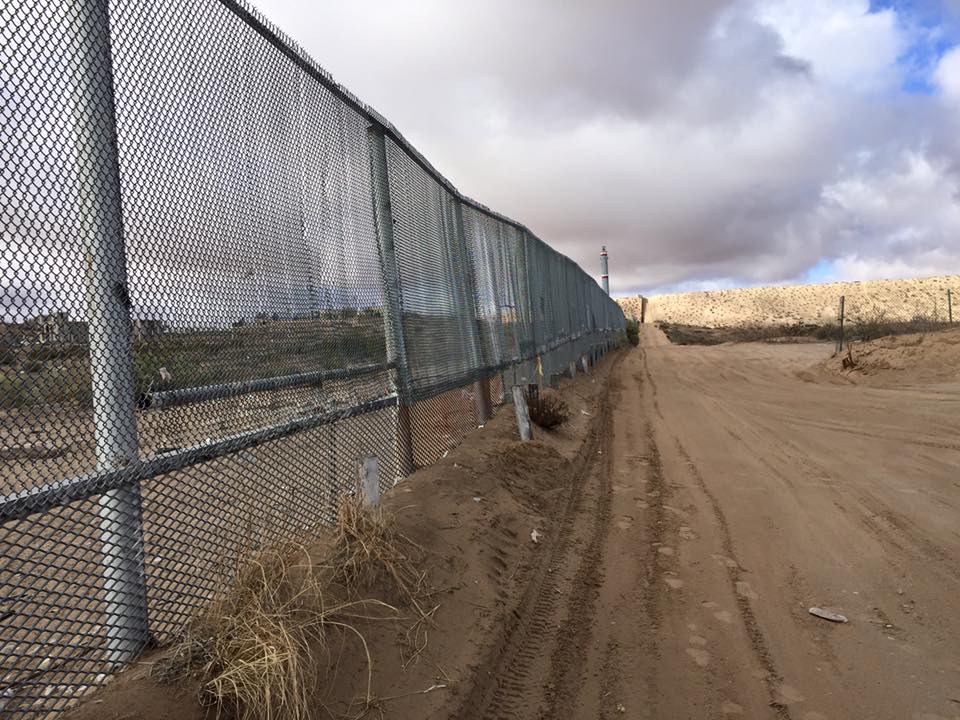
I’ve had the opportunity to visit the U.S.-Mexico border twice: first in the summer of 2013 during a college campus ministry conference in San Diego bordering Tijuana; and again in the winter of 2016 leading a service-immersion trip to El Paso, a city thoroughly integrated with its neighbor Ciudad Juárez in Mexico.

I never crossed over to Mexico in either of these encounters, but exchanged words, held hands, and prayed with people mere feet away from me, the only thing separating us an immense wall of steel and millions of dollars built up to create a militarized border. I stood on the U.S. side; a recently deported family stood less than three feet away in Mexico. We breathed the same air. We each huddled from the same chill.

That was three years ago; had I met that family at the border there now, they and their three kids would be running away from the fence to avoid tear gas and rubber bullets.

Last week the Trump administration put out a statement authorizing the use of lethal force against families and individuals from Central American countries who trekked thousands of miles to enter our country, with the possibility of closing “the whole border.”

The news of tear gas attacks on thousands of people coming to the United States to flee violence – and being met with more violence – hits me to my core.

Lethal force? For people seeking safety, fearing they’d die in their home country – and facing the possibility of death instead of new life?

I’ve eaten and laughed and cried with people whose life stories and trials are likely near-identical to the droves of asylum seekers searching for welcome in our country. What kind of country are we creating when we say we are a nation of immigrants, then turn away the most vulnerable?

The U.S.-Mexico border in Sunland Park, NM – January 2016

The images and videos I’ve seen are of women, children, families – people who should not be faced with the immensity of physical punishment that the U.S. is inflicting upon them for fleeing violence in their own countries. It is unconscionable that the Trump administration has come so far as to demonize infant children and their mothers, and anyone seeking asylum, so much so as to accept their injury, trauma, and potential death as merely a necessary consequence of our political debate and national security.

Firing tear gas on children and families who are here seeking asylum is both legally and morally wrong.

The actions of the U.S. government in turning people away and further militarizing our borders are a result of systematic racism, and do not reflect the core of our foundational communal values. The immigration system in our country has long been broken, but the recent attacks against immigrants and refugees under this administration have attempted to fundamentally reshape our system with the aim of closing our border to all but wealthy, white immigrants.

The structures of our country were never set up to benefit the most marginalized, but we don’t have to accept policies that perpetuate these evils. Instead, we can change them.

Children shouldn’t choke on tear gas. Parents shouldn’t have to make pilgrimages hundreds of miles on foot to seek a better life for their families. People in neighboring countries shouldn’t have to face a life-threatening decision: stay and die, or go and live.

Bridge into Juárez, Mexico from El Paso, Texas – January 2016

Yet our administration sees these migrants from Central America as criminals for the very fact that they are pleading to us for help.  We are failing to live up to our own laws and international human rights obligations to offer asylum to those who qualify. We are willing to let innocent people die before we open our borders.

It isn’t right – none of it is right.

We must continue to pressure the Trump administration against the harmful consequences they are inflicting upon our sisters and brothers who deserve protection, not condemnation.

Did You Eat Today? Do More Than Thank a Farm Worker

Did You Eat Today?
(Do More Than) Thank a Farm Worker

Erin Sutherland
November 19, 2018

Last month, I had the opportunity to attend an interactive presentation and mindful dinner entitled “A Harvest for Justice,” led by Stoneridge Academy’s Director of Social Action, Lauren Brownlee. Lauren described her recent trip to Washington State to meet with other members of the National Farm Worker Ministry.  While learning about the challenges farm workers face in access to housing, adequate health and safety, just wages, and those that specifically impact women, I was both parts equally shocked and horrified.

I was immediately reminded of the striking similarities between the injustices farm workers experience and the issue areas NETWORK has chosen to focus on to “Mend the Gaps” in our society.  The gap for farm workers is even wider than that of the general population because of the inability of farm workers to organize collectively, or the fact that citizenship status can deter people from coming forward and reporting abuse.  Especially as Thanksgiving approaches, it makes me angry to think about how our national dinner table is supplied by people who are being exploited.  All of us, especially those who are dedicated to fixing societal gaps, need to do better to rectify the ways in which we are participating in an unjust food system.

As I reflect on all I have to be thankful this year, the evening left me wondering what more I could do to show my respect for farm workers and be an ethical consumer.  Attendees discussed eating mindfully, hosting a documentary watch-party like watching Food Chains, and participating in online campaigns.  While these are a great first step, I think it is also important to think more broadly about how to dismantle the unjust, capitalist produce market.

One way is to buy produce directly from farmer-organized initiatives or with ethical certifications.  As someone with modest income, I also understand how difficult it can be to pay a little more for ethically sourced produce.  One thing I’ve started doing is making sure to keep my food waste to an absolute minimum.  This is one way I can show my solidarity with those who worked so hard to pick the food in my fridge by making every effort to consume it all.  This means packing leftovers, coming up with creative solutions to using produce that is starting to look iffy, and supporting companies like Hungry Harvest that save perfectly good food from landfills by re-selling produce that couldn’t be sold at the grocery store.

My journey to becoming an ethical consumer and demanding positive change in the produce industry is just beginning.  Far from feeling hopeless or overwhelmed, I feel equipped with the knowledge to move my appreciation past words and into action.

What to Look Out for in Lame Duck!

What to Look Out for in Lame Duck!

NETWORK Government Relations Team
November 5, 2018

The Midterm Elections are upon us — and NETWORK is busy looking ahead to the work that must be done for the rest of the year.

Members of Congress will arrive back to Washington, D.C. on Tuesday, November 13 to finish out the final legislative efforts for the 115th Congress. There are some time-sensitive issues Congress must address, as well as others that may be considered if there is time and political will. All the items on the agenda will be affected by two factors: the outcome of Tuesday’s election as well as subsequent leadership elections, especially in the House of Representatives.

With these uncertainties in mind, here is NETWORK’s analysis for upcoming issues in the final days of the 115th Congress.

Must Do: Fund the Government for 2019

Appropriations: Congress outperformed all expectations by passing 7 of the 12 appropriations bills for FY2019 before the start of the fiscal year, which began on October 1.  While kudos are in order, NETWORK is urging them to pick-up where they left off as soon as they return and it’s imperative that they finish the job before the end of the year.  Lawmakers have until December 7th to reach agreement on the 5 remaining spending bills which fund programs at more than 10 federal agencies, or risk a government shutdown.  Several of our Mend the Gap issues are among the log-jam.  These include: programs that fund the 2020 census, affordable housing and keep immigrant families together.

Border Wall

The most contentious issue will be funding for the Department of Homeland Security; which President Trump has already threatened a government shutdown if Congress fails to appropriate roughly $5 billion for his border wall.  A government shut-down would be detrimental just weeks before Christmas and would coincide with the anticipated arrival of thousands of migrants trekking toward the Southern border.  NETWORK has joined hundreds of advocacy organizations in calling for Congress freeze spending at FY 2018 levels for immigration enforcement officers, agents and detention beds.   And we urge Congress to pass a separate short-term extension for the Department of Homeland Security.  NETWORK is ready to kick our advocacy efforts into high-gear if we perceive threats around funding for our immigration and census priorities.

2020 Census

Funding for the Census Bureau, which requires a significant ramp-up for Census 2020 preparations and planning.   If Congress returns to the dysfunction we saw last year with repeated funding delays via Continuing Resolutions, it could seriously threaten the ramp-up and preparations for our government’s largest peacetime undertaking, the decennial.  Fiscal Year 2019 is the pivotal year leading up to the 2020 Census so postponing full funding would have dire consequences on the preparations and outcome of the count.  While the proposed funding levels from the Senate and the House seem acceptable, it is unclear what the budget impact would be on the impending court ruling on the controversial citizenship question.

Click here to read more about NETWORK’s FY 2019 appropriations priorities.

That being said, there are some outstanding “Maybe” issues that Congress could address: the Farm Bill, Criminal Justice, and the Low Income Housing Tax Credit.

Farm Bill: Protect SNAP

There has not been much apparent progress since the Farm Bill moved into conference in August.  One of the primary sticking points in negotiations is the nutrition title and reauthorization of the Supplemental Nutrition Assistance Program (SNAP).  The partisan House Bill—which passed by 2 votes on the second try—includes harmful provisions that would undermine the program’s effectiveness and cut nutrition assistance for millions of Americans.  The Senate bill, which saw the strongest bipartisan support of any prior Farm Bill (86-11), makes key improvements to strengthen SNAP without threatening food security of participants.  The 2014 Farm Bill expired this month but, fortunately major programs like SNAP have a funding cushion that minimizes the impact of Congress missing that deadline.  It’s highly likely, though, that the Farm Bill conference committee will kick into high gear when Congress returns on November 13th.  During Lame Duck NETWORK will need your help to ensure that the nutrition title from the Senate bill is what’s ultimately adopted and voted into law.

Criminal Justice

There is wide speculation that the Senate could join the House and take up a modest criminal justice reform package during the Lame Duck session, if 60 Senators agree to proceed.  In May, the House passed the First Step Act, a bipartisan bill purporting to be a significant step forward in prison reform.  Over the summer the President tentatively agreed to include several sentencing reform elements into a prison reform package. The Senate was split on the issue of separating prison reform from sentencing reform but has changed course given the President’s willingness to negotiate a compromise.  While NETWORK supports sentencing and prison reform as a joint legislative package we did not take an official position on the First Step Act.

Read NETWORK’s thoughts on the First Step Act, from when it passed the House, here.

Low Income Housing Tax Credit

As Congress concludes work for the year, there is a tradition that of a small group of tax bills that are bipartisan, non-controversial and relatively inexpensive get passed.  This group of tax bills is called “extenders.”  Members of the tax writing committees are now reviewing what their priorities are for any extender bill.  One of the tax initiatives under consideration is passage of “The Affordable Housing Credit Improvement Act of 2017” (S. 548) which expands the Low Income Housing Tax Credit (LIHTC) to meet the housing needs of extremely low income renter households. This credit is the primary tool to encourage private investment in affordable housing development and is responsible for 90 percent of all affordable housing developments built each year.  Since it was passed in the bipartisan Tax Reform Act of 1986, the credit has incentivized the creation of 3 million affordable rental homes around the country.  NETWORK will work with

Given the national shortage of affordable housing, NETWORK believes it is critical that new build more low income housing units. Passage of this bill will go a long way to meeting the needs of the homeless and other vulnerable low income individuals and families.