



A Future for Freedom
We Must Never Stop Dreaming of a Better World
Joan F. Neal
June 17, 2024
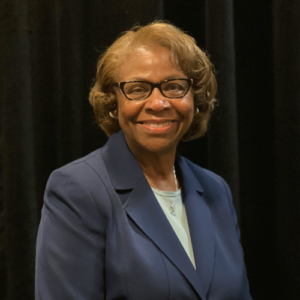
Joan F. Neal, Deputy Executive Director and Chief Equity Officer at NETWORK
It’s usually dangerous to look back on previous eras of history as somehow better. Nostalgia too often masks racism and other egregious injustices more widely accepted in times past. However, one positive hallmark of some recent past decades is people’s capacity to dream.
Past generations had a lot to say about the American dream; they embraced the concept of all people having the ability within their grasp to make the life they wanted for themselves. In the fight against slavery, Jim Crow, and second-class citizenship, most Black Americans embraced Dr. King’s dream of the Beloved Community where all are free and equal. Dreams push us toward action, because they imbue the lives of those who have them with hope.
We all want to live lives of hope, lives oriented toward having what we need to flourish and find fulfillment. The word for that is freedom, true freedom.
Unfortunately, due to circumstances beyond their control, today’s younger generations do not feel the hope to dream. Millennials and Gen Zers have had their adulthoods defined by financial crises, spiraling economic inequality, and an unrelenting experience of being priced out of American success and the freedoms that only democracy conveys, ones that their parents and grandparents took for granted. This is no accident. This is the result of 40 years of deliberate public policy choices that divested from families and communities and directed greater and greater wealth into the hands of fewer and fewer extremely rich individuals.
Pope Francis has described this phenomenon as young people feeling “crushed by the present,” unable to dream of a better future. Young people without hope should be a warning to us all that our ability to experience or exercise freedom is in danger. When people lose faith in a system’s ability to deliver for them, the system is in jeopardy. Is it any surprise then that the world has witnessed a global decline in democracy for the past 17 years?
We cannot afford for freedom to be relegated to the history books as a curious anomaly of the late second millennium. No, it is in the best interest of all people on the planet for there to be a future for freedom. For a picture of what the alternative offers, we can look to a country like Russia where the corrupt rule of a few oligarchs violently suppresses its opposition, leaves its own people without hope, and brutally attacks the freedom of its neighbor, Ukraine. But we can also look to the oppressive structures we permit in our own politics — such as inaction on immigration reform or refusing to make the tax code more equitable — that also robs people of freedom and their future.
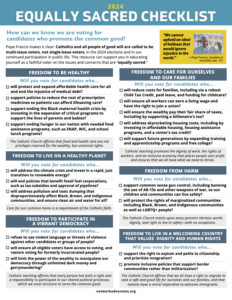
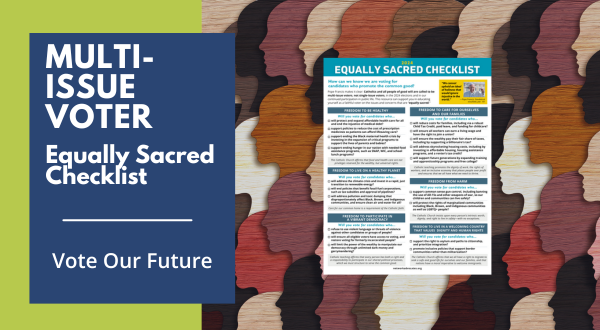
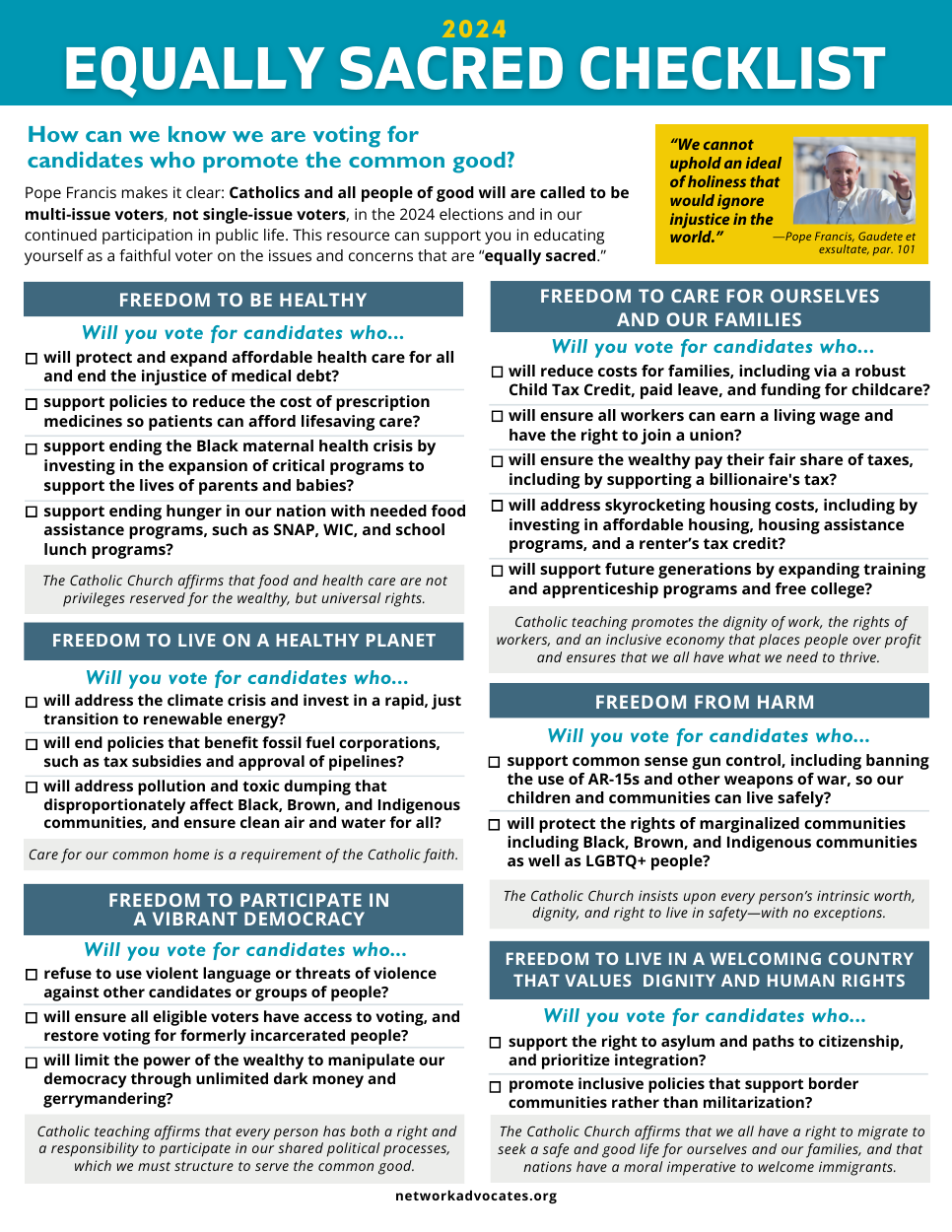
See NETWORK’s 2024 Equally Sacred Checklist, to support you in educating yourself as a faithful voter on the “equally sacred” freedoms at stake in this election and beyond.
Catholic Social Teaching talks a great deal about freedom. It really matters. If a person lacks freedom, then they do not have what they need to make a true moral choice, including the choice to live into the potential and the dream that God has for every one of us to thrive, no exceptions!
At NETWORK, we see the brokenness of our public policies as structures of sin, that destroy people’s freedom and the common good. That is why, this year, NETWORK is focusing our election priorities on six freedoms:
- Freedom to be Healthy
- Freedom to Care for Ourselves and Our Families
- Freedom to Live on a Healthy Planet
- Freedom from Harm
- Freedom to Participate in a Vibrant Democracy
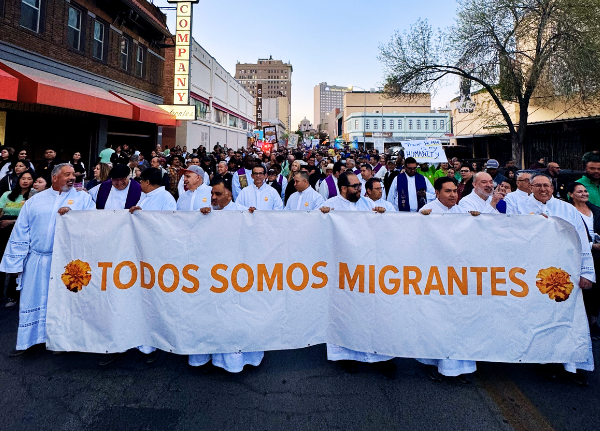
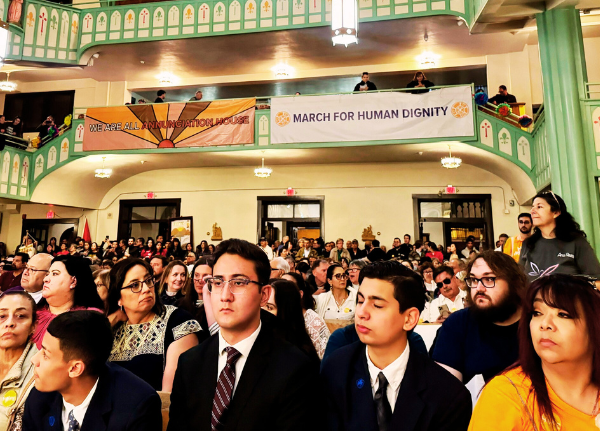
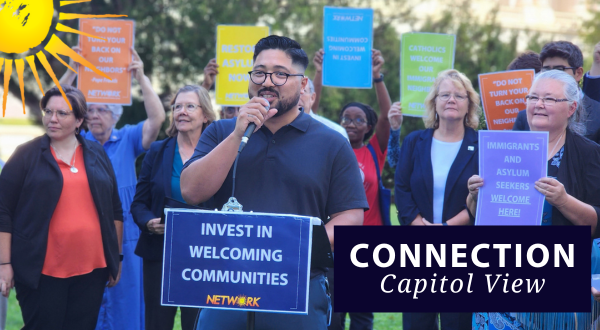
- and Freedom to Live in a Welcoming Country that Values Dignity and Human Rights.
You can read more about these later in this issue of Connection. Whether it’s health care, immigration, climate change, or one’s economic situation, we see this year in terms of the human freedoms at stake. We must ensure that these freedoms are reverenced and more deeply enshrined in our politics and our public policies, so that future generations experience the freedom to dream.


 But Easter is also a collective reality—something we experience in community—and an invitation to something new, for all of us. In Eastern Christianity, we have the image of the Resurrection depicted as not only Jesus springing from his tomb alone, but of leading others to God communally. We are raised up together. As this week’s prayer from NETWORK Lobby Board Chair Sr. Catherine Ferguson, SNJM expresses:
 As we look ahead to the stark choice we face in the 2024 election, it becomes clear that what needs to die in us is apathy, despair, and all the hatred, anger, and us-versus-them mindsets that keep us from solidarity with our neighbor. All of these things–the division and disengagement–help the wealthy and powerful amass power and resources, while hard-working people in our communities are deprived of the resources needed to live the dignified life we all deserve.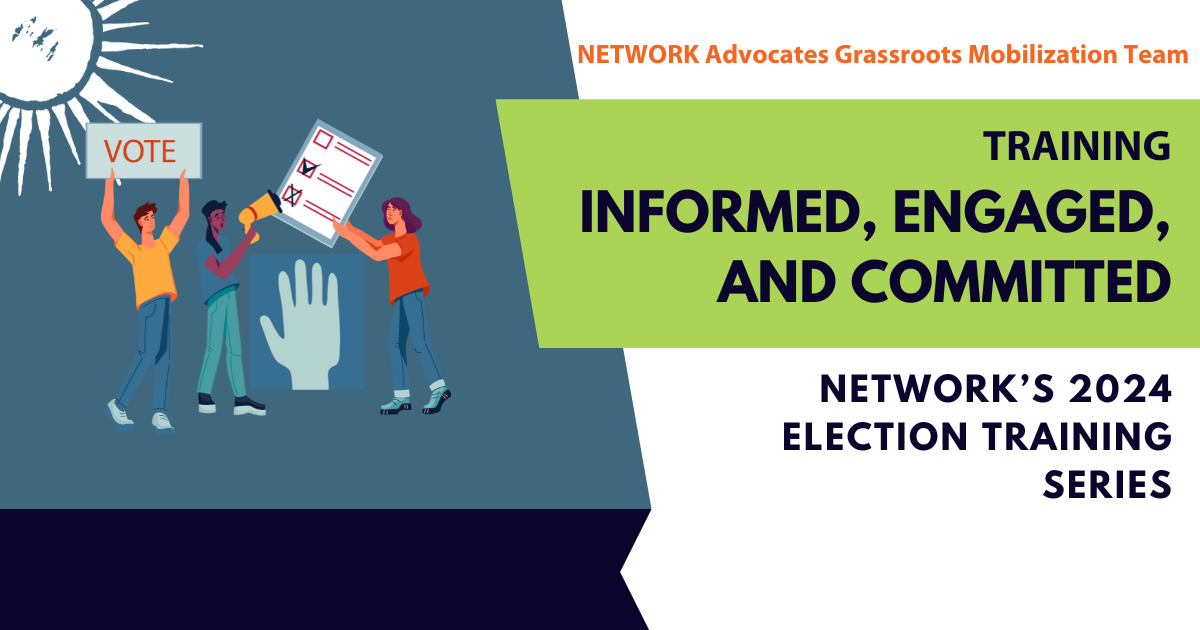
 As we enter the fourth week of Lent, we turn to our deep need to both accept God’s mercy and extend mercy to others. To show mercy to others (and to oneself!) means joining in God’s merciful, broad, and inclusive invitation to work together for the common good, and to transform our structures of racial, economic, and social injustice.