


Category Archives: Immigration

Congress Finally Passes a FY2018 Budget

Congress Finally Passes a FY 2018 Budget

NETWORK Government Relations Team
March 22, 2018

At long last, Congress will pass a bipartisan FY 2018 spending bill that will send communities across the country much anticipated resources. This legislation is six months overdue, and Congress should be ashamed. That being said, while it is not perfect, the FY 2018 consolidated appropriations measure contains robust investments in vital safety net programs.

Many of NETWORK’s Mend the Gap issues were among the programs that fared well. The spending measure significantly boosts funding for the 2020 Census, low-income housing, as well as healthcare for seniors, children, and people who are disabled. Investing in safety-net programs is paramount to ensuring the common good.

We are disappointed that Congress did not muster the courage to include a permanent fix for more than 800,000 DACA recipients. That being said, we know the Trump Administration wanted – and failed – to expand their mass deportation agenda. NETWORK continues to support our champions in the House and Senate for their unwavering commitment to protect Dreamers and their families from harmful attempts to tear apart families.

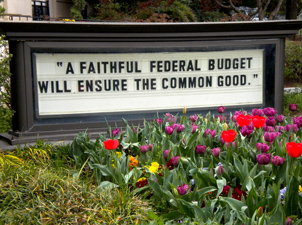
All of us at NETWORK Lobby for Catholic Social Justice look forward to working with Congress throughout the FY 2019 appropriations process to ensure passage of a Faithful Budget.  It’s our hope that Congress will turn a new leaf and set aside petty partisanship in order to complete its work on time.

Below is a detailed look at how the omnibus bill affects NETWORK’s Mend the Gap priorities:

Department of Agriculture

  • Decreases funding for the Supplemental Nutrition Assistance Program (SNAP) by $4.5 billion primarily due to declining enrollments

Department of Commerce

  • Fully funds the 2020 Decennial Census at $2.814 billion, an increase of $1.344 billion above the FY 2017 enacted level

Department of Housing and Urban Development (HUD)

  • Increases the HUD budget by $4.6 billion in additional program funding compared to FY 2017, and more than $12 billion above the president’s FY 2018 request
  • Renews all Housing Choice Vouchers and provides new vouchers to veterans and people with disabilities—the president’s budget request proposed to eliminate 250,000 Housing Choice Vouchers
  • Allocates nearly $1 billion in additional funding to repair and operate public housing
  • Boosts funding for the HOME Investment Partnerships program to the highest level in seven years
  • Does not include any of the rent increases proposed by the president in his FY 2018 budget request

Department of Health and Human Services (HHS)

  • HHS would receive approximately $98.7 billion, an $11.6 billion increase above the FY 2017 enacted level, including $2.6 billion in new funding
  • Tweaks Medicare reimbursement status of several prescription drugs
  • Increases the Child Care Development Block Grant from $2.9 billion in FY 2017 to $5.2 billion in 2018
  • Raises funding for the Low Income Heating Assistance Program by $250 million to $3.6 billion, although the Trump administration requested elimination of the program for the second year in a row
  • Fails to stabilize the health insurance market by providing subsidy payments to insurers and allowing states to develop more flexible insurance requirements

Department of Homeland Security

  • $1.6 billion as down payment for border wall construction and to make repairs of existing fencing structure
  • Scales back on detention beds: includes 40,520 beds with a glide path down to 39,324 by the end of the fiscal year, a decrease of 12,055 from the FY 2017 enacted level.
  • Freezes number of ICE agents at FY 2017 level
  • Cuts Homeland Security Investigations agents from 150 down to 65

Department of Labor

  • Prevents the Trump administration from carrying out a controversial rule that might have resulted in employers of tipped workers restricting how the tips were distributed
  • Increases funding for employment and training services to $3.5 billion, compared to $3.3 billion in FY 2017

The Acute Need for an Accurate Census

The Acute Need for an Accurate Census

Mary Cunningham
March 19, 2018

With the 2020 Census rapidly approaching, it is important to consider exactly what is at stake. Although the census is not a process which typically figures into the public consciousness, the information we obtain from it is vital. Census data is used, among other things, to determine the distribution of federal funds for healthcare, housing, infrastructure programs and more.  An accurate census is sorely needed to ensure communities –particularly marginalized communities–receive their fair share of resources.

There is a plethora of programs that depend on census data to determine funding distribution. During fiscal year 2015, 132 programs used Census Bureau data to allocate $675 billion to communities across the United States. These programs included: Medicaid, the Supplemental Nutrition Assistance Program (SNAP), the Section 8 Housing Choice Voucher, the Section 8 Housing Assistance Payment Program, the School Breakfast Program, the State Children’s Health Insurance Program, Low-Income Home Energy Assistance, Highway Planning and Construction and others.[1] In order to distribute funds, these programs rely on a variety of datasets such as Population Estimates, Poverty Guidelines, Per Capita Income and more. Without an accurate census count, states may not only receive inadequate funds, but they also may experience lower reimbursement rates for expenses accrued from the programs.[2]

If there is an undercount, areas that need funding the most will not get the resources they need. This is now an issue of particular concern due to a new citizenship question introduced by the Department of Justice that is currently under consideration. The Justice Department is requesting the census ask participants to indicate their citizenship status on the questionnaire. This is highly intimidating for immigrants who are already feeling vulnerable in the current political climate. They may fear that an honest answer would expose them or their families to deportation despite the fact that census data is anonymous and protected information.

The decennial census survey has always counted both citizens and noncitizens. In fact, the Constitution calls for a census which accounts for the “whole number of persons in each State” (14th Amendment, Section 2), not just citizens. Adding this question threatens to undermine efforts to gather a fair and accurate count by dissuading immigrants from participating. This could have a severe effect on Latino communities in particular.  This potential citizenship question, along with anti-immigrant language and increased ICE funding by the Trump Administration, together creates an environment of heightened anxiety and mistrust towards the census.[3]

What is there to take away from all of this? That participation in the 2020 census is vital! An accurate census, which includes members of the immigrant community, will ensure proper funding to communities in need and proper apportionment of seats in the U.S. House of Representatives. Everyone counts and everyone should be counted! Let’s make sure everyone gets their fair share for the next 10 years and beyond.

[1] https://www2.census.gov/programs-surveys/decennial/2020/program-management/working-papers/Uses-of-Census-Bureau-Data-in-Federal-Funds-Distribution.pdf

[2] https://gwipp.gwu.edu/counting-dollars-role-decennial-census-geographic-distribution-federal-funds

[3] https://www.salon.com/2018/02/25/why-the-2020-census-should-not-ask-about-your-citizenship-status_partner/

Finding a New Measure of Winning

Finding a New Measure of Winning

Meg Olson
March 8, 2018

There is no doubt about it: 2017 has been a rough year for justice seekers. As I write this, I am sitting with the devastating reality that before leaving on their holiday vacations, Congress passed a bill that will increase taxes for taxpayers in the lowest brackets, cause 13 million people to lose their health insurance, and exacerbate our nation’s already staggering racial wealth gap. And this is just one example of how Congress and the Trump administration are hurting people living in poverty, people of color, immigrants, labor, women, the earth…

Some days I look at my postcard of Dorothy Day’s famous adage and think, “Dorothy, I DO have the right to sit down and feel hopeless! Nothing is working!”

And yet, I know that I need to pursue Gospel justice with joy and persistence and approach situations with hope and welcome. And, as the lead NETWORK organizer, I am called to model this joy, hope, and welcome for you, our members, who reach out on a daily basis, asking what else you can do to pass the Dream Act or save the Affordable Care Act.

If I take a step back from the immediate crisis at hand and look at this past year, I can actually muster up quite a bit of hope. I just have to accept that in these challenging times, I need to adjust my expectations about winning.

In my early days of organizing, I was taught to think of multiple answers to the question, “What does winning look like?” Yes, the ultimate “win” is stopping harmful legislation or passing a bill that supports the common good. However, “winning” also looks like people committing to taking action, strengthening relationships with those who share their values, and building power.

So here’s how I’ve seen NETWORK’s members and activists win in 2017:

  • You’ve committed to taking action by making over 50,000 phone calls to Congress this year; going on more than 40 in-district visits; and attending town halls, rallies, and even protests.
  • You’ve strengthened your relationships with your fellow NETWORK members, with organizations led by Dreamers, and members of other faith based organizations such as Bread for the World and Faith in Indiana.
  • You’re building power in your congressional districts. I know that because our Government Relations team will gleefully tell me when they get back from the Hill, “Congressman Pete King’s Legislative Assistant started our meeting by thanking NETWORK and crediting our members for urging Rep. King to get on Rep. Scott Taylor’s letter to get a solution for Dreamers before the end of the year!” or “Congresswoman Brooks’s staffer said that the Congresswoman told her about the great meeting she had with NETWORK members!”

We’ve got a long road ahead of us to mend the wealth, income, and access gaps in our nation, especially for people living in poverty, women, people of color, and those living in the intersections of those realities. But I have hope that in 2018, NETWORK’s members and activists will commit to taking more action, continuing to deepen their relationships with fellow justice-seekers, and building even more power.

And yes, I believe that we will win!

A Year of Protest, Prayer, and Persistence

A Year of Protest, Prayer, and Persistence

Laura Peralta-Schulte
March 7, 2018

2017 was a tumultuous year for our nation. Following the election of President Trump and with Republicans in control of both the House and Senate, advocates were fearful of what lay ahead for women, people of color, immigrants, and other communities that had been the target of then-candidate Trump’s consistent attacks on the campaign trail.

President Trump began his Inaugural Address talking about “American carnage”, building walls, and making “America first.” The next day, millions of people marched in Washington and around the world to show their opposition to President Trump’s agenda. Sister Simone Campbell addressed the Women’s March in Washington, D.C. asking people of faith to actively engage in the political debate on behalf of the common good. With that historic mobilization, we began the political action of 2017.

Administrative Attacks on our Mend the Gap Agenda

Two areas of NETWORK’s Mend the Gap agenda were under constant attack in 2017:  healthcare and immigration. On both issues, the Trump Administration used all legal means at their disposal to undo the progress of the Obama Administration. For healthcare, the Administration moved immediately to dismantle the Affordable Care Act by changing regulations under the guise of “flexibility” to limit the program. Later in the year, the Administration refused to advertise and engage in ACA enrollment activities, which was an act of sabotage.

On immigration, including in the area of refugee resettlement, the Administration attempted to fundamentally restructure longstanding programs. This began with issuing multiple Muslim travel bans – which were, until recently, stopped by Court challenges – then concluded the year by announcing a historic cut to the number of refugees the U.S. will settle. The Trump Administration also callously rescinded the Deferred Action for Childhood Arrival (DACA) program created by President Obama that has protected Dreamers from deportation and allowed them legal work authorization since 2012. The Administration is currently working to remove Temporary Protected Status for large communities of immigrants including those from Haiti, El Salvador, Guatemala, Honduras, and elsewhere.

Legislative Attacks on Mend the Gap Issues

One of the first and most sustained threats to our agenda came as Republicans in Congress launched their efforts to repeal the Affordable Care Act (ACA). Republican members of Congress have campaigned on repealing the ACA since its passage, so it was no surprise when the House moved to repeal the program. Congress also moved to unravel our broader healthcare system by attempting to fundamentally restructure the Medicaid program into a block grant. This proposal would devastate Medicaid and risk the health of millions of Americans who depend on the program.

What was surprising – and inspiring – was that these efforts failed due to the hard work of a diverse coalition of advocates and the engagement of many people all around the country who responded to the attack with determination. The Republicans had planned to repeal the ACA quickly at the beginning of the Congressional session, but ended up fighting to make changes through the spring and summer until they finally failed in July. Network chaired the national faith healthcare table and played an important role in defeating the effort.

Harmful immigration bills became part of the Republican legislative agenda during the first days of the new Congress. Republicans moved swiftly to increase funding for deportations, detention, and border security as well as pass new legislation to strip sanctuary cities of federal funding. Early on, Democrats united and refused to support a bill that included significant funding to build a border wall. This was an early win for our community, and it became apparent that Republicans would have trouble implementing their agenda because of Senate rules (requiring 60 votes to pass legislation) when operating under regular process. That is why the budget reconciliation process (which only requires 51 votes) has been used to try to pass partisan healthcare and tax legislation.

Crisis set in as the Administration rescinded the DACA program in September. Over 800,000 Dreamers who had signed up for protections and who are fully integrated in American communities, schools, and workplaces face the threat of deportation if Congress does not pass legislation that provides protection. Congress failed to pass this critical legislation in 2017 and it remains a key part of NETWORK’s agenda for 2018.

End of the Year: Tax Cuts or Bust

Because of advocates’ success in blocking major portions of the Republican agenda during the first half of the year, when Congress returned after the August recess, the pressure was on Republicans to deliver a win before the end of the year. They moved quickly to a popular issue for the party: tax cuts. Congressional Republicans worked feverishly for the rest of the year to pass a partisan tax bill that gives significant tax cuts to wealthy people and corporations at a loss of $1.5 trillion dollars for our nation. While there were obstacles to passing the bill, in the end Republicans rallied around the tax bill written by and for lobbyists and their rich donors, marketing it as a middle class tax bill that will spur economic growth and raise wages. Unlike earlier debates, there was little Republican opposition to the tax bill and it moved forward at lightning speed. The bill did not receive any Democratic support.

This was a significant loss for NETWORK for two reasons. First, as part of the tax bill, Republicans achieve a year-long goal of destabilizing the Affordable Care Act by including a repeal of the individual mandate. Experts show that this will increase premiums and potentially lead to 13 million people losing healthcare in the near future. Second, the significant loss of national revenue sets the table for Republican leadership to talk about the need to cut the social safety net programs like Medicaid, Medicare, and nutrition programs next year. Already, President Trump and House Speaker Paul Ryan have indicated that Congress will push for “Welfare Reform” next year.

An Uninspiring Federal Budget Process

Congress did not pass a full federal budget for 2018, deciding instead to put all of their political energy into passing tax cuts for the wealthy and large corporations. Congress adjourned on December 21 after passing a short-term bill to fund the government at current levels through January 19. This sets the stage for further budget action as well as discussions on funding for 2019.

Harmful Neglect of the Common Good

Congress’s single-minded focus on partisan priorities continually got in the way of bipartisan legislation that would have advanced the common good. For much of 2017, NETWORK and partners urged Congress to extend funding for the Children’s Health Insurance Program (CHIP) well before the October 1 deadline. For 20 years, CHIP has been a popular, bipartisan program that brought the rate of uninsured children to the lowest level in our history. Congress failed to renew CHIP funding and only passed a temporary funding for the program until March of 2018 when they will try again to achieve bipartisan consensus.

Overall, there are three important lessons we have learned in the past year. First, Republicans are deeply divided on core Mend the Gap issues like healthcare and immigration; it is possible in certain instances to build bipartisan support to block bad bills and, over time, potentially to develop bipartisan legislation to solve problems. Second, in order to be successful, advocates must organize and engage in Washington and, perhaps more importantly, at home. Third, President Trump and Republicans in Washington are fearful of political losses in 2018 and will prioritize “winning” the political fight and the next election over the common good. As we work to resist against unjust policies and to promote the common good, we continue to find our power in diversity and community.

Read NETWORK’s 2017 Voting Record here.

Family Reunification is the Heart of Immigration

Family Reunification is the Heart of Immigration

Sister Bernadine Karge, OP
February 22, 2018

May I share the immigration story of the Gomez* Family whom I met more than 13 years ago?

Mr. Gomez* had come to the United States in the early 1980’s to work to support his wife, and children in Mexico. When the Immigration Reform and Control Act of 1986 (IRCA) went into effect in 1987, Mr. Gomez applied for temporary resident status during the one year application time. He successfully proved that he had entered the U.S. without documents, lived here without documents since 1/1/82, had provided for himself, paid taxes and was a person of good moral character. After the required time as a temporary resident, he became a permanent resident in 1992. One aspect of the 1986 law was that there were no derivative beneficiaries. This means a spouse could not bring in his or her spouse and minor unmarried children into the country as permanent residents when she or he recieved a “green card.”

However, as a permanent resident Mr. Gomez could and did file a petition to bring his wife and unmarried children in 1992. So Mr. Gomez was living legally in the U.S. and his wife and three kids were living in Mexico. What would you do? Leave your wife and kids in another country or bring them here? The latter, no doubt, which is what the Gomez family did-reunite the family. The children attended school here in the U.S. and the sons began working with their dad in the factory when they were old enough.

When I first met the family, in 2005, their number in the second preference visa category was not current. They patiently waited in line for a visa number to become available. Two years later in July 2007, their number became available, but the older son was over 21. Would he be able to immigrate with his mother as a derivative along with his younger brother and sister? Each family member, mom and three kids had to file a separate petition, get a medical examination, do fingerprints and a background check. This cost the family about $5000 in application, medical and biometrics fees before fees increased at the end of July 2007!

In November 2007, the family went for an interview at the immigration office in Chicago. Thanks to the Child Status Protection Act and its intricate formula for protecting “child status” the immigration officer agreed with us that the older son was under 21 for immigration purposes. Mr. Gomez’s wife and the three children were granted permanent resident status at the end of 2007 – 20 years after dad first applied!

The daughter graduated from grade school and high school. She became a U.S. citizen when she turned 18 and graduated from college last June. The sons have married, immigrated their wives and are raising their children in Chicago. Family is the chain that binds us. Family reunification is the foundation of U.S. immigration law.

*Name has been changed to protect the privacy of the family

Sister Bernadine Karge is a Sinsinawa Dominican Sister and a former “Nun on the Bus.”

My Family’s Immigration Story

My Family’s Immigration Story

Monsieree de Castro
February 21, 2018

Allow me to tell you all a (very common) story about “chain migration,” a portion of the immigration system the current administration and members of Congress are trying to eliminate.

In 1977, my father was petitioned by my aunt, who was living in Seattle, to come join her in the United States using the sibling category of family reunification (what some offensively refer to as “chain migration”). The waiting process for family visas can take decades, and my father waited 17 years to have his papers approved for him to come to the United States. It wasn’t until 1994 that we as a family finally stepped foot on American soil for the first time.

It has been 24 years of struggling in a country that more often than not makes you feel unwanted for your brown skin and foreign customs, but also 24 years filled with triumphs and success. My parents have held multiple jobs since we first came to this country, from caregiver to custodian. Today, our family has grown and my siblings and I lead successful lives and are all contributing taxpayers and members of the community. Of my siblings, we currently have a Director working in social services at the Asian Counseling and Referral Service, an IT professional working for Paul Allen’s business/philanthropy, an accountant providing her skills at a hospital, and finally, the youngest and most Americanized sibling, foolishly pursuing her dreams in the most American way possible; living and working in politics in Washington DC hoping to contribute to the country that has given so much to her. Additionally, major props to my awesome parents and each of my siblings who all own their own homes, collectively owning 5 pieces of real estate across the Seattle area (I’m clearly the millennial of the clan, probably eating avocado toast instead of buying a house).

My family’s story is not at all unique. This is the story of millions of Americans who come here seeking the opportunity for a better life. This is the simplified version of the story, leaving out the heartaches of visas that were never approved after years of waiting, and parts of our family that continue to be split apart (no, you can’t “bring in virtually unlimited numbers of distant relatives,” there are countless restrictions). This is also the story of a privileged family that was lucky enough to have a pathway to pursue the American dream and citizenship, and had the economic stability to wait 17 years to have a visa approved.

The current administration claims that the program that allowed my family to come and succeed in the United States needs to be eliminated for the sake of the “economy and the future of America”. But Mr. President, I am CERTAIN that allowing families like mine to be welcomed into this country is ABSOLUTELY NECESSARY for the success of our economy and future of our great nation.

Monsieree de Castro is a former NETWORK associate. She currently works at Robert F. Kennedy Human Rights.

Live Immigration Updates

Live Updates on Congressional DACA Debate

Updates are listed in reverse chronological order from the top of the page

Tuesday, February 20, 2018

Sana Rizvi

Members are out for recess this week after an intense immigration debate that ended with the failure of four immigration bills. Although there is much bad news to go around about DACA, the one silver lining of last week’s votes was the overwhelming number of votes against the Administration’s immigration bill led by Senator Grassley: “The Secure and Succeed Act of 2018.” The Senate made clear that although it was fractured on the issue of what a DACA fix should look like, there is unity on what it should not look like (See: NETWORK and partners ask Congress to vote against Senator Grassley’s immigration bill.)  On the House side, Republican leadership attempted to whip votes for a similar anti-immigrant bill and determined that they did not have enough votes to pass.

Now, we must raise immigration from the ashes of last week’s debacle and find an immediate solution for DACA, 13 days from its cessation. We cannot allow Congress to drop this issue. Remember that after March 5, about 1,400 DACA recipients will lose their status every day.  We are using this recess to gather information and plan next steps for action and we are grateful that many NETWORK advocates are meeting in district with key members of Congress arguing them to pass bipartisan DACA legislation when they return to work next week, February 26.  We are keeping our eye on the process for a solution going forward and will update this space as we learn more and continue advocating for a solution.

Thursday, February 15, 2018, 6:00 pm

Sana Rizvi

The Senate has voted, and all four amendments have failed. Read Sister Simone’s response. 

Thursday, February 15, 2018

Sana Rizvi

Majority Leader Mitch McConnell has filed for motion to cloture vote on four amendments and we could see a vote on the amendments individually sometime between today and Friday evening. Once an amendment reaches 60 votes it is attached to the final bill. The four amendments will be voted on in the order they have been filed. Below, please find NETWORK’s vote recommendations on those amendments for the Senate.

  • NETWORK strongly supports the “Uniting and Securing America Act” Senate Amendment #1955 led by Senator Coons (DE) and Senator McCain (AZ). The USA Act is a strong bipartisan bill which provides Dreamers with a pathway to citizenship and authorizes funding for data-driven border technology in consultation with border communities. This bill upholds the human dignity of those affected by DACA with a narrow bipartisan, bicameral solution.
  • NETWORK strongly opposes “Stop Dangerous Sanctuary Cities Act” Senate Amendment #1948 led by Senator Patrick Toomey (PA).   This bill threatens to break the trust between local law enforcement and immigrant communities and will make our communities less safe. This bill fails our test of upholding human dignity. NETWORK asks Senators to vote NO on this bill and urges Members to support a narrow, bipartisan solution for Dreamers with a pathway to citizenship.
  • NETWORK strongly opposes “Secure and Succeed Act of 2018 (S. 2192),” Senate Amendment #1959 led by Senator Charles Grassley (IA). This bill would permanently ban families from reuniting in the United States. Families belong together and this bill violates the sanctity of family. NETWORK asks Senators to vote NO on this bill and urges Members support a narrow, bipartisan solution for Dreamers with a pathway to citizenship.
  • NETWORK does not take a position on the “Rounds-King” proposal, Senate Amendment #1958.  We are grateful that this amendment provides Dreamers with a pathway to citizenship. We are, however, deeply concerned about the impact this bill will have on domestic immigration enforcement, wasteful spending at the border, and concerned that it removes discretion for considering the situations of families as well as limiting family reunification. We are a nation that values families and that should be recognized in our law.

We must recognize that passing a solution for our country’s immigrant youth is paramount. Since September 5, Dreamers and their families have lived in fear of deportation and Congress delayed a solution until the last minute, wherein thousands of Dreamers have already lost their DACA protections. This is the place we are in with a Republican-controlled Congress and a Republican-controlled Administration which has refused to let us pass a clean Dream Act to protect Dreamers. After March 5th, 1,400 DACA recipients will lose their status every day. This amendment raises some serious concerns for us and our immigrant communities but it is our last chance to pass a solution for DACA recipients. As people of faith, we cannot sit back and watch our immigrant youth be ripped away from their homes.

Wednesday, February 14, 2018

Sana Rizvi

The immigration debate continues in the Senate today and amendments are expected to hit the floor as members hurry to draft language from bipartisan negotiations with a possible vote in the next couple of hours. Fourteen amendments have been filed to date.  Most of them our Republican messaging bills aimed at making Democrats who are up in 2018 take tough votes on immigration hot button issues.  One of the amendments filed is the Secure and Succeed Act of 2018 sponsored by Senators Grassley (R-IA and Cornyn (R-TX) which contain the provisions President Trump has laid out for any DACA deal.  NETWORK and our partners sent a letter to Senators this morning urging them to vote NO on this bill which includes the Administration’s four immigration pillars. Read the letter here.

Thus far, there is only one bipartisan bill sponsored by Senators McCains (R-AZ) and Coons (D-DE)  – which is a narrow bill providing a pathway to citizenship with minimal border security.  There are also two other bipartisan efforts aimed at finding a compromise that garners the 60 votes needed to get a bill voted out of the chamber.  Democratic leaders and Republican moderates are currently meeting with the goal of finalizing a deal by the end of the day.

We are monitoring the floor closely today for narrow bipartisan amendments which include a pathway to citizenship for Dreamers and continue to urge members to vote NO on bills which are harmful to our immigrant communities.

Tuesday, February 13, 2018

Sana Rizvi

As floor debate continues into today, Senate leadership will negotiate terms of amendment proposals and we will begin seeing amendments after the terms are set. As negotiations continue, we expect significant amendment action tomorrow.

The Congressional Black Caucus weighed in the immigration debate yesterday urging a no vote for any Republican plan that cuts family and diversity visa programs.  They further argued that the Administration is pitting black and brown immigrants against each other by offering a pathway to citizenship for Dreamers in exchange for tearing families of color apart.

We continue to see members of the Senate float “compromise” proposals to try to get to 60 votes.  They range from bills that have a pathway to citizenship for dreamers with limited border security to broad proposals that provide a pathway to citizenship paired with the Administration’s four immigration pillars, allocating $25 billion for a border wall, increase to interior enforcement and cuts to family based visas.

NETWORK urges Congress to pass a narrow bipartisan bill which upholds human dignity, family unity and provides Dreamers with a pathway to citizenship.

Monday, February 12, 2018

Sana Rizvi

With less than a month to go until the end of DACA, Congress is heading into a week of debate on immigration to find a solution for DACA recipients. Early last week, in an effort to avert another government shutdown, Senator Mitch McConnell and Senator Chuck Schumer came to an agreement on a two-year budget deal which advocates hoped would be paired with a DACA solution. As part of a budget deal, Senator McConnell asked to have DACA decoupled from the budget in exchange for a promise to create a fair process of debate for a DACA fix immediately following the passing of a budget. The strategy was agreed to by Democrats and the budget bill was passed with wide bipartisan support. Today as promised, Senator McConnell will begin the immigration debate which is expected to go through the week. The process will allow Republicans and Democrats to bring forth a number of immigration amendments to the floor for votes. The goal of the process is to pass a bill that gets at least 60 votes.

There are different perspectives of what should be in the bill. Anti-immigrant hardliners – including the Trump Administration – want to pair a DACA fix with major reforms to the immigration system that limits family visas, substantially increases border and interior enforcement and limits protections for unaccompanied asylum seekers. Moderate Republicans and Democrats are seeking a more limited bill that provides a pathway to citizenship for Dreamers and includes more limited border enforcement funding. This weekend, hardline Senate Republicans introduced a proposal that contains priorities of the Trump Administration. It will likely be put on the floor this week as one option, although it will not have the votes necessary for passage. Democrats have signaled they will bring the Dream Act forward with the possibility of some border measures to get 60 votes as one of several options to get to 60 votes. Negotiations are underway at the Member level.

All eyes are on the Senate this week for the immigration amendment process…Things are moving quickly – Stay tuned, we will be updating this page as the amendment process proceeds. Senators need to hear from us now more than ever on the issue of DACA and the importance of a narrow solution for Dreamers which is includes a pathway to citizenship.

Congress Continues to Fail to Unify and Protect Dreamers

Congress Continues to Fail to Unify and Protect Dreamers

Sana Rizvi
January 19, 2018

Congress is still divided on a plan to protect DACA recipients from deportation. As bills emerge, NETWORK will continue to analyze and describe the differences between all possible proposals. Read NETWORK’s summary of the Dream Act, Bridge Act, and more bills introduced months ago.

As always, NETWORK continues to urge Congress to pass a bill as close to the Dream Act as possible, that includes a pathway to citizenship and doesn’t include a high cost for family migration or increase border expenses.

Uniting and Securing America Act (Hurd – Aguilar Bill H.R. 4796)

This bill, also known as the USA Act, is the House compromise bill that sponsors believe can garner support from House Democrats as well as a core group of Republicans.  The bill currently has 26 Republicans and 27 Democrats as cosponsors. It provides a pathway to citizenship for Dreamers and TPS holders and carries over language from the Dream Act requiring eligible recipients to have been brought to the US before the age of 18, pass a background check and meet requirements for either work or education. It also calls for more immigration judges to push through the backlog of cases and authorizes tech on the border as a form of border security.  This bill was written in consultation with border community organizations and the Hispanic Caucus. The List of current cosponsors can be found here.

Durbin-Graham Proposal

Senators Dick Durbin (D-IL) and Lindsey Graham (R-SC) have been working for months on a bill that can pass with a majority of Senators.  While no concrete language exists to date, their proposal provides a pathway to citizenship for Dreamers and mirrors language from the Dream Act. It also authorizes $2 billion for border security, eliminates the visa lottery system and limits family-based migration by preventing Dreamers from sponsoring their parents. 3 Democrats (Durbin, Bob Menendez (D-NJ),  and Michael Bennet (D-CO)) and 3 Republicans (Jeff Flake (R-AZ), Cory Gardner (R-CO) and Graham) created this proposal and are currently trying to garner support from their colleagues.  Four Republican Senators – Susan Collins (R-ME),  Lamar Alexander (R-TN), Lisa Murkowski (R- AK) and Mike Rounds (R-SD) – signed on in support of the proposal.

“Securing America’s Future” Act (Goodlatte Bill H.R. 4760)

NETWORK opposes Representative Goodlatte’s bill because it fails to meet the most important criteria for a compassionate solution. H.R. 4760 does not offer Dreamers a pathway to citizenship, and it authorizes money for a border wall and aims to overhaul the entire immigration system by making severe cuts to family reunification programs. This bill would be devastating to our communities by taking an “enforcement first” approach by attacking the federal funding of sanctuary areas and heavily criminalizing visa overstays. Simply put, this is a terrible bill.

It’s time for Congress to stop playing with peoples’ lives and pass legislation to protect Dreamers in our country. Call your Senators today at 1-888-410-0619 (Call twice to reach both your Senators) and tell them to protect Dreamers. Call your Representatives at 1-888-496-3502.

Our Advent Prayer: Let Us Support Dreamers in our Immigration Policy

Our Advent Prayer: Let Us Support Dreamers in our Immigration Policy

December 11, 2017

As we enter into the second week of Advent, we recall the time Mary and Joseph spent preparing for the birth of Jesus – time spent in joyful anticipation. Now, we wait in hopeful anticipation for Christ and strive to shape a world where all children are welcomed and cared for, including immigrant children and families.

As we prepare for the coming of Jesus, we are reminded of children across the country whose lives are affected by federal policies. This week, we explore the current reality for DACA-recipients who are facing enormous uncertainty during this Advent season.

“The Word became flesh and made his dwelling among us. We have seen his glory, the glory of the one and only son, who came from the Father, full of grace and truth.”   -John 1:14, NIV

Personal Reflection from a Dreamer

Deferred Action for Childhood Arrivals (DACA), which protects young immigrants brought to the United States as children, runs out in less than three months. Now, more than ever, the security of Dreamers is at risk and we need a legislative solution from Congress. Dreamers are raising their voices to express their concerns and to vocalize the pain and suffering they have experienced. Heyra Avila, a Dreamer who lives in northern Kentucky, shares her experience as a Dreamer in our latest blog post, Dreamer’s Survival Fight.

“We all essentially live life day to day, not knowing what tomorrow will bring. We wake up, exist, and survive. Those are all blessings that get taken for granted too often and too easily. Surviving looks different for each individual. For me, surviving means fighting. My parents and I fought for survival and to break through poverty when we decided to cross the border without the proper documentation. We risked everything we had in search of a better life.

Fast forward to today: survival means justifying my humanity and worth as an “alien”, trying to fit into a foreign land I have called home my whole life. I’m surviving to fight and fighting to survive and not to just simply exist but also to thrive. The uncertainties of my tomorrows are plagued by anxiety, but also by very real possibilities of tragedies.” – Heyra Avila

Read the full reflection in NETWORK’s Emerging Justice Seeker blog

Resources

Discussion Guide for Talking about the Dream Act

Congress still hasn’t passed the Dream Act. It is time to engage in conversation! Check out Emerson Collective’s discussion guide on how to talk about the Dream Act with your family and friends this holiday here.

News

Read news on DACA, the Dream Act and Dreamers here:

The fight for the Dream Act is reaching its peak – but time is running out

‘This is the moment’: Dreamers face make-or-break push on immigration fight with Trump

Mother of three Dreamers holds fast on Hill for passage of DREAM Act

Thousands of immigrants are losing their DACA protections already

A Prayer for Immigrants, Dreamers and DACA

God of light and life,

We pray in great hope during this darkest time of the year that you shine your light on those living in the shadow of darkness, especially those who are undocumented with no path to permanent resident status or citizenship.

To those who say, “Throw them out. Keep them out.” we pray that you drive out their fear and change their hearts to be welcoming and inclusive. Enlighten our minds and hearts to welcome you in the “stranger” who is seeking  posada (shelter)  and knocking at our door.

We pray that members of Congress have the courage to pass a clean Dream Act to allow our immigrant brothers and sisters to reach their full potential. Open the doors of our hearts and minds to bring about compassionate immigration laws that will allow for the fullness of life and belonging.

May we bless all families and help us realize that every family is holy.

In this season of Advent and in the spirit of the prophet Micah 6:9, may we strive to “act justly, love mercy and walk humbly with our God.”

Amen.

Written by Sister Bernadine Karge, OP

Dreamer’s Survival Fight

Dreamer’s Survival Fight

Heyra Avila
December 08, 2017

We all essentially live life day to day, not knowing what tomorrow will bring. We wake up, exist, and survive. Those are all blessings that get taken for granted too often and too easily. Surviving looks different for each individual. For me, surviving means fighting. My parents and I fought for survival and to break through poverty when we decided to cross the border without the proper documentation. We risked everything we had in search of a better life.

Fast forward to today: survival means justifying my humanity and worth as an “alien”, trying to fit into a foreign land I have called home my whole life. I’m surviving to fight and fighting to survive and not to just simply exist but also to thrive. The uncertainties of my tomorrows are plagued by anxiety, but also by very real possibilities of tragedies. I have to be very mindful of the fact that my family can be separated through incarceration and deportation for simply trying to live a normal life.

It wasn’t always this bad though. The fears were always there, but now they are very much alive thanks to the political climate promoted by the new President’s administration. Our existence has boiled down to numbers and statistics, and even worse, we have become bargaining chips in this political gridlock involving immigration. I’m disappointed that our government has taken the stance it has, but I am not surprised.

What’s frustrating is that some people are leaving it up to faith alone. “Don’t worry, Heyra, something will be worked out.” I can’t just “not worry” when my life is on the line. I remember people told me not to worry about Trump winning. They also told me not to worry about the termination of DACA. SO naturally, I am going to worry. I understand that some people do not like to get involved in politics, but at this rate we cannot afford for people not to care.

I am a woman of faith, raised in a Mexican Catholic household. I do find solace in prayer and mass. However, we also need to pray for God to give us strength, clarity, and empathy, so we can better understand our neighbor and to try to work for something more tangible that jeopardizes fewer lives and instead offers opportunities. Well-intentioned wishes and prayers do wonders, but legislative action is a must.

DACA is dead, but my dreams are not. In as little as three months when DACA expires, some lives are going to be forever transformed and the economy is going to be impacted no matter what your stance is. I want to survive and thrive in the country I’ve known and grown to appreciate. But I cannot do it alone. We have done a lot of work with and for our immigrant brothers and sisters, yet we have a long way to go for justice.

Heyra Avila is an Honors student at Xavier University in Cincinnati, Ohio where she is a Philosophy, Politics, and the Public major. She takes action on a regular basis to advocate as an immigration lobbyist. Heyra currently lives in northern Kentucky.