


Courage in the Face of Cruelty
We Have the Power to Refuse Fear
Giovana Oaxaca
June 16, 2026
Our society is living through what many view as a deep moral crisis. In an era when armed and masked agents employ aggressive tactics to arrest people in and at their homes and neighborhoods—even resulting in the fatal shootings of Alex Pretti and Renee Good—the stakes for our shared future could not be higher.
The tendency to justify state-sanctioned violence—whether through harsh detention practices, excessive force, or sweeping mass deportation policies that uproot families—stands in direct contradiction to the common good. Courage in the face of cruelty is becoming central to the moral and spiritual lives of people across many traditions, and faith-rooted solidarity movements are catalyzing a kind of social and spiritual renewal, offering spaces for grief, hope, and action.
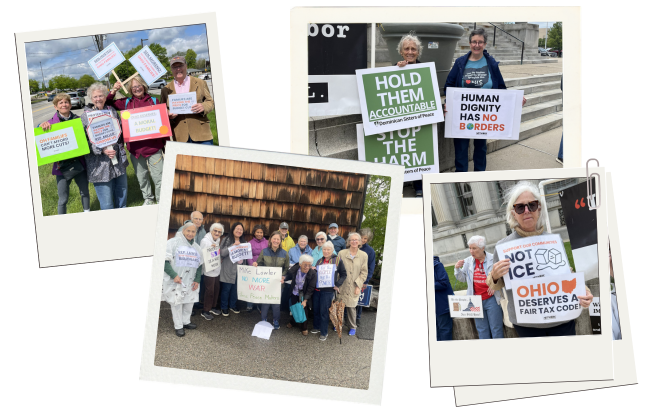
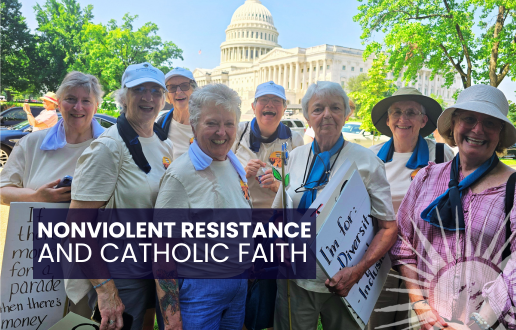
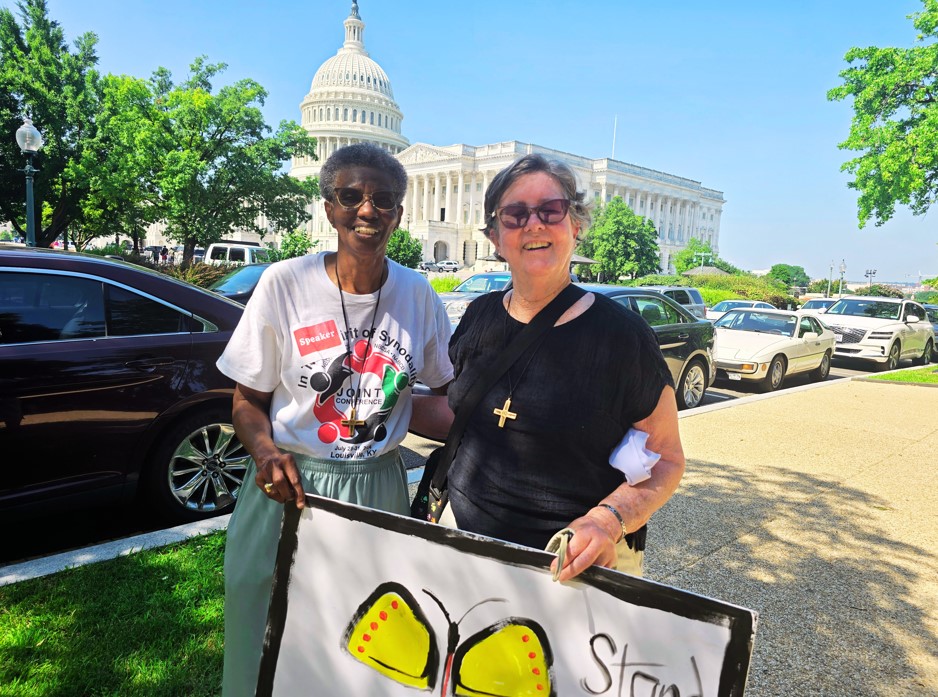
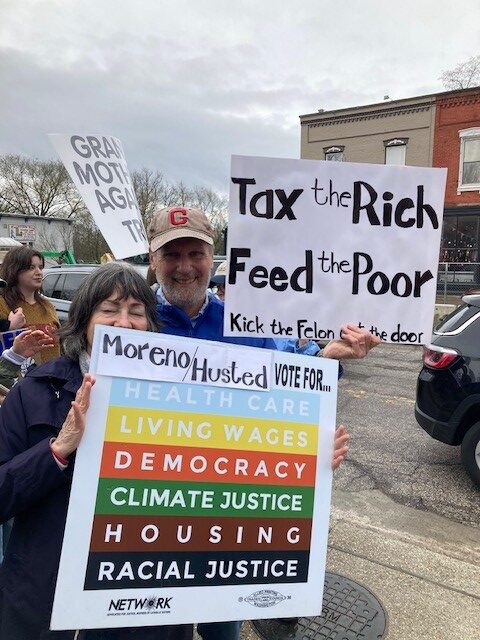
Organizing programs, advocacy campaigns, and in-person gatherings have become essential outlets for people seeking to engage in nonviolent resistance. The Catholic-led Season of Faithful Witness vigils and the secular No Kings Day, to name two examples, have generated sustained opportunities for solidarity and deeper engagement, with historic turnout.
We are witnessing responses that challenge the flawed assumption that societies must be governed through fear. Instead, these movements reflect a conviction that pluralistic
governance—not intimidation—is the surest way to build a society where the gifts of God’s creation are shared among all for the thriving of all.
Yet fear persists. Some politicians count on the brutalization of both citizens and non-citizens to suppress dissent and quicken the end-goal of mass deportations. Families with legal immigration uncertainty have gone deeper into hiding.
A plethora of cruel policies utilize fear to make their point. They include messaging campaigns that threaten families with harsh consequences for not self-deporting (i.e. Project Homecoming); degrading and inhumane treatment in detention centers; practices that strip immigrants of lawful temporary status; and bureaucratic delays that prevent people from sustaining their livelihoods. They send one harmful message: cruelty is an acceptable tool. When online trolling by official government accounts, dehumanizing rhetoric, and the invocation of wartime legal powers are added to that mix, the effect is to further normalize authoritarian impulses and diminish the dignity owed to every person.
Faith leaders, institutions, and organizations have long urged a balance between legitimate public safety and compassion for individuals and communities. This is one of three central principles of Catholic Social Teaching on immigration.
St. Thomas Aquinas said, “Mercy without justice is the mother of dissolution; [and] justice without mercy is cruelty.” History shows that when enforcement operates without checks, the risks of abuse rise. The current overreach is straight out of the Authoritarian Playbook and is fundamentally incompatible with Catholic teaching.
Fear is antithetical to a free and open society. When it becomes a widespread political tool, public discourse is distorted by misinformation, panic, and sensational claims. These distract from pressing issues such as affordable housing, accessible health care, and long-term solutions for undocumented people living in the shadows.
Fear of immigrants is a flimsy excuse to propose legislation to threaten Americans’ freedoms further. Bills such as the SAVE America Act and Make Elections Great Again Act would prevent millions of eligible U.S. citizens from voting. This is a sign of how fear is poisoning the discourse around actual solutions to repair broken trust in elections.
As a Catholic and person of conscience, I lament systems that harm families, weaken civil rights, or undermine community life. Yet “lament” is not the final word. Across traditions, faith teaches that people possess agency. We have the power to refuse fear, reject cruelty, to stand together, and to insist on the inherent dignity of every person.
Ultimately, our collective power, guided by moral conviction, has always been the force that bends societies back toward justice. Fear holds only as much power as we grant it.
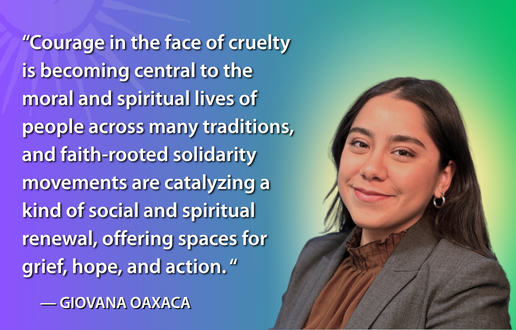
Giovana Oaxaca is NETWORK’s Senior Government Relations Manager. This column originally appeared in the Quarter 2 2026 issue of NETWORK’s Connection magazine.