

Category Archives: Front Page

Listen to Season 1 of Just Politics Podcast!

Listen to Season One of Just Politics Podcast!

January 23, 2023

Just Politics podcast season 1 logo

Our first season of the Just Politics podcast, produced in collaboration with U.S. Catholic magazine, is complete! This exciting new avenue for our political ministry wrapped up its inaugural seven-episode season earlier this month.

Throughout Season 1, our hosts — Colin Martinez Longmore, Sr. Eilis McCulloh HM, Joan F. Neal, and Sr. Emily TeKolste SP — spoke with Catholic Sisters, Members of Congress, and other justice-seekers on the path toward building a more just politics.

Episodes explored topics at the intersection of U.S. politics and the Catholic faith, including racismelections, immigration, and care for families.

You can listen on the U.S. Catholic website, as well as on Apple PodcastsSpotify, or wherever you listen to podcasts. Don’t forget to subscribe, and join the conversation about #JustPoliticsPod on social media!

STAY TUNED: We’re happy to share that the first episode of Season 2 will start Monday, February 6! 

Webinar Recording: Unpacking NETWORK’s 2022 Voting Record

Unpacking the 2022 Voting Record Webinar

Meg Olson
January 19, 2023

Watch the recording of our recent webinar “Unpacking NETWORK’s 2022 Voting Record: The Deep Need for Repair” — then take action!

Next, take action!

Visit our 2022 Voting Record web page where you can

2022 Voting Record

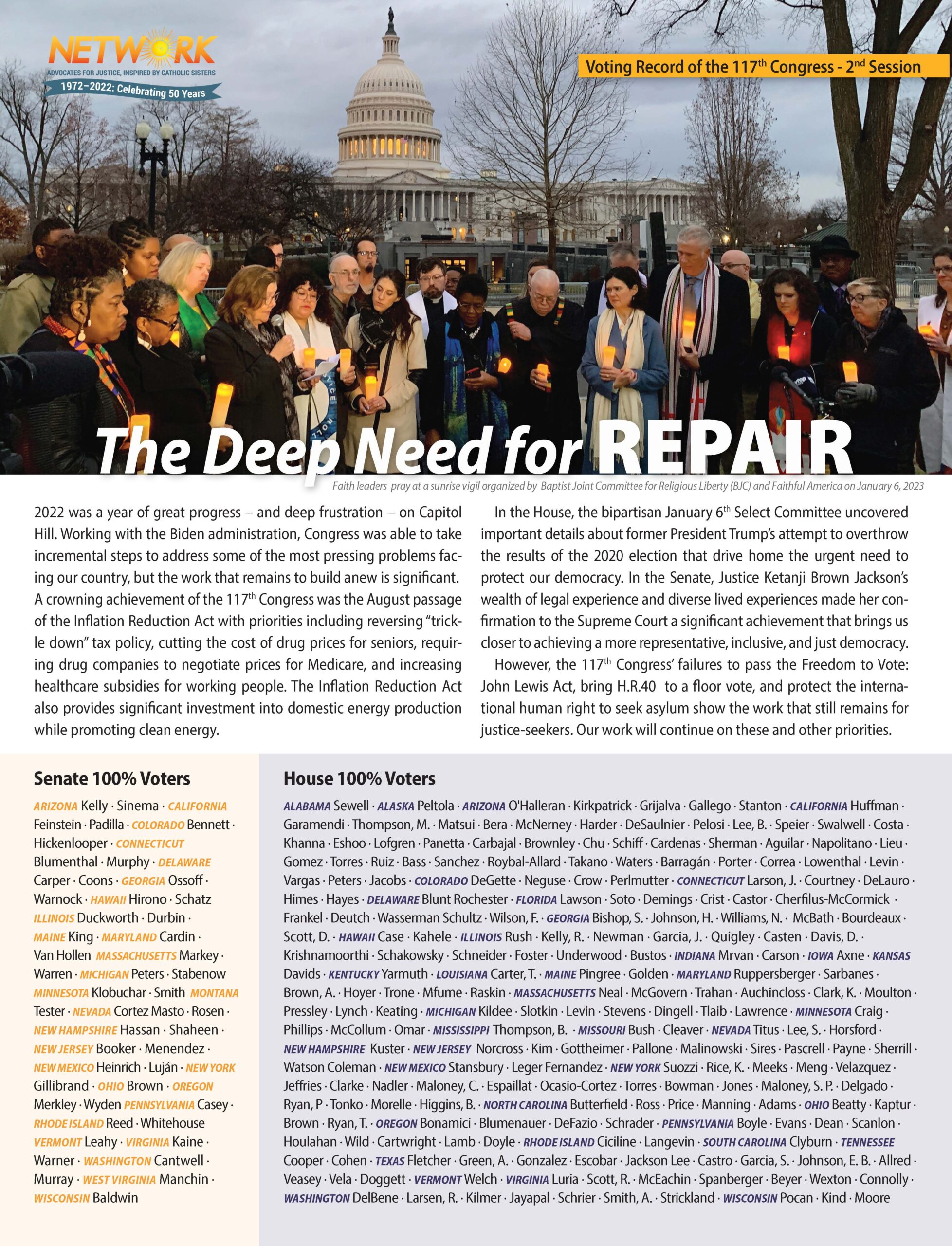
2022 Congressional Voting Record

At the start of each new year, NETWORK staff compiles an assessment of Congress’s voting record. The 2022 Voting Record is our evaluation of Members of Congress based on the votes they cast to advance, or thwart, social justice policy and our Build Anew agenda. Take action for justice and deliver your Members of Congress’s 2022 Voting Record results in January or February 2023.

Webinar Recording & PDF

Download the 2022 Voting Record

Let Congress know what you think about the 2022 Voting Record

Email Congress

We’ve got great news: 270 current Members of Congress scored 100% on the 2022 Voting Record! Can you act now to reach out to Members?

Legislators who scored 100% deserve praise, and it is vital that we hold those who received a less-than-perfect score accountable. And, as new Members begin their work on Capitol Hill, advocates must let them know about NETWORK’s Voting Record!

Will you send a quick email to let your Members of Congress know how you feel about their Voting Record? Don’t worry about what to say, we’ve prepared a message that you can edit. Click below!

Deliver the Record

NETWORK advocates (like you!) will deliver Voting Records to Members of Congress in January and February in-person, on Zoom, and by email. Thank you for helping to create the multi-faith, multiracial democracy we must build anew so that we can all thrive.

Note: NETWORK creates special Voting Record certificates of excellence for Members of Congress with a 100% Voting Record score. 

There are three ways to deliver the NETWORK 2022 Voting Record. Be sure to sign up for one of them. Click below!

Tax Fairness
CTC
Voting Rights
Justice Served
Medicaid
End Title 42
Marriage Rights
H.R.40
.
Election Safety
Mental Health
Gay marriage

Keep Up with NETWORK

NETWORK Welcomes H.R.51 for D.C. Statehood Re-Introduction

NETWORK Welcomes H.R.51 for D.C. Statehood Re-Introduction 

Update:

On January 24, 2023, Senator Tom Carper of Delaware, led a group of Senate Democrats in reintroducing S.51, the Washington, D.C. Admission Act, to make Washington, D.C. the 51st state and give Washington D.C. citizens full representation in Congress. This legislation is the Senate companion to H.R.51, introduced by Congresswoman Eleanor Holmes Norton of the District of Columbia.

Minister Christian Watkins
January 18, 2023

On January 9, 2023, Representative Eleanor Holmes Norton (DC) introduced H.R.51, the Washington D.C. Admission Act, to the 118th Congress. The bill was introduced with 165 original cosponsors, which Rep. Norton noted was the most cosponsors of any bill introduced that day.

Rep. Norton has introduced this bill on the first day of every Congress for decades. Each time it has gained more support. In June 2019, the D.C. Statehood Bill passed the House for the first time and it passed again in April 2021, with NETWORK Spirit-filled justice-seekers adding their voices to the call for D.C. Statehood.

NETWORK strongly supports the movement for D.C. statehood to uphold every citizen’s right and responsibility to participate in the political process as an expression of their inherent human dignity.

D.C. Statehood is a Racial Justice Issue

Voting representation is the foundation of our democracy, and if passed into law, this legislation would finally extend it to the people of D.C. With a majority Black and brown politically active population currently disenfranchised from representation, D.C. statehood is a racial justice issue.

The District houses nearly 700,000 citizens, a larger population than states like Wyoming and Vermont. All D.C. residents pay federal taxes and fulfill all other obligations of American citizenship and yet are denied full representation in our Congress and full local self-government.

As Rep. Norton noted when introducing the bill, “The United States was founded on the principles of no taxation without representation and consent of the governed, but D.C. residents are taxed without representation and cannot vote on the laws under which they, as American citizens, must live.” Many believe that establishing The District as a state will abolish the permanent seat of the federal government. But H.R. 51 does not abolish the national capital — it only shrinks it, making a new state of the District’s non-federal area.

Last year, the Biden administration committed its “strong support” for H.R.51 in a statement of administration policy and President Biden has promised to sign it into law if passed by Congress. Ending the continued disenfranchisement of a non-minority Black jurisdiction that has left hundreds of thousands of Americans without representation in Congress must become a reality. Congress must take this opportunity to correct this injustice and pass D.C. Statehood in both the House and the Senate during the 118th Congress.


* Currently, Representative Eleanor Holmes Norton serves as a delegate, a non-voting representative to the United States House of Representatives. In the 118th Congress, the House has six non-voting members: a delegate representing the District of Columbia, a resident commissioner representing Puerto Rico, as well as one delegate for American Samoa, Guam, the Northern Mariana Islands and the U.S. Virgin Islands. Delegates can introduce legislation and vote in committee, but generally cannot vote the passage of legislation in the full House.

Biden Administration Restored Pre-Trump Era Public Charge Regulations

Did Congress Strive for Economic and Social Transformation with the 2022 Omnibus Law?

As we begin a new year, NETWORK looks back to see whether Congress made inroads in economic and social transformation with the 2022 Omnibus Law. Every person in our country, whether they live on a sprawling estate, in a farmhouse along a country road, or in a public housing development, should have the resources they need to care for themselves and their families. Sadly, we know that lobbyists and dark money special interests work with some elected officials to block policies that would create just laws and equitable access to economic prosperity.

But NETWORK’s community of justice-seekers know that we can have just and equitable communities where all of us–not just the rich and powerful–can have thriving lives. When we work together and join our efforts with others who share our vision for a multi-racial democracy, we can bring about the economic and social transformation for which we strive.

One of the most important pieces of legislation for the Build Anew agenda last year was the $1.7 trillion FY2022 Omnibus. This bipartisan end-of-year spending package made significant investments in healthcare, housing, criminal legal systems reform as well as critical democracy reforms and investments in voting infrastructure to ensure free and fair elections.

For months, NETWORK advocates across the country (like you!) lobbied Congress to include policy priorities in the Omnibus package like the expanded Child Tax Credit, the Pregnant Workers Fairness Act, and a pathway to citizenship for undocumented community members. Justice-seekers called, emailed, and tweeted to Congress, wrote Letters to the Editor, and attended rallies, to advocate for a federal budget that supports just and equitable communities where everyone can thrive. Thank you for your advocacy!

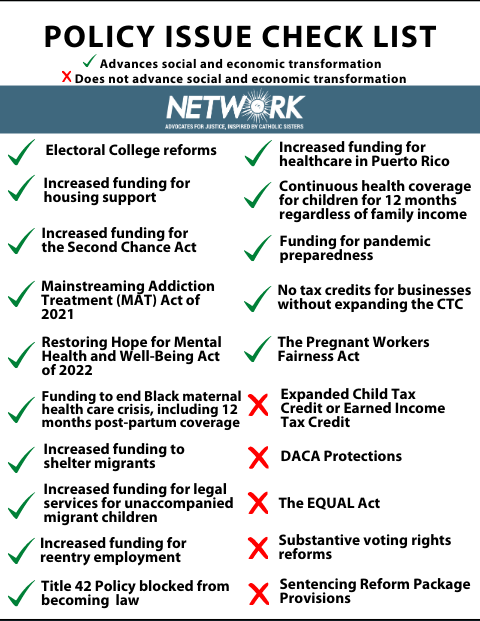
An Overview: Where did Congress Invest in Economic and Social Transformation with the 2022 Omnibus Law?

A Check List: Where did Congress Invest in Economic and Social Transformation with the 2022 Omnibus Law?Congress made significant progress toward eonomic and social transformational changes with the 2022 Omnibus in healthcare and housing. Medicaid recipients in Puerto Rico and U.S. territories, and Black mothers who are unable to pay for maternal healthcare receive more aid. For example, Medicaid coverage for new moms is guaranteed for 12 months and infants cannot be removed from Medicaid, or the Children’s Health Insurance Program, for a continuous 12 months, even if their family’s income changes.

Housing measures support people experiencing homelessness, public housing voucher recipients, people in rural communities, and homeowners.

Movement toward justice in the omnibus legislation is also noted in criminal legal system reforms where new laws bridge significant racial equity gaps in health care, access to housing, and equity in the judiciary and police forces. We hope the funding leads to improved health outcomes and treatment by the criminal legal system for Black, brown and indigenous communities.

The omnibus also includes critical democracy reforms that shore up Presidential elections (Electoral Count Reform and Presidential Transition Improvement Act of 2022) and a $75M investment in election security grants to ensure all votes are counted by continuing provisions from the Help America Vote Act of 2002.

Sometimes, Policy Not Included in a Bill is a Positive Result

NETWORK celebrates the harm avoided in the omnibus. For example, the continued misuse of Title 42 cannot be part of a fair, humane asylum process. It was not codified into law thanks to Democratic Members of Congress who rebuked attempts to incorporate outdated public health policy into permanent immigration law.

Movement Toward Justice in a Polarized Congress

We are disappointed that significant NETWORK priorities were left out of the package but appreciate that Congress took steps toward social and economic reform with some of the omnibus investments. Ultimately, the bipartisan passage of the FY2022 omnibus package was a significant accomplishment in a polarized Congress.

The leadership of Senate Appropriations Chair Patrick Leahy (D-VT), now retired, and House Appropriations Chair Rep. Rosa DeLauro (CT-03) allowed Congress to reach an agreement and fund the government before the end of the year. However, it is unacceptable that more Members of Congress did not support including needed policies like a pathway to citizenship for Dreamers, the expanded Child Tax Credit, and the EQUAL Act.

NETWORK will continue making these issues top legislative priorities into the future and – with your help – continue building support for these common-good policies in the 118th Congress.

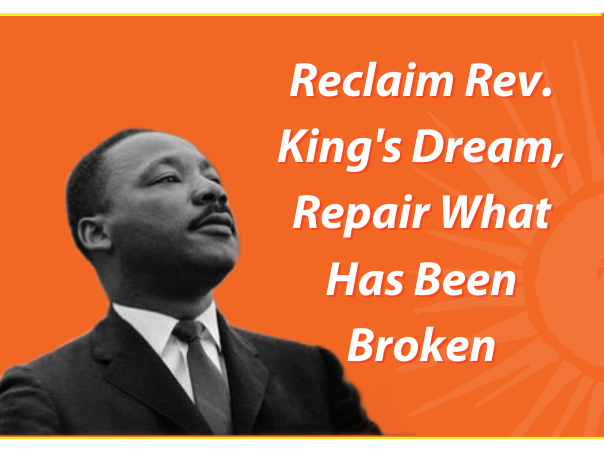
Reclaim Rev. King’s Dream, Repair What Has Been Broken

Reclaim Rev. King’s Dream, Repair What Has Been Broken

A Recommittal to Build Anew

After a restless and tumultuous midterm election year, we entered 2023 with bated breath and anxiety over what is to come. The initial days of this 118th Congress provided negligible relief. Four days of disputatious debate and back-room negotiations making international headlines, demonstrations of ineffective leadership, and stirring spectacles of brute disputes in the House chamber were newsworthy manifestations of similar occurrences on the local, state and federal level that we have seen for too many years to count. Not to mention remembering January 6th, the insurrection’s aftereffects, investigation, and repudiation thereof. Politically, these past 16 days have been a whirlwind, and we have 349 to go.

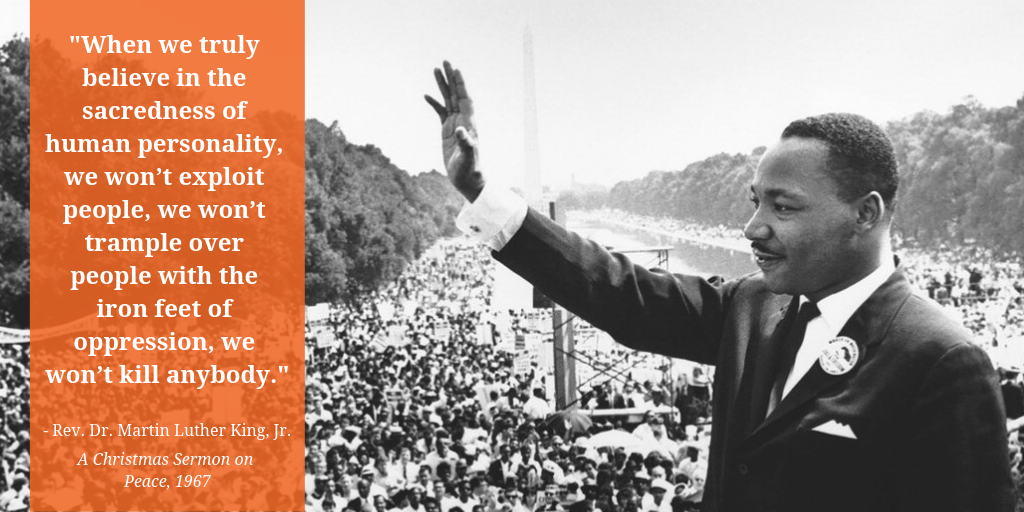
One of Rev. Dr. Martin Luther King’s final socio-theological inquiries remains with us nearly 55 years after his ascent to the ancestral realm. “Where do we go from here: chaos or community?” This decades-long question needs a robust, faith-filled response THIS year. Ourselves, our children, and the whole of Creation deserve it. Future generations depend on it.

Beyond Rev. King’s Civil Rights movement accolades, and even beyond his consistently brilliant articulation and yearning for the church and society to realize what it means to truly be the “Beloved Community,” he helped us to understand more fully the essence of human dignity and worth, and the importance for these to be enacted among all of us if we will ever be all that God calls us to be.

The sacred interconnectedness of our diversely complicated existences cannot be ignored. Our nation and “world house” are in peril. The inescapable mutuality of our problems and robust solutions to resolve them for our destiny’s sake must be a priority. This holiday is not just to be a means for rest, but a day of remembrance and service towards that end. Moreover, we must not be so distracted and dismayed by the antics of this and previous years to forget the many accomplishments of yesteryear.

Some of the accomplishments towards building the “Beloved Community” include: 

Passage of the Inflation Reduction Act meant to curb inflation by reducing the deficit, lowering prescription drug prices, and investing into domestic energy production while promoting clean energy. Enactment of a  $1.2 trillion infrastructure package which drastically increased investment in the national network of bridges and roads, airports, public transport, national broadband internet, as well as waterways and energy systems. President Biden appointing the highest number of federal judges since Reagan. Re-joining the international Paris Climate Accord, which President Trump had parted ways with, allowing the U.S. to restart and improve its commitment to combatting climate change, working with global players to thwart the climate’s deterioration. We cannot forget that President Biden started his term signing into law the American Rescue Plan. The law kept millions of families housed while Covid-19 ravaged the country. The list of legislative accomplishments goes on, and none could have been possible without your commitment to the practice of caring for those people and families too often judged as “the least of these.” Reflecting on these achievements must refuel our fervor for faithful advocacy.

As we look forward to future acts of making Justice possible by the works of our hands, feet, and voices, we must recommit to repairing what has been broken through an unwavering recommitment to build anew. While NETWORK remains steadfast to the prevailing priorities of social justice and racial equity, our policy advocacy is rooted in repairing what has been broken since the Doctrine of Discovery was signed, for the benefit of future generations that will follow. We welcome your collaboration on ending poverty and a progressive pursuit of reparations, repairing and strengthening the Voting Rights Act, and advancing robust criminal legal system reforms. Your participation in working to eliminate hunger and houselessness, assuring that labor is not in vain and equitably compensated, guaranteeing the “more than haves” pay their fair share into our nation’s support systems to adequately care for those who have not, and more!

Rev. Dr. King’s legacy proclaims, “We are now making the choices which will determine whether we can achieve these goals in forthcoming decades. We cannot afford to make these choices poorly.” We are now making the choices which will determine whether we can achieve these goals in forthcoming decades. We cannot afford to make these choices poorly.

We can do better! Our existence demands we must do better! Will you journey with us until we realize what Brother Martin saw on the Mountain Top?

H.R.40 Re-Introduced in the 118th Congress

H.R.40 Re-Introduced in the 118th Congress

Update:

On January 24, 2023, Senator Cory Booker of New Jersey introduced S.40, the Commission to Study and Develop Reparation Proposals for African Americans Act, legislation that would establish a commission to consider proposals for reparations for African American descendants of slavery. The legislation is the Senate companion to H.R. 40, introduced by Rep. Sheila Jackson Lee (D-TX-18).

Jarrett Smith
January 11, 2023

On the first day of the 118th Congress, Representative Sheila Jackson Lee (D-TX) reintroduced H.R.40 with a speech on the House floor. In her speech, Rep. Lee noted, “H.R.40  is a crucial piece of legislation because it goes beyond exploring the economic implications of slavery and segregation. It is a holistic bill in the sense that it seeks to establish a commission to also examine the moral and social implications of slavery.

H.R.40 was first introduced in 1989 by former Representative John Conyers (D-MI) and has been introduced in every Congress since. In the last Congress, H.R.40 passed out of the House Judiciary Committee for the first time in its history, however, it failed to receive a vote on the House floor.

NETWORK, and our multi-faith coalition partners, strongly support the passage of H.R.40, however, given the reality of the divided Congress, we also call on President Biden to establish a commission on reparations via Executive Order.

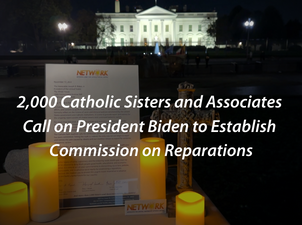
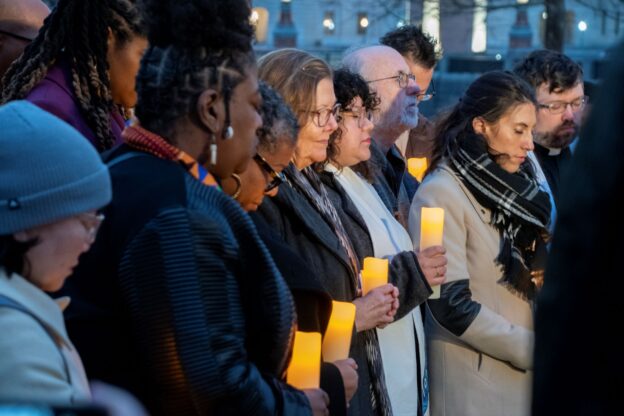
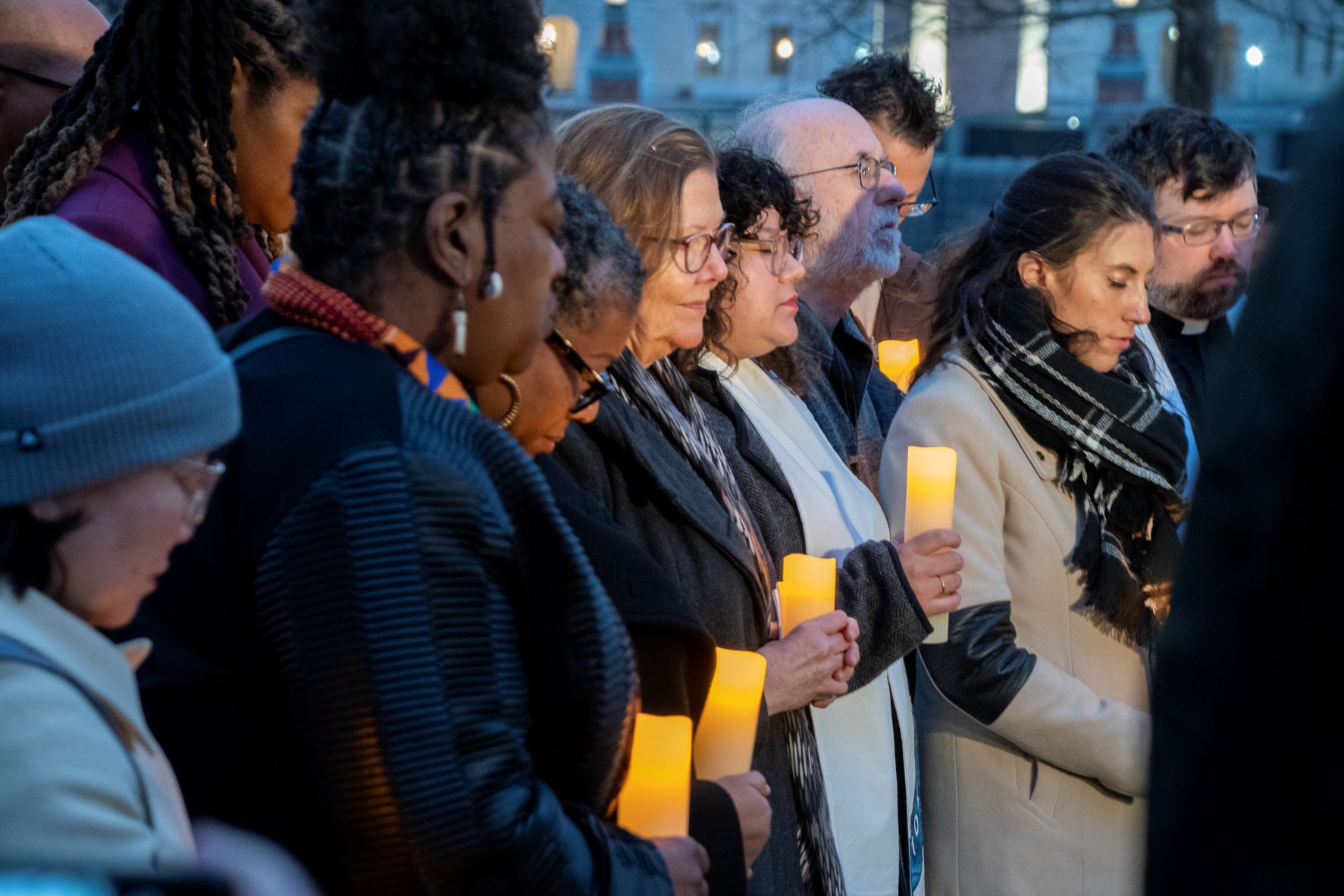
A table in front of the White House holds a large letter with signatures at the bottom and candlesLast year, more than 2,000 Catholic Sisters and Associates sent a letter to President Biden, urging him to fulfil his campaign promise to support reparations. The letter followed a months-long campaign to build support for reparations with vigils organized by NETWORK advocates to pray and act for reparations. The vigils were held across the country in-person and online with local and national faith leaders.

Creating a commission to study and develop reparations proposals, as outlined in H.R.40, is the only policy that will lead to concrete proposals for repairing the damage that the United States government has inflicted on Black people. Its passage will allow us to move towards dismantling white supremacy and towards repair so that we can build anew together.

Catholic Social Teaching is clear: racism is a sin. Our faith teaches us to reject the immoral system of white supremacy and to work for truth-telling and repair. We can no longer deny the sins of the past and its ongoing implications Black people experience every day. NETWORK urges Congress to support and pass H.R.40 in the 118th Congress.

Christian leaders gather across from the U.S. Capitol Building for a sunrise vigil marking the second anniversary of the January 6 insurrection. Photo courtesy of Baptist Joint Committee for Religious Liberty.

Healing Our Politics

Healing Our Politics

We Can Build a Better World by Participating in the Systems That Shape Our Destiny

Joan Neal
Jan 11, 2023
Christian leaders gather across from the U.S. Capitol Building for a sunrise vigil marking the second anniversary of the January 6 insurrection. Photo courtesy of Baptist Joint Committee for Religious Liberty.

Christian leaders gather across from the U.S. Capitol Building for a sunrise vigil marking the second anniversary of the January 6 insurrection. Photo courtesy of Baptist Joint Committee for Religious Liberty.

With the 2022 midterms behind us and a new Congress coming into session, it’s fitting for people of faith to survey the “Signs of the Times.” Where is God speaking to us and trying to lead us as a people as we enter a new year, with a new Congress, in one of the oldest democracies on earth? The answer that NETWORK has discerned in the face of an increasingly volatile political landscape is that we must work to heal our politics.

Our political life has suffered a wound, a laceration that has exposed us to further injury and infection. This wound is reflected in the divisions in our society today that allow hateful, dehumanizing rhetoric to become normalized, and violent, resentful action to become a part of everyday life. The Signs of the Times are clear: We are a divided country. Even the composition of the new Congress – with the narrowest of majorities in both houses – suggests a body politic that has been torn asunder.

This situation has been building for a long time. The fact is, we are witnessing the ugly final acts of a power struggle in the U.S. that began half a century ago as an effort to strip away the gains made toward equity and justice for anyone who is not white, male, and socioeconomically privileged.

This struggle has played out in every aspect of our politics and now, most concerning, in our judiciary. For the first time in our history, we are seeing recent rulings that take rights away from Americans instead of expanding them, rulings that seem wholly untethered from any sense of the common good and even reflect bias toward a particular political ideology. Sadly, we also see allegations of corrupt dealings between justices and right-wing groups. Even the objectivity of our judicial system seems caught up in this fight.

The repercussions of this power struggle have been as painful as they have been predictable: stratospheric economic inequality; the dismantling of the power of organized labor; the rise of Christian nationalism with its view that America is only for white Christians; increasing threats to our planet and our public health; rising homelessness, and so much more. These are signs that our politics and our society are in desperate need of healing and repair.

As we look back on 2022 and the legislation passed in the second session of the 117th Congress, we can imagine each bill as a tiny swatch of material trying to patch the frayed social fabric of our current reality. The field hospital imagery of Pope Francis is apt language as we try to bind societal wounds while also addressing their root causes.

This is where we see our mission. At our core, NETWORK is a political ministry, which calls us to respond first with empathy and then with truth-telling and concrete actions that lead to economic and racial justice.  We decry the divisions and seek to be a prophetic voice for peace, reparatory justice and reconciliation in order to reshape our politics and center the voices of those whose voices are not heard – those who are not privileged; those who lack the money and power to wield influence; and those who are most impacted by the evils of unfettered capitalism, white supremacy and extreme individualism in our politics and in our society.

At NETWORK, we have endeavored to do this by first listening to and seeking out other justice-seekers, such as the National Black Sisters’ Conference, to partner with us in raising an authentic witness for the common good. We have also sought to amplify the call for justice through our new podcast. “Just Politics,” a collaboration of NETWORK and U.S. Catholic magazine, launched in September 2022 and will have its season 2 premiere in February. We have used this new platform to center the voices of women religious, impacted communities, and other justice-seekers.

In his 2020 encyclical Fratelli Tutti, Pope Francis argues for “a better kind of politics” and makes a key distinction between political movements that are populist – the forces that weaponized people’s anger for personal gain – and those that are truly reflective of “the people’s voice”. Our work seeks to put the Pope’s words into action, to insure that our politics includes the needs and voices of all people in order to build a more inclusive and equitable community. Through healing our politics, we can all play a part in shaping our common destiny and building a better country, a better society, a better world for everyone.

Joan F. Neal is NETWORK’s Deputy Executive Director and Chief Equity Officer.

This story was originally published in the 1st Quarter issue of Connection. Download the full issue here.

Advent 2022: Better Neighbors Care for New Moms

NETWORK Lobby offers Advent reflections

Advent 2022: Better Neighbors Care for New Moms

Laura Peralta-Schulte
December 19, 2022

Reflection:

When we reflect on the coming of Jesus at Christmas, one detail is very striking as a person who have given birth: God decided to incorporate the birthing of a healthy baby – under far from ideal circumstances – into the salvation plan of the world.

Everything touched by God is forever transformed. And with Christmas now so near – the birth of Jesus so imminent – we should remember that welcoming Jesus into the world means supporting something sacred: maternal health.

The U.S. faces a devastating maternal health crisis. Over 800 women died due to pregnancy or childbirth in 2020, a record high. There are two concrete ways that justice-seekers can confront this crisis right now.

Call to Action:

The Pregnant Workers Fairness Act would guarantee pregnant workers a right to reasonable, medically-necessary accommodations, closing gaps in current law that have left too many pregnant workers unprotected for too long. Pregnant workers are routinely denied basic, temporary accommodations to ensure a healthy pregnancy. These are often as simple as a stool to sit on, a break from lifting heavy boxes, schedule changes, and protection from dangerous conditions. Many pregnant workers face undue pressures to take an often-unpaid leave of absence, which leads them to poverty. Despite current protections included in the Pregnancy Discrimination Act of 1978 (the last time we passed any sort of legislation to protect pregnant workers), over 37,000 pregnancy discrimination charges have been filed between 2010 and 2020 with the U.S Equal Employment Opportunity Commission.

The establishment of nationwide 12-month postpartum Medicaid coverage would reduce disparities in coverage across states, eliminate racial inequities in maternal health outcomes, and end preventable maternal deaths. Extending Medicaid coverage from the current requirement of 60-days postpartum to 12-months nationwide is critical to lowering the nation’s maternal mortality rate. Medicaid covers at least 40 percent of all births in the U.S., a disproportionate number of which are to Black, Latinx, and Native American people.

Read more about NETWORK’s support for the Pregnant Workers Fairness Act.

The legislative priorities not passed before the end of the 117th Congress will continue to be priorities of NETWORK in 2023 and beyond!