

Category Archives: Front Page

NETWORK Lobby Leaders Envision a Future Built Anew

Toward the Kin-dom

A More Just Future Depends on Everyone Building Together

Movements of people striving for justice have the power to affect real change by pushing for policies that build up the common good. Throughout history, we have seen social and political movements arise, especially from moments of destruction and turmoil, to deliver righteous change. Advocates, organizers, and people of faith know that the process of building so often begins with rebuilding, with emerging from a deep hole and the rubble of broken structures and systems.

The process of re-building from a solid foundation has biblical roots. In the book of Isaiah the Lord says, “See, I lay a stone in Zion, a tested stone, a precious cornerstone for a sure foundation; the one who trusts will never be dismayed. I will make justice the measuring line and righteousness the plumb line” (Isaiah 28:16-17).

Such is the model and inspiration for NETWORK’s Build Anew agenda. We seek to build up God’s beloved community, a kin-dom of God. Where our political and social systems in this country are not built to include and provide for everyone, we must dismantle, reimagine and build a new foundation, based on the cornerstones of justice, equity, and solidarity.
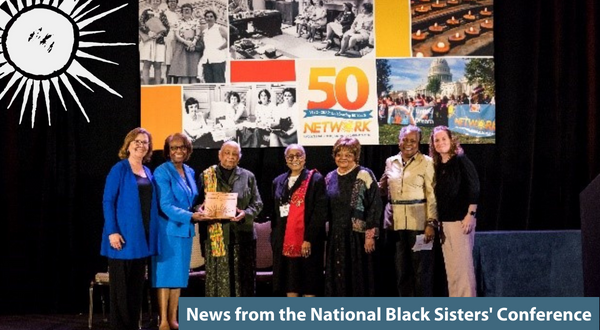
Pivotal movements such as the Civil Rights Era show us a road map for rebuilding. Racist policies and practices were denying people of color the right to participate fully in a society where they could feel safe and flourish. Civil Rights leaders and activists knew this was not the world God promised, and took on the responsibility to work toward dismantling the old racist structures and building a new social contract that includes everyone. The Catholic Sisters who founded NETWORK 50 years ago were operating out of the same Spirit.

We see these same efforts taking place now through the work of NETWORK Advocates teams and the policies being delivered by this Congress and Administration. The last several years left us in a crater socially and politically – with a global pandemic and political insurrection, on top of distrust in political leadership fueled by a politics of xenophobia and white nationalism. To build anew we must first emerge from this deep hole.

Congress and the Biden administration have stepped into this moment with policies promoting justice and equity. With legislation like the EQUAL Act and the Sentencing Reform package moving through Congress, we see a desire to repair practices that perpetuate racism and white supremacy and foment Christian nationalism. The advocacy work of our community on issues such as Title 42 expulsions at the border and establishing a federal reparations commission show the dedication to building anew.

The signs of our times are troubling and at times terrifying. With growing extremist ideology, an increase in violence, and pernicious political polarization, it can be hard to imagine creating a new world where all can live in dignity and peace. We are looking at the very real possibility of losing our democracy, and if we do, there will be no building anew for a very long time.
But this is our call. Democracy carries both rights and responsibilities. It is not optional to sit by and allow the destruction of a vision of our society that we know is possible. Now is the time that everyone, not just leaders, must step up and do their part.

We must take inspiration and teachings from the change-makers who came before us to continue building towards our vision of the kin-dom. We all have to do whatever we can to save the foundation upon which we were founded so that we can build “a new heaven and a new earth,” a future that embodies the truly representative, multi-racial society we all envision, centered on human dignity.

This article originally appeared in the Third Quarter 2022 issue of Connection, NETWORK’s quarterly magazine – A Time to Build. Read the entire issue here.

The Voting Rights Act of 1965--57 Years Later

Restoring the Promise of the Voting Rights Act — 57 Years Later

Restoring the Promise of the Voting Rights Act — 57 Years Later

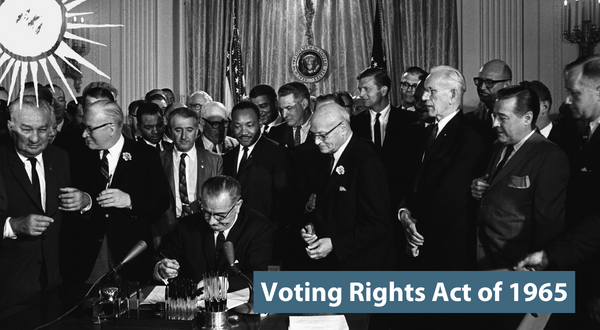
Fifty-seven years ago, the Voting Rights Act of 1965 was signed into law by President Lyndon B. Johnson, a son of the South who recognized the grave wrong of denying African-Americans their right to vote. For the first time in U.S. history, Black Americans had the legal means to ensure compliance with the 15th Amendment of the Constitution and to challenge restrictive voting laws and practices designed to deny them access to the ballot. This was a victory brutally fought for in the Civil Rights Movement and a long time coming.

African Americans were hopeful that at last they could assume their place as full citizens of this country, participate equally in the political process, and exercise their right to vote without fear or harassment. But celebration was short-lived as the Voting Rights Act was met with almost immediate court challenges, mostly from Southern states, the same states where slavery had once thrived. Many people remained determined to deny the most basic right of citizenship to a large swath of their fellow citizens.

Sadly, this ‘tug of war’ for the full rights of citizenship for people of color has continued over time. In 1970, 1975, and 1982, Congress renewed the Voting Rights Act. In 2007, Congress amended it to include non-English speaking U.S. citizens, Indigenous people, and other excluded populations, and extended its enforcement provisions for 25 years. But many states, mostly in the South, continued to place obstacles in the way of non-white citizens’ exercise of their right to vote in order to dilute Black voters’ electoral power and their potential to threaten the political status quo.

Despite these efforts, the political power of Black, Latinx, Native American, and AAPI voters across the country has grown over time. Increasingly, Black and Brown voters have diversified the ranks of elected officials, making their voices heard through the ballot box so powerfully that in 2008, we saw the election of Barack Obama, the first Black President in U.S. history. In 2021, we saw the election of the first Black and the first Jewish Senators from Georgia. While these were historic victories for our country, many white citizens found them a threat to their traditional idea of America.

Backlash against Voting Rights

A growing number of white voters now fear their historical monopoly on political power in this country will be forever eroded if Black, Latinx, Native American, and other excluded voters are able to freely exercise their constitutionally protected right to vote.
This fear was apparent when the Supreme Court, in its Shelby County v Holder decision, struck down the enforcement provisions of the Voting Rights Act in 2013. The court’s ruling found that the formula to determine which jurisdictions were subject to pre-clearance requirements was unconstitutional because it is based on an old formula and assumed there was no longer a need for such enforcement. Contrary to the Court’s assumption, immediately after the ruling was handed down, states began to pass restrictive voting laws and increase ID requirements once again.

State legislatures gerrymandered district maps and made it harder to access the voting booth by closing polling places, especially in communities of color, limiting early voting, placing restrictions on mail-in voting, and by putting people in positions who will enforce these restrictions no matter the infringement on their citizens’ rights. Since the beginning of 2021, 18 states have passed 34 restrictive voting laws, which disproportionately affect voters of color.

Reclaiming Our Right to Vote

Today, as a country, we find ourselves facing the same situation the Voting Rights Act was designed to end. Once again, Black and Brown citizens have to fight to retain the fundamental right to vote their conscience and their preference in free and fair elections.
This is not just a problem for people of color. Unfounded restrictions on lawful access to the ballot, excessive and undue requirements for citizens to exercise their right to vote, and the undergirding white supremacist ideology that fuels them, are a problem for all of us. Voting is the pillar and hallmark of a functioning democracy and when citizens are unduly prevented from the free and fair exercise of that right, it weakens our democracy. That is why everyone must step up to reject these unconstitutional attacks on the right to vote.

Now Is the Time to Act

Right now, our democracy is on the verge of collapse in the face of an unrelenting assault on our rights by people who seek only their own, unrestricted power. Everyone needs to wake up to this threat to our democracy!
The Voting Rights Act of 1965 was an important step in securing the rights of citizenship for all people. We cannot and must not let its legacy be lost. At this crucial time in our country’s history, we must come together to protect our right to vote from those who would withhold the full rights of democracy from some people based on race, ethnicity, or other arbitrary distinctions.

The Senate must join the House in passing H.R.4, the John Lewis Voting Rights Advancement Act. And it’s our time to emulate the Civil Rights advocates of the 1960s and demand the rights of democracy for all. Most importantly, we must use our political power to elect policymakers who will safeguard the right to vote for all citizens.
Our vote is our voice and right now, we have to raise our collective voice and overcome these anti-democracy forces once and for all. If we fail, we might wake up to find that we no longer live in a pluralistic, democratic society, but an autocracy enforced by the political and financial power of a small group of people who fundamentally do not believe in democracy at all. The time is now to act.

CHIPS and Science Act of 2022 Promotes Gender and Racial Equity in STEM Workplaces

CHIPS and Science Act of 2022 Promotes Gender and Racial Equity in STEM Workplaces

Gina Kelley
August 4, 2022

In a difficult year for the care economy, there has been a small but impactful victory.

The CHIPS and Science Act of 2022, passed on July 28, includes a key caregiving provision. The provision entitled “Broadening Participation in Science” increases flexibility for individuals working in the sciences when they have caregiving responsibilities. This increased flexibility promotes gender and racial equity in STEM workplaces and ensures people have the time they need to care for their loved ones.

NETWORK has worked on the need for paid family and medical leave and other policies that support caregivers for decades. While many industries still struggle to create environments that encourage equity and diversity, women and especially women of color in STEM fields are faced with both barriers to entry and internal barriers to full participation.

This provision is a critical step towards ensuring no people in STEM fields are penalized for having caregiving responsibilities. Specifically, the provision requires every federal science agency to establish policies that allow for flexibility regarding the timing of federal research grants if a principal investigator of a grant has a caregiving role. This provision does not alter the benefit policies at any individual institution but instead removes barriers currently in place by encouraging flexibility for specifically outlined responsibilities.

Providing support to families in the STEM field is a necessary step to preventing impossible decisions between economic stability and their loved ones needs. This provision will help women in STEM fields stay working and combat biases that are present in the workplace while simultaneously encouraging more men to take on more caregiving responsibilities at home.

In June, NETWORK joined our organizational partners in sending a letter to the Conference Committee on Bipartisan Innovation and Competition Legislation in support of the CHIPS and Science Act of 2022. See the letter here:

USICA-COMPETES_ Caregiving Provision Support Letter

New Agreement Would Advance Healthcare, Tax Justice, and Climate Protections

New Agreement Would Advance Healthcare, Tax Justice, and Climate Protections

Laura Peralta-Schulte
August 1, 2022

On Wednesday, July 27, Senate Majority Leader Chuck Schumer (D-NY) and Senator Joe Manchin (D-WV) issued a joint statement announcing an agreement on moving the fiscal year 2022 budget reconciliation process forward. This announcement was welcome after months of ups and downs in Senate negotiations since the House passed its budget reconciliation package last fall.

This new bill—the Inflation Reduction Act—addresses tax reform, prescription drug reform and healthcare costs, as well as climate change. If passed, this bill would be a huge accomplishment by beginning to require the wealthy and corporations to pay their fair share of taxes, while tackling the long-standing crises of healthcare costs and climate change.

Key tax provisions in the Inflation Reduction Act include:

  • $313 billion in revenue raised from a 15% corporate minimum tax. This is critical to ensure that wealthy corporations pay taxes.
  • $124 billion in revenue raised from better IRS tax enforcement. This provides the IRS with money to improve customer service systems as well as ensuring the wealthy pay what they owe.
  • $14 billion in revenue raised from closing the carried interest loophole.

Key healthcare provisions in the Inflation Reduction Act include:

  • Prescription Drug Pricing: The legislation empowers Medicare to negotiate prescription drug prices directly, ensuring that seniors get better deals on their medications, and caps Medicare beneficiaries’ out-of-pocket costs for drugs at $2,000 per year.
  • ACA Premium Tax Credits: The Inflation Reduction Act extends enhanced Affordable Care Act premium tax credits for the next three years to enable working families and individuals support to pay for insurance through the exchange.

Key climate provisions in the Inflation Reduction Act include:

  • Incentives for Consumers to Go Green: The legislation provides money for home energy rebates, consumer tax credits for energy-efficient homes and vehicles, and grants to make affordable housing more energy efficient. These measures would help reduce energy costs for families by more than 10% on average.

Unfortunately, this package leaves out high-level policy priorities for us at NETWORK including Medicaid expansion, paid leave, funding for affordable housing, expanding the Child Tax Credit, and more. However, given the political and time constraints, this bill will do a lot to advance economic justice and address other problems in healthcare and climate.

No Republican Senators support this bill, and one Senator, Kyrsten Sinema (D-AZ), is the only Democratic member who has not yet expressed her full support for the bill. Democrats need all 50 members of their caucus to vote “yes” to pass the legislation. Senate Democratic leadership is planning a vote on this package later this week.

Sign the Petition to Lament the Loss of Transformative Policy

Sign the Petition to Lament the Loss of Transformative Policy

We suffer when Congress fails to address the crises facing people and our planet

President Biden’s ‘Build Back Better Act’ would have reversed 40 years of trickle-down tax breaks for the wealthy and corporations, provided funds for healthcare, eased financial barriers to childcare and early education, invested in wildfire prevention and drought relief efforts, and more. The House passed the BBB plan, but the Senate did not.

Instead of taking moral action, the Senate prioritized the wealthy and corporations over the people and communities that would have benefited from the jobs and equitable access to life-giving resources that the transformative legislation would have provided.

Who would have benefited from BBB? Working people, school-aged children, Black and Brown people, tax payers, rural communities, the climate and ecological concerns, Tribal lands and citizens, college students, immigrants…all of us. Congress is in the final days of budget reconciliation negotiations for less impactful, piecemeal solutions as an alternative to BBB.

We lament the investments in affordable housing, support for children and families, and efforts to combat climate change missing from the budget reconciliation package. It is shameful that our country will suffer as a result of Congress’s moral failure. Join your lament with ours and sign the petition to lament the loss of transformative policy.

We invite you to sign our petition
[ninja_form id=”8″]
Congresswoman Marcy Kaptur Celebrates NETWORK Lobby's 50th Anniversary

Congresswoman Marcy Kaptur Celebrates NETWORK Lobby’s Legacy of Connecting the Common Good to Politics

Congresswoman Marcy Kaptur
July 26, 2022

A Legacy of Connecting the Common Good to Politics is Cause for Thanksgiving

Congresswoman Marcy Kaptur is a NETWORK SupporterWe are called to be a sacrificial people. Each person must imbue that call with meaning. The network of parishes, dear priests, Catholic school teachers and administrators, church societies and quarterly church events build community at the parish level. This becomes even more important as modern societies become more transient and often rootless. And that is why it is especially a blessing that, thanks to the vision of women religious – for the past 50 years – this connection has also been represented on Capitol Hill.

I recall well when I was first elected to Congress and sworn in, a dear, diminutive NETWORK Sister by the name of Sr. Bridget O’Malley made a concerted, warm effort to welcome me to Washington. Her kindness was a blessing in those early foundational years. I remember many conversations and lunches with her as she addressed serious topics — B-1 bombers, child hunger, and housing for families in need.

Together, I recall we attended a White House Holiday gathering. With our noses almost pressed against glass cabinets, we admired the White House china collection from all presidential administrations and, of course, the mammoth Christmas tree.

A few years later, a polite, take-charge NETWORK Sister dropped by our office and gingerly but authoritatively took a seat in our office waiting area. She wore sturdy leather shoes with thick soles to manage the miles she walked over her three decades as NETWORK’s top lobbyist. She generally staked out a position outside Members’ offices where she could be certain a Member would walk by. This is how I met the brilliant, indefatigable, good-humored Sister Catherine Pinkerton. A Sister of St. Joseph who left a legacy of education and human development wherever she served – Sr. Catherine was a high respected, indeed revered, lobbyist.

The Roman Catholic faith is a central pillar of my being, particularly as an American of Polish heritage. First, through the intergenerational history of our family, it was the Roman Catholic faith that offered our ancestors worth and hope — during times of bondage, repression, punishment, war, illness, and harrowing economic downturns. Our faith gives value to each human life and to the limitless possibilities of each person and family. This belief animated the tireless work of Sr. Catherine, and it remains with the people who carry on that legacy of advocacy today.

Even when Sr. Catherine retired and returned to live with her community in River’s Edge in Cleveland, she still offered hospitality and counsel to her visitors. When our Congressional district was stretched across Ohio to include Sister Catherine’s residence, she welcomed me to rest there when I was required to stay overnight. That was so extremely thoughtful and appreciated, as our lumbering coastal district requires a more than two-hour drive from one end to the other.

The Catholic Church’s teachings over 2,000 years of human experience provide anchors for values and promote understanding. The preferential option for people experiencing poverty, the enduring call to serve others, and litany of saints remain noble and timeless. It is a faith calling with discipline and love.

And just as faith without works is dead, we owe so much to the NETWORK Lobby for making our faith come alive in the halls of power. Their commitment to the common good has helped ensure that love and care for our neighbors finds expression in federal policy and are lived out more fully on the peripheries and throughout society.

Warmest congratulatory wishes to NETWORK and your faith-filled, devoted membership on your 50th anniversary! Bravo! Onward!

Congresswoman Marcy Kaptur represents Ohio’s 9th Congressional District. She has served in Congress since 1983 and is the longest-serving woman in the history of the U.S. House of Representatives. This essay originally appeared in Connection, Second Quarter 2022 – “Networked for Faith and Love: A Legacy of Connecting the Common Good to Politics is Cause for Thanksgiving ”  *Special 50th Anniversary Edition*).

Billionaires: Buying Our Democracy to Line Their Pockets and Empty Ours

Billionaires: Buying Our Democracy to Line Their Pockets and Empty Ours

Christian Watkins
July 22, 2022

Last week, an unknown sum of dark money paid every Republican Senator and one Democratic Senator, Joe Manchin of West Virginia, to kill the trillion-dollar investment and tax plan Democrats have been working on for a year. The plan, which you might have originally known as the Build Back Better Agenda, was remodeled as the Budget Reconciliation Plan.  

Budget Reconciliation, a version of which passed the House in November 2021, would have started to reverse 40 years of trickle-down tax breaks for the rich and corporations. Dozens of billion-dollar corporations – like Amazon, Starbucks, and Netflix who now pay little to no federal income taxes, would have been required to pay at least a 15% minimum tax so they would pay into the U.S. economy like the rest of us. 

Taxing the ultra-wealthy would provide federal funds for policy measures that folks in the United States not only need, but want. Potential policies that would benefit the country include: more affordable health care, climate change mitigation, and reduced household energy costs. 

Dark money and corporate donors used their influence (money!) to flood Congress with messages that benefited them, but drowned out the voice of the people. 

The Constitutional declaration, We The People, should be the driving force that motivates legislators, not corporate interests. We need to get the out-sized influence of dark money and corporate dollars out of politics to heal our democracy. There are responsible Congresspersons who recognize the need for federal reform, and they have created bills that provide solutions.   

The John R Lewis Voting Rights Act (H.R.5746 S.4) and The For the People Act (S. 1) are ready for debate and a vote. The John R. Lewis Voting Rights Act corrects the Supreme Court of the United States (SCOTUS) decisions that diluted the safeguards of Voting Rights Act and dismantles new barriers to voting and election integrity put into place by 19 state legislatures. Chief Justice Roberts said Congress needs to act or else states are sovereign on election law.  Returning election law to the state level would again allow for state legislatures to combine already in place redlining tactics with voter suppression and disenfranchise Black and Brown voters. This country is not a collection of sovereign states, so we need federal standards for elections.  

The John R. Lewis Voting Rights Act (H.R. 5746 S. 4) would establish guidelines for elections, like: times, appropriate locations for in-person voting, and rules for early voting boxes, etc.).  The For the People Act, is transformative legislation that ensures clean and fair elections by reducing or eliminating the influence of big money, dark money, and foreign money in politics. S.1 also calls for easier voting access.  For example, States would register new voters on election day for federal elections and establish independent (i.e., non-partisan) redistricting commissions to reduce partisan gerrymandering. 

S.1 would strengthen the ethics and financial disclosure requirements for the President, Vice President, Members of Congress, and Federal officers and employees. One way this will be done is by prohibiting congresspersons from serving on the boards of for-profit entities. 

Is it no wonder why corporate special interests have rallied to oppose these bills! They want to continue to carry on with the status quo – and use money to influence Congressional decision-making.  We can work around them! If Senators committed to the preservation of “We The People” carve out filibuster exceptions similar to the ones that they have done for Budget Reconciliation measures, Federal executive nominations approvals, and Supreme Court Nominations, then significant action can be taken to protect our democracy.  

Our faith and sacred documents give us much needed guidance about our role in the body politic.  

The Bible says, 

“There should be no division in the body, but that its parts should have equal concern for each other. If one part suffers, every part suffers with it; if one part is honored, every part rejoices with it. (1 Cor. 12:25-27).”  

And, Catholic Social Justice tradition and the Catholic Catechism dictates that democratic participation in our communities is both a right and a responsibility and each person must be equipped with the proper resources. As a United Methodist minister, I also find guidance from our founder John Wesley who said, “there is no holiness without social holiness.” Taken together with NETWORK’s Build Anew agenda, we are well-equipped for this righteous cause. I pray you’ll dig deep this year and call on your friends and families to do the same! 

We are at a critical time in our country, so contact your Senators now and demand that they work to save our democracy by suspending the filibuster and passing election reform bills. 

Text reads: An Erie Connection over a photo of an event with people holding signs and candles

An Erie Connection: The Solidarity Needed To Transform Society Is a Local Issue

An Erie Connection

The Solidarity Needed To Transform Society Is a Local Issue
Don Clemmer
July 13, 2022

Erie, Pennsylvania shares many things with other communities, especially former industrial cities, in the U.S. Endemic problems like gun violence, high rates of poverty, food insecurity, and homelessness are common, as well as familiar to residents.

Dr. Laura Lewis headshot - white woman with brown hair in a white button down shirt“Those issues have always been dominant in my mind,” says Dr. Laura Lewis, chair of the Department of Applied Sociology and Social Work at Mercyhurst University. “And all these issues are interrelated.”

“It’s small enough of a city that things don’t hide very well,” adds Michelle Scully, Mercyhurst campus minister.

Michelle Knight, a retired social worker and a member of the Erie NETWORK Advocates Team, says the dynamics of the city were daunting for her as a social worker relocating to the area.

“If you don’t know everybody, you don’t know anybody,” says Knight. But that didn’t stop her from starting up a NETWORK Advocates Team in 2019, a year after the Nuns on the Bus made their second stop in Erie. A core group of about eight people meet via Zoom from across a range of backgrounds and roles in the community.

“What we have is a real shared love for Catholic Social Teaching and the social justice vision that that embodies,” says Knight. “All of us are involved in other things that are helping the community.”

Support NETWORK’s work in Erie and across the country!

Wider efforts to foster solidarity in Erie reflect the efforts of the NETWORK team, with justice-seekers drawing from the charisms of women religious and relying on education to push past direct service into dismantling structures. They may not be working in direct coordination, but their discernment leads them to a shared justice vision.

Bridging Disparities

Prior to her retirement, Knight helped administer the Emergency Rental Assistance Program, connecting people in and around Erie to benefits. A divide she encountered was how social services were located in the city, but the rural outlying county had lots of poverty and many residents who couldn’t travel, whether for lack of a car or gas money.

“Almost all of the benefits were more easily accessible if you had a computer – not a phone, not an iPad – but a computer and good internet,” says Knight, who described her work as comparable to an IT person, walking with people through the steps of the application process. “I talked on the phone with people. Many people around here don’t have internet.”

Mary Bauer, a woman with blonde hair in a green shirt and blue jeans, speaks at a campus event.Mary Bauer, who graduated from Mercyhurst University in Erie this year with with a bachelor’s in social work and criminal justice, says she came to college largely unaware of societal problems, but that quickly changed.

“Living in Erie I was able to see it first-hand,” she says. Bauer would grow into a campus leader, organizing events including walks for suicide awareness and racial justice and helping NETWORK to plan an Intro to Social Change virtual event in 2021 with students and staff.

“They have been willing to listen and reflect and engage with the community,” she says of the campus, citing the influence and values of the Sisters of Mercy, who are also active – along with Benedictines and the Sisters of St. Joseph – in service to the wider community. “If we don’t embody these values, then we stand for nothing, really.”

“I’ve had other [Mercyhurst University] classes that have been strong when it comes to advocacy, but this has been a great group,” Lewis, who retired this year from her role leading the social work program after 23 years at Mercyhurst, says of her final graduating class.

An animating value of Lewis’s tenure has been the necessity to push her students to get involved in the community and to think about issues at the systemic level.

“We need social workers working to bring about change at all levels,” says Lewis, “direct service, organizing, improving organizations, and, importantly, influencing social policy. Without systemic change we will not create a society where all can thrive.”

While not Catholic, Lewis has found NETWORK to be a tremendous resource, even welcoming her and a group of students to the NETWORK offices to meet with staff, learn about the Earned Income Tax Credit, and prepare for a lobby visit to Senator Bob Casey’s office.

“It was a great experience overall,” says Lewis. “We could not have a better visit than the one we did at NETWORK. It was just so helpful to me and the students.”

Roads to Racial Justice

One of the students to participate in the visit to NETWORK was Michelle Scully, who graduated from Mercyhurst in 2016 and, after participating in Notre Dame’s Echo Graduate Service Program, decided to integrate her social work degree into ministry. She recently completed her fourth year as Mercyhurst campus minister.

“It adds another dimension to the work, of doing the work in different ways and supporting people in personal ways, as well as on the advocacy level,” says Scully.

Janiece Withers, a Black woman in a Black Lives Matter t shirt speaks at a campus racial justice event.For the last four years, a standout student has been Janiece Withers, a young Black woman who graduated in 2022 with Mercyhurst’s highest student honor, the Carpe Diem Award.

“She is one of the most hopeful people that I know,” says Scully. “She’s become a great community organizer.”

The turning point for Withers was when she faced returning to campus in the wake of George Floyd’s murder and the Black Lives Matter protests of 2020.

“I was terrified,” says Withers, at the prospect of finding out what close friends thought of the events of that summer.

“If you honestly believe that there’s nothing wrong with the number of Black people who have died,” she says, “I can’t be in the same area as you and trust you, because my life may be in danger.”

Withers found herself speaking up in many different spaces, helping people to see the urgency in being anti-racist. The Erie NETWORK Advocates Team, who have worked on immigration
and climate issues, have also seen their work increasingly move into dismantling systemic racism.

Part of this involved NETWORK’s workshop on the Racial Wealth and Income Gap, which breaks down the many factors contributing to socioeconomic disparity between Black and white  people in the U.S.

Help NETWORK continue offering the Racial Wealth and Income Gap and other educational workshops.

“Most of our team participated in a workshop, and we were just amazed,” says Knight, who notes that members of the Erie team have lead the workshop locally several times.

“We’ve decided to focus on the racial justice piece,” she says. “The community is speaking the words of being concerned. … The diocese is talking about wanting to do things. … It feels like a moment.”

Whether that moments takes hold, Mary Bauer is hopeful, as she leaves Erie following graduation to intern as a social worker with a police department near her native Pittsburgh, her focus on civil rights concerns..

“I definitely think change will happen in Erie. I just don’t think it will be super-fast,” she says. “It’s going to happen, because the Erie community is willing. It’s just going to take some time and a lot of effort.”

“Everyone in the community follows the Sisters of Mercy in their values,” Withers says, noting that one one of those is anti-racism. “They just needed someone to lay it all out in front of them.”

Don Clemmer is NETWORK’s Content and Editorial Manager.

 This article originally appeared in the Third Quarter 2022 issue of Connection, NETWORK’s quarterly magazine – A Time to Build. Read the entire issue here.

Sr. Simone receives Medal of Freedom from President Biden

Watch Sr. Simone receive the Presidential Medal of Freedom

Watch Sister Simone receive the Presidential Medal of Freedom  

Mary J. Novak
July 7, 2022

On July 7, 2022, President Joe Biden awarded Sister Simone Campbell, SSS and 16 other extraordinary Americans with our country’s highest civilian honor, the Presidential Medal of Freedom. While leading NETWORK from 2004 to 2021, Sister Simone propelled NETWORK’s mission of political ministry into the national spotlight with her committed advocacy for justice.   

President Biden said that Sister Simone and her fellow medal recipients “embody the soul of the nation — hard work, perseverance, and faith,” and I strongly agree. It is people like Sister Simone and each of you — advocates for justice, participating in politics to dismantle systemic racism and advance the common good — who give me hope.  

As we witness rising tension and growing threats to our democracy, it is more important than ever to lobby for federal policies that dismantle systemic racism and create a country where all people can thrive.