





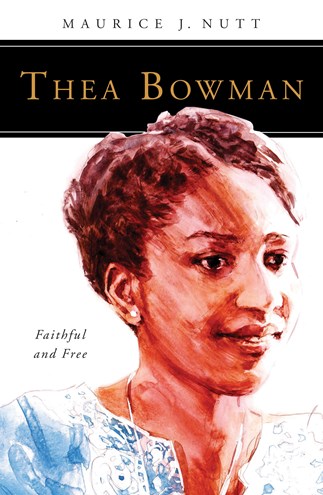
With every passing year since her death in 1990, more people are recognizing Sister Thea Bowman as one of the most inspiring figures in American Catholic history. This granddaughter of slaves became Catholic on her own initiative at the age of nine. As a Franciscan sister, she lived a wide-ranging ministry of joy, music, and justice.
Father Maurice Nutt offers a new biography of Sister Thea that introduces her and sheds new light on who she was. Drawing on careful research and the insights of people who were close to her, Nutt explores her personality, her passion, her mission, and her prayer. He captures Thea Bowman as she was: an unapologetically African American woman, a religious sister who deeply loved God and the people to whom she ministered through teaching, preaching, and singing, and who embraced the blessing of her ancestry, the wisdom of the “old folks,” and a passion for justice and equality for all God’s children. Published in 2019.
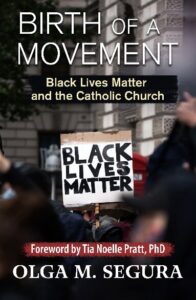 Birth of a Movement presents a radical call to dignity and equality for all people. It examines the founders of the Black Lives Matter movement, the church’s involvement with slavery, including the decision by Georgetown University to make amends for its past actions, and the Catholic Church’s response to the recent deaths of Trayvon Martin, George Floyd, and Breonna Taylor.
In relating the story of the Black Lives Matter movement through a Christian lens, readers—Catholic and others—will gain insights and a deeper understanding of the movement and why it can help the church, and the country, move closer to racial equality. Published in 2021.
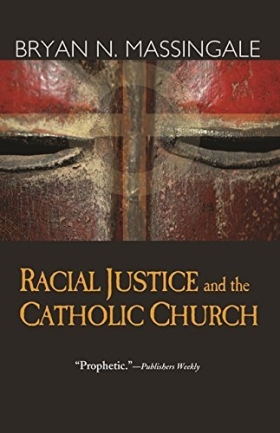
“We all are wounded by the sin of racism… How can we struggle together against an evil that harms us all?”
Racial Justice and the Catholic Church examines the presence of racism in America from its early history through the Civil Rights Movement and the election of President Barack Obama. It also explores how Catholic social teaching has been used–and not used–to promote reconciliation and justice. Published in 2010.

This book makes an extremely valuable contribution to our understanding of African-American religious life by presenting the first full-length treatment of the Black Catholic experience. It should be read by all interested in the history and culture of Black Americans. Published in 1995.
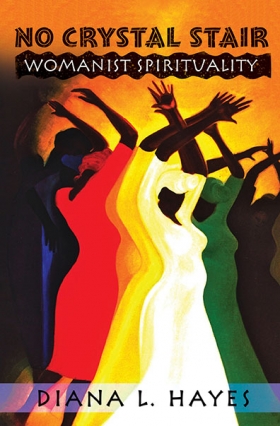
In this collection of essays, prayers, and meditations, Diana Hayes lays the foundation for womanist spirituality in the lived faith and struggles of African American women. This spirituality, as she observes, “flows from their lived encounters with God, nurtured and sustained with sweat, tears, and blood as they worked the fields, worked in the homes of white families, worked in factories and wherever else they could to support their families and build their communities.…It is a spirituality which arises from a deep and abiding faith in a God of love, a wonder-working God who walked and talked with them, giving them the strength to persevere.” Published in 2016.
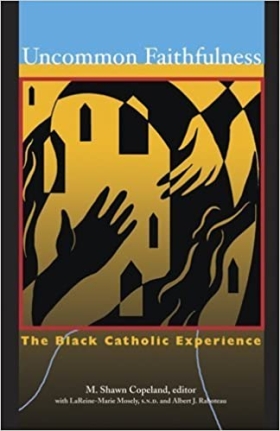
These essays describe the experience of Black Catholics in the United States since their arrival in North America in the sixteenth century until the present day. The essays highlight the difficulties black Catholics faced in their early attempts to join churches and enter religious communities, their participation in the civil rights struggle, and the challenges they face today as they seek full inclusion in the church, whether in terms of liturgical practice or pastoral ministry.
The five parts–history, theology, ethics, pastoral ministry, and pan-African concerns–include essays by Albert J. Raboteau, Diane Batts Morrow, Cyprian Davis, Cecilia A. Moore, Katrina M. Sanders, LaReine-Marie Moseley, Jamie T. Phelps, Diana L. Hayes, Bryan N. Massingale, Wilton D. Gregory, Kevin P. Johnson, Paulinus I. Odozor, Clarence Williams, and M. Shawn Copeland. Published in 2009.


Rep. John Lewis died over a year ago, in the midst of his passing senators and representatives from both sides of the aisle shared kind words about him and honoring his legacy. However, sentiment does not seem to align with congressional action.
On three occasions in the past month, Senate Republicans have blocked discussing the John Lewis Voting Rights Advancement Act (H.R.4).
What’s in the John Lewis Voting Rights Advancement Act?
Suppression tactics to hamper voter participation have become campaign strategy. Gerrymandered districts reflect the needs of the party in power, not the constituents. It is often impossible to know the sources of campaign attacks and fear-mongering half-truths. While these weaknesses were on full display, a coordinated misinformation campaign by the loser’s party is dangerously undermining voters’ trust in elections.
In a faithful democracy, elections, campaigns, and voting are all mechanisms for a collective wisdom to break through which shapes truly representative leadership and empowers accountable decision-makers. This is the open-loop system that, at its best, brings about a more perfect union. Transformational reforms are needed to get us there, and they cannot wait another election cycle.
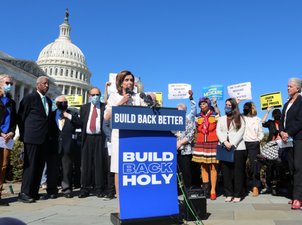
On October 28, President Biden unveiled the framework for his Build Back Better Plan. The $1.75 trillion package includes key provisions such as permanent refundability of the Child Tax Credit, closing the Medicaid coverage gap in the 12 non-expansion states, a $150 billion investment in affordable housing and vouchers, $100 billion for immigration system reforms, four weeks of paid family leave, and more.
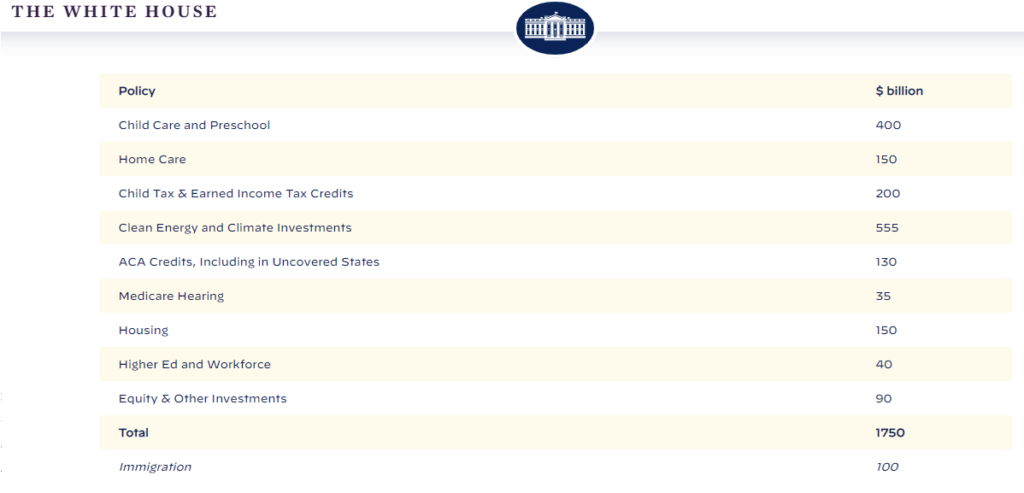
Source: https://www.whitehouse.gov/briefing-room/statements-releases/2021/10/28/build-back-better-framework/
Here’s a breakdown of the NETWORK priorities included in the Build Back Better framework:
*Expand Medicaid coverage in 12 non-expansion states
*Address the Black maternal health crisis
The $130 billion health care investments in the Build Back Better framework will expand Medicaid coverage to 4 million uninsured people in 12 non-expansion states. Medicaid expansion will help elders, rural communities, low-income communities, and other folks with health care accessibility issues receive care. Also included in the package are historic maternal health equity investments to address the Black maternal health crisis.
*Permanent refundability of the Child Tax Credit
*One-year extension of the expanded Child Tax Credit and Earned Income Tax Credit
The proposed Build Back Better framework includes permanent refundability of the Child Tax Credit, and will provide more than 35 million households with the expanded Child Tax Credit of up to $3,600 per child for one year. Full refundability of the Child Tax Credit means that low-income families who do not typically file a tax return will still qualify for the credit and get the support they need.
The framework also extends the expanded Earned Income Tax Credit for about 17 million low-wage workers. The American Rescue Plan tripled the credit for childless workers, many who are essential workers, and the Build Back Better framework will extend this provision to work towards alleviating poverty.
*$150 billion for housing investments including: $25 billion in new rental assistance; $65 billion to preserve public housing infrastructure; and $15 billion for the national Housing Trust Fund
President Biden’s plan would invest $150 billion in housing affordability, especially for rural communities. These investments will fund more than 1 million new affordable homes, rental assistance, public housing, and expand housing vouchers to hundreds of thousands of families in the U.S. This is one of the biggest affordable housing investments in history and will help eliminate the racial wealth and income gap by allowing first-generation homebuyers to build wealth.
*Four weeks of paid family and medical leave
After initially being gutted from the original Build Back Better framework, four weeks of paid family and medical leave is now included thanks to the tireless advocacy of workers and families across the country. The U.S. is one of the only countries in the world without a national paid family and medical leave program. A federal paid leave program will allow low-income workers and workers of color to access paid leave for the first time. Workers will no longer have to choose between a paycheck and caring for themselves or their family members.
*Reforms to our immigration systems
*Work permits and deportation protection for undocumented people in the U.S. 10 years or longer
The Build Back Better framework includes a $100 billion investment for immigration systems reforms, contingent on a Senate parliamentarian ruling. While the current framework includes access to work permits and deportation protections for nearly 7 million undocumented people living in the U.S. for a decade or longer, it disappointingly does not include a pathway to citizenship Dreamers, TPS holders, farm workers, and other essential workers despite strong bipartisan support.
In addition to these NETWORK priorities, additional investments the Build Back Better plan will establish universal and free preschool for more than 6 million 3- and 4-year-olds, expand access to high-quality, affordable child care, improve Medicaid coverage for home care services for seniors and people with disabilities while improving the quality of caregiving jobs, and provide $550 billion of investments in clean energy and other climate change initiatives.
The Build Back Better plan will be paid for by requiring ultra-wealthy millionaires and billionaires and corporations to pay their fair share. The framework reverses some of the 2017 Trump-era tax cuts for the wealthy to raise revenue for families and workers in the U.S. The tax justice provisions include:
Unfortunately, the Billionaires Income Tax was left out of the framework. With the tax changes in the Build Back Better framework, we will raise more than enough revenue to pay for the $1.75 trillion plan.
The Build Back Better framework outlines transformational investments in workers and families that will work towards eliminating the racial wealth and income gap and building a new, equitable society. The framework falls short by not including a pathway to citizenship, but is overall a significant step towards dismantling systemic racism in our federal systems. House Democrats are currently working on moving the Build Back Better plan across the finish line before the end of the year. Email your Representative today or dial 888-738-3058 to call your Representative and tell them you support the Build Back Better framework!
While we have been talking about the Bipartisan Infrastructure bill (H.R.3684) and Build Back Better Act for months, last Friday, the Bipartisan Infrastructure package passed the House and became law and a deal was struck between moderates and progressives on Build Back Better. While the Bipartisan Infrastructure plan includes important investments in affordable housing, safe drinking water, and broadband access, we need Congress to also pass the social investments in the Build Back Better plan to support families and communities. You can read more about the Bipartisan Infrastructure Deal on the White House website.
Together, both bills will make a spectacular investment to improve lives, create good union jobs, add a more sustainable environment, and more! Last week’s vote, agreeing on the rule for Build Back Better, will pave the way for investment in the care economy, a clean environment, and having the wealthiest pay more of their fair share for it all.
Five Democrats: Representatives Ed Case (HI-1), Josh Gottheimer (NJ-5), Stephanie Murphy (FL-7), Kathleen Rice (NY-4) and Kurt Schrader (OR-5); offered their tentative support for Build Back Better. If the cost estimate from the nonpartisan Congressional Budget Office is “consistent with the toplines for revenues and investments” outlined in the White House estimate, they will vote in support. With this commitment, the House went forward and passed the Bipartisan Infrastructure bill. This is in large part thanks to the Congressional Black Caucus’s two-step solution: passing the Bipartisan Infrastructure bill along with the rule governing floor debate for Build Back Better (H.Res.774).
NETWORK applauds President Biden, Speaker Pelosi, the Progressive Caucus and Moderates who are moving the whole package, both bills, forward. Now, we urge Congress to vote before Thanksgiving to begin making transformational investments that prioritize vulnerable communities. As the Build Back Better plan continues advancing in the House, we have to keep pressure on Senators Joe Manchin and Krysten Sinema of Arizona, neither of whom have yet to support the plan publicly.
Make your voice heard! Join us in emailing the Senate and House to show your support for Build Back Better.
Or write a letter to the editor supporting the Build Back Better plan here!
As Pope Francis said at the beginning of the pandemic, “it is necessary to build tomorrow, look to the future, and for this we need the commitment, strength and dedication of all.”
Ahead of a vote on the Build Back Better Act (H.R.5376), NETWORK Executive Director Mary J. Novak sent a vote recommendation to the Hill urging Representatives to vote yes. This historic legislation reflects values inherent in Catholic Social Teaching as it embodies love of neighbor, care for vulnerable communities, and care for the earth. As importantly, this transformative bill requires those who have the most to contribute their fair share to advancing the common good.
The Build Back Better Act takes critical and necessary steps toward addressing long-standing injustices by:
The time to act is now. NETWORK Lobby for Catholic Social Justice urges all elected officials to seize this moment as a critical opportunity to act faithfully and make a once-in-a-generation investment in our families and all communities.
Read NETWORK’s Vote Recommendation on Build Back Better Act (H.R.5376).
With President Biden’s release of a detailed Build Back Better Framework last week, we are on the verge of a historic shift in our government’s priorities. Now, let’s get it done!
There is a good chance the House of Representatives will vote on the Build Back Better legislation THIS WEEK so please take action TODAY.
Update: Since this video was filmed, further negotiations have succeeded in securing four weeks of comprehensive paid family & medical leave to care for a new child, to care for a family member, and to care for your own medical needs in the House version of the Build Back Better framework. Paid leave will unite the country, keep us healthy and help every family in the U.S.
Call Your Representative Now: 888-738-3058
Tell them to vote Yes on the Build Back Better plan!
With your help, Congress will vote to shape our federal policies to align more closely with our values.
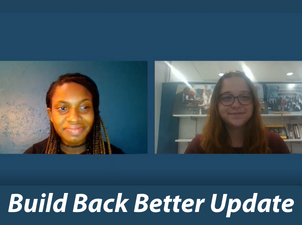
What is housing infrastructure and why/how are we spending $150 billion on it? NETWORK policy experts, Chiquita Jackson and Jarrett Smith break it down. Watch a new NETWORK update on our housing infrastructure:
Call Your Representative Now: 888-738-3058
Tell them to vote Yes on the Build Back Better plan!
With your help, Congress will vote to shape our federal policies to align more closely with our values.
The expanded Child Tax Credit is one of the most significant expansions of the social safety net the U.S. has had in decades and provides necessary assistance to millions of middle class families, and families living at or below the poverty line. This safety net expansion is essential. Nine in ten families qualify for the Child Tax Credit, supplementing up to $300 for each child, which played a major role in bolstering families struggling to afford food, clothes, and childcare in the pandemic.
This universally beneficial tax credit is in jeopardy, with Senators Joe Manchin (WV) and Krysten Sinema (AZ) posing major threats to getting these essential funds to children in need despite the major success they’ve seen in their home states.
In September, 86% of West Virginians said the expanded Child Tax Credit made a “huge difference.” In Arizona, poverty rates would decrease by 45% if the Child Tax Credit was expanded.
As it stands now, the credit will only be expanded for one year, and it is not likely to be renewed in Congress again. Our economy is going to need longer than one year to recover — which will leave millions of families without the support they need.
In addition, Senator Manchin wants to impose strict work requirements for this bill. This ignores that wages are as low as they’ve ever been in American history. Putting in a hard days work in the United States is no longer a guarantee that you won’t live in poverty, leaving many parents to work two jobs — meaning they will have to pay for child care, which many can no longer afford. Let’s face it: raising children is work and strong families are the building block of our society.
Speaker Nancy Pelosi and Majority Leader Chuck Schumer are hoping to pass the Build Back Better plan by October 31. These next few days in Congress are critical.
NETWORK needs your support to pass one of the significant investments in our country to date.
Here are a few highlights of this bill:
All of these bold provisions are necessary to ensure a full economic recovery. As Pope Francis said, recovery needs to be: “capable of generating new, more inclusive and sustainable solutions to support the real economy… and the universal common good, not a return to an unequal and unsustainable model of economic and social life, where a tiny minority of the world’s population owns half of its wealth.”
A budget is a reflection of our values, but past budgets have too often caused harm by underinvesting in our people and our communities. We at NETWORK know this from meeting and listening to families across the country who struggle to make ends meet every month or face impossible choices between paying for rent or paying for medicine.
Now is the time to show Congress your support; this is the final push we will need to get this passed.
You can write an email to tell your Senator to support Build Back Better here.
Or if you are a constituent of Sen. Sinema or Sen. Manchin, you can call them at 1-888-436-6478, to show your support for the bill.

