

Category Archives: Spirit Filled Network

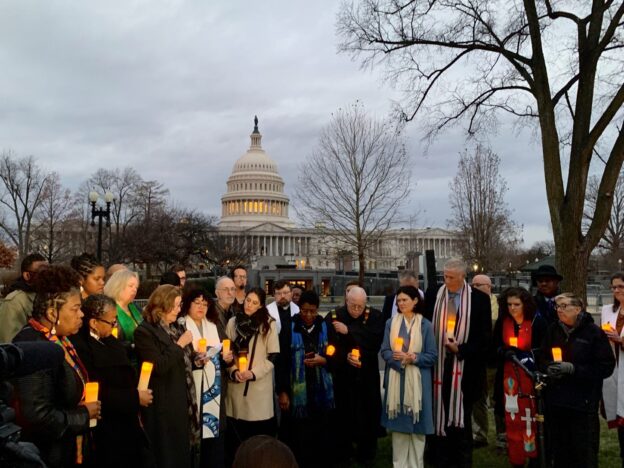
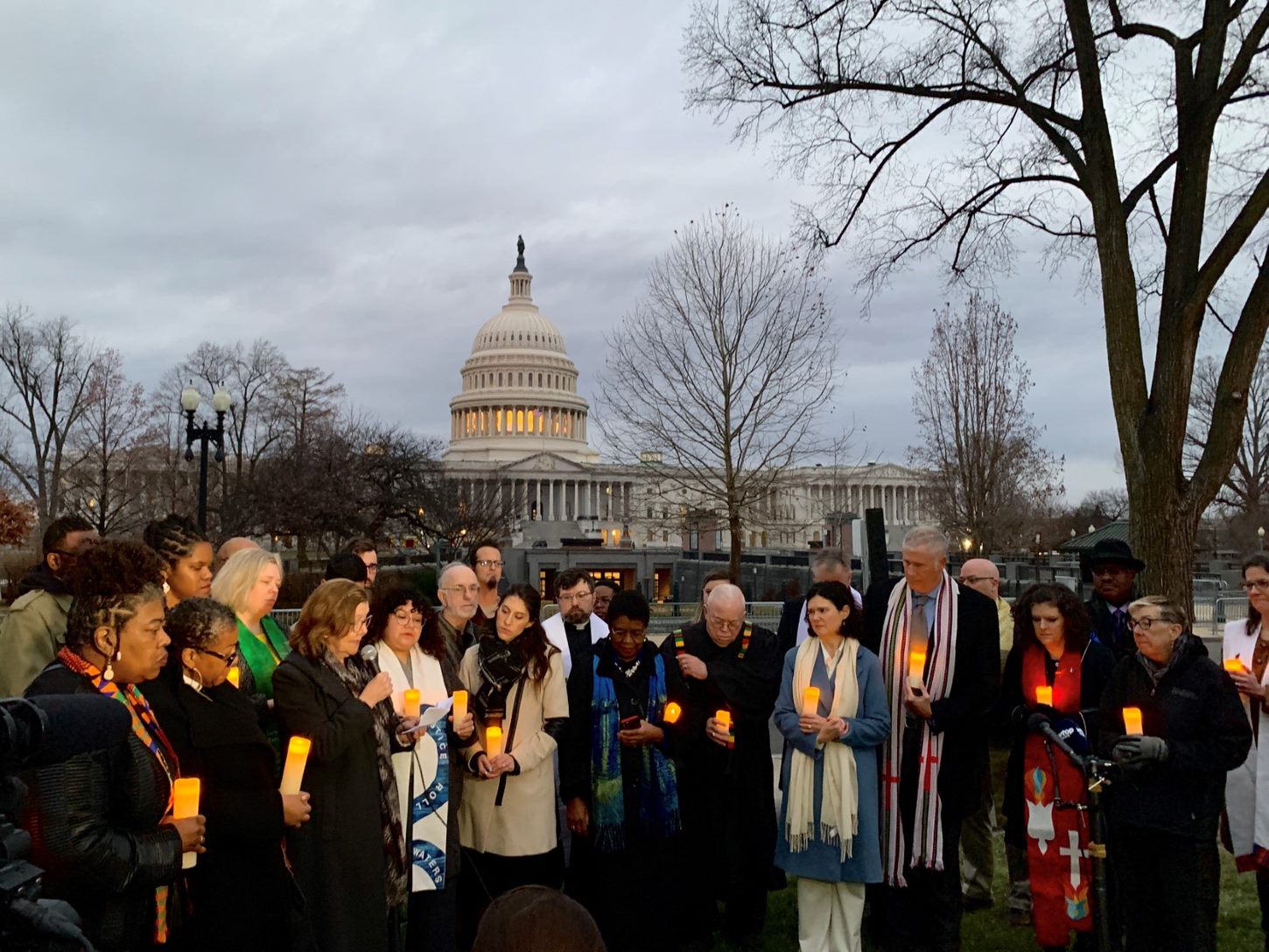
Christian leaders gather across from the U.S. Capitol for a sunrise vigil organized by the Baptist Joint Committee for Religious Liberty and Faithful America, marking the second anniversary of the January 6 insurrection.

Relational Politics

Relational Politics

Democracy’s Future Depends on Fostering Community

Mary J. Novak
April 12, 2023
Christian leaders gather across from the U.S. Capitol for asunrise vigil organized by the Baptist Joint Committee for Religious Liberty and Faithful America, marking the second anniversary of the January 6 insurrection.

Christian leaders gather across from the U.S. Capitol for a sunrise vigil organized by the Baptist Joint Committee for Religious Liberty and Faithful America, marking the second anniversary of the January 6 insurrection.


Early in the morning on Jan. 6 of this year, a diverse group of faith leaders from different Christian denominations gathered across from the U.S. Capitol for a sunrise prayer vigil. I spoke at this event, representing NETWORK and the concerns that many Catholics have for the future of the United States. We prayed together for our democracy, and it felt like a glimpse of the Beloved Community that our system of government is capable of fostering.

The challenge that faces all of us is that this group was not representative of the rhetoric and political movement currently claiming the mantle of “Christian” in U.S. politics. One of the results of the 2022 midterm elections has been the ascendancy of extremists in Congress who assert a nationalist brand of politics that is corrosive to our system of government. If anything is clear from the January 6 Committee hearings and other current signs, our democracy is not yet out of the woods.

Democracy is the container for all the social and political issues that our Catholic tradition so richly informs — the dignity of the human person, economic equity, the rights of workers. We work for them in a pluralistic context, always seeking to build up the common good. Democracy offers protections that policy alone cannot cover and which other systems and philosophies, like Christian nationalism and Catholic integralism, openly reject. These seek to ascribe some uniquely dominating role to Christianity in society and invariably end in oppression and violence. The protections of democracy have remarkably held us through these past years, and the midterm elections played out without violence, despite coming a year after the insurrection of January 2021. I believe this was possible precisely because people got involved, especially at the local level.

At NETWORK, our field is very engaged and active among the countless justice-seekers who have been awakened in the past six years. I see in them an opportunity to recapture a certain relationality in our politics that has been lost in recent decades, and some NETWORK Advocates Teams are already embracing this in moving ways. We cannot achieve lasting change without authentic investment in the human relationships that run through our government and our society. The Catholic Sisters who founded NETWORK believed in this model, and we have seen it start to re-emerge with a new generation of political activists, as was evident in the awe-inspiring turnout of Gen Z in the last election.

But what we need for the long haul is a true political movement that breaks through the polarization and moves us into a space where we can creatively imagine what our democracy needs to look like to meet people’s needs and truly respond to the signs of our times.

One of the real hazards of our politics, as pointed out by Rachel Kleinfeld and others, is that the very polarization and obstructionism that creates gridlock in our politics wears down people’s faith in our system of democracy over time, because they do not see it delivering for them. People need clean air, clean water, affordable housing, pathways to home ownership,  protections against discrimination — things that the government can and has delivered for people in the past! And we have been fortunate that the Biden administration has been able to deliver in areas like infrastructure and pushing back a bit against trickle-down economic policy.

But so much remains to be done. Part of our democracy work is addressing spiraling wealth inequality, the stratospheric inequity in our society that keeps wealth out of reach for so many and concentrated in the hands of the few. The wealth divide works to severely undercut people’s belief in this democratic system, because they do not see it as fair, they see that it can be corrupted, and again, they do not think it can deliver for them.

Despite the peril of the present moment, so many people of goodwill are responding to the challenge. Are enough people unsettled? No, frankly. But in our frustration with the polarization and stagnation brought about by a small number of ideological extremists with access to way too much funding and power, we can look around and see that we are not alone. We even find community in that space. And as we continue to organize and unify our vision and work for lasting change, we find something to be hopeful about, which can ground us for the long haul.

Mary J. Novak is NETWORK’s Executive Director.

This column was originally published in the 2nd Quarter issue of Connection. Download the full issue here.
Your Public Comments Against the Asylum Ban are Appreciated

Your Public Comments Against the Asylum Ban are Appreciated

Your Public Comments Against the Asylum Ban are Appreciated

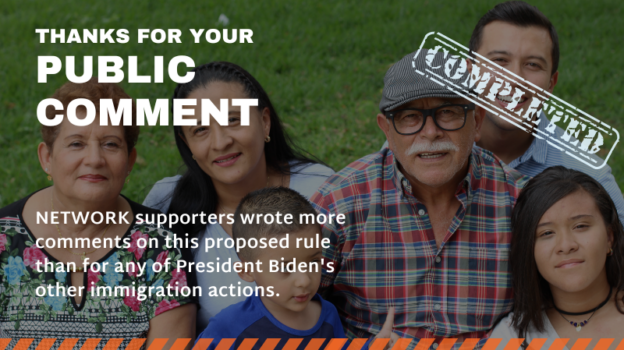
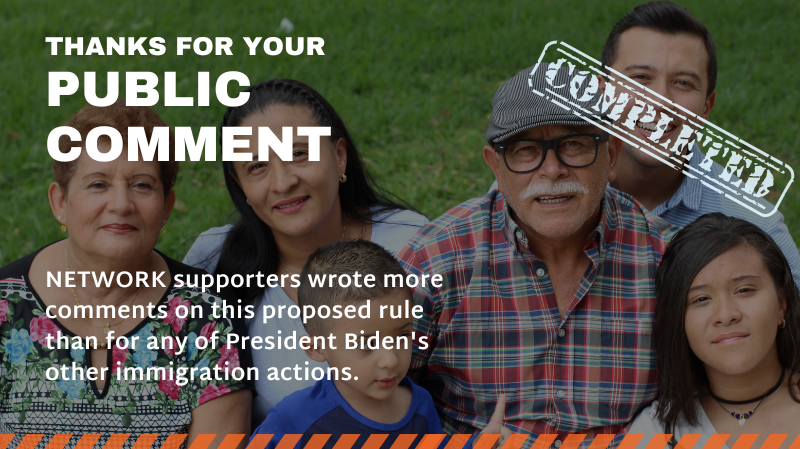
NETWORK’s Spirit-filled community submitted over 850 public comments in response to President Biden’s proposed asylum ban. Thank you, this is the largest response we have ever had to a call for our supporters to write an immigration comment!  And you did not act alone. Supporters of our faith and secular partners, and individuals across the country, also contributed to the 51,952 total submissions (as of Sunday, April 2).

It’s not too late to let President Biden know that justice-seekers demand a fair asylum — or tell hime again. Will you use the form below to let President Biden know that you oppose his asylum ban?

Thank You!

NETWORK justice-seekers recently came together to submit public comments against an immigration ban proposed by the U.S. Citizenship and Immigration Services (officially called Circumvention of Lawful Pathways). The ban is essentially a retread of the asylum ban that President Trump instituted and was found to be in violation of immigration law. Together, nearly 900 NETWORK supporters made their voices heard on this issue.

As an immigration lobbyist and passionate advocate for a safe and dignified asylum process, I am awed and humbled. But we must continue our efforts to protect people seeking safety in our country — the asylum process as we know it is still in jeopardy!

This is not the end. Continue to Take Action!

The Biden Administration is doubling down on anti-asylum policies. After the Title 42 expulsion policy expires on May 11th, the Administration is highly likely to push through parts, if not all, of this rule. We cannot remain silent about the deterrence policies that do not work and lead to great harm, and even death, of people who are seeking protection.

Let President Biden know that his asylum ban must be rescinded, and that justice-seekers like you oppose any asylum policy that creates new barriers for vulnerable people seeking freedom and security in our country.

The U.S. has been a beacon for fair and humane asylum for people seeking refuge and opportunity. Thank you for acting to preserve this shared, honored value.

In solidarity,

Ronnate Asirwatham

Take Action!

Take Action: Let President Biden Know, Justice-seekers oppose harmful asylum changes!

Keep Up with NETWORK

Just Politics Catholic Podcast Season 2

We Have Power to Use

We Have Power to Use

Positive Change is Not Inevitable; Nor is it Beyond Our Grasp

Min. Christian Watkins
April 4, 2023

In a world that is moving and changing seemingly at an uneasy pace, feelings of hopelessness and helplessness are quite pervasive. With social media hyperstimulation, news cycle fatigue, and electronics exhaustion, it can be paralyzing to do anything other than what is necessary just to exist. When billionaires can financially influence elections, nominations to the Supreme Court, and entire media platforms in hopes of steering events according to their will, the power of the individual can be easily neglected. But regardless, one thing the sacred texts and my mother constantly remind me of is that we have more power than we think.

The system of democracy has been credited to the ancient Greeks. Demos kratos literally translates to “people power.” I constantly see the power that one person’s voice can have in the halls of power. Every time I engage Congress and the Administration, whether through meetings or direct public actions, when people show up, when people use their presence and voice for good, good things happen. This greatly informs how NETWORK approaches all of our key policy areas like criminal legal reform, voting rights, and reparatory justice. It’s all about what we decide to do with the power of the voice and the presence we possess.

April 4 marks the 55th anniversary of the martyrdom of Rev. Dr. Martin Luther King, Jr. An assassin’s bullet may have killed the man, but it couldn’t kill the dreams, prayers, and work of righteous people. One aspect of his legacy that still resonates is how a young Baptist minister from meager beginnings was able to be such a catalyzing force in the movement for good in U.S. politics. The Civil Rights Movement of the 1950s and ‘60s culminated in the passage of civil rights, voting rights, and fair housing for Black and impoverished people all throughout our country. Dr. King knew how to build power, through and with people, on and for purpose.

Gains made back then are still active struggles today. As my mother says, it’s an unbearable reality that the rights she marched and voted for in the ‘60s are still in question today. But it is soul-settling to know that Dr. King’s advocacy and pastoral legacy through Atlanta’s Ebenezer Baptist Church is alive and well through the life and witness of Rev. Senator Raphael G. Warnock.

It is a blessing that Senator Warnock does not stand alone as a high-profile person of faith engaging with U.S. politics. Rev. Dr. Jacqui Lewis, Rep. Emmanuel Cleaver, II (D-MO), Jeanné Lewis of Faith in Public Life, Rev. Dr. William J. Barber, Rev. Dr. Barbara Williams-Skinner, and Rev. Dr. Frederick D. Haynes, III are just a few examples of people I believe embody Dr. King’s legacy of faithful public witness and leadership.

Their witness matters especially because we see today too many bad examples that confine Christian political belief to be represented by a small but extremist segment. Most of them fall under the heading of Christian nationalism — the belief that the U.S. is meant to be ruled by white Christians to serve white Christians. That belief system is contrary to the lofty principles and unalienable rights of life, liberty, and the pursuit of happiness enshrined in our country’s founding documents.

A tragic consequence of this – in addition to the exclusion, oppression, and loss of life that are the natural consequences of nationalist policy — is that religious faith in the public square becomes synonymous with intolerance and hatred, hostile to other belief systems expressed throughout the nation’s citizenry. It is unfortunate that the faith-filled justice-seeker is a strange, unknown construction to many people in the U.S., especially among younger generations.

As a Black man from the South and minister of the Gospel, I find hope and strength in the model of Dr. King. He reminds us: “Change does not roll in on the wheels of inevitability, but comes through continuous struggle.” It is a sin — a deadly one — to assume the cause is lost and not take any action at all. It is a virtue to keep showing up. It is a virtue to honor your God-given gifts through presence and witness. This is how we ultimately push past hopelessness and helplessness in our lives. May your power compel you to keep on showing up for justice, peace, and equity.

Min. Christian Watkins is a NETWORK Government Relations Advocate and minister of The United Methodist Church.

This column will be published in our upcoming Quarter 2 2023 issue of Connection.

“Every time I engage Congress and the Administration, whether through meetings or direct public actions, when people show up, when people use their presence and voice for good, good things happen.”

Join the Thriving Communities Campaign So We All Thrive

Thriving Communities

Thanks for your advocacy!

NETWORK’s Thriving Communities Campaign ran MARCH 28 to JUNE 2, but our advocacy and lobbying for social justice continues. We thank all who joined our community of Spirit-filled supporters to advocate for food, medical care, housing, and other human needs.

We look forward to working with you again soon to continue the push for thriving communities for all of us — no exceptions!

Thriving Communities Campaign

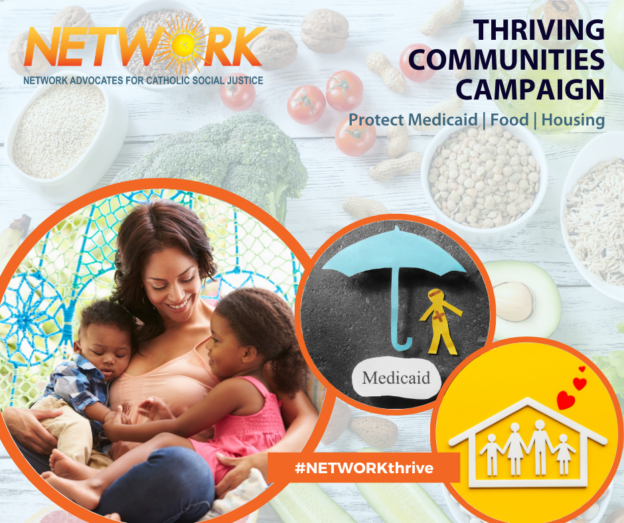
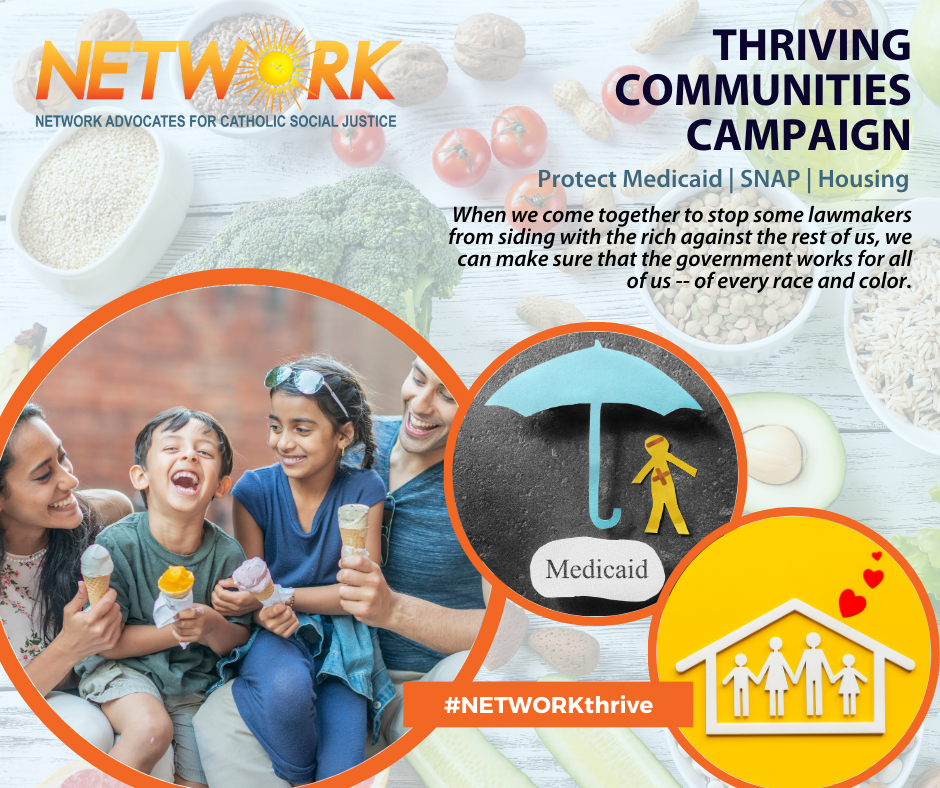
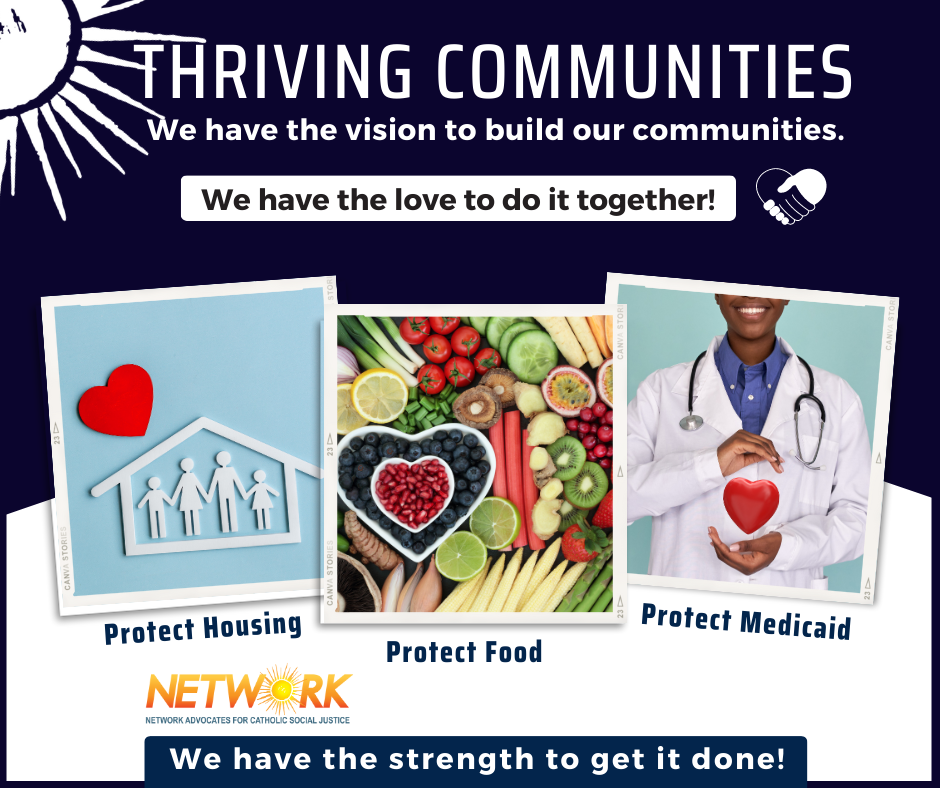
No matter where we live, how we pray, or the size of our paycheck, most of us want to be sure our families are well-fed, have a warm place to sleep at night, and can see the doctor when needed. Some politicians want to cut food, medical, and housing assistance programs that struggling folks need to pay down our country’s debts. It is immoral to place the debt ceiling burden on the backs of struggling people. Our national budget is a moral document that must allow everyone to thrive — not just the wealthy. When wealthy corporations and billionaires stop getting unfair advantages from the government that let them dodge what they truly owe in taxes, our budget will have what it needs to take care of veterans, families, and anyone in need — no exceptions. Just as we did when we fought for the Affordable Health Care Act 15 years ago, and last year for the Infrastructure Reduction Act, we will press our elected leaders to provide the supports and services our families need. Will you join the campaign?

Get Started with the Thriving Communities Toolkit

We know what our communities need to thrive, and we have the faith and love to advocate for our neighbors, and we have the strength to advocate for what we need, because we are seeking justice together!

Ready to get started? View our Thriving Communities Toolkit here, download it here. You can also view LTE’s that justice-seekers have had published in their communities around the country. See a selection of letters to the editor here.

We know that resources are bountiful in God’s beloved community. There’s enough for all of us — Black, white, and Brown — to thrive. But House Republicans want to meet the burden of our shared budget debt by cutting vital programs that those struggling in our country need to survive, like WIC, SNAP, housing assistance, and Medicaid.

We cannot balance a budget on the backs of poor people. It’s time that wealthy corporations and billionaires pay their fair share of taxes.  Spirit-filled justice seekers are coming together through the Thriving Communities Campaign to advocate for a moral budget that provides for all of us… no exceptions!

The Thriving Communities Campaign has actions that we all can take to demand that Congress protect spending for vital human needs programs — so that everyone can have the food, shelter, and medical care they need to thrive. See our Thriving Communities Campaign Toolkit here. 

The toolkit has guidance, messaging help, social media hashtags and posts, images to share, and more to make it easy for you to participate in the way that best suits you.

Watch Our Thriving Communities: #CareNotCuts Rallies

Long Island

Erie

Youngstown

Learn More with Campaign Support Guides and Videos

Thriving Communities One-Pager

The Thriving Communities One-pager helps you share the message of our campaign at events that you organize. It’s also a resource to help you persuade friends, family, and others to join our campaign.

This Work Requirements 1-pager helps you learn about existing work requirements and why adding such requirements is unnecessary and unjust.

Feel confident when you spread the goals and underlying messages of the Thriving Communities Campaign with this comprehensive talking points document.  url=”

Watch the Government Relations team explain why a moral budget is needed and how the country can fund our federal budget to cultivate thriving communities.

Watch LTE Training: Let’s Talk Debt Ceiling facilitated by the Grassroots Mobilization team. See the Letter to the Editor Training slides.

See a selection of letters to the editor written by NETWORK advocates here.

Join the Campaign!

Let Congress know you want to protect Medicaid, housing, and food programs like SNAP!

Call Your Members of Congress!

Tell them to protect vital human needs programs in our federal budget!
*Dial 1-888-897-9753 to reach your House Representative
_____________________________

*Dial 1-888-496-3502 to reach your Senators
(Call this number two times to reach both Senators.)

When you call, here’s what you might say:

“Hello, my name is [YOUR NAME] from [YOUR TOWN]. I want to ask [MEMBER OF CONGRESS’S NAME] to protect SNAP, WIC, Medicaid, housing, and other vital human needs programs from any harmful budget cuts.

Hard working families, people with disabilities, kids aging out of foster care, and others who need the life-affirming support are our neighbors, friends, and loved ones, and our nation’s budget must prioritize their needs. As a person of faith, I believe that it is immoral to balance the budget on the backs of those who are struggling the most.

Congress must reduce the deficit by having the wealthy people and corporations pay what they truly owe in taxes, not by making cuts to our neighbors who need the support that our social safety net provides. [MEMBER OF CONGRESS’S NAME], as the budget process moves forward, please reject all proposals that weaken access to healthcare, food, or housing programs.”

Our Values Root Our Call for Vital Human Needs Programs

No matter our background, faith, or color, most of us work hard for our families. ​This includes people that receive assistance from vital human resource programs like Women, Infants, and Children (WIC), Supplemental Nutrition Assistance Program (SNAP), and Medicaid. Congressional Republicans want to make cuts in these programs to pay down our country’s budget. Instead of pointing the finger of blame at people struggling to make ends meet, our elected officials must make wealthy corporations and billionaires pay what they owe to our shared economy — so that everyone in our communities can thrive, not just the rich.

Every Member of Congress serves constituents that rely on Medicaid, SNAP, and housing, and other programs that help people and families eat food at night and see a doctor when they are sick. We must tell our federal budget makers to love their neighbors and protect these life-affirming programs.

Keep Up with NETWORK

Just Politics Catholic Podcast Season 2
Your Advocacy for Reparations is Appreciated!

Your Advocacy for Reparations is Appreciated!

Thank You for Writing a Letter to President Biden for Reparations

NETWORK Justice-seekers recently came together to fill President Biden’s mailbox at the White House with requests for a reparations commission. Specifically, for an executive order for a federal reparations commission to study reparations like the one proposed in H.R.40. Below, Jarrett Smith, NETWORK’s Government Relations Advocate who lobbies on behalf of reparatory justice issues, offers appreciation for this faith-filled advocacy.

Your Advocacy for Reparations is Appreciated!

Our Values Root Our Call for Reparations

All of us want the freedom to live where we want and to have the resources we need to care for the people we love. For too long, law makers in D.C., state politicians, and businesses, have created inequity in home ownership, the job market, safe police tactics, and more — harming Black economic progress. Some blame and shame Black people for the negative outcomes that flow from this inequitable treatment.

But we know that this is wrong. By divine right and according to our Constitution, all of us are to live free, equitable, and thriving lives. To do this, we must reckon with the original sin of slavery–as it is at the root of racist policy, abuse, and violence that we see in our politics, churches, and economy today. The time is now for a federal reparations study commission.

Thank you for your Spirit-filled photos

Thank you, your words mattered!

Beloved Field,
Thank you for participating in the President’s Day Letter Writing Campaign to the White House. Your advocacy for reparations is appreciated — especially at this moment when the creation of an H.R.40-style reparations commission is up against a tight deadline. The Network team and I are  honored that you significantly bolstered our efforts to mobilize the Biden Administration to sign an executive order to create an H.R.40-style reparations commission.

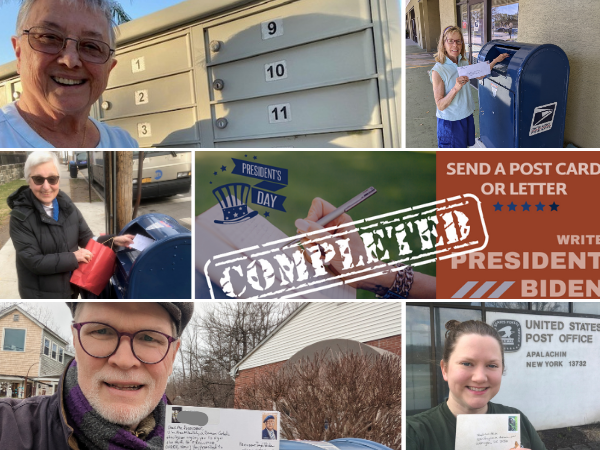
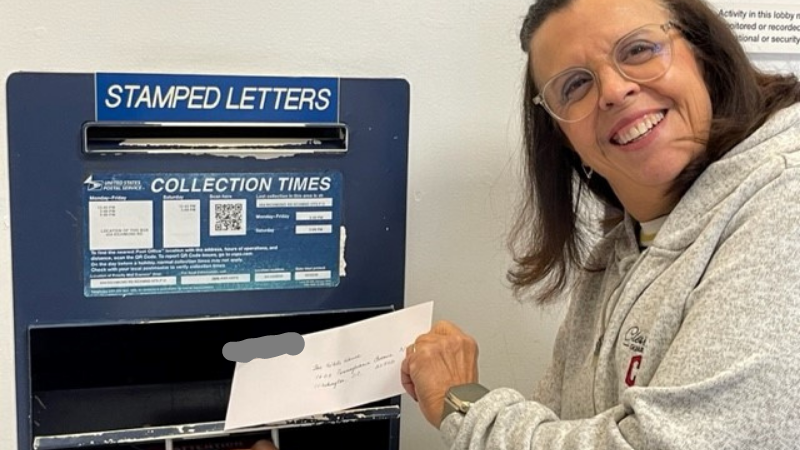
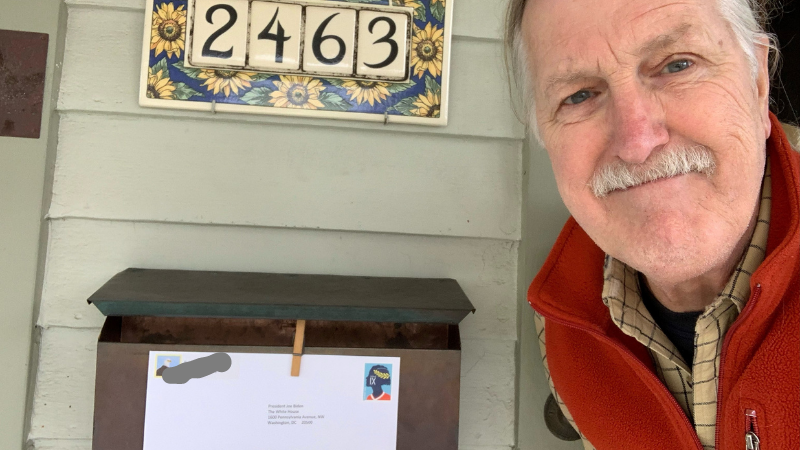
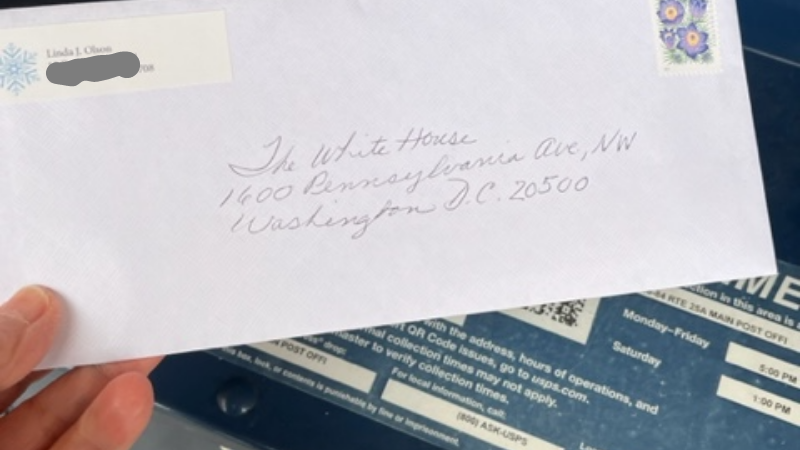
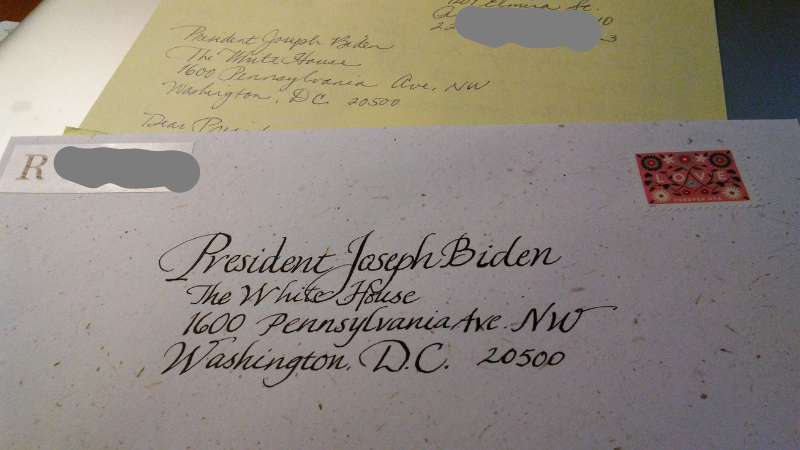
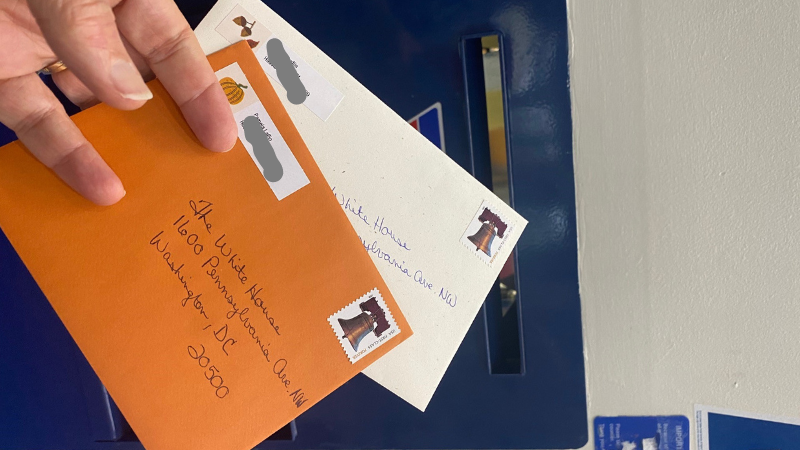
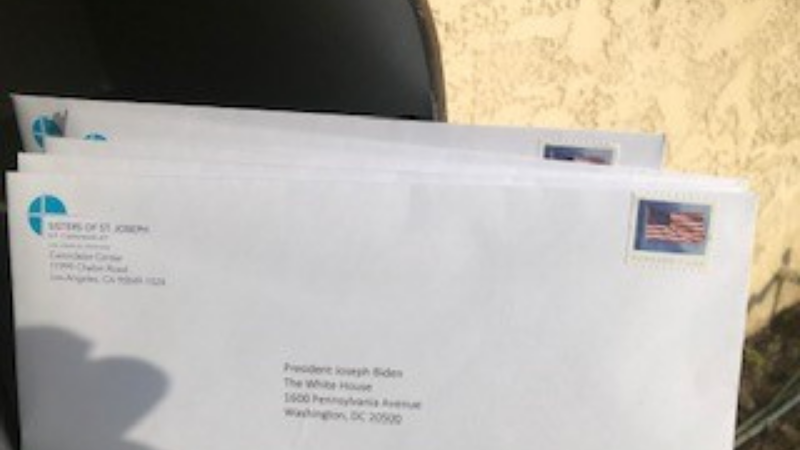
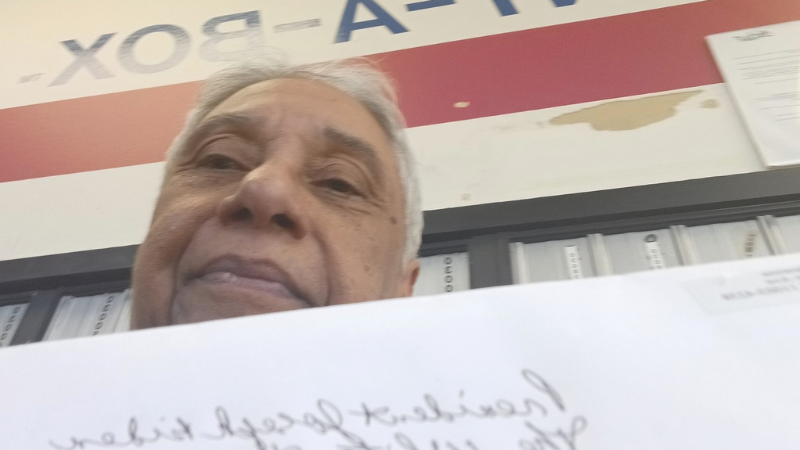
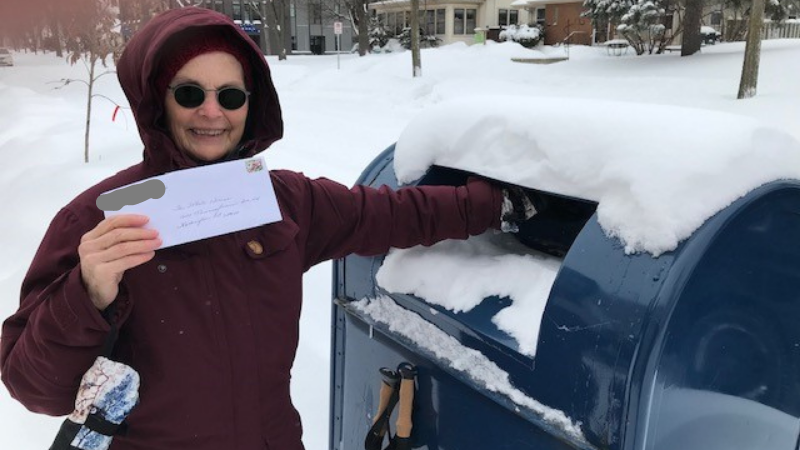
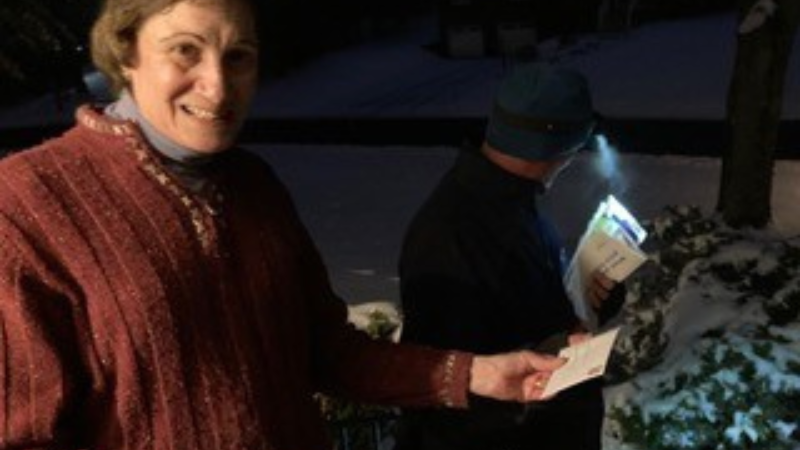
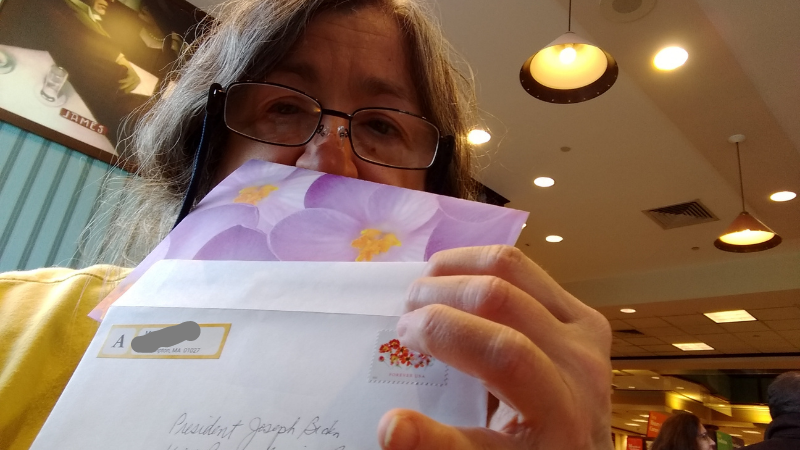
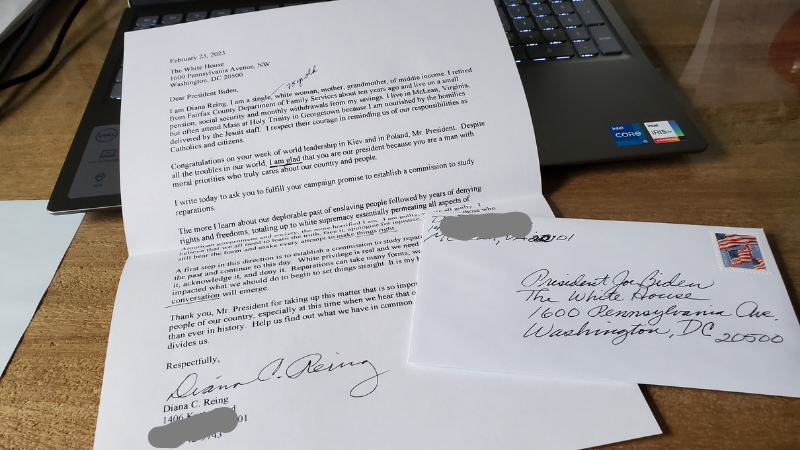
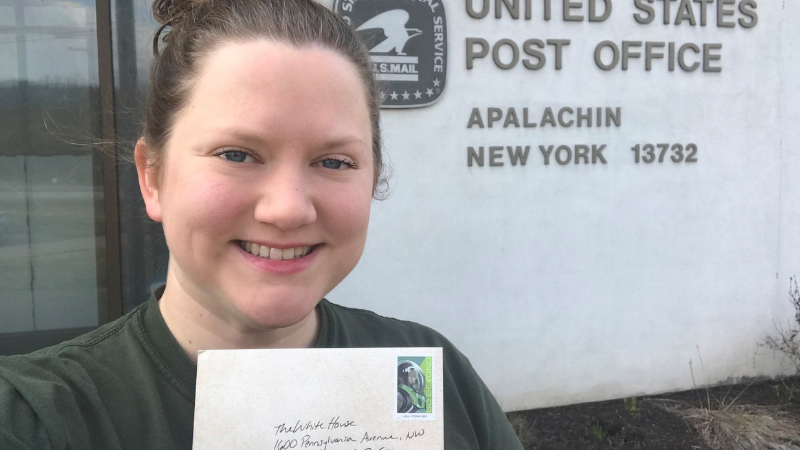
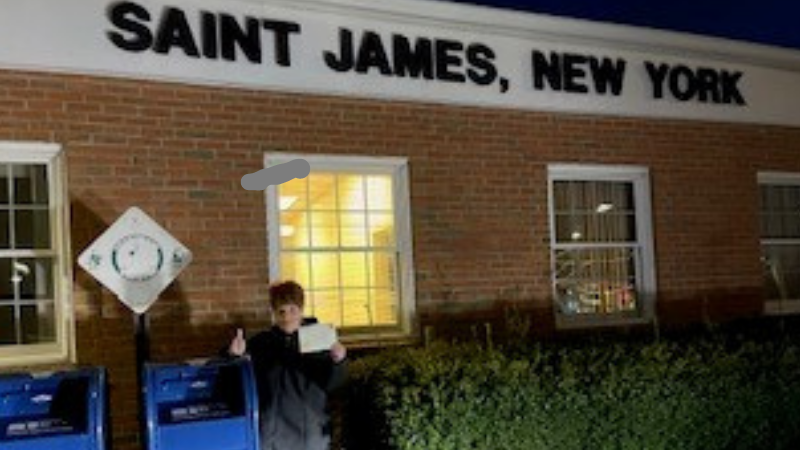
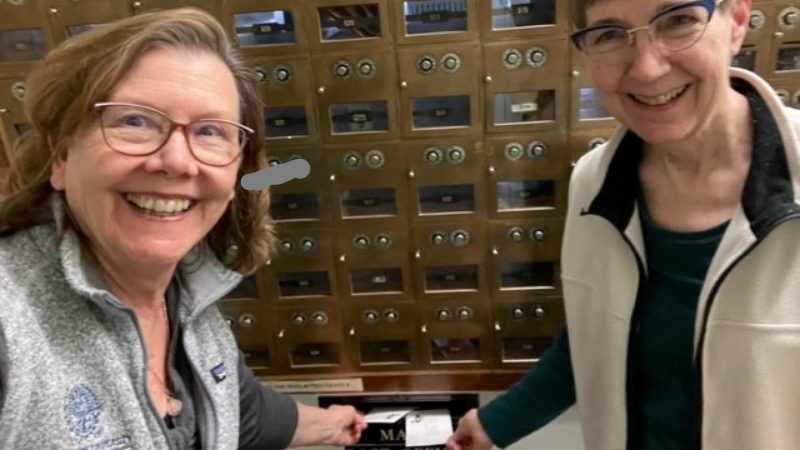
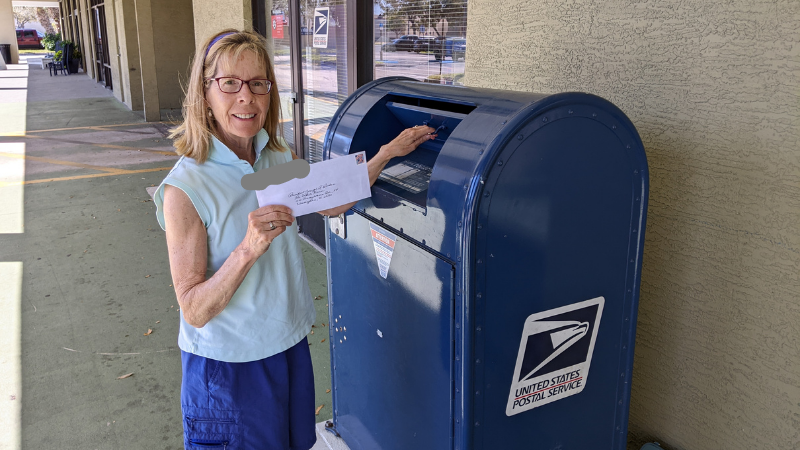
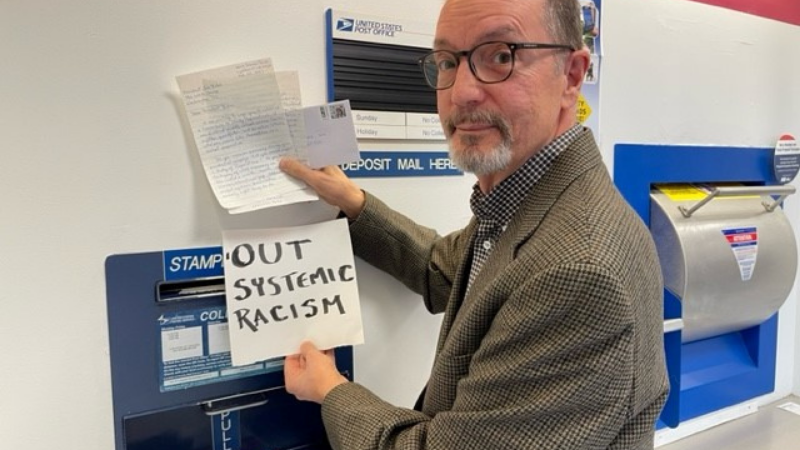
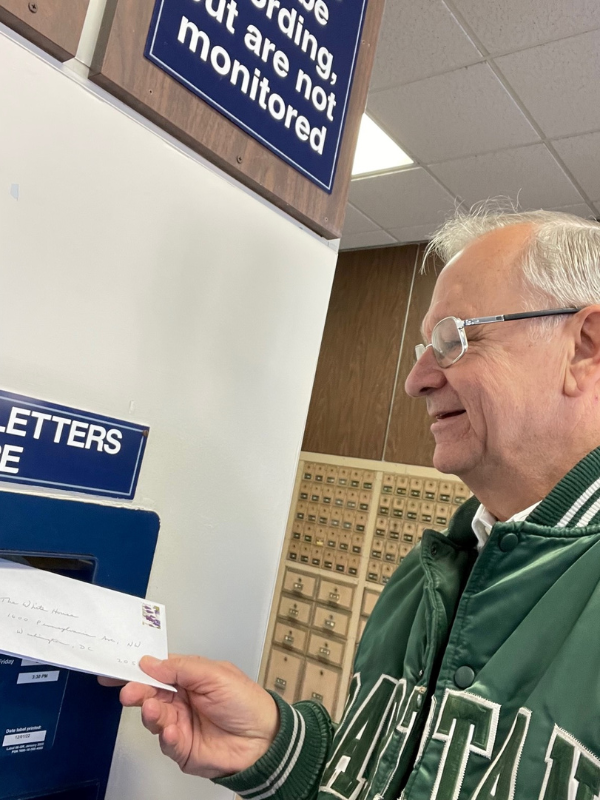
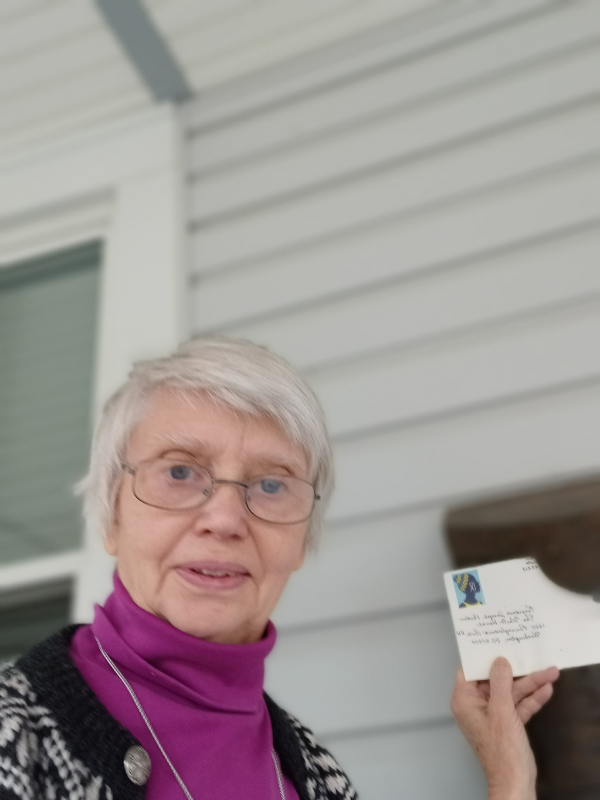
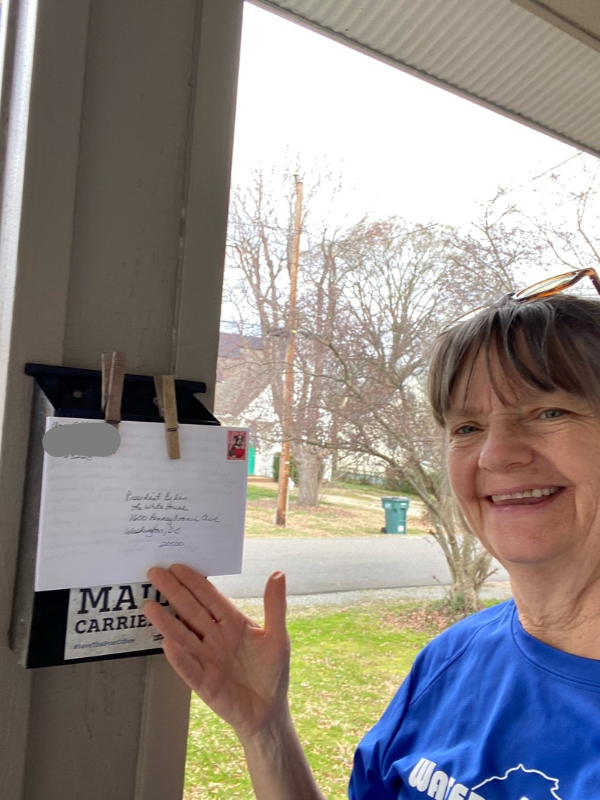
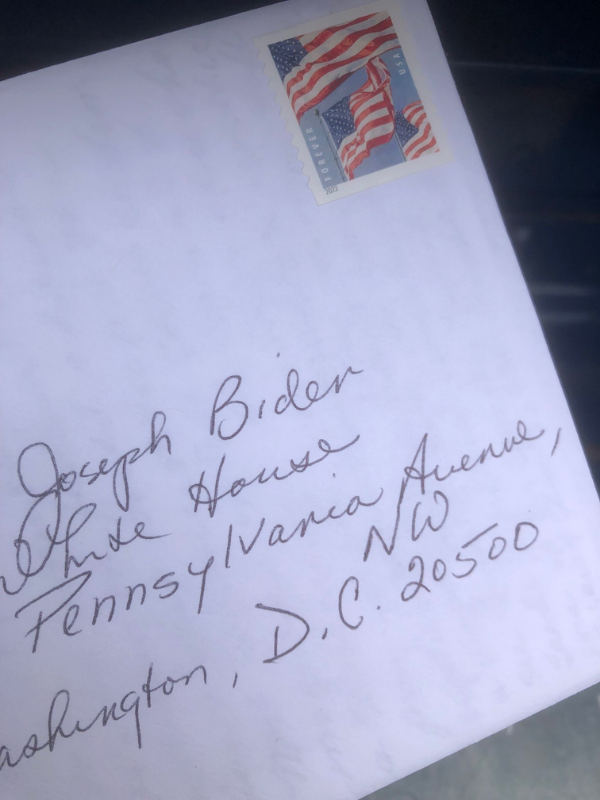
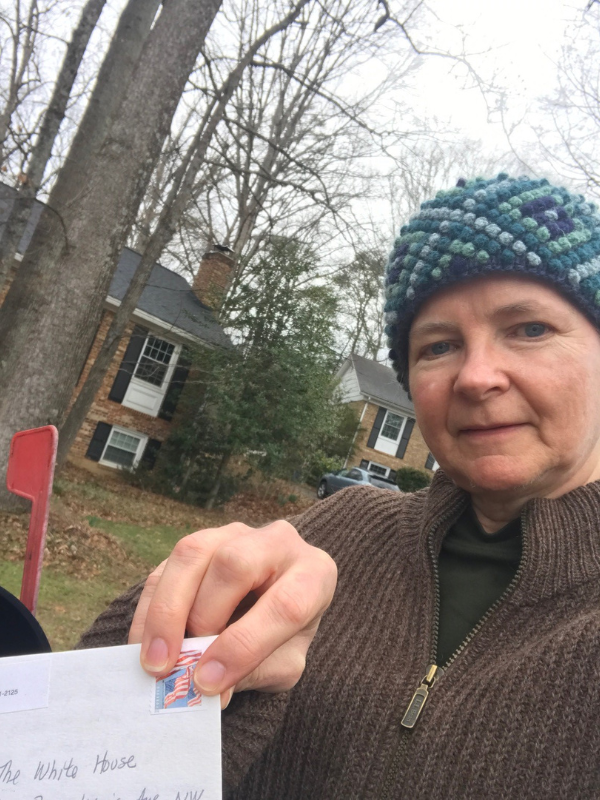
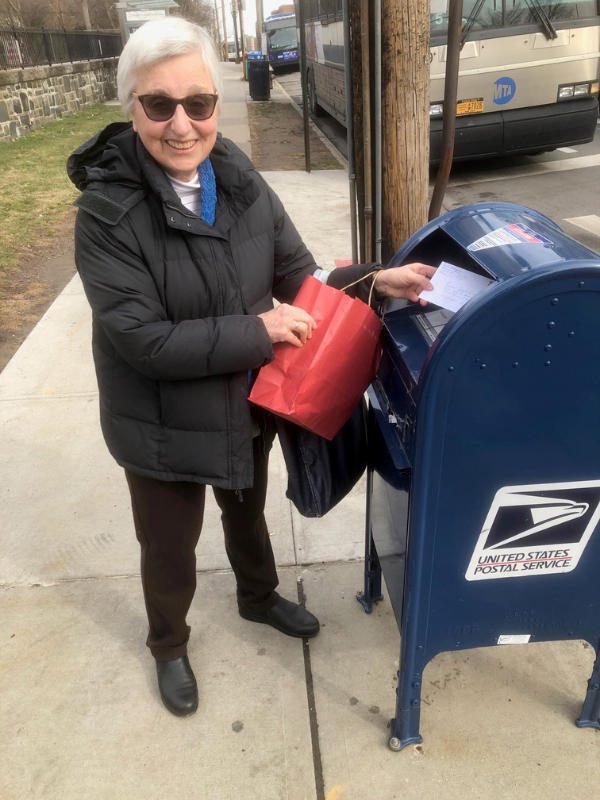
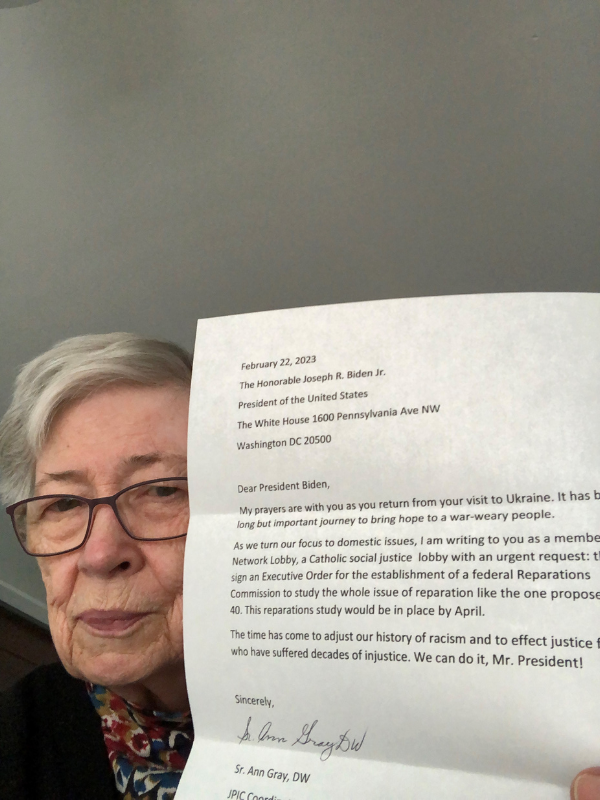
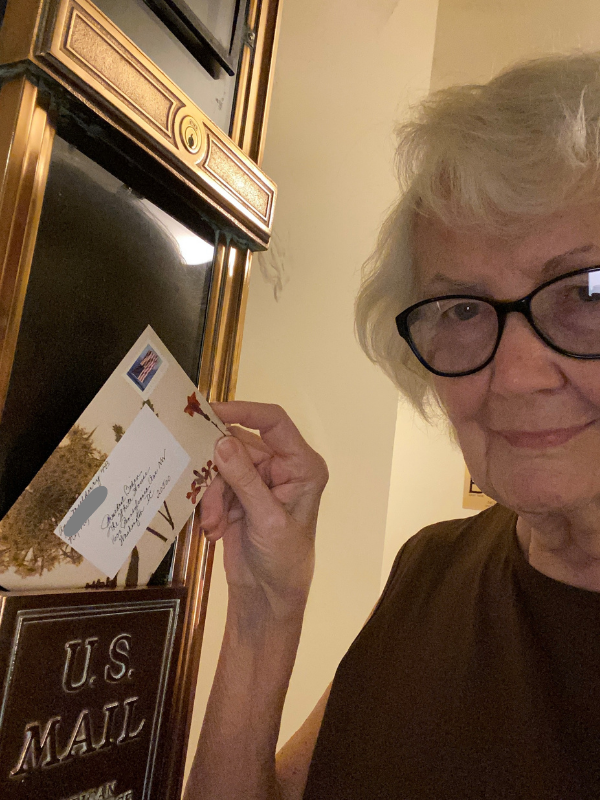
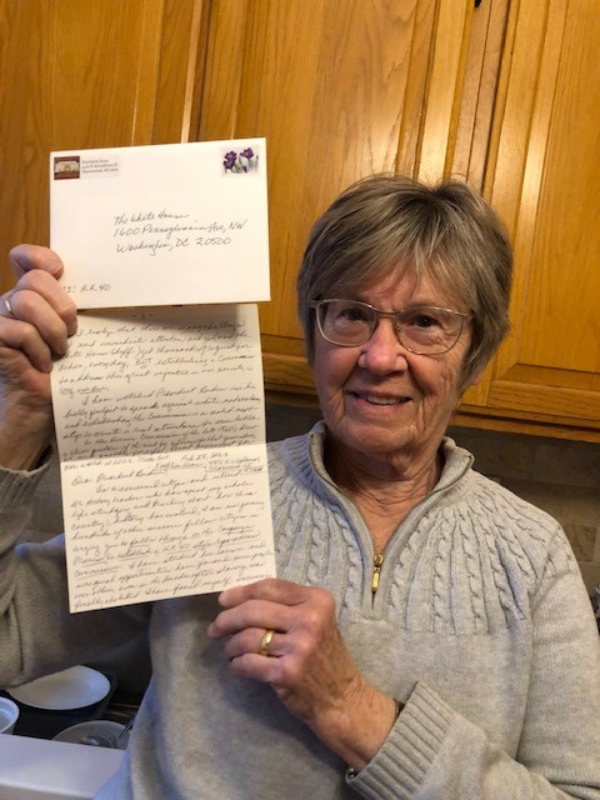
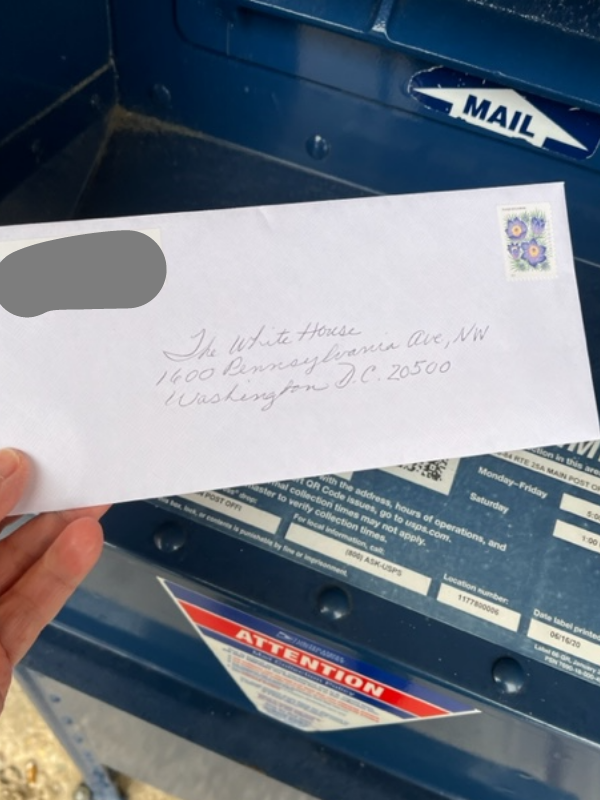
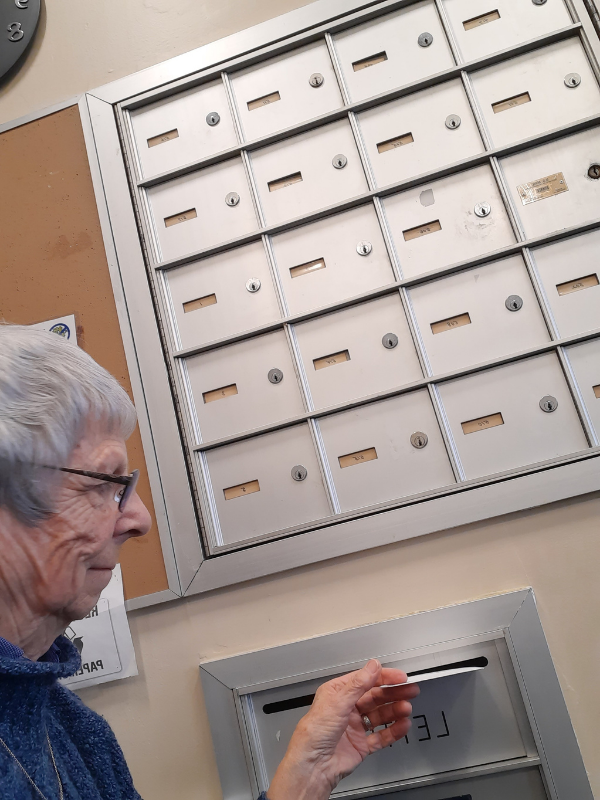
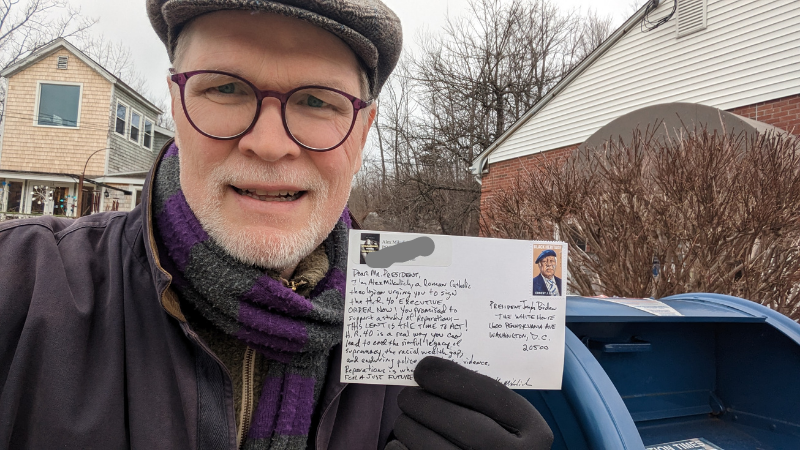
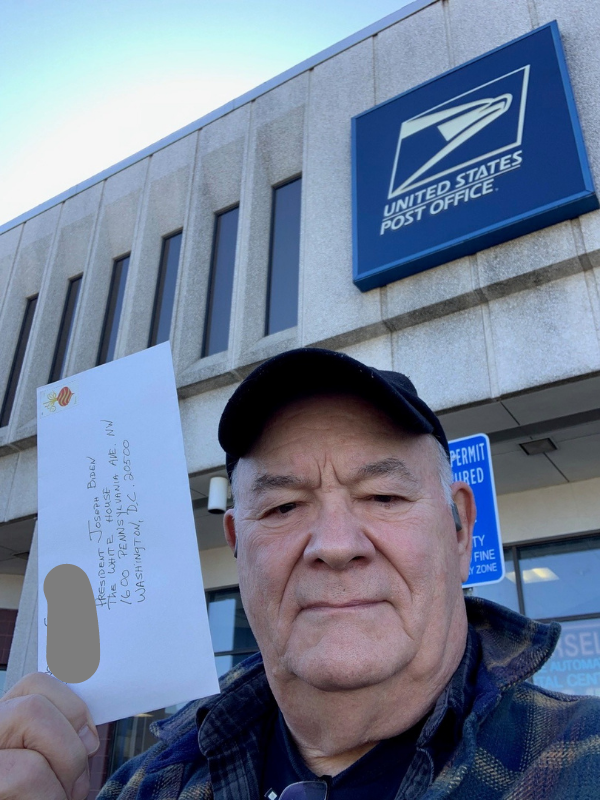
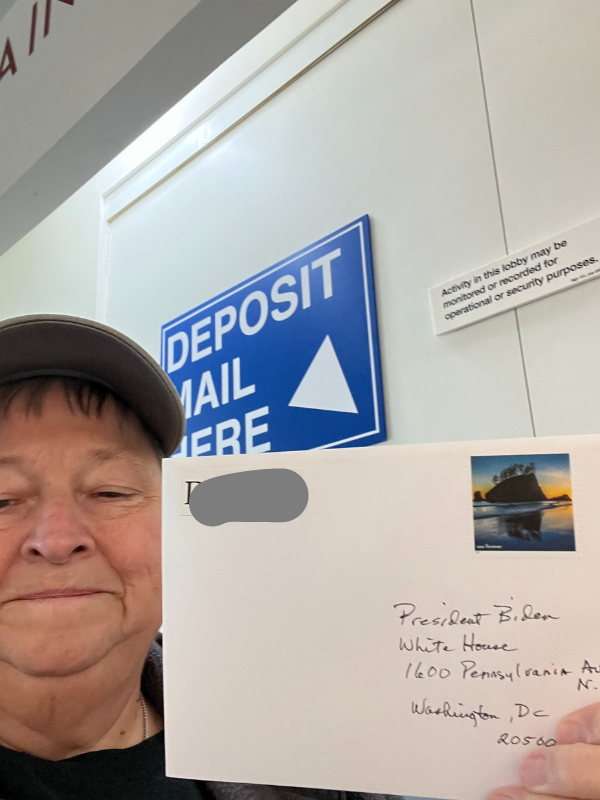
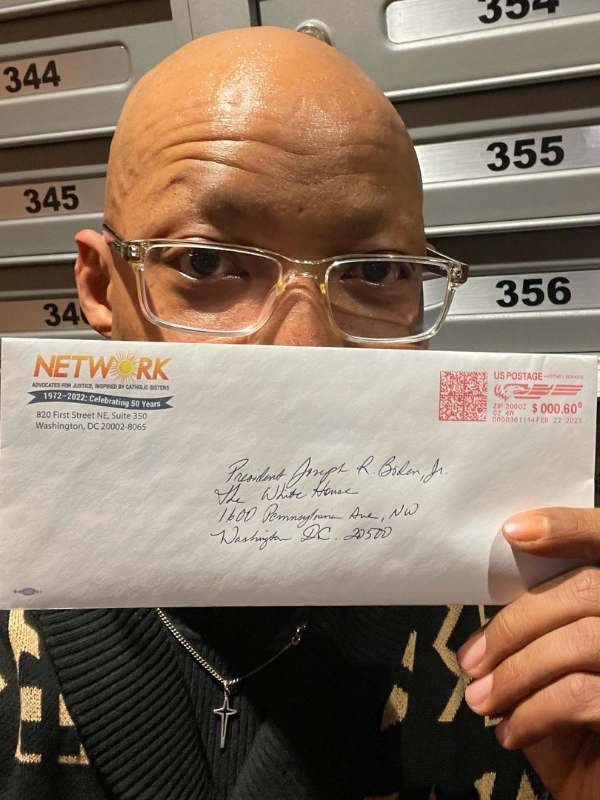
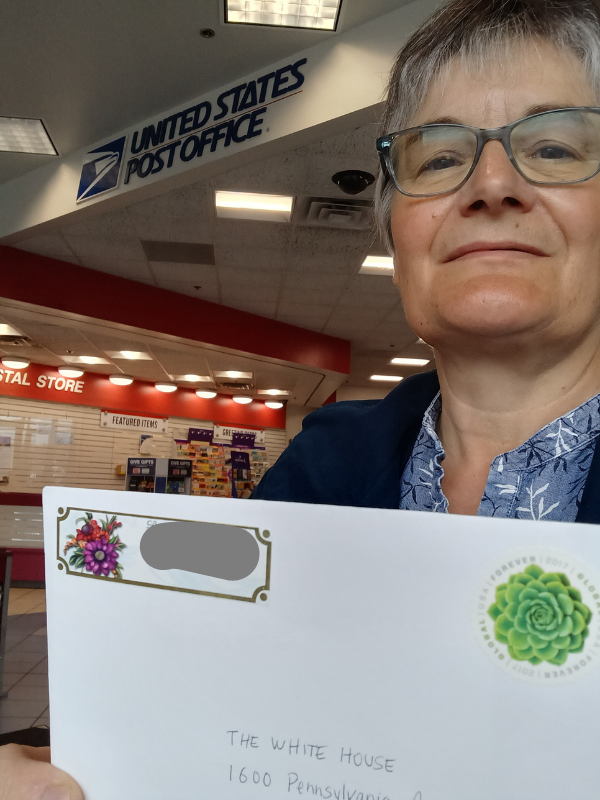
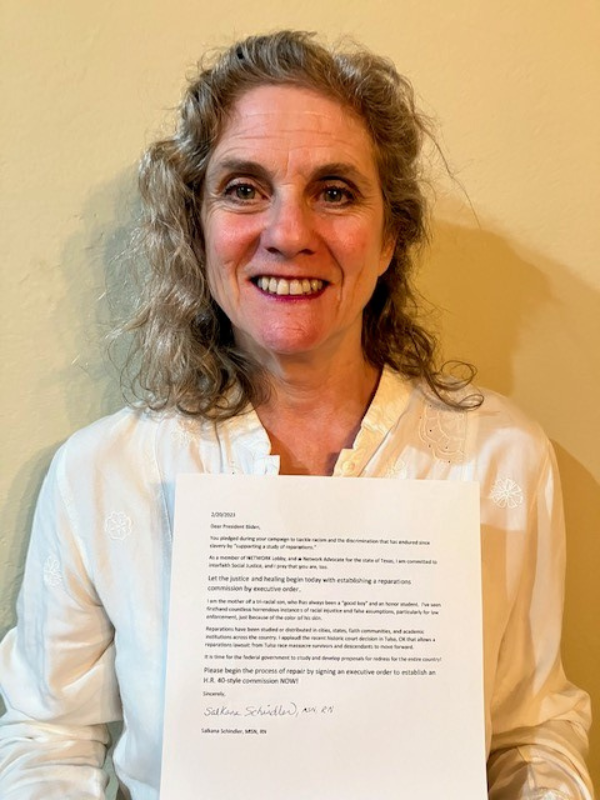
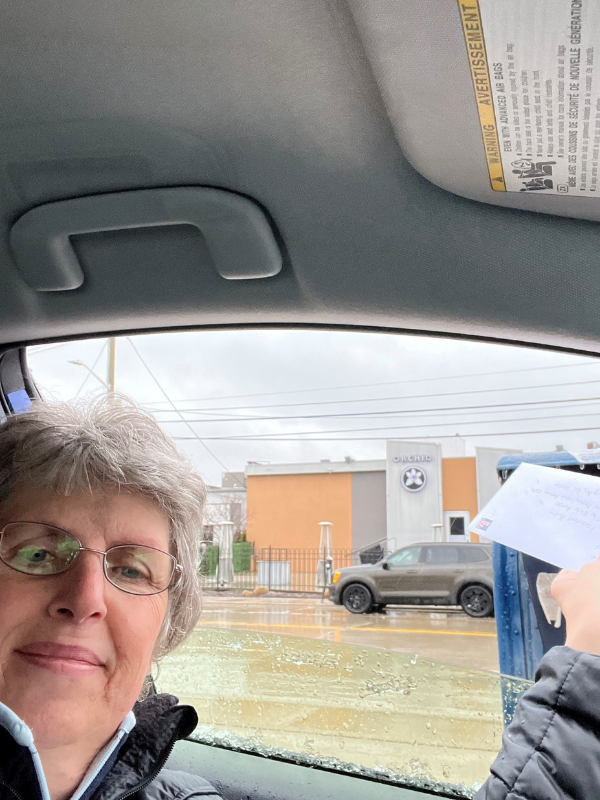
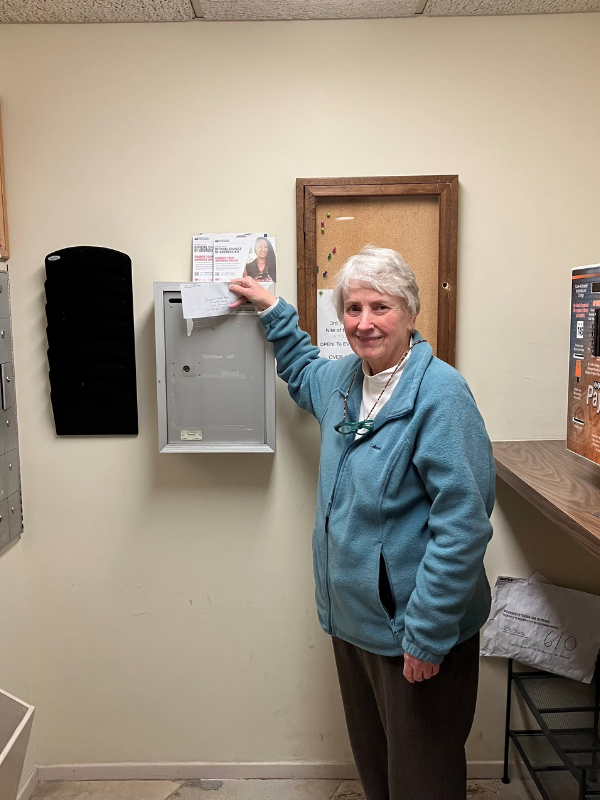
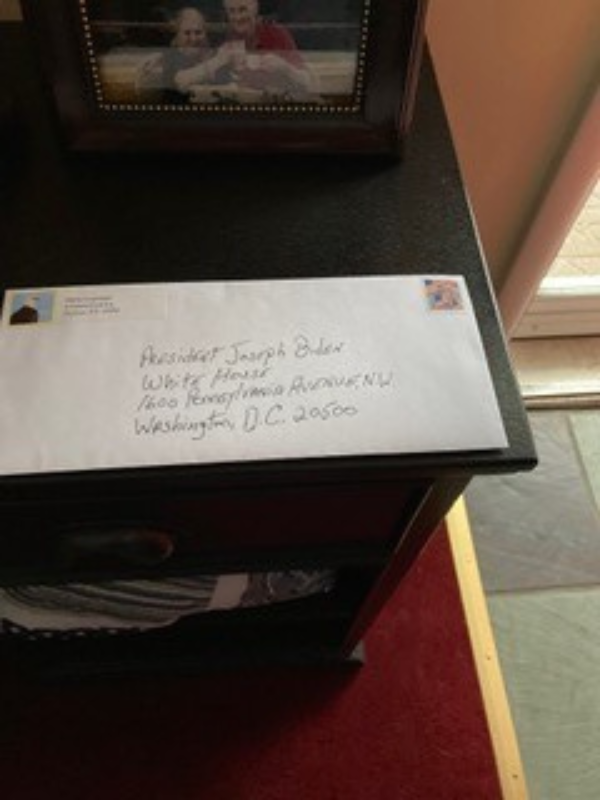
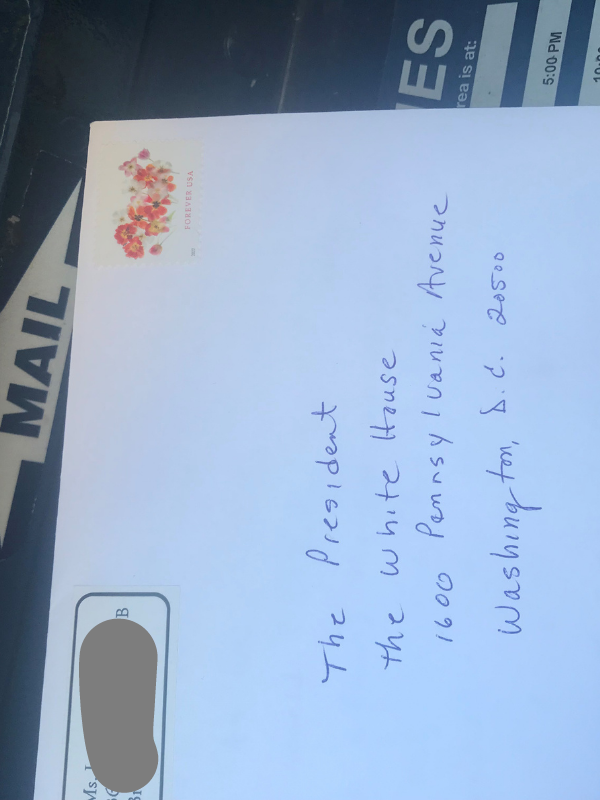
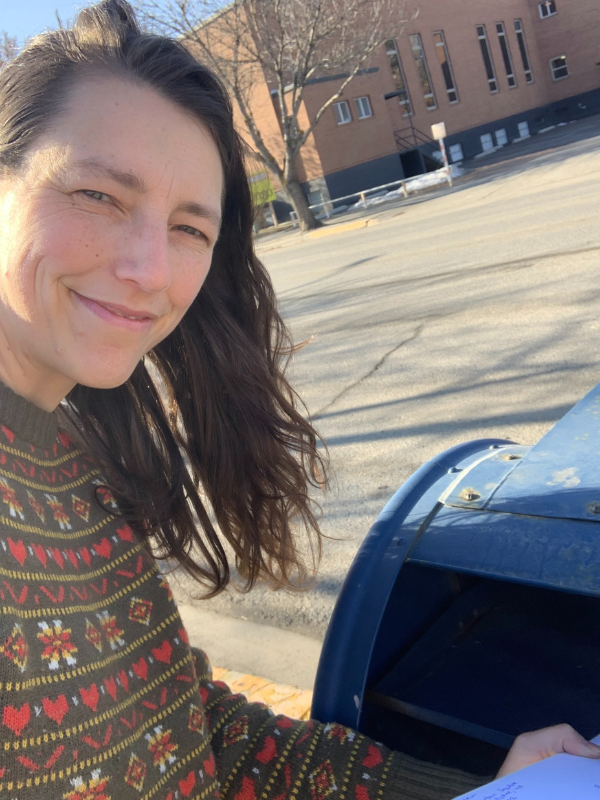
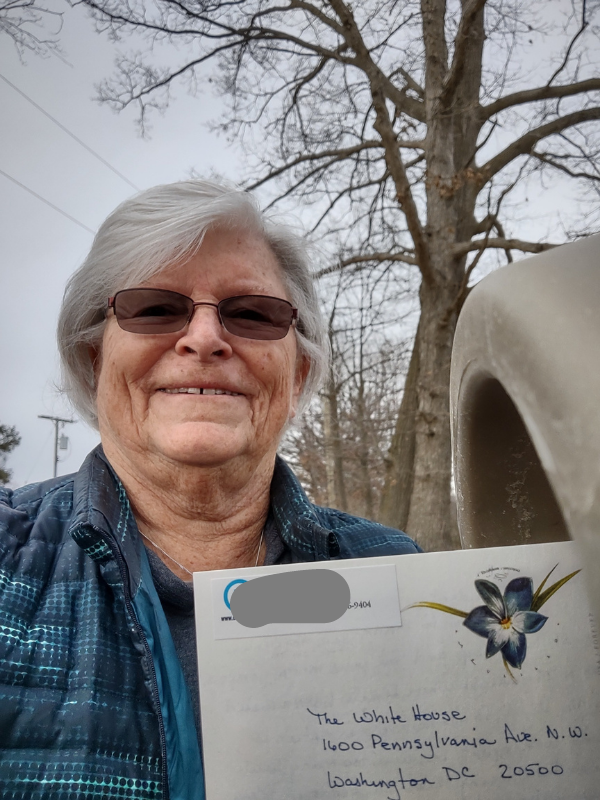
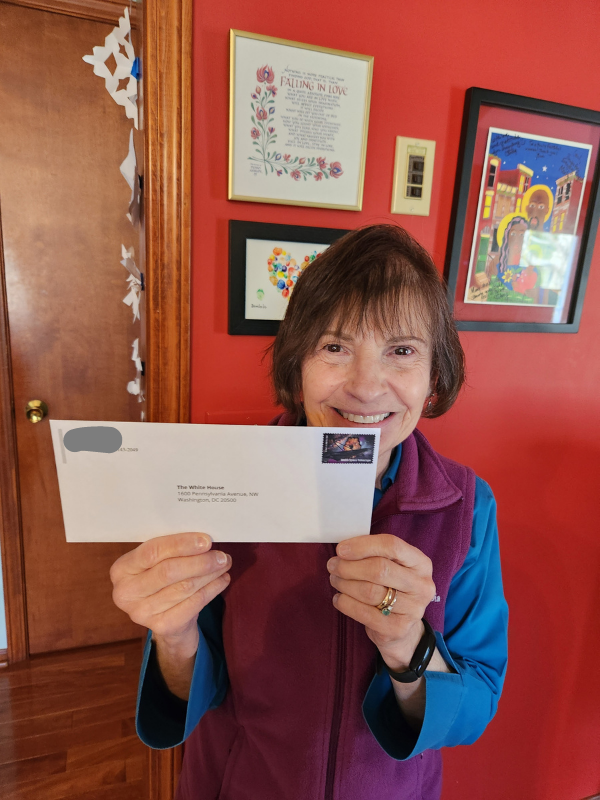
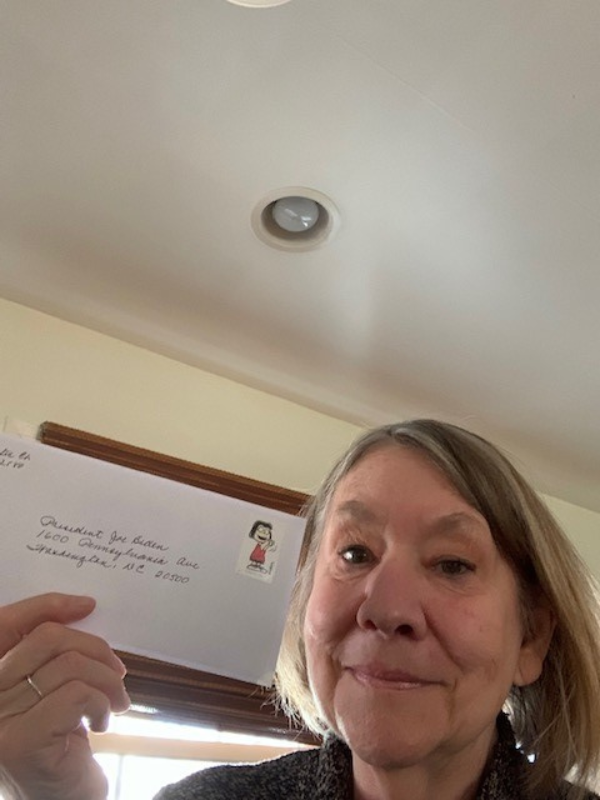
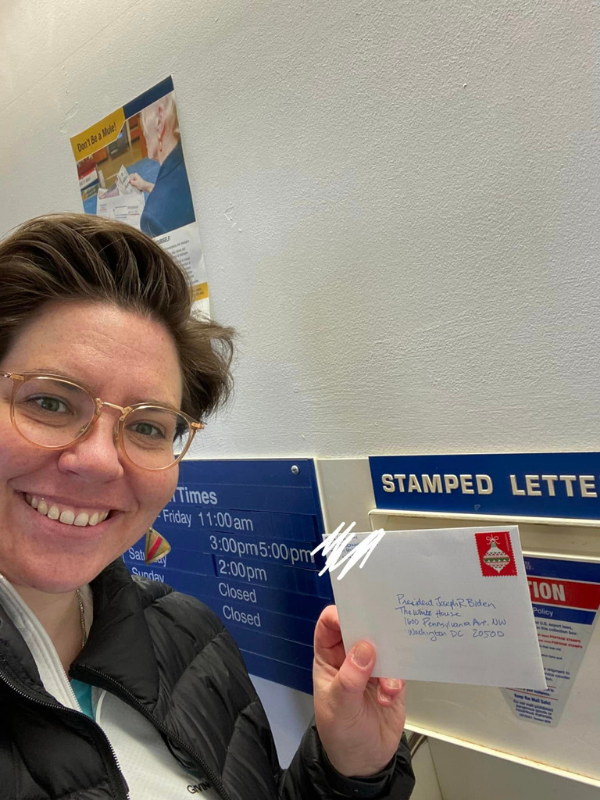
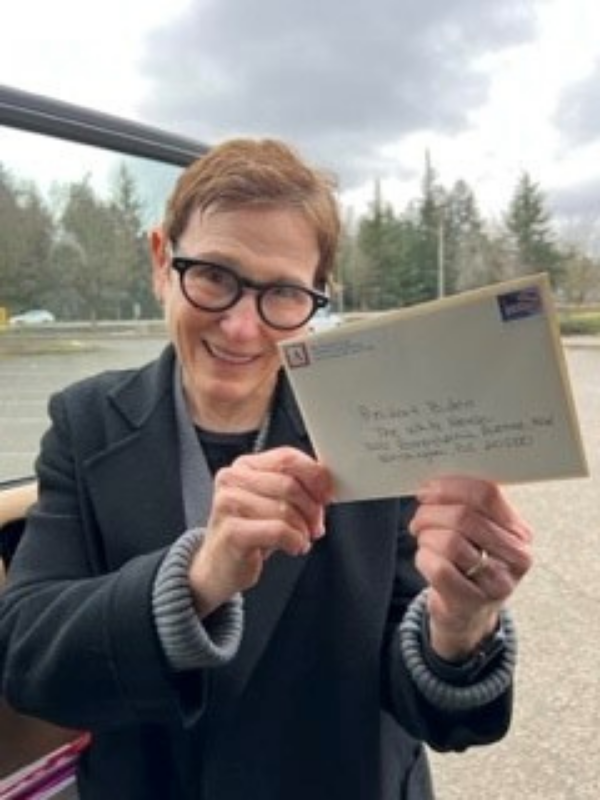
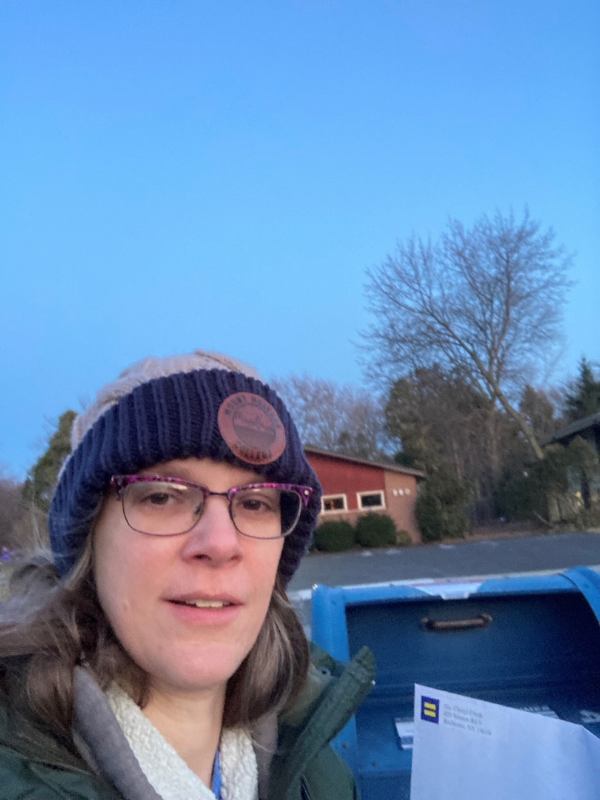
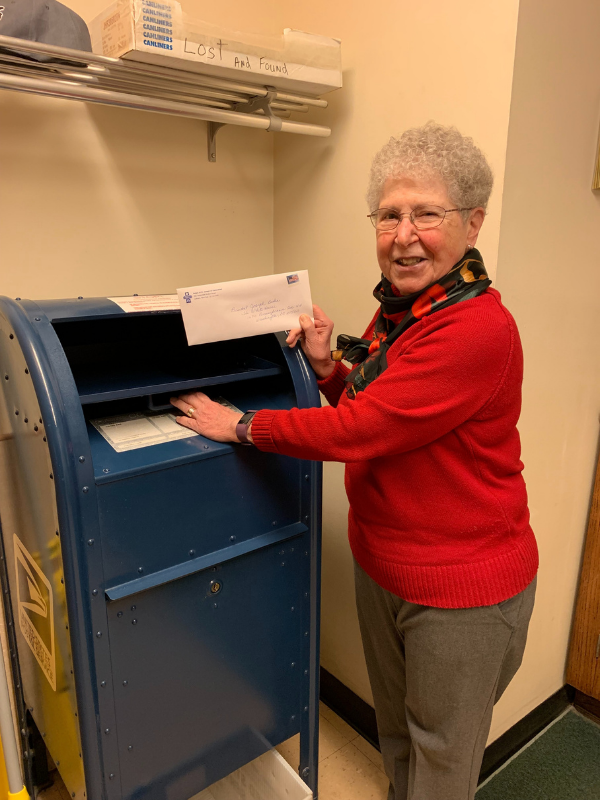
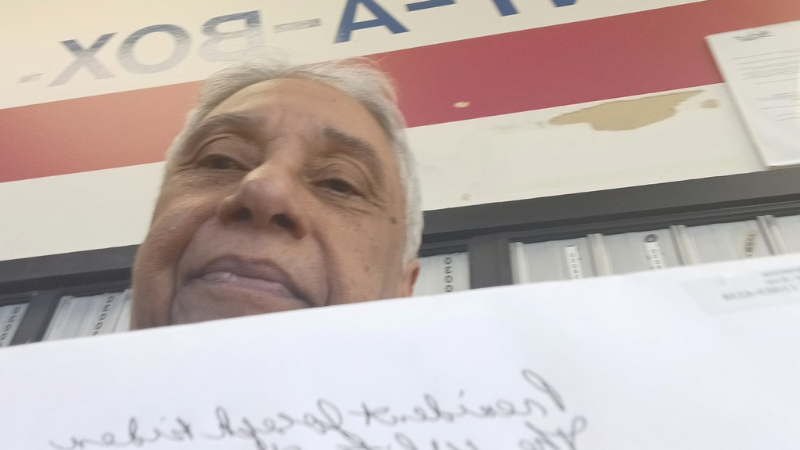
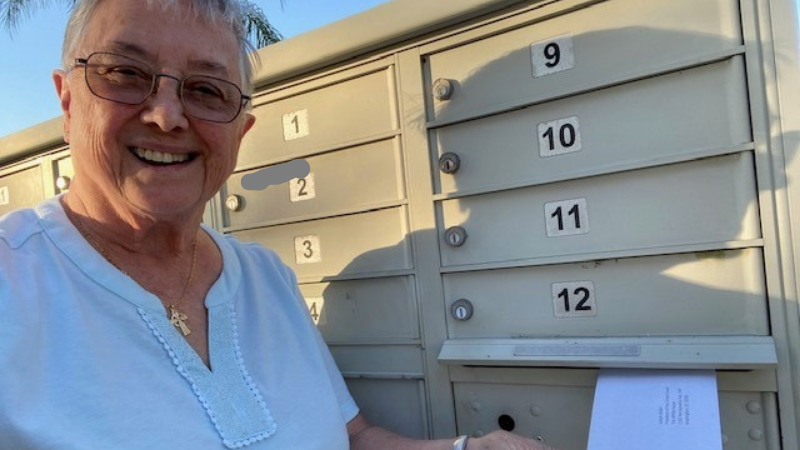
Many justice-seekers shared selfies and candid photos featuring letters, mailboxes, and post offices. It was wonderful to see your Spirit-filled posts on social media and in our NETWORK email inbox. I am delighted to share the images here.

Your actions during Black History Month came shortly after Representative Shelia Jackson Lee (D-TX) reintroduced H.R.40 in January 2023 in the 118th Congress. This year marks 34 years since Representative John Conyers (D-MI) first introduced the bill. Mr. Conyers and several advocates, like the National Coalition of Blacks for Reparations in America, based the proposal on the President Reagan-signed legislation that gave Japanese interned during World War II reparations from the United States Federal Government.

Since last year, NETWORK Lobby has co-sponsored and led numerous direct actions for a reparations commission. We believe that this work is sacred. The Reconstruction effort of 1865-1877 gave our country an opportunity to find a path to equality, however, politics were chosen over humanity. White supremacy defeated repair. While redress is long-overdue, H.R.40 offers another opportunity to finally begin to repair our country’s original sin.

I would be remiss if I didn’t thank you for praying for reparations during Black History Month, Together as well as sending letters to President Biden. Your prayers are still needed! I kindly suggest re-watching Faith in Reparations to guide your prayers and reflections. This fantastic  event featured Jewish, Protestant, and Catholic faith leaders — and the presentation of a Sister Letter signed by Women Religious — calling for President to implement a federal reparations commission.

I’m thrilled with what we’ve accomplished together, and I know we will do so much more!

In solidarity,

Jarrett

Jarrett Smith, Government Relations Advocate

Join the Campaign!

Let us know you will send a letter to President Biden.

Keep Up with NETWORK

Just Politics Catholic Podcast Season 2
Write a Public Comment to Oppose the Proposed Biden Administration Asylum Ban

Write a Public Comment to Oppose the Proposed Biden Asylum Ban

Write a Public Comment to Oppose the Proposed Biden Asylum Ban

THIS CAMPAIGN HAS ENDED.

The Biden Administration is taking comments on a proposed asylum ban. NETWORK justice-seekers recognize it as a new version of a harmful Trump-era anti-asylum seeker policy and are coming together to oppose the proposed asylum ban. Join us and write a Public Comment to oppose the proposed Biden asylum ban!

March 9-27

THIS CAMPAIGN HAS ENDED.

This campaign is to oppose a proposed Biden Administration asylum policy change that would violate our faithful call to welcome our neighbor and decades old U.S. immigration law. Write a Public Comment to oppose the proposed Biden Administration asylum ban to stand in solidarity with our siblings seeking safety from harm at the southern border.

  • Introduce yourself. Be sure to include your religious order, career title, or any involvement in your community, including a house of worship you may attend.
  • Choose a reasons or two why you oppose the policy.  Need some help? Scroll below for Talking Points, but don’t rely too much on them!
  • Highlight why you oppose the proposed ban Share any immigration support work you’ve done, share a moral tale, use examples of Jesus welcoming travelers or God sending people on safe passages.
  • If you have a story to share, share it! Asylum seekers have found safety in our communities, churches, workplaces, etc. Do you have a personal story, or will you share one that belongs to a friend or family member?

Here’s what to do after you’ve written your public comment:

  • Check for uniqueness. Before you press send, check to be sure that at least one-third (33%) of your public comment is original to you. Submissions that are copy and paste regurgitations of talking points will not be considered by reviewers.
  • Share your submission on social media:  After you submit your form, you will see a prompt to share your advocacy action on Twitter or Facebook. It’s important that our words spread, so please take the time to share on one your social media accounts.  #ImmigrationPublicComment or #NoAsylumBan or @NETWORKlobby. If you have any questions or concerns, please email us at [email protected].

More Talking Points

  • President Biden’s Administration has proposed a new asylum ban that is eerily similar to one that existed in the Trump era. It will close the southern border to asylum seekers and change asylum law and practice as we know it. During the Trump era, the court declared such a ban illegal. This ban will separate families, expose asylum seekers to violence at the border, and discriminate against black, brown and indigenous asylum seekers
  • Our neighbors seeking asylum are amongst the most vulnerable people in the world and we are called by faith, and our sense of the common good, to welcome them to safety. U.S. immigration law provides a legal process to apply for safety in our country. Sadly, President Biden’s revival of an asylum ban similar to President Trump’s is a moral failure that disregards decades of settled law.
  • NETWORK supporters will come together to show solidarity to migrants and oppose the Biden Administration asylum proposal by writing a Public Comment against the harmful policy.
  • While the administration has attempted to distinguish its asylum ban from Trump’s policies, it still has the same effect: denying asylum seekers the protection they need in the United States. The rule they are proposing would ban many refugees from asylum protection in the United States based on their manner of entry into the United States and transit through other countries.
  • This asylum ban, like Trump’s, will separate families and lead to the return of asylum seekers to harm and possible death. It will disproportionately harm Black, Brown, and Indigenous asylum seekers requesting safety at the U.S. southern border – who often cannot afford to arrive in the U.S. by plane.
  • Indigenous women and girls, many of whom will likely be barred by the rule, are at heightened risk for sex and human trafficking, extortion, and violence due to the continued erasure of their Indigenous identities, language exclusion, and ongoing discrimination they face throughout their journeys.
  • Our U.S. laws and treaties protect asylum seekers and prohibit their return to persecution and torture. Our laws also explicitly guard an asylum seeker’s right to seek protection regardless of how they arrive in the United States.
  • The rule would unlawfully deny protection to asylum seekers and require them to seek asylum in countries that do not have functional asylum systems and where they may still be in harm’s way.

Join the Campaign!

This campaign has ended.

Our Values Root Our Call to Welcome Our Siblings

Our communities are enriched by the diversity of experiences, cultures, and traditions that all of us, including people who are immigrants, bring to our neighborhoods. All of us want to provide our family with the food and shelter needed to live a thriving life. For too long, our immigrant siblings at the southern border have been harmed by a broken U.S. asylum system. Instead of enacting policy to build anew an equitable asylum process, the Biden Administration has chosen to make life dangerous and difficult for people seeking safety and freedom — especially Black, Brown, and indigenous people. People of faith must demand better.

More Details

The Administration is asking the public to share opinions on this rule and will consider our comments before issuing the final version. Please write a unique comment to tell them how this rule will harm asylum seekers.

The government is required to review and respond to comments in writing in the Federal Register. You can see in this proposed asylum ban that there are dozens of pages with anonymized summarizations and responses to public comments, including rules changes that were made in response to public comments. To make sure the government counts and considers your comment, please edit our pre-drafted text to make it unique – duplicate comments will otherwise be lumped together and responded to as one.

Recent Immigration Blogs

Not on Our Watch, Not in Our Name

We are part of the movement to create an Economy for All, where all people, no matter their economic status, citizenship status, orientation, or ZIP code, have what they need to thrive.

Hispanic Heritage Month is About Pride and Justice

Hispanic Heritage Month not only matters because it reminds us of who we are as a nation but also challenges us to remember the dignity and efforts of millions of people whose voices have made this country.

Keep Up with NETWORK

Just Politics Catholic Podcast Season 2

Restore Basic Function

Restore Basic Function

Fixing America’s Immigration System Starts With Updating the Registry

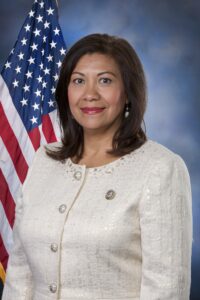
Congresswoman Norma J. Torres
March 7, 2023

When something isn’t working like it should—such as a car making a strange noise or a computer laboring to perform basic tasks—our human reaction is often to ignore the problem and hope that it goes away. We do this as long as possible, even as our avoidance is clearly allowing the situation to get worse.

In the United States, this is the path we have taken with our immigration system, which we have left broken and ignored for too long.

The problem is that we have no real function to allow people who come to this country, and who work hard and contribute to our communities, to pursue legal status. And because we have avoided addressing the problem, more than 10 million people in our communities live in the shadows, without legal status, and barred from full participation in society. People even wait 30-40 years in line for their documents to be processed. That is all part of the systemic failure we have seen.

We call the U.S. immigration system broken because it doesn’t perform the basic functions it’s intended to carry out.

Now, how often when we finally seek help and take a car to an auto mechanic do we hear that one little part is causing all the problems? It’s a relief and almost an embarrassment to know that our long-avoided problem has such a simple answer.

This too is reflected in U.S. immigration policy.

The Immigration Act of 1929 set up a registry to assist people who came to the U.S. without legal status. It was understood even then that we are better off knowing the people around us are not hiding in the shadows. The registry, which is still the law of the land, offered a rigorous process by which long-time residents could obtain permanent legal residence, and one of the provisions of that process was that a person resides in the U.S. before a cutoff date. Originally, this date was June 3, 1921. It has been updated four times through the years and is currently Jan. 1, 1972.

That’s a long time ago. I had just come to the U.S. two years earlier, at age 5, with my uncle, from Guatemala, which was embroiled in a dangerous civil war. I became a citizen 20 years later. The system worked for me. And that is part of why, in the 117th Congress, I co-led H.R. 8433: Renewing Immigration Provisions of the Immigration Act of 1929. This bill would simply update the cutoff date that, again, exists in current law.

It shouldn’t surprise us that one little provision in our system that hasn’t moved in half a century is broken and needs to be replaced. This bill is a simple change that would have a major impact on the quality of life of so many people. People will be able to present themselves at financial institutions, register their kids at school, go to the doctor, and contact federal, state, and local agencies without being afraid because they don’t have a legal document. While it wouldn’t solve every problem for every person in the U.S. without legal status, it would be a major step forward.

For the thousands of immigrant workers, our neighbors and friends who have been in the community a long time and who have been good Americans in every way, except on paper, we have an opportunity to be better neighbors to them. Delay and avoidance will lead to only more brokenness, and now, we have a path forward.

Let us work to make our communities whole—the time to do registry is now.

Rep. Norma J. Torres represents California’s 35th District. She has served in Congress since 2015.

This story was originally published in the 4th Quarter issue of Connection. Download the full issue here.
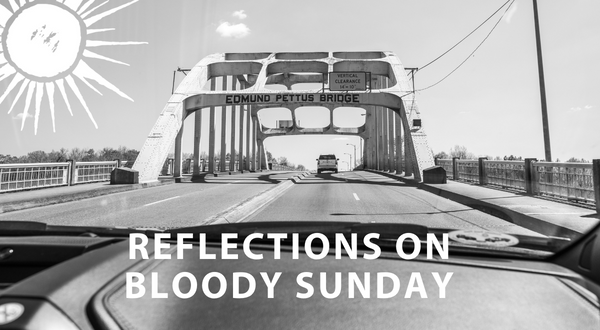
Reflections on 58th Anniversary of Bloody Sunday in Selma

The 58th Anniversary of Bloody Sunday in Selma Alabama

Reflections on the 58th Anniversary of Bloody Sunday in Selma Alabama

Min. Christian S. Watkins, Government Relations Advocate
March 7, 2023

On the 58th anniversary of Bloody Sunday in Selma, Alabama, my thoughts are focused on the brave justice marchers who sacrificed their safety to advance racial justice. Can you imagine rising to pray and prepare for the 54-mile march from Selma to Montgomery in 41-degree weather? What must it have felt like to be a stitch in the fabric of the interracial, intergenerational, and interfaith crowd that blanketed this place in the Deep South seeking justice for Black Americans knowing that Jim Crow’s grip in this neck of the woods could not be tighter? And, that the threat to their lives was real.

The Selma to Montgomery march was one in a series of public actions, part of a slow but growing movement for racial equity, voting rights, and policy change. Civil rights leaders organized this march to protest the murder of Jimmie Lee Jackson, an activist shot to death by an Alabama state trooper on February 18 for defending his mother against police violence. Can you imagine what the marchers experienced as they stood in solidarity with 600 likeminded folks knowing the lengths racist power would go to protect segregation?

Certainly, fear and anxiety were present, but their purpose was clear: march to the Alabama state capitol in a unified show of support for lives that should matter to all, but were abused, demeaned, and often snuffed out by private citizens and state actors. These justice warriors would not be moved by the bastion of white supremacy committed to racist violence and terror. 

In the Company of 600 Justice Coconspirators 

Can you imagine advancing toward Selma’s Edmund Pettus Bridge and seeing the resistance from authorities dressed in riot gear? Their clubs and gas masks are a major threat to your life, but you stand firm in your resolve to stand for liberty for Black people and bring America closer to the promises of the Constitution.

If over the past few years, you’ve stood with Black Lives Matter protesters, or have marched alongside Black and Brown people for civil rights since Rev. Dr. Martin Luther King’s time, you may have felt the anxiety that comes with meeting law enforcement face to face. Even if they served to protect you and the group, unsettling feelings often arise with the fight for freedom. The threat of violence is always a possibility. The state-sponsored vitriol and violence that showed up to squash activists in places like Selma in 1965, Ferguson in 2014, and Standing Rock in 2016 reminds one that freedom fighters can be seriously wounded, or have their lives stolen, by those sworn to protect and serve the public.

On Bloody Sunday, the march for voting rights came face-to-face with racist power motivated by Christian nationalism (an ideology that promotes God aligned with patriotism and a certain race of people) and white supremacy (the belief that white people are preferred over other races). Eventually, freedom overcame race-based illiberal ideology, undeniably because of the heroes who stood for justice on March 7, 1965.

And some rose to prominence on the national political stage like the late Representative John Lewis (GA).  He was among those beaten by police that day, and he went on to serve in the U.S. Congress for 33 years. Can you imagine what it was like to witness this great man get his skull fractured?

Bloody Sunday Progressed Civil Rights, But Significant Transformation Is Still Needed

Yes, voting rights were secured for Black people a few months after the Selma March when President Johnson signed the Voting Rights Act of 1965, but racial violence and discrimination persists in policing. And, over fifty years later, racist power in ‘red’ states persist in efforts to circumvent the federal law with voter suppression tactics. My mother finds it unbearable that the rights she marched and voted for in the ‘60s are vulnerable to attack, and that some police forces continue to abuse, harm, and kill Black people. 

The ongoing reality of hyper-militarized police violence against Black and Brown people is why NETWORK supports the George Floyd Justice in Policing Act, legislation introduced in the 117th Congress. If passed, essential oversight and protections would be secured at the local, state, and federal levels. And NETWORK’s efforts to strengthen voting rights, through the John Lewis Voting Rights Advancement Act and other legislation, would advance our vision for communities that thrive with economic, criminal legal system, and other social justice policy reforms.

With God, Change Is Possible  

Spirit-filled justice seekers cannot wait for change to come. We must fervently care for communities and commit ourselves to the pursuit of safe, equitable, and thriving lives for everyone who lives in them. The soil in which God has planted us, must be enriched with love and kindness. It’s time to root out the fear and hatred that thrives with racism. Let’s not just imagine a world of renewed intimacy between people of all backgrounds and all of Creation through the work of our Messiah: Jesus of Nazareth. Let’s radically pursue it!

God didn’t give us a spirit of fear, but of power, love and sound minds (2 Tm. 1:7). How will you use your divinely creative mind to employ love out loud for justice?  

Dr. Martin Luther King, Jr. prayed: “My great prayer is always for God to free me from the paralysis of crippling fear, because I believe that when a person lives with fears of the consequences for his personal life, he can never do anything in terms of lifting the whole of humanity and solving the social problems which we confront in every age and every generation.”  

On this day we remember the devastating events of Bloody Sunday, the glories that were revealed in its aftermath and even those yet to be seen.  

My Prayer for Spirit-Filled Justice Seekers  

On the 58th Anniversary of Bloody Sunday in Selma, Alabama, I am grateful to the 600 who defied racial terror on the Pettis Bridge and sacrificed their safety and security to advance civil rights in our country. Because they braved racist police power, I, and millions of other Black men, women, and children, can take any seat on a public bus, attend integrated public schools, and vote in elections. But I am not content. More needs to be done to protect Black lives, especially in interactions with the police. I offer a small prayer for justice-seekers:

Lord, help me to love freely and serve You.
Guide my efforts to bring change to communities so that all of Your children thrive, regardless of race, religious affiliation, gender, or sexual orientation.
God, give me the courage to act for divine justice without reservation nor fear of impediments.
God, give me the strength to do this until justice rolls down like a waterfall, and righteousness like an ever-flowing stream. Amen.

President's Day Letter Writing Campaign to President Biden

President’s Day Letter Writing Campaign to President Biden

President's Day Letter Writing Campaign to President Biden

This campaign has ended. Please read here to see pictures from our advocates and to view a special message from Jarrett Smith, Government Relations Advocate.
For over a year, NETWORK supporters have attended educational webinars, prayer vigils, and other reparations-related events to learn about, and advocate for, an executive order for a federal reparations commission to study reparations like the one proposed in H.R.40. And now, justice-seekers are coming together to fill the White House’s MAILBOX with a President’s Day Letter Writing Campaign to President Biden.

President's Day Letter Writing Campaign to President Biden

FEB. 17 to MAR. 3

Justice-seekers are filling the MAILBOX at the White House during NETWORK’s President’s Day Letter Writing Campaign to President Biden to urge him to create a federal reparations study commission by April. Will you join the campaign?

This campaign has ended. Please read here to see pictures from our advocates and to view a special message from Jarrett Smith, Government Relations Advocate.
Here’s what to include in your letter to President Biden (written by hand or printed from your computer):

  • Introduce yourself. Be sure to include your religious order, career title, or any involvement in your community. Also share your city and state.
  • Choose a few reasons why it is time to establish a Commission to Study Reparations. Scroll below to download H.R.40 Talking Points.
  • Highlight why you support establishing an H.R.40-style reparations commission and detail any anti-racism work you’ve done.
  • If you have a story to share that would let the President know how a reparations study would benefit you, your family, or your community, share it!

Here’s what to do after you’ve written your letter:

  • Take a selfie (photo) with your letter at the mailbox or post office to share with NETWORK
  • Share your selfie with us: On your social media accounts, share with #HR40NOW or #ReparationsNow; or email us at [email protected].
  • Stamp your correspondence and mail it to the White House

The White House
1600 Pennsylvania Avenue, NW
Washington, DC 20500

Join the Campaign!

This campaign has ended. Please read here to see pictures from our advocates and to view a special message from Jarrett Smith, Government Relations Advocate.
Our Values Root Our Call for Reparations

All of us want the freedom to live where we want and to have the resources we need to care for the people we love. For too long, law makers in D.C., state politicians, and businesses, have created inequity in home ownership, the job market, safe police tactics, and more — harming Black economic progress. Some blame and shame Black people for the negative outcomes that flow from this inequitable treatment.

But we know that this is wrong. By divine right and according to our Constitution, all of us are to live free, equitable, and thriving lives. To do this, we must reckon with the original sin of slavery–as it is at the root of racist policy, abuse, and violence that we see in our politics, churches, and economy today. The time is now for a federal reparations study commission.

Talking Points

When writing your letter, consider using these talking points:

What Would Establishing an H.R.40-Style Commission Do?

  • H.R.40 sets a framework that would establish a 15-member commission to study the effects of chattel slavery on African slaves and their African American descendants. This panel cannot grant money directly.

 Why NETWORK Supports H.R.40 Commission

  • Reparations is where we must start in order to chart a pathway to a just future
  • Slavery didn’t end, it merely evolved (a quote from Reparations For Slavery)
  • President Biden promised during his presidential campaign to support a study of reparations
  • H.R.40 embodies cornerstones of our political advocacy: dismantling systemic racism and cultivating inclusive community
  • President Biden must act on their commitment to dismantling racist laws, policies and frameworks, and to advance racial equity
  • The Catholic Church played a major role in the Atlantic slave trade and supported slavery in the States, Jim Crow, and other forms of discrimination. The Catholic Church gave slave ownership moral absolution, and helped it propagate.
  • Catholic teaching demands confession, penance and restitution when a sin has been committed
  • Catholic Social Justice advocates must stand up to diminish the impact of historical and contemporary racism in today’s political, social and economic systems, frameworks, and institutions
  • The sinful legacy of white supremacy and the enduring racial wealth gap must no longer be allowed to deny Black people good health, educational, and economic outcomes.
Pledge to Pray for Reparations

Keep Up with NETWORK

Just Politics Catholic Podcast Season 2

2023 State of the Union Bingo

2023 State of the Union Bingo

February 6, 2023

Based on NETWORK’s  Build Anew policy agenda, we’ve created the #BuildAnew Bingo card to use during President Biden’s second State of the Union address to Congress. Download your Bingo card and watch the State of the Union live to see how well the President Biden’s speech covers our Build Anew policy areas.

We hope to see President Biden address the need to work towards Dismantling Systemic Racism, Cultivating Inclusive Community, Rooting Our Economy in Solidarity, and Transforming Our Politics.