
Category Archives: Food Security

image of the US Capitol with a caption calling on Congress to protect health care

Hey, Congress: Care is What Really Matters

Hey, Congress: Care is What Really Matters


Deliberate Distractions Must Not Derail Our Efforts to Protect Health Coverage for Millions of People

Jackalope Labbe
October 29, 2025


Every week brings a new wave of confusion regarding health care from the Trump administration. One day, it’s HHS Secretary Robert F. Kennedy Jr. making unfounded claims about over-the-counter painkillers and autism. The next, it’s open skepticism about childhood vaccination schedules. At the same time, the Department of Health and Human Services touts that most people don’t need regular care. The chaos this creates serves a purpose. It is meant to dominate attention and drown out the real story.

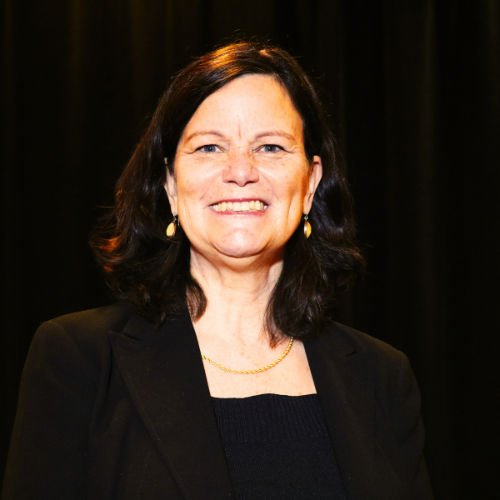
Jackalope Labbe, a Sr. Carol Coston Fellow in NETWORK's Young Advocates Leadership Lab (Y.A.L.L.)

Jackalope Labbe

While everyone argues about medical conspiracies, some lawmakers in Congress have worked to dismantle and defund major parts of the Affordable Care Act (ACA). When public focus is fixed on fringe controversies, it becomes easier for lawmakers to push through such a devastating policy change. While the media churns out headline after headline on the newest baseless claims coming from members of the current administration, Congress is preparing to let the ACA’s enhanced premium tax credits expire.

The ACA’s premium tax credit lowered the cost of health care for millions of people by capping how much we pay for coverage on the ACA marketplace based on our income, making premiums either free or affordable for millions of low- and middle-income families. It is the only way millions of people in the U.S. can afford health care. Without this, insurance companies are surging their rates, leaving us with more expensive, less effective health care.

Since being introduced, the ACA premium tax credits have transformed access to health care in our country. Enrollment in ACA marketplace coverage hit record highs in early 2025, driving the uninsured rate to its lowest level ever. Today, more than 24 million people rely on these tax credits to afford their insurance. An estimated 4.8 million people will lose their health coverage entirely because they can no longer afford it without the premium tax credits.

These aren’t abstract numbers. They represent parents choosing between rent and insulin, young adults aging out of their parents’ plan with nowhere to turn, and rural hospitals forced to close their doors as patient numbers drop.

As frustrating as this political theater feels, anger alone won’t change minds. Our community members echoing misinformation about vaccines or Medicaid aren’t doing so out of hostility. They’re scared. Years of rising costs, confusing bureaucracy, and inaccessible care have left so many feeling alienated. When leaders exploit that fear, it breeds mistrust, making people more vulnerable to conspiracy theories that tell us the system was never meant to help anyway.

If we respond with outrage, we alienate those who could join with us. Empathy does not mean agreeing with misinformation; it means understanding the concerns that fuel it. When we center conversations around shared experiences, we remind each other that health care is a universal issue. Compassion is not weakness; it’s a strategy for rebuilding community.

Much of the misinformation flooding social media targets one of the most vulnerable emotions in the country, a mother’s fear. False claims about medications during pregnancy or routine childhood vaccines being dangerous are designed to strike where the instinct to protect intersects with trust in science. These stories circulate because they sound caring, reframing misinformation as maternal caution rather than political manipulation. This strategy is deliberate.

When fear takes hold, it erodes trust in the healthcare systems families depend on. Instead of feeling supported by doctors and public health agencies, parents feel suspicious of them. This cycle of fear doesn’t just isolate families; it weakens collective confidence in public health, making it easier for lawmakers to justify cuts to the programs that keep those same families healthy.

This government shutdown is not just another budget debate; it’s a turning point. The distractions, conspiracy theories, culture wars, and partisan gridlock are meant to make us forget where we need to focus: keeping health care accessible. This means protecting the ACA, including premium tax credits.

Every phone call to a representative, every conversation educating each other, every show of solidarity helps. The Trump administration may count on division and fatigue, but we can choose to stay centered on what matters. We cannot fall to distrust in uncertain times. We must strive for clarity. While some government officials try to use confusion to take away our care, we can refocus our attention to saving it.


Jackalope Labbe is a social work and history major at College of Our Lady of the Elms in Chicopee, MA and a Sr. Carol Coston Fellow in NETWORK’s Young Advocates Leadership Lab (Y.A.L.L).

What’s the Real Reason for High Grocery Prices?

What’s the Real Reason for High Grocery Prices? 

Food prices are unaffordable! What’s going on, and what can we do?

Sr. Emily TeKolste, SP, is NETWORK’s Grassroots Mobilization Coordinator.

No matter how old we are, where we live, or what’s in our wallets, every one of us has a right to be free from hunger. It’s a matter of our dignity. Grounded in the teaching and tradition of Catholic Social Justice, NETWORK believes that all of us—especially our children and elderly—have an essential right to good, basic nutrition.

As we all have noticed, grocery prices have skyrocketed since the COVID-19 pandemic. But even after the crisis of the pandemic has subsided, and even as inflation has dropped off in recent months, grocery prices remain high. With food prices up roughly 20% in the last two years, too many of us are struggling to feed ourselves and our families.

Why are our grocery prices so high?

We hear all sorts of explanations for food inflation, but none of them explain why big food corporations keep raising their prices.

So, what is actually behind the continuing rise in food prices? The simple fact is that a few big agribusiness executives are lining their pockets at our expense. Economists estimate that, by mid-2022, 53% of the increase in food prices was the direct result of corporate profiteering. Workers’ wage increases accounted for less than 8%.

While we’re struggling to feed our families…

      • Big corporations made $2.5 trillion in profits in 2021 alone, their most profitable year since 1950and corporate food executives still raised prices.
        • Tyson Foods made profits of $11 billion, up 48% from 2021.
        • Cargill, a huge commodities corporation, posted $5 billion in 2021 profits.
        • General Mills posted profit increases of 97% in early 2022, as it increased its prices by 53%.
        • PepsiCo raised prices for drinks and snacks by 17%, while its profits grew by 20%.
        • Coca-Cola’s corporate profits grew by 14%.
      • At the same time, food industry CEO salaries became even more bloated, averaging $22 million in 2022—almost 1,000 times the average food worker’s earnings.
      • All this time, a few mega-corporations controlled the food industry, all but eliminating real competition, and driving out smaller businesses.
        • Cargill and three other firms control 70% of the world’s food market.
        • Just four supermarket chains control 65% of the nation’s food retailers.

But you won’t hear big food executives and the politicians they buy mention these realities. Some Republican lawmakers like to blame inflation on the Biden-Harris administration’s economic policies — even though those policies help us afford our groceries. They blame the tax, unemployment, and rental assistance lifelines that got struggling families through the pandemic, and they blame new programs that build well-paying jobs, safely fix our roads and bridges, and give us clean air and energy. They blame these programs to distract us — because they would rather keep corporate profits high than fund the things that actually help us feed our families. They know it, and we know it!

What can we do?

The president alone cannot control inflation. President Biden has no authority to unilaterally issue orders to lower food prices, and a few lawmakers in Congress have blocked meaningful Congressional action.

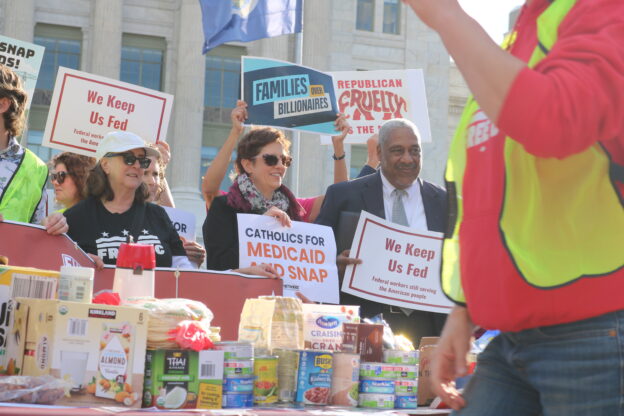
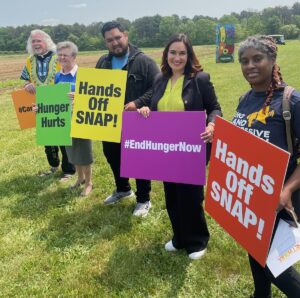
Advocates at NETWORK’s “Care Not Cuts” rally in Long Island last year. From left to right: Fr Frank Pizzarelli, Sr. Tesa Fitzgerald, Angel Reyes, Serena Martin-Liguori, Monique Fitzgerald

But we can demand better! Together, we will ensure that Congress supports affordable, nutritious food for us and our communities.

As a multi-issue voter, you can ask your elected officials and the candidates on your ballot:

1. Will they ensure that freedom from hunger is an essential right for all of us by fully funding food assistance programs, including:

  • The Supplemental Nutrition Assistance Program (SNAP), including its Thrifty Food Plan that protects SNAP benefits from rising food inflation? 
  • School lunches, elderly meals, soup kitchens, and food banks? 
  • The Special Supplemental Nutrition Program for Women, Infants, and Children (WIC), which offers basic nutrition for pregnant people, new parents, and babies?

2. Will they stop rewarding the executives of mega-corporations and their wealthy shareholders at the expense of ordinary workers and their families by:

  • Reversing excessive Trump administration’s 2017 tax bill benefits for big corporations?
  • Imposing needed measures to curb excessive CEO and executive compensation packages for profiteering companies?
  • Making the tax system fair for workers and their families, with stronger tax credits for children, childcare, and earned income?

3. Will they push the Federal Trade Commission to put the brakes on the monopolization in big agribusiness and protect small farmers and sellers?

Vote Our Future logoAnd then, of course, VOTE! Head to NETWORK’s Be a Voter page to check your voter registration status, find your voting information, make a voting plan, and tell your family and friends to vote, too!

Together, we will make Freedom from Hunger a reality for all of us, no exceptions! We will ensure that our nation’s food industry isn’t about feeding corporate profits, but about feeding our communities.

See NETWORK’s Food Prices One-Pager Here:
YALL Food Prices One-Pager FINAL
Sources

Head to these links to learn more about the real reasons for rising food costs:

https://www.stlouisfed.org/open-vault/2023/january/complex-supply-chains-bottlenecks-and-inflation

https://time.com/6139127/u-s-food-prices-monopoly/

https://finance.yahoo.com/news/inflation-is-cooling-the-gop-wants-you-to-remember-its-up-179-since-biden-took-office-152408852.html?fr=yhssrp_catchall

https://www.nytimes.com/2023/03/23/us/politics/republicans-inflation-federal-reserve-powell.html

https://www.cnn.com/2021/08/06/politics/inflation-gop-fact-check/index.html

https://www.forbes.com/sites/errolschweizer/2022/05/10/how-windfall-profits-have-supercharged-food-inflation/


Legislative Review of 2023

Legislative Review of 2023

One of the Most Dysfunctional, Unproductive Congresses of Modern Times

Laura Peralta-Schulte
February 19, 2024

Laura Peralta-Schulte is NETWORK’s Senior Director of Public Policy and Government Relations.

Following the 2022 midterm elections, 2023 brought “divided government” to Washington, DC as Republicans took control of the U.S. House of Representatives, while the Presidency and U.S. Senate remained under Democratic control.

Policymaking is always more difficult with a divided government because only compromise allows success. The federal system, by design, encourages deal-making and compromise, half-measures, and rare bipartisan achievements. The reactive nature of the federal system often frustrates those seeking revolutionary change.

The first session of the 118th Congress stands out as a year of abject legislative failure. It was a year of squandered opportunity, petty infighting, and deep frustration. The blame for this lack of progress lies directly at the feet of the House Republican Caucus and, by extension, former President Trump.

It is no secret the two major parties have competing visions on key policy issues. The key distinction between the parties is generally informed by what they believe to be the federal government’s proper role. These differences profoundly impact the lives of vulnerable people and the earth, our common home.

NETWORK’s Build Anew agenda requires an active federal government to address the social sins of the day: a broken, inhumane immigration and asylum system, shocking levels of wealth inequality and an ever-growing wage gap, increasing levels of child poverty, destruction of our planet, and more. NETWORK, in Washington and through the actions of our members back home, plays a critical role in bridging the divides to build support for core policy initiatives informed by Catholic Social teaching.

Why does this session stand out as being particularly troublesome? The design of the federal system remains the same; however, the norms of the system — civility and goodwill at minimum to a member’s party — have vanished. The problem did not start this year; institutional norms have slowly eroded, dating back to the speakership of Newt Gingrich and the government shutdowns of 1995 and 1996. The Trump administration accelerated this decay in Washington leading directly to the insurrection of January 6 and an attempted overthrow of the 2020 election.

The schism in the Republican party is most apparent in the House of Representatives and exists between two distinct factions: institutionalists, a quickly shrinking number of Members who respect traditional norms and recognize the need to compromise, and radicals, those who view compromise as capitulation and weakness and act with little regard for the institution or their fellow Republicans.

Tension between the two factions has been displayed in the House since the beginning of the term. This first became apparent during the nomination of Rep. Kevin McCarthy for Speaker of the House. A group of hardline House Republicans blocked McCarthy from securing the speakership to extract policy concessions to their radical agenda. McCarthy won the speakership after 15 humiliating votes. The nomination debate foreshadowed the tumult that was McCarthy’s short tenure as Speaker.

It is critical to note that Senate Republicans, led by Minority Leader Mitch McConnell, have largely rejected chaos, instead opting to collaborate with Senate Democrats to achieve mutual policy objectives. As 2023 came to a close, it was sadly apparent that a core issue that intersects both House and Senate Republicans’ agenda is a strong desire to end the U.S. asylum system and “build the wall.”

The radical nature of House Republican conservatives — in policy and political norms — is nothing less than shocking. Action on key policy initiatives stopped except for must-pass legislation — lifting the debt ceiling and passing two continuing resolutions to keep our government operational. Each bill moved forward only after House Republicans attempted to use the deadlines to alter core human needs programs for struggling families significantly. Then, after failing to develop a consensus among their caucus, the government was kept afloat due to the support of House Democrats under the leadership of House Minority Leader Hakeem Jeffries.

Cuts to poverty programs are being heralded by House conservatives as necessary austerity measures. The great irony is that the same House conservatives proposing to take food from babies are poised to spend billions of dollars for more tax cuts for the wealthy and corporations on top of the $2 trillion spent under President Trump’s Tax Cuts and Jobs Act passed in 2017.

Then-Speaker McCarthy lost his speakership due to passing a bipartisan continuing resolution with the support of Democrats in September. Compromise is the enemy of House conservatives, regardless of the chaos resulting from policy failure. Chaos is a key tactic and desired outcome.

It is worth noting that these radical members are working very closely with former President Trump in the lead-up to the 2024 election. Many are on record as election deniers and supporters of the insurrection. The former president urged these House Republicans to replace McCarthy in September. He rejected several candidates for Speaker to replace McCarthy, ultimately praising the nomination of ally Rep. Mike Johnson. It bears remembering that now-Speaker Johnson led the effort in the House to reverse Trump’s 2020 election loss.

The first session of a new Congress is typically a time when work gets done before the election cycle begins. Unlike previous congressional terms, the 2024 elections have been front and center in the House from day one. House legislative efforts have relentlessly attacked immigrants and U.S. asylum laws, voting rights, and the LGBTQ+ community.

There have been calls for book bans and ending diversity initiatives, attacks on the Internal Revenue Service as they actively work to ensure wealthy taxpayers pay their taxes, and drastic cuts on all key anti-poverty programs, including WIC, SNAP, healthcare, Social Security, Title One school funding, housing vouchers, and so much more. House Republicans also started formal impeachment processes for Department of Homeland Security Secretary Alejandro Mayorkas and President Biden.

The House Agriculture bill provides a great example of the harsh austerity measures radical House members are seeking. After successfully making it harder for older Americans to receive SNAP in the new debt ceiling law, key provisions of the Agriculture bill were nothing less than a frontal attack on communities living with high rates of poverty. The bill had cruel cuts in funding to prevent hunger and food insecurity, including hallowing out key programs for fresh fruits and vegetables for children.

Shockingly, the bill would eviscerate long-standing bipartisan support for the Special Supplemental Nutrition Program for Women, Infants, and Children (WIC) at a time of great need. A lack of funding means waiting lists, poorer health outcomes, and other hardships for new families and their babies.

House conservatives are heralding cuts to poverty programs as necessary austerity measures. The great irony is that the same House conservatives proposing to take food from babies are poised to spend billions of dollars for more tax cuts for the wealthy and corporations on top of the $2 trillion spent under President Trump’s Tax Cuts and Jobs Act passed in 2017.

As the year ends, Congress, due to inaction in the House, has pushed all decisions on major legislation into 2024, making this the most non-productive, dysfunctional Congress in the modern era. The House of Representatives completely failed in their responsibility to the American people. As always, the high cost of inaction falls hardest on the most vulnerable.

This story was published in the Quarter 1 2024 issue of Connection.

This Advent, Remember the Promises

This Advent, Remember the Promises

Mary J. Novak
December 20, 2023

Read NETWORK’s Advent 2023 reflections here!

Readings for the Fourth Sunday of Advent, December 24.

2 Sm 7:1-5, 8b-12, 14a, 16
Ps 89:2-3, 4-5, 27, 29
Rom 16:25-27
Lk 1:26-28

The Readings for the Fourth Sunday of Advent speak beautifully of God’s promises. Time and again, God delivers great things, and people rejoice at these wonders. God is good, and God is faithful. 

This year, NETWORK had experience with keeping promises and remaining faithful.  

Too often, this has taken the form of making sure Congress did not slash funding to vital human needs programs including SNAP and WIC, even after promising not to in the deal averting a government shutdown.  

A few but powerful extremist Members of Congress called for cuts that would have harmed millions of people in the U.S. by jeopardizing their access to food, housing, and healthcare. And worse, they proposed these cuts as part of their demands to avert a government shutdown. Shutting down the government would have harmed millions more across the U.S. and disproportionately harmed Black and Brown communities. 

We lament the sin of indifference toward our neighbors and communities these cuts would harm. We also lament the dangerous brinkmanship that sees shutting down the government as an acceptable bargaining tool. This approach is corrosive to the very fabric of our democracy, and worse, those who engage in this practice seem to know it. 

Amidst these trials, we also saw beautiful reminders of the faithfulness of God, in our own NETWORK Advocates. Justice-seekers from across the country gathered throughout this year as part of NETWORK’s Thriving Communities campaign to call on Congress to pass a moral budget. Rallies in Erie, Pennsylvania and Youngstown, Ohio, as well as on Long Island and Capitol Hill made the appeal for “Care Not Cuts.”  You joined together and spoke out, and you continue to beautifully model your faithful commitment to the common good. 

The ultimate fulfillment of God’s promise is Jesus, and the Gospel reading this Sunday finds the angel announcing to Mary that she would bear a son. Just as God’s faithfulness resulted in the creation of a family, the Holy Family, so the faithfulness of NETWORK Advocates has allowed countless families to flourish with the assistance they urgently need.  

Call to Action 

So far, the dedication of NETWORK Advocates has paid off in protecting vital human needs programming. But we must stay alert because the human needs programs we are called to care about are still very much at risk. Funding for the Supplemental Nutrition Program for Women, Infants, and Children (WIC) is not finalized till January. 

TAKE ACTION: Tell Congress to keep their promise and fund this vital program.