

Category Archives: Spirit Filled Network

Just Politics Catholic Podcast Season 2

Season 2 of Just Politics Podcast is Complete – Listen Now!

Season 2 of Just Politics Podcast is Complete – Listen Now!

August 24, 2023

After a successful inaugural season of the Just Politics podcast, produced in collaboration with U.S. Catholic magazine, we came back for an exciting second season!  

Our hosts Sister Eilis McCulloh, H.M.Colin Martinez Longmore, and Joan F. Neal spoke with more advocates, Catholic Sisters, scholars, faith leaders, and even a Vatican official about how we can transform our politics for the common good.  

In season 2, which wrapped up in May, our hosts covered topics ranging from Pope Francis and integral ecology to the urgent, Spirit-filled call for economic justice, health care access, and women’s leadership.  

You can find the podcast on the U.S. Catholic website, as well as on Apple PodcastsSpotify, or wherever you listen to podcasts. Don’t forget to subscribe, and join the conversation about #JustPoliticsPod on social media!  

Also check out Just Politics press at www.uscatholic.org/justpolitics where you can also sign up for email updates, learn more about each episode, and find additional reading on each episode’s topics. 

COMING SOON: Season 3 of Just Politics podcast drops Monday, Sept. 11!  

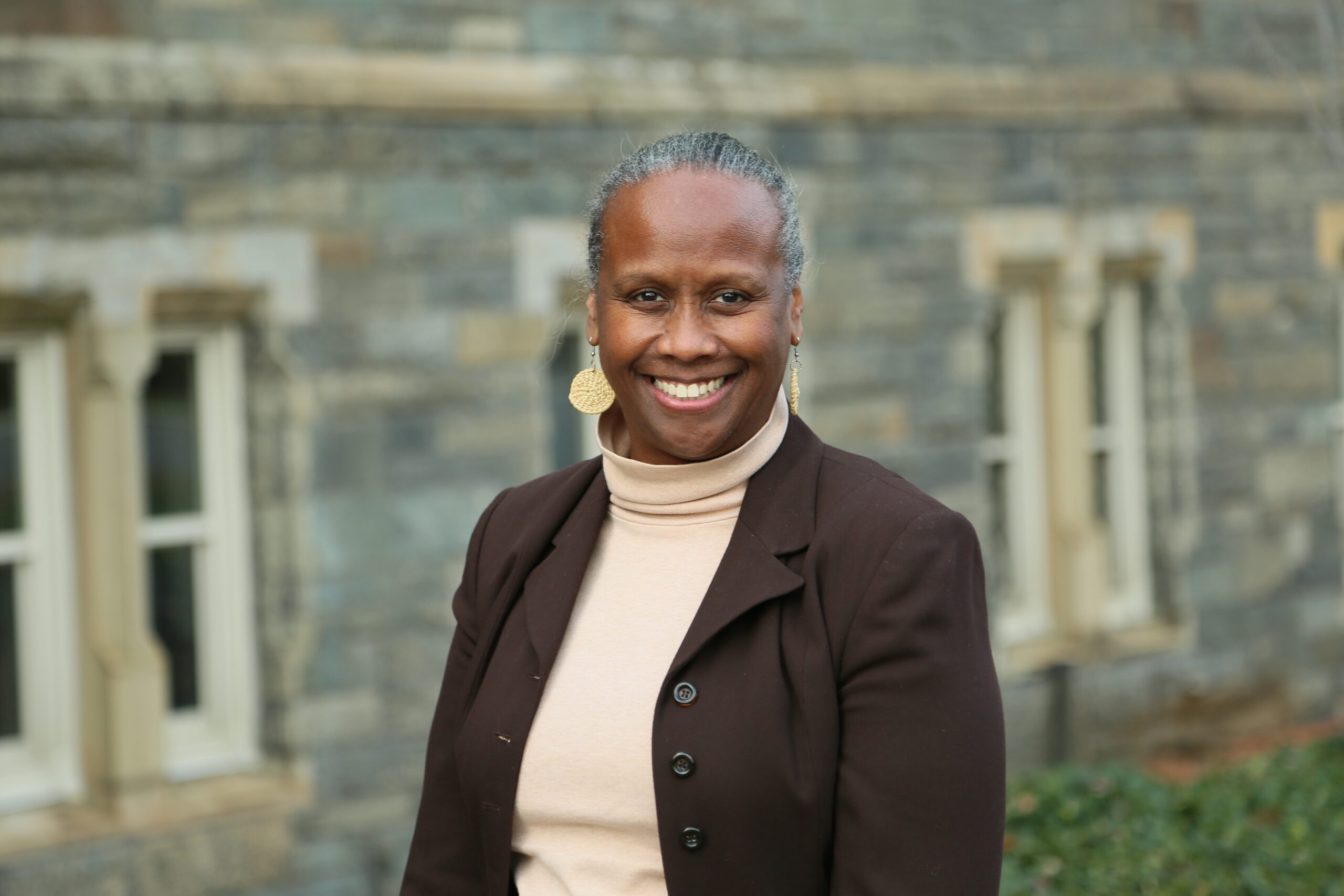
Kim Mazyck, associate director of the Initiative on Catholic Social Thought and Public Life at Georgetown University, discusses the transformative power of dialogue and encounter

The Transformative Power of Dialogue and Encounter

Encounter Changes Everything

Kim Mazyck
August 15, 2023

Kim Mazyck is the associate director of the Initiative on Catholic Social Thought and Public Life at Georgetown University. She has served in key positions at Catholic Relief Services, Catholic Charities USA, and the Sisters of Notre Dame de Namur East-West Province. She is a graduate of Georgetown University’s Walsh School of Foreign Service with a degree in international relations and has a certificate in African studies.
She spoke with Connection about her work with the Initiative and what her journey has taught her about the power of dialogue and encounter.

What do you see as the factors that keep solidarity from taking root in our politics?

Kim Mazyck: I think it’s taking root in some places but not everywhere. I think mostly what we hear in the news is that which isn’t taking root. But I do think that there are politicians and political entities that are still considering what it means to walk with people, what it means to be in solidarity with them. There are some in politics who are really thinking about the impact on the least of these, those living in poverty, those living unhoused. I think there are many people really making sure that as we think about policy largely, we don’t get distracted with things that aren’t important, and we remain focused on people who are really struggling.

That being said, there seems to be a ton of infighting and a ton of distraction with other issues that don’t quite draw us into solidarity. They don’t have us think about the people who really need us to be considering them every time we think about policy and big decisions. I think that people are, to use the phrase we often use, not keeping their eye on the ball. When people are elected to represent a congressional district, or to the Senate, or to any office, even if it’s a local municipality, that comes with the responsibility of representing those people who have put you in office. Solidarity is when we think about, what’s impacting schoolchildren, are schoolchildren eating? How do we make sure people have the things they need, like Wi-Fi in a small county in which a lot of things are generally inaccessible? How do we make sure people can meet their basic necessities? I think some people are really speaking into that. But I also think that the voices that we’re hearing mostly are the ones that don’t speak into why that’s so critically important.

What was the call that you answered to engage on a path of solidarity?

KM: Before going to Georgetown I remember sitting in mass one Sunday … being challenged to think about service. That translated into me applying to and enrolling at Georgetown, eventually in the School of Foreign Service, thinking about diplomacy and the U.S. Foreign Service specifically.

I was in school during a time when the policy of apartheid loomed large in South Africa, and there were lots of protests on campus. By the end of my freshman year, I was very focused on African studies, primarily Sub-Saharan African. That really did shape and form my time there.

I spent a year after graduating teaching in South Africa, in a post-bacc program developed by Georgetown to put people in place to address the issues of what was going on in schools at that time in South Africa. I did that sort of thing for a year, and that year of service was the thing that shifted everything. I connect everything, even where I am now, back to that year in South Africa.

Bryan Stevenson said, “If you want to be a force for justice, you need to get proximate to people who are suffering.” You have worked with Catholic Relief Services and Catholic Charities USA. What did you learn about becoming a force for justice through proximity?

KM: I love Bryan Stevenson! I think the important thing about both the work of CRS and the work of Catholic Charities USA is that they are working to alleviate poverty, and to really address what’s going on in communities. Primarily at CRS, before I left and went to CCUSA, I led a number of delegation trips over to different countries in Africa, and that was where we got to encounter. It goes back to what Pope Francis says is so, so critical — that you encounter people.

Within that encounter, you may see suffering, you may see the impact of poverty, you may see what happens when people have been diagnosed with something like HIV, and you may think, there’s no hope. From trips to Uganda where I met night commuters, or communities protecting children from the LRA, to people living with extreme drought in Ethiopia, or a center for child brides… I’ve seen some incredible things. And yet, I always came back with the joy that I experienced more than anything else. I can look subjectively with my American eyes and say, wow, this is a situation I can’t imagine living in. And then I sit down and talk to somebody, I sit and spend some time with someone, and what I walk away with is my cup being filled with joy and community. I remember that I can’t just see them through the lens of poverty, through the lens of oppression, through the lens of a disease. There’s a full person there. And that full person is reminding me that I see God, and that God is also telling me that there’s joy in that experience.

For me, that reflection is what I see at the heart of CRS and the heart of CCUSA — encountering individuals. When we do that, we really know what the joy of the Gospels are all about. We know the joy that Pope Francis is reminding us about. That’s when we are in community with each other. Our brothers and sisters remind us that we’re on this journey together.

You’re at the Initiative, a convening space. Francis talks powerfully about dialogue, telling the U.S. bishops, “Dialogue is our method.” What have you learned about the power of dialogue?

KM: I’m so fortunate to sit with John [Carr], Kim [Daniels], Anna [Gordon], and Christian [Soenen]. What I’ve known about dialogue is that, again, it really fosters that sense of connection. That encounter is so critical. It brings back to me a quote from Pope Francis, that dialogue is the way of peace. Dialogue fosters listening, understanding, harmony, concord, and peace. That’s what we try to do.

When we set up these dialogues, we are trying to bring people who are maybe not on the same path or occupation. As we approach the issues, how can we bring them together to model what dialogue does? Pope Francis keeps reminding us that when we talk to each other, our opinions and approaches don’t seem as far apart as we think they are. When we focus on the heart of the matter, then we can really talk about what needs to be done. We can inspire not just those who are in that dialogue, but even other people if they experience it or watch it. I think we inspire them to have those same dialogues in their parishes, in their schools, and in their families, and hopefully on a larger scale in their communities, in the county, in the state, and in the country. That, to me, is really impactful.

Where do you see your perspective as a Black Catholic woman fitting into a convening space, in those dialogues?

KM: We want to have multiple perspectives, we want to have different ways of looking at an issue. My lived experience as a Black woman, and as a Catholic, all filters into how I see things — maybe differently from you, or John, or Kim. But by dialogue, we listen to each other. That’s when we begin to understand each other. And through that listening, we foster understanding. That’s what dialogue is about: not me coming in prepared to say, “oh, I need to make sure I hit these three points.” But listening to what the other person is saying so that I’m not just ready with my next response — I’m really processing. And that’s the only way we can talk about harmony, and the only way we can talk about really building community.

Compromise is a dirty word in so many spaces. How can lawmakers come together? In what ways can we work together, so that solidarity is not a casualty, and the most vulnerable people are not collateral damage?

KM: When we bring together our dialogues, we try to give a mix of perspectives, and I think that’s a tool. We continue to invite women religious, many of whom are on — I hate using the term “front lines” because it sounds so militaristic — but they are the ones responding in schools, in hospitals, in soup kitchens, in places where there’s the greatest need. And so we try to reflect that perspective, including with professors and lawyers, and we invite lawmakers to be a part of that so that they begin to also have a new perspective.

Again, it’s the modeling. We’ve done 151 dialogues; we’ve had almost 300,000 people listen to us. What does that change look like? How are people thinking differently? How are they conversing? We have a gathering after a dialogue, in person, so that there’s an opportunity for people to break bread, if you will — to talk, to have conversation, to not have to be on a microphone, so that they can ask a question maybe they were too embarrassed to ask in front of a large room.

We can’t be labeling each other because we disagree. When we’re invited into dialogue, we’re here together, we’re going to work on this together. That’s what Pope Francis is asking, too. The Initiative is saying that if we sit down and listen to each other, then we’re going to foster and better our understanding of each other. And even if we have completely divergent perspectives, we only get closer. It’s like anything — when you know somebody, it’s harder to demonize them, when you’ve actually sat next to them and had a conversation. Then they aren’t this person who thinks so differently than you. They are a human being with thoughts and a heart, like you. That goes back to solidarity. It’s when we see each other as both children of God, both built in the image and likeness of God.

What does healing our politics even begin to look like?

KM: The discourse of nationalism is about who is and who isn’t an American, but what I believe and know to be true is that we’re all Americans. We need to be more clear about that and have conversations about that.

This column was published in the Quarter 3 2023 issue of Connection. 
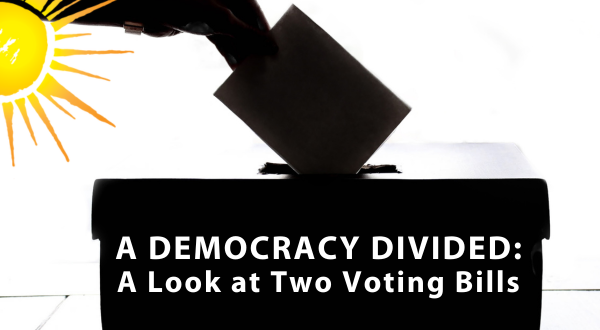
Safeguard American Democracy: Oppose the American Confidence in Elections Act and Support the Freedom to Vote Act

Safeguard American Democracy: Oppose the American Confidence in Elections Act and Support the Freedom to Vote Act

Safeguard American Democracy: Oppose the American Confidence in Elections Act and Support the Freedom to Vote Act

Safeguard American Democracy:Oppose the American Confidence in Elections Act and Support the Freedom to Vote ActOur country is divided on how to best safeguard American Democracy and the freedom to vote. Some favor continued progress towards a more inclusive democracy with expanded voting protections that benefit all citizens of voting age. Such proponents are in conflict with others who prefer restricted voting laws that make it more difficult for voters to cast a ballot, and whose policies tend to benefit wealthy corporations and individuals. NETWORK Lobby’s Build Anew policy agenda guides our work to forge a multifaith, multi-racial democracy where we all thrive. Paramount to this transformative change is unfettered access to voting. We ask all justice-seekers to join our efforts to safeguard American Democracy and oppose H.R. 4563—the American Confidence in Elections Act and support the Freedom to Vote Act.

While we thank God that the Supreme Court’s holding in Allen v. Milligan protected voting in Alabama’s Black and Brown communities by striking down gerrymandered congressional districts – and the voting power of these communities across the nation, political extremism is still a major threat to our democracy. In 2023, legislators in at least 11 states passed 13 restrictive voting bills. These restrictive voting measures were the result of concerted efforts by dark money special interests and self-serving politicians. Money was funneled to influence policymakers’ decisions to alter voting laws to make it harder for communities of color to vote. Instead of ensuring fair and equal representation promised in our Constitution, Republicans in states across the country have drawn partisan gerrymandered district maps designed to keep political parties and dark money special interests in power.

The prophet Isaiah’s judgement of the rulers and leaders of Jerusalem during their time of seeming prosperity is especially poignant. “They say that what is right is wrong and what is wrong is right; that black is white and white is black; bitter is sweet and sweet is bitter” (Is. 5:20). Sacred reflection is prologue to the contradictory nature of two election related bills recently introduced in the House — the Republican-crafted American Confidence in Elections (ACE) Act (H.R.4563) and the Freedom to Vote Act (FTVA) (H.R.11) — which has bipartisan backing.

The ACE Act (H.R.4563) would:

  • Limit the choices that voters have when registering to vote
  • Repeal President Biden’s Executive Order instructing federal agencies to encourage voter registration
  • Restrict the ability of voters to cast a ballot by mail
  • Create strict photo ID requirements
  • Reinforce partisan gerrymandering
  • Enhance the power of wealthy special interests by increasing contribution limits and maintaining the avenues for anonymous, or dark money, donations

The Act would also restrict private funding of the administration of elections, even as Congressional Republicans refuse to adequately fund the administration of federal elections. And, Washington, D.C. voters are singled out by the legislation as District voters would become guinea pigs for the states, with the establishment of a series of repressive restrictions, including dramatic reductions in drop box access for voters and onerous new voter ID and mail-in voting rules.

Conversely, FTVA (H.R.11), introduced by Rep. John Sarbanes (MD-03) in the House on July 17, 2023, is a transformational pro-voter, anti-corruption bill that is complementary to the John R. Lewis Voting Rights Advancement Act. Passage of this bill would be a vital step forward to live into Build Anew’s mission.

The FTVA (H.R.11) would protect the integrity of elections, simplify voter registration, and expand access to the polls. It would:

  • Protect local election officers and poll workers from harassment and intimidation
  • Limit gerrymandering
  • Shine light on “dark money” flooding into campaign advertising

Untraceable funds allow wealthy individuals and corporations to exert undue influence over the political process and erode the democratic ideal of equal representation. The FTVA (H.R.11) would not allow money to effectively drown out the voices of everyday citizens it would enhance the aspirational principle of “we the people” from the Preamble to our Constitution.

The Catholic faith requires that we on honor human dignity. The rise of dark money and undisclosed corporate donations, coupled with restrictive voting measures, casts a shadow on the integrity of our democratic process, and results in diminished dignity for those left out of the process. We are called to recognize and respect the inherent worth and dignity of every human being, no exceptions!

Voting is not only a civic duty but also a means of upholding the dignity of every person, and allowing them to have a voice in shaping their communities, and the larger society. We must actively working towards the elimination of discrimination, prejudice, and systemic racism in all its forms, especially in our elections. NETWORK strongly opposes the House Republican American Confidence in Elections Act The ACE Act, H.R.4563) and calls for the swift passage of the Freedom to Vote Act (FTVA H.R.11).

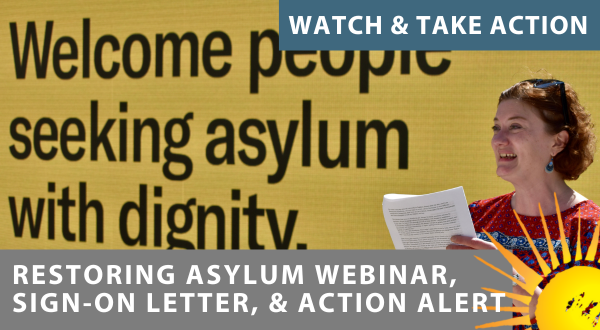
Restore and Protect Asylum - -watch the NETWORK Lobby Webinar, Sign-on the the Letter to Congress, and more

Take Action to Restore and Protect Asylum

10,000 Signatures Needed from Catholic Advocates!

We are no longer accepting signatures for the letter.

Watch: Restoring Asylum & Dignity for Immigrants

The Restoring Asylum and Dignity for Immigrants webinar makes it clear — our country needs a well-funded, law-abiding asylum process that respects people seeking a new life in the U.S. All immigrants deserve dignity — no exceptions! Catholic justice-seekers*, we are collecting 10,000 signatures to let Congress know that NOW is time to invest in better, equitable immigration policy.

*NETWORK is offering another immigration justice action — in addition to the sign-on letter — for all justice-seekers. With one click, you will be taken to a letter that you can personalize, or just send, immediately. Click here to send an email to your Member of Congress. 

Help friends, family, & parishioners sign-on, too.

Action Everyone Can Take for Immigration Justice

Resources to support you when you take action to restore and protect asylum

Blogs
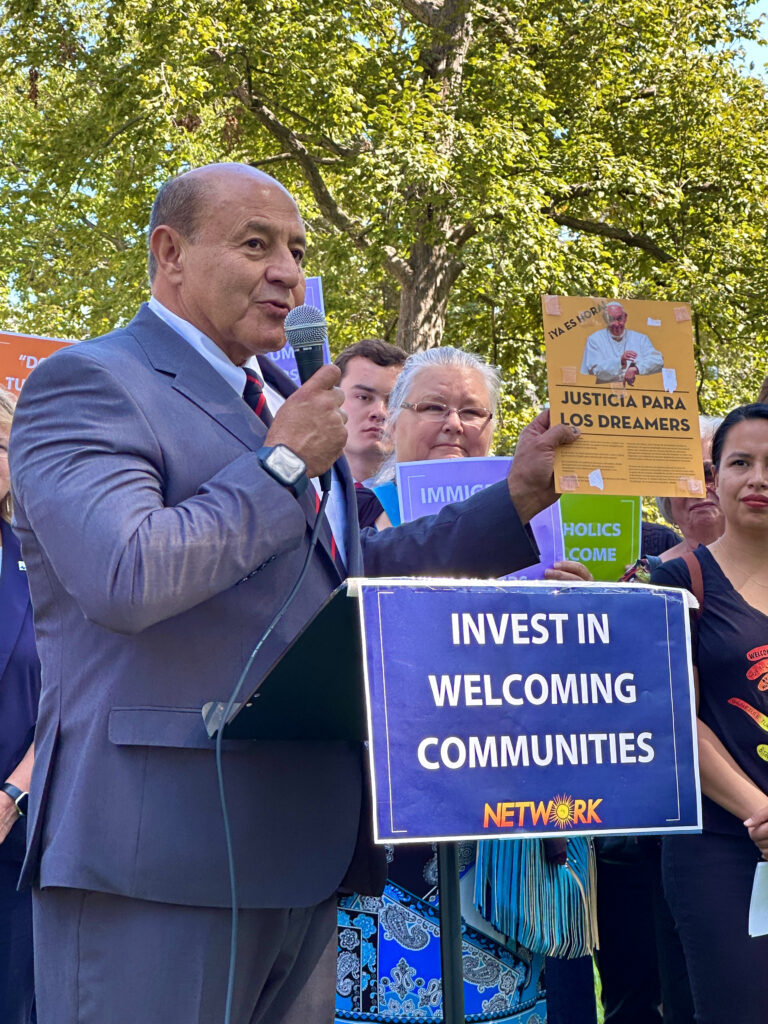
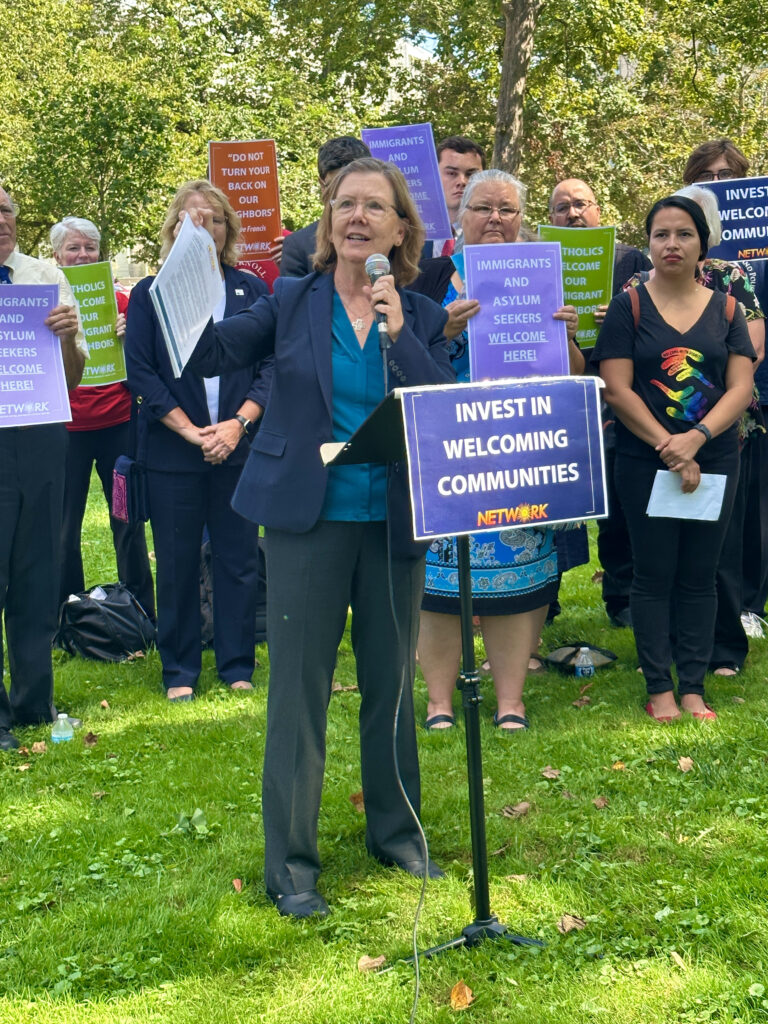
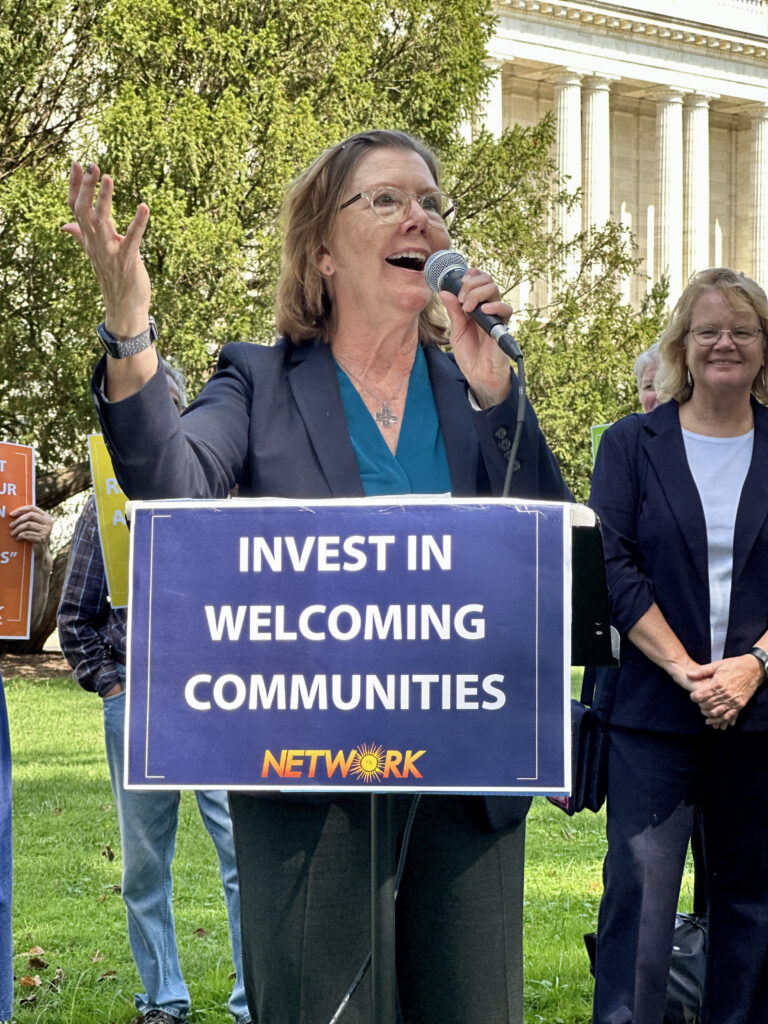
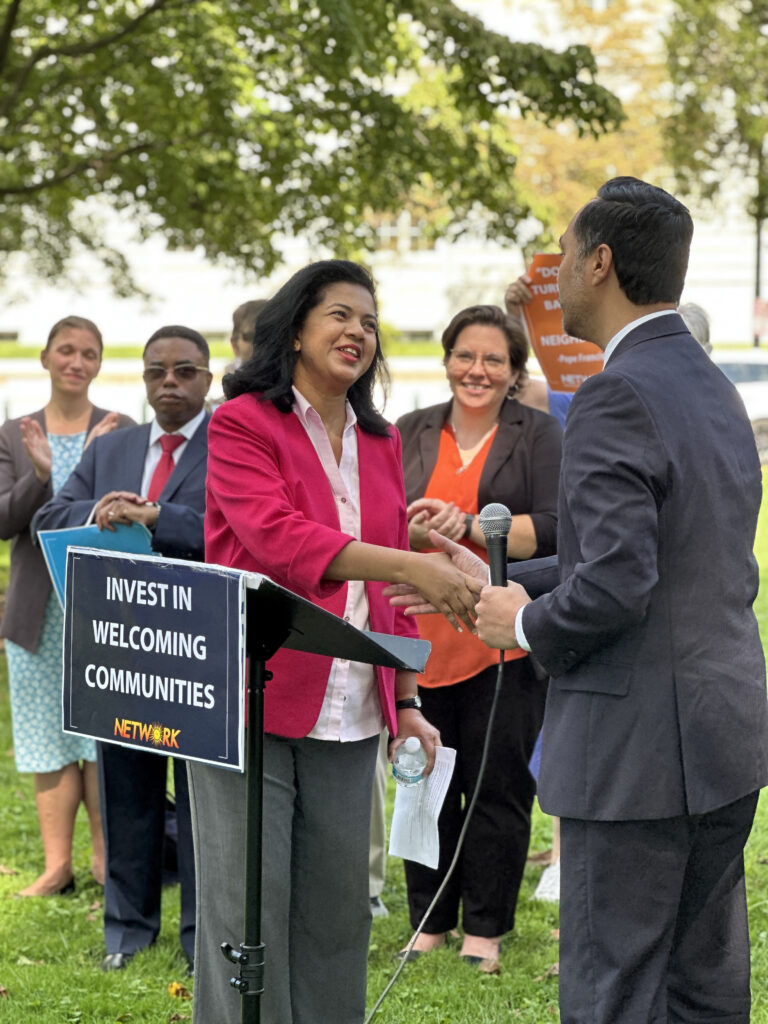
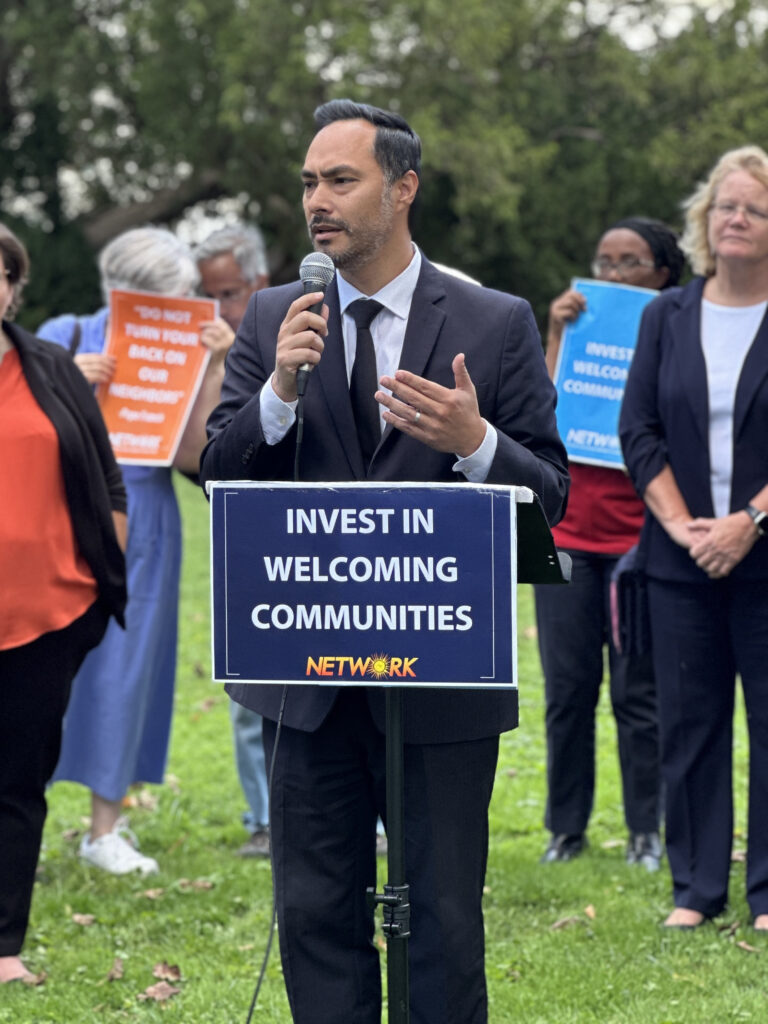
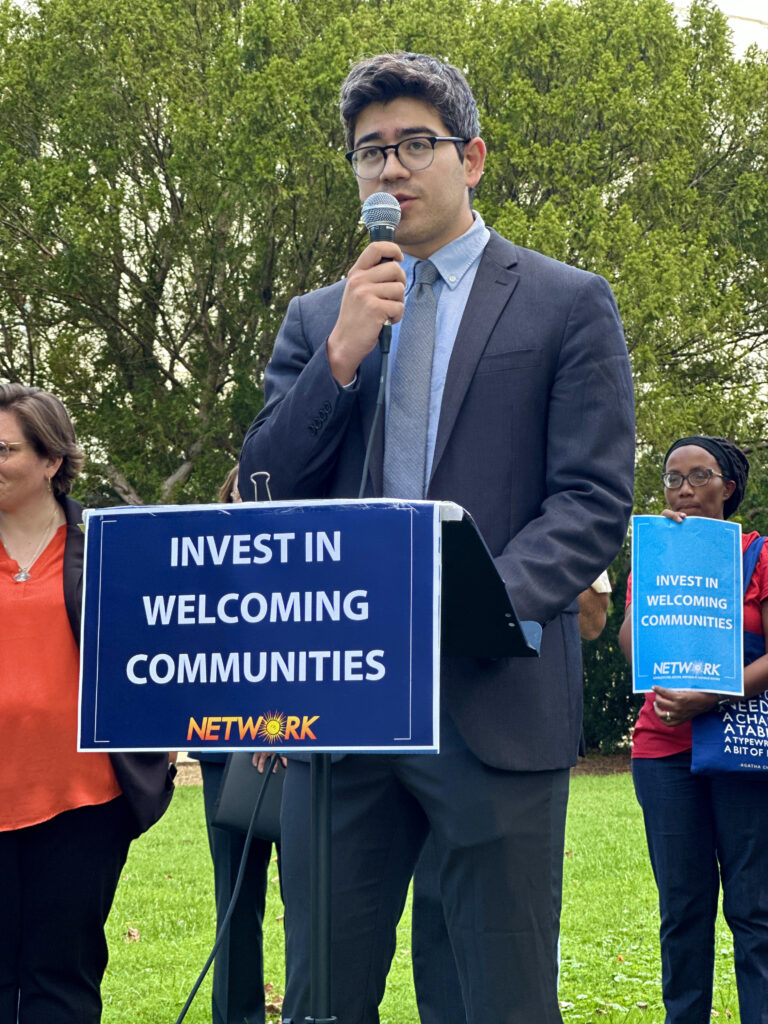
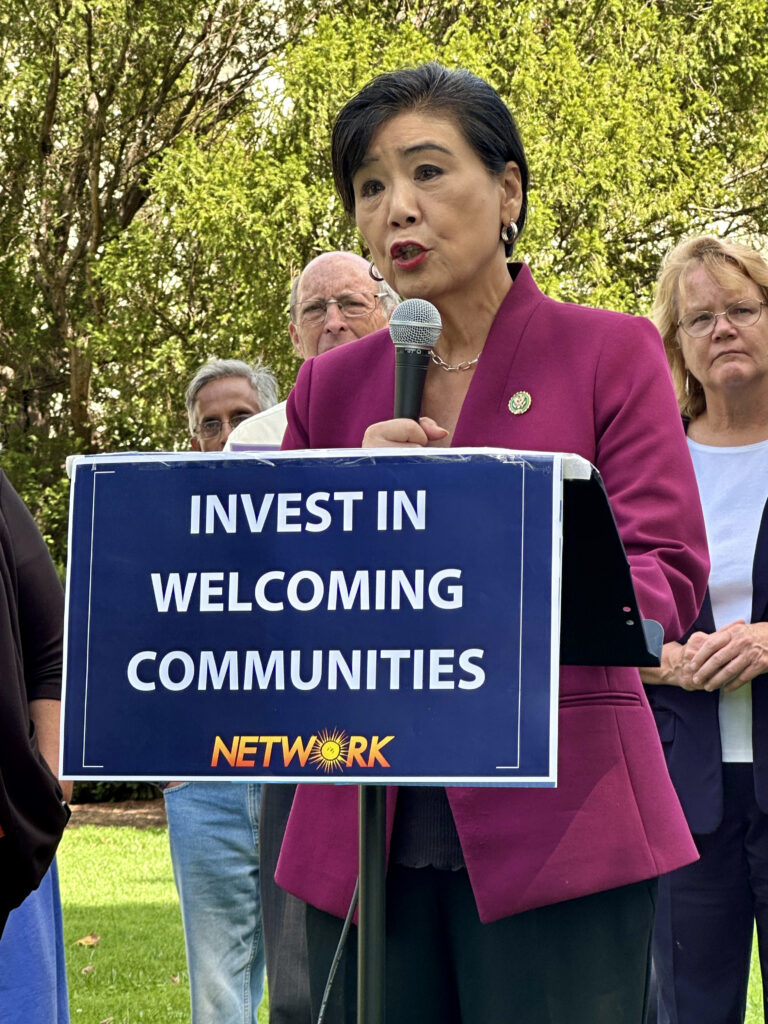
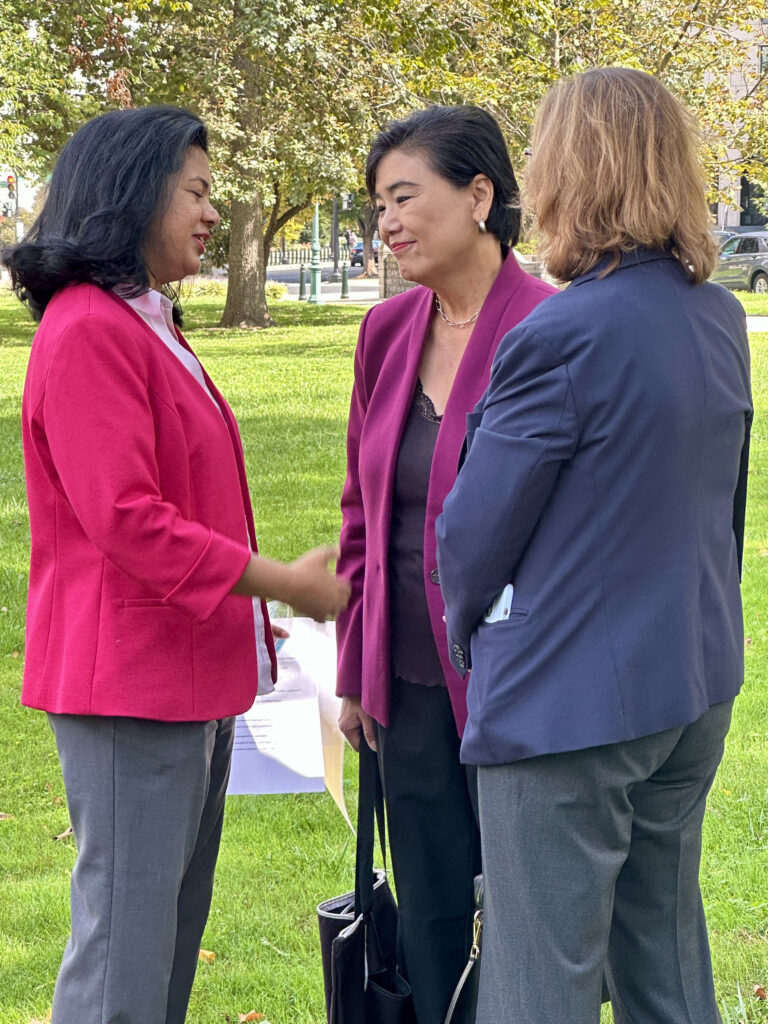
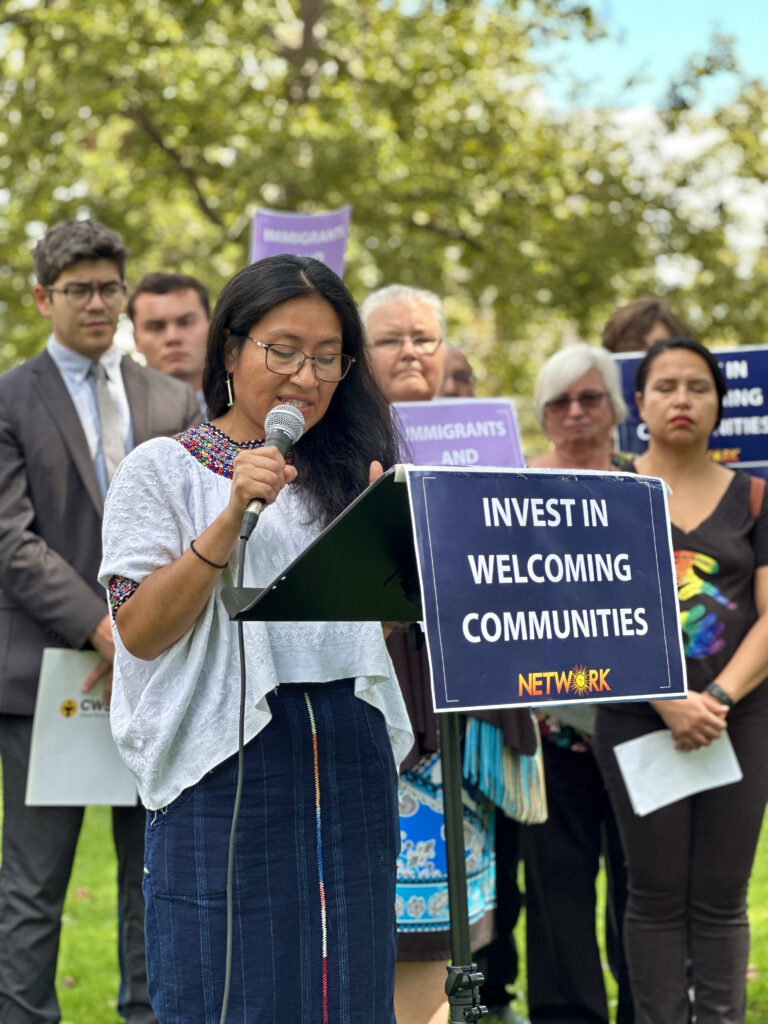
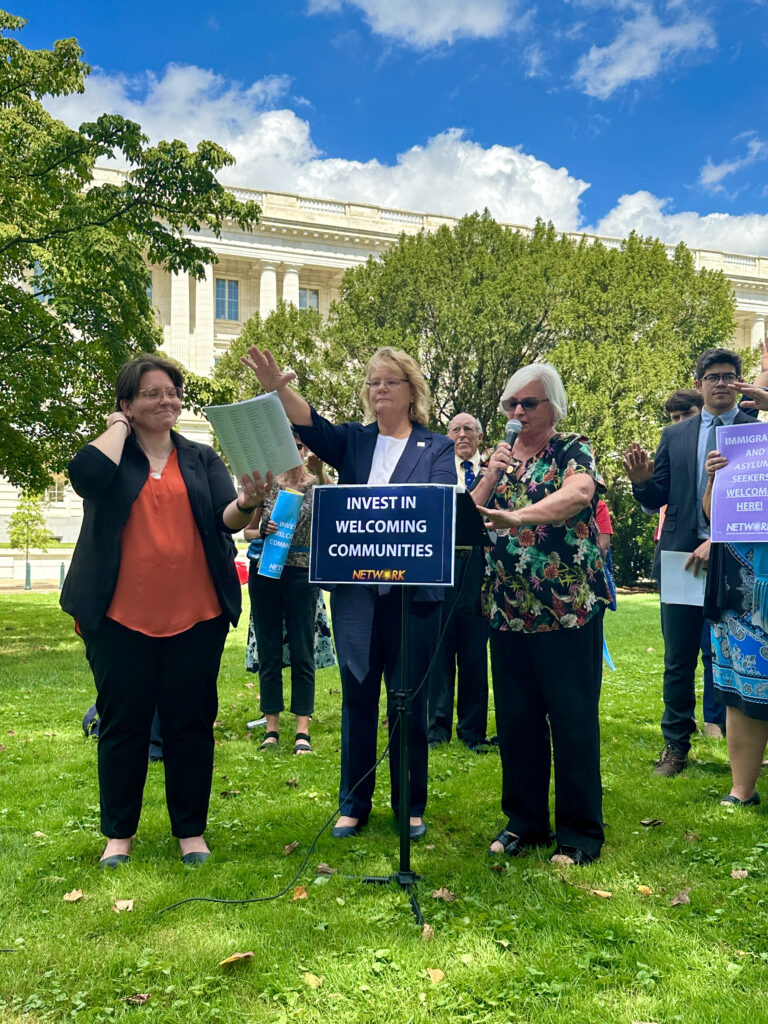
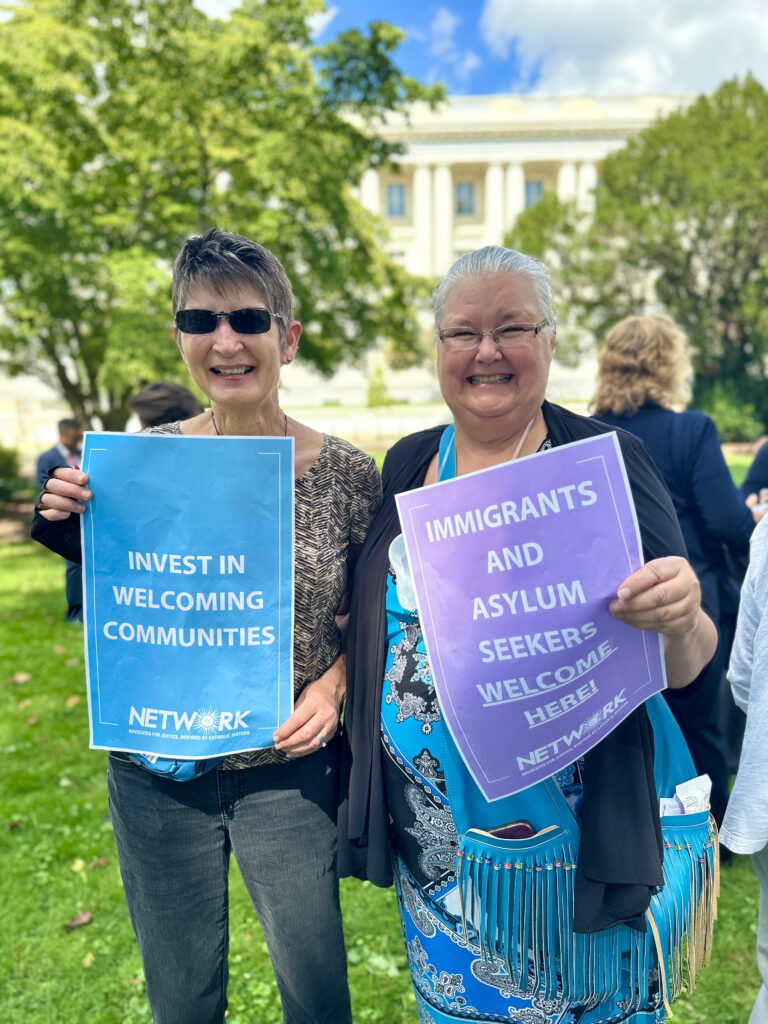
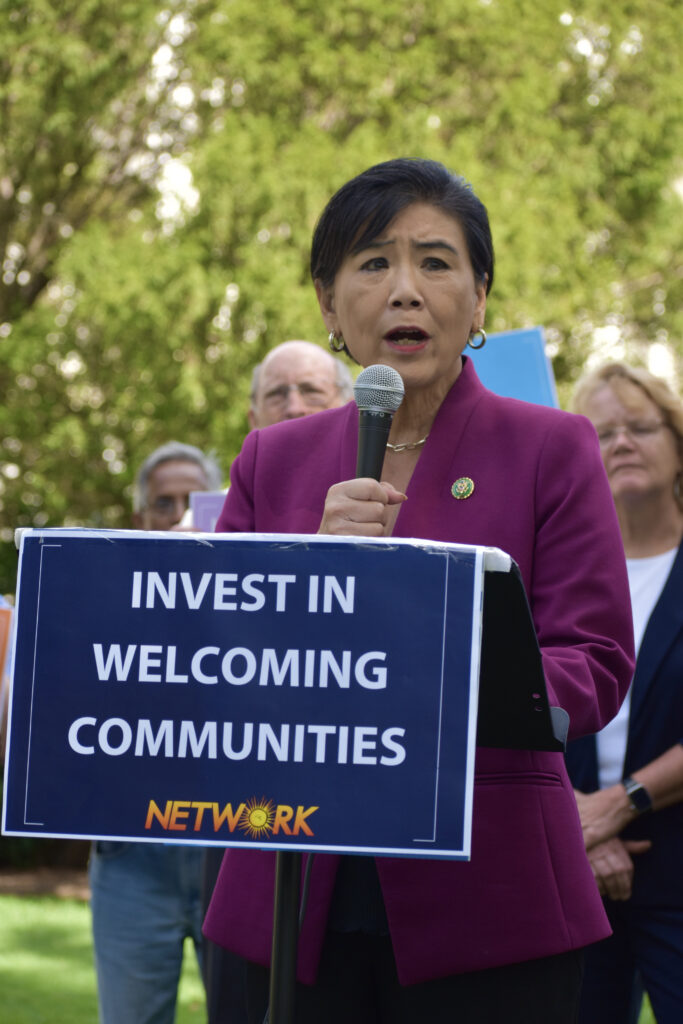
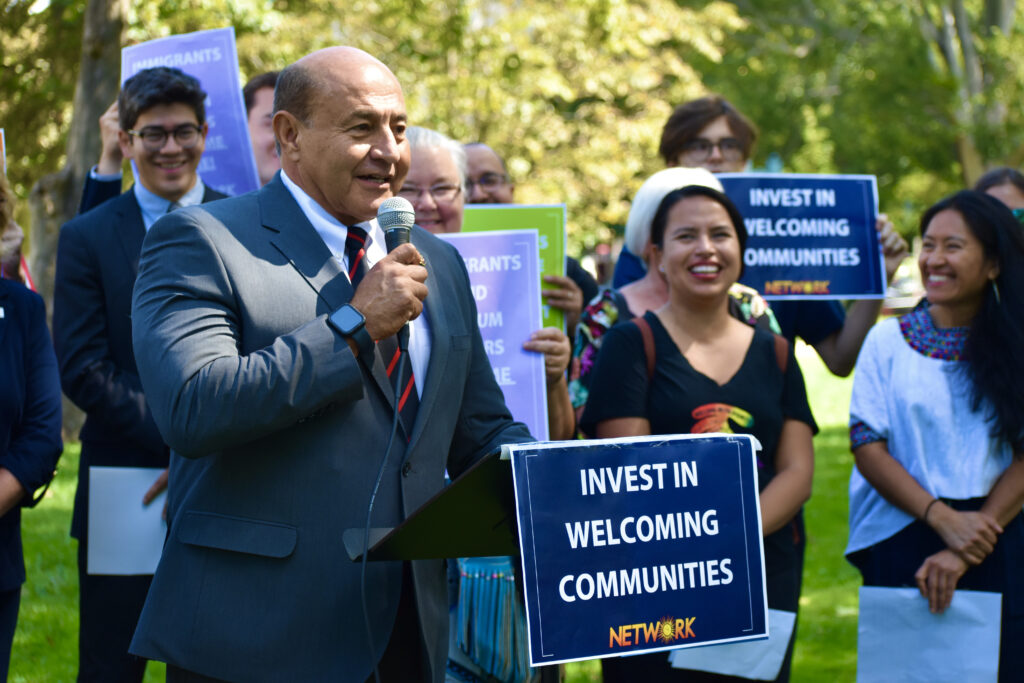
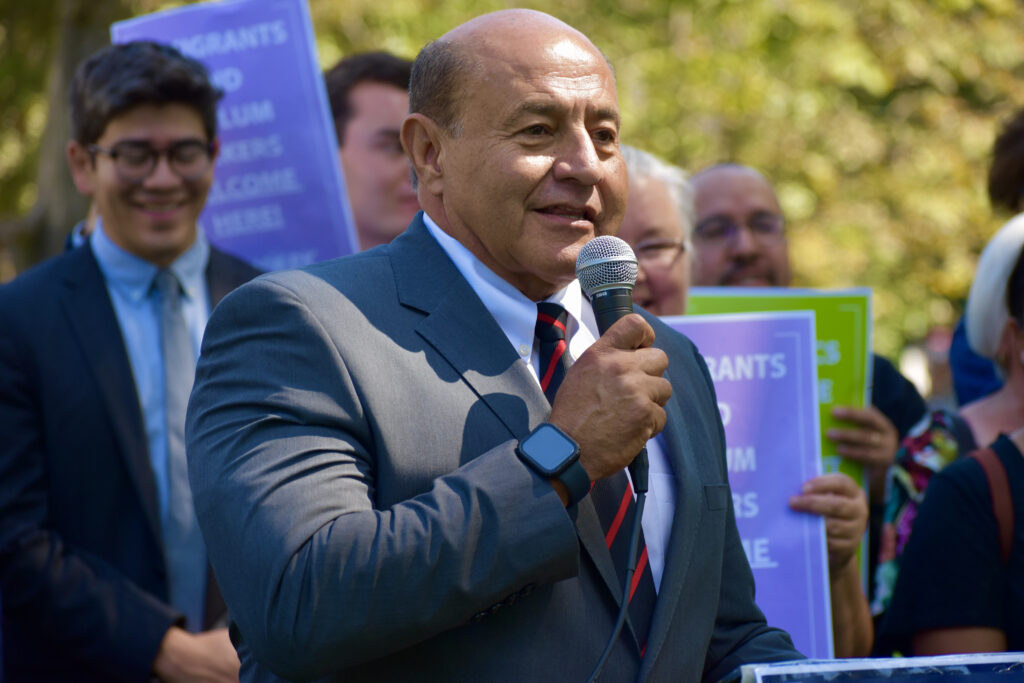
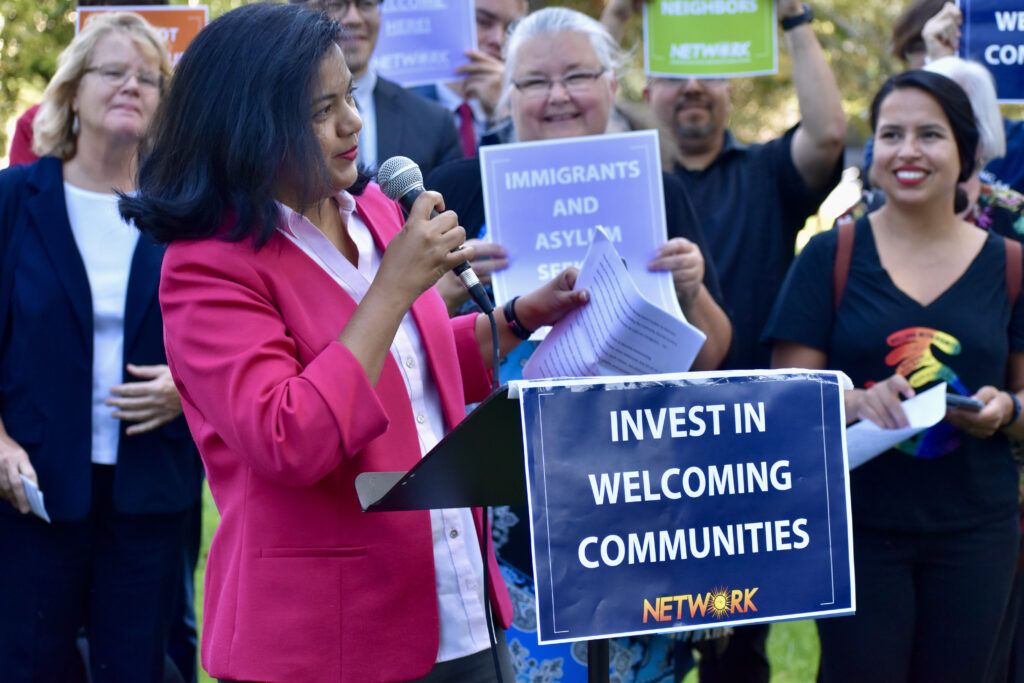
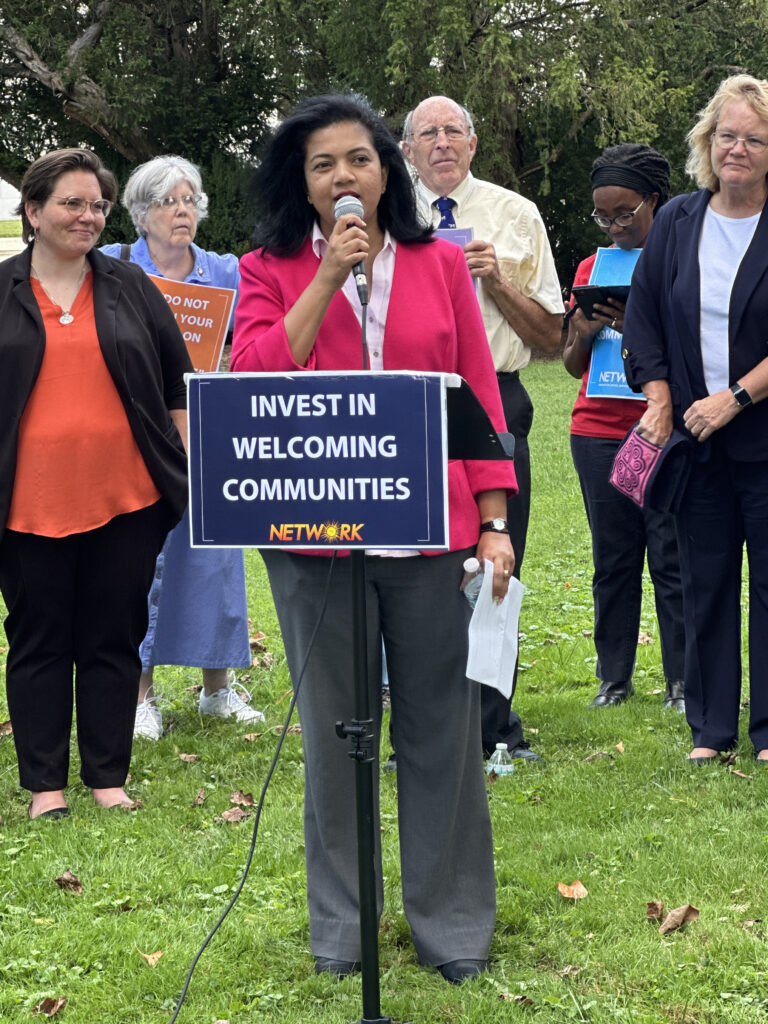
Images from the Catholic Immigration Letter press conference in September 2023

Keep Up with NETWORK

Just Politics Catholic Podcast Season One

Youngstown, OH Justice-Seekers Supported Safety Net Programs at the Care Not Cuts Rally

Sister Eilis McCulloh, HM
Grassroots Outreach and Organizing Specialist
June 27, 2023

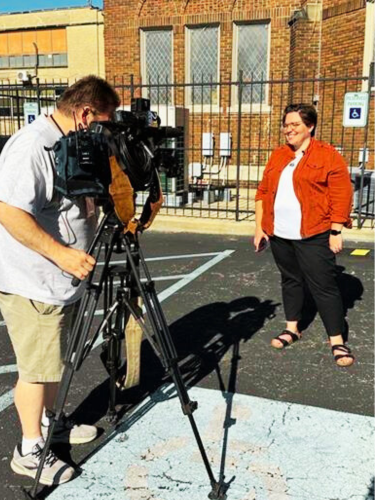
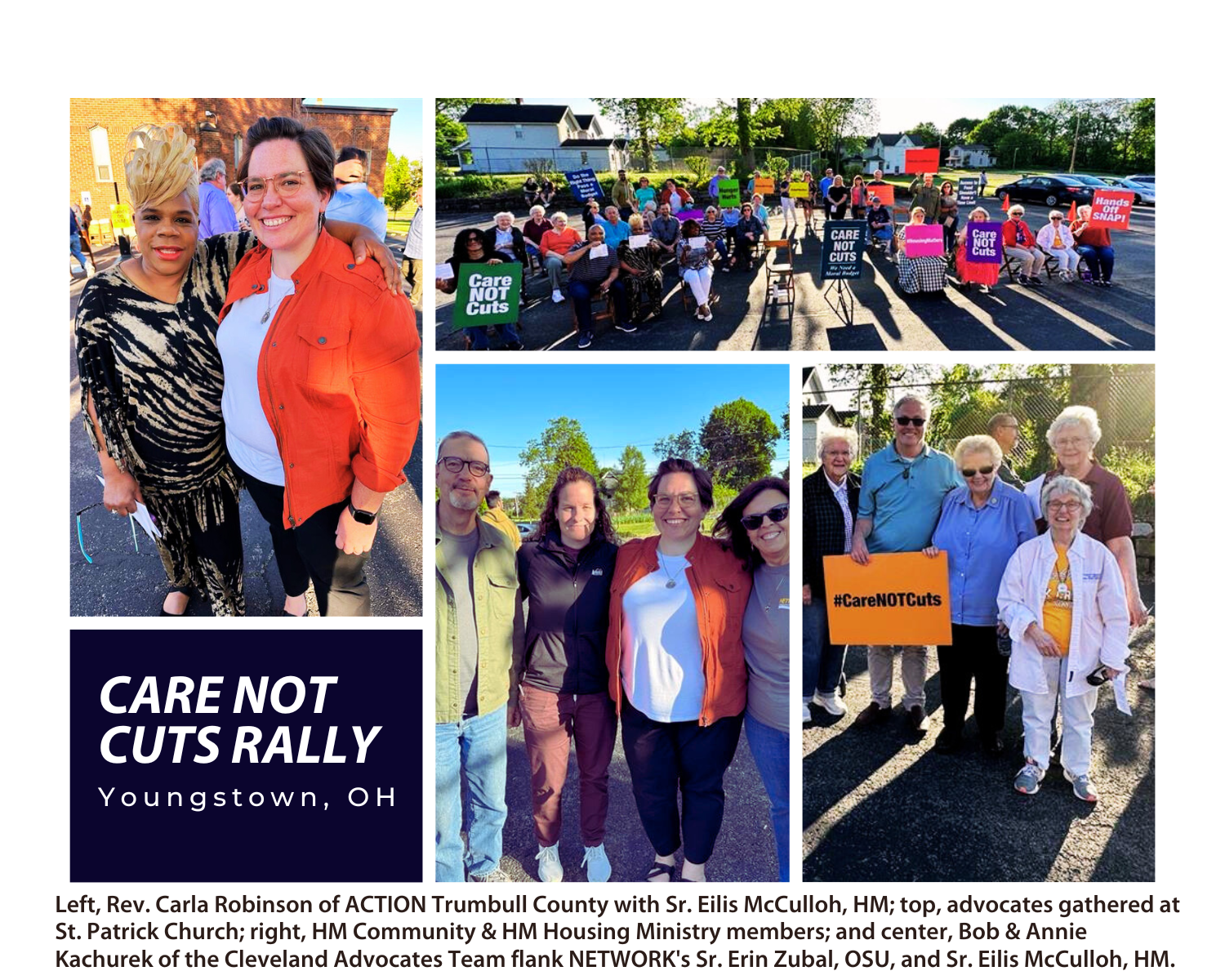
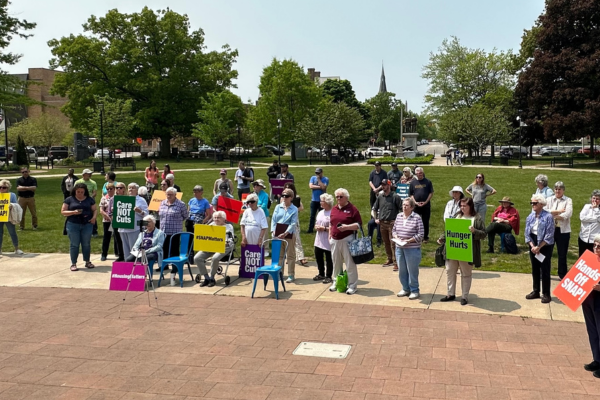
NETWORK organizer Sr. Eilis McColluh, HM, speaks to the media about the Youngstown, OH Care Not Cuts RallyAs Congress was in the final days of negotiations around the debt ceiling and trying to avoid a default, more than 40 faith-filled justice seekers gathered in Youngstown, Ohio at St. Patrick’s Church on the city’s southside.

Because I grew up in Youngstown, I have a soft spot for the city that is still trying to claw its way out of the devastating effects of the steel mill closures in the 1970s. I often talk about the grit and determination the city and its people have to build itself anew.  Folks have come together – in  faith-based and secular organizations, local government, and churches–to make sure everyone has access to human needs resources.  Fresh food is provided through a mobile pantry and housing resources, food assistance, medical assistance, and so much more are being delivered, too. But, from the rally’s speakers, we learned that they cannot do that alone.

Tom Hetrick, President of City Council, told us that more than one-third of all residents rely on SNAP to feed their families. However, the city is considered to be a food desert, so most people do not have access to fresh food within their neighborhoods. What good is SNAP when locations to access the benefit are lacking? Additionally, many residents rely on Medicaid and housing subsidies. Youngstown would be decimated if these vital social safety net programs were cut. Local non-profits are stepping up to fill the gaps, but they cannot do this forever.

“No matter how many organizations will come to the rescue, we need our federal government and Congress to stand up, as we strive to give you the benefit of the doubt…Because each and every one of us needs food, clothing, and shelter. And we ask that you would consider and not make these severe cuts to humanity, to our communities. As we gather together as organizations, we are striving to do our part, but we cannot do it without our Congress and federal government stepping up and doing the right thing by the people. “   ~ Rev. Carla Robinson

Watch Video from the Youngstow, OH Care Not Cuts Rally

NETWORK thanks the community advocates who spoke out to protect the social safety net at the Youngstown, OH Care Not Cuts Rally.

Tom Hetrick
Youngstown City Council

Michael F. Stepp
St. Vincent de Paul

Fred Berry
Humility of Mary Housing, Inc

Elder Rose Carter
ACTION

Minister Joseph Boyd
UU of Youngstown

Rev. Carla Robinson

Dr. Alexis Smith

At the Care Not Cuts Rally in Erie, PA, Justice-Seekers Called for a Moral Budget

At the Care Not Cuts Rally in Erie, PA, Justice-Seekers Called for a Moral Budget

Mary Nelson,
Guest Contributor from the Erie NETWORK Advocates Team
June 8, 2023
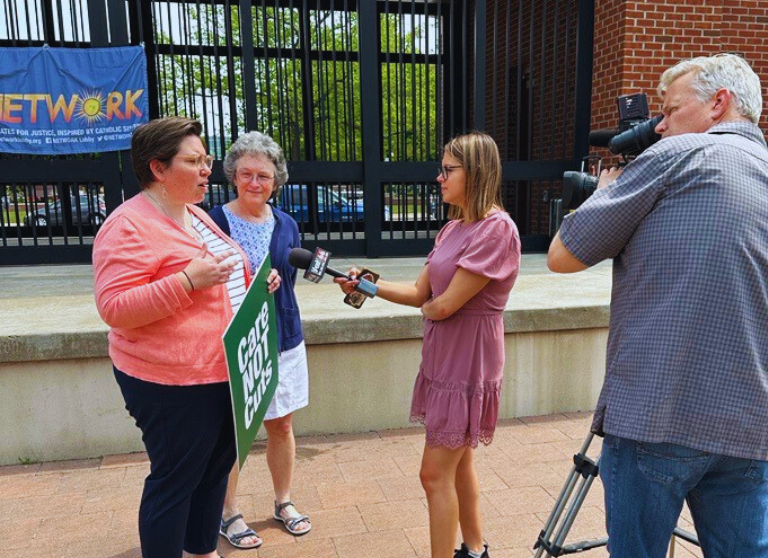
NETWORK organizer Sr. Eilis McColluh, HM, and Mary Nelson, justice-seekers in Erie PA speak to the media about the Care Not Cuts Rally in Erie, PA

May 23, 2023: NETWORK organizer, Sr. Eilis McCulloh, HM, left, and Mary Nelson, in the blue sweater, speak to the media about the Care Not Cuts Rally in Erie, PA

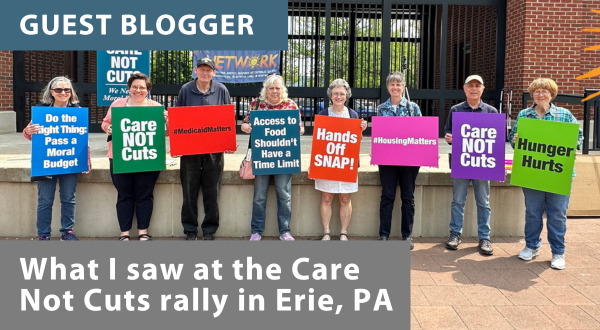
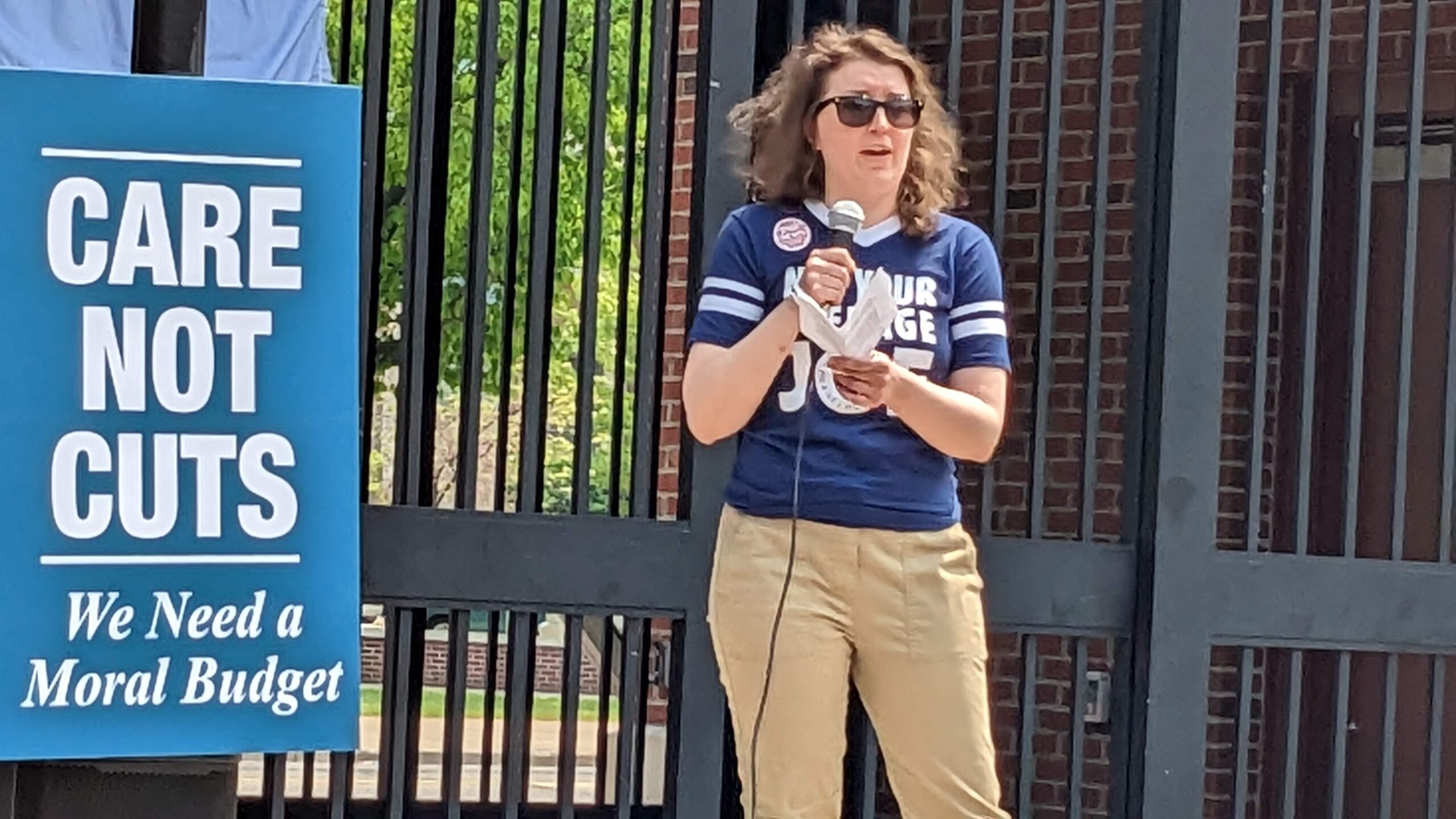
On May 23, 2023, I gathered with a group of community and religious leaders in Erie, Pennsylvania for a “Care Not Cuts” rally. Speakers and attendees were advocating for a moral federal budget as House Speaker Kevin McCarthy and President Biden negotiated a bill that would raise the debt ceiling in exchange for significant cuts to critical human needs programs in our community. Over 60 people from the Erie community joined together to protect Medicaid, housing, and food assistance in our community.


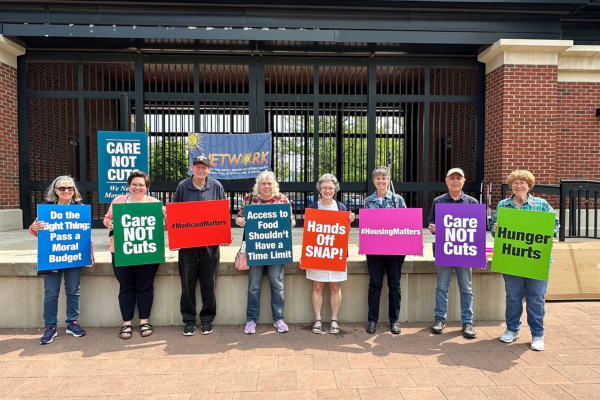
Erie, PA NETWORK Advocates Team members Cynthia Legin-Bucell (far left), Mary Nelson (fourth from right), and Michael Bucell (second from right)

Erie, PA NETWORK Advocates Team members Cynthia Legin-Bucell (far left), Sister Eilis McCulloh, HM (second from left), Mary Nelson (fourth from right), and Michael Bucell (second from right)

Our Erie Advocates Team of NETWORK supporters had been following the federal budget negotiations with concern, hearing proposals of drastic cuts to the social safety net that aids Erie’s vulnerable populations. Attempts by the House of Representatives to balance the budget on the backs of people living in poverty, while not raising taxes for the ultra wealthy and corporations, seemed a painful and immoral way to address the country’s debt.

Erie is fortunate to have three orders of religious women (Sisters) who have served the community and northwest PA for decades: the Benedictine Sisters of Erie, the Sisters of St. Joseph (SSJ), and the Sisters of Mercy. They serve the people of God in Erie and the surrounding counties in a myriad of ministries and remind us of what it means to be in relationship with God and with each other. They lead by example to inspire and educate. They show up in all kinds of weather to protest, protect and advocate, and to call out the best in us. The Sisters demonstrate what a thriving community can become, if only we can be brave enough to work together and to care.

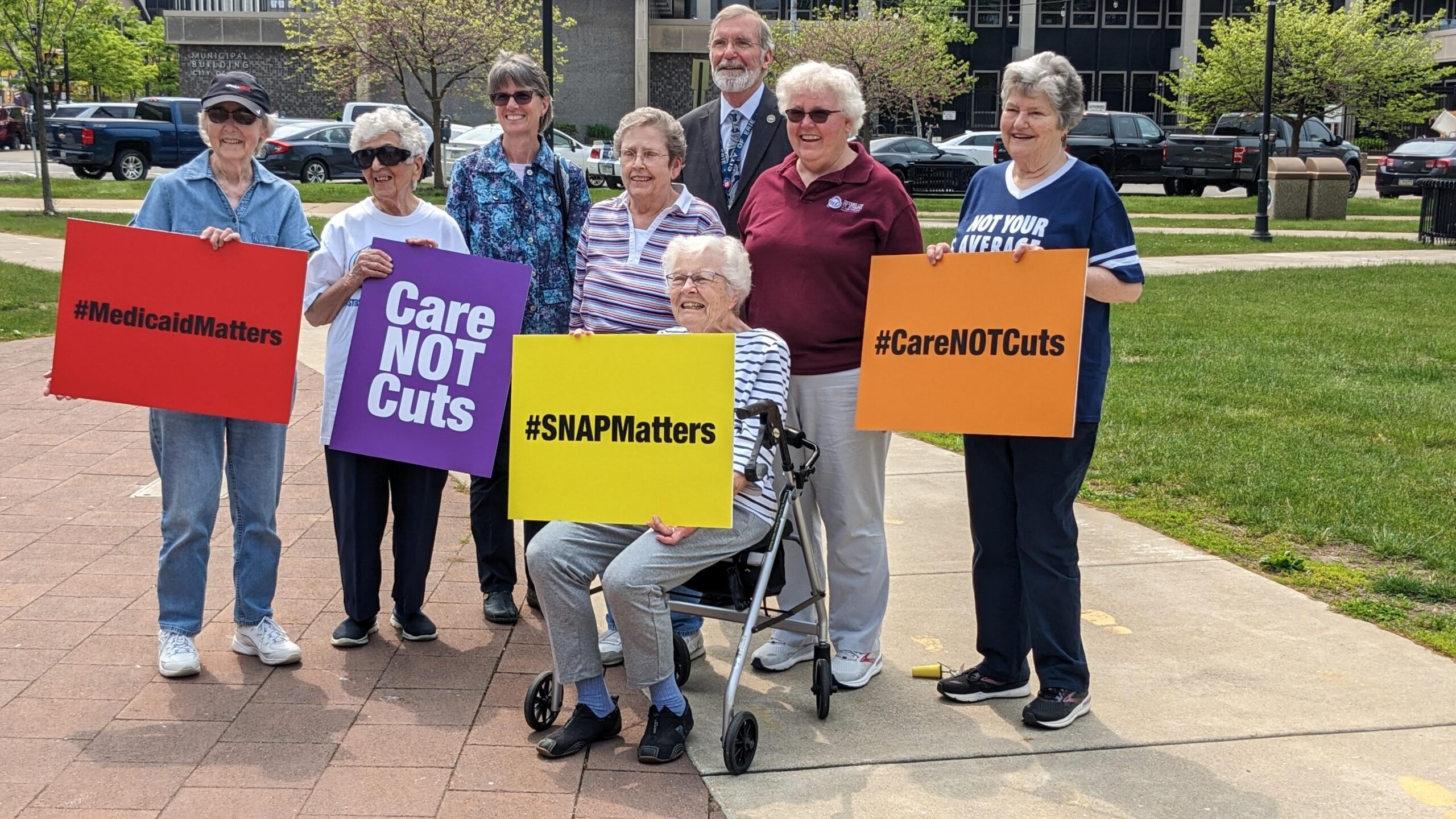
Sisters of St. Joseph and friends, pose with Erie, PA Mayor Joe Schember at the Care Not Cuts Rally in Erie, PA

May 23, 2023: Women Religious from the SSJ community and friends pose with Erie, PA Mayor Joe Schember at the Care Not Cuts Rally in Erie, PA

And so, on that sunny, warm spring day, most of the people who responded to NETWORK’s call to attend the “Care Not Cuts” rally in Erie were Sisters and allies from the Erie area. One of the speakers was Sr. Dorothy Stoner, OSB, who works with refugees and people seeking job training at the St. Benedict Education Center. Sr. Dorothy shared about the extensive services the Benedictines offer, from food pantries and soup kitchens to environmental education and safe-space programs for children. She called out the irony of certain members of Congress seeking to cut funding for the very support of food, housing, and Medicaid, while insisting people work in such low-wage jobs that they are unable to afford food, housing, and healthcare!

Another speaker, Susannah Faulkner, who works for the SSJ Neighborhood Network and serves on the Erie City Council, noted that “The city of Erie’s child poverty rate is three times higher

Susannah Faulkner of the SSJ Neighborhood Network & Erie City Council speaks at the Erie, PA Care Not Cuts Rally

Susannah Faulkner of the SSJ Neighborhood Network and Erie City Council speaks about poverty and policy choices at the Care Not Cuts rally in Erie, PA

than the state and national average…[they are] trapped in this situation depriving them of opportunity, good health, and stability.” If we believe that poverty is a policy choice, we should be able to mold a federal budget that is also a moral budget.

Betsy Wiest described how St Patrick’s Haven, another ministry of Sisters of St Joseph that provides temporary overnight shelter and a ministry of friendship for unhoused men, was supported by the community after a fire last year. The proposed 2023 budget would strip a significant portion of their federal HUD funding, which provides emergency shelter for men with nowhere else to go, critical during Erie’s frigid winters. She asked, “How is this practicing love of neighbor without distinction?”

Jennie Haggerty spoke to how the Mercy Anchor Center for Women was recently expanded at a repurposed Catholic elementary school. This transitional home for women and children also includes extensive support services for the community. Since 2017, none of their clients have become homeless again, which should be an indicator of its success in reducing homelessness and improving the dignity and employability of its clients.

Mayor Joseph Schember demonstrated his Catholic heart by sharing what the city is doing to address economic and racial inequities. He noted that evidence has shown that by providing housing and support services to people with addiction first — instead of requiring them to meet certain requirements before receiving assistance — gives people a better opportunity to turn their lives around and reduce chronic homelessness. New initiatives seek to revitalize long-neglected areas that will require federal investment but will recoup significant financial payback. There are local, state, and federal investment programs, neighborhood coalitions, and downtown partnerships which are primed to move us forward to prosperity and equality, if they are funded.

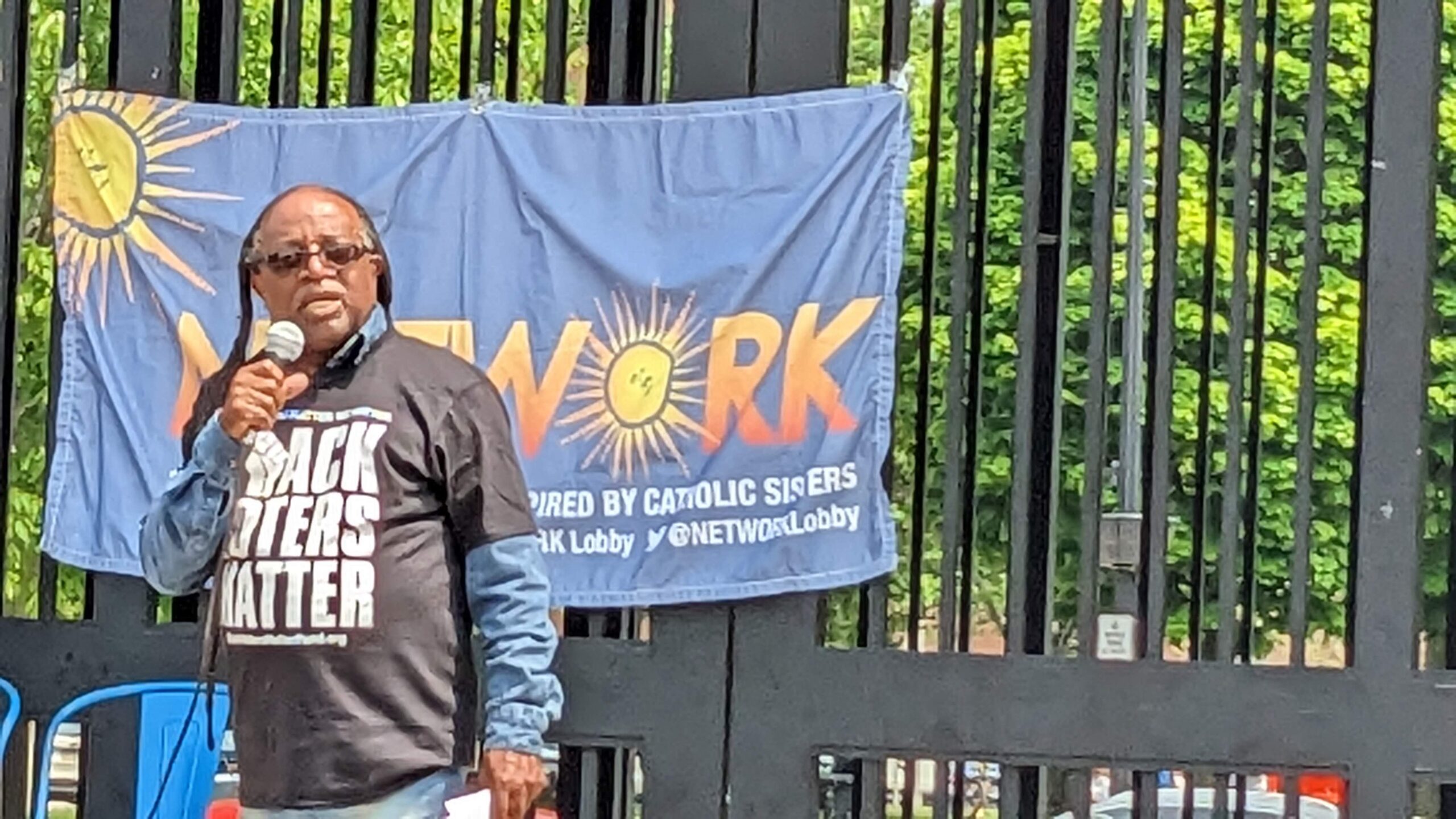
Gary Horton, of the Minority Community Investment Coalition, exhorted everyone to get involved politically, and like Congressman John Lewis said, to make good trouble. He said, “Democracy is on the line, and we must vote like our lives depend on it.”  We must speak up for people who have been disproportionately impacted by bad policies that have created generational poverty, which is so evident in the divided and high poverty areas in Erie and the surrounding counties.

Their passionate pleas to protect federal funding for these programs that help vulnerable people in our communities  is a call to the rest of us to contact our legislators, to advocate for those whom some policy makers in Washington have ignored for far too long.

People gathered in Erie, PA to listen to local leaders talk about love and care for all in the community at the Care Not Cuts Rally.

Together, by speaking out in support of federal safety net programs, and the local organizations that tend to our struggling neighbors, we can build thriving communities. “Care, not cuts,” indeed.

Watch Video from the Care Not Cuts Rally in Erie, PA
Free, Voluntary, IRS-run Electronic Filing System May Be on the Way

Free, Voluntary IRS Electronic Filing System is Essential for Low-income Taxpayers

A Free, Voluntary, IRS Electronic Filing System is Essential for Low-income Taxpayers

JoAnn Goedert, Ignatian Volunteer Corp Member
Government Relations Special Contributor
May 24, 2023

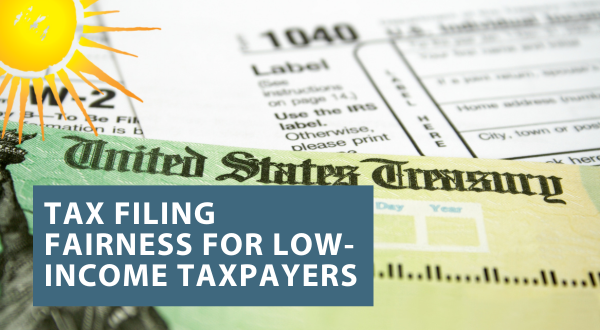
Paying income taxes to the federal government has been obligatory since 1914. Even though we are all subject to federal tax laws for nearly 100 years, the Internal Revenue Service (IRS) has still not found a way to make it easy. The tax code is complex, and the process for calculating and filing pay payments each year can be daunting. Individuals with the means to afford the services of a tax professional, or electronic tax program, can minimize filing obstacles and maximize advantages in the tax code. But what about people of limited means? A free, voluntary, IRS electronic filing system would help all of us, but it is essential for low-income taxpayers.

The need for such a system has been recognized for decades, and its feasibility has been demonstrated by other countries, such as Australia, which have already implemented free direct e-filing for their taxpayers. In the U.S., as the gap between the wealthy and the middle-class grows, and working- and lower- class wages fail to keep up with the cost of living, the need for tax equity is more pressing. Lower wage workers, individuals with disabilities, and others living in the economic margins, deserve help navigating federal tax code and the IRS’s complicated tax forms and documentation policies.

But for many low wage workers and individuals with disabilities, limited help is available. Their options are to struggle with antiquated, handwritten tax forms that must be filled out and mailed to the IRS with paper documentation and any tax payment due; to contend with confusing and complicated requirements for limited, free IRS online filing; or to file no return because their income is so low that they owe no taxes. As a result, many individuals who can least afford to, miss out on tax benefits like the Earned Income Tax Credit and child tax credits, and they fail to document their eligibility for key federal supports like SNAP, Medicaid, and housing assistance – simply because of the intimidating tax filing maze.

What Does the Inflation Reduction Act Have to Do with Tax Fairness?

A new report gives us hope that a measure of tax fairness is coming soon, thanks in large part to a policy supported by NETWORK advocates, the Inflation Reduction Act of 2022 (IRA). The IRA set a requirement that the IRS issue a report on the feasibility of a free, direct e-file tax return system with a focus on multi-lingual, mobile-friendly features, and safeguards for taxpayer data to Congress before May 16, 2023.

Supporters of free, voluntary, IRS electronic filing emphasize that paying taxes is an obligation, not a privilege. As Nina Olsen, head of the Center for Taxpayer Rights and a former IRS official explained, “Let’s not forget that taxes are a public good. . . not a commercial product like potato chips or an airline ticket.” Accordingly, the government should provide a reasonable filing system for all taxpayers.

Opposition to free, voluntary IRS electronic filing

There is vigorous opposition to free, voluntary IRS electronic filing from big business. Commercial tax service providers and electronic tax preparation companies fear that making the process easier for some will diminish their profits. And some conspiracy theorists have conjured up “big brother” arguments against the program, casting it as an attempt by the government to collect and misuse financial information. Others with adequate means simply prefer the status quo.

NETWORK has supported free, voluntary, IRS electronic filing initiatives for years, and we are heartened by the Biden Administration plans, at last, to propose such a system later this month.  We look forward to reviewing the Administration’s plan and working with NETWORK supporters and our partners to ensure that it provides the tax filing relief that our low-income earners need and deserve.

Justice-seekers defend vital human needs programs from federal budget cuts at NETWORK's Care Not Cuts rally in Brentwood, N.Y., on May 22.

Justice-Seekers Call for ‘Care Not Cuts’ in Long Island

Wisdom from Long Island Justice-Seekers at the Care Not Cuts Rally for the Safety Net

Social Justice seekers advocate for thriving communities at the Long Island, NY Care Not Cuts Rally

From left to right: Fr Frank Pizzarelli, Sr. Tesa Fitzgerald, Angel Reyes, Serena Martin-Liguori, Monique Fitzgerald

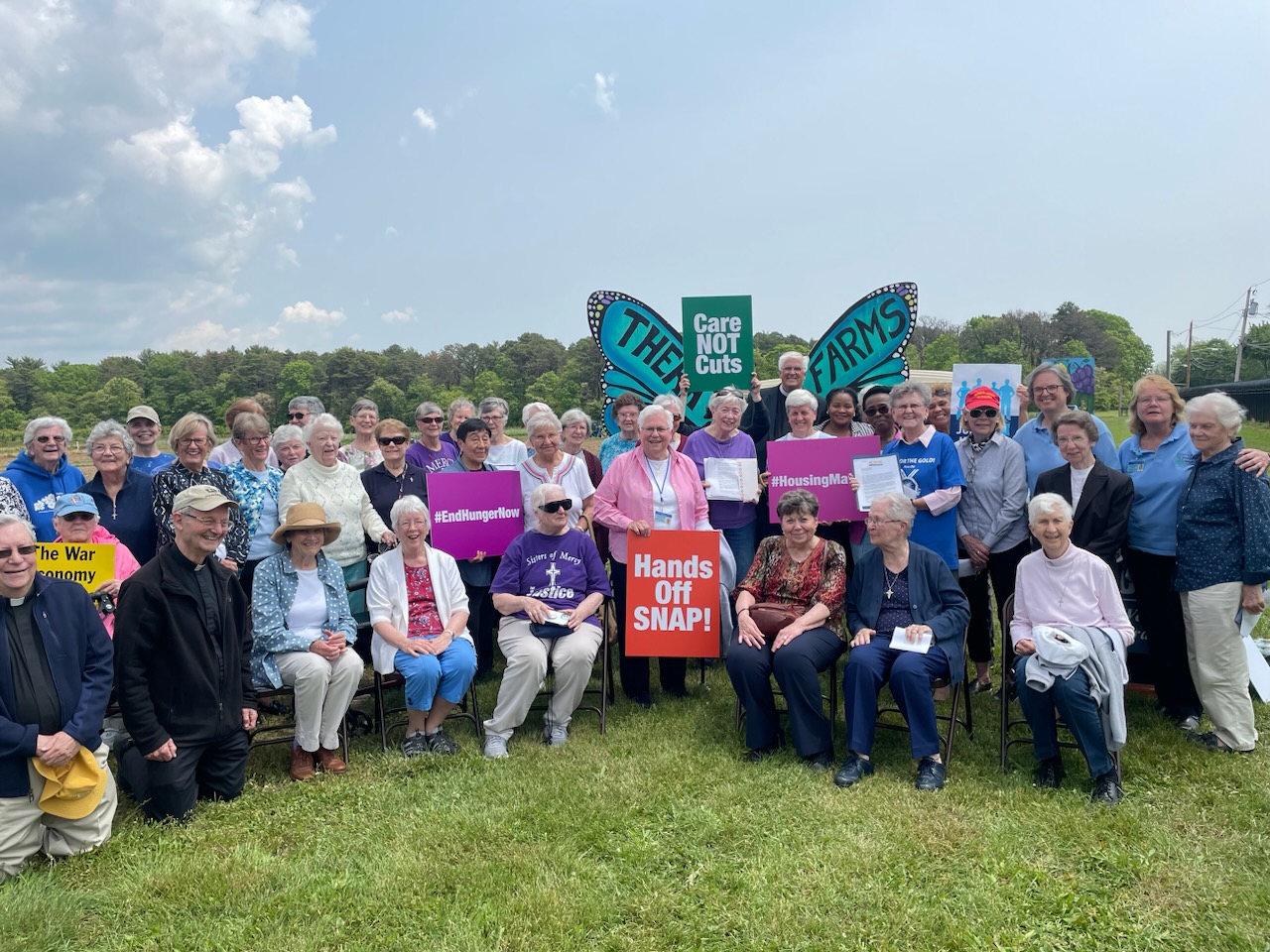
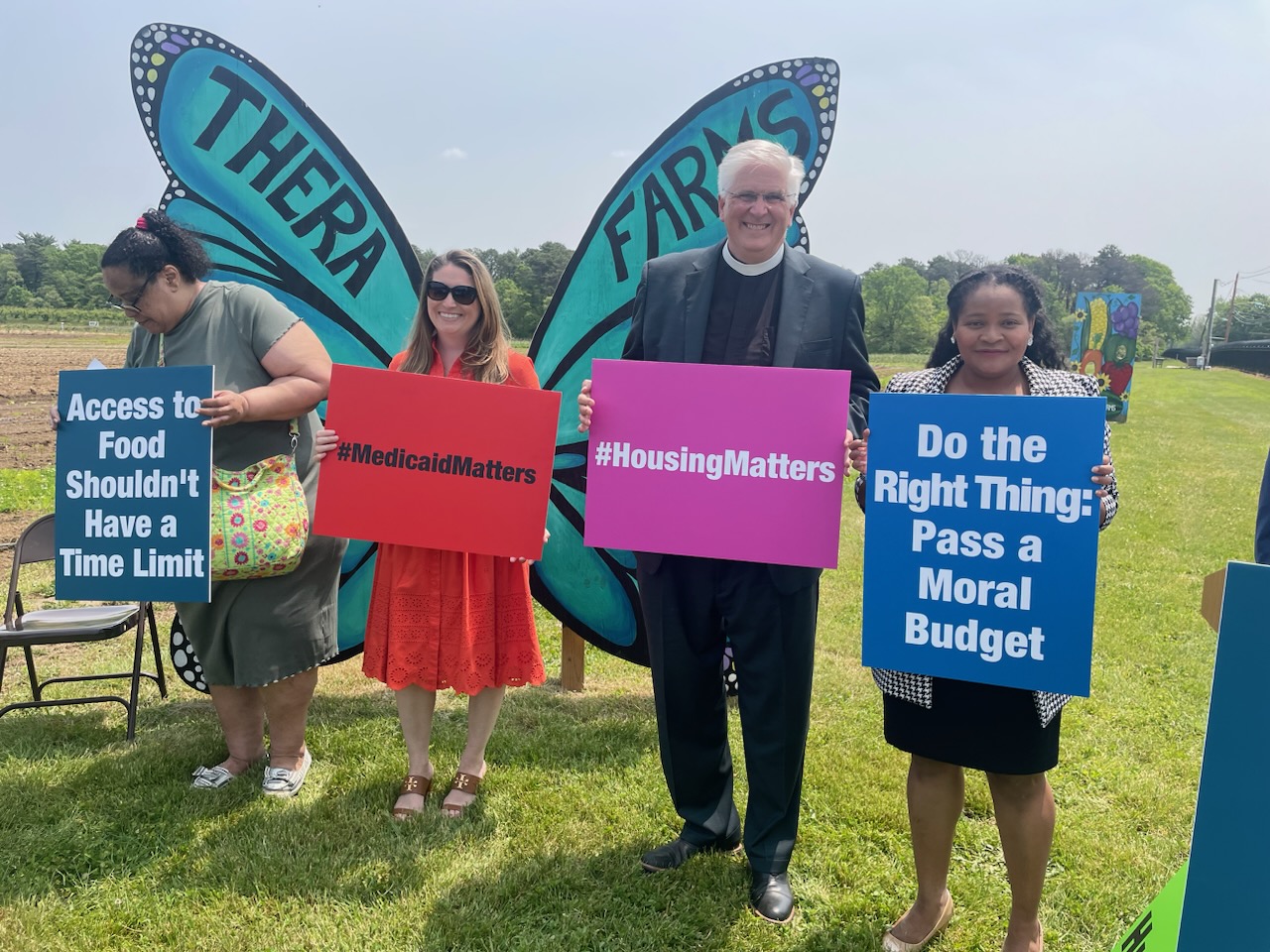
In the face of the unjust healthcare, housing, and food program cuts proposed by House Republicans, justice-seekers came together in New York on May 22 to continue NETWORK’s Thriving Communities Campaign and demand a moral budget that protects all our neighbors! Almost 100 Sisters, clergy, partners, and advocates turned out to oppose these cuts and defend food, housing, and healthcare programs.

In order to highlight the devastating harm their proposed social program cuts would bring to the local community, NETWORK invited organizations who provide vital services to impacted families and individuals of all backgrounds. The result of that work culminated in the first of our Care Not Cuts rallies on Long Island, New York, which drew over 85 attendees and 12 community organizations that are on the frontlines of care in Long Island.


Justice-seekers gather at the Care Not Cuts rally in Long Island on May 22.

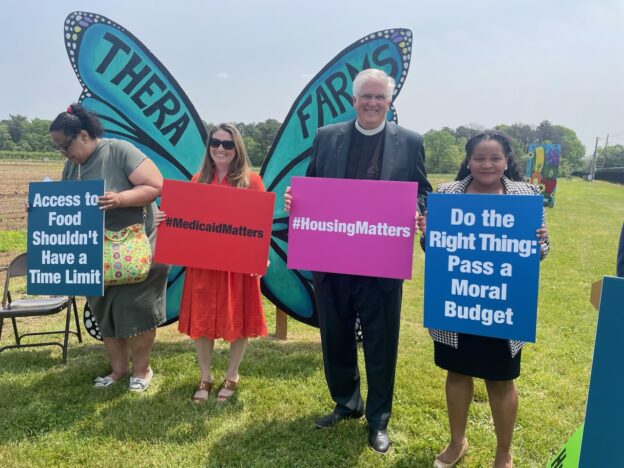
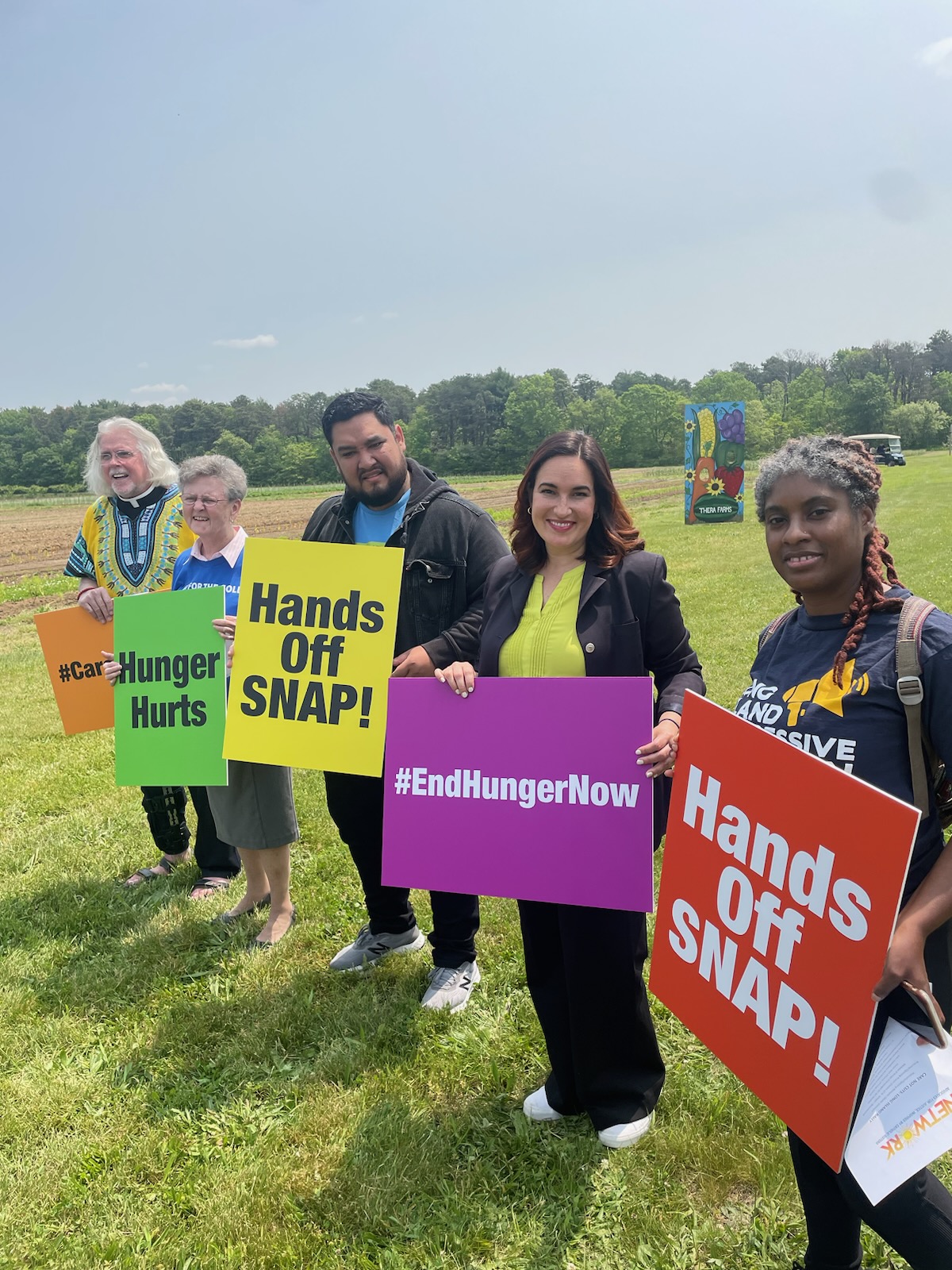
Almost 100 Sisters, clergy, community leaders and other justice-seekers gathered at Thera Farms in Brentwood, N.Y. to oppose cuts to food, housing, and healthcare programs in the federal budget.

Thera Farms, located on the beautiful, sprawling campus of the Sisters of Saint Joseph in Brentwood, served as the backdrop for the rally. Thera Farms is a local community farm that offers fresh produce to women, children, families and seniors by accepting SNAP, WIC and other nutritional benefits at their farm stand.

We heard from powerful advocates like the Sisters of Saint Joseph Brentwood, New Hour for Women and Children, Mercy Haven, and Make the Road New York. Together we spoke about what is at stake from the immoral social program cuts, and called on the community to contact their members and demand a moral budget.

Wisdom from Long Island Justice-Seekers at the Care Not Cuts Rally for the Safety Net

Selected statements from justice-seekers at the Care Not Cuts Rally for the safety net

“We need to stop putting the poorest of us on the line when Washington wants to balance the Federal Budget,” said Skyler Johnson of New Hour.

“It’s tax cuts for the wealthy that have blown up the debt in our country. It is not the social programs for those in need,” said Mark Hannay of Metro New York Healthcare for All.

“This isn’t just about the government and people being held hostage. This is a blatant attack on working people, on the hungry, on the homeless and work insecure, on children, on veterans, on the disabled, on women, on LGBTQI people, on Black and Brown communities, on our Indigenous neighbors. This is an attack on all of us,” said Ani Halasz of Long Island Jobs with Justice.

Justice-seekers defend vital human needs programs from federal budget cuts at NETWORK's Care Not Cuts rally in Brentwood, N.Y., on May 22.

Justice-seekers defend vital human needs programs from federal budget cuts at NETWORK’s Care Not Cuts rally in Brentwood, N.Y., on May 22. Melanie D’Arrigo, Campaign for New York Health (in red), Rev. Peter Cook and Rashida Tyler, New York State Council of Churches.

The consequences of an immoral budget are dire, but the efforts and resilience of our advocates and justice-seekers are strong enough to make a change. Throughout our rally, we could see a clear, hopeful vision: when we come together, we can create a community where everyone can thrive.


Colin Martinez Longmore is NETWORK’s Grassroots Outreach and Education Coordinator.

STOP ANTI-ASIAN RACISM & CHINA BASHING RALLY at Chinatown Archway at 7th and H Street, NW, Washington DC on Saturday afternoon, 27 March 2021 by Elvert Barnes Photography

AAPI Heritage Month Invites Reflection and Reparation

AAPI Heritage Month Invites Reflection and Reparation

Jarrett Smith
May 1, 2023

The human brain is excellent at recognizing threats. If something upsets the patterns, we associate with normal – or fits into a pattern we associate with as harm – our fight-or-flight response is triggered, and we react accordingly. Our Neanderthal cousins’ ways of processing the world live on. But this very old impulse has caused a lot of harm in recent centuries because human beings have developed a destructive tendency to see one another as a threat, even when they have no reason to believe this.

A terrible example from the last century is U.S. government’s internment of Japanese Americans following the attack on Pearl Harbor and the U.S. entry into World War II. In the name of national security, entire communities were disrupted. People lost everything. And the harm is still in living memory of the young Japanese Americans who joined their families in the camps where the government forcibly relocated them.

May is Asian American and Pacific Islander Heritage Month, so it’s good to remember such chapters of U.S. history and apply their hard lessons to our world today. At NETWORK, we take from it a couple of key lessons. First, it’s sober context for the terrible border policies of recent years, including family separation, kids in cages, Title 42, and the ongoing inability or refusal to restore basic function to our immigration and asylum systems. Racist policies are sadly nothing new.

But we can also take encouragement in the fact that, in 1981, in recognition of the harm done by Japanese American internment, the U.S. government gave Japanese Americans $20,000 in reparations, along with an apology from President Ronald Reagan. This move served as one inspiration for H.R. 40, the bill that would form a commission to study the question of reparations for Black Americans. NETWORK is part of the coalition that endorses this bill, and our work on the Racial Wealth and Income Gap and Tax Justice for All demonstrates the pernicious structural and intergenerational racial inequities that would need to be addressed as part of reparations.

And sadly, we have far more recent examples of anti-Asian hate in the U.S., especially the ugly and paranoid response of many people to the COVID-19 pandemic. Facing the peril of a new and dangerous respiratory disease, many people projected their fear onto a group of people, an “other.” This too requires solidarity, repudiation, and real examination of both the harm and its causes.

I believe that human beings have the capacity to learn and grow past the sin of racism and all its ugly patterns. We shouldn’t be recognizing threats in one another. We should be recognizing humanity. Humanity brings a vibrant diversity that is gift. And in Asian American and Pacific Islander Heritage Month, that gift is so abundantly clear. Our friends and neighbors of Japanese, Chinese, Vietnamese, Sri Lankan, Indian, and so many other Asian and Pacific Islander backgrounds are all gift, and the appropriate response to a gift is not fear, but gratitude.

This Asian American and Pacific Islander month is a call to reflection on the actions, past and present, of the society in which we live, and an invitation to repair the harms, to break the patterns and cycles of racism. Breaking those habits and finding areas to collaborate with marginalized groups seeking reparatory justice would truly put us in a place to celebrate the future we want.

Jarrett Smith is a NETWORK Government Relations Advocate.

Colin Martinez Longmore and Sr. Eilis McCulloh, HM, of the NETWORK Grassroots Mobilization Team and co-hosts of the Just Politics podcast, stand with a cutout of Pope Francis at University of Detroit Mercy on Oct. 12, 2022, on NETWORK's Pope Francis Voter Tour.

Gen Z’s Voter Vision

Gen Z’s Voter Vision

Young Catholics See Connections to Their Faith When They Vote for Justice

Nora Bradbury-Haehl
April 19, 2023
Colin Martinez Longmore and Sr. Eilis McCulloh, HM, of the NETWORK Grassroots Mobilization Team and co-hosts of the Just Politics podcast, stand with a cutout of Pope Francis at University of Detroit Mercy on Oct. 12, 2022, on NETWORK's Pope Francis Voter Tour.

Colin Martinez Longmore and Sr. Eilis McCulloh, HM, of the NETWORK Grassroots Mobilization Team and co-hosts of the Just Politics podcast, stand with a cutout of Pope Francis at University of Detroit Mercy on Oct. 12, 2022, on NETWORK’s Pope Francis Voter Tour.


On Nov. 9, 2022, the day after the midterm elections, President Joe Biden expressed his gratitude to young voters. “I especially want to thank the young people of this nation, who voted in historic numbers,” he said, and named the issues they came out for: “They voted to continue addressing the climate crisis, gun violence, their personal rights and freedoms, and student debt relief.”

Gen Z has embraced a platform of social justice — economic, racial, climate, immigration — and they don’t just care about it, they vote about it. In 2018, young people ages 18-29 set a record for voter turnout, 28.2 percent, and again this past fall they came just short of that previous performance at 27 percent. Indeed, Gen Z voters, the largest and most diverse generation of American voters in history, are making waves — and stopping them. The much-hyped “Red Wave” of Republican victories in 2022 never came ashore. The nation’s youngest voters made sure of it.

The Second Vatican Council’s Constitution on the Church in the Modern World (Gaudium et Spes) urges that “all citizens be mindful of their simultaneous right and duty to vote freely in the interest of advancing the common good.” The Venn diagram of Catholic Social Teaching and the values of Gen Z voters has a wide region of overlap.

But do Gen Z Catholics know it?

Seeing Connection

According to Colin Martinez Longmore, they do. Martinez Longmore is the Grassroots Outreach and Education Coordinator at NETWORK, where he works on equipping young justice-seekers with faith-based advocacy skills and opportunities. A co-host of NETWORK’s “Just Politics” podcast, produced in collaboration with U.S. Catholic magazine, Martinez Longmore spent several weeks in the fall of 2022 visiting college campuses and other venues as part of NETWORK’s Pope Francis Voter Tour, making the case for multi-issue voting across generational lines.

Gen Z voters, one of the most racially and ethnically diverse generations, “are also growing up surrounded by an American popular culture that is much more accepting of diversity than before,” says Martinez Longmore. He contends that because of this, their understanding of the equity and social justice aspects of Catholic Social Teaching is more innate than previous generations.

Emely Hernandez

Emely Hernandez

Emely Hernandez, a 24-year-old studying and working in Chicago, also makes the connection between the church’s social teaching and her own vote.

“There is so much beauty and thoughtfulness in the teachings of the Catholic Church that focuses on upholding the dignity and respect for every human,” she says, naming the call to family, community, and participation as the principle that motivates both her vote and her career. She describes the latter as “focused on advocacy work against human injustices” and “working to promote the greater good for those who are poor and vulnerable.” Her current position involves supporting unhoused individuals, low-income families, immigrants, and refugees.

Ethan Carrino is a Michigan-based college student and a recent convert. He describes a “disconnect” he encounters with some older church leaders over hot-button and social issues.

Ethan Carrino

Ethan Carrino

“As a mixed-race Catholic who’s felt racism in the church, raising awareness ending bias, and having inclusion is very important.” Carrino grew up going to Catholic schools but came into the church through a campus RCIA program.

“Our church calls all cultures/ethnicities to itself,” he points out. Regarding voting, Carrino says his faith pushes him to take note of things Jesus would speak on and think about what the Gospel calls him to do.

“It’s easy sometimes to only see an issue a certain way, but being Catholic helps me to see how the issue impacts everyone, especially those in need,” he says.

According to Tuft University’s Center for Information and Research on Civic Learning and Engagement (CIRCLE), a non-partisan, independent research organization focused on youth civic engagement in the United States, “Youth are increasing their electoral participation, leading movements, and making their voices heard on key issues that affect their communities.” The first Gen Z member of Congress, 25-year-old Maxwell Frost, got his start organizing with the anti-gun-violence group March for Our Lives. Voters of Tomorrow, a pro-democracy research and advocacy organization, was founded in 2019 by then 17-year-old Santiago Mayer.

What is Meant by Catholic?

Do Gen Z Catholics see a connection between the church’s teachings and their vote? Christian Soenen, projects manager of the Initiative on Catholic Social Thought and Public Life at Georgetown University and one of NETWORK’s 2022 Social Poets, says perhaps.

Christian Soenen

Christian Soenen

“I think this largely depends on which circles of Gen Z Catholics I am in,” Soenen says. He observes that very devout Catholics on both the left and the right connect their Catholic identity with their vote but that different aspects of religiosity inform their different conclusions on politics.

“Among my friends on the right, ritual, symbol, and personal discipline are components of their practice of faith that then create a cultural lens through which to understand politics” Soenen says, which in his observations translates to conservatism. On the left, “the social message of the Gospels and the prophets form the core of their understanding of their faith.”

Among left-leaning young Catholics, this understanding manifests as a desire for a more inclusive and equitable society that prioritizes issues like poverty and healthcare.

Audrey Carroll

Audrey Carroll

Audrey Carroll, 24, is a political communications professional and former NETWORK staff member. She says her faith provides a framework for the values she cares about and votes for, “by encouraging me to always be in pursuit of justice and the common good.” Carroll says being Catholic teaches her to avoid supporting “policies and legislation that only protect and benefit people with power and privilege” and to reject policies that “intentionally marginalize underserved communities and individuals.”

Nick Cook, 24, works in Rochester, New York at a refugee outreach center. He has worked with homeless veterans and, during college, volunteered with a Catholic organization that serves the people living in poverty in rural Pennsylvania. Cook says he votes the way he does because of his Catholic faith and Catholic Social Teaching. The issues that he identifies as a part of that influence also have wide appeal among his peers: “Respect for all God’s creation — environment, option for the poor and dignity of the human person — higher minimum wage, more expansive public benefits, care for refugees, the homeless, anti-death penalty, anti-gun.”

But he also identifies two big sticking points: “I disagree with a narrative I hear that Catholic voting should lead to voting for anti-abortion candidates without regard for any other issues, especially because I believe conservative candidates have more opinions opposing Catholic social teaching than more liberal candidates.”

His other concern is also common among Gen Z voters: “Thinking about the term ‘Catholicism’ sparks ideas of a lack of openness to issues of sexual orientation and gender identity, even though I and many Catholics I know are open to that. I also believe respect for the gay and transgender community should be included in respecting the dignity of the human person too.”

Where We’re Rooted

Gen Z Catholics, depending on where they worship and what movements or media they are connected to, may or may not hear their own views and values supported by church leaders. Nonetheless, those who are committed to Catholic Social Teaching seem to be firmly rooted.

Martinez Longmore describes his own sense of it: “My Catholic faith instilled instilled in me a deep sense of reverence for the inherent dignity of every person, and an awareness of God’s unique preference for marginalized and shunned communities. So I see issues like creating a just immigration process, or reforming the criminal legal system, or addressing the root causes of poverty through public policy as a very Catholic thing — even if I don’t hear those issues talked about at my local parish or by faith leaders.”

Soenen at Georgetown offers a caveat on the importance of formation: “A Catholic whose faith formation hasn’t included any significant focus on the social dimension of the Gospel will have very little reason to reject the present destructive forces in politics: populist nationalism, nativism, and romanticized notions of the efficacy of capitalism, to name a few. In this case, faith might actually become an obstacle to social justice, especially if it is understood to place morals in a dimension that is somehow separate from the public square.”

But Soenen’s thinking on young Catholics whose faith causes them to care about social justice is that they will have “an extraordinarily impactful dedication to social justice and will carry with them a moral that is more consistent, coherent, and focused on the common good than another system of social values.”

He adds, “When faith and politics are understood together, the faith adds a sense of transcendent importance to the politics, while knowing that that importance is fully expressed in human terms. My Catholicism, for me, means that a political injustice offends both God and humans, and because of that, it has a much stronger hold over my conscience than it would have if the religious component were absent.”

Nora Bradbury-Haehl is the author of “The Twentysomething Handbook” and “The Freshman Survival Guide.”

This story was originally published in the 2nd Quarter issue of Connection. Download the full issue here.